
The idiosyncratic beauty of artist Rose Wylie's studio
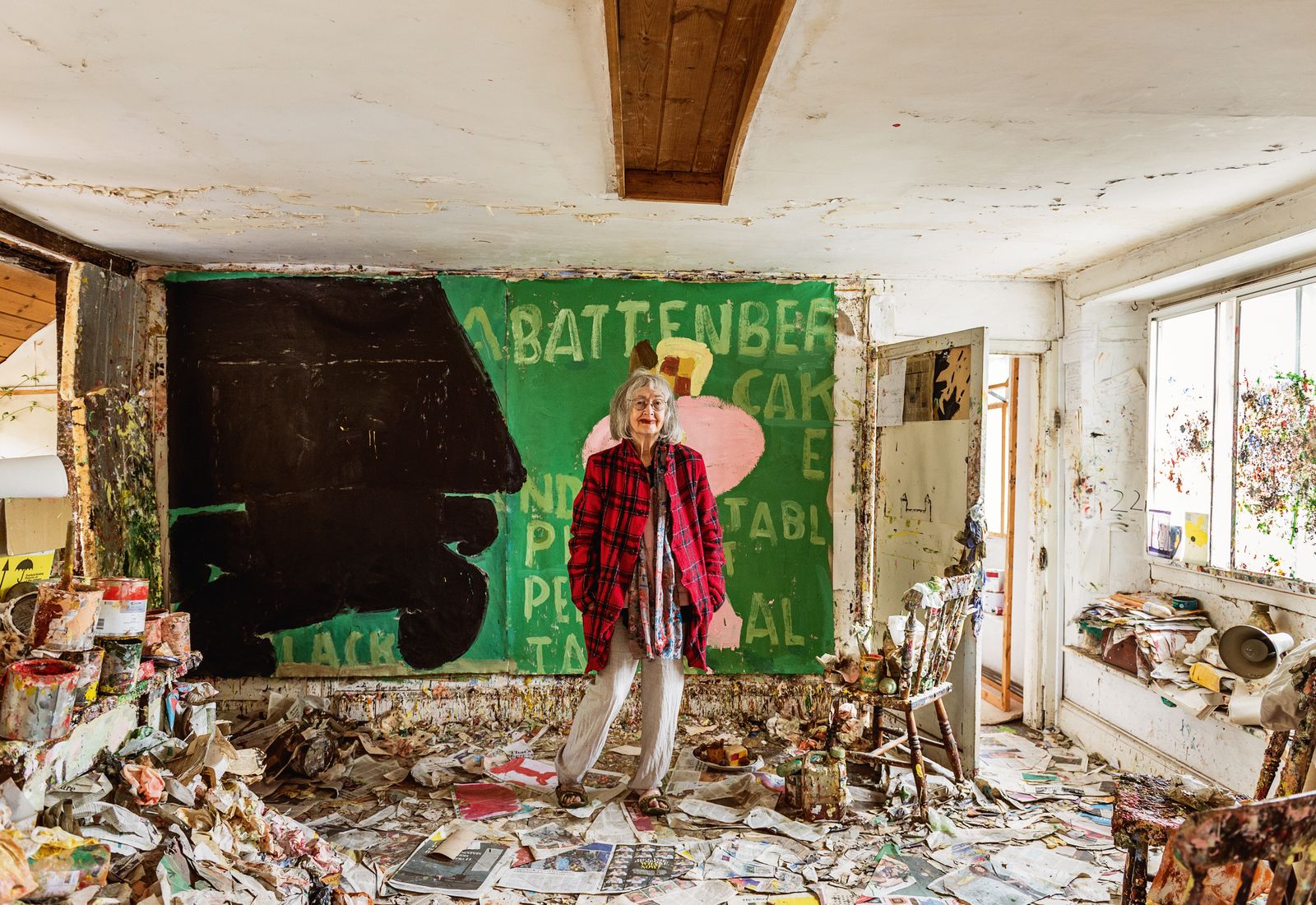
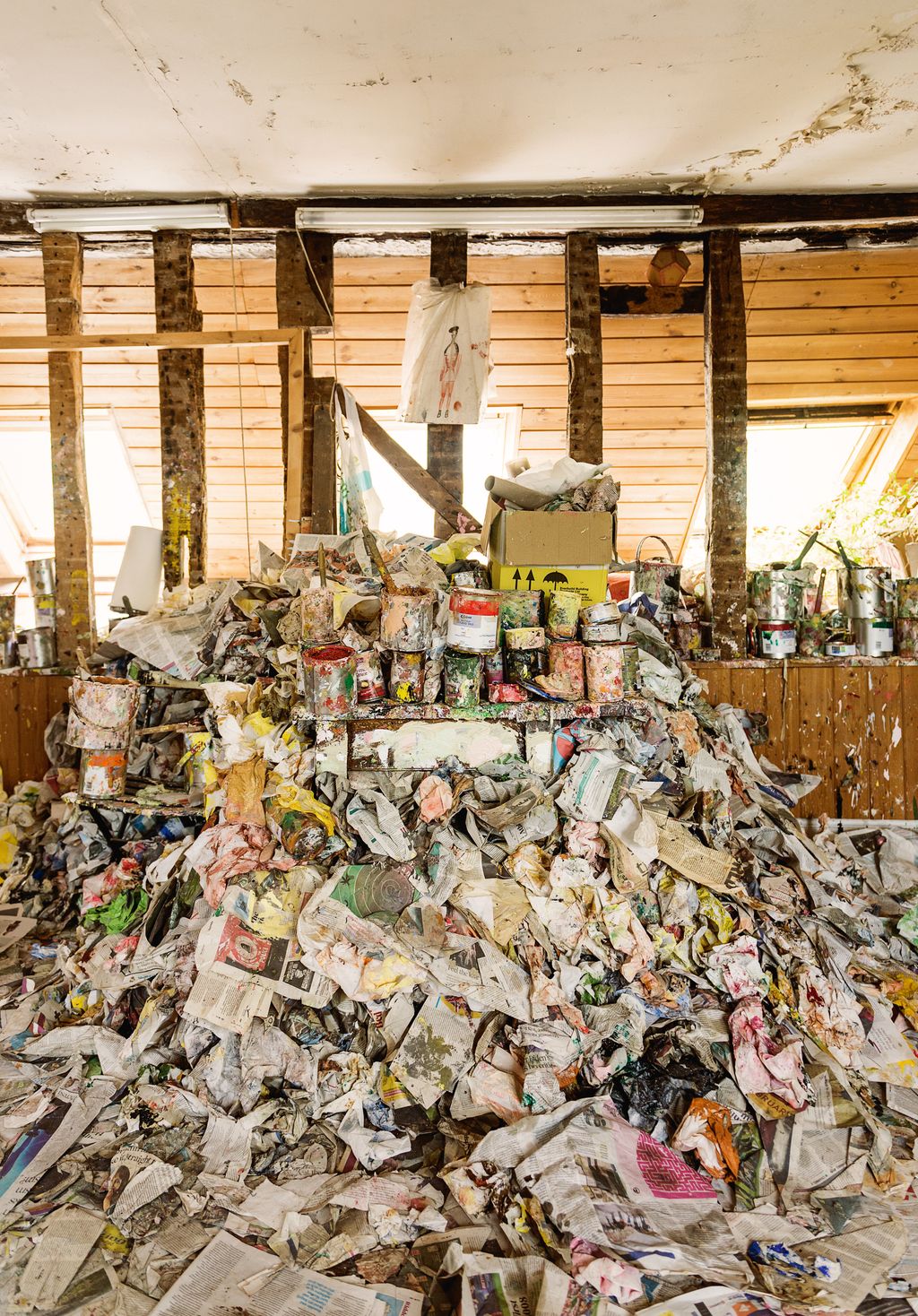
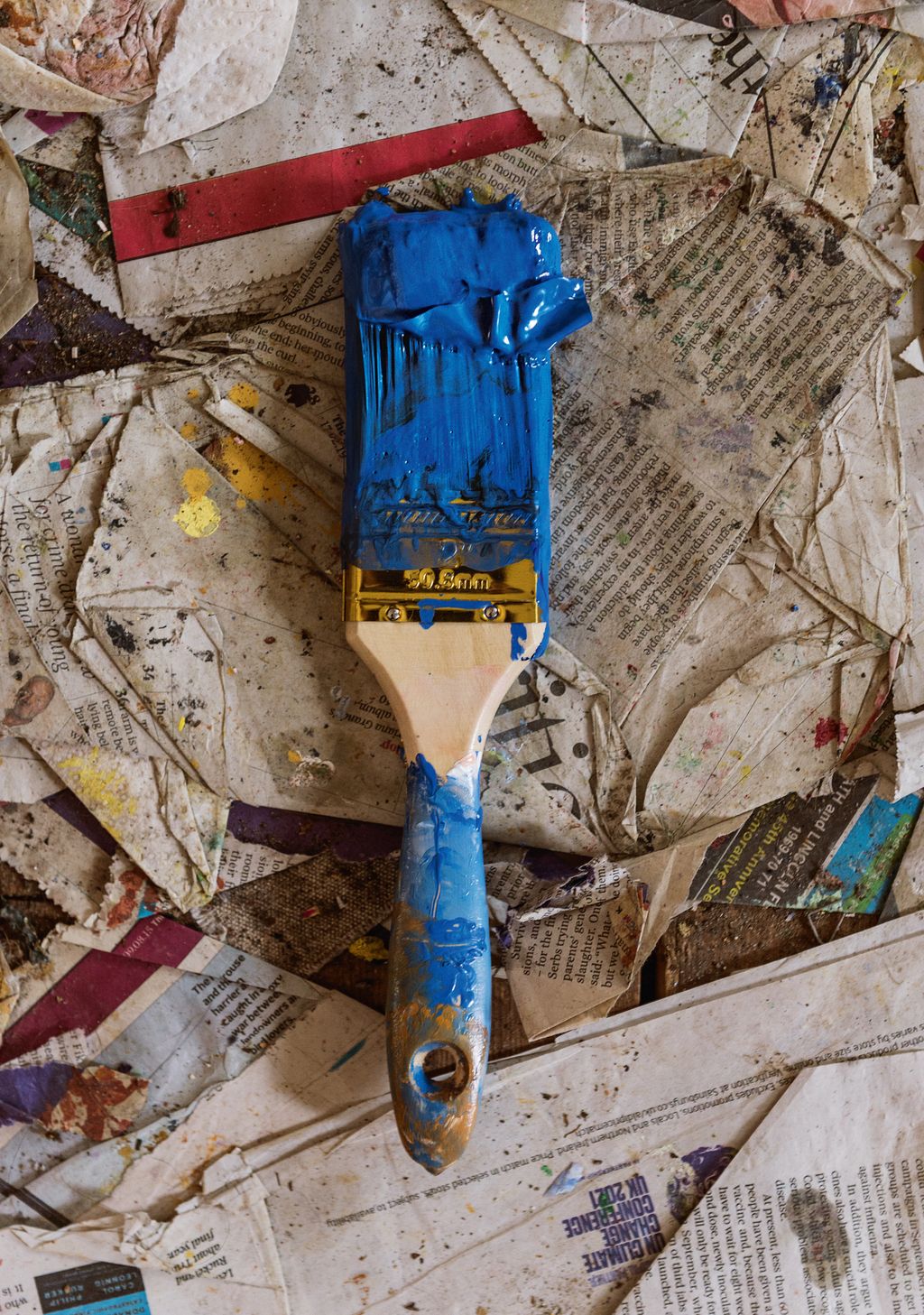
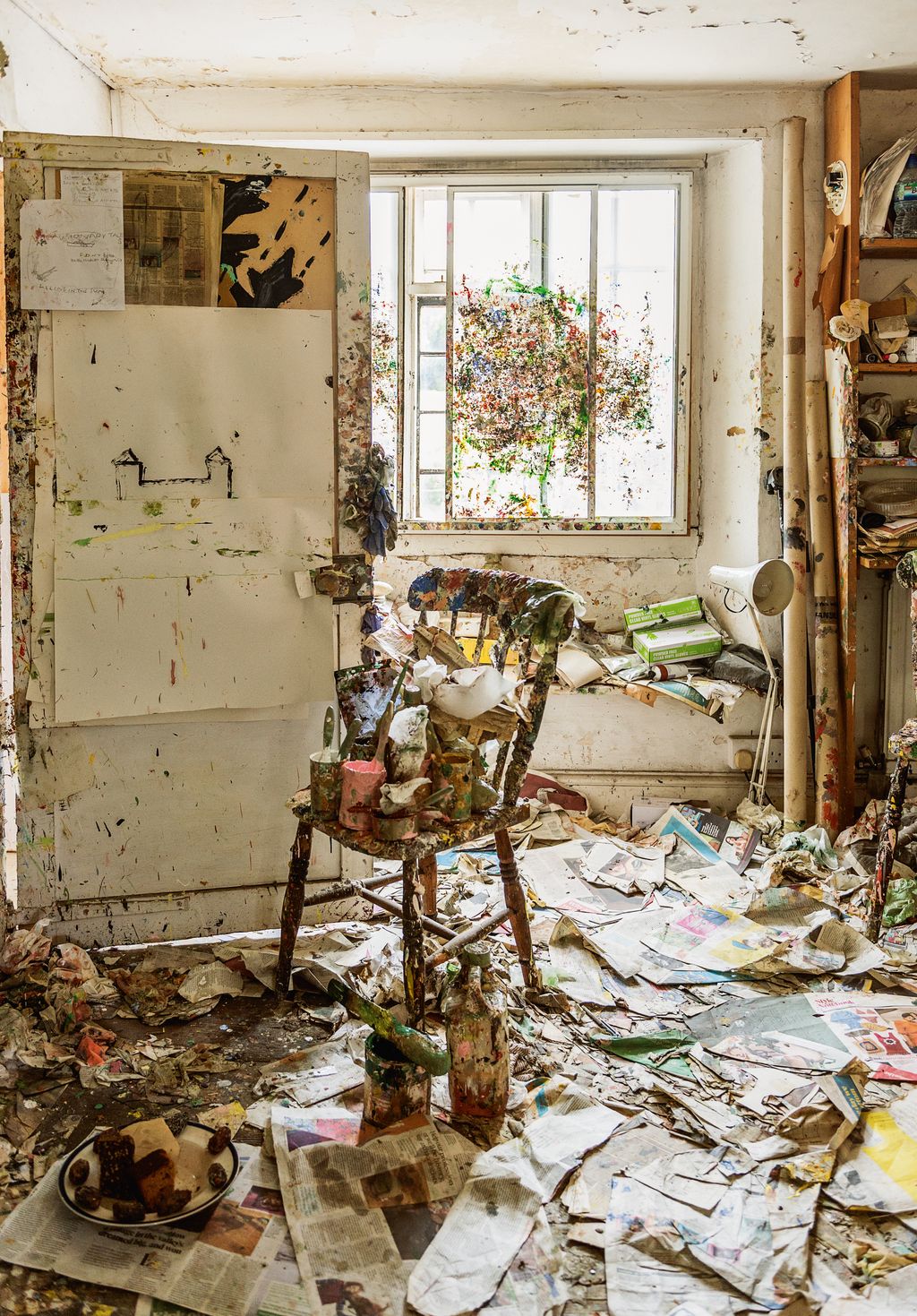
'This is what happens when you put work before the concept of tidiness,' says Rose Wylie, of her studio in the 17th-century Kent cottage where she has lived for over half a century. Warning us not to sit on an empty chair - 'it's become a palette and it might be wet' - she indicates her collections of equipment. 'I paint directly from the tin. Big tins. I don't like little tins and I hate tubes. And I'm careless with brushes - I buy cheap ones and throw them away.' She wipes them on surfaces, creating rainbow patches of lichen-like pattern on the window and walls. Newspaper - which carpets the floor - is another cleaning instrument; along with discarded plastic gloves (protection from solvents), the balled-up pages are developing into a sizeable bank.
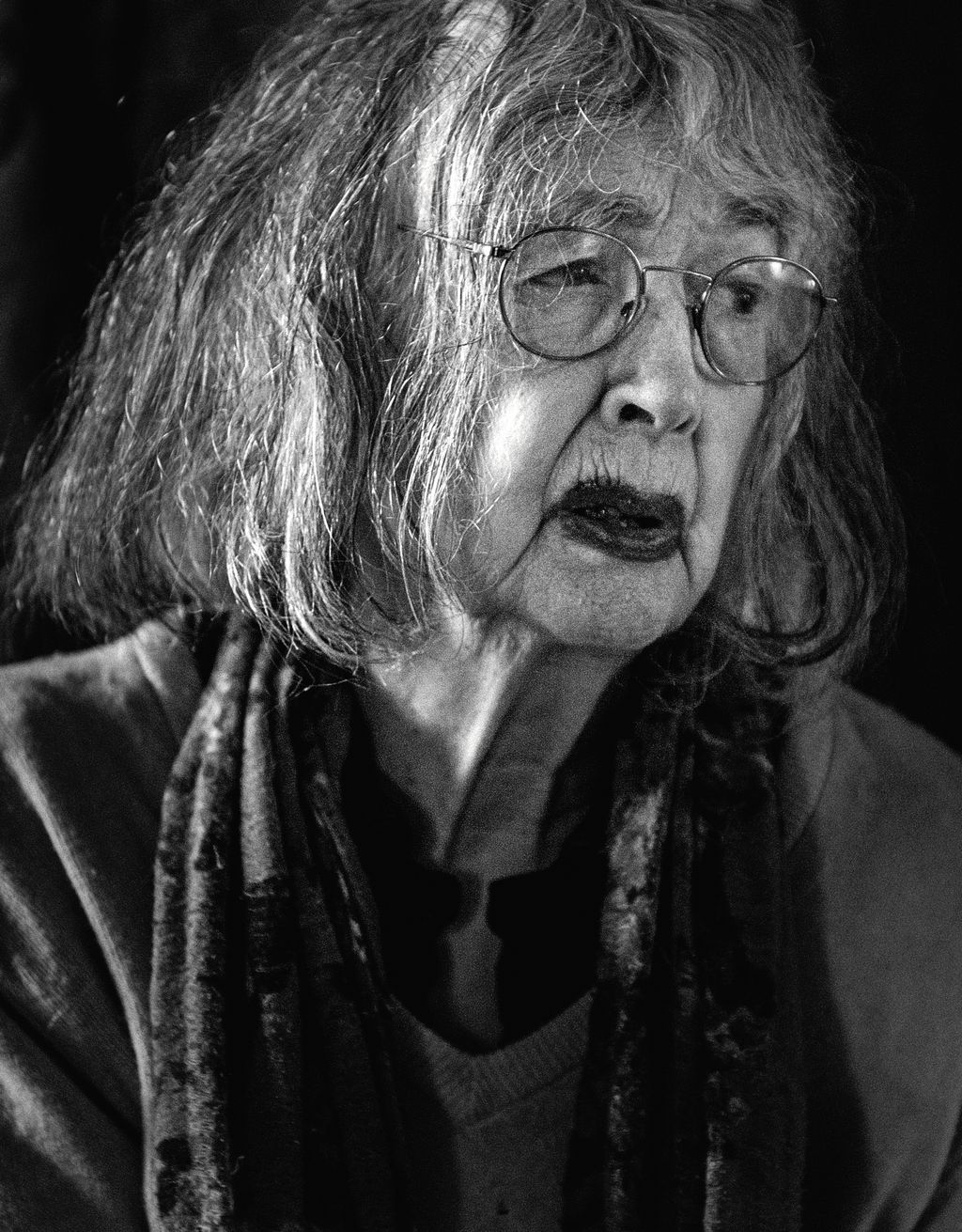
Rose first attended art school in the 1950s, but she paused her practice to bring up her children. Back then, this room was the studio of her late husband, the artist Roy Oxlade, as well as the couple's bedroom. 'We had a mattress on the wide shelf under the eaves,' she recounts. She returned to painting via an MA at the Royal College of Art in 1981. In 2012, at the age of 77, she had the first of a succession of acclaimed solo shows across Britain, Europe, the US and Asia. Her boldly coloured and instantly recognisable works are in several prominent collections around the world, including the Tate's. She will be 90 this October; to celebrate, David Zwirner devoted part of its booth at Frieze London to her new work.
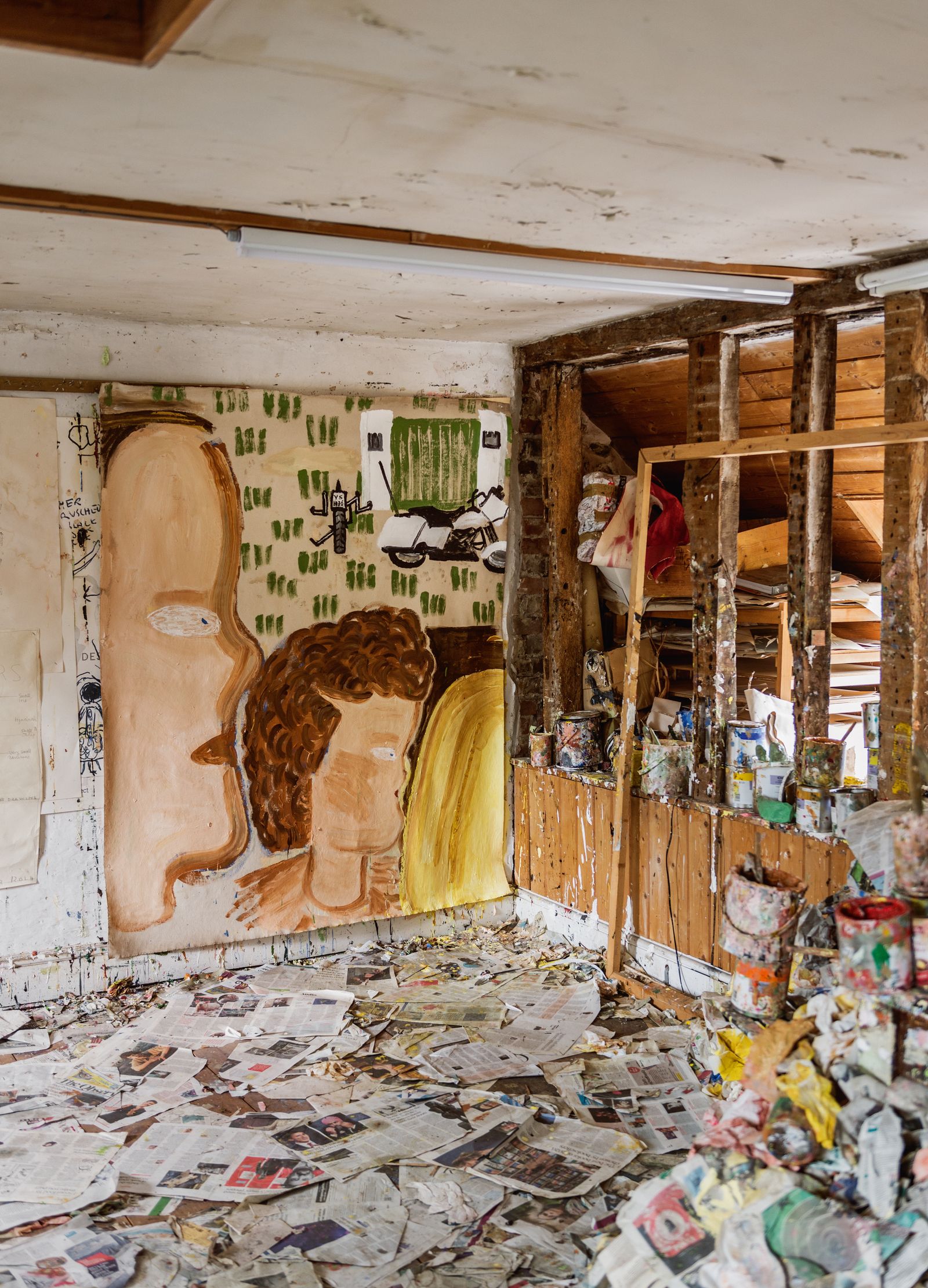
She paints mostly from memory - her sources include Old Masters, cartoons, her garden, interesting people and her cat - though there is a plate of ageing cakes on the floor, which are being eternalised on an unstretched and unprimed canvas stapled to the wall. Reporting her studio hours as 'entirely irregular - I come in here at 11.30pm, thinking I'll change something, then suddenly it's 3.30am, she describes a drive to get quality into a painting, something that is exciting, that is moving forward - I carry on trying to be better'. There is a palpable sense of joy, which she considers crucial: 'If the artist is bored, might the painting be boring?'
Notable is the fact that, two years before our visit, the entire contents of the room, 'spent stable guns, newspaper and all', was meticulously catalogued, packed up and shipped to Korea, where it was recreated and exhibited - and not returned. 'The newspaper and tins come back terribly quickly,' says Rose. ‘But for me, they represent freedom.’
David Zwirner: davidzwirner.com
 Joshua Monaghan1/6
Rose explains that newspapers, used for cleaning brushes, and empty paint tins build up quickly in her studio as she works.
 Joshua Monaghan2/6
Rose.
 Joshua Monaghan3/6
In front of Pretty Girl & Mexican Barber; (cautionary tales) and From Greg for Easter and Greg's Easter Flowers, (delicate), both 2023.
 Joshua Monaghan4/6
Rose paints with cheap brushes that she discards after use.


 Joshua Monaghan5/6
A wooden chair has ‘become a palette’.
 Joshua Monaghan6/6
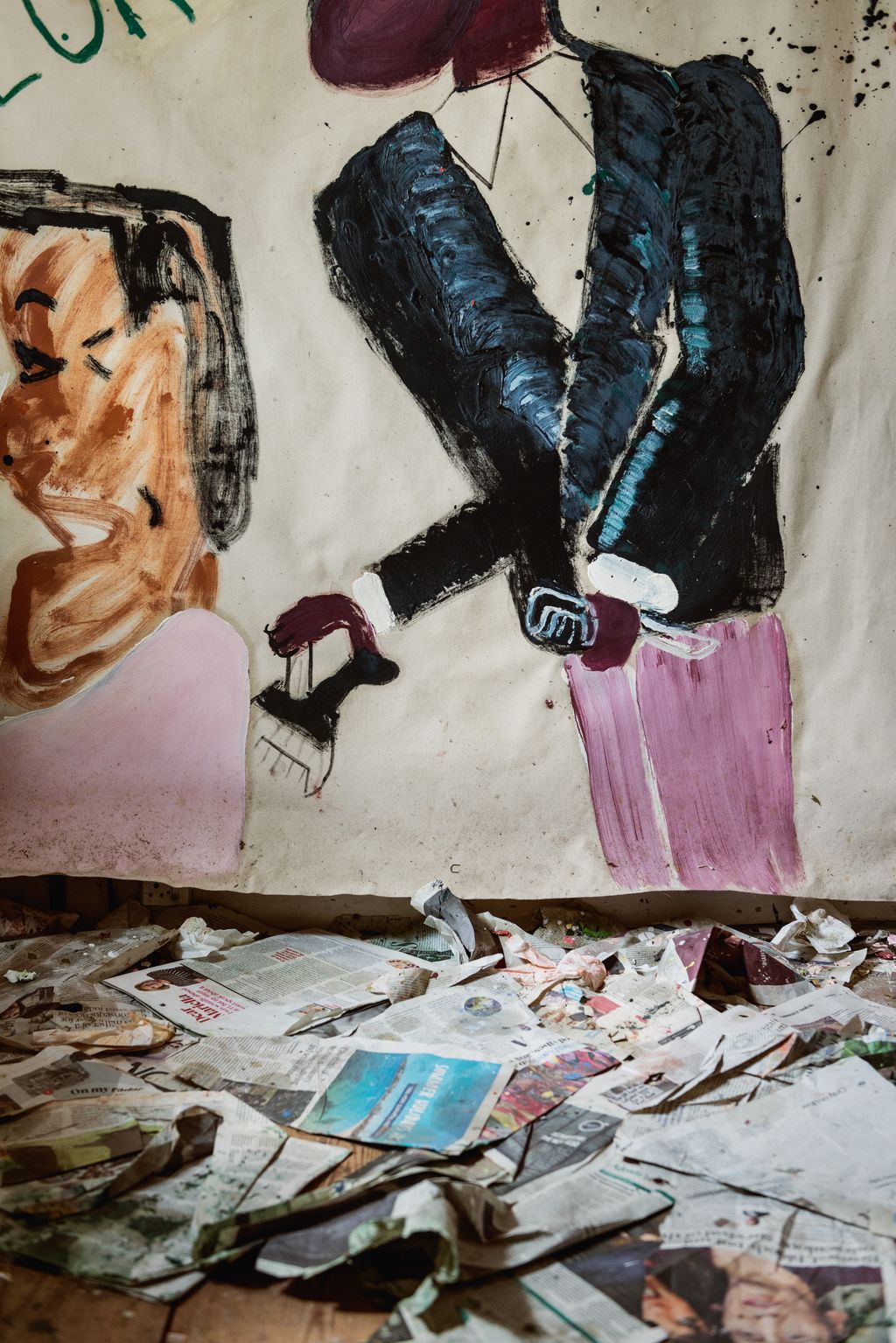
Up the Bikers, 2023, is seen on the wall.


Comments
Back to Top


