


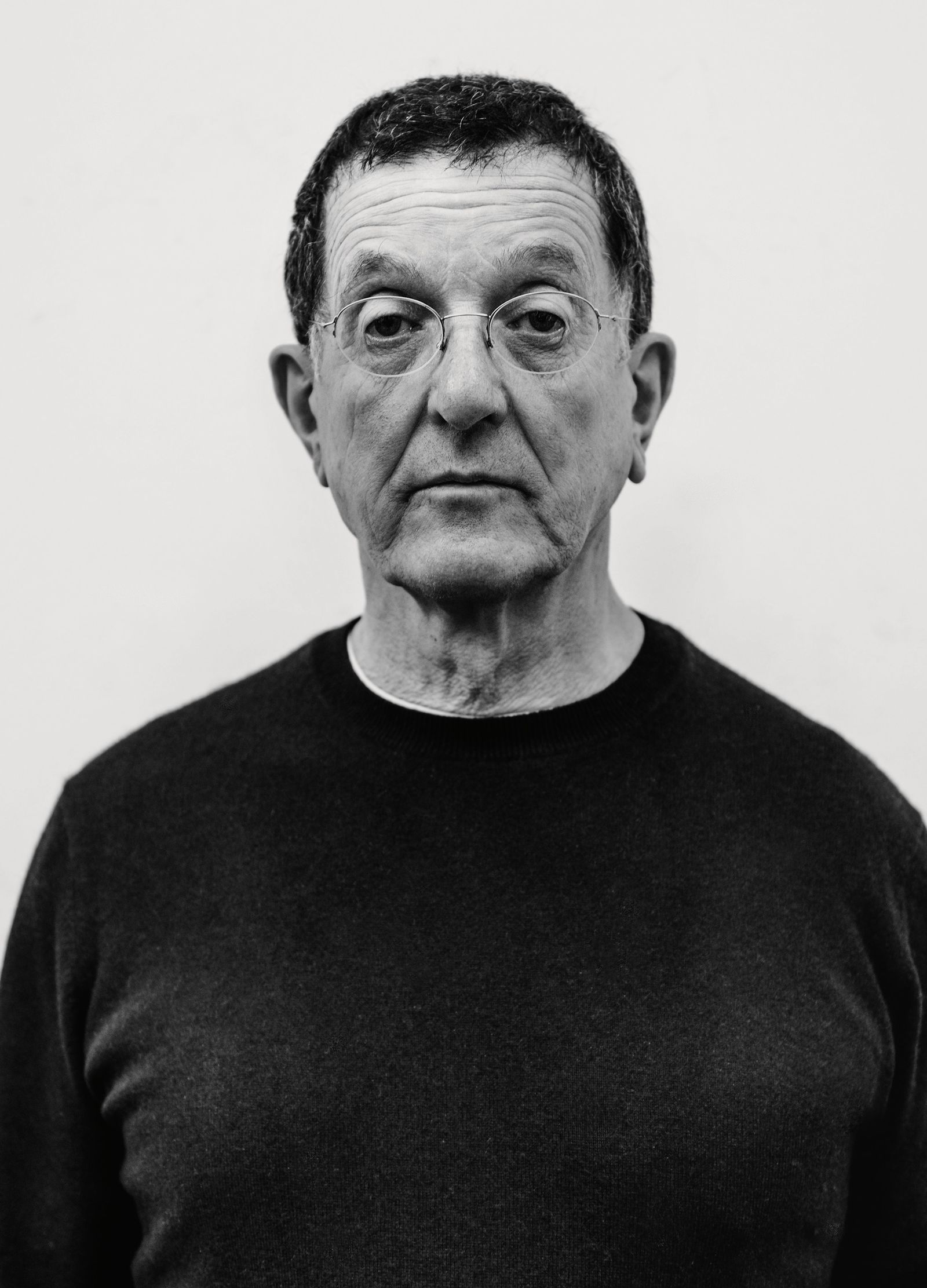
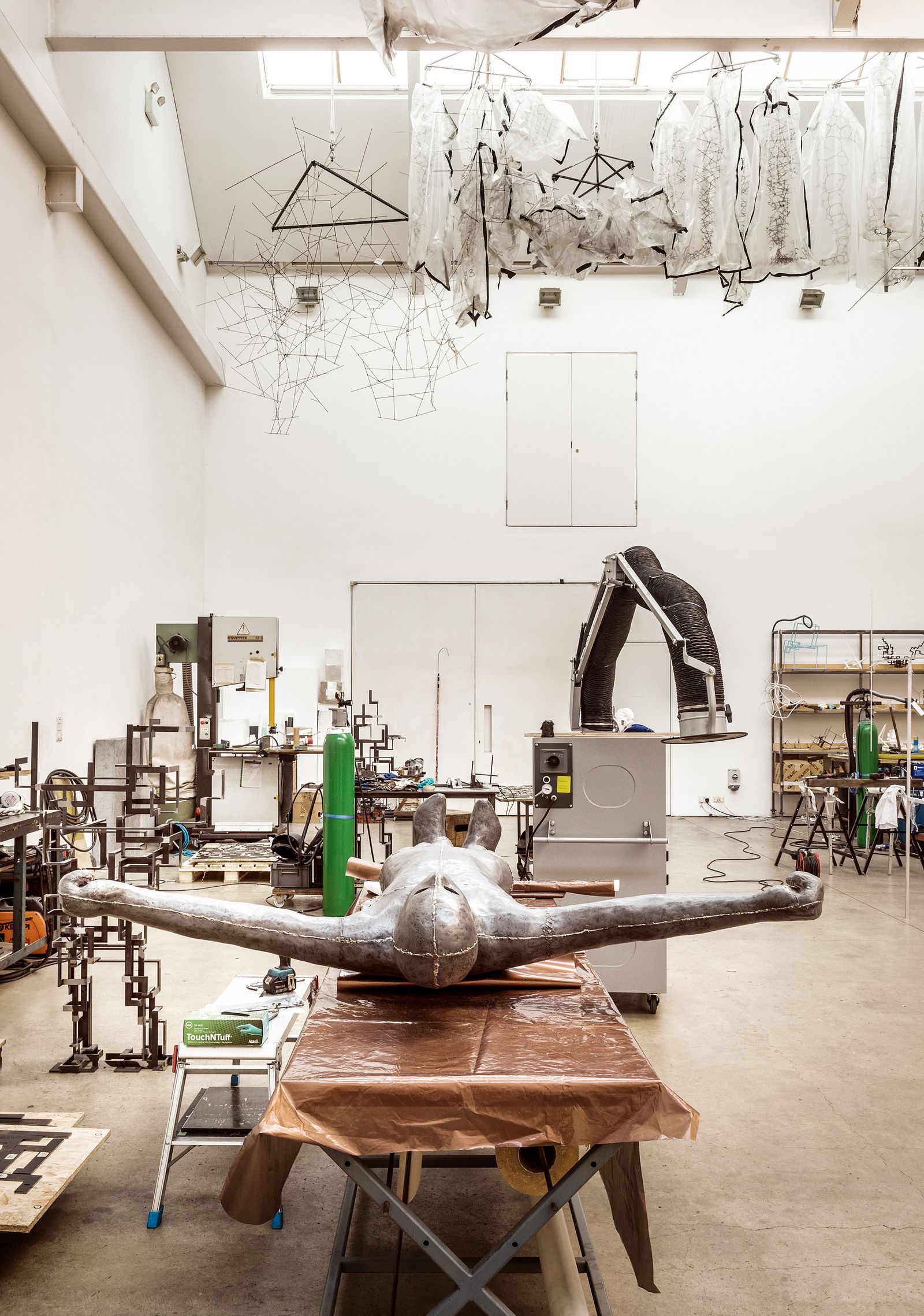
‘I need space, light and silence. But I also need 12 metres of height, and to be able to drive in a 10-tonne truck and put down a five-tonne weight as a point load,’ recounts Antony Gormley, of the specifications he gave architect David Chipperfield for the purpose-built London studio just north of King’s Cross that he and his team of 30 moved into in 2002. There is another studio and foundry in Hexham, Northumberland, with a comparable-sized team, but it is this building that Antony has described as his ‘playground and laboratory’, and he is here four or five days a week.
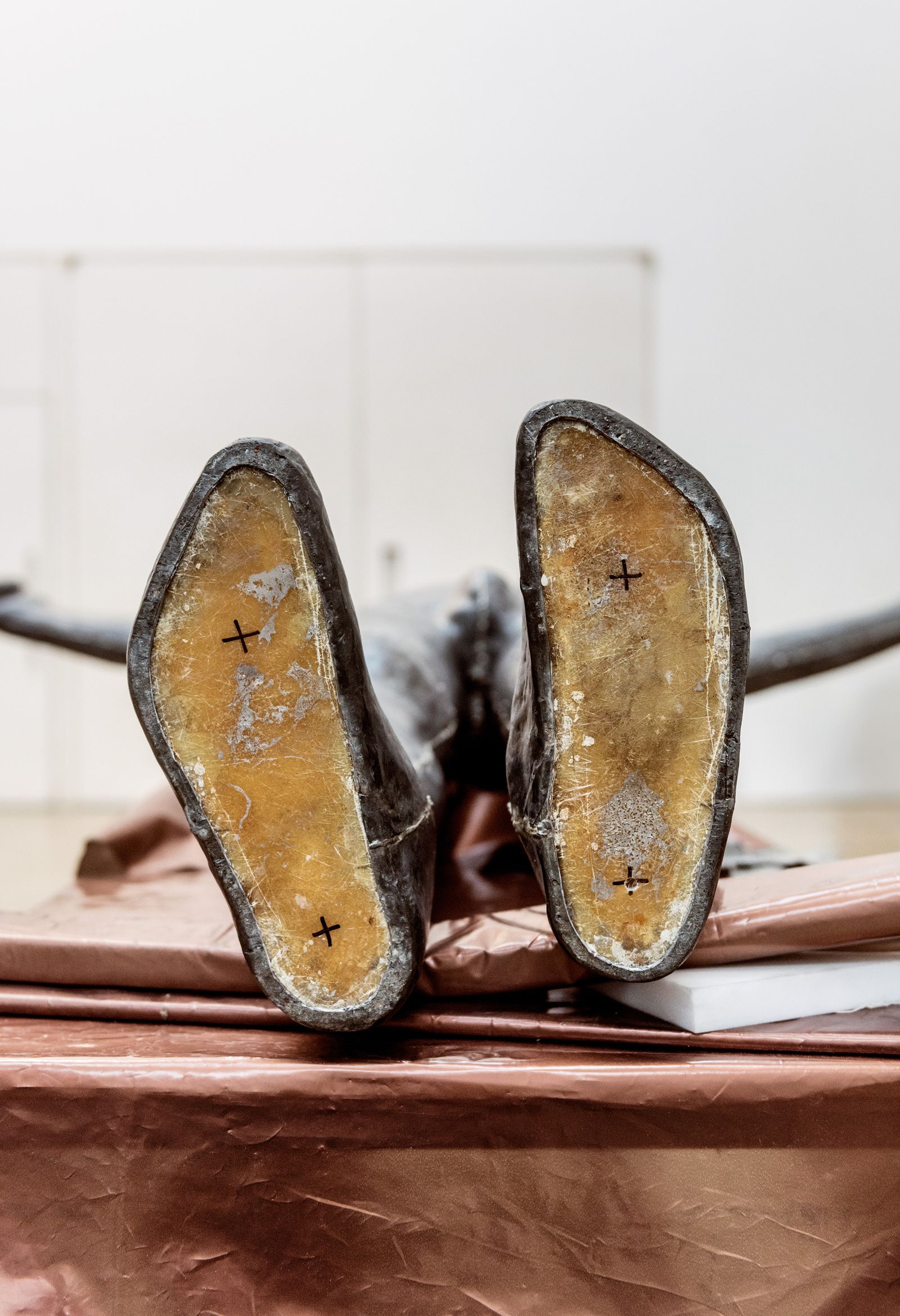
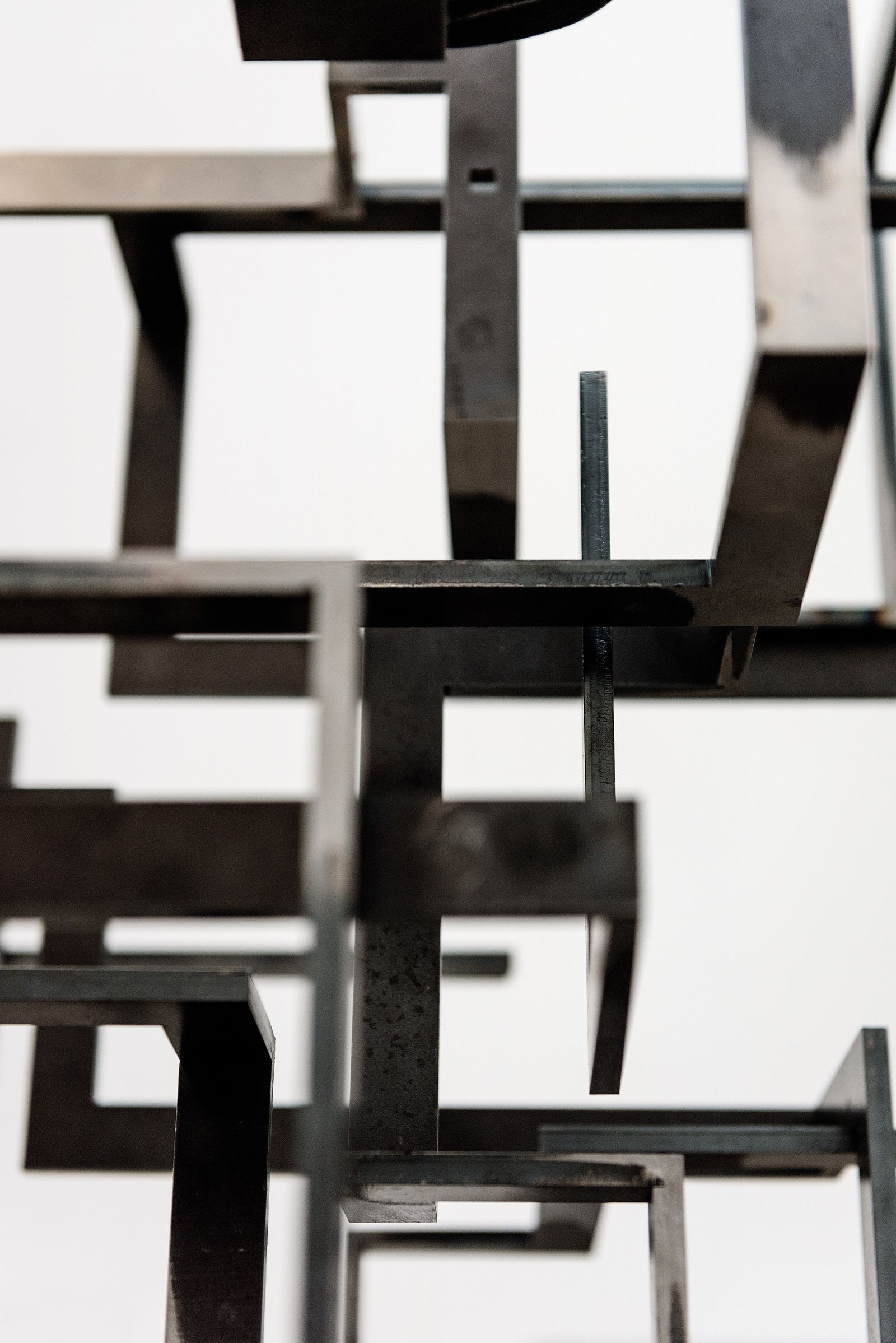
Upstairs, in his drawing studio, he is preparing a new series of works on paper relating to Cave, the cluster of cuboid voids that viewers were invited to crawl through at his Royal Academy of Arts show in 2019. Downstairs, an angular aluminium structure is being assembled ahead of an exhibition in New York; shrouded figures are strung e from the ceiling like chandeliers; and a lead body case – cast from Antony’s own in the 1990s – lies on a trolley.

The time of our visit coincided with the installation of 100 similar, life-sized sculptures across 300 acres of parkland at Houghton Hall, built in the 1720s for Prime Minister Sir Robert Walpole. The first UK staging of Antony’s spectacular, large-scale work Time Horizon, the sculptures are positioned in accordance with ‘an absolute horizontal’, with some buried right up to their chins.

He compares them to fossils, ‘They are industrially made, but they identify the place where lifeforms once were, long before Walpole and his architects arrived in this part of Norfolk.’ He refers to geological history – ‘the Pleistocene epoch, the Cenozoic’ – and contrasts it with our bid to tame nature into ‘the picturesque’. His aim, he says, is to show ‘that while we’re limited by a horizon and mortal time, we’re part of much bigger systems of entropy and growth – between those two, everything is in flux’.
He confesses to some initial reservations: ‘It’s difficult with a very fine 18th-century house not to put a nymph in the glen and a nobleman in a niche.’ Antony’s practice does not adhere to that Classical relationship between architecture and sculpture, but rather explores what it
is to be human and the relationship that we have with our environment. He points out we are in the first era ‘when a single species has affected the planet’s temporality’. The figures of Time Horizon are akin to transitory envoys – ‘not there to decorate, but to intervene’.
‘Time Horizon’ is at Houghton Hall until October 31: houghton hall.com | whitecube.com | ropac.net | antonygormley.com


