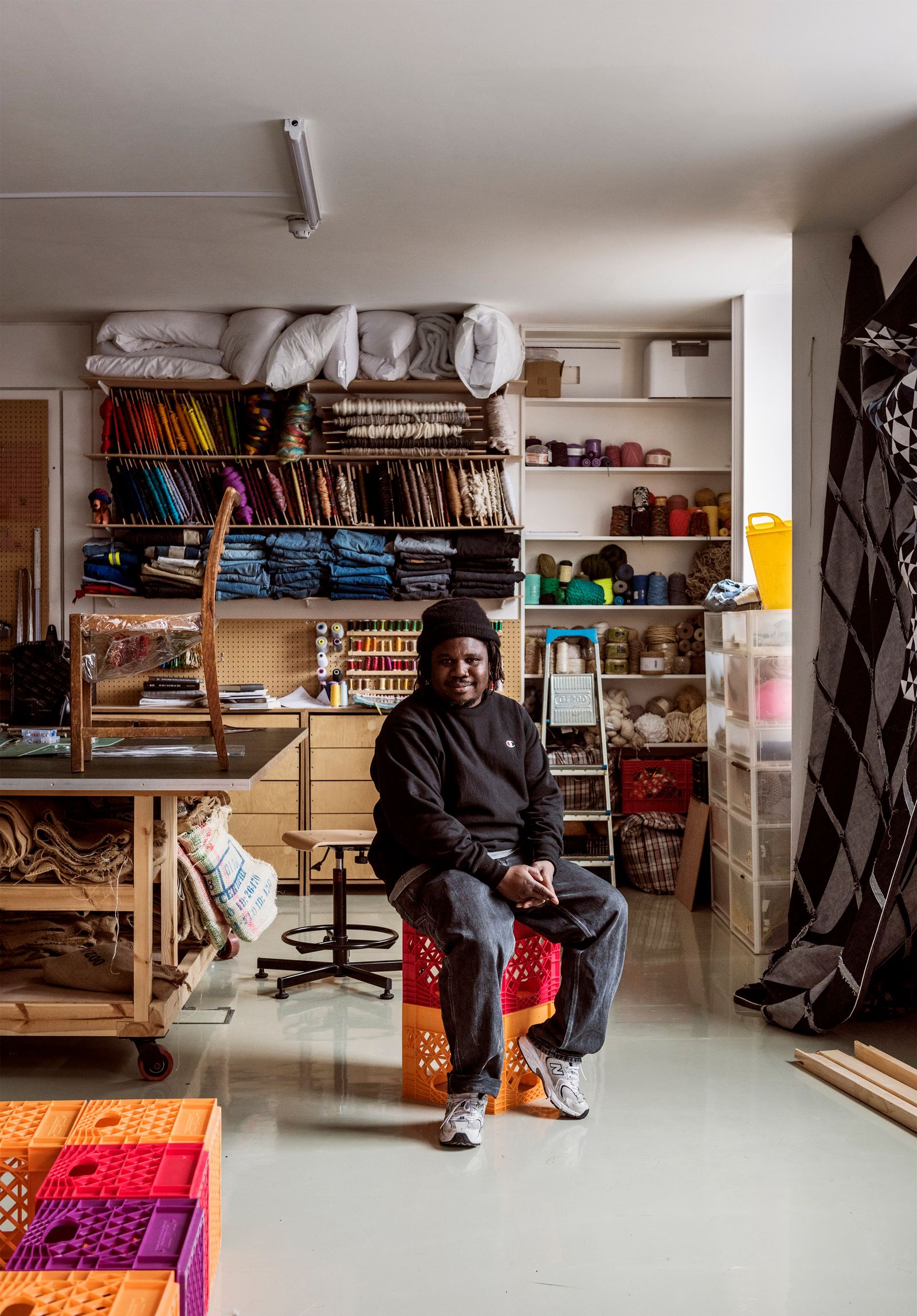

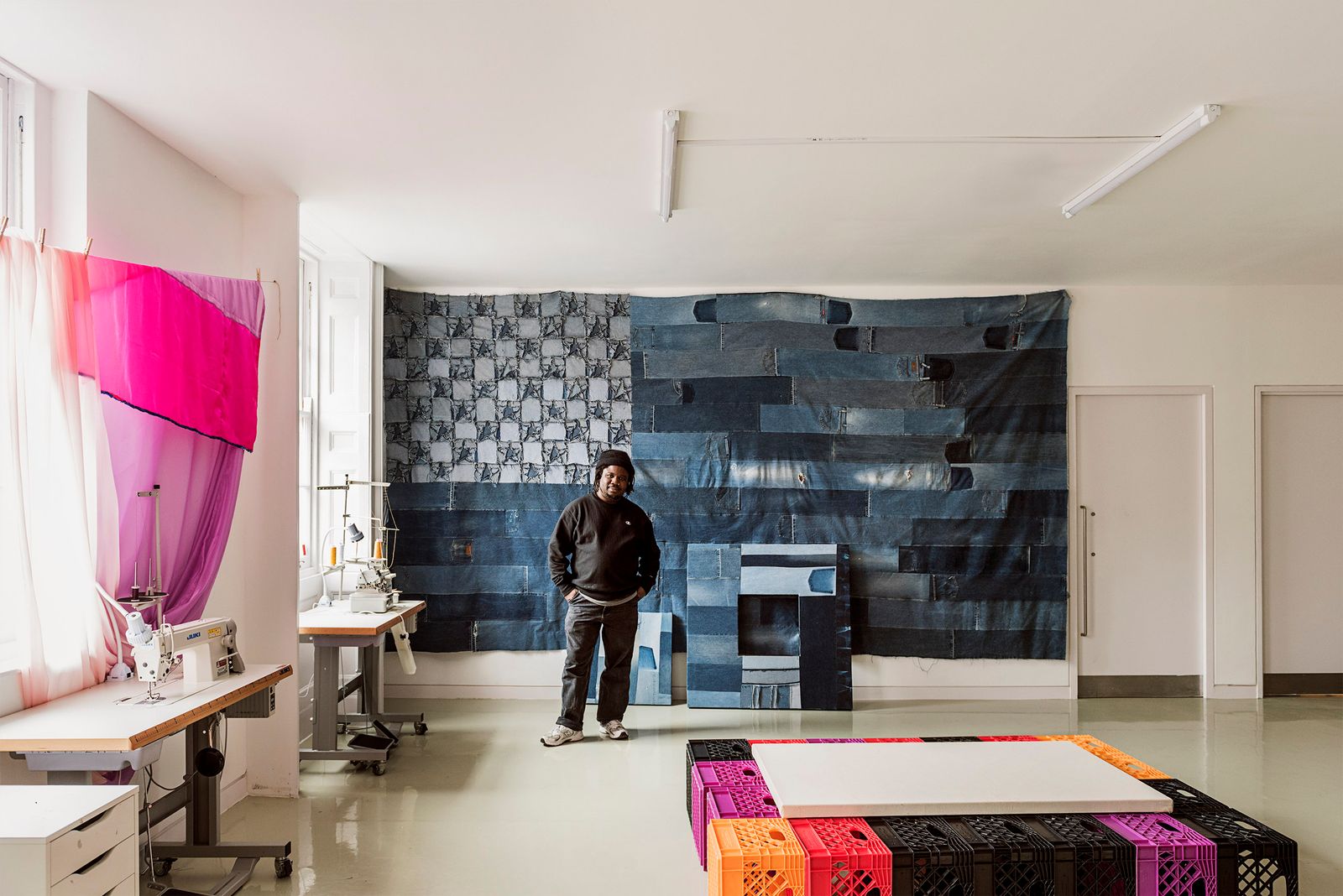
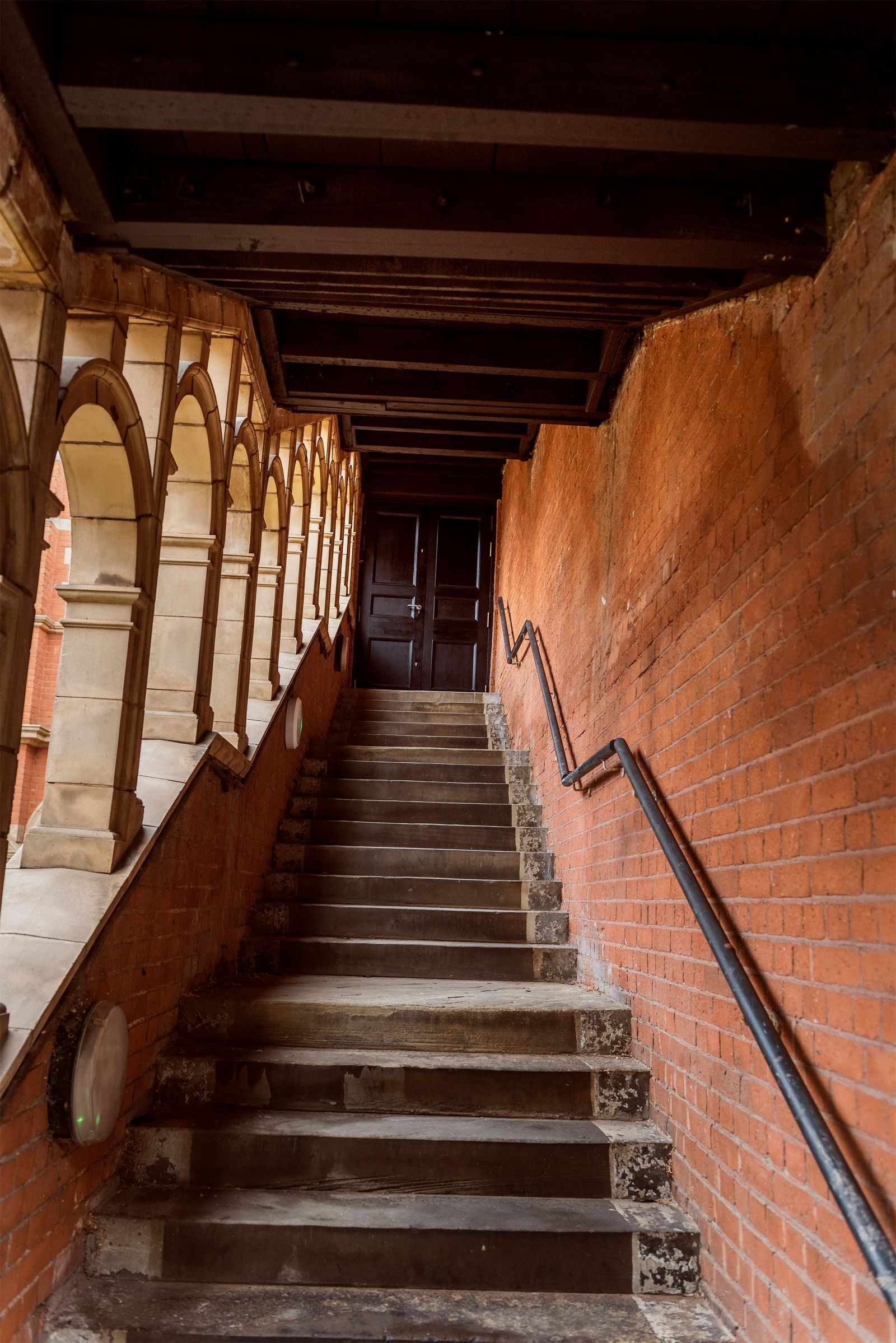
'As an artist, it has always been my mission to be publicly accessible, and the fabric of these buildings is public facing,’ says Alvaro Barrington, of the early-19th-century school turned community centre on Whitechapel Road, E1, that he bought and moved into in April last year. Though he is primarily a painter, there are further symbiotic strands to his practice – sewing and carpentry – and currently each has its own floor in one of the two separate buildings that bookend a central garden. In the later- Victorian building at the far end, which has retained much of its neo-Jacobean splendour, a vast sheet of corrugated metal rests on trestles in a grand hall. ‘It’s a giant ceiling speaker,’ Alvaro says. Flicking a switch, he fills the room with the sound of rain clattering on a tin roof.
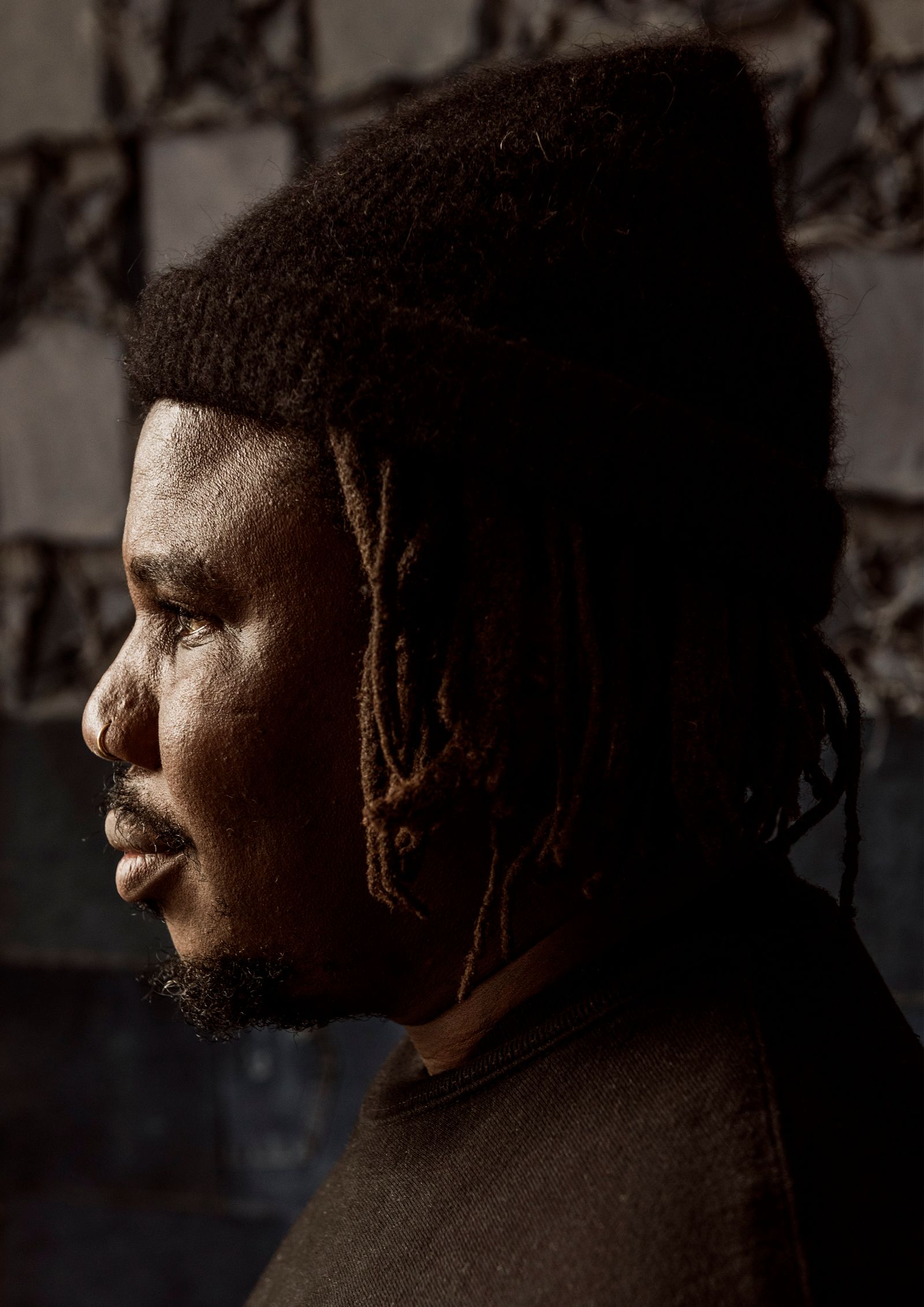
Born in Venezuela to a Haitian father and Grenadian mother, Alvaro was raised between the Caribbean and Brooklyn, New York, and moved to London in 2015 to study at the Slade School of Fine Art. Success has come fast, via a slew of high-octane exhibitions on both sides of the Atlantic. Notably, a pad of what he terms ‘insomnia drawings’, in reference to those by Louise Bourgeois, is sitting on his desk. Despite living a 20-minute walk away in Shoreditch, he spends one or two nights a week at the studio, sleeping on the sofa in his office, and a chunk (if not all) of every weekend, painting, sleeping and painting again, in three- or four-hour bursts. ‘I try to make use of every possible moment,’ he says, explaining he sees art as a possible bridge to ‘the nuanced area’ between diametrically opposed – ‘often politically led’ – opinions.
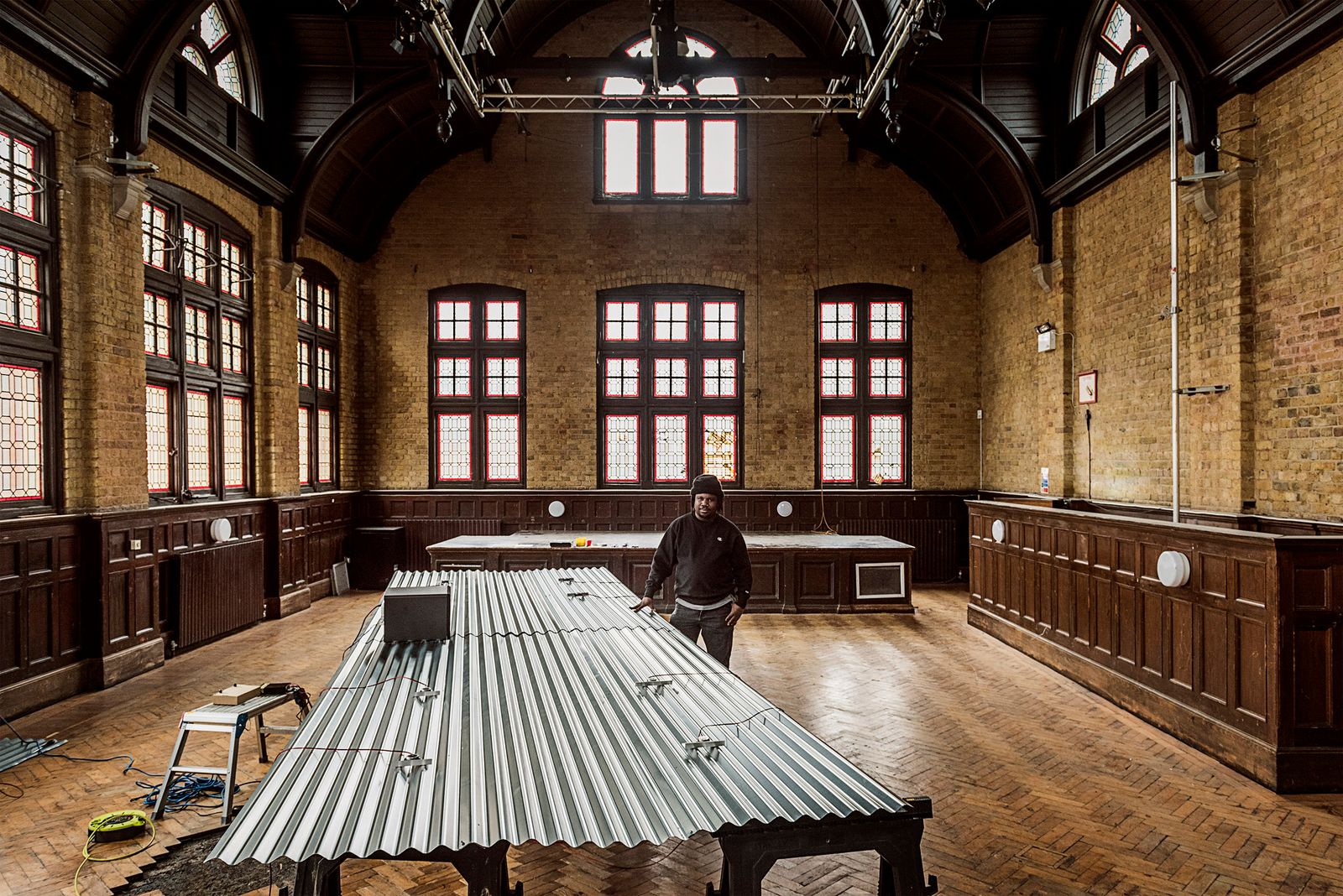
The ceiling speaker, a reference to his grandmother’s home in Grenada – ‘a simple shack with a tin roof ’ – was a test piece for his Tate Britain commission, now installed in the Tate’s Duveen Galleries. His largest institutional show to date, the multidisciplinary work combines auto-biography with social commentary and community. Through collaboration with Notting Hill Carnival, it is due to spill out of the gallery and onto the streets of west London at certain times. ‘Something can’t be truly public if there’s a door,’ Alvaro observes. This attitude is reflected in his plans for his studio complex, which involve restoring community purpose via a café kitchen, as well as an events space in the grand hall, and – most importantly – free access from the street to the garden. ‘What’s most interesting and most worthwhile is what brings us together’ m Alvaro Barrington’s Tate Britain commission will be in the Duveen Galleries until January 26, 2025; check the Tate website for dates when the artwork will appear on the streets: tate.org.uk OPPOSITE Alvaro in the grand hall, which is on the upper floor of the neo-Jacobean Victorian building on the far side of the courtyard garden. The corrugated metal ‘giant ceiling speaker’ is a test piece for his show at Tate Britain.