


The summer holidays – three words that conjure up idyllic scenes of frolicking on beaches and through meadows, paddling in streams, and playing on a lawn long into the still-light evenings. The reality, as any parent knows, can be slightly different, especially if you’re trying to combine looking after children with getting stuff done. And then there are the rainy days (of which we seem to have had quite a few, recently.) Often, some semblance of structure – or aim – helps.
Happily, there are a slew of interiors projects that you can do with your children that can help provide that structure and aim – and might even result in the occasional impressive achievement that holds within it happy memories of collaboration (depending on the age of your children, your perseverance, and the saturation levels of your rose-tinted backward-looking spectacles.) The added bonus of the ideas listed below is that, for most of them, there’s little in the way of financial outlay - and some of them are genuinely useful. So read on…
Beach-combing
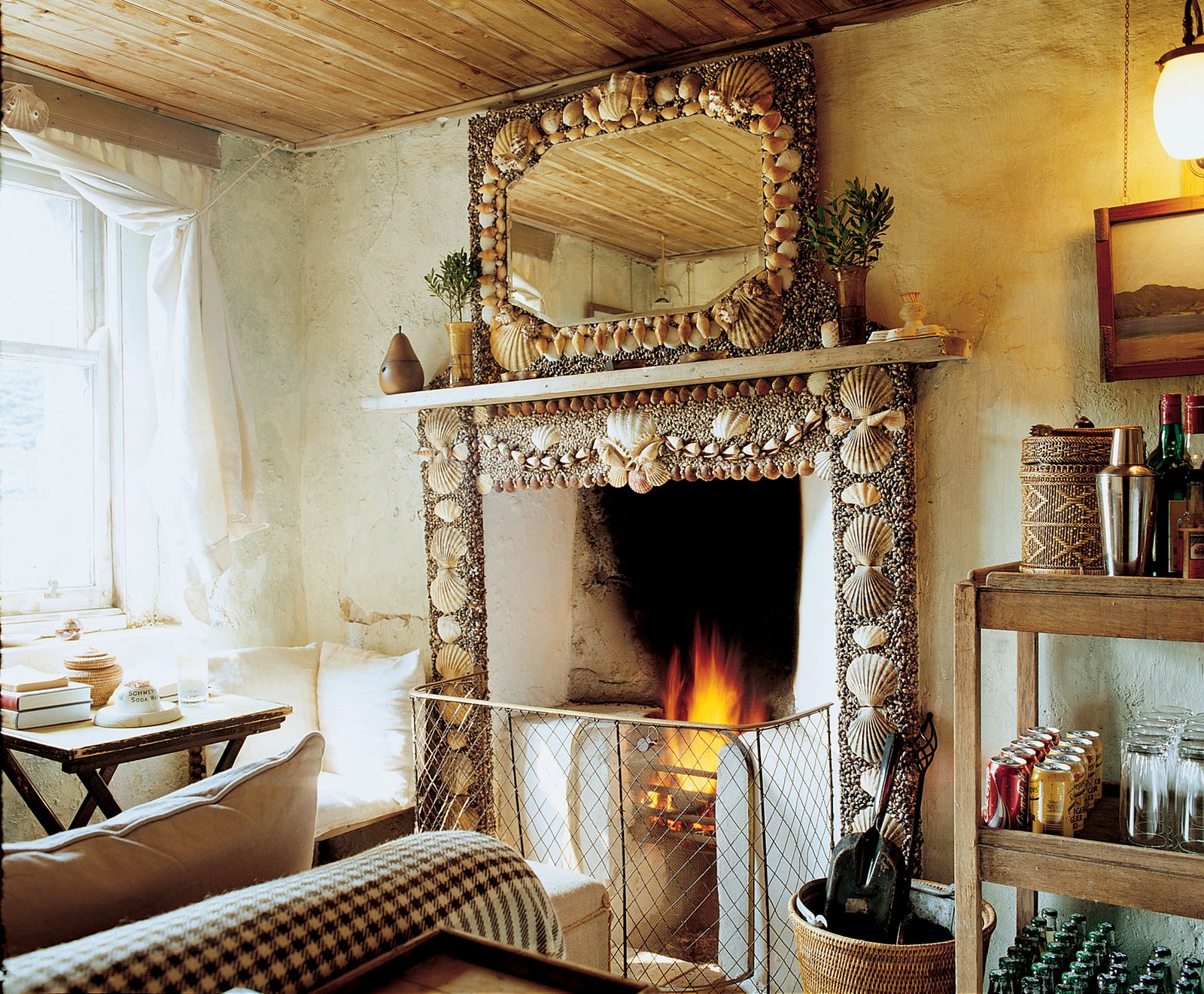

You’re going to say that this isn’t strictly an interiors project – to which my response is just look at Annabel Astor’s bothy on Jura, and particularly the shell-adorned mantelpieces and windowsills. For further inspiration there are shell grottos, of which we have a plethora in this country (in Margate, the Scilly Isles, Ware in Herefordshire, Portmeirion, and at several country houses including Woburn Abbey in Bedfordshire and Goldney Hall in Bristol.) The issue is that it can take forever to collect shells in sufficient numbers (I should know, we started two years ago and only have enough to edge a medium-sized mirror) but there are smaller shellwork projects that can be just as satisfying, from decorating boxes to creating contemporary versions of Victorian sailors’ valentines (Alexandra Tolstoy has a collection of the genuine article hanging in her London bedroom.) You need clear gorilla glue (readily available on Amazon) and if your children are young, you may want to do the gluing for them. Although, if you want to avoid anything too fiddly, remember shells can look very pretty in a clear glass vase.
But beach-combing extends beyond shells. The great art collector and curator Jim Ede reckoned you found a perfect pebble “once in a generation” – he arranged a spiral of almost exactly spherical examples on a table at Kettle’s Yard. The artist, writer, filmmaker and gardener Derek Jarman collected hag stones, which are the stones with holes in them; according to folklore, they have magical properties and ward off witches while attracting good fortune. You need the right sort of beach, but even then they’re sufficiently rare to make finding three or four in one afternoon rather rewarding. The ideal is to go to Dungeness, where Jarman himself lived, but my children and I have found quite a few at Cuckmere Haven and Birling Gap, too. Jarman threaded his on strings and hung them on the wall, or fixed them to staffs which he used as props in his films.
Then there’s drift wood – which can be tricky to use in an original way (though Jarman, naturally, managed) – but worth knowing is that Alastair Hendy of A G Hendy & Co Home Store used reclaimed groyne oak found on beaches for the floorboards of his Tudor house in Hastings.
Sewing

This might sound far-fetched for younger children, and certainly this is an activity will need to be scaled – but once upon a time five-year-olds made quite fiddly samplers, and if you’ve got the patience to teach them, it’s an excellent means of improving fine motor skills. Admittedly my children started slightly later – but at eight my daughter managed her first embroidery from The Fabled Thread (we started with the musicians) which is now framed and hanging on the wall.
Instagram content
Once you’ve got a sewing machine, you can up your game. At the beginning of the first lockdown I started a quilt by way of stitching together my many fabric samples – which come handily pre-cut into squares – using a method which is definitely more improvised à la Gees Bend than 19th century prescribed pattern; this summer, my daughter is going to finish it. (Of course, if you’d prefer to adhere to a plan, such as Log Cabin, or Flying Geese, you can.) My daughter has already made a covering of her own design for the window seat, backing a piece of GP&J Baker fabric with wadding and another fabric, binding it, and stitching around the flowers and hummingbirds (which is probably the quickest and most straightforward approach to quilting – though you will need a special foot for your sewing machine.)
Jules Haines, founder of Haines Collective, has a variety of ideas of what to do with a left-over metre of fabric, to which I’d add trimming tablecloths to give them a flounce (always fun – plus it hides ugly table legs) and making lavender bags. The last is especially brilliant if you’ve got lavender growing in your garden (pruning isn’t due until the beginning of autumn, but you could have the bags ready to fill, sewn up on three sides) – and you’ll have made a head start on Christmas presents.
Paperwork

Just as you can make use of fabric samples, so you can make use of wallpaper samples. To return (briefly) to Christmas, transforming them into star shapes ready to use as decorations is an effective means of ensuring a very stylish tree in five months’ time. Otherwise, and if you’d prefer something more summery, there are origami tulip heads (the Raj Tent Club has got a kit by Piet Design, we’ve mixed our own in with them and they’re now in a vase on my desk.) Wallpaper samples can also be used to cover notebooks or box files, all you need are scissors, a ruler, and good glue. For the notebook, cut out a piece that’s roughly three centimetres longer and deeper than the notebook, turn over the top and bottom to get rid of the sharp edge, and then fit it and glue it to the notebook (when shut!), folding the other sides inside the front and back cover. Another idea is to cut wallpaper samples into strips, you’ve got future name-cards for party tablescaping.
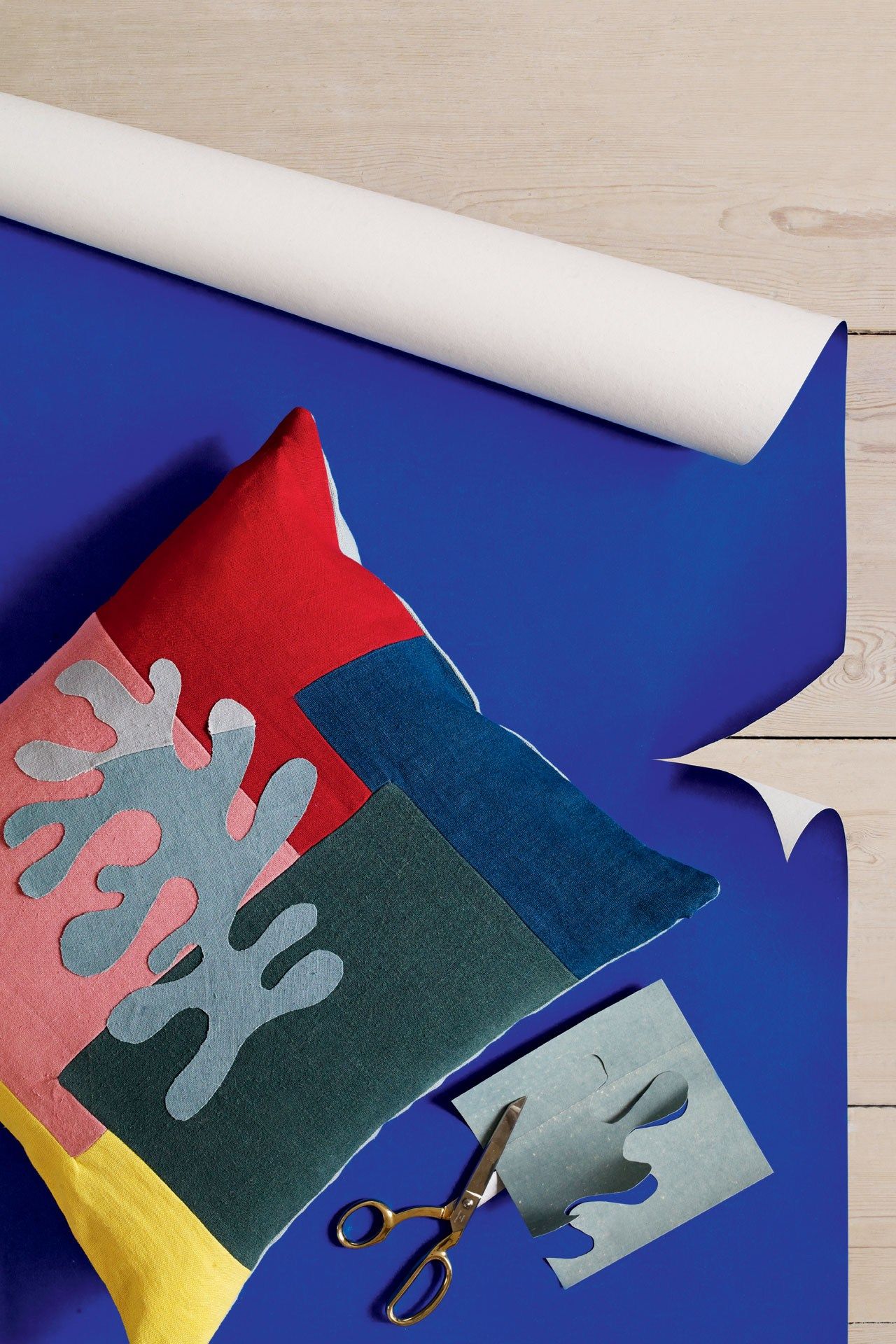
Alternatively, you can allocate the wallpaper samples for use within collages, along with already-read magazines, odd off-cuts of fabric, and anything else you find. The artist and designer Alexandra Robinson uses paintings by her three young children, which she cuts up, “placing shapes on the page, depicting interiors, still lives and abstract work. The children help me sort out scraps by colour and make their own versions.” I lack independent artistic thought, so find a theme useful; we’re currently snipping shells and wave-edges out of card.
Instagram content
More ambitiously, we’re scouring every antiques shop we find ourselves in for old pendants featuring saints, or the Virgin and Child, with the aim of combining them with small metal decorative pieces we find on eBay to create highly elaborate votive scenes similar to those we saw earlier this summer in Sicily.
Decorating
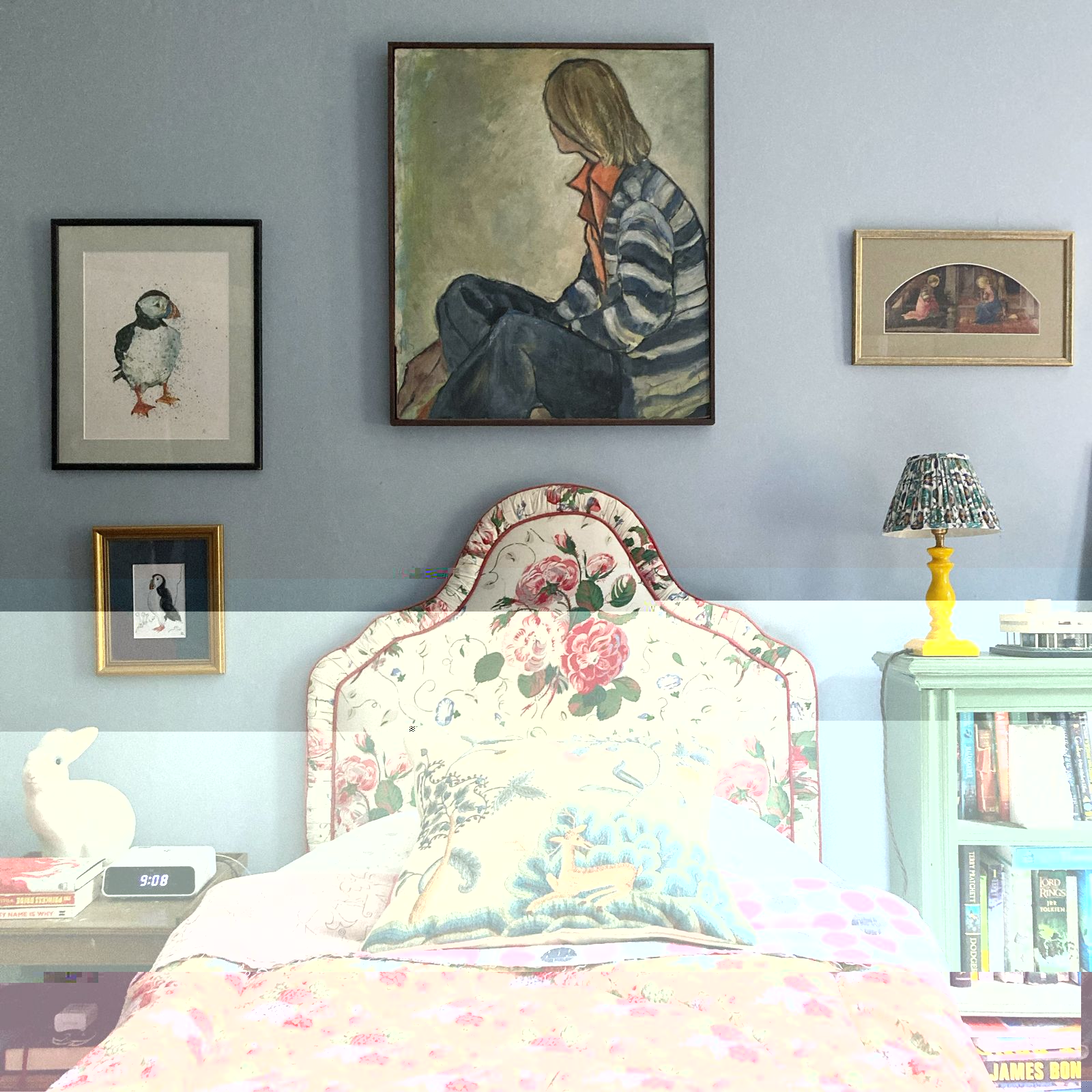
I’m not suggesting that you allow your children free-rein in commissioning new curtains (though, if you did want to rethink their bedrooms, that sort of decorating with children is not impossible) – what I’m referring to is teaching children about decorating, and getting to a point where they begin to develop an idea of their own taste.
The architect Michael G Imber maintains that it is through drawing or painting that we best observe our surroundings – and SJ Axelby reveals that her youngest @roomportraitclub regular is five, and she knows of several families who take part together. (The premise of the Room Portrait Club is simple: every week SJ posts an inspirational interior for members to paint or draw.) Equally, you can set your children up to capture your own interiors – or take them sketching at a National Trust property, Charleston Farmhouse, or Kettle’s Yard.
Next, you can get started on practical design – in miniature. Vintage and second-hand dolls’ houses are remarkably easy to find – there are over 30,000 results coming up on eBay right now. If you’re short of space and don’t want to invest in a knee-high four-bedroom doer-upper, an empty shoe box will serve as a single room. It’s another opportunity to use left-over fabric and wallpaper samples, while you can also scour sites and second-hand shops for furniture (that you can reupholster) if you don’t have a child of an appropriate age to make it from scratch using their carpentry skills (as Lucy Clayton’s 12-year-old son has done). Fimo is another good material (especially for details) - and Channel 4’s The Great Big Tiny Design Challenge is fun to watch with your children, and contains a wealth of ideas.
There are also actual interiors projects that your children can do, too, including stripping wallpaper and sanding. I’m currently paying my 11-year-old daughter £3 an hour to paint the trellis in the garden; next are the internal doors. I might even get to the end of the summer holidays with the house looking better than it was at the beginning – at least, that is the (optimistic) plan.


