

When the late winter blues inevitably kick in, finding a way to feel sparky and stay cosy (particularly when striving to keep down energy bills) is imperative. Quilting – a form of sewing which involves stitching layers of fabric together with stuffing to create insulated textiles – ticks both these boxes.
The technique has its roots as far back as the 13th century. According to the V&A the word ‘quilt’ comes from the Latin ‘culcita’ meaning a ‘bolster or a cushion’ and from its beginnings, the quilt has always straddled the line between utility and decoration. Quilting was used to create bedding and even as alternatives to expensive armour. Highly decorative, quilted items would become family heirlooms, and many are listed in Medieval inventories. One of the earliest surviving examples is the ‘Tristan Quilt’ made in 1360s Sicily – which embroiders the tragic tale of Tristan and Isolde.
Up until the 18th century, quilting was largely the reserve of the rich, made using expensive fabrics by women who had both the means and the time (often used for dowries), or manufactured professionally to make sumptuous clothing.
However it was through the technique of ‘patchwork’ where quilting really took off as we know it. Associated with domestic economy, the technique involves using scraps of fabric to create patterns. It is America where the culture of patchwork is most vivid. Think of Little House on the Prairie where quilts are used not only as bedspreads but as wall and door hangings, to protect from the cold during the Minnesota winters. (The show is reportedly responsible for the popularisation of quilting in Japan as a hobby in the 1970s). Amish and Mennonite communities are also famous for their quilts. Unable to use colour or frivolity in clothing or interiors generally, quilts are both creative and devotional outlets. The most common quilting pattern is the ‘Star of Bethlehem’ – an 8-pointed star, either repeated or lone.
As gendered activity, quilting has historically been a way for women to tell stories and create visual language when no other artistic means has been open to them. In Black American culture, it was enslaved women who would be tasked with making quilts. These quilts, created with a high degree of skill, did not only create warmth but carried covert messages and stories. Quilts would even act as mnemonic devices, marking out routes of escape.

.jpg)
We spoke to two contemporary quilters: Julius Arthur, founder of design practice House of Quinn and author of Modern Quilting: A Contemporary Guide to Hand Quilting who runs quilting workshops in London and other locations across the UK and Annie Bowes, an amateur quilter who picked up the craft in 2016. They discuss how to get started, learning techniques and creating a quilt that lasts.
How would you recommend someone get started in quilting?
As well as my courses, of course, I think there are a lot of ways! Especially as there’s so much information on YouTube and online now. It’s quite easy and accessible to get into. Libraries also have great books if you’re looking for traditional quilting techniques and you can also join your local quilting guild.
In terms of materials, you can use what you’ve got to hand, which is an amazing way to use up fabrics and old clothes, and traditionally this has been used as a way of storing memories and passing them on. All you need in terms of equipment is a pair of scissors, fabric, sewing needles, sewing machine (if you have one), and a straight edge or ruler of some kind.’
Why should someone get into quilting?
Quilting is definitely changing. I come from a contemporary art perspective and also have other creative projects. It’s definitely very similar to ceramics, as an art object which is also useful. You can display it on the table at parties, it’s a conversation starter with people which tells a story. ‘Oh I made it from so-and-so fabric.’
I think it’s quite a good way to get into sewing in general, because there aren’t too many technical skills involved. It’s literally putting two pieces of fabric together and sewing a line. It’s quite basic straight stitching and hand-stitching but it’s a great way to learn those skills and build confidence.
What is your approach to teaching quilting?
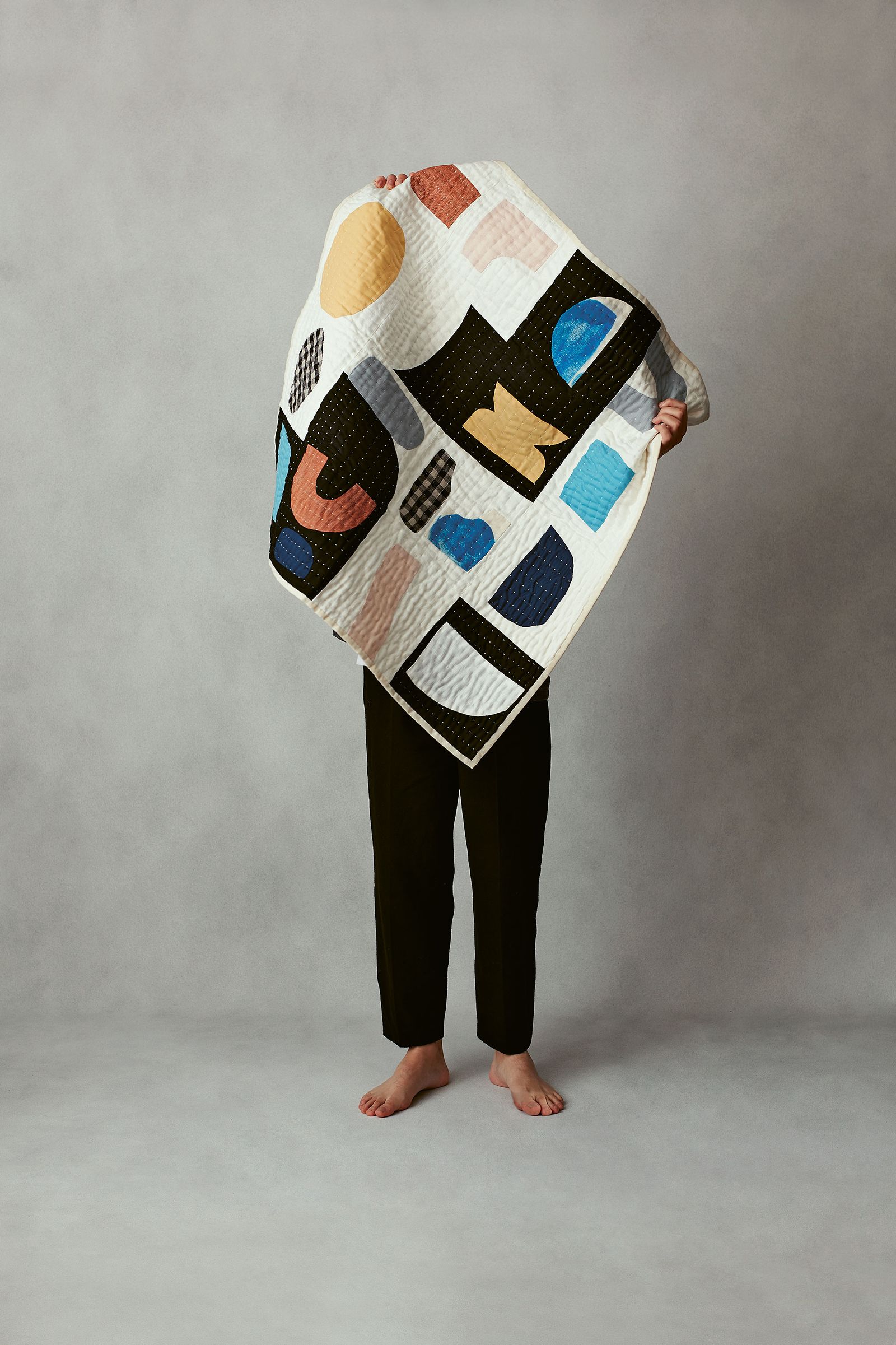
A lot of people who come to me say they want to quilt but they don’t want to do traditional quilting. I don’t teach how to make something specific, but just how to make something that is personal and meaningful to you. I'm not looking for people to create something formulaic. My whole thing is creating contemporary designs using traditional techniques. So I’m getting away from those square patchwork quilts, by using more organic shapes and colour and exploring line and form much like a painting.
People also get alienated by the amount of time it takes. My practice is about using larger shapes. It still takes a lot of time, but it doesn’t take as much time as traditional quilting, so it’s more accessible in that sense.
How should you find creative inspiration for a quilt?
I work with creative prompts, be it environment, heritage, shape, line, colour, and then it’s for my students to go away and experiment. You might think, ‘oh I’m from a certain place that is inspiring’–I have a lot of Cornish influences in my work, for example. It might be colour, where you'd start by picking three colours and combining that with the idea of heritage. In that instance you might create shapes in yellow representing members of your family and you’d arrange it in a certain way, so it’s quite an abstract process, but with these prompts designed to inspire you.
Would you say it is best to start small?
People come to my classes and I teach them the fundamental skills, then I get people to make something that is quite accessible in terms of size, so you can experiment with shape and colour. Once you get confident, you can make something that is much bigger in size, or you can put all the small pieces together and make one giant quilt.
houseofquinn.co.uk
www.createacademy.com/courses/julius-arthur
Annie Bowes, quilter
Why did you start quilting?
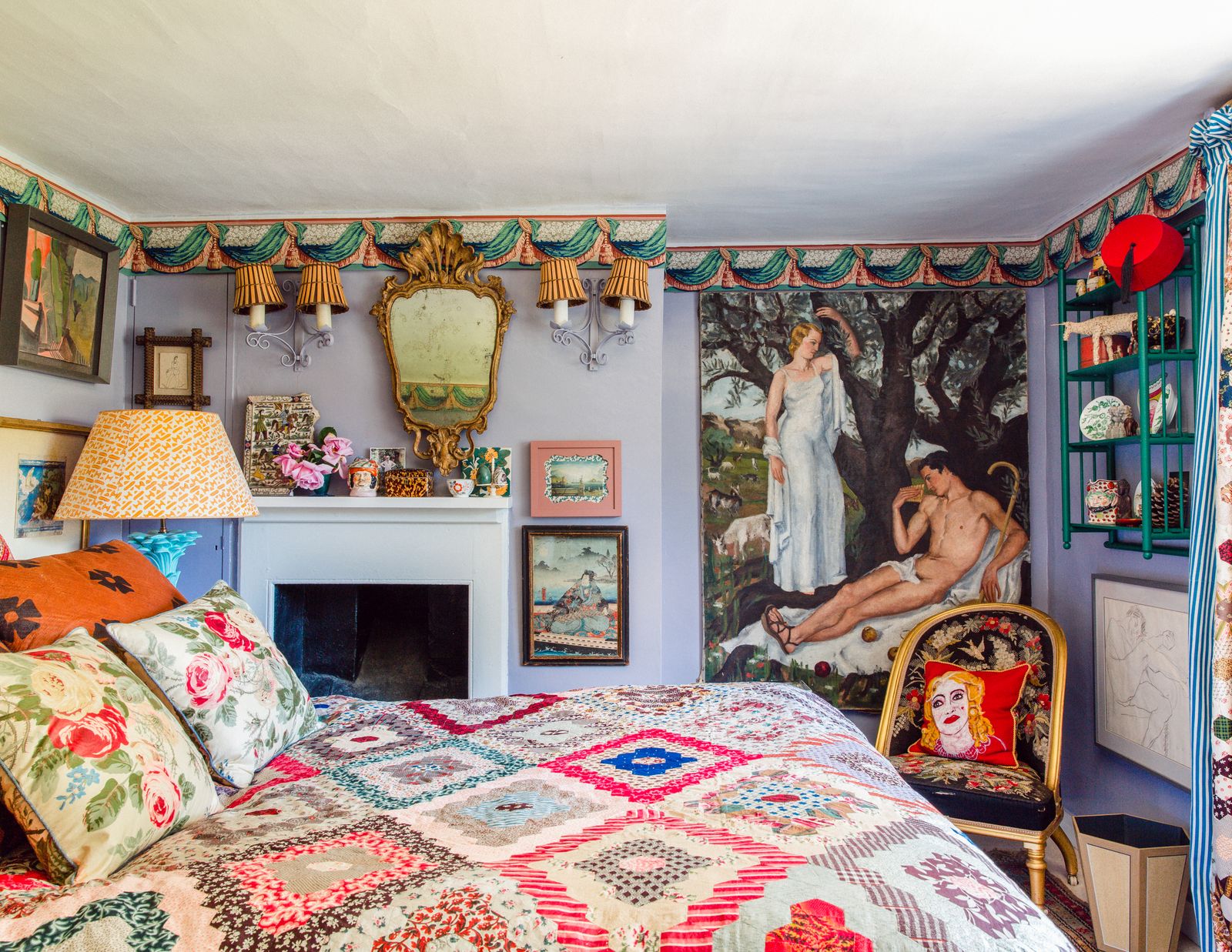
I started quilting in 2016 after graduating from University. The Great British Sewing Bee was on TV and so I thought I’d try my hand at sewing, using a beginner’s quilt kit that I’d bought years before. After purchasing a cutting board and a rotary blade I set to work cutting squares and finally made a higgledy-piggledy patchwork quilt top. But from that moment I became totally obsessed and today I’m working on my 49th quilt.
Where did you learn?
I mainly taught myself, though I had help and advice from my Gran and also the ladies at The Quilt Room who took me under their wing! They’re the oldest quilting shop in the U.K. run by a mother-daughter team.
Would you recommend quilting?
Yes! I love quilting because it’s a therapeutic activity, at the end of which you’ve created a piece of art that you can use on a daily basis. You can also watch TV or listen to a podcast or chat while you’re doing it. I can lose days and weekends to sewing.
Are there any drawbacks?
It took me a long time to figure out how important it was to be accurate with your cutting and measuring. Especially with more intricate patterns even a millimetre here or there can have a dramatic effect on the look of the completed quilt. It took me a while to learn how to use my machine well enough too, but there are lots of courses you can do.
Even though quilting originally came out of using scrap fabric, I’ve found quilting to be an expensive hobby as I’m drawn to the most beautiful fabrics. But now I’ve built up a big enough stash to keep the cost down. An easy and inexpensive way to get into quilting is to experiment with charity shop clothes and shirts or even your own old clothes first.
I also found it challenging to accept that even if I have a project on I still have to live my life and go to work! Once I’ve started a new quilt I find it hard to tear myself away.
Are there any quilters you like in particular?
Kaffe Fassett is an absolute standout for me, for his striking, colourful patterns. His books are so aesthetically pleasing and I’d recommend everyone to have a look. I recently discovered Michael A Cummings, who quilts in a story-telling fashion using African themes.
Quilts have been made and traded and gifted for centuries, telling stories and traversing through generations. If you started today you could have completed your own by next Christmas, ready to be handed down and cherished for generations to come!


