
How to bring a touch of magic to your interiors using shellwork
One of the oddest decorative trends to have swept England’s country houses over the course of the last few centuries is surely the shell grotto. These damply magnificent structures – with their walls inlaid with shells and dripping statues of deities peering out from around every corner – were popular among the Greeks and Romans and underwent a revival in the Mannerist gardens of Renaissance Italy. They started making their way to our more northern shores in the 1600s, and by the 18th century, many of Britain’s grandest country houses were enthusiastically embracing the craze. Among the most legendary was the extensive version at Oatlands Park in Surrey, then the home of the Duke of York, which was two storeys high and served as an entertainment pavilion for the Duke and his guests. Woburn Abbey, Stowe and Osterley Park all had their own grand grottoes, as did Alexander Pope in his Twickenham house.
After a couple of centuries of being out of fashion, the shell grotto in its various manifestations has been making a real comeback in recent years. The Shell Grotto at Margate, a mysterious underground passageway discovered in 1835 and whose purpose and original date remain unknown, is an increasingly popular tourist attraction; the spectacular 18th-century crystal grotto at Painshill was the subject of major works to restore it to its former glory in 2013; and charming contemporary versions are being created from scratch. The celebrated garden designers Julian and Isabel Bannerman were responsible for Oberon’s Palace, a new crystal grotto at Arundel Castle, the home of the Duchess of Norfolk. Sir Roy Strong has also created a new grotto at The Laskett, his Hertfordshire garden.

It’s not only the grand tradition of grottoes that’s back in vogue, however. Back in the 18th century, ladies of wealth and taste adopted the craft of shellwork, creating small decorative objects like caskets and miniature grottoes in cases, and this smaller-scale work has become increasingly popular lately. Tess Morley, who has worked on the restoration of a number of shell grottoes, including the stunning one at Goodwood, makes all manner of shell-decorated objects, including mirrors, lamps, obelisks and sailors’ valentines.
There is also a growing number of makers and brands creating shell-inspired pieces, from lighting to seating. Porta Romana, for instance, has a range of wall lights based on various different shells, offering an elegant and subtle way to bring the timeless beauty of shells into your room scheme. It is also worth searching antique shops and markets, and scrolling through online listings, to find some exquisite examples of original shellwork pieces. Alternatively, you could try experimenting with interesting arrangements of individual shells or groups of shells in one of your rooms – the perfect way to dip your toe into the world of sea shells without making a considerable investment.
Whether you’re hoping to create your very own shell grotto, or find the perfect finishing touch for your interior, there is plenty of inspiration to be found in the pages of House & Garden. These are favourite examples to inspire your magical transformation.
 1/17
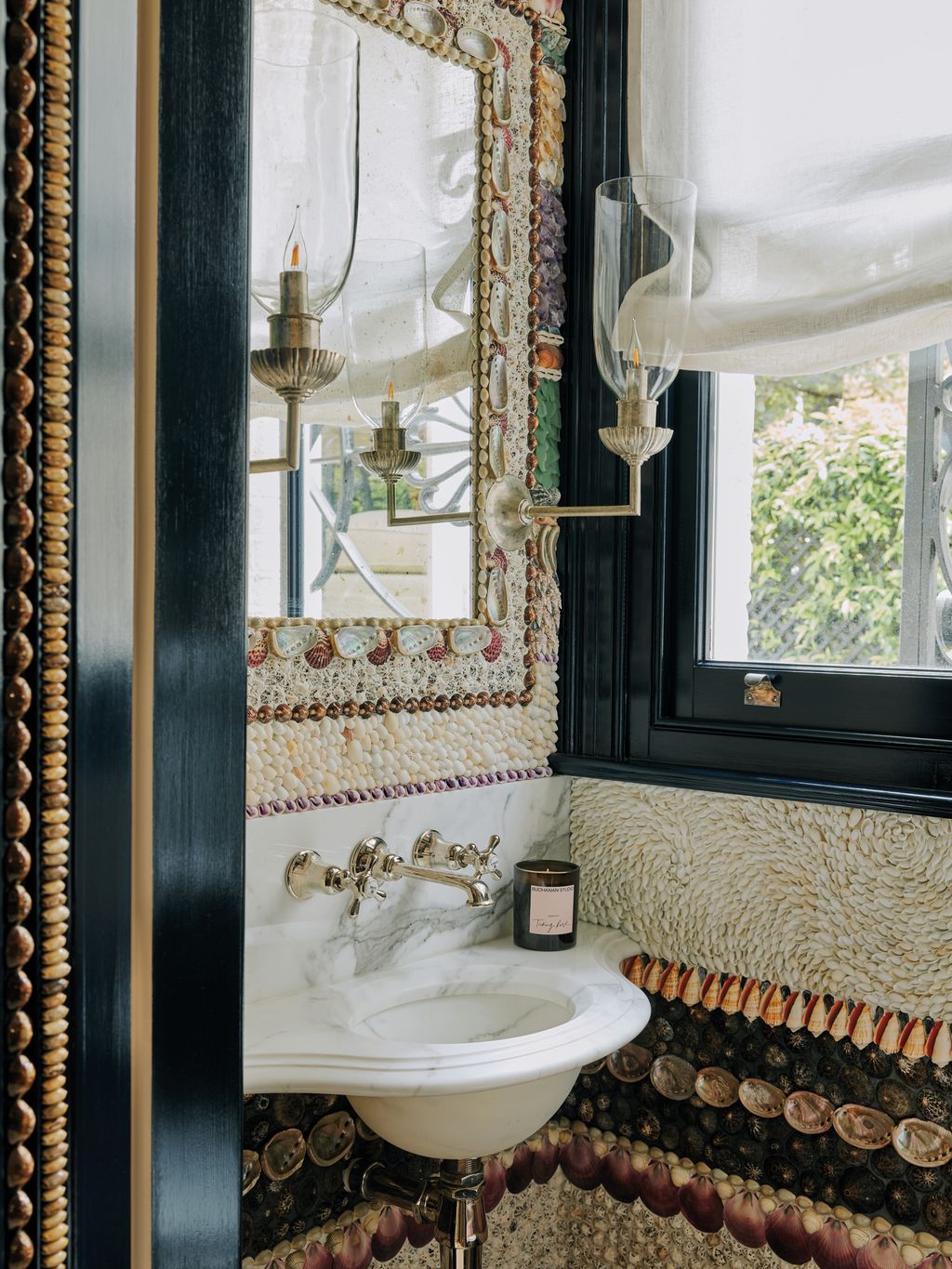
1/17Shell artist Katherine Lloyd worked closely with Buchanan Studio on the design for this cloakroom in a cleverly reimagined Belgravia townhouse. Small rooms like this provide the perfect opportunity for intricate shell designs, which could prove a little overpowering in a larger space. Think of it as a fresh, contemporary take on the traditional garden shell grotto.
 © Anna Malmberg2/17
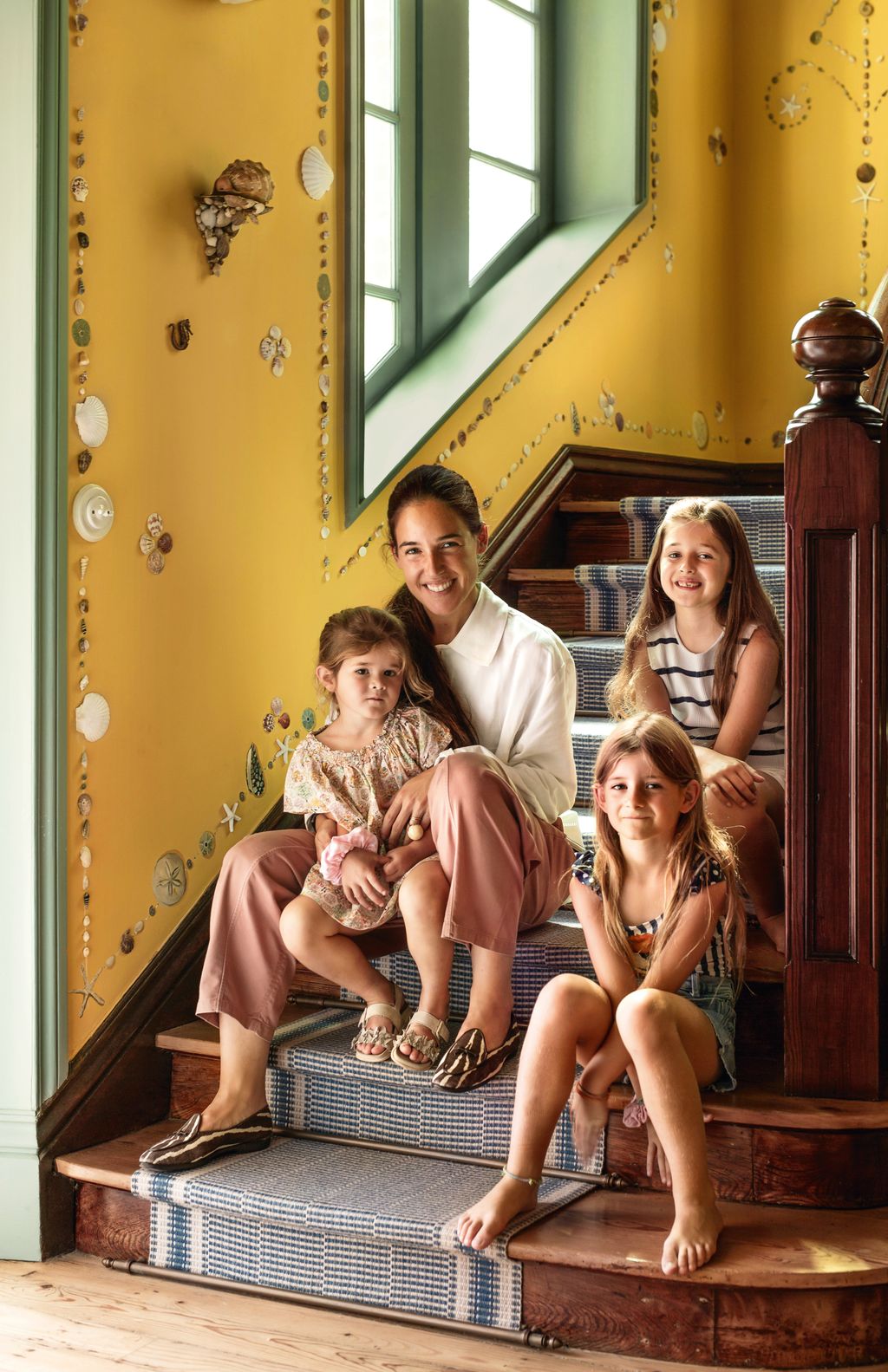
This shell-encrusted staircase wall is the work of muralist Johina García-Concheso for designer Marta de la Rica’s holiday home in France. A playful and pretty reinterpretation of a standard seaside motif, it enlivens a space that Marta felt was completely dominated by the ‘heavy and almost tough’ personality of the original woodwork. She admits it is slightly vulnerable to damage in a busy household, but she enjoys getting her glue gun out and reattaching any shells that come loose.
 Jerome Galland3/17
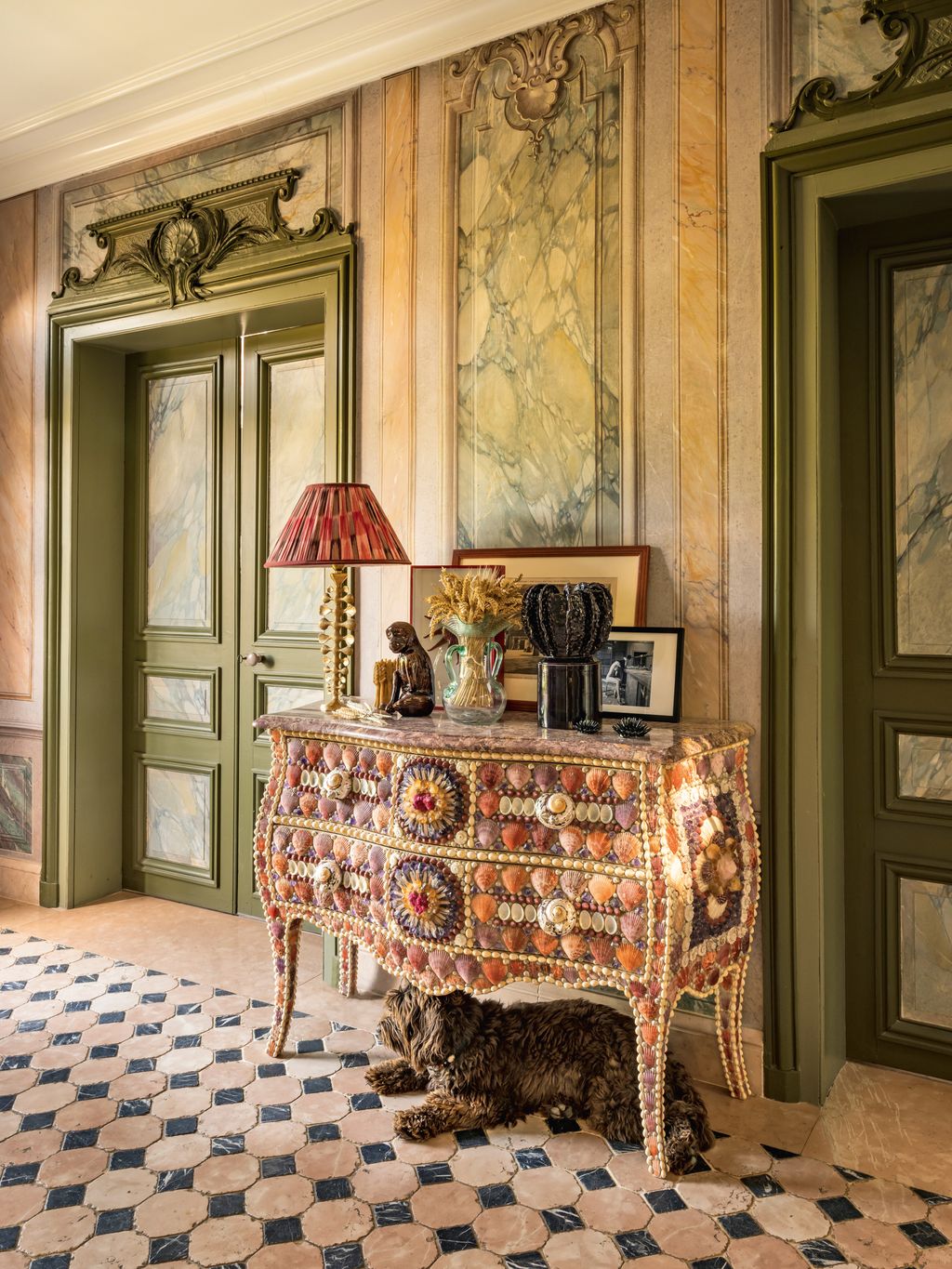
Designer Laura Gonzalez’s Normandy house is filled with clever imaginative decorating ideas. This antique shellwork commode in the hall was chosen to resonate with the existing trompe l’oeil marble wall panels and the new marble floor.
 Mark Anthony Fox4/17
Though shellwork pieces are often seen in charmingly eclectic interiors, alongside lots of other interesting finds, they can have real impact in a more pared-back space. Here, in a Cotswold barn transformed by mother-and-daughter design duo Laura and Gracy Berkeley-Hawkes, a shellwork chair snapped up at an auction of the Belgian antique dealer Peter de Grande’s stock serves as an eye-catching focal point in this serene hallway. It is so delicate that they had to drive to Bruges to collect it, and swathed it in duvets for the ride home.


 Kensington Leverne5/17
Hotels can often provide a source of fantastical inspiration for our homes. In the grounds of the Talbot Hotel in Malton, North Yorkshire, guests can take refuge in this magical shell house, created by gardener Charlie Day. Furnished with stylish outdoor furniture and a light by Beata Heuman, it has a cool contemporary feel as well as an old-world wonder.
 Christopher Horwood6/17
Former House & Garden editor Hatta Byng chose a Porta Romana ‘Scallop Shell’ light for the wall above this bathtub, which is cleverly hidden in a cupboard in one of the bedrooms. It looks incredibly elegant set against the pale-painted panelling. The light source is hidden within the curve of the sconce, which results in wonderfully soft, diffused glow, perfect for a bedroom or bathroom.
 Tim Beddow7/17
This cottage on the Hebridean island of Jura belongs to Annabel Astor, the creative director and founder of OKA, whose husband’s grandmother Nancy Astor bought the property in 1918. Annabel’s colleague Sue Jones has decorated the fireplace with mosaic-like patterns of seashells. ‘Each of my designs is symmetrical,’ says Sue, ‘but the pattern often developed as I went along and, inevitably, became more ambitious.’
 Tim Beddow8/17
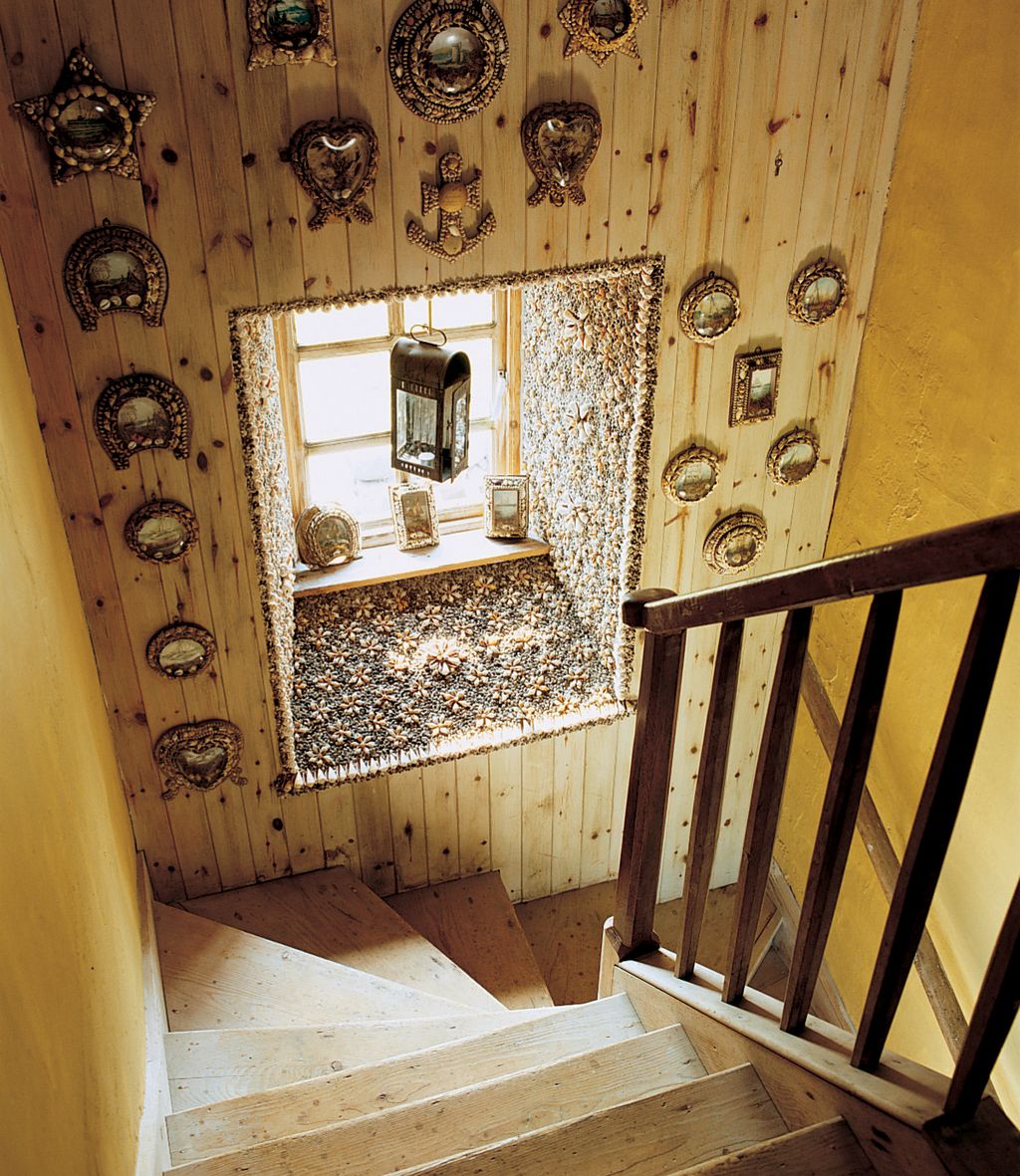
The staircase of Annabel Astor’s Scottish bothy has also been enlivened by one of Sue Jones’ intricate creations. It is surrounded by a collection of 19th-century sailor’s Valentines, also made from shells. For the window embrasure, she used two varieties of shell to create a flower pattern.


 Simon McBride9/17
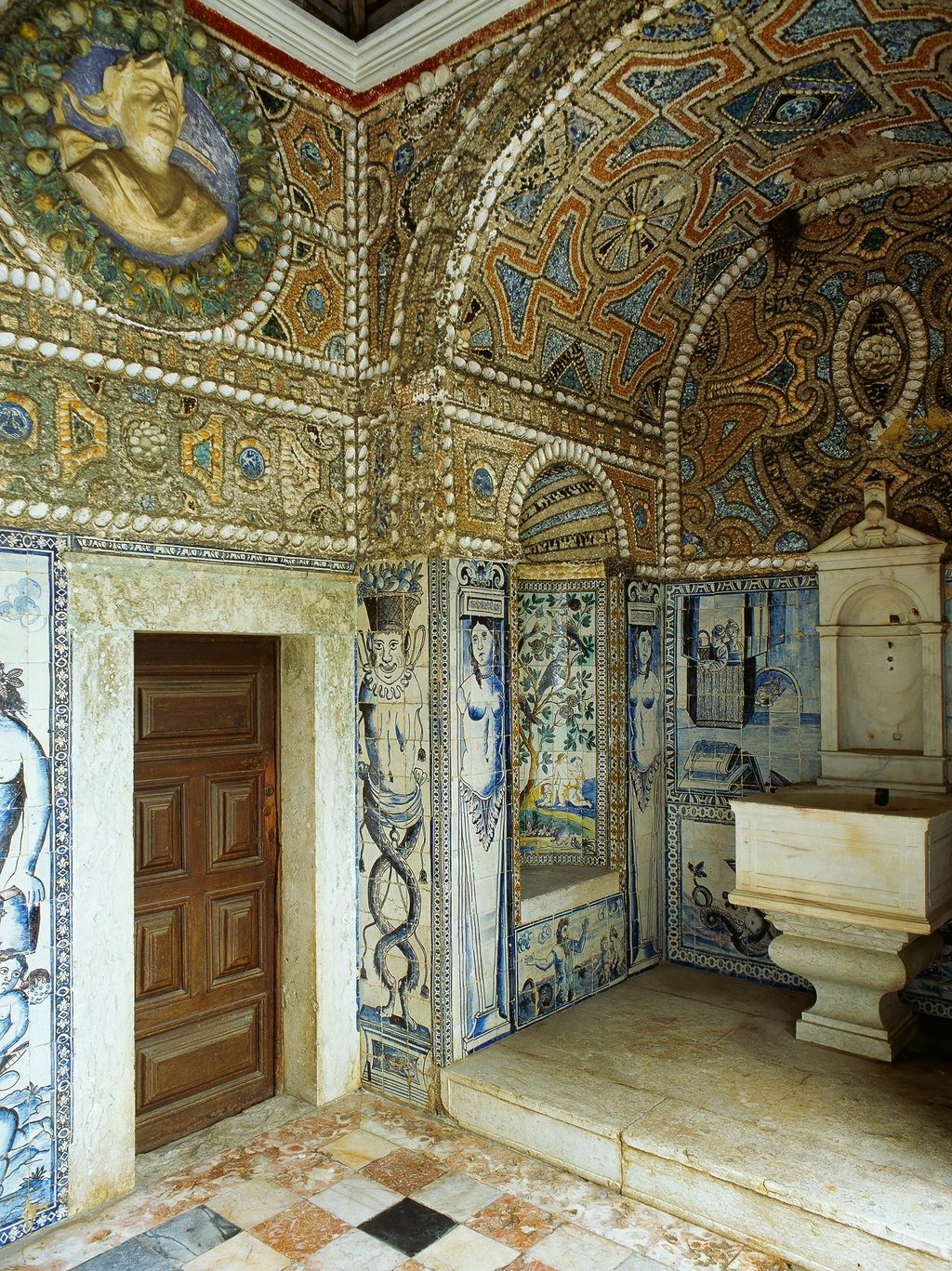
At Lisbon’s Palácio Fronteira, the entrance to chapel has walls encrusted with shells, stones and even plates left over from royal banquets some 400 years ago. In Portugal at that time, it was considered disrespectful for anyone to reuse crockery off which the King had dined, and here at Fronteira it has been given a creative second life.
 James McDonald10/17
Having bought the house next door to her west London townhouse, chef Lindsay Elder called in interior designer Kate Guinness to gently layer styles and eras, filling the space with colour and pattern. The ground floor sitting room features a whimsical, handmade shell mirror by Katharine Lloyd, which sings against walls painted in Papers and Paints’ ‘Empire Red’.
 Simon Upton11/17
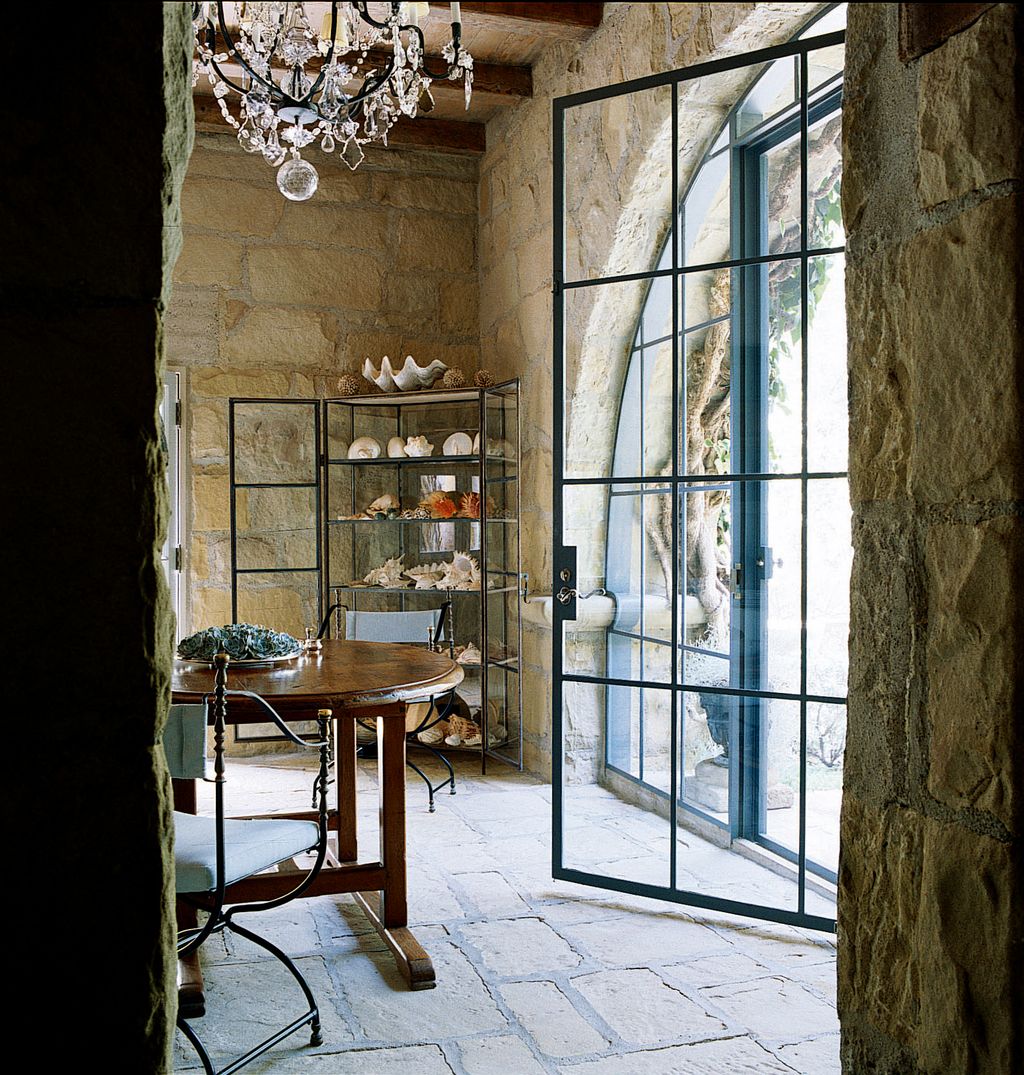
John Saladino’s Italian-style villa, overlooking the Pacific Ocean in California, features shells and shell pieces throughout, but the most impressive example is this glass cabinet in the breakfast room filled with numerous finds.
 Eva Nemeth12/17
The shell house at Belcombe Court in Wiltshire, originally featured in the December 2020 issue of House & Garden, was created by the Norfolk-based specialist artist Blott Kerr-Wilson. ‘I’m not interested in individual shells,’ she explains. ‘Shells are my material – it’s what I can do with them that counts.’ If you are lucky enough to have a large garden with room for a little folly like this, you might like to consider experimenting with a simple shell design yourself or commissioning an artist like Blott.
Blott’s studio has also been featured in House & Garden, offering a fascinating glimpse into her artistic process and inspiration.


 Yuki Sugiura13/17
In the kitchen of Matilda Goad’s London home, a giant ceramic clam shell from her own collection is used as a fruit bowl. An interesting, sculptural take on the decorative shell trend.
 Alexander James14/17
A shellwork mirror by Tess Morley brings a wonderfully distinctive touch to this bathroom in a Bahamas beach house designed by John McCall. This feels particularly appropriate in the coastal setting and shows just how well shell pieces can work in contemporary interiors.
 Paul Massey15/17
Designer Emma Grant has employed a very pretty shell detail border in the large living room of her Primrose Hill flat. Along the dado rail, she has placed equally spaced pink-hued scallop shells. The dado rail runs throughout the entire room, as does the shell decoration. It is simple yet incredibly effective.
 Yuki Sugiura16/17
If you’re a confident DIYer, or a budding artist, you could try creating your own shellwork centrepiece at home. Our decoration editors created this fire surround themselves for a seaside-themed shoot. They used wood panels, gravel, glue and shells of all kinds – everything from oysters to conches – to create this elaborate work of art. Just be sure to spend some time washing and soaking the oyster shells if using them to avoid an unpleasant smell! The 1970s seashell-decorated wood cabinet on the right was sourced from antique dealer Hilary Batstone.


 Dean Hearne17/17
For a more subtle and affordable way to include shells in your interiors, take your cue from Olympia and Ariadne Irving’s vibrant flat in London. They have decorated the sitting room mantelpiece with shells and shards of coral that they have picked up on their travels. This is a lovely way to remember past trips, and the display can evolve organically over time.

Comments
Back to Top


