

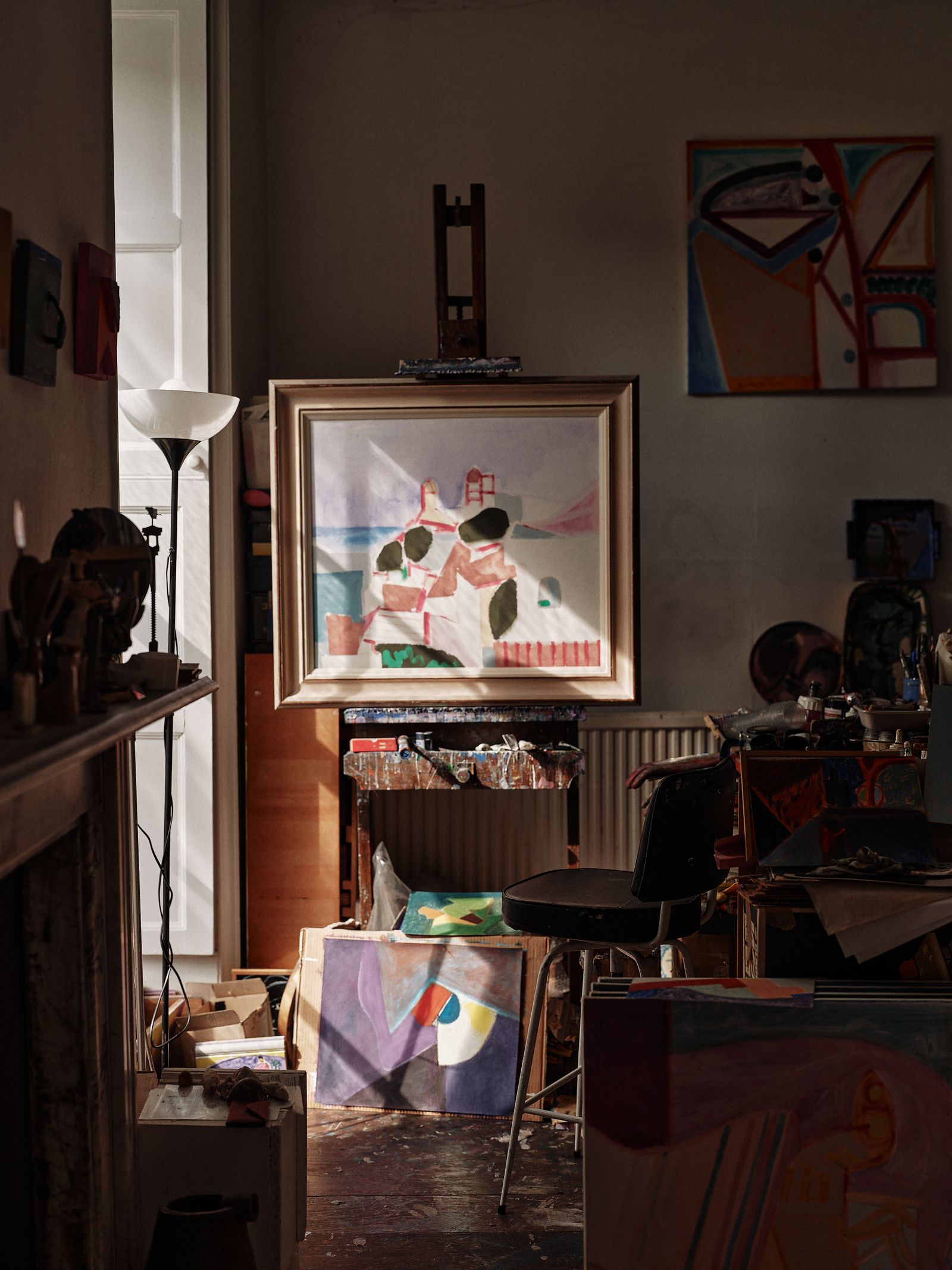
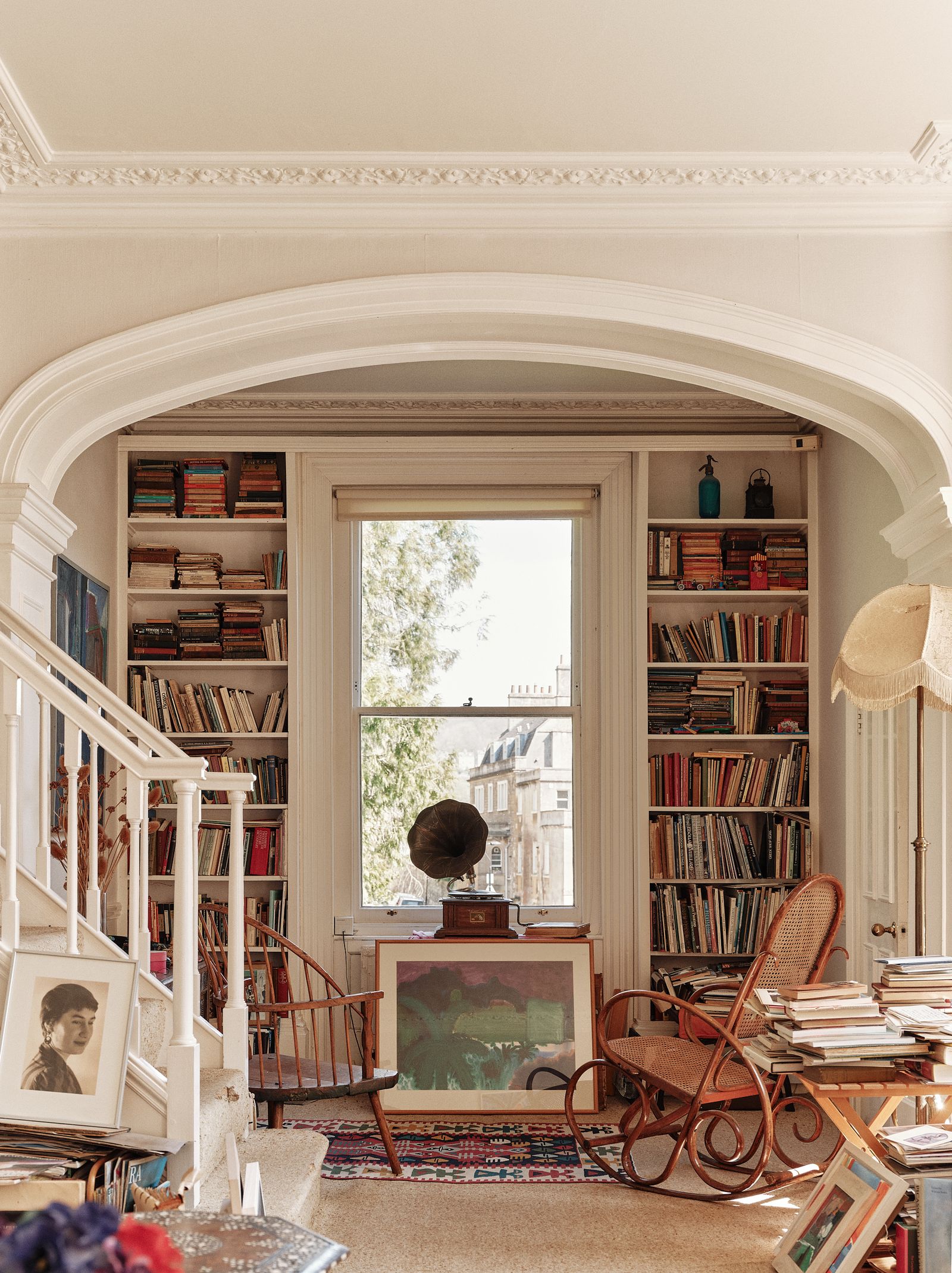
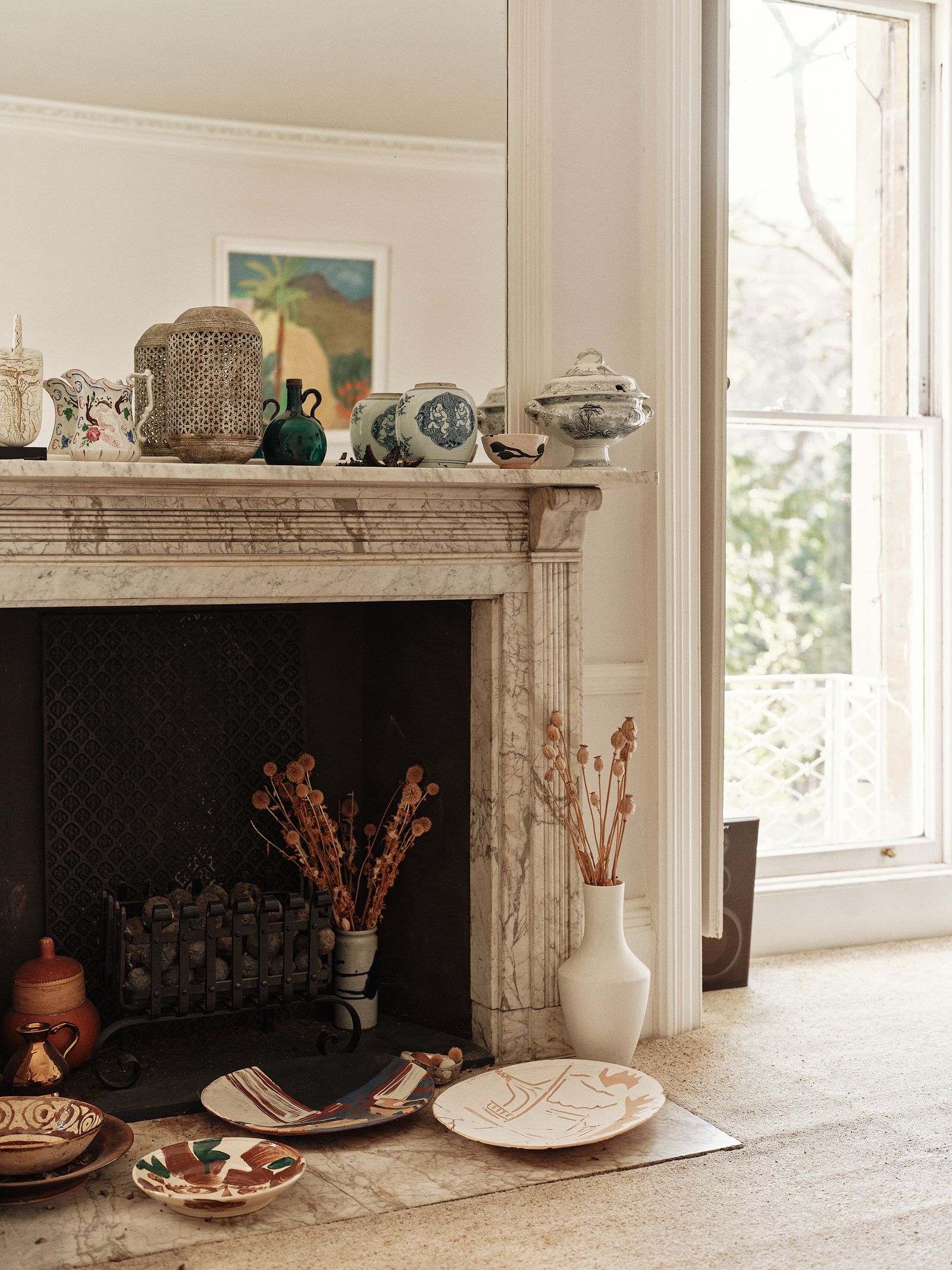
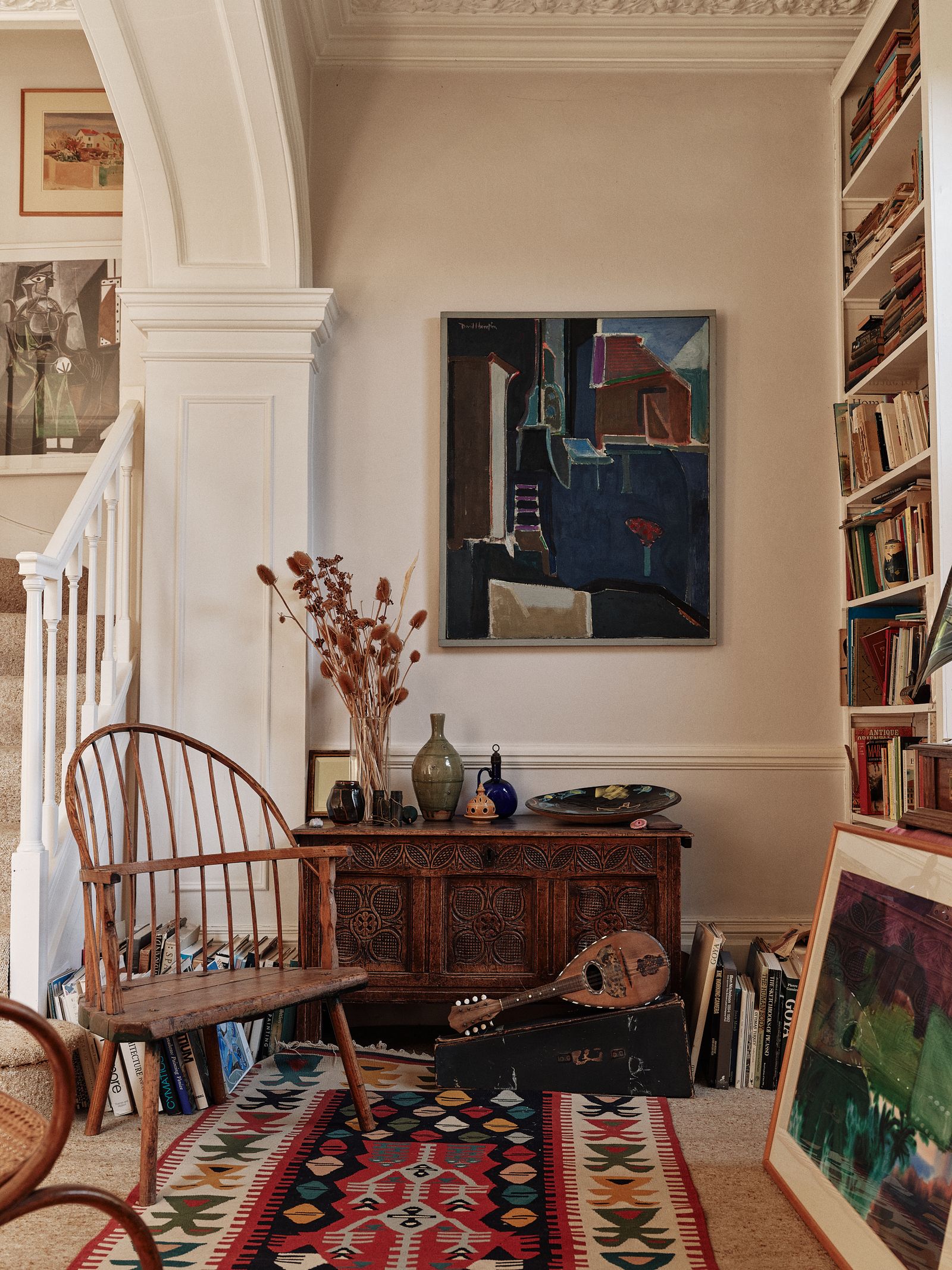
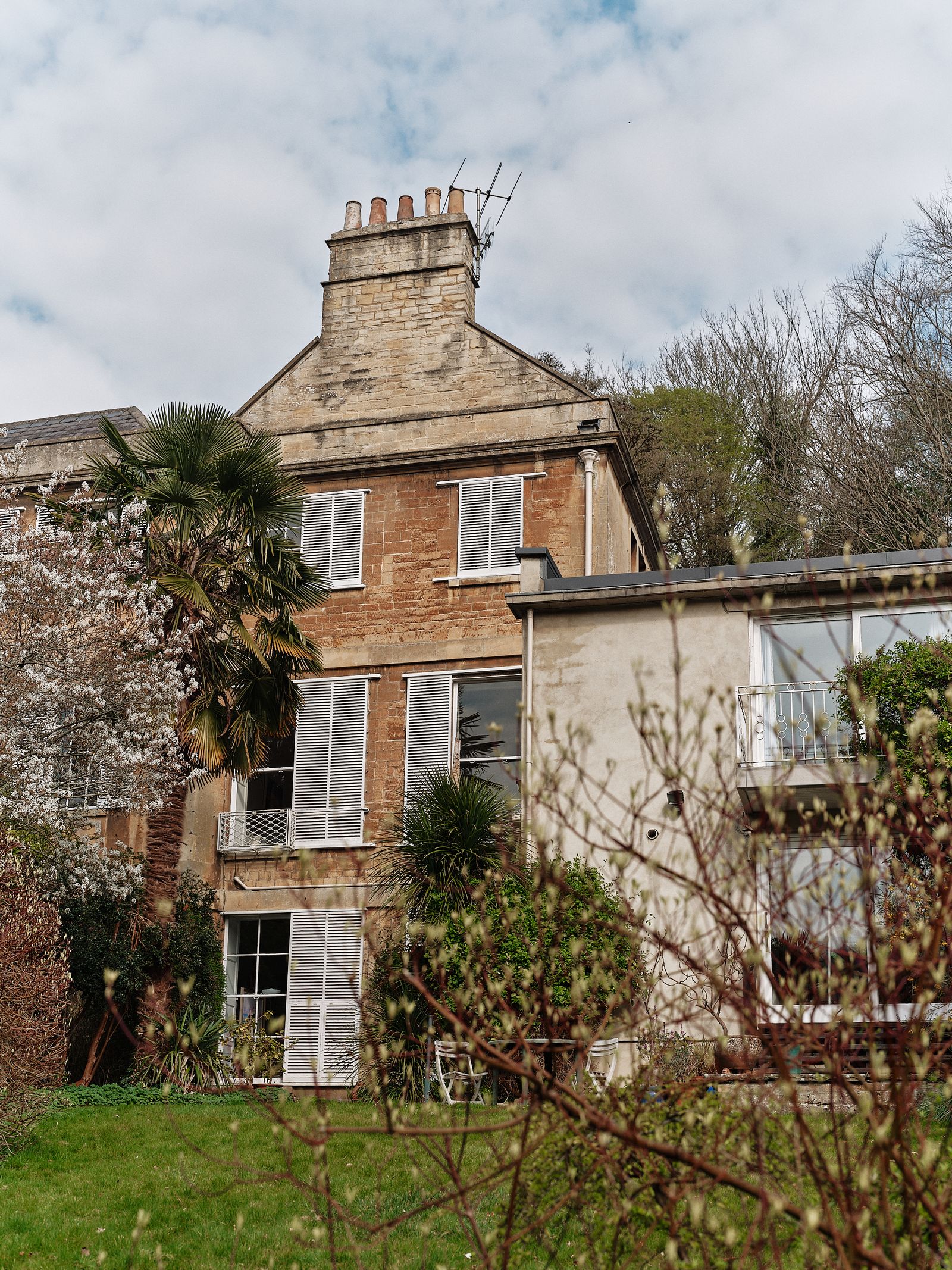
You’d be forgiven for thinking that David Hampton had lived in his Bath townhouse for his entire life, such is the accumulation of canvases, sculptures and objets d’art that the artist has assembled over the years. Impasto palettes of dried oil balance precariously on chairs and marble fireplaces, and high-ceilinged Georgian rooms full of books, ceramics and wicker furniture testify a lifetime of creative endeavour and collecting – and yet Hampton actually only settled in Bath later in life, having retired by way of London and the Cote d’Azur. Hampton and his late wife Joan found the house after their purchase of a different place serendipitously fell through. “We couldn’t believe we were able to live in such a beautiful place,” he says.
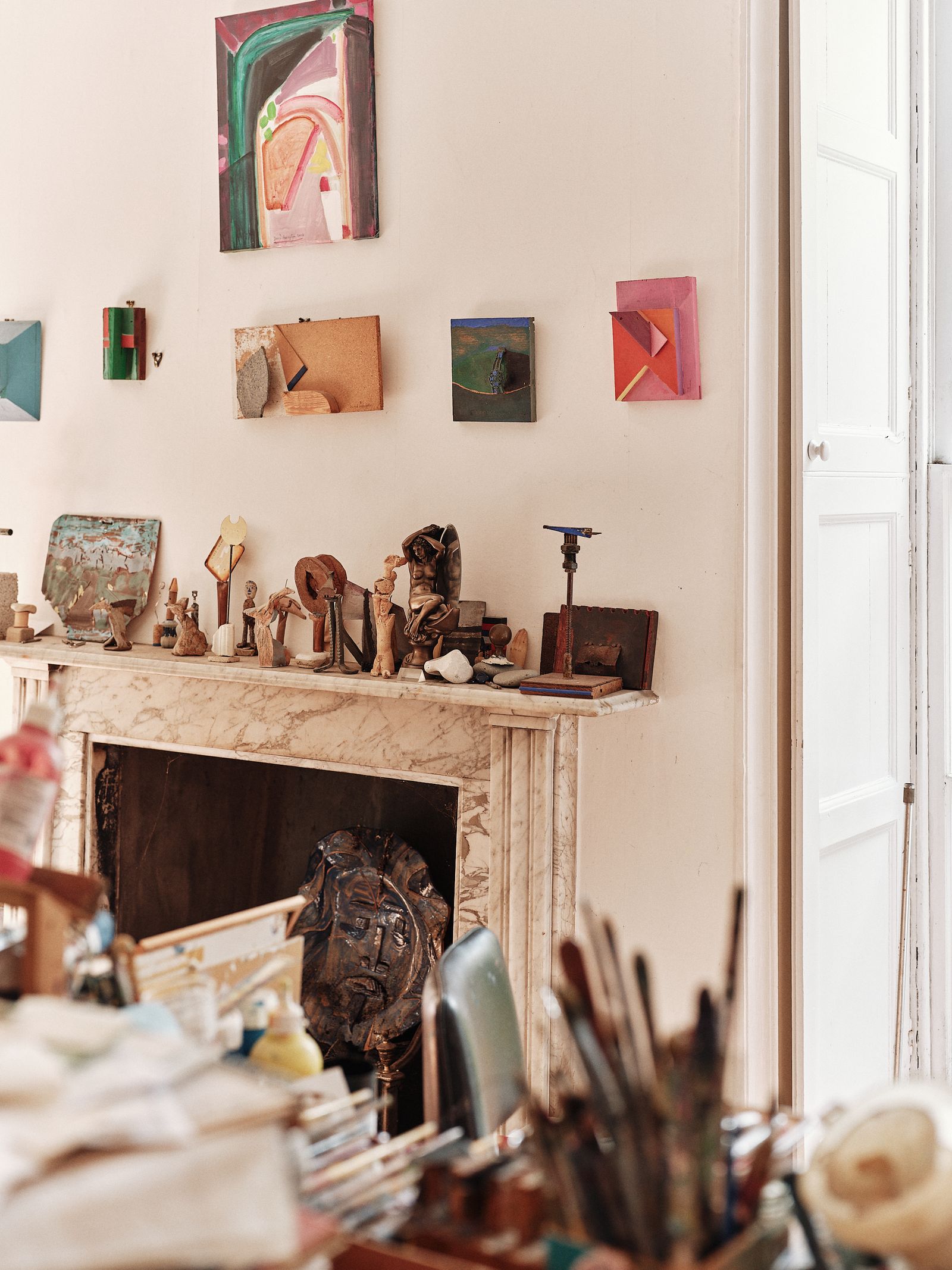
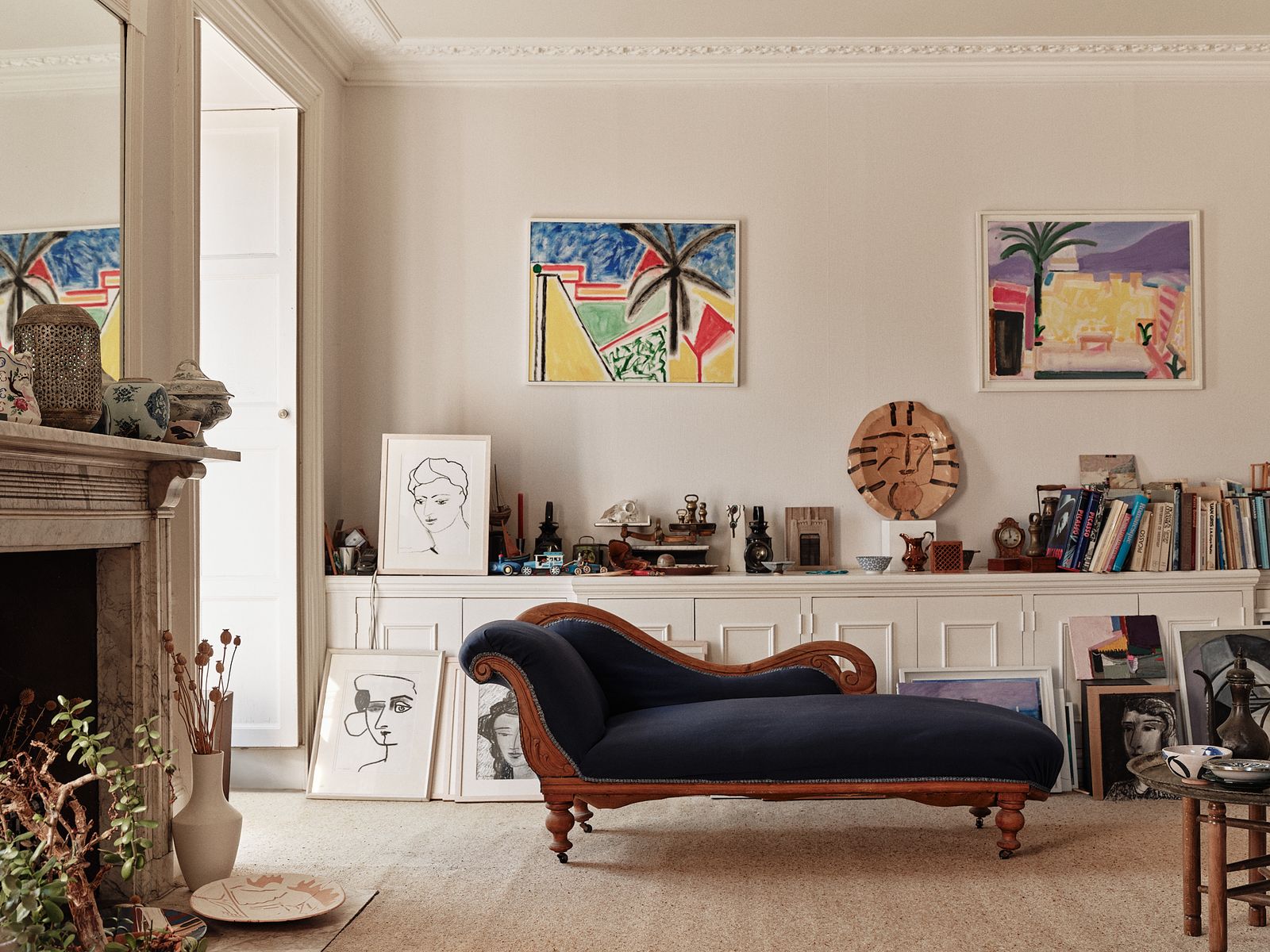
To step into Hampton’s house is to discover a cornucopia of 20th-century art – think Kettle’s Yard by way of the sumptuosity of Delacroix’s The Death of Sardanapalus – with every pile of paintings holding a potential modernist treasure. Cubist landscapes and still lives hang on the walls, though Hampton says that colour, not form, is the most essential consideration in his work. If Hampton dresses a little like Picasso – blue shirt, knotted red kerchief, straw boater – it is Matisse who is his true guiding light. “If I was to choose a painting to hang on my wall I would most likely choose Matisse,” Hampton says, “as his work is more serene.”
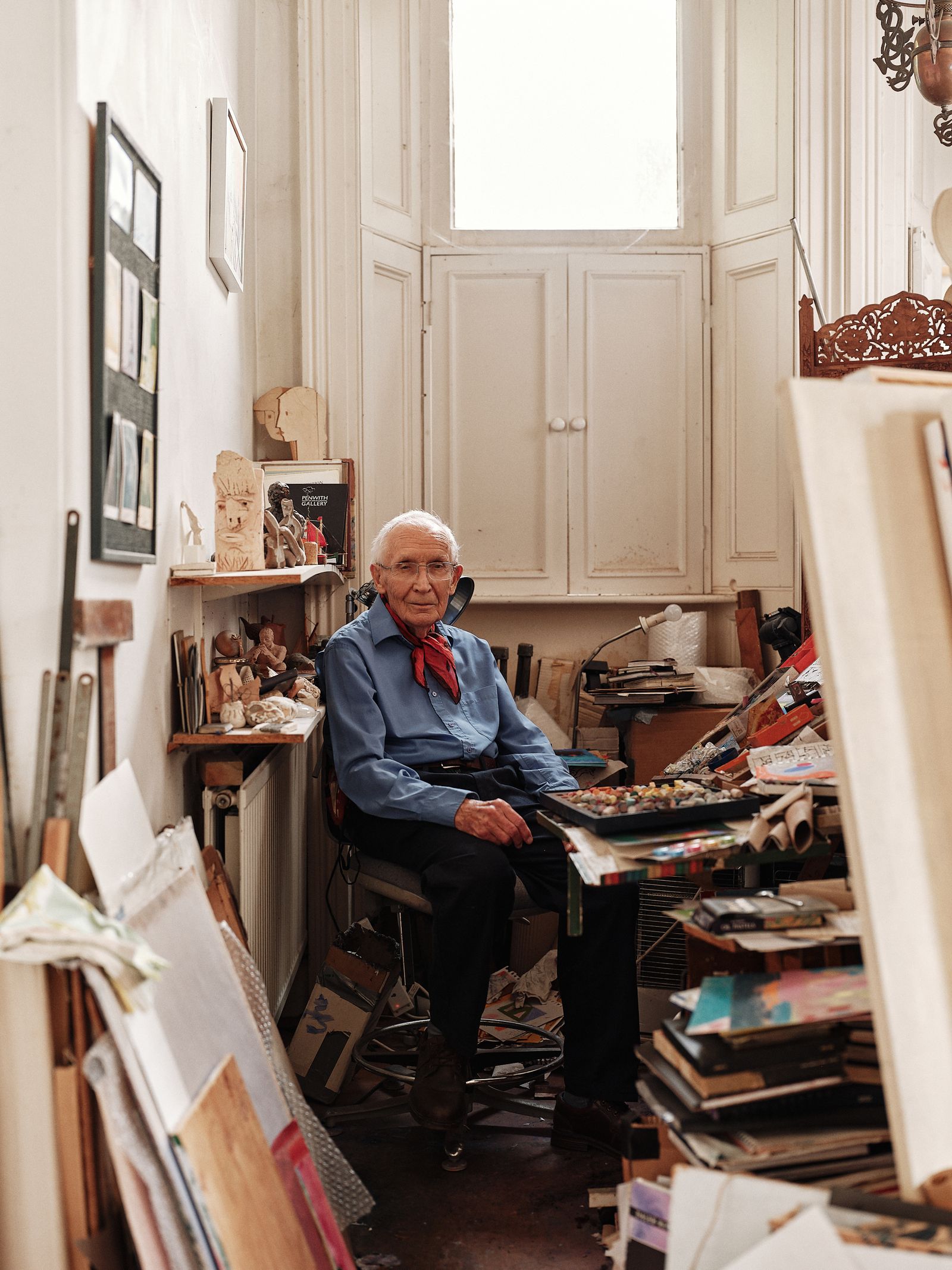
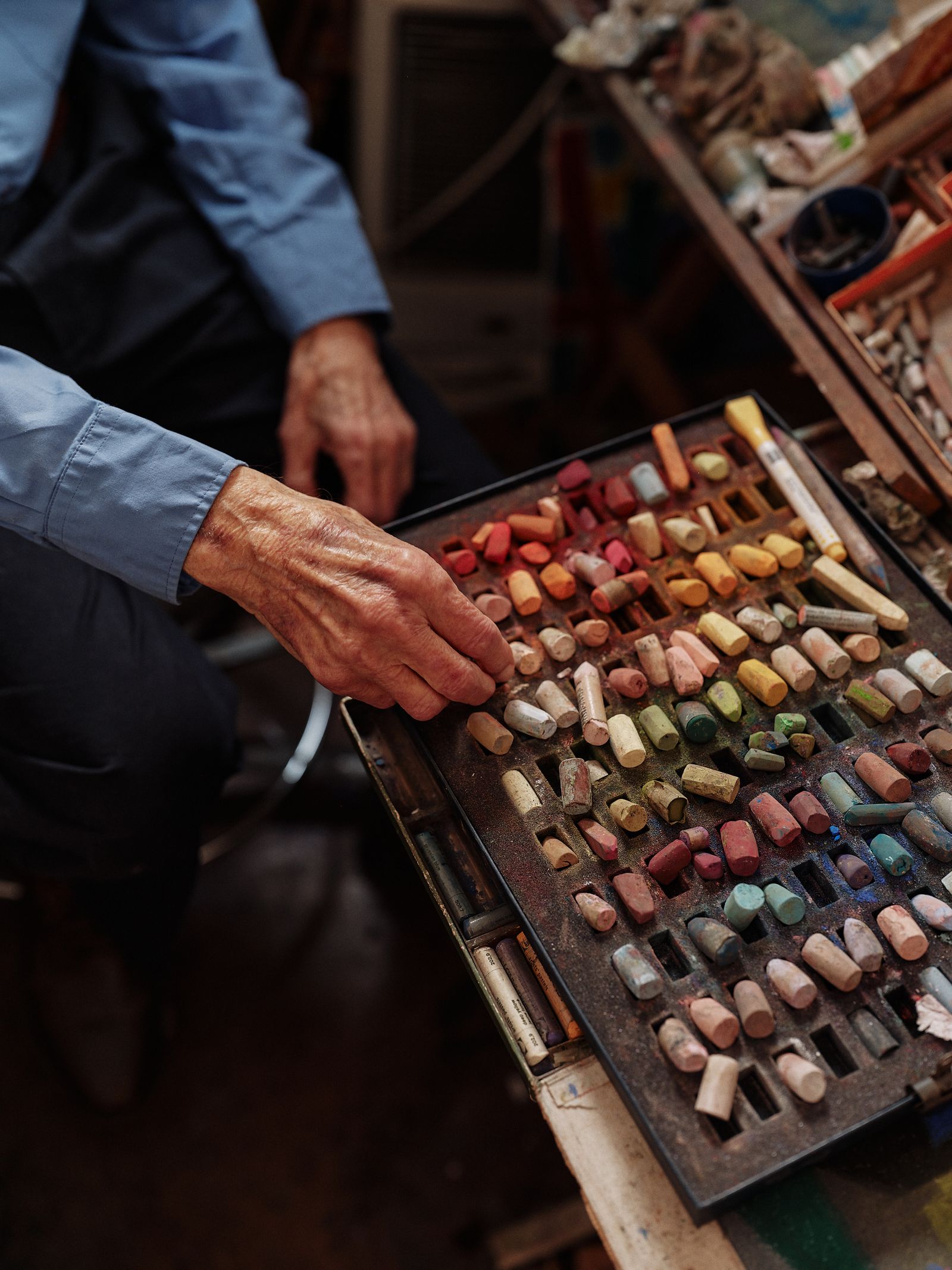
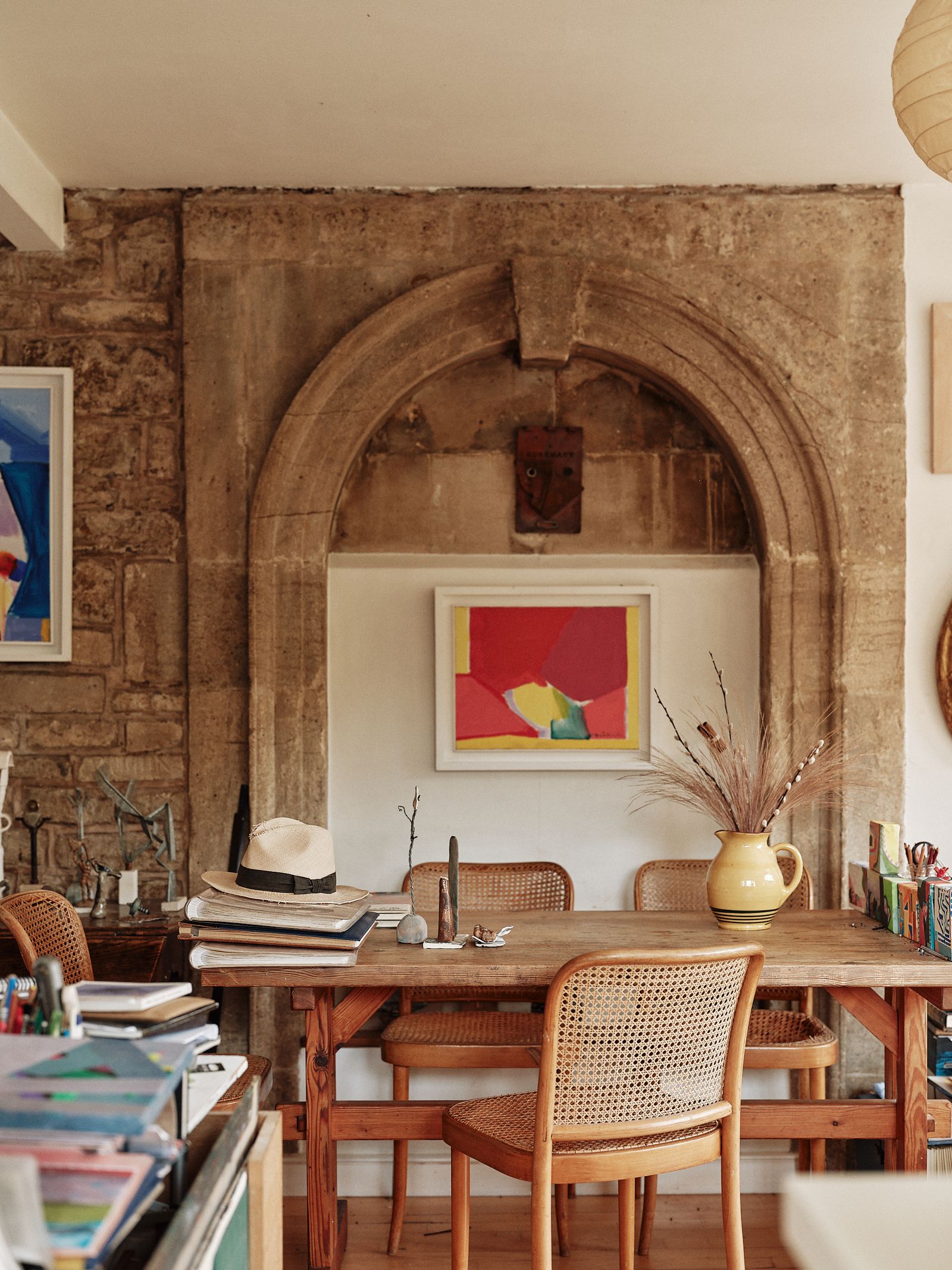
That is, perhaps, a somewhat ironic choice of word. Creative energy, visual complexity and formal experimentation are all phrases that spring to mind in Hampton’s house; serenity might feature a little further down on the list. Nonetheless, for Hampton the house remains a haven in which he has continued to work even as he approaches 100 years old. His studio is laid out according to a sort of organised chaos, and Hampton knows where everything is.
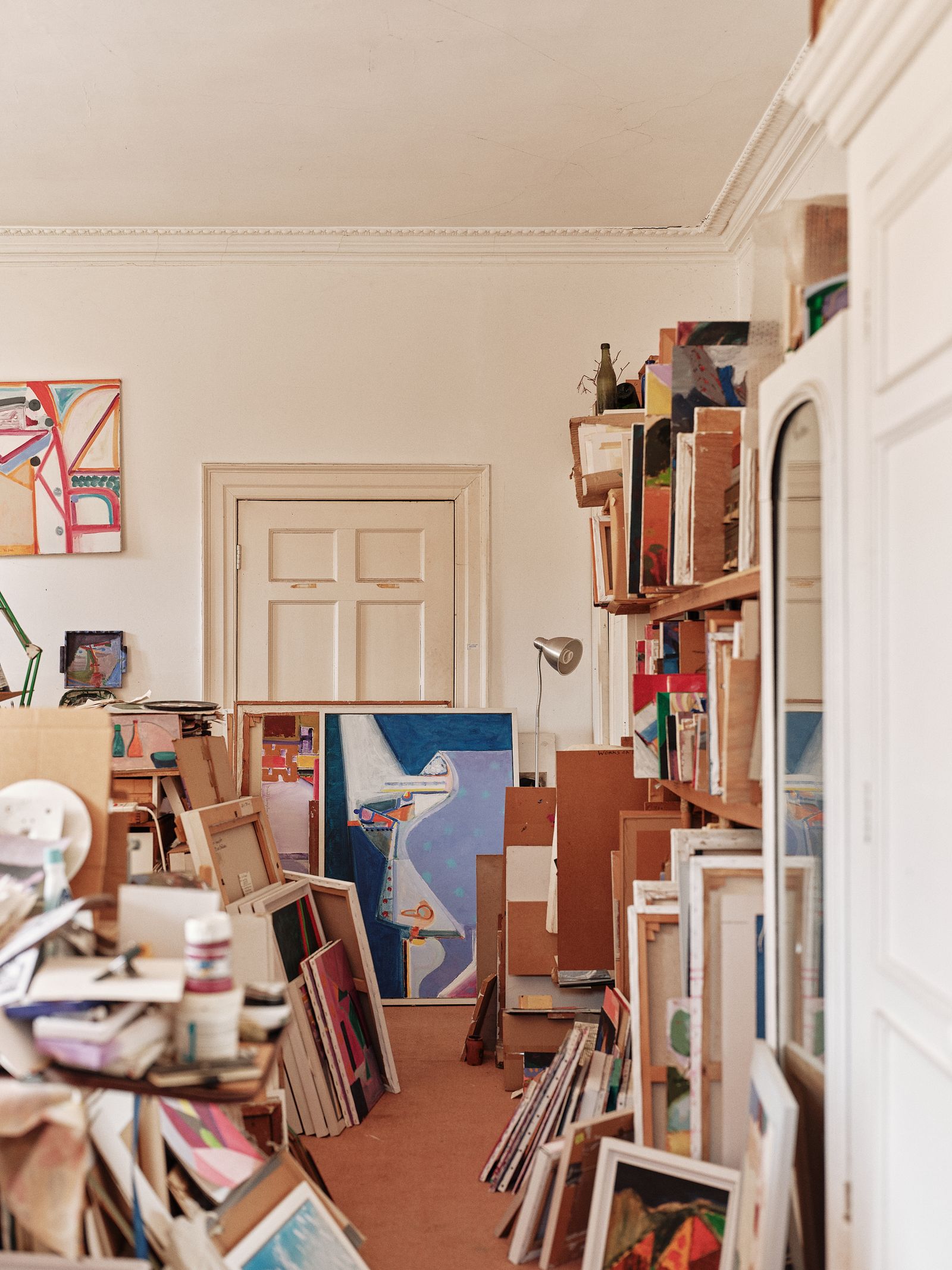
Throughout, there are reminders and artefacts from a life lived over a full century. Hampton’s son-in-law Duncan, a professional gardener, planted palm trees and shrubs in the garden some 35 years ago; the view of the palms is a motif that has featured in Hampton’s paintings ever since. A mandolin, a favourite object in the house, was bought from an antique shop in Bath for £20. “When I saw it I thought of Corot’s wonderful paintings of a women with a mandolin,” Hampton explains. A chaise longue, meanwhile, travelled from London with Hampton and his wife when they moved to the Southwest. “Joan used to lie down on it with my daughter Sophie when she was a baby. Eventually the fabric wore out and we had it reupholstered. I preferred the old fabric.”
Hampton was born in 1926 and brought up in London. His grandfather was Herbert Hampton, a notable Victorian sculptor, and his father William Hampton was a painter and restorer of paintings, though the family did not live a hugely luxurious life: two rooms between six people, no hot water, an outdoor lavatory. When war broke out, the teenage David was first evacuated, then later enlisted and sent to Palestine. After the war, he was posted to Egypt where – surely only natural for a would-be third-generation artist – he began painting on a prevocational national service course.
On his return to Britain, Hampton continued to paint on an ex-serviceman’s grant at Kingston Art School, where he met Joan and a friend called Denis Higbee, who would go on to design furniture for Terence Conran. Higbee introduced Hampton to the work of Picasso and Matisse, and abstract painting as a movement; conversely the head of painting at Kingston, John Newton, was “a great admirer” of the figurative painter Ruskin Spear, says Hampton. Spear would become another early influence.
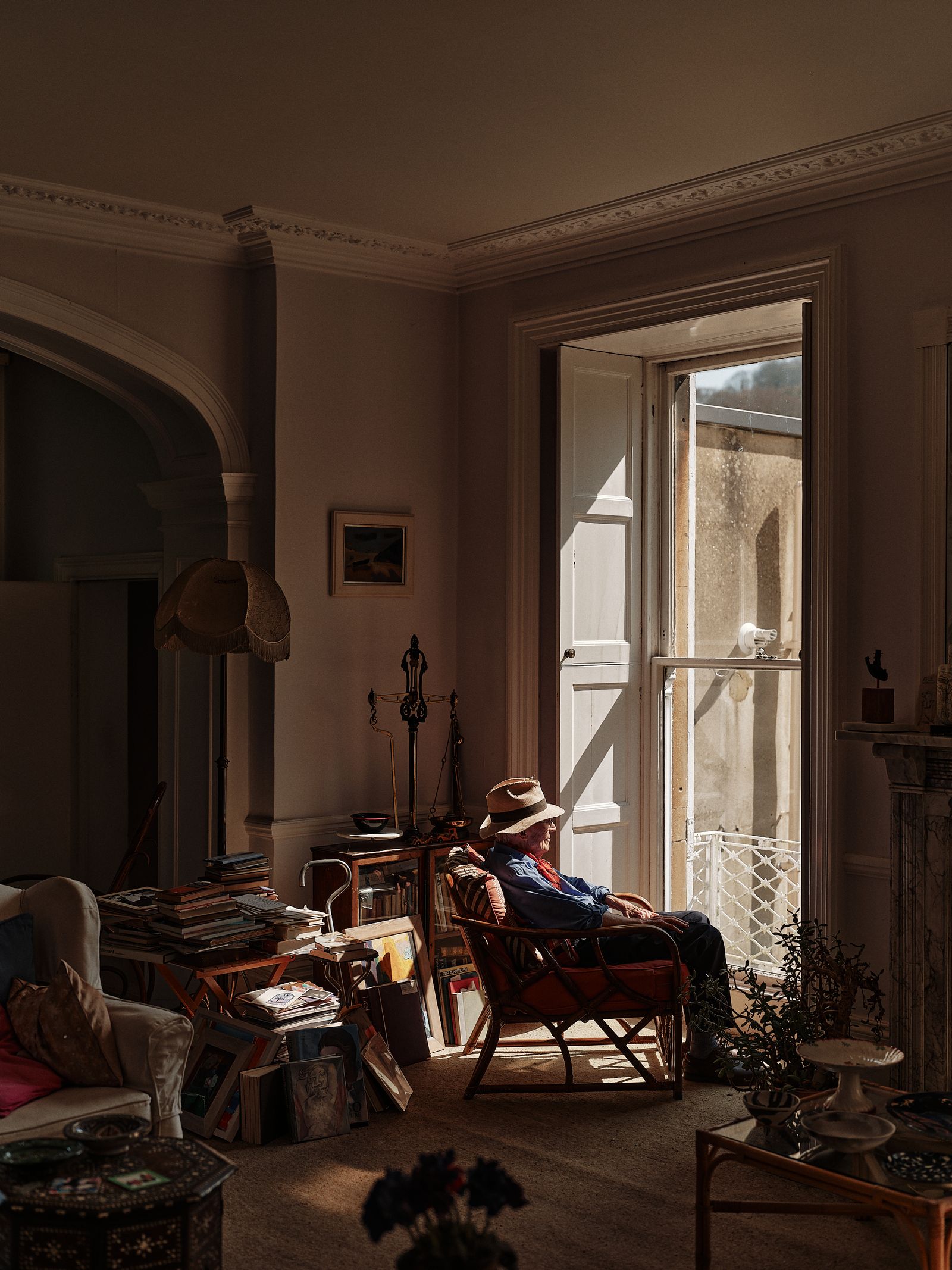
David studied at the Royal College of Art, before both Hamptons became teachers in London. Professional art took a back seat to teaching, but Hampton says that over the course of his life, he has never ceased creating work. He didn’t stop when Joan, also a prolific and significant painter, died in 2004 after 52 years of marriage, though her death did change how he lived in the house. Gradually, he swapped days spent at exhibitions in London or making ceramics at Bath Art College for painting or drawing in pastels in his home studio or at the kitchen table. “I used to stand up to paint and could get back from my work to look at it,” says Hampton. “But I can’t stand for long now.”
Hampton is proof that longevity has its own qualities; that a life spent creating can generate its own deep meaning. In 2023, a chance encounter with his neighbours Kirstie and Paul Jackson led to representation by the couple’s Pencil Tree Gallery, and an exhibition followed. At 98, Hampton gave his first ever interview – to the Guardian, no less – in which he explained how he felt that his creative endeavour, as well as his interests in philosophy and poetry, have kept him mentally sharp for so many decades (“You can’t carry a painting around with you,” Hampton told the newspaper, “but if you’re feeling low you can always recite a Shakespeare sonnet”). This July, he exhibited a retrospective at Pencil Tree.
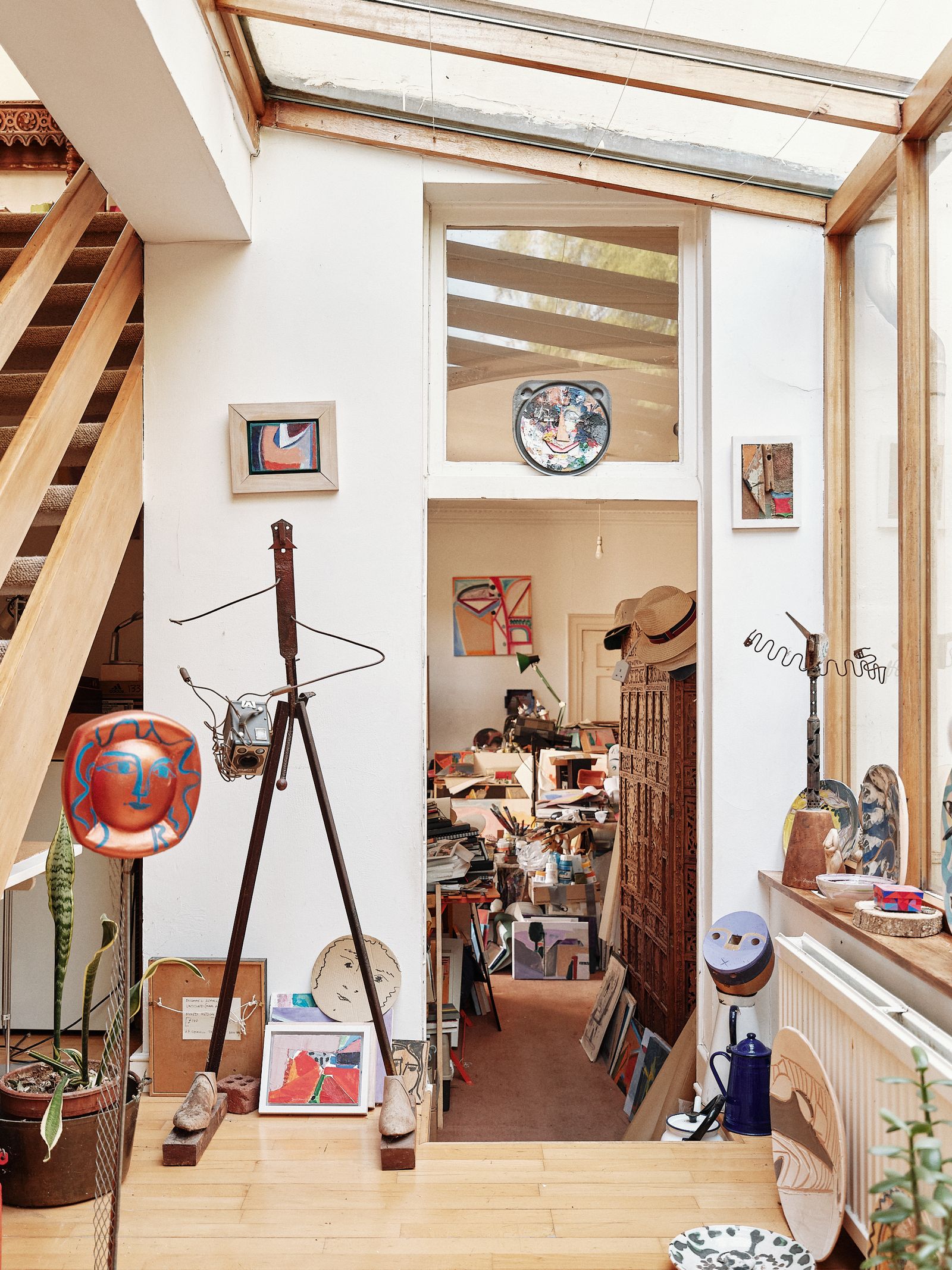
“I always stop to talk to people,” Hampton explains, noting that it is engagement with the world around him that keeps him vitalised. Just as essential is the creativity the house engenders. Living to a great age, and keeping the paintings, ceramics and pastels all around him in his home means that in a sense, he is never alone. “I enjoy being surrounded by the memories.
David Hampton passed away at the end of July, aged 99
David Hampton: A Retrospective is open now at Pencil Tree Gallery, 5 Cleveland Terrace, Bath, BA1 5DF, featuring paintings from the artist's personal collection created between 1950 and 2010. Open online and by appointment in the gallery, please call 07979 306079.


