


Taking on the immense challenge of bringing to life the world of a well-loved story from page to screen is no mean feat, but it is one that production designer James Merifield is accustomed to. Having previously helmed the design of adaptations of Brighton Rock, The Guernsey Literary & Potato Peel Pie Society and the 2008 Sense & Sensibility BBC series, James's latest job was to visualise the universe of Richard Osman's bestseller The Thursday Murder Club. With millions of readers eagerly waiting to see how the book they've imagined in their head has been transplanted to the screen, perhaps the scale of the film made it a particularly daunting one to embark on?
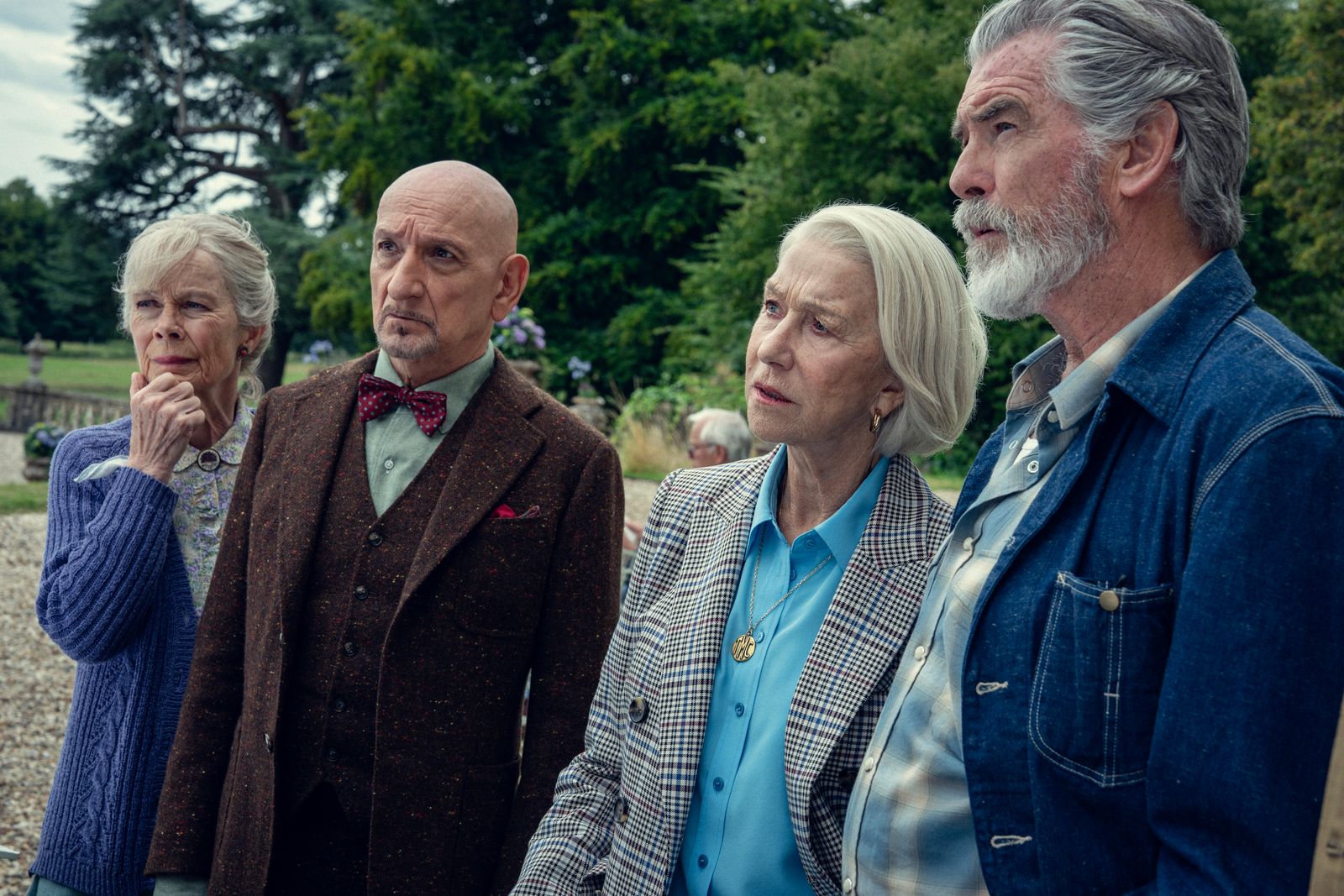
‘Yes and no’, says James. ‘In one respect, the bonus of having such a successful story to tell is that it's already tried and tested in so many ways. It's going to have an audience come what may, and we hope, obviously, that we've given good due diligence and done justice to the original book.’ Having the novel to work from as well as the script allowed for more detail and depth to be picked out: ‘you had an opportunity to read into the characters more, because Richard writes very much in character and plot, and obviously then one deviates in order to make it filmic.’ On that note, the personalities of the four main characters (played by Helen Mirren, Pierce Brosnan, Celia Imrie and Ben Kingsley) very much informed the look of four key sets: their apartments in the luxury care home, Cooper's Chase. Read on for the inside scoop on how and where James and his team crafted these sets and the surrounding cinematic world of The Thursday Murder Club.
The Thursday Murder Club filming locations
Englefield Estate in Berkshire (Cooper's Chase)
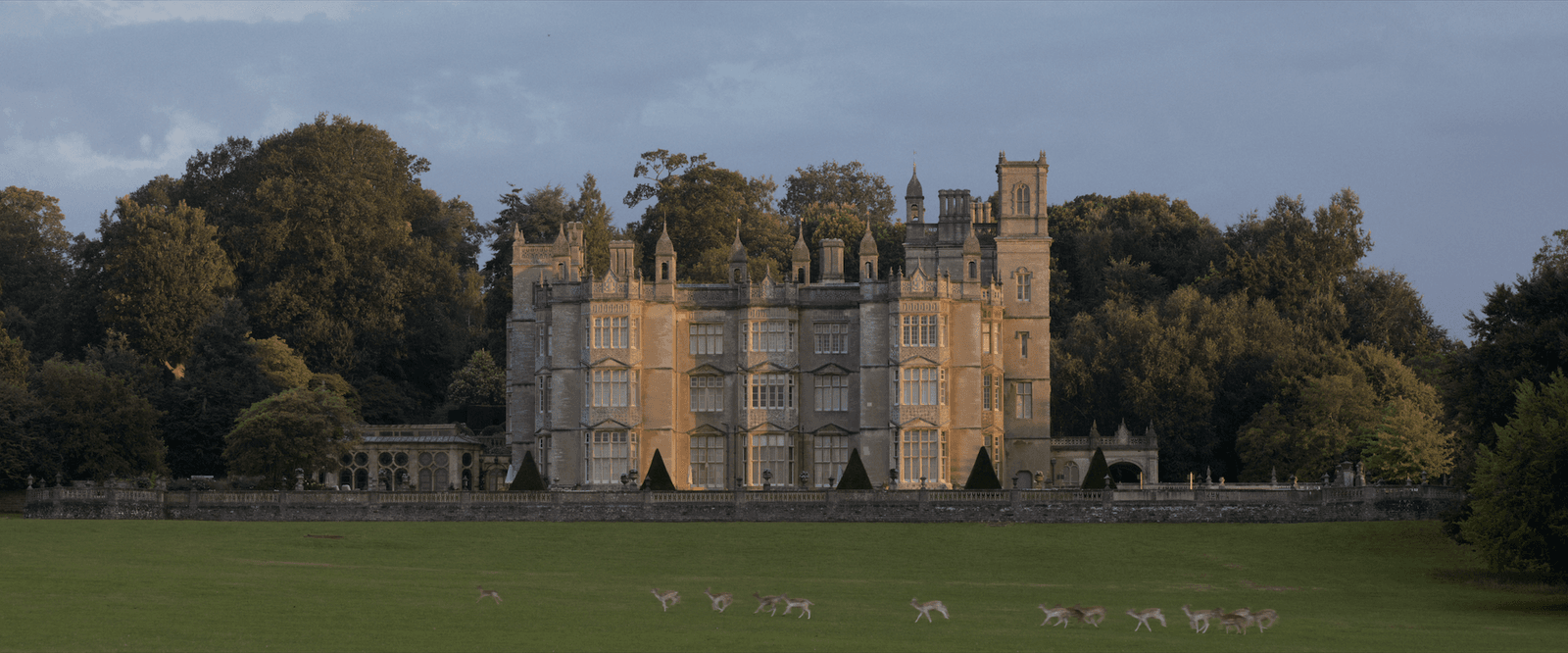
Englefield House in Berkshire (which was recently used in Lena Dunham's Too Much) was chosen by James as the exterior of Cooper's Chase, where much of the story plays out. ‘It's a place I'd originally thought of when I was reading the film script… it works in terms of scale, in terms of architectural beauty, in terms of relationship to the graveyard, the church and so on’, he explains. The graveyard, where a skeleton is discovered, was built in the surrounding grounds at Englefield; so that they didn't damage any tree roots ‘we had a botanist there telling us where we could actually dig’, he adds.
As well as the exterior, several parts of the inside of the Elizabethan country house were also used for filming scenes in the library, the dining room, the stairs and the corridors that linked the apartments.
.jpeg)
Englefield Estate (The Jigsaw Room)
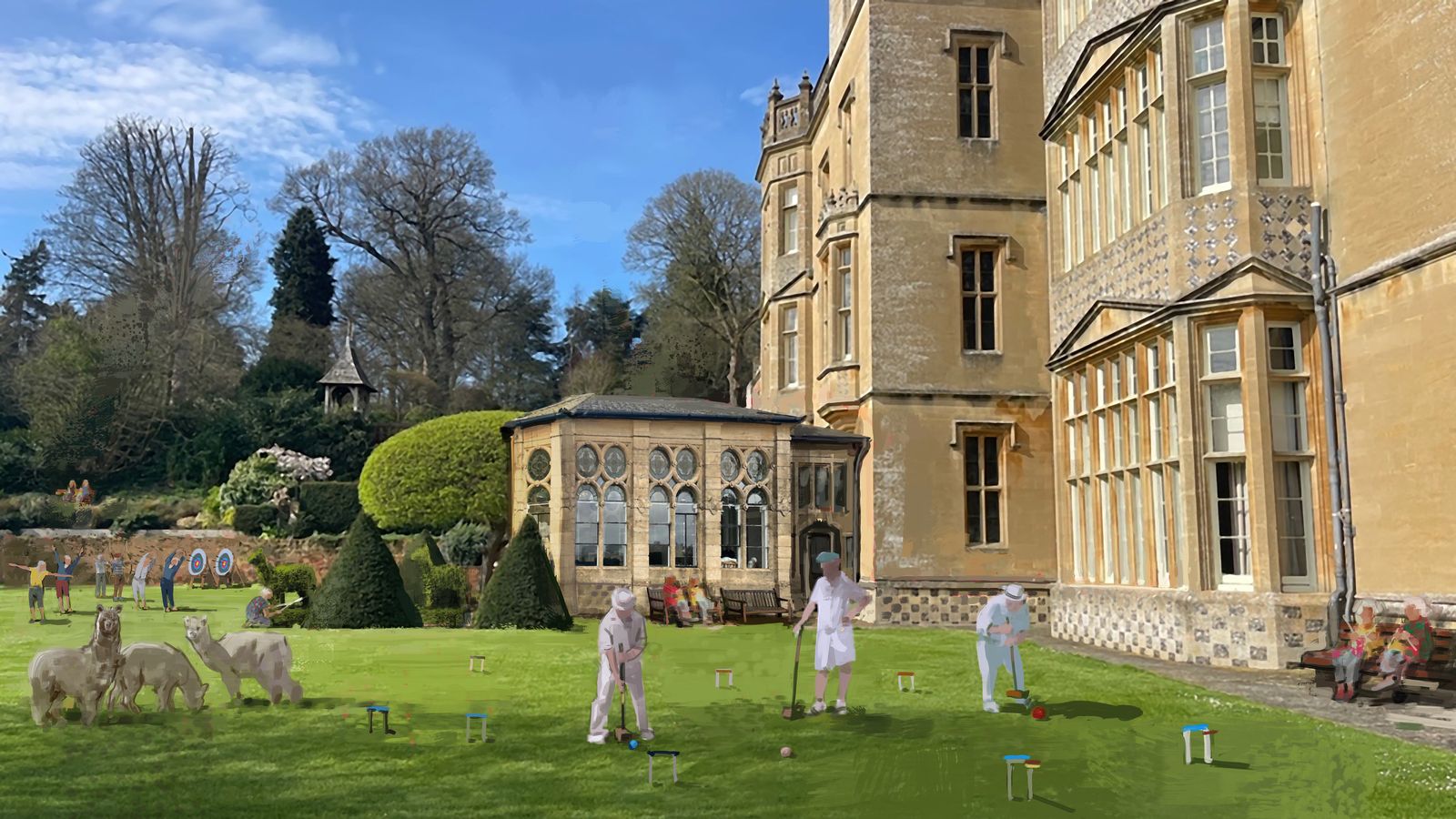
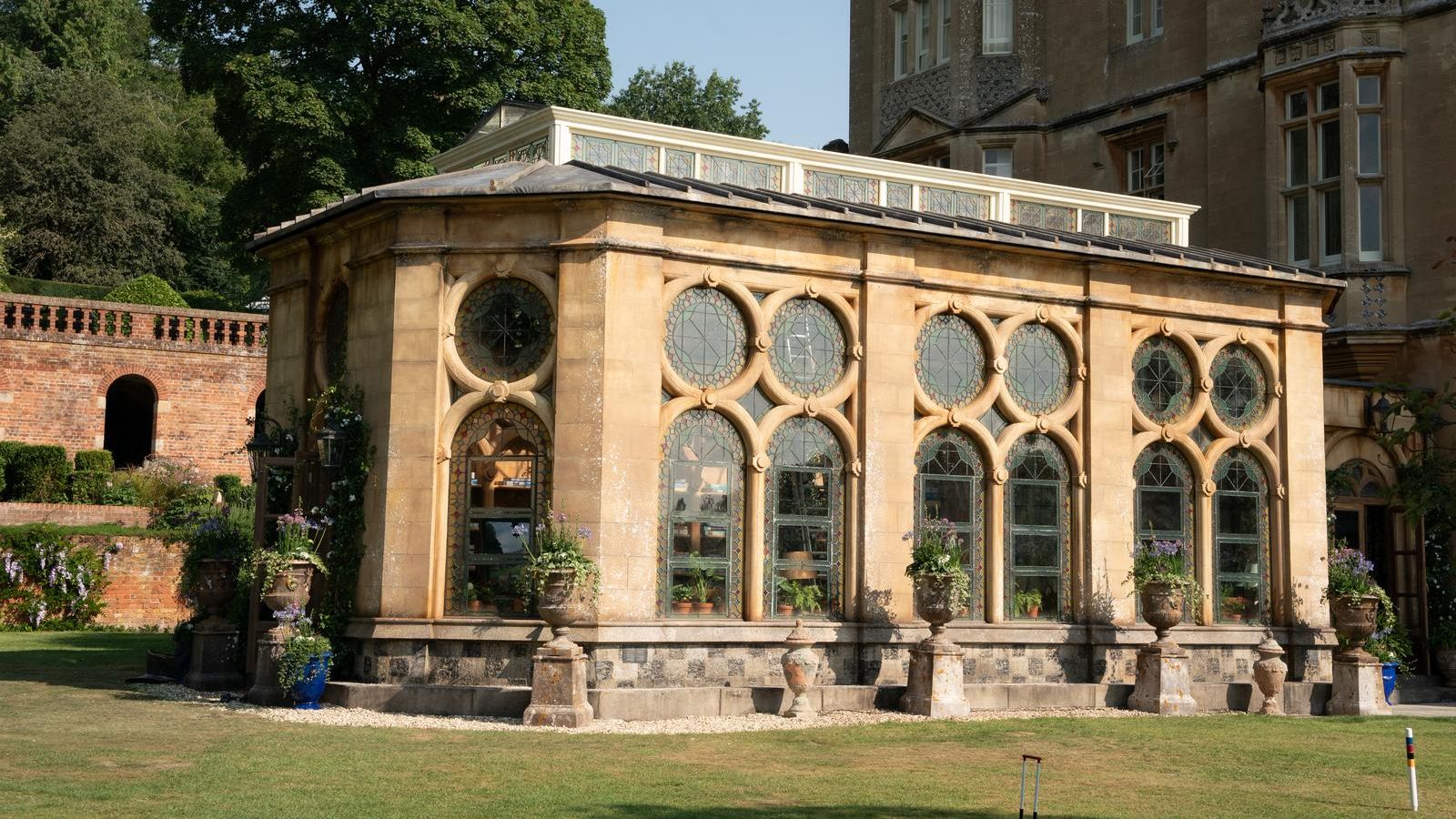
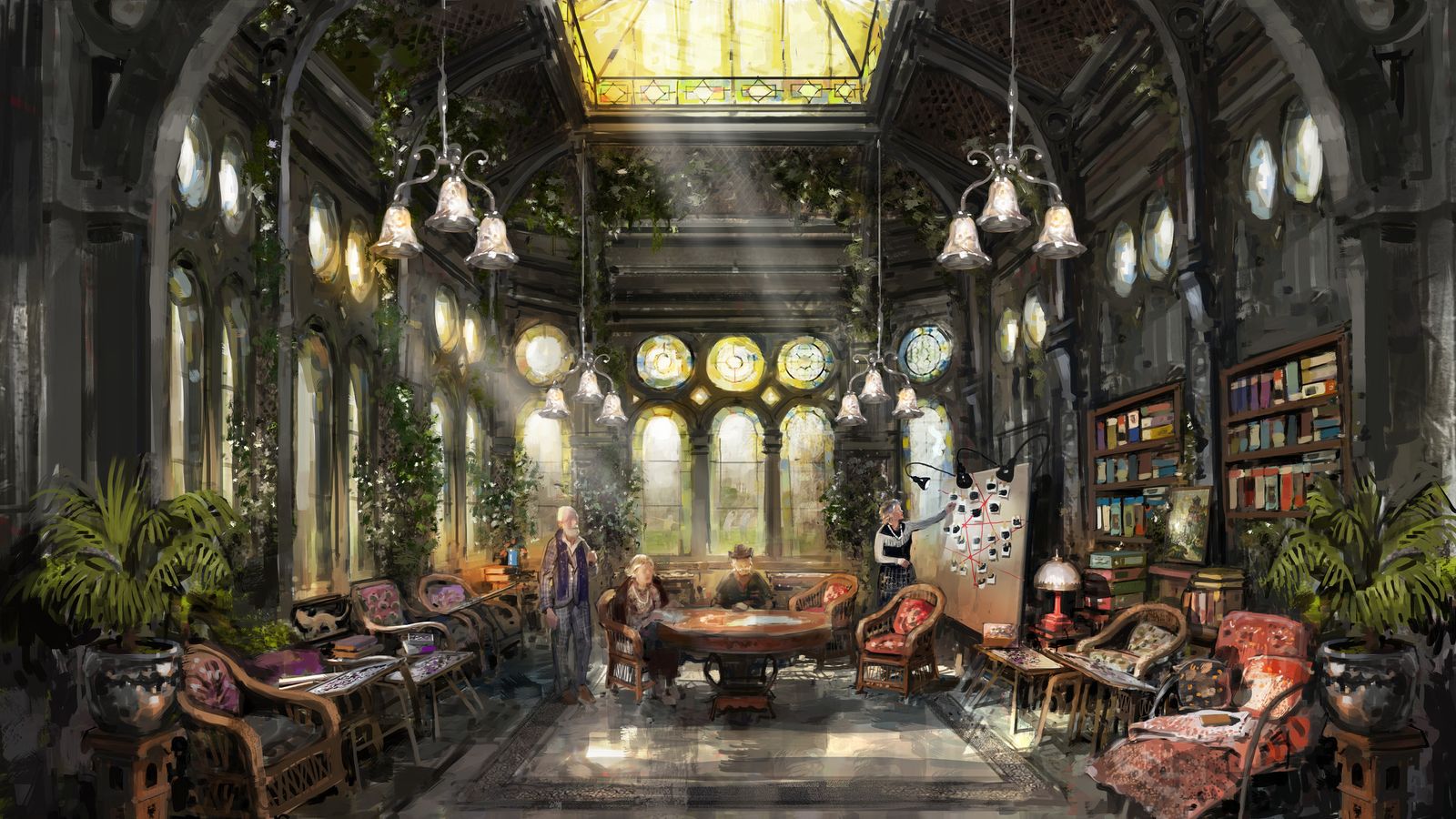
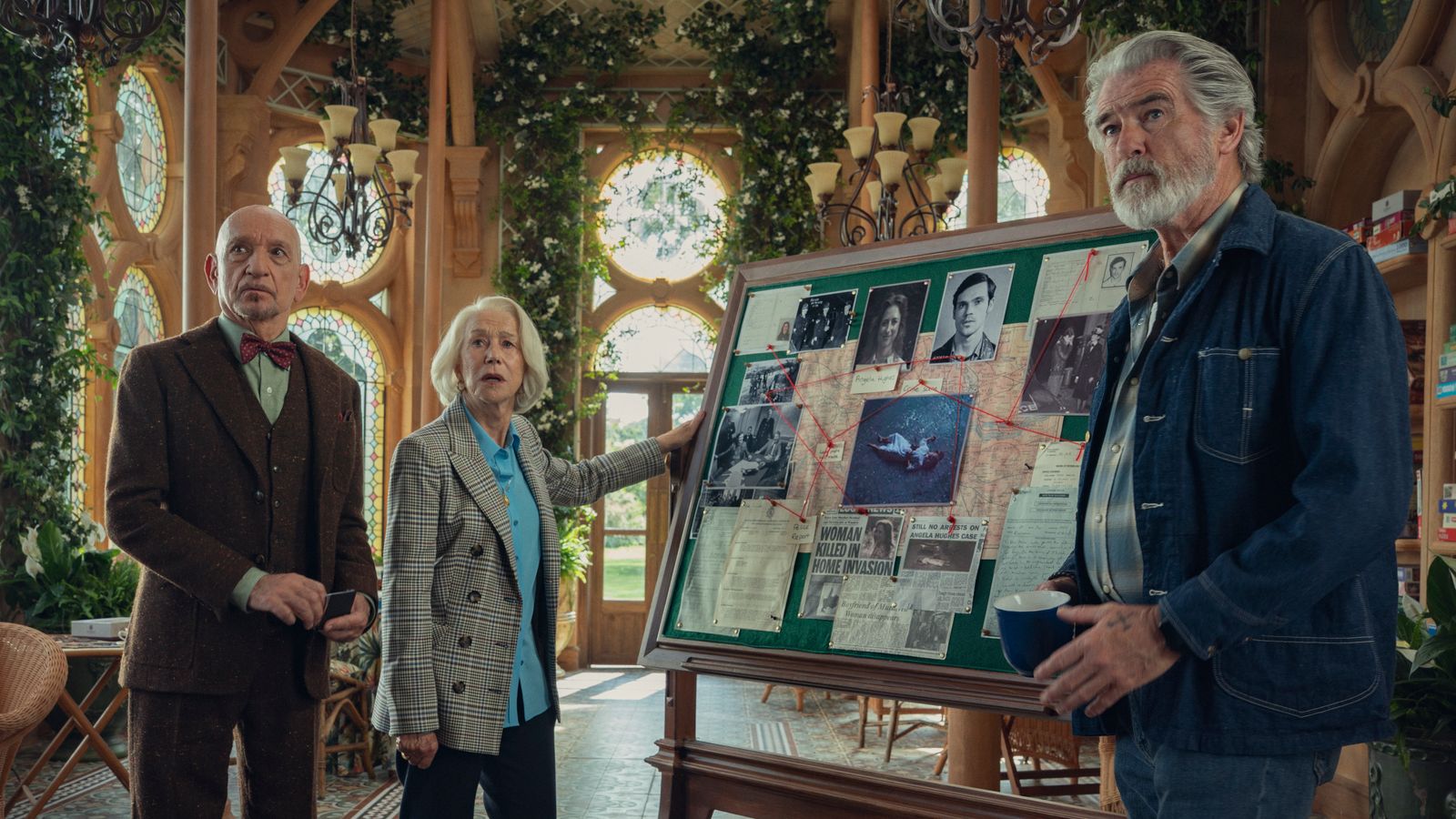
The room inside Cooper's Chase where the titular amateur sleuthing club meet every Thursday is a key location, and ended up being a particularly ambitious set build for James and his team. In the book, James thought the description of the modest room was ‘not very cinematic’, so he decided to make it a slightly grander affair, an orangery with stained glass windows (which were crafted from acrylic painted with glass paint and self-adhesive leading).
To be able to ‘see for real what was going on outside the windows, so you sensed that Cooper's Chase had a pulse, that it was breathing, that it was alive’, James chose to build a double-sided set bolted on to the side of Englefield, that essentially worked as both an interior and an exterior set. This type of set built at the shooting location is more a unusual way to design, as often a set is either an exterior or an interior, and more often than not is built at a studio. He admits that this was the trickiest set, because ‘you're building onto an existing structure, so you've got to make the audience believe that it's real and not an addition. So getting the tone of the the brick… the colours of the flint, the window design, everything to blend was challenging’.
The characters' apartments
All four principal characters' rooms at Cooper's Chase were studio builds, which needed to be believable as existing within the walls of Englefield.
Elizabeth is the most dominant member of the club, the ringleader, therefore she had the ‘grandest apartment.’ James continues, ‘she had what I would call the platinum package or the gold package. She had the higher ceilings, the ornate plaster mouldings and beautiful tones. We hoped to show how well-travelled she was, with various artefacts from around the world.’ The rich slate blue that covers the walls and ceilings of the living area was based on a Farrow & Ball colour, ‘Inchyra Blue’. James expands on his use of colour drenching in this set: ‘the idea of painting all the walls, the panelling, the door frames, the window frames, all in the same sort of tone, is very fashionable now and it was very important to us that we didn't want these interiors to feel fussy or fuddy duddy in any way, shape or form. They should feel current and they should feel like when you get to a certain age, you really would love to retire to Cooper's Chase.’
.jpg)
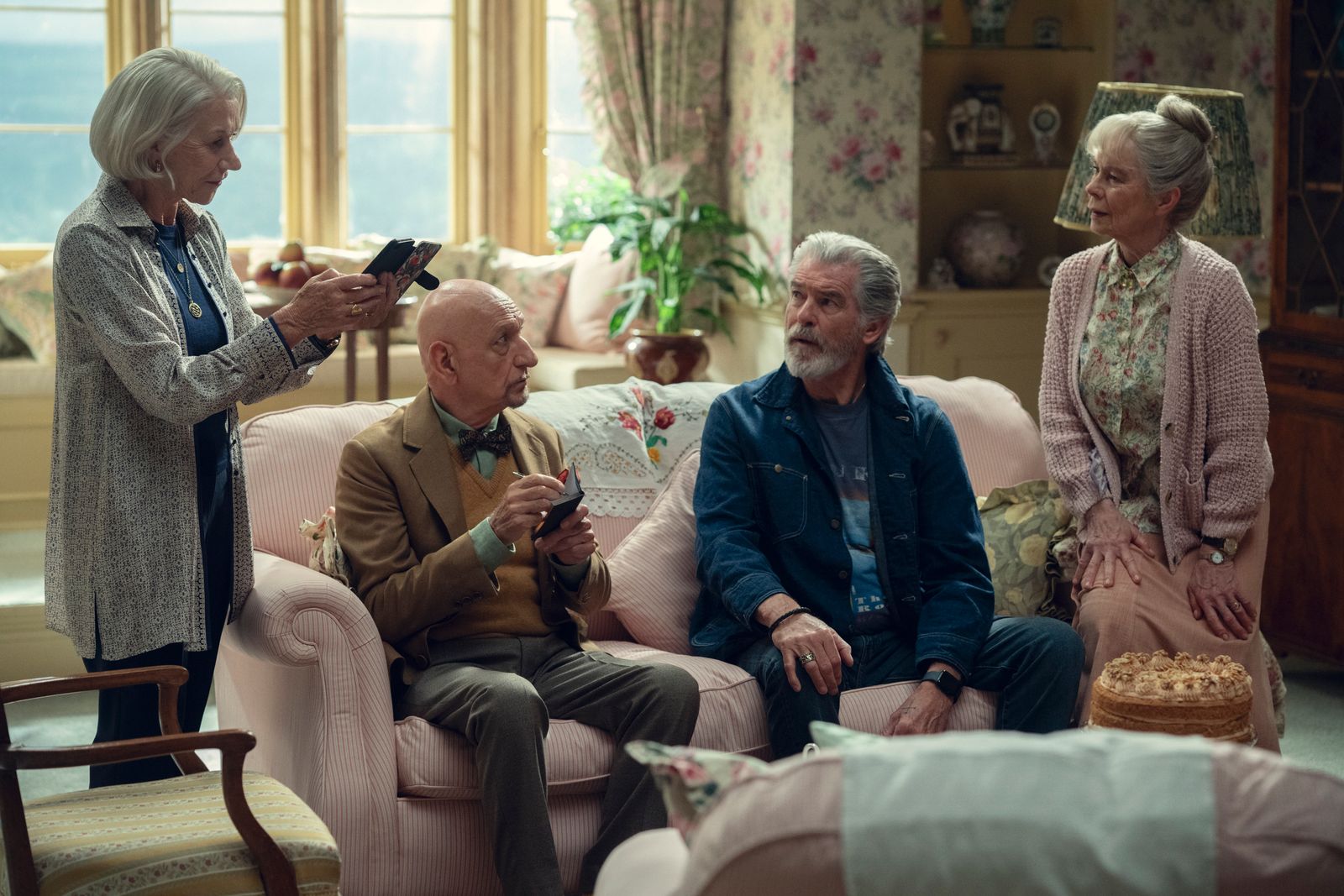
James describes Joyce as ‘the Mary Berry of the set, she is just obsessed with cooking cakes and the cakes get bigger and bigger and more filled with cream and strawberries. So her set was based on a sort of Laura Ashley catalogue, with all the different, mixed floral fabrics.’ Layered, chintzy Sanderson-esque prints, Austrian blinds and pastel tones give this set a charming, feminine, and particularly English country house look. This was one of James's favourite sets to envision, because of the sheer joy of combining the mismatching prints and the frothiness of it all; he reveals that they referred to her apartment as ‘the lemon drizzle cake.’
.jpg)
‘The serious one’ is how James refers to the character of Ibrahim, who ‘just wants to do everything by the book.’ His apartment, therefore, is refined, traditional and stylish; James wanted it to feel like an old-school gentleman's member's club. To achieve this, it was decked out with a ‘green button back sofa, leather, the panelled walls, the deep burgundy wallpaper and the lovely parquet floor.’
.jpg)
And finally there is Pierce Brosnan's lovable rogue Ron, who has a ‘lad’s den’ up in the attic, as James describes it. ‘He's got the dartboard, he's got the big flatscreen TV. He's got the big comfy armchair that he's had since the sixties, and the boxing ball attached to the wall and all these trophies showing he has a past, a history.’ This set is much messier and more laidback than the others, which again is reflective of the character.
.jpg)
Columbia Road & Brick Lane
Due to the difficulty of closing down the ever-busy Columbia Road to film scenes set there, the team chose to entirely build it as a studio set, with the flower shop ‘Bloomin’ Marvellous’ being the focus in climactic scenes towards the end of the film featuring Richard E. Grant's villainous Bobby Tanner. James recalls the moment when Helen Mirren's ‘jaw dropped’ in amazement after stepping on to the set, so he knew he'd done a good job: ‘if I've made an actor feel comfortable in their environment, then I'm a very happy man’.
This extensive set was then ingeniously recycled for shooting the opening scene of the film, a grimy, film noir style sequence set in Brick Lane in the 1970s, where a murder victim dramatically falls from a window to the street below with a Grand Guignol flourish. James admits that budgetary constraints lead to clever solutions like this, and reveals that they ‘had a week to turn the set around. So we shot Columbia Road first with all its colour, vibrancy and murals on the walls, and all those beautiful flowers that the set decoration team brought in. And then we ripped that all away and painted the walls dark, dank brick to give us that sense of Brick Lane in the seventies.’
.jpg)
.jpg)
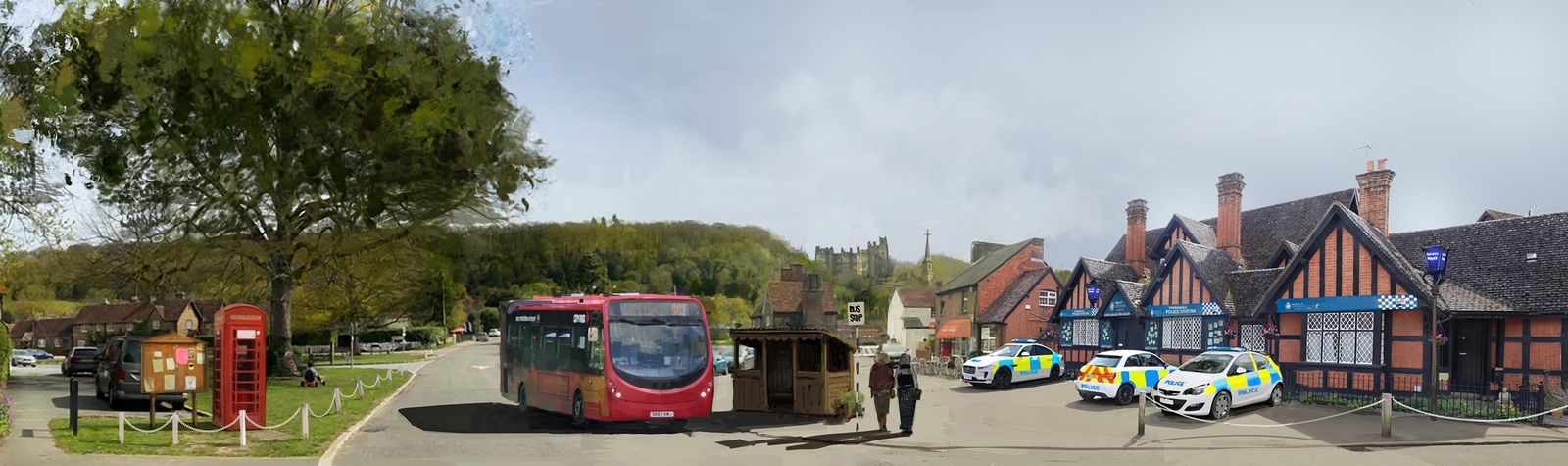
Aldbury, Hertfordshire (the police station and village)
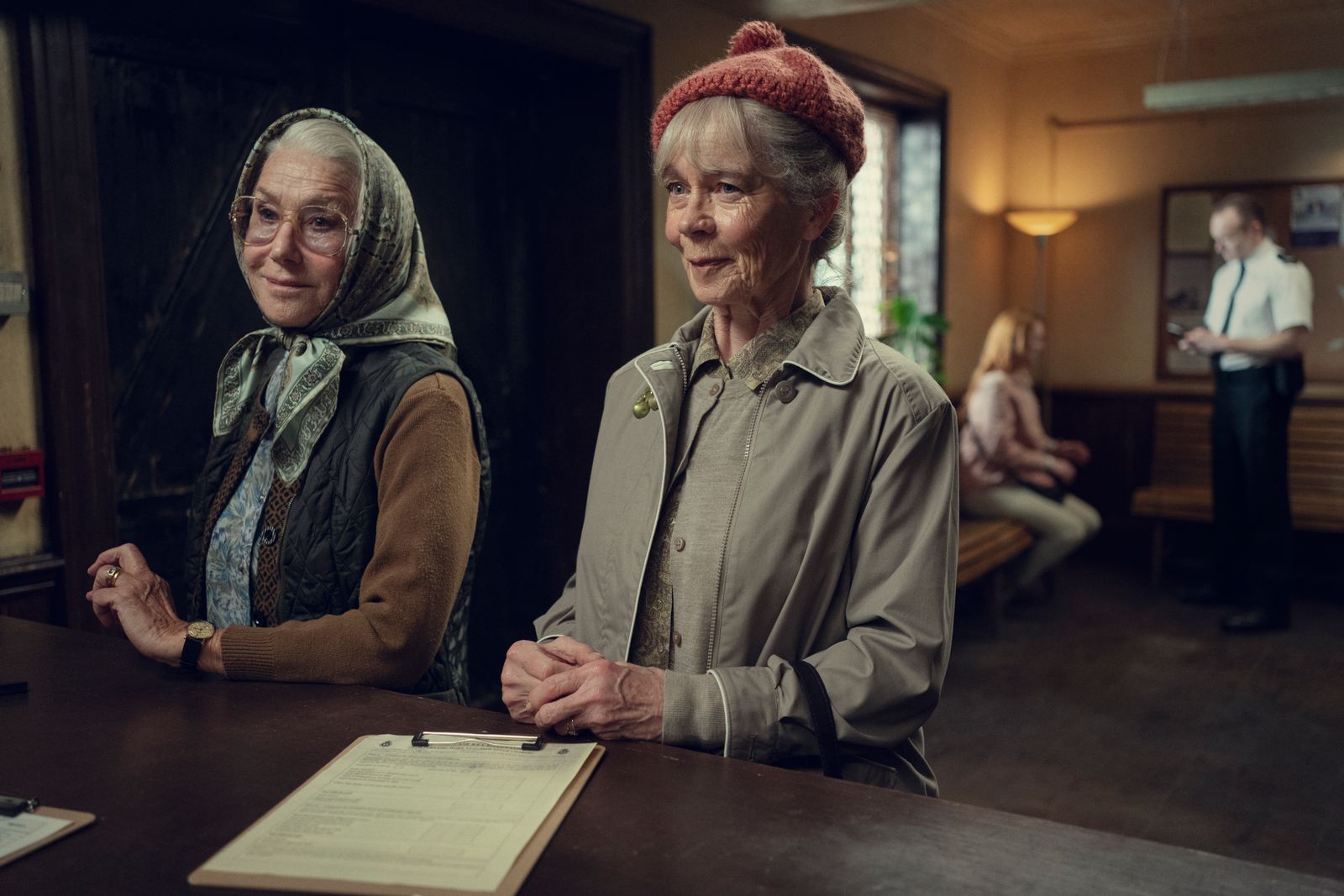
The exterior of the police station in the sleepy village where Cooper's Chase is imagined to be, was filmed in Aldbury, Hertfordshire, chosen because of it's ‘archaic, quintessentially English’ quality and quaint thatched cottages. Aldbury is a popular filming location that has also been seen in Bridget Jones: The Edge of Reason. The interior of the station, however, was filmed on a set at Shepperton Studios. James describes the wall colour for this set as ‘nicotine deep’ yellow, ‘because the place hasn't been decorated since the seventies.’
.jpg)
The Thursday Murder Club is in select cinemas from 22nd August, and is released on Netflix on 28th August.


