

Taking on the restoration of a very old house is an affair of the heart. It has to be, or you wouldn’t put yourself through it; the paperwork, persuasions and long delays of planning, the inevitable panic-inducing discoveries of a rotten joist, or wobbly chimney, and the search for craftsmen with the right knowledge and skills. And the older the house the more in love you have to be. A house that dates back more than 400 years is highly likely to be listed Grade II* or Grade I, requiring the intervention of Historic England, as well as the extra-close attention of your local Conservation Officer. It will almost certainly have undergone successive alterations, leaving uncertainties, and architectural mysteries to be unravelled and interpreted. It will resist mod cons, and there will not be a single straight line or right angle, let alone any classical symmetry.
As designer Harriet Anstruther says “to tackle an ancient building, you have to be someone who gets a kick from all the DNA it has absorbed.” It isn’t the most romantic way of putting it, but she’s right. Alastair Hendy, food journalist, author and stylist, who stripped a Tudor townhouse in Hastings back to its beautiful bones calls it “making magic” and “telling stories.” Antique dealer Tarquin Bilgin describes “honouring the spirit” of the 16th-century Suffolk farmhouse he has nursed, rejuvenated and enjoyed as his family weekend retreat. As for me, I feel lucky to have joined the cavalcade of people who have been sheltered by these heavy walls, and pleased by the idea that there will be many more after me.

When we bought our house in Devon, which dates from about 1550, we quickly learned that it isn’t enough to fall in love. You also have to make the effort to understand how an old house works. Our house was damp, and attempts had been made to cure it by lining walls with polystyrene - one of a series of 20th-century interventions, all of which were counter-productive. Brick infills choked the flues, three layers of lino were suffocating the thick stone flags which are laid directly on earth - houses of this date don’t tend to have foundations - and impermeable cement mortar daubed between the flint and stone of the three-foot-thick walls was trapping water. Stripping out these later additions, and replacing the concrete with permeable lime mortar, allowed the house to breathe and the damp to evaporate. For the same reason, Tarquin Bilgin took up the concrete on the ground floor of his farmhouse and replaced it with the original Suffolk floor bricks he found stacked in an outbuilding, laying them on sand in the traditional way.
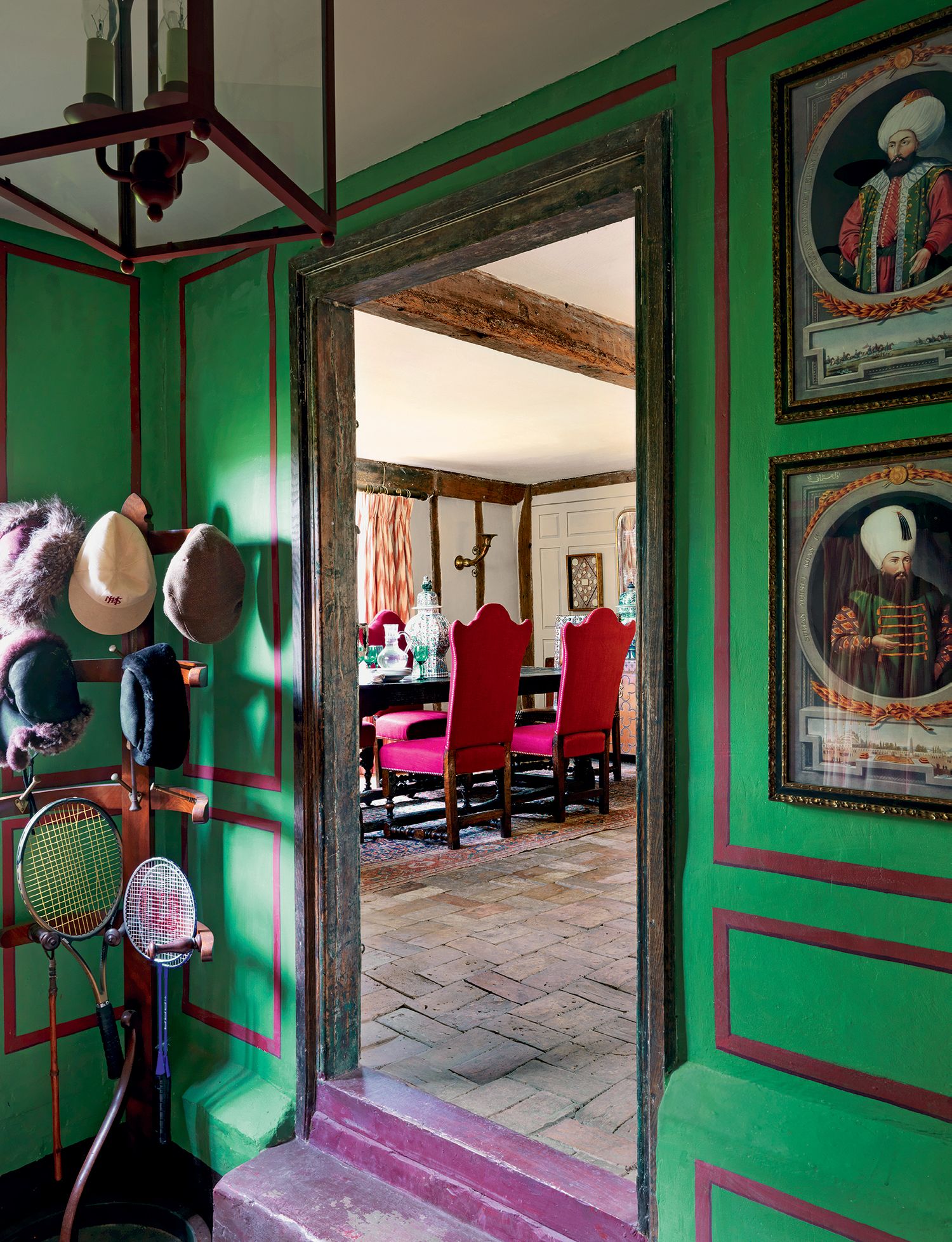
Tudor building materials were natural, and usually local, whether stone, brick, wood, cob, slate, clay tiles or thatch. However a house of this date was constructed, it almost certainly incorporated lime, whether as interior wall plaster, paint, exterior render or mortar. Finding builders who are comfortable working with these materials and who appreciate their properties is essential. All have particular qualities, those of lime being perhaps the least appreciated and understood. Not only is this environmentally friendly building material porous, it is also flexible, unlike cement. Alastair Hendy swapped rigid gypsum plasterboard for lath and lime plaster, allowing the timber frame of his townhouse imperceptibly to shift as it was originally designed to do.

Every old house will require a different set of specialist artisans. Our house has leaded windows which had distorted so badly that the old glass was starting to crack. A stained glass expert, more used to working in cathedrals, took them out, boarded up our windows, and mended them like giant jig-saw puzzles, saving and re-using as much of the old glass as he could. Meanwhile, we lived in a state of penumbral gloom and resisted spraying the boarded windows with Tudor squat-style graffiti.

A very old house makes very particular demands, and putting it right is guaranteed to be a long, dirty, noisy - and in our case temporarily rather dark - business. And when at last you have finished, the dust has settled, and you only have to make cups of tea for yourself, you will still be living with drafts, floors that slope so violently you have to prop furniture to stop things rolling off, and a fire that smokes unless you leave the door open. And this is why you need that nose for historic DNA. Because alongside the noise and the dust, and the worry about rotting joists, there will also be wonderful discoveries. Harriet Anstruther found a whole new room behind a lath and plaster partition when working on her 16th-century Sussex farmhouse, and a walled-up Victorian sewing machine in the attic. We uncovered a large stone fireplace, and found a Tudor garderobe in a cupboard, and I have a box full of tiny finds from under the floorboards including the leg of a small china doll and a silver button.
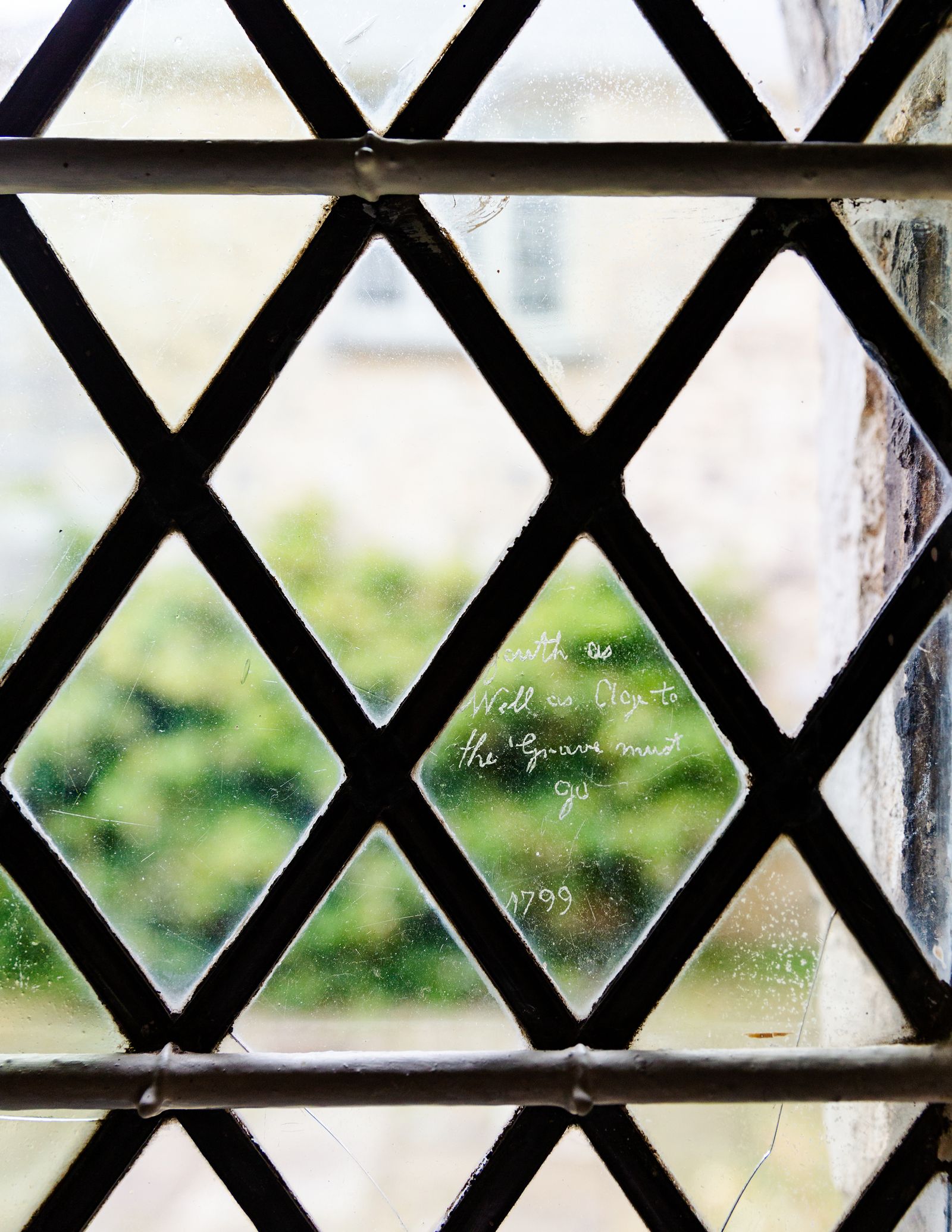
Every generation, our family included, has left its mark, even if only as a little more wear on the scoop of a stone step. There are initials and dates scratched into the stone of a door surround, and the name Mary carefully inscribed on an outside wall. Engraved in tiny copperplate script on the fragile glass of the oldest surviving leaded window is the mournful observation ‘youth as well as age to the grave must go, 1799.’ Our house is much older than anything else I own, and will last much longer. The process of restoration is well described by Harriet Anstruther as “layers of stress and joy intermingled.” In truth, the process is never entirely finished. There is always a gutter to mend, a window that has warped, an outbreak of new woodworm to be treated. We are only passing through, a brief episode in the history of these venerable homes. The aim should always be to leave them in better shape than we found them. And that is profoundly satisfying.


