

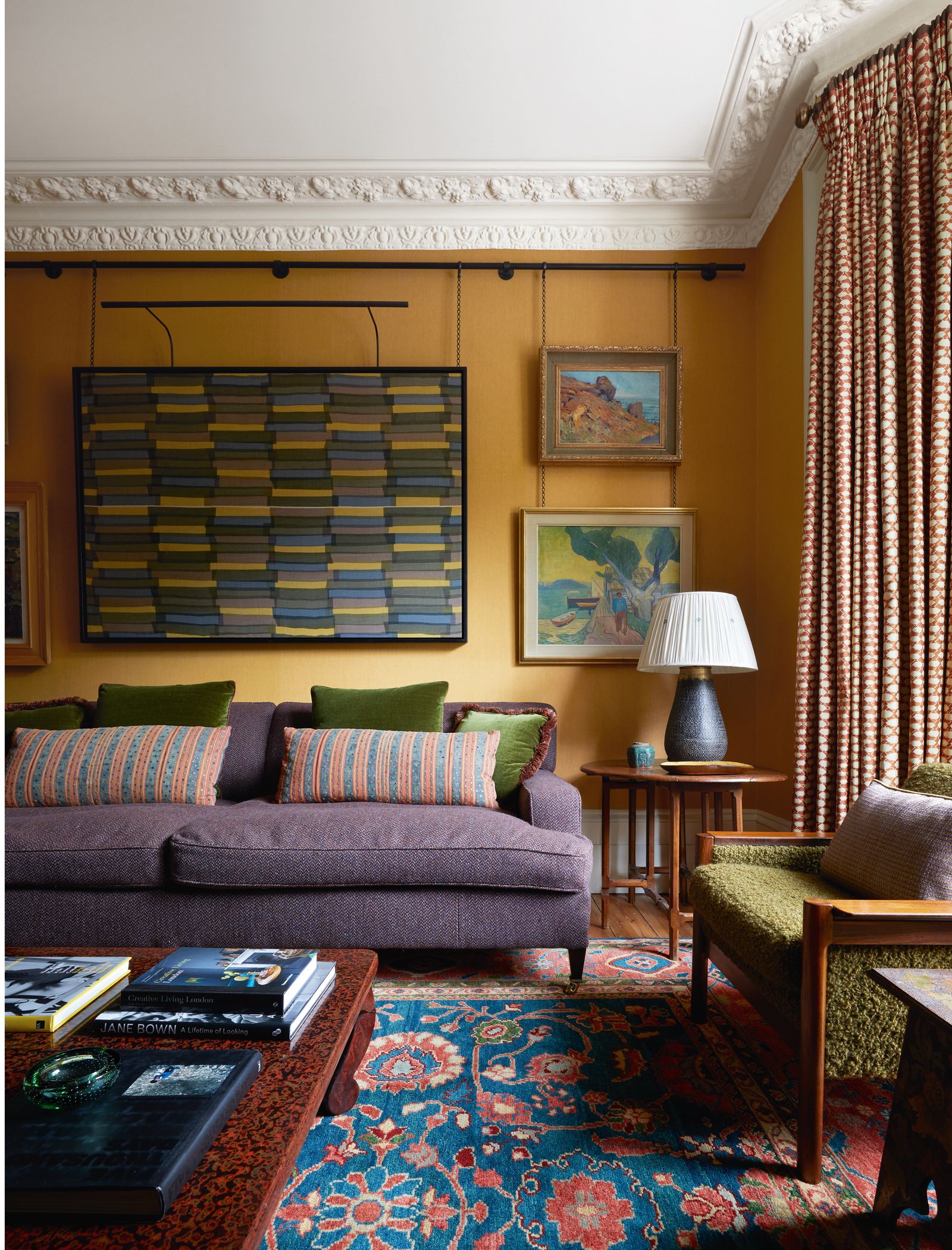
“Oh no… I’ve forgotten how to be American…” I recently thought this to myself as we walked around the house with the builder (American: contractor) at a new project in Charleston, South Carolina. I couldn’t recollect any of the right words for things. “We may need to change this architrave… which you would call a…. What do you call it?” I couldn’t remember.
“Do you mean the door casing?”, the contractor asked in a slow South Carolina drawl.
“Yes, of course, that’s it!”, as if I had known all along, though as soon as he said it, I realised that I doubted I’d ever known the right word for it.
Dimensions were a problem too. As we walked around the house, I suggested that a new dining table might need to be 190-200cm long. But how quickly could I divide centimetres by 2.5 to get to inches… then divide by 12 to get to feet? I hesitated like a struggling computer and then gave up trying. Math has never been a strength, but converting dimensions while walking and talking was out of the question.
I found myself in this predicament because I’ve recently taken on my first interior design project in the USA. I could not be happier about it. I’ve had international projects in Europe before, but I’ve wanted to work on an American project for a while now. And so I was wishing it, manifesting it even, into existence, when one day earlier this year I had an enquiry from my two lovely, now-clients in Charleston, South Carolina.
I’m an American. I was born there, and didn’t move over here until I was fully grown up at 26 years old. But I have been here in the UK for almost my entire professional career, the last 10 years or so of which has been in interior design. And so I think of myself as a “British” interior designer in many ways, with a UK passport to prove it. In fact, my accent has changed so much since I’ve been here, that I shudder to look at the comments I receive on social media videos (one said I sound like Moira Rose from the TV show Schitt’s Creek…a character whom I adore, but cannot really countenance being compared to).

All of my trouble with language and dimensions got me thinking about the importance of “place” in interior design. I mean that in a geographic sense—that buildings and interiors, and also the people who craft them and live in them, have a connection to their location, whether that is gained passively over time or whether it is created by an interior designer like me.
Place is more than the words people use to describe things, though the way we build our buildings is a meaningful contributor to it. At its simplest, I think of place like this: when you look at an interior do you know where it is or anything about the geographic identities of the people who live there, or is it blandly generic and global, impossible to pin down anywhere on the map?
When I was a child, my mother let me choose how I wanted to decorate my bedroom at home. I was only about 12 years old. But with her help, we chose the paint colour, furniture and bedding. Then I spent months collecting objects, from old signs, to model cars, to tattered flags, and cowboy paraphernalia, all to decorate the room with. The end result was a red, white and blue American fantasy. As if Ralph Lauren’s dreamlike version of Americana was adulterated in a back alley, sold as a concentrate, and then drunk straight from the bottle. I loved it. And what it lacked for in subtlety, it made up for in sense of place. You knew exactly where you were. This was America, more specifically Texas, full of rugged and outdoorsy activities. And cowboys. In hindsight I may have been overcompensating for my budding homosexuality, but it was also the beginning of a belief about design that has become a part of my philosophy: that rooms are best when they connect with the place they’re in.
I was struck by a project published in Architectural Digest a couple of years ago, and it has stayed with me. Emma Burns, the English decorator and director at Sibyl Colefax & John Fowler, designed a completely jaw-dropping set of log buildings in the Great Camp style of New England. I found it an incredible interpretation of place by a foreigner, and the images blew me away. Of course the quality of the work is stunning, but it’s the sense of place that is most impressive to me. This is an English person, interpreting a uniquely American style, and speaking the language flawlessly.
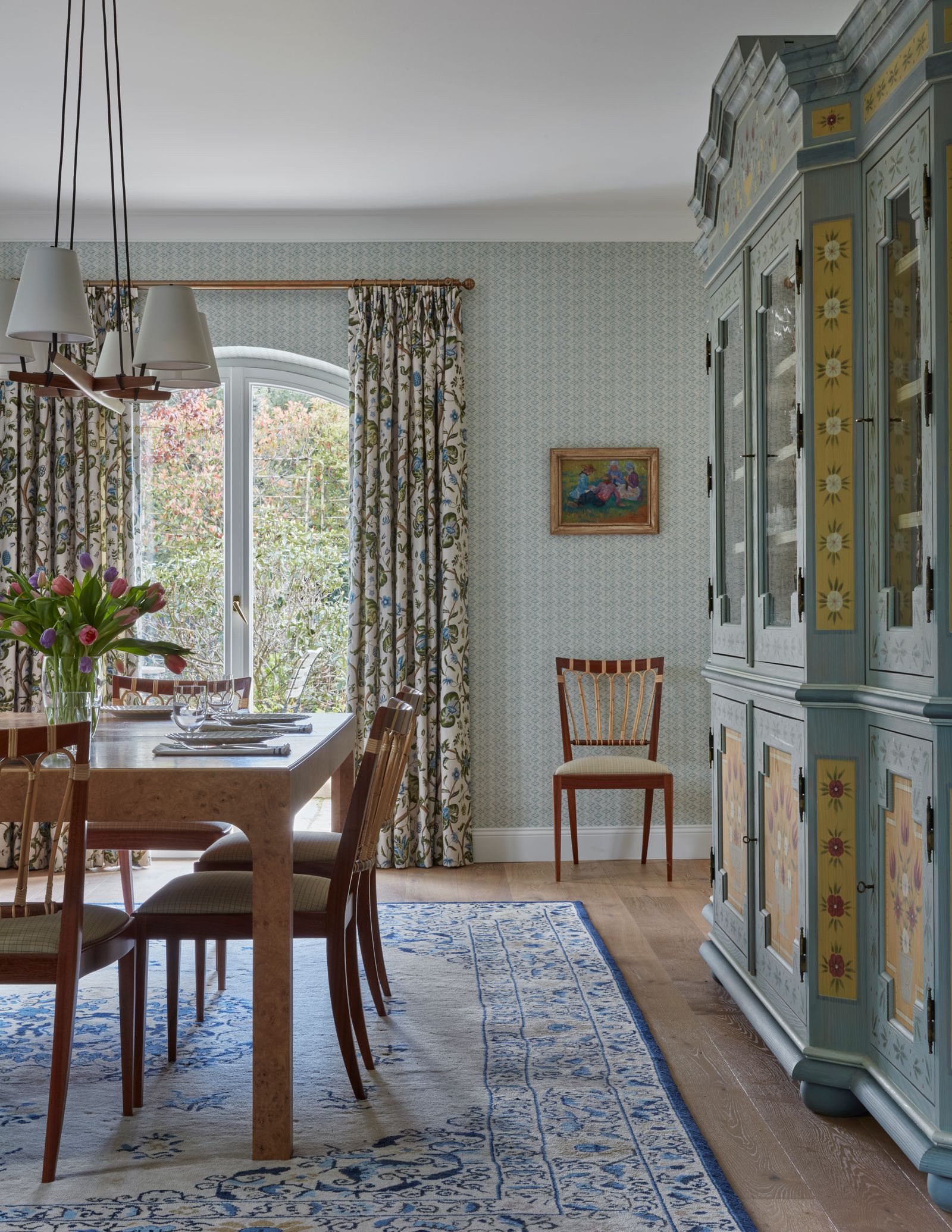
Not every interior can or should be obvious with its expression of place. Subtlety is often preferable, and place can be expressed in nuanced and discreet ways. I was fortunate to design a project in southern Germany a couple of years ago. My client looked around at German designers and decided that they were not for her—far too much grey modern cleanliness. She wanted something that felt more English instead. But simply doing English in an old German farmhouse (now captured by the suburbs’ expansion) felt slightly off to me. It just wouldn’t relate to its place. So I tried to use antiques from Germany, northern Italy and middle Europe, and to incorporate elements that one might not expect to find in England. I was most excited by a glazed cupboard that we designed here in London with the incredibly talented Mathew Bray and Matthew Collins, but which we decorated in the style of a Bavarian wedding cabinet. An overt nod to the place in the hopes of creating an interior that felt like it connected to its surroundings, rather than stood apart from them.
Which brings me back to my visit to Charleston. I’m struggling just a bit to define the sense of place that the house should evoke. On the one hand, it was built in the first years of the 19th century, and its designs are so clearly influenced by the English houses that preceded it. And there is a flare of French and colonial architecture in the shutters and sweeping porches (called “piazzas” in Charleston, I’ve learned). On the other hand, it is American through and through, so perhaps it should revere its history without being constrained by it, evolving and rebuilding, just like the country itself.
I suppose the first step is to remember how to speak the language, maybe to go back to my upbringing a bit and remind myself what it was about America that inspired me to decorate my bedroom in red, white and blue.


