

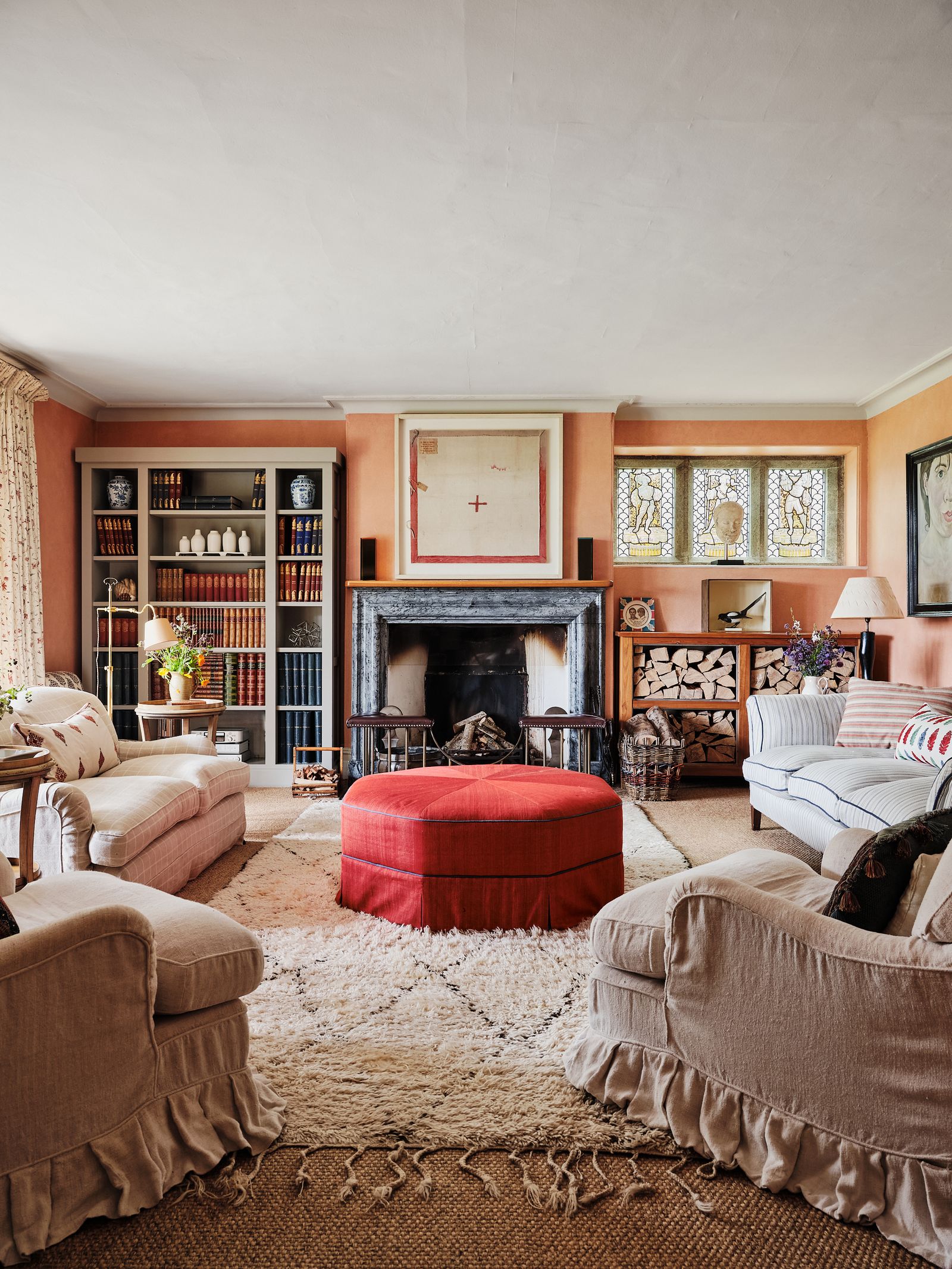
While some interior designers will tell you ‘there are no rules,' we all know that's not entirely true. Paying attention to some of the key principles of interior design will make most rooms better, even if you consider them only to disregard them. Getting the scale of your furniture right, thinking about balance and symmetry, and incorporating contrast, for example, are things pretty much every designer will do. Another excellent principle we like to think about is the need for every room to have a focal point (or perhaps more than one, depending on its size) – something to immediately draw the eye and anchor the space, so it doesn't just register as an amorphous mass of objects. A focal point can also create visual interest or spark conversation – think of an interesting collection of books and objects on a shelf, or a striking artwork that takes centre stage in the room.
The classic example of a focal point is a fireplace, and indeed the word ‘focus’ derives from the Latin word for a hearth, the traditional place where people gather. If you look at a typical British house, say of the Victorian period, it is natural to organise seating around a fireplace, even if there's no longer a working fire. Correspondingly in kitchens the focal point tends to be the cooker, which might even still occupy an old hearth. In other spaces, especially more modern, boxy rooms, it might not be as obvious, and we have to create the focal points ourselves – but what to choose?
Look at the architecture
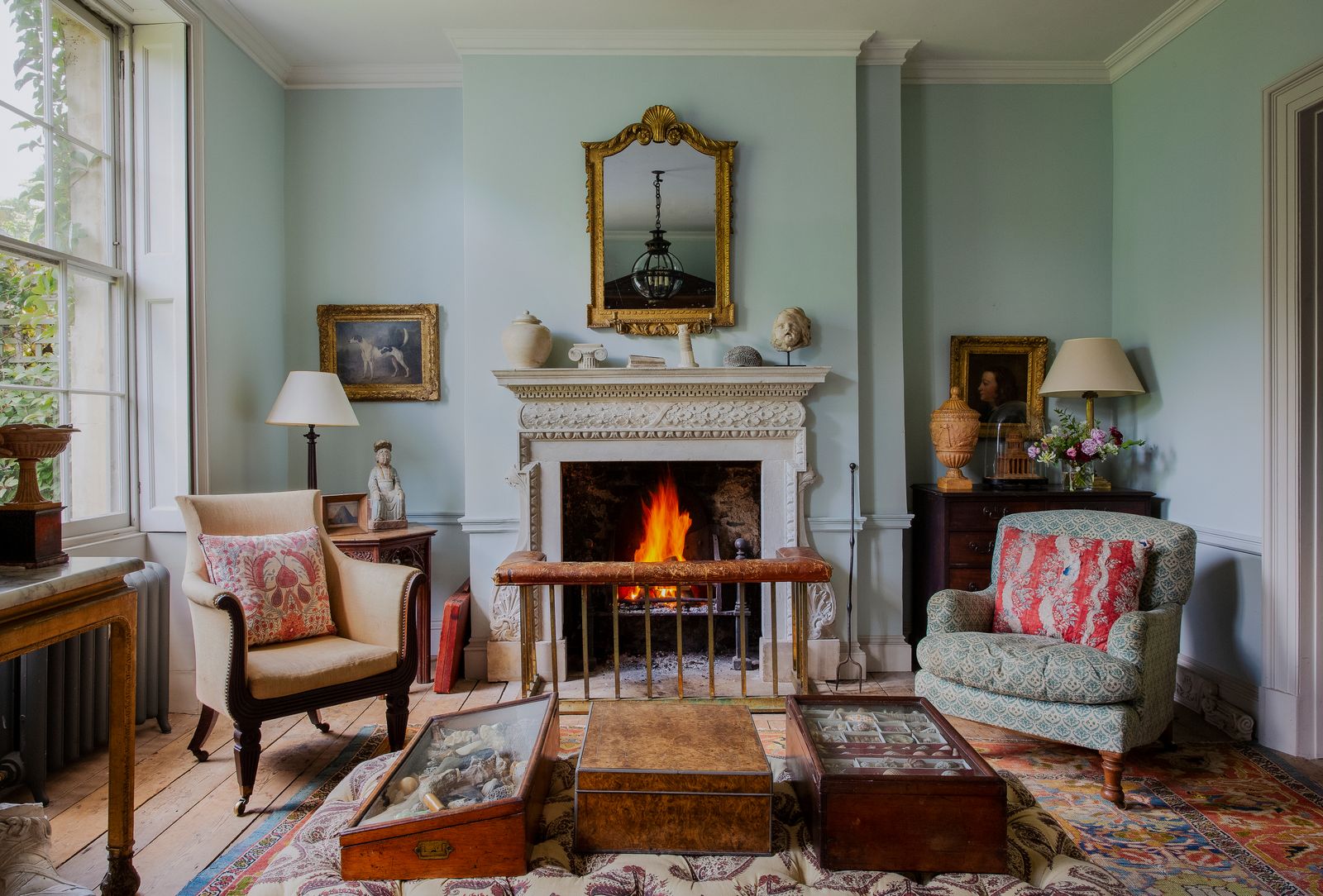
One of the easiest routes for defining a focal point in a room is to follow the architecture and highlight one element. As we've said, if you have a fireplace, especially in a living room, this will almost certainly work as the focal point. Look at most living rooms on the pages of House & Garden and the seating will revolve around the fireplace, either with a sofa and chairs facing each other with the fireplace opening up a line down the middle, or a sofa facing it and chairs on either side. If you do have a fireplace as a focal point, pay proper attention to the chimneypiece (the decorative surrounding of the actual hearth and chamber), ensuring that it is in proportion to the rest of the room and its style suits the period and aesthetic of the space.
“The chimneypiece is the anchor of a room, the focal point around which the rest of the room revolves,” say Will Fisher and Charlotte Freemantle of Jamb. “It is therefore crucial that it fits perfectly the room in which it is to be housed. The chimneypiece, being purely decorative, does not have to reflect the size of the chamber opening, but the dimensions of the room itself.” A grand drawing room calls for a chimneypiece of equivalent scale and ornamentation, while a more pared-back, modern room will be fine with something simpler.

There are two more key things to consider with fireplaces: what hangs above it and what goes on either side. A mirror or more pared-back artwork is what should go above, rather than a TV (although hanging a TV and concealing it behind a hung suzani or inside a clever piece of art, as above, is a great idea). As for the sides, where you're likely to find alcoves, these become focal points in their own rights so it pays to be mindful as to what is there. Built-in shelving is the obvious option but can quickly look too curated or too cluttered. If you don't need tons of storage, consider something like a stylish sideboard with trinkets on top and art above, or built-in closed cupboards on the lower half with either art or some well thought out shelving above.

Where there is no fireplace, Dorothy Draper, in her book Decorating is Fun!, suggests that a window can be an alternative focal point, as the modern Somerset house proves, or “if there’s no fireplace, you can use a bookcase to be the centrepiece of the room instead,” says Sarah Vanrenen, who has done precisely that in the newbuild above which she packed full of country house personality. The clever thing here is that Sarah has painted all the woodwork in the house in ‘Vert de Mer’ by Edward Bulmer, a decorating trick that unifies the entire space. To avoid clutter or too much curation, Sarah has used the bookshelf to house the client's impressive ceramics display, while all the books are fake and in fact provide a cover for the hidden TV.

Start with the art
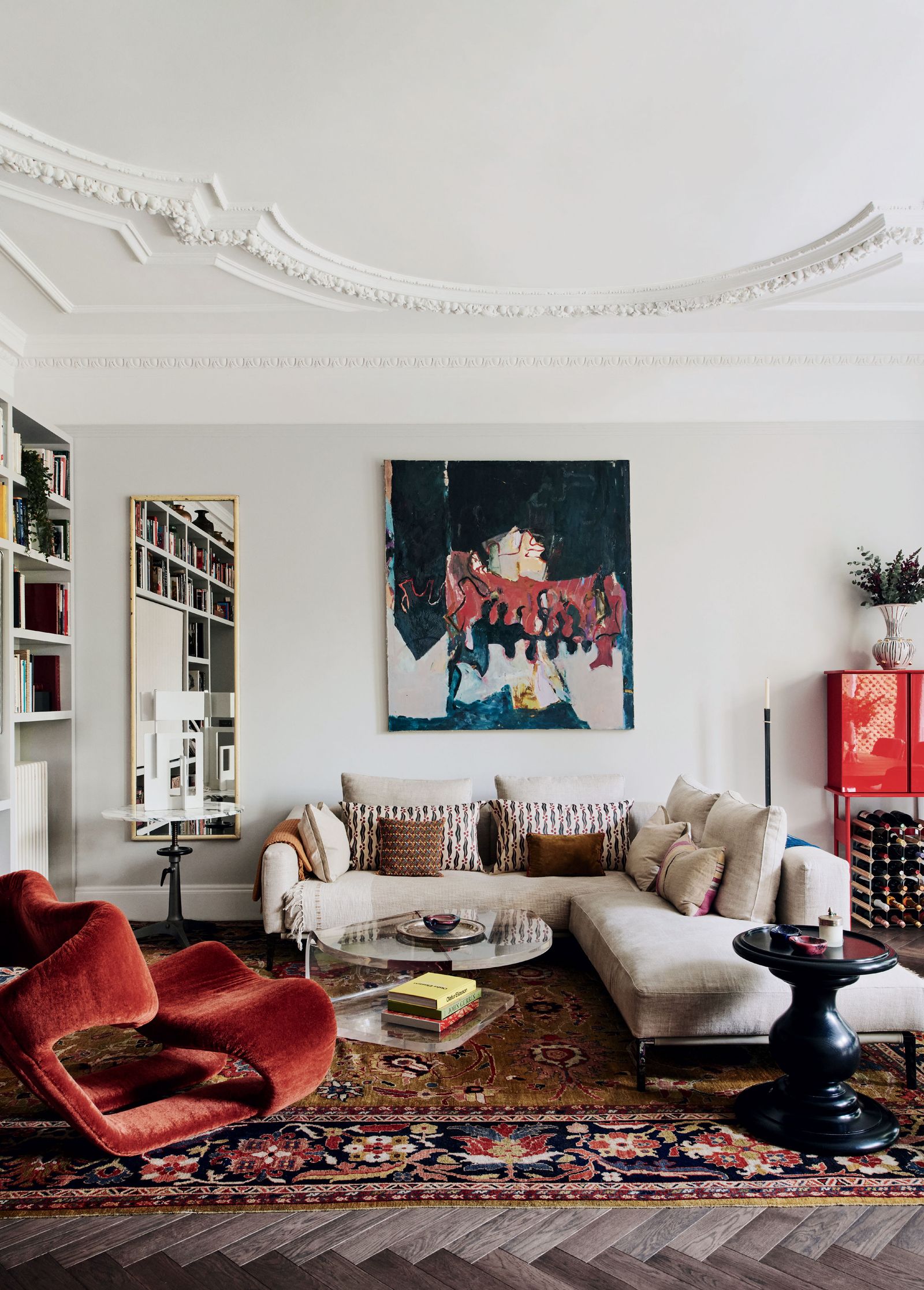
Sophie Ashby, founder and director of Studio Ashby, once famously used the maxim “start with the art” to describe how she designs a scheme and it's quickly taken on a life of its own. It's how many designers do approach a room and it can be a brilliant tool in deciding on a focal point too. It's best to follow Sophie's route if you do choose to start with the art; choose one piece that you want to accentuate and then draw out the colours from that into the rest of the room. For example, Pallas Kalamotusis has chosen an Eliza Bonham Carter painting as the focal point of the living room above, then used the deep red in the velvet chair, rug and glossy cabinet, while taking the inky blue through to the gloss black side table and rug again, and a harmony of brown tones on top of that. It means the whole space is harmonious but the artwork is where your eye rests. If you simply piled the room with competing colours, it would remove the art as the focal point and instead leave a confused jumble.
Choose a statement piece
.jpg)
If art isn't your thing or you simply haven't built up a collection yet, and there is little to no architectural merit in the room you are focusing on then instead, you can choose to accentuate a piece of furniture. This can be done in two ways; a simple piece in a statement fabric or a stand out design that speaks for itself. In the snug above, the visual language of the corner sofa, which dominates most of the tiny space and is upholstered in Svenkst Tenn ‘Baranq Linen Wine’, is hard to ignore and so becomes the focus in itself. It's a clever idea for a room like this as its sole purpose is for lounging in comfort, so why wouldn't you want the sofa to do the talking?

The same could be said of the curving, bespoke, green leopard print-covered sofa in Nina Litchfield's house, though there are a few competing focal points here, from the sofa to the fireplace (however the chairs remove its immediate effect) and artwork above. However, the unusual shape and design of the sofa make it the natural talking point and its colour is layered with the art to keep a sense of cohesion.


