
A striking house in Somerset that is a model of energy-efficient design
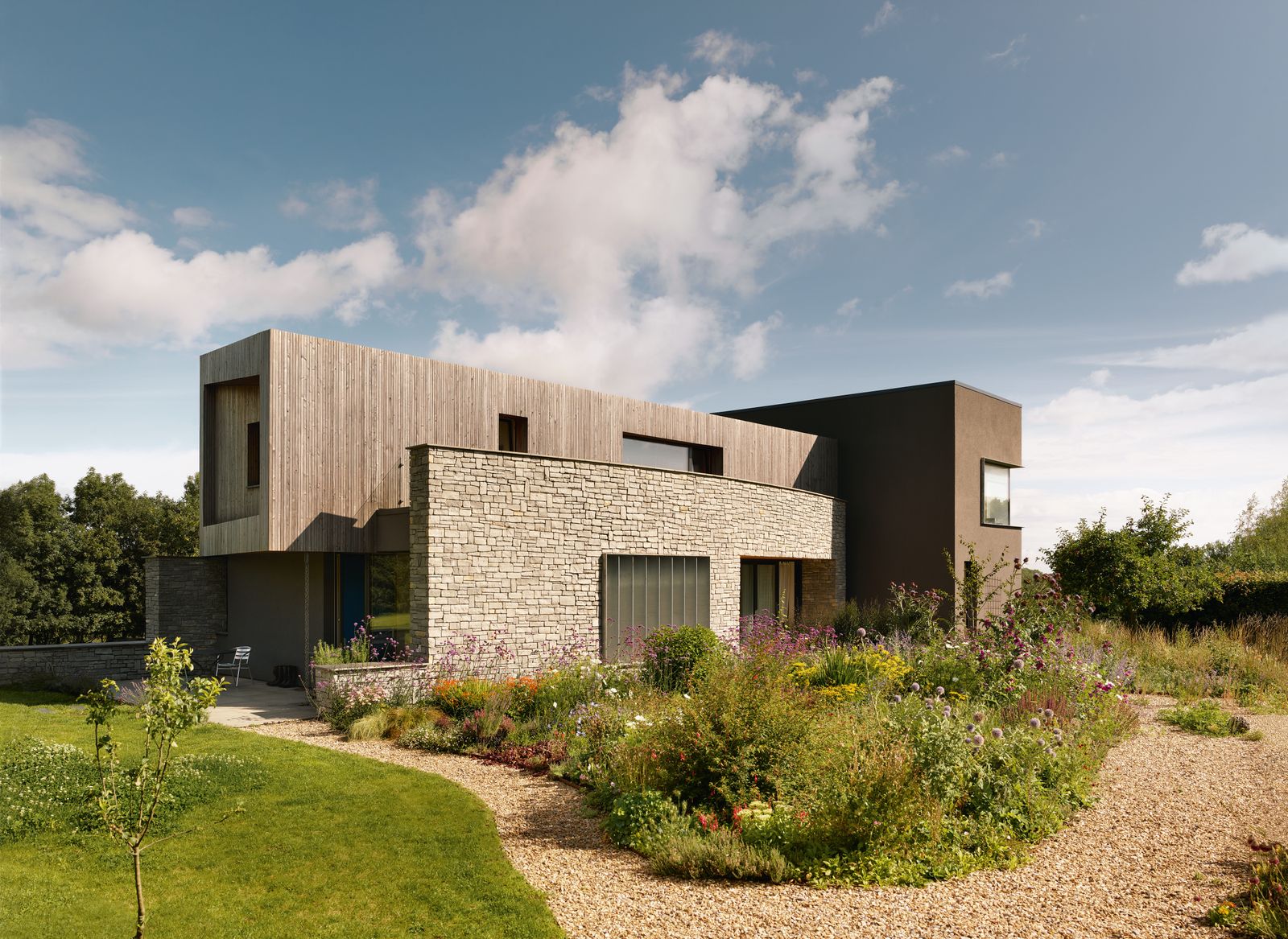
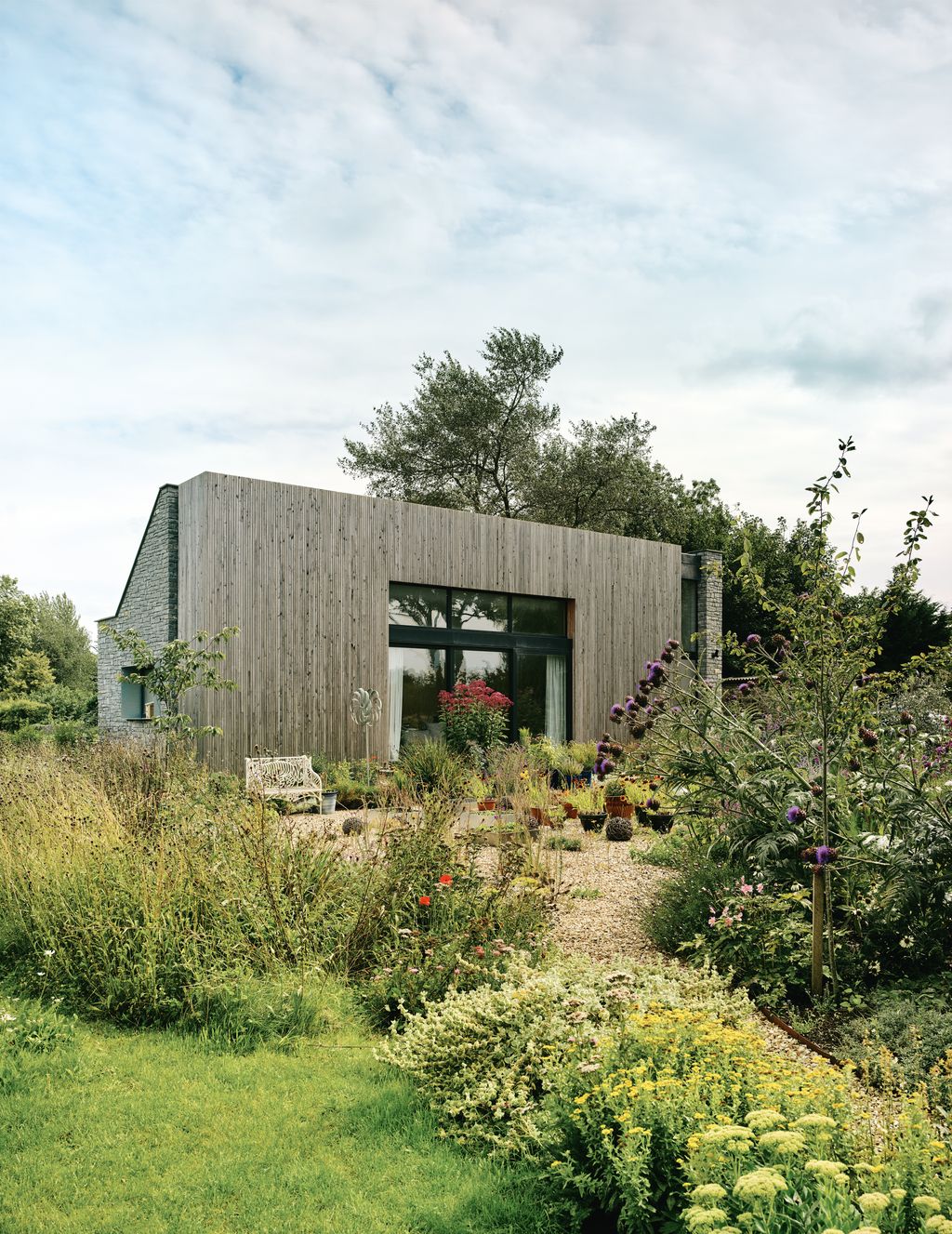
The premise for two-storey, modernist-style Haha House was ambitious. Textile artist Alice Kettle and her husband Orlando Goodden, both embarking on their second marriage, wanted to create ‘a new space where we could combine our lives, art and collections’ with a sustainable self-build of architectural merit. Upping the ante was their inexperience, a tight budget and Orlando’s intention to be the project manager. It is a set of circumstances that will be familiar to viewers of a certain programme helmed by Kevin McCloud but, in this instance, there is a twist – namely, success. Begun in 2019 and completed to budget in 2021 – and to Passivhaus standards (it even exports surplus energy in the summer) – the newbuild rises from fields at the foot of the Mendips in Somerset, quietly triumphant and surrounded by drifts of self-seeding flowers that belie its contemporary status.
It was Orlando who found the plot. ‘We wanted somewhere with privacy, but not too remote,’ says Alice. Two miles from Frome, it was originally the site of a small bungalow in the former garden of a Georgian rectory. It has views towards the Westbury White Horse, immortalised on canvas by Eric Ravilious, who was a friend of Orlando’s father, the modernist designer and architect Robert Goodden. Orlando collects glassware designed by his father, as well as china by Ravilious. The couple researched local architects on the RIBA website and Klas Hyllén was selected. ‘We had most in common with him aesthetically speaking, and it was to be his first whole house, so it was equally exciting for all of us,’ recalls Orlando.

Key to the design was a separate studio for Alice, who won the 2023 Brookfield Properties Craft Award in partnership with the Crafts Council. ‘In the house, we wanted flexibility,’ adds Alice, explaining they wished to host occasional events or exhibitions, and mentioning their combined five children and three grandchildren. ‘But we didn’t want lots of bedrooms that, most of the time, wouldn’t be used.’
It was Klas’s idea to build in a way that extended onto the plot’s boundaries. He also resurrected the ha-ha that now gives the house its name. ‘This avoids a jarring, garden-to-field transition,’ explains Klas. This approach meant that the bungalow in the middle of site could initially stay, enabling Orlando to live there. Work began around it before it was eventually demolished and replaced by a gravel garden.
‘Sustainability is about the choices you make,’ Klas says. ‘It is straightforward to build a house that performs well in terms of energy efficiency – but it is about materials, too.’ The frame system, which includes insulation and guarantees airtightness, was provided by MBC Timber Frame, and the exterior is clad in a combination of larch and Blue Lias stone that Orlando sourced from a local quarry. Inside, an open-plan layout ensures views through the rooms, while sliding panels provide elasticity of space. When employed, the panels cleverly increase the wall area, turning the full-length hall that runs parallel to the combined kitchen, dining and sitting space into a gallery. An upstairs study and the downstairs snug both have secondary purposes, so the number of bedrooms can rise from two to four.

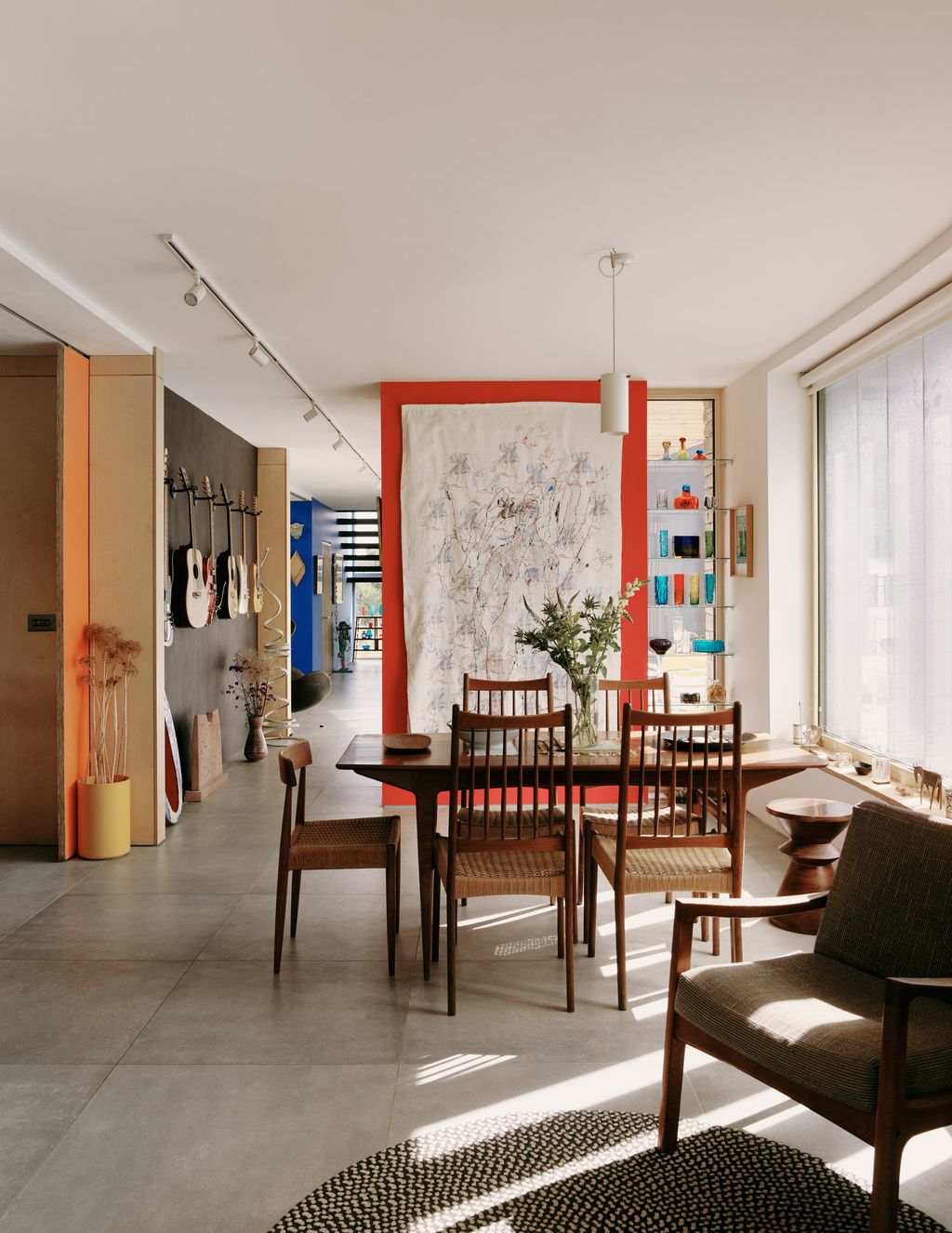
A modernist vibe is delivered by the symmetrical panelled birch ply on many of the walls. ‘That was Klas’s idea,’ says Orlando. This alternates with areas of strong colour on others, taken from the 1960s Marimekko fabrics used for the curtains. When it came to fixtures and fittings, Orlando kept costs down – and maintained his environmental commitment – by using end-of-line and second-hand variants.
Impressively, considering it is the amalgamation of two households, nothing here seems incongruous, and there is a serene spareness to the rooms, the contents of which speak to the threads that bind the couple together. Alice identifies her greater tendency to sentimentality than Orlando, adding, ‘We meet in our appreciation of colour, material and light, and we were selective, but democratic, in what we kept.’
Klas, who initially attempted to talk Orlando out of project managing – ‘part of an architect’s role is to manage risk’, he explains – is full of admiration for ‘the incredibly high quality and integrity of build that has been achieved’. It is notable that Orlando kept Klas on a retainer for the duration. ‘This prevented any costly disasters,’ says Orlando. The project is proof that a progressive self-build does not always result in TV-worthy drama; instead this is an inspiring tale of rewarded ambition. ‘We love it so much, we never want to go anywhere else,’ says Alice.
 Michael Sinclair1/8
Designed around a stainless-steel sink found on Ebay by the house’s owner, Orlando, the birch-ply units by CM Pretlove Cabinet Maker are finished with stainless-steel worktops.
 Michael Sinclair2/8
An Isokon Plus table is partnered with Norman Cherner ‘Side’ chairs and Robert Williams’ ‘Pearl Dot’ chairs.
 Michael Sinclair3/8
The interiors were created in sympathy with owner Orlando’s collection of mid-century furniture. Two ‘Day’s Forum’ sofas – Habitat reissues of Robin Day’s original 1964 design for Hille – are complemented by a new Habitat rug and a 1970s coffee table by Richard Young for Merrow Associates. A ‘PH 5’ pendant light by Poul Henningsen for Louis Poulsen picks up on the striking acrylic painting by Ruth Wurzburger on the wall
 Michael Sinclair4/8
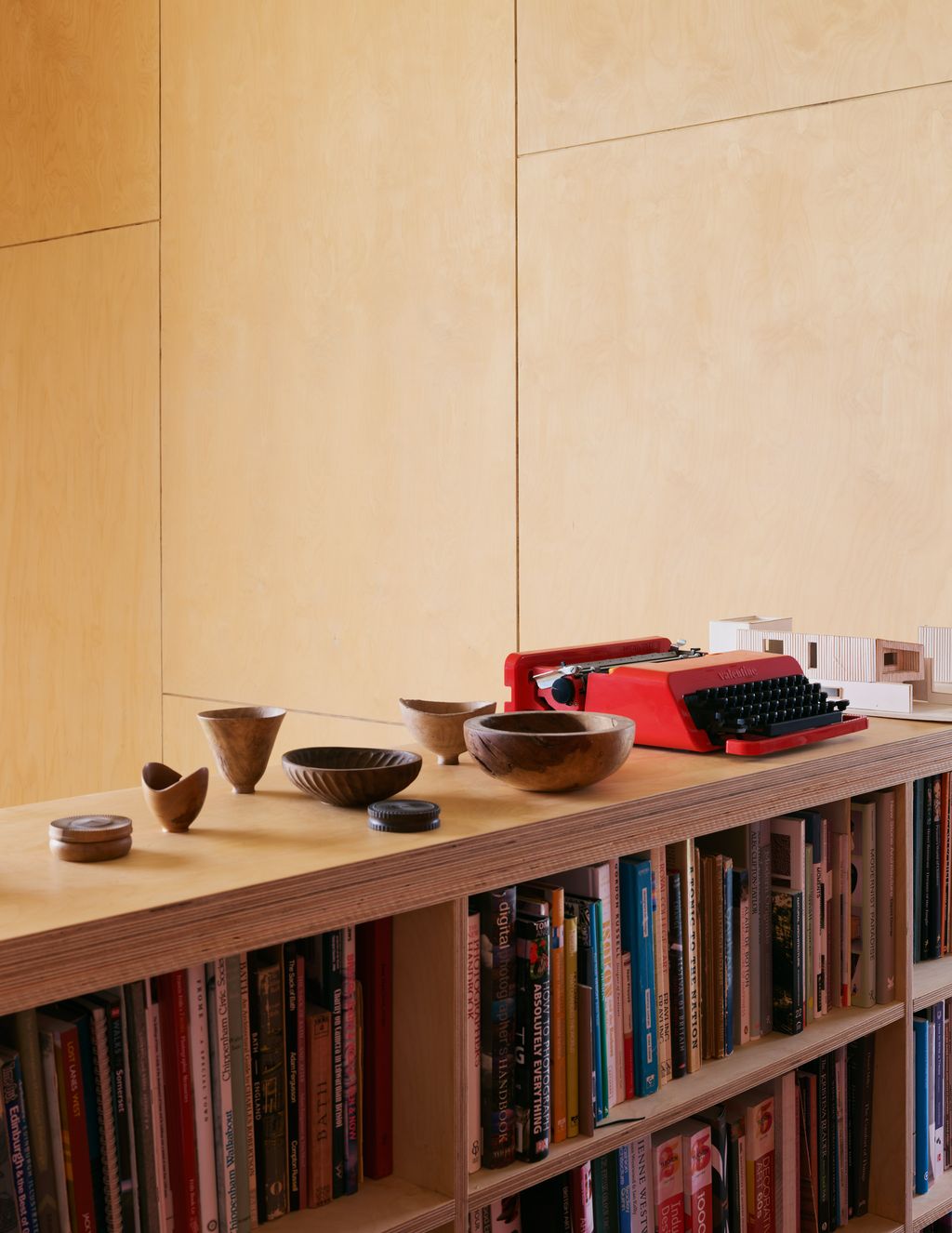
The shelving was made by Tom Graham Workshop and Futurustic Woodworking to house pieces from the owners’ collections


 Michael Sinclair5/8
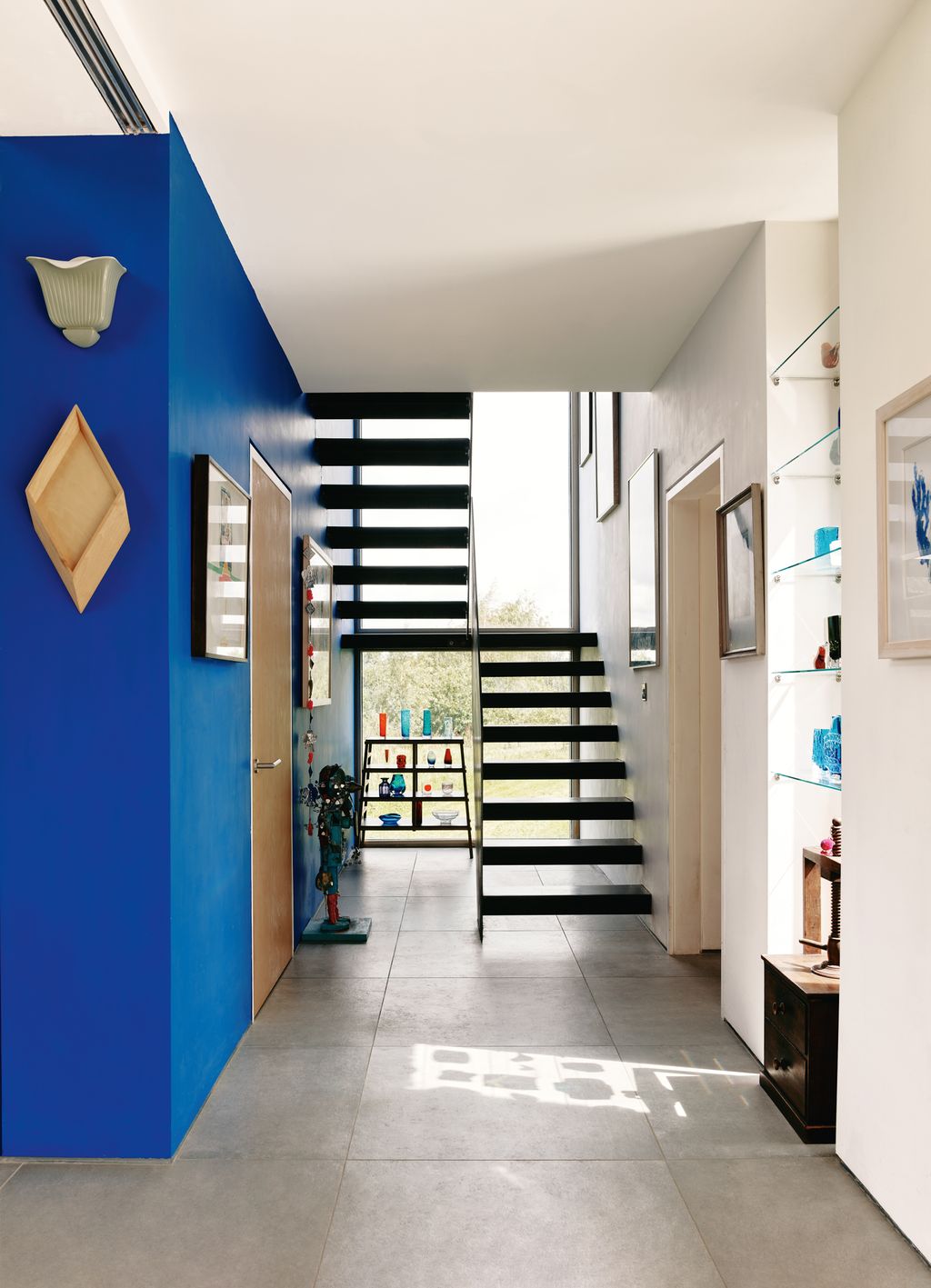
Walls in Valspar’s ‘Paradiso’ set off paintings and pieces such as a ceramic sconce by Orlando’s father Robert Goodden for Clarice Cliff.
 Michael Sinclair6/8
Bookshelves create a practical and decorative solution, allowing a view of the sitting room below.
 Michael Sinclair7/8
Strong colours bring a modernist twist to the bathroom.
 Michael Sinclair8/8
A gravel path leads to this separate building, also clad in larch and stone


