

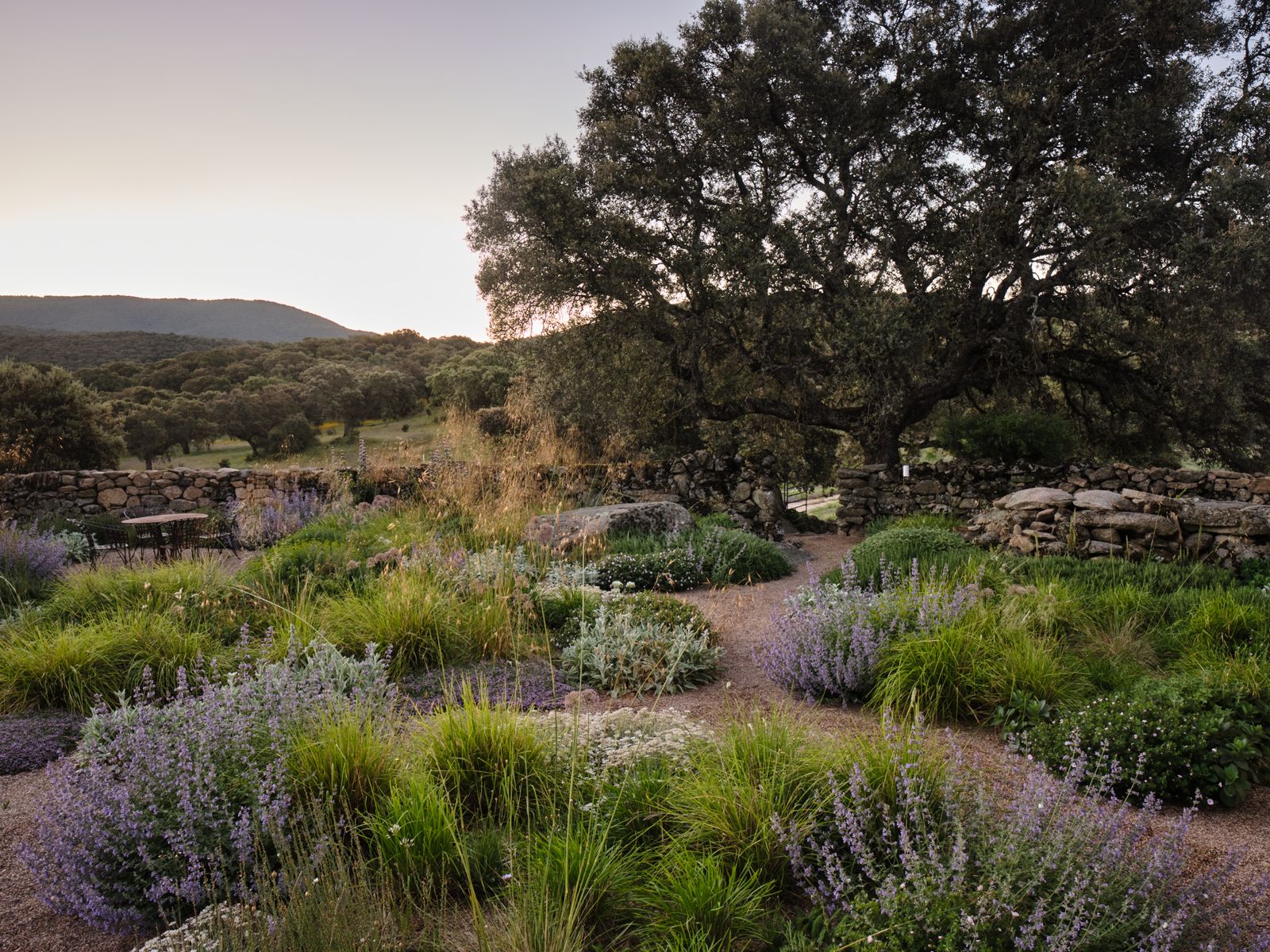
On hot, still summer days, the oils contained in the foliage of aromatic plants are coaxed out by the sun. As they sweat in the heat, their scent fills the air. Most of these plants hail from the Mediterranean and, when their odours mingle, the smell is reminiscent of that region; the camphorous, spiced, balsam notes of lavender, thyme, cistus, rosemary and other drought-tolerant herbs that thrive in the sun-baked garrigue of southern France and similar Mediterranean wildernesses. In the right conditions, they are low-maintenance, long-flowering stalwarts, and their pungent perfumes add a layer of magic to the summer garden.
Which aromatic plants to grow in sun
Under the sun's rays, the leaves of rock roses (Cistus) release an incredible ambergris odour. Some – such as Cistus ladanifer, which is used by the perfume industry to mimic musk, and C. x dansereaui 'Decumbens' – ooze so much sweet resin that their leaves are sticky. If you love scent, they are must-have plants.
The sages also offer a wealth of fragrant foliage choices, from the gorgeous papery flowers of biennial clary (Salvia sclarea var. turkestanica) to the sub-shrub perovskia (Salvia 'Blue Spire'), which has woolly flowers humming with bees in summer and ghostly grey stems in winter.
On the terrace, scented pelargoniums are gorgeous in pots as summer bedding. Most require their leaves to be rubbed to release their aromas, but some are unleashed by the heat of the sun, especially balsam-scented 'Royal Oak' and 'Attar of Roses'; the latter is a form of the species used to make geranium essential oil.
And, for those with room to spare, one of the new compact gum trees (for instance, Eucalyptus gunnii Azura) will make the garden smell heavenly on warm days, and, unlike the barmy bigger trees, won't soar out of control.
Which aromatic plants to grow for wildlife
Lavender is top of the list, providing a rich food source for butterflies and bees and releasing a reviving perfume that lingers in the heat. Research shows that bees favour the Lavandula x intermedia varieties (such as purple-blue 'Grosso' and white 'Edelweiss'). The intermedias are fantastic for creating hedging to line a path, and this is a great way to maximise the smell and wildlife draw of lavender. Rosemary (such as Salvia rosmarinus 'Tuscan Blue') is also popular with bees when it flowers in spring and can, likewise, be clipped into a low hedge.
If you have gaps in between paving or space at the edge of gravel beds, creeping thymes, such as woolly thyme, produce mats of tiny pink flowers that bees crawl over as they forage. Butterflies are more partial to marjoram, which will also grow in gravel or out of cracks in walls.
In the border, the grey-green foliage of nepeta (catmint) exudes a caramel tang, and the perennial's nectar-rich flowers lure bees in summer. Upright blue Nepeta grandiflora 'Summer Magic' is ideal for pots, and taller N. nuda 'Romany Dusk', which has pale lilac-pink blooms on dark stems, is perfect for the middle of a naturalistic border.
Which aromatic plants to grow for colour
Many sages bloom in fabulous colours, including vermillion 'Royal Bumble' and blackcurrant 'Nachtvlinder', which have small flowers that mingle well with other perennials at the front or in the middle of the border. More imposing is 'Amistad', which has long purple blooms on tall black stems. All three flower over a long period.
Cistus x pulverulentus 'Sunset' sizzles shocking pink and pairs well with other low aromatic shrubs, such as yellow bobble-flowered Santolina rosmarinifola subsp. rosmarinifolia, silver mounds of lacy Artemisia 'Powis Castle' and Helichrysum italicum, which floods the garden with a wonderful aroma of cumin on warm days.
Also superb, bronze fennel (Foeniculum vulgare 'Purpureum') is a misty mass of copper and purple when short and young, before soaring into 2-metre stalks of grey-green leaves that reek of aniseed, topped with Canary-yellow umbels.

Which aromatic plants to grow in semi shade
Topiary is a great way to add aromatic plants to the garden. The fragrant culinary bay tree (Laurus nobilis) can be cut into smart, glossy evergreen shapes in sun or part shade, and the willow-leaved form has slender, narrow leaves that respond particularly well to clipping. The tiny leaves of box (Buxus sempervirens) are even more satisfying to shear, and the smell of box hedging on hot days is unbeatable. Box is less likely to suffer from blight in part shade. Both of these highly clippable plants perform well in containers.
Mints are excellent in shade or light shade, and some are good-looking plants, including variegated pineapple mint (edible), curly mint (edible), and upright pennyroyal (not edible).
Nepetas (mentioned above) will bloom in partial shade, as will the punk-haired perennial monardas 'Beauty of Cobham' (powder pink) and 'Gardenview Scarlet' (letterbox red). Both are good for bees.
For summer bedding, deliciously scented marigolds (such as Calendula officinalis 'Indian Prince' and Tagetes tenuifolia 'Tangerine Gem') produce blazing orange flowers in sun or part shade and will attract beneficial predators (hoverflies and ladybirds) to gobble your aphids.
How to grow aromatics
- Sunshine: most aromatics are Mediterranean plants that like to sunbathe, so they fare best in full sun, in a south or west-facing garden. However, a few (such as nepeta and mint) are tolerant of the lower light conditions of a north or east-facing plot.
- Soil and moisture: many aromatic plants (such as lavender and cistus) hail from stony sloping terrain, so good drainage is vital and fertility is not important. These Mediterranean plants are extremely drought tolerant and thus ideal for a gravel garden. Some of the exceptions include monarda (bee balm) and mint, which enjoy moisture-retentive, well-drained soil; monarda also likes relatively fertile earth.
- Maximise scent: a garden that is well contained via hedging, walls, or other windbreaks will contain the smell of aromatic plants. Place them within sniffing distance: close to seating areas, paths, and doorways, to enjoy them as much as possible. Create fun scratch 'n' sniff beds for children (for instance, with cola, lemon, and pineapple pelargoniums); grow hedging out of fragrant foliage shrubs (such as lavender) so that ankles release the perfume as they brush past; and plant aromatics under windows, so that their odour drifts into the house on summer days.


