
The Wiltshire manor house of a lover of the early eighteenth century

Since her childhood pony rides through the 'Capability' Brown park of Petworth House, Diane Nutting has been strongly drawn to architecture in all its forms. 'I remember, as a teenager, that beautiful buildings had a deep effect on me,' she says.
At 18, she married David Beatty–son of the celebrated Admiral Beatty–who came from a stable of patrician good taste: his sister-in-law Nancy Lancaster spearheaded the quintessential English country-house look through her company Sibyl Colefax & John Fowler, and she lived in the exquisite Ditchley Park.
Overnight Diane became the chatelaine of the Grade I-listed Chicheley Hall, one of the most beautiful early-eighteenth-century houses in the country, built by architect Francis Smith; before long she took her first steps towards a lifelong career in conservation.
'The Seventies were the golden age of conservation,' says Diane, 'triggered by the Destruction ef the Country House exhibition at the V&A in 1974. Until then a Georgian house was being pulled down every week. I had no formal training, but I was passionate about the preservation of our heritage, and my career developed from there.'
In 1978 Diane was appointed chair of the Thames and Chiltern regional committee of the National Trust. 'The bones and teeth of the National Trust are in the regions,' she says. 'There were many restorations, but the most exciting was the rescue of Stowe, its grounds and 36 temples. To be part of that was a great privilege.' Today Diane is chair of The Georgian Group, which, as she explains, is 'consulted by public bodies on matters affecting listed buildings, and gives grants and advice on all matters Georgian'.
MAY WE SUGGEST: Why Bowood remains the epitome of an eighteenth-century English country house
The custody of Chicheley was a benchmark as her career unfolded, but after 50 years of nurturing it- her children having flown the nest- Diane and her second husband, John Nutting, decided three years ago to downsize to her late mother-in-law's house on the Wiltshire downs.
The house is an E-shape, mainly early Queen Anne building, with parts dating from the fifteenth century as well as later Georgian additions - a grand hall and staircase - at the front. It sits on the side of the chalk downs that rise to Salisbury Plain, and incorporates what Diane's mother-in-law Gill referred to as 'the village street' - an ancient cobbled pathway that comes into the house on its way to the adjacent church, the medieval part of the house enveloping the former thoroughfare.
'We discovered that the house was full of asbestos,' says Diane, 'which, in a way, was fortunate, as it led to much redecoration. We copied many of Chicheley's architectural features: doorcases and doorways, skirtings, dado rails and cornices, overdoors and chimneypieces. The furniture and carpets came with us. And I remembered the late Tom Parr saying to me, "If you ever spend any extra money on anything, you must have the carpet borders mitred round the hearths, door frames and into corners." We followed his advice and he was so right.'
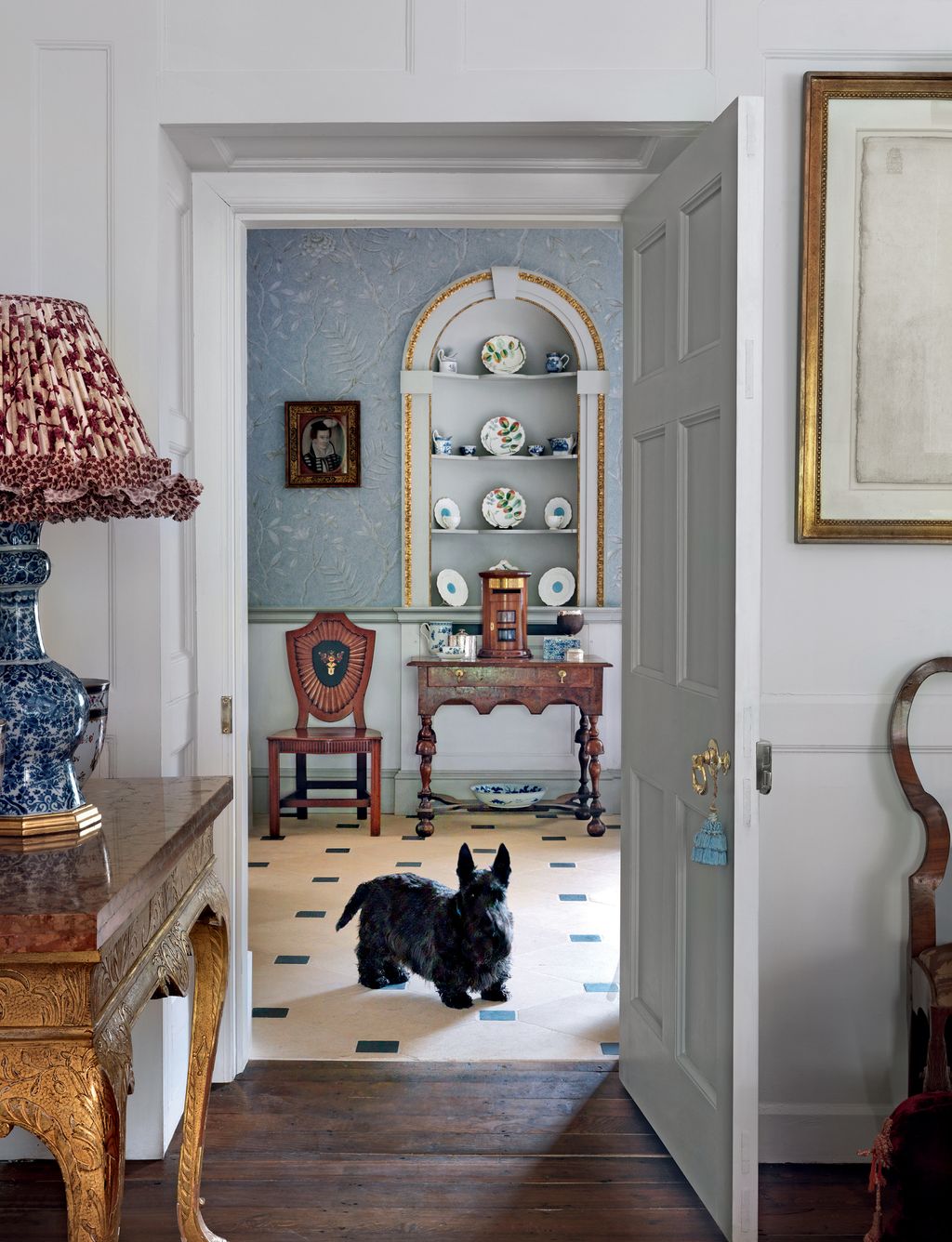
In the hall, Artisans of Devizes recreated the stone floor that was such a hallmark of Chicheley, and Coryndon copied a much-loved recessed niche for china, now flanked by the two Georgian hall chairs that had stood on either side of the original. A sporting painting hangs above the eighteenth-century table, and the family rocking horse sits in its familiar position below.
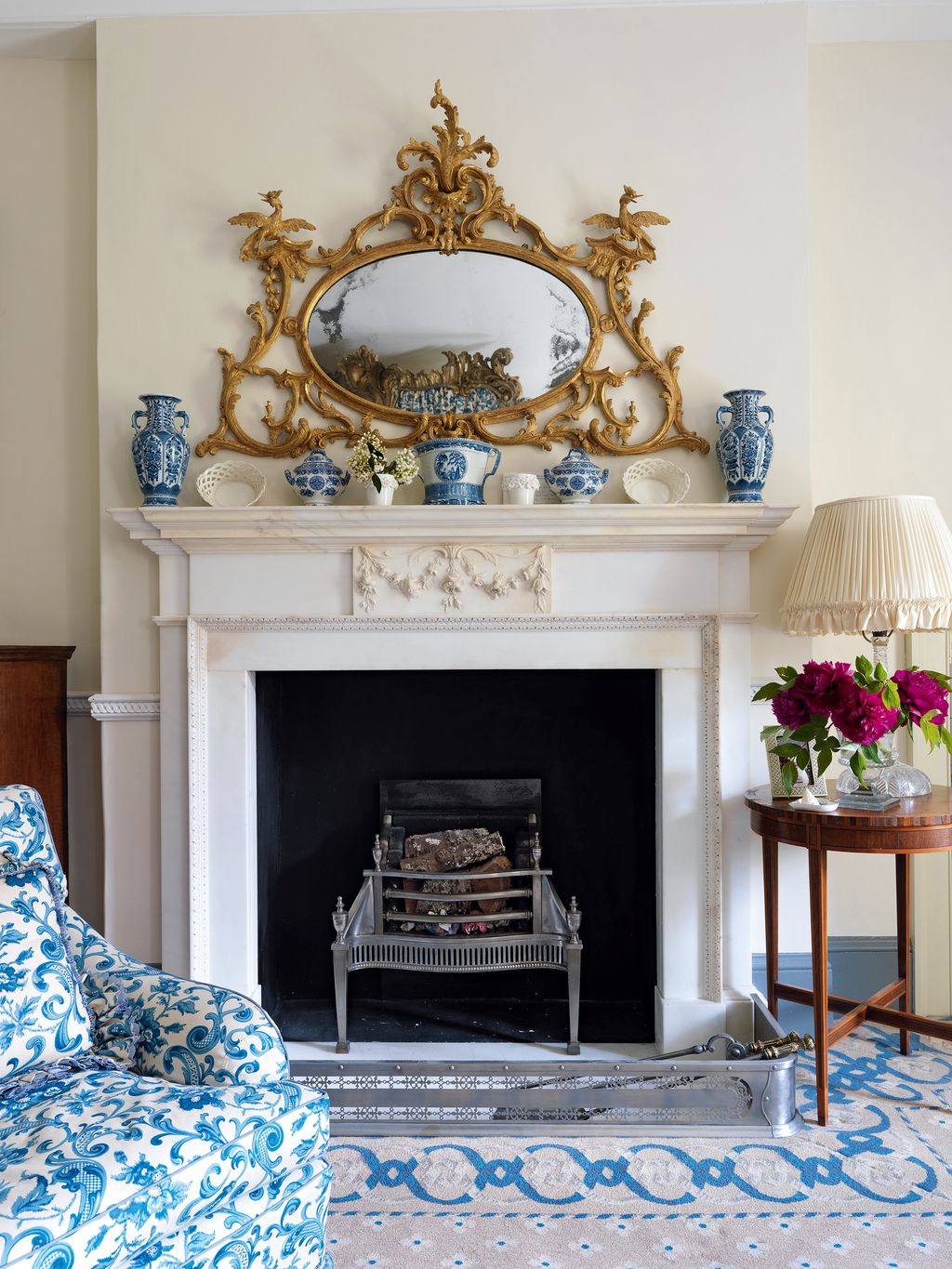
Inspired by the White Library at Helmingham in Suffolk, Diane chose a chalky grey colour for the drawing room from Farrow & Ball - a good background colour for her paintings and drawings and for the two rococo mirrors that John's mother bought for the house when she moved in 50 years ago. These were exuberantly carved, but looked lacklustre. Diane sent them to a small antiques shop on the Left Bank in Paris, where they were restored and gilded. Now they flank the doorway that leads out of the drawing room into an anteroom, and beyond into the diminutive library.
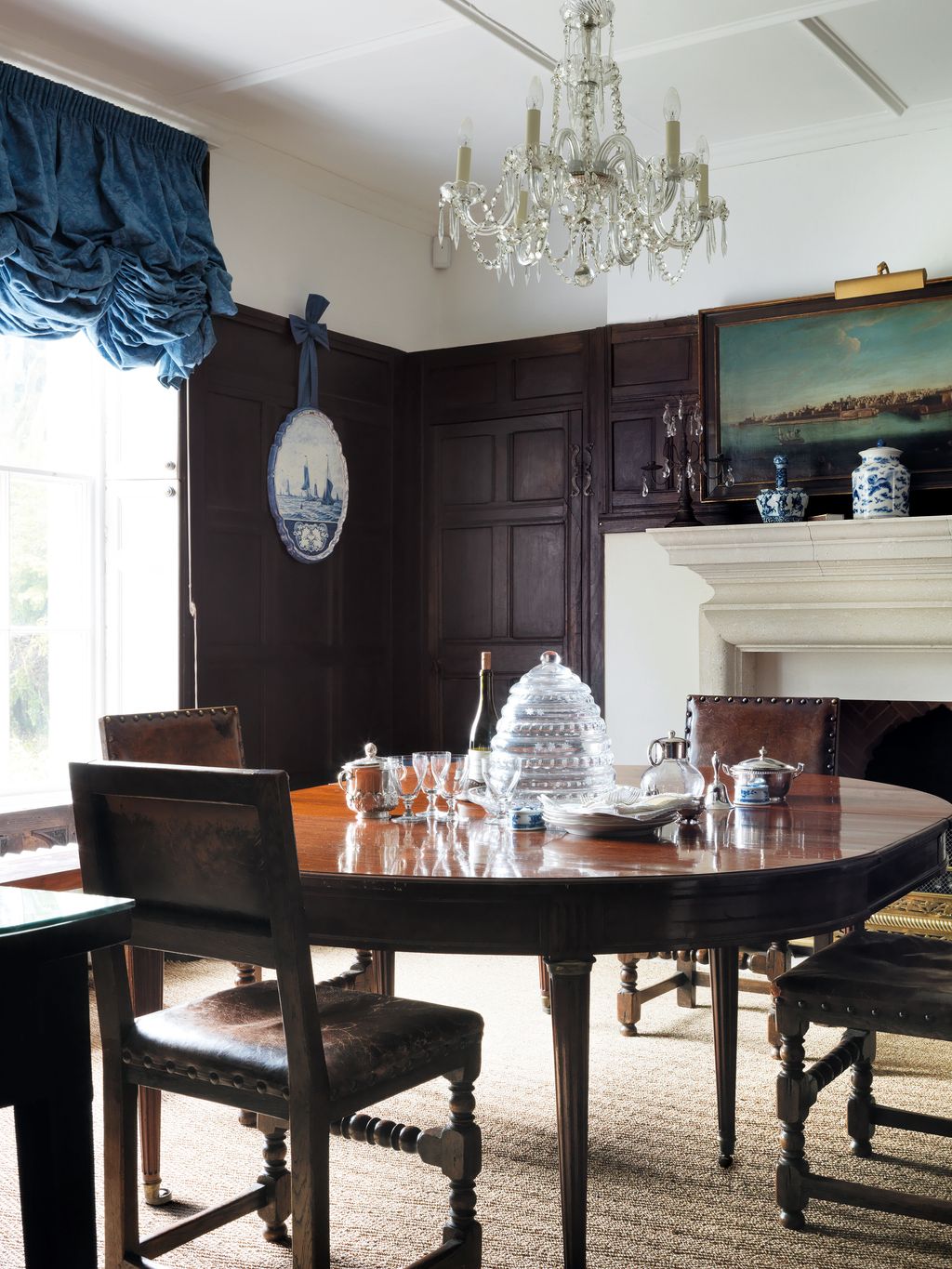
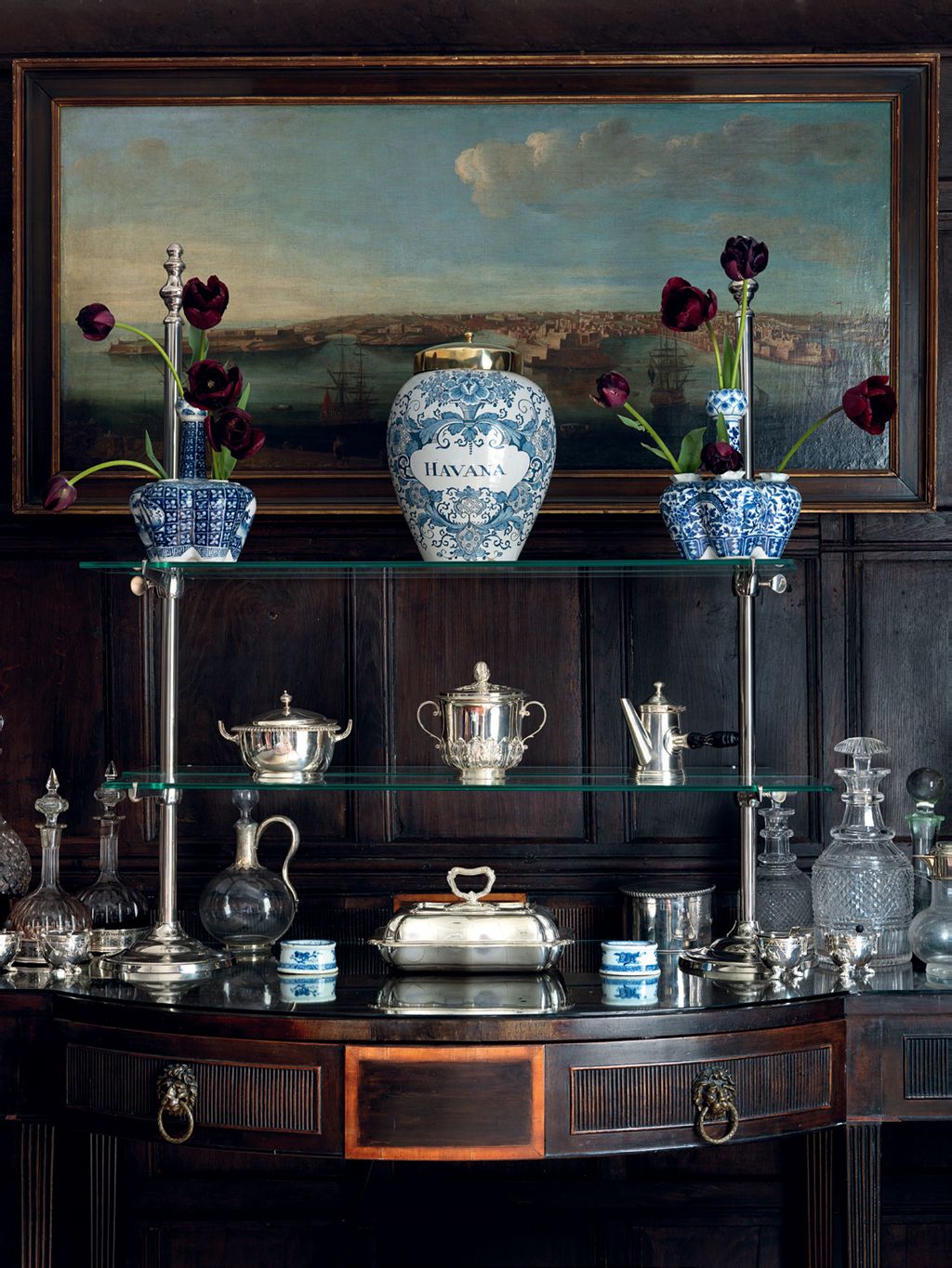
The dining room, with its original oak panelling, dates from the seventeenth century, but the windows had been enlarged in the eighteenth century, which lightens what must once have been a sombre room. It holds the Nuttings' remarkable collection of blue-and-white ceramics, including three Delft roundels and a tobacco jar dating from the seventeenth century.
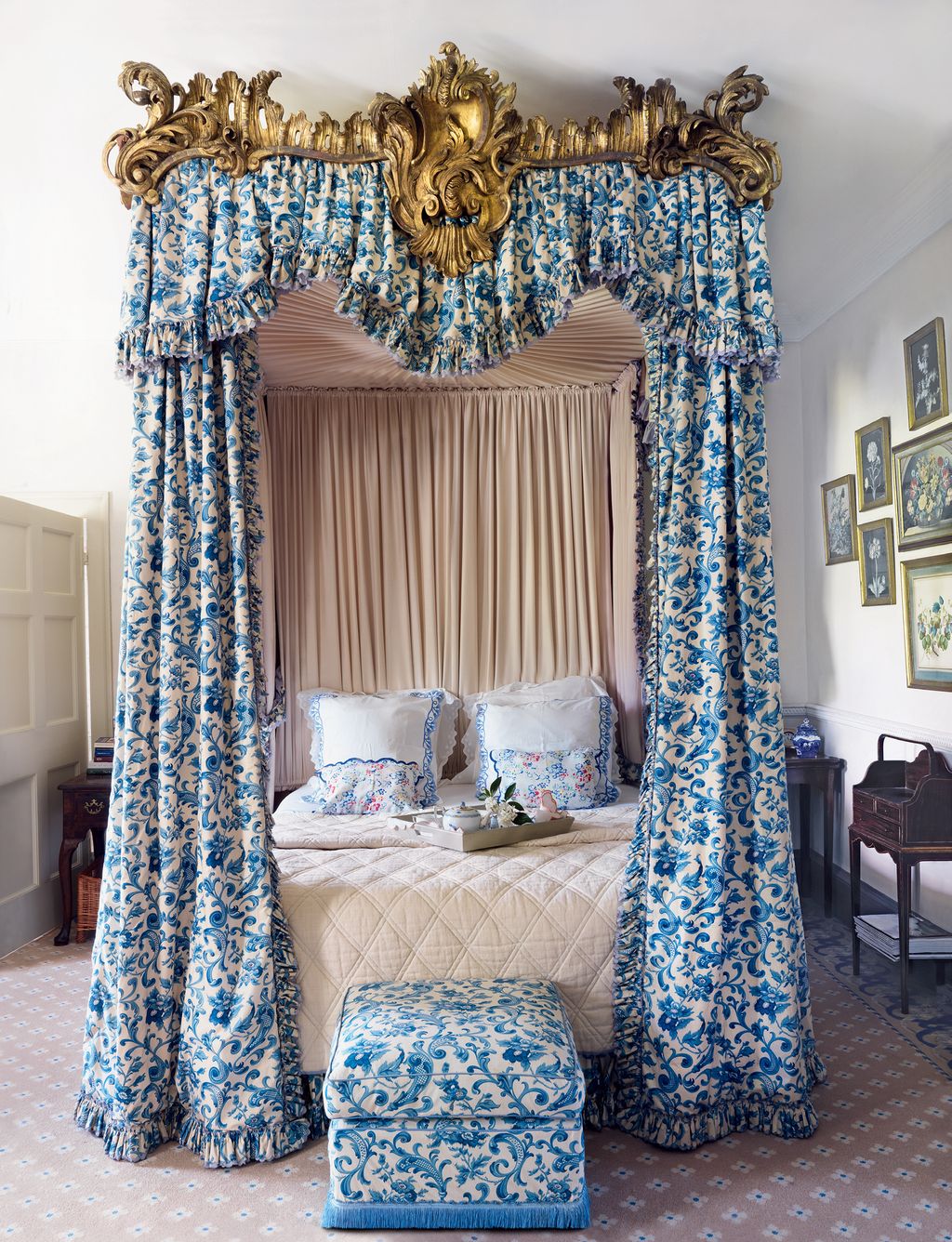
The main bedroom, although much smaller, is a replica of Chicheley's, and, with its carved and gilded tester fractionally lowered, the four-poster bed just fits. The eighteenth-century chimneypiece, rococo mirror and dressing table all came on the great move; only the guilloche dado rail is new, made to a design remembered by Diane from Nancy Lancaster's bedroom.
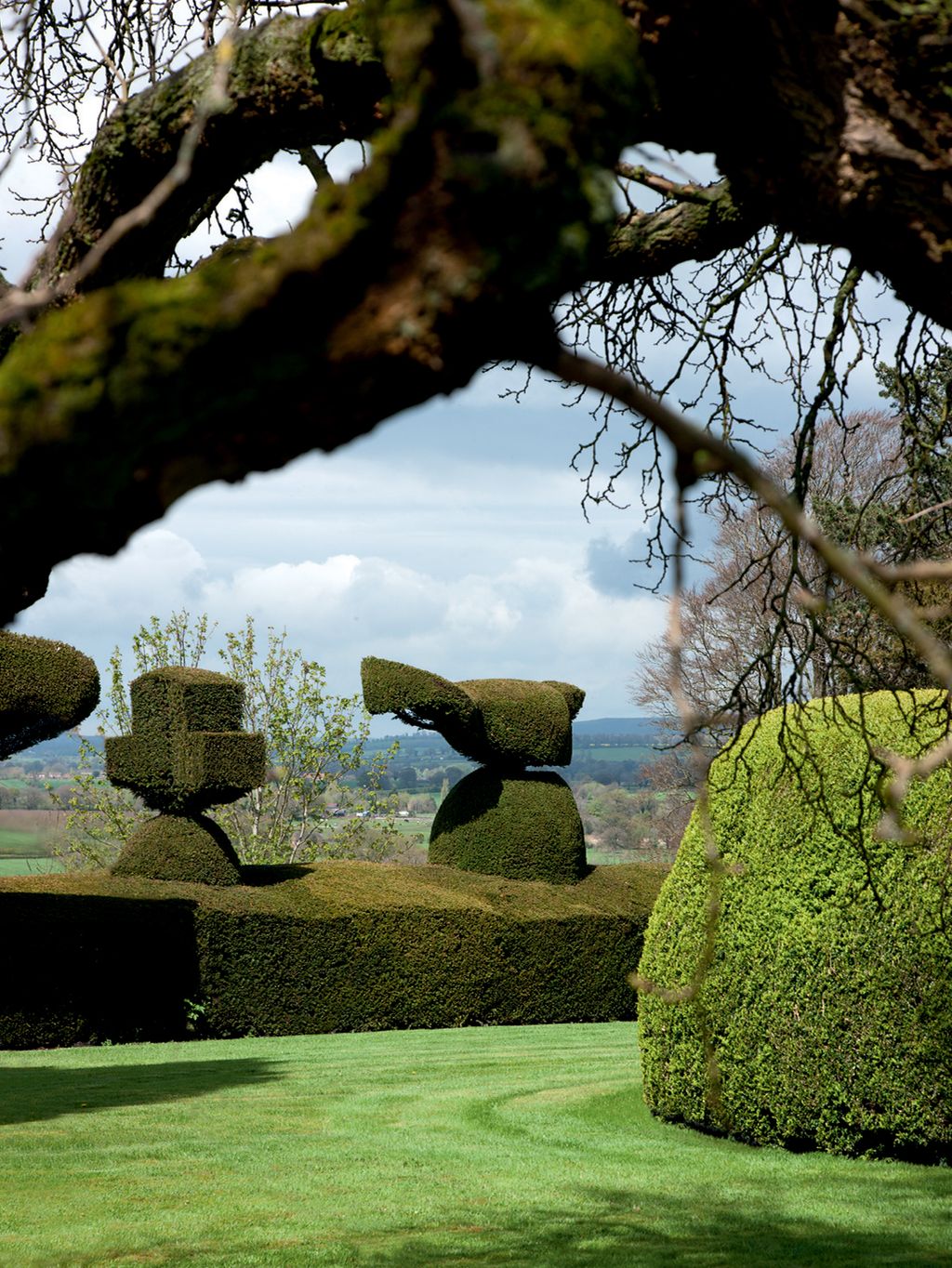
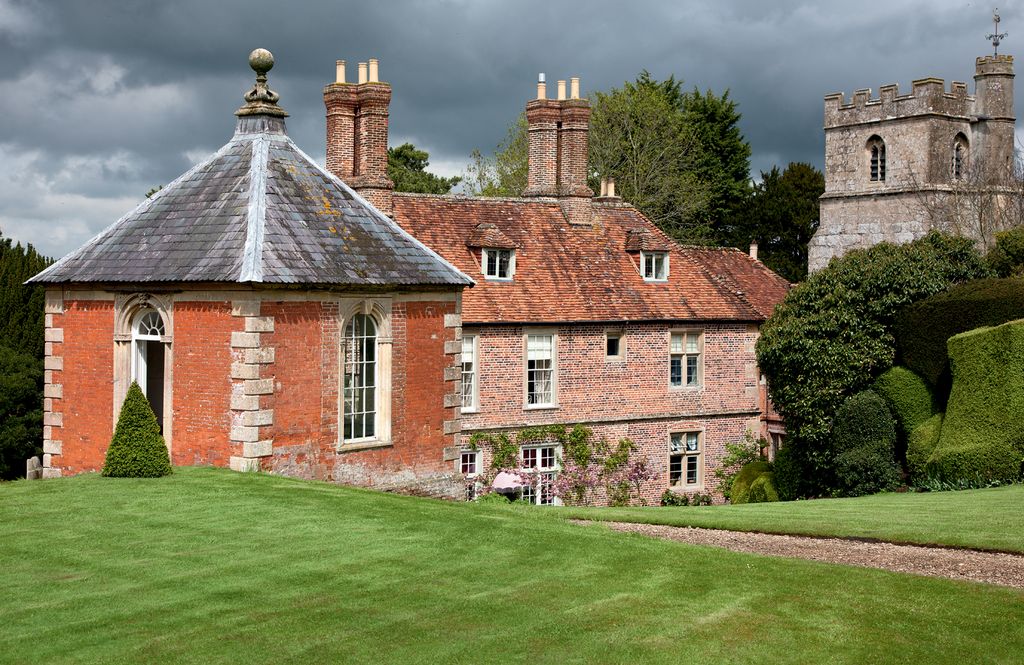
At some stage the house belonged to a magistrate; his courtroom survives, separate but adjacent to the house, with a lock-up, and a rare ducking pool for female offenders outside. In the garden, a monumental row of animal topiary draws the eye along the ridge, giving it an Alice in Wonderland feel, but the Nuttings' contribution has been more classical: a newly planted avenue of pleached limes behind a blue bench - a copy of one from Marly, Louis XIV's chateau near Versailles - and four symmetrical box pyramids.
Diane's creative spirit never wanes. Plans are under way to redesign the gravel approach to the house, with its lawn and yew hedges, and create a courtyard. But whatever form these changes take, we can be sure they will always be informed by a taste for eighteenth-century style.
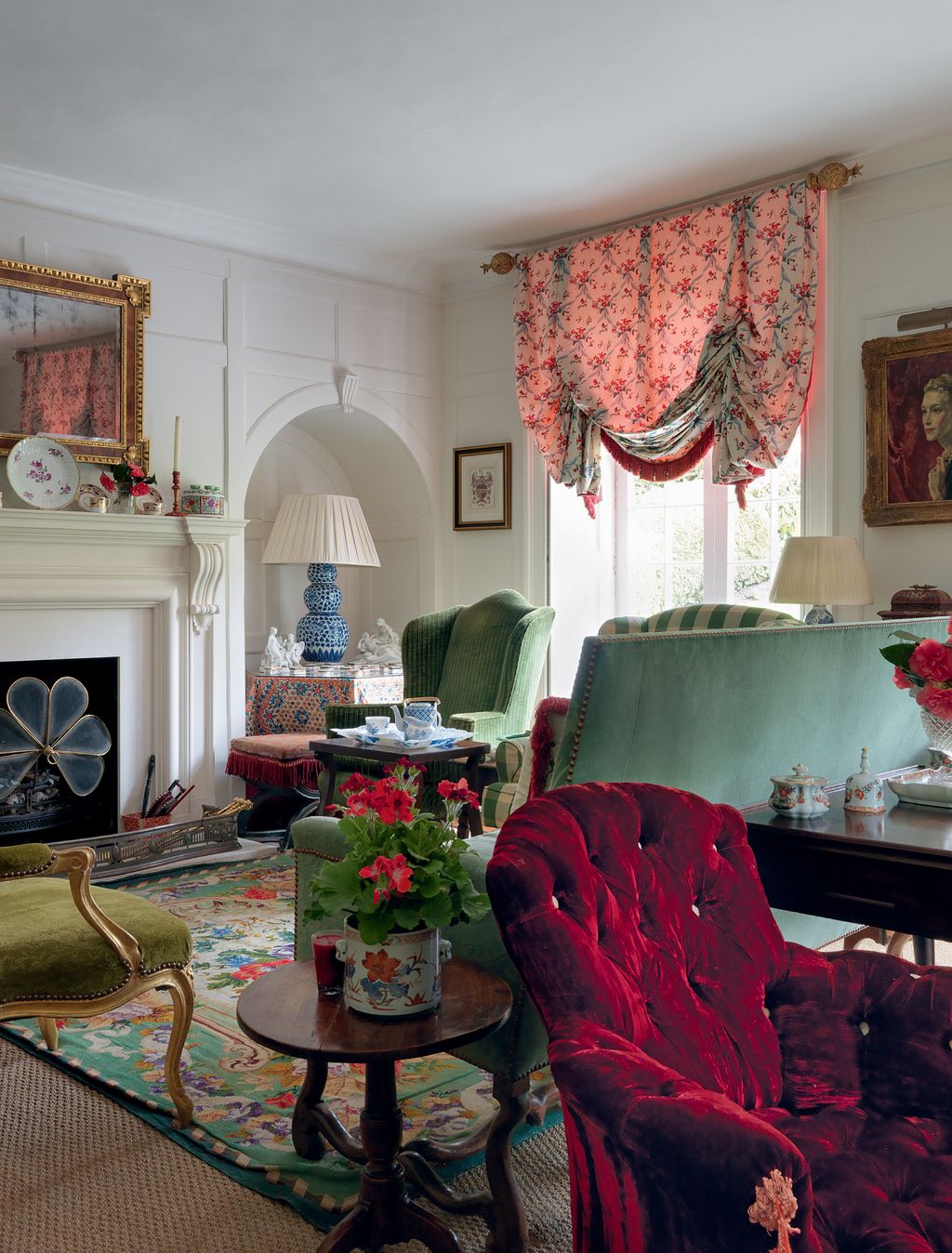 Simon Brown1/15
A bespoke sofa by Richardson & Paige in Devizes picks up the pale green of the rug, which was bought from Louisa Ramsay. The fabric for the blinds was bought in Paris, while the gilded pineapple finials were custommade in 1961 by Mallett.
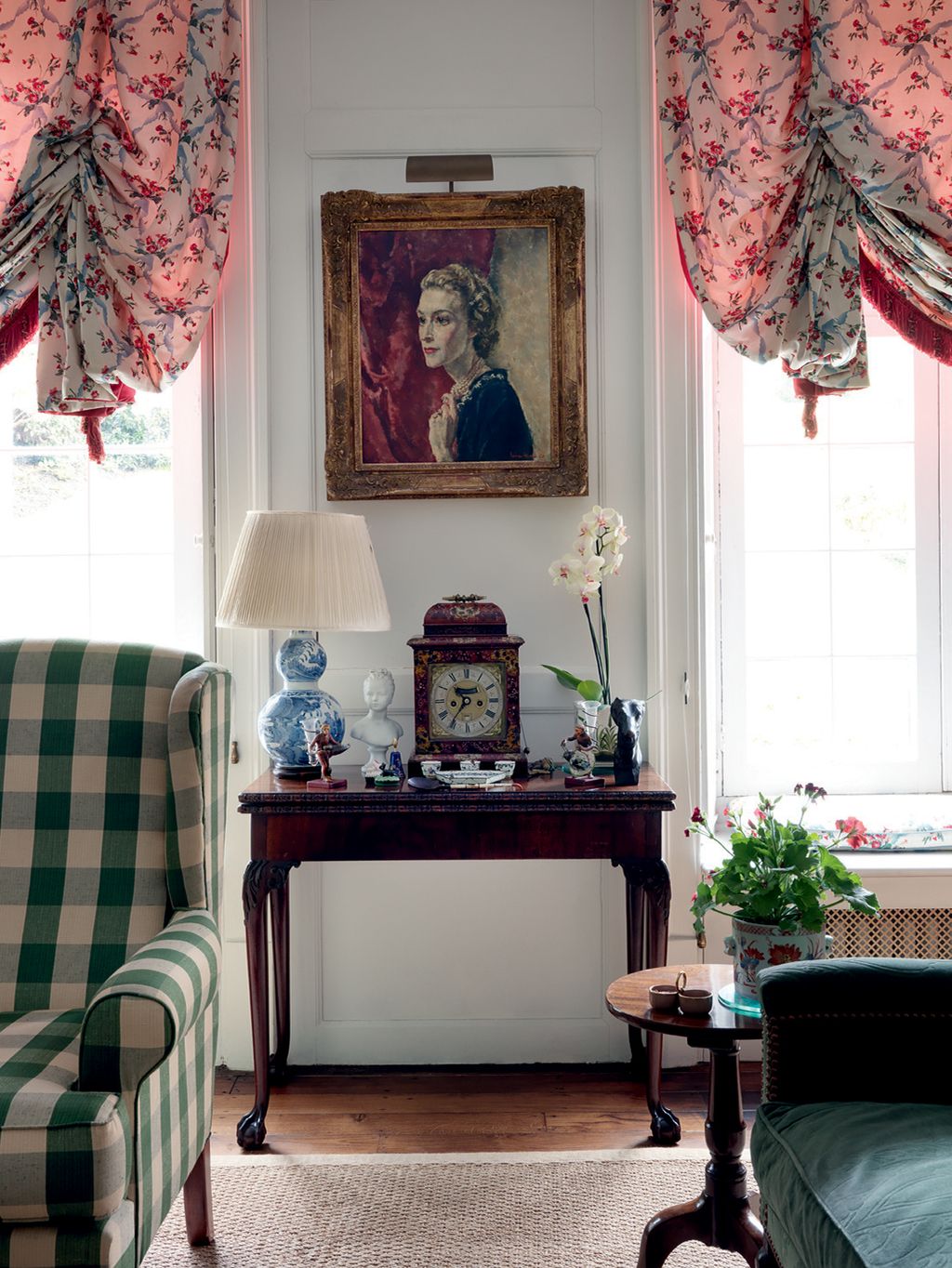 Simon Brown2/15
A portrait by Simon Elwes of John's mother in the library hangs between the windows.
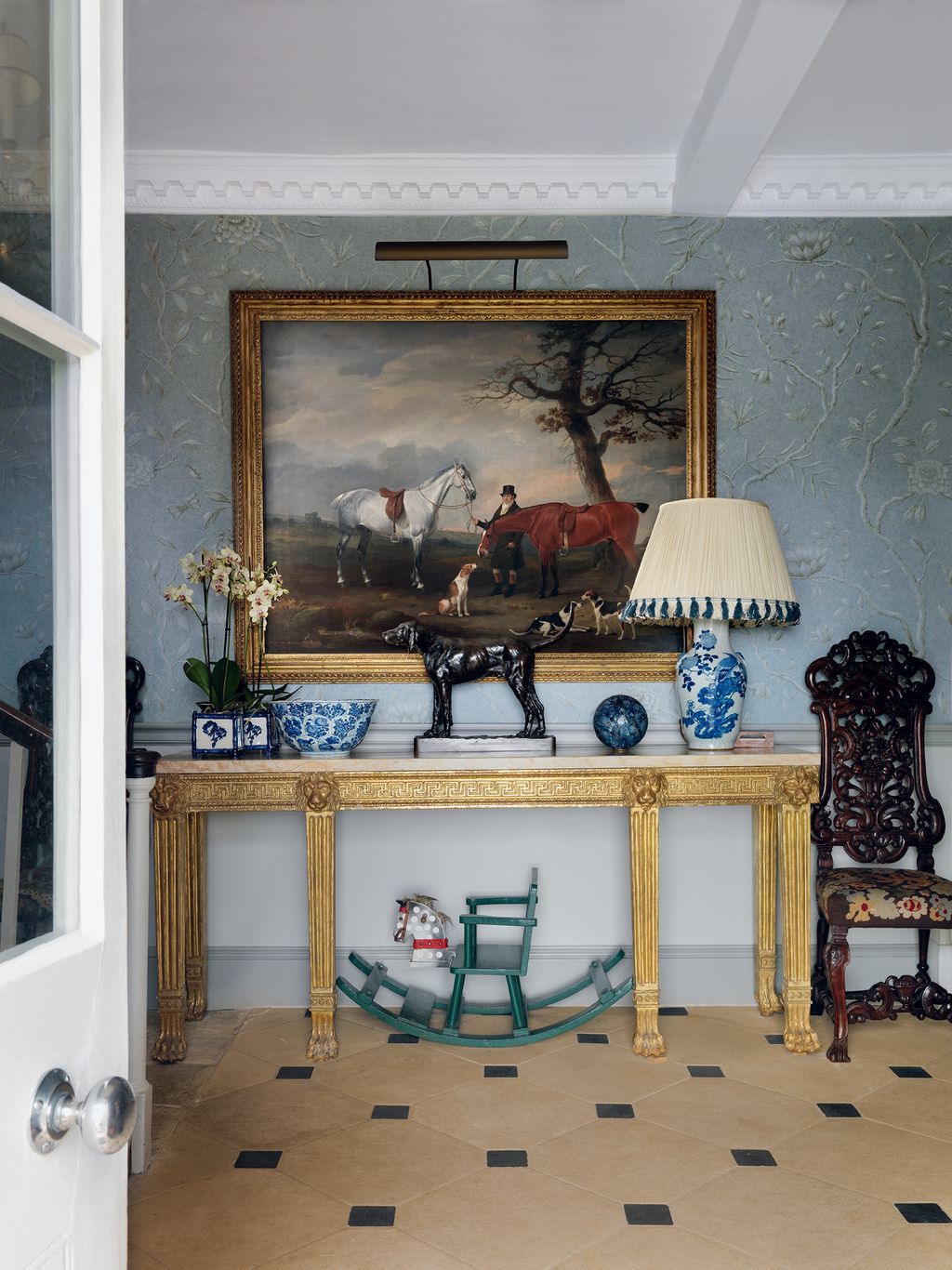 Simon Brown3/15
Design features of the hall at Chicheley, the owners' previous home, have been reproduced here, including the stone flooring by Artisans of Devizes.
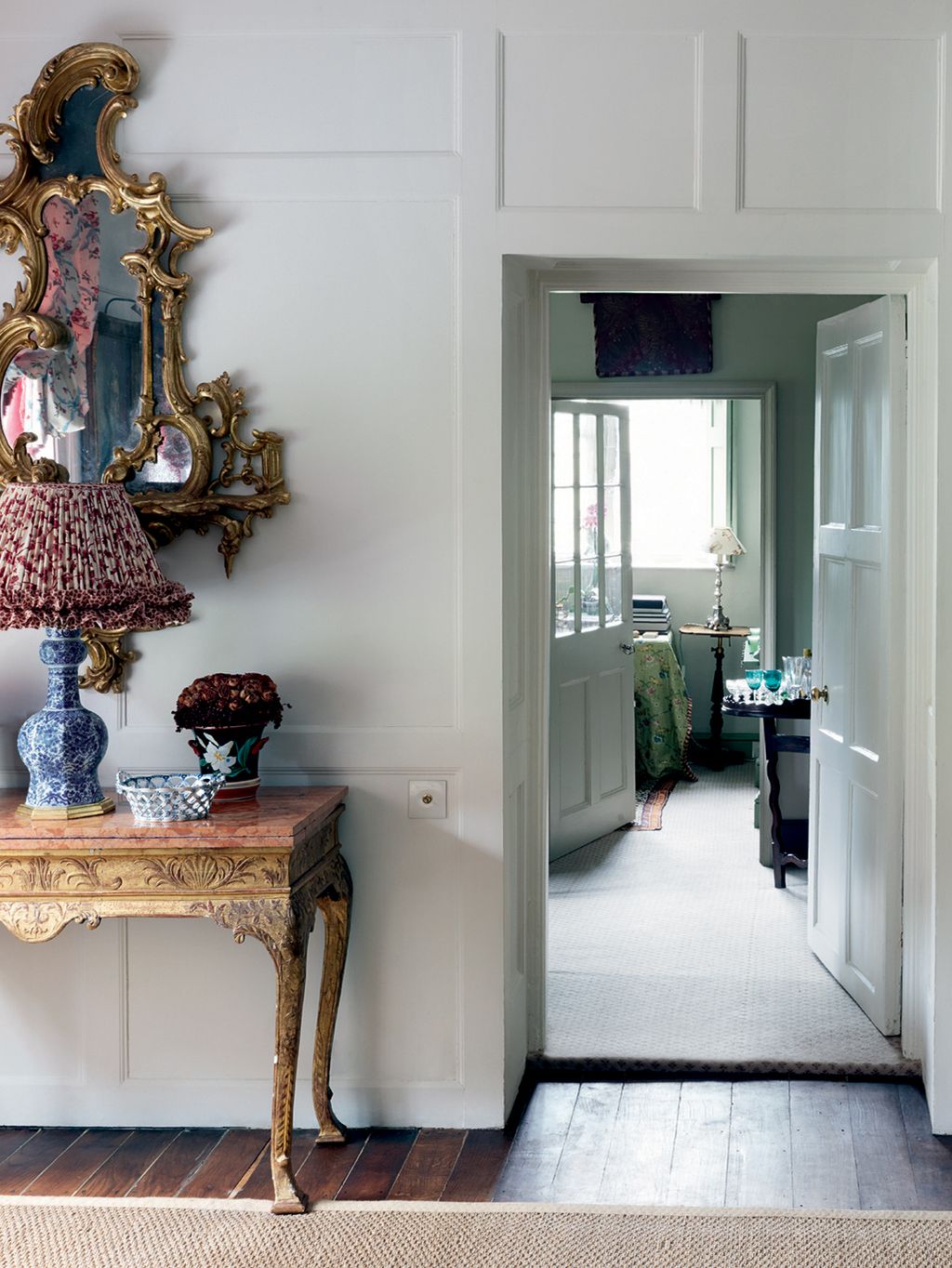 Simon Brown4/15
The drawing room is painted in 'Cornforth White' by Farrow & Ball. A door, flanked by one of a pair of rococo gilt mirrors, opens to an anteroom and the library beyond .


 Simon Brown5/15
The niche to display china has also been recreated from Chicheley by cabinetmakers Coryndon.
 Simon Brown6/15
The Delft roundel in the dining room dates from the seventeenth century, while the crystal beehive on the table is a recent acquisition from William Yeoward.
 Simon Brown7/15
Further silver and ceramics are displayed on a sideboard.
 Simon Brown8/15
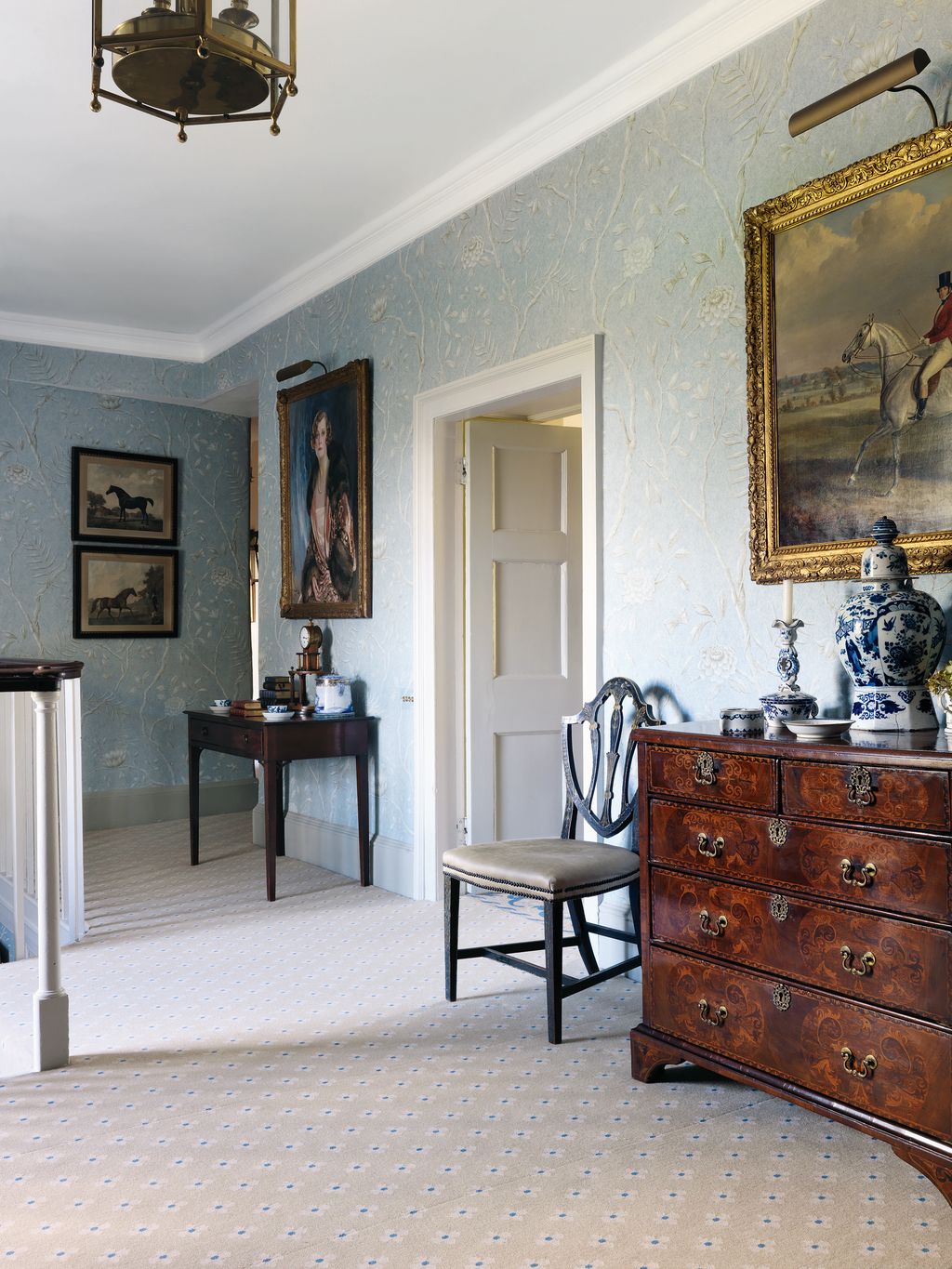
The Colefax and Fowler carpet used in the main bedroom was copied by Lynette Hood so that it could be extended to the landing (below) and the bathroom.


 Simon Brown9/15
 Simon Brown10/15
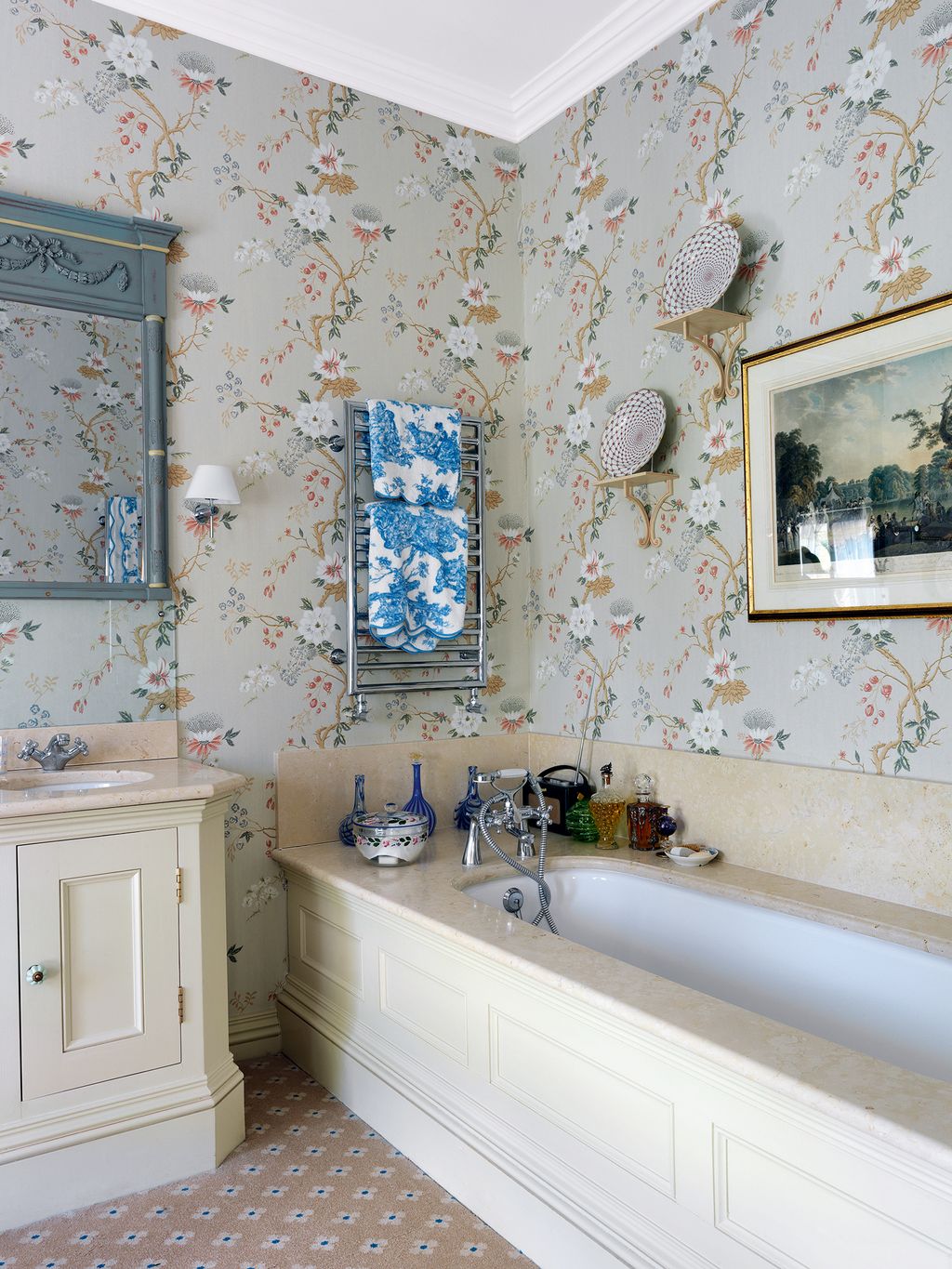
The bathroom is papered in 'The India Paper' by Cole & Son.
 Simon Brown11/15
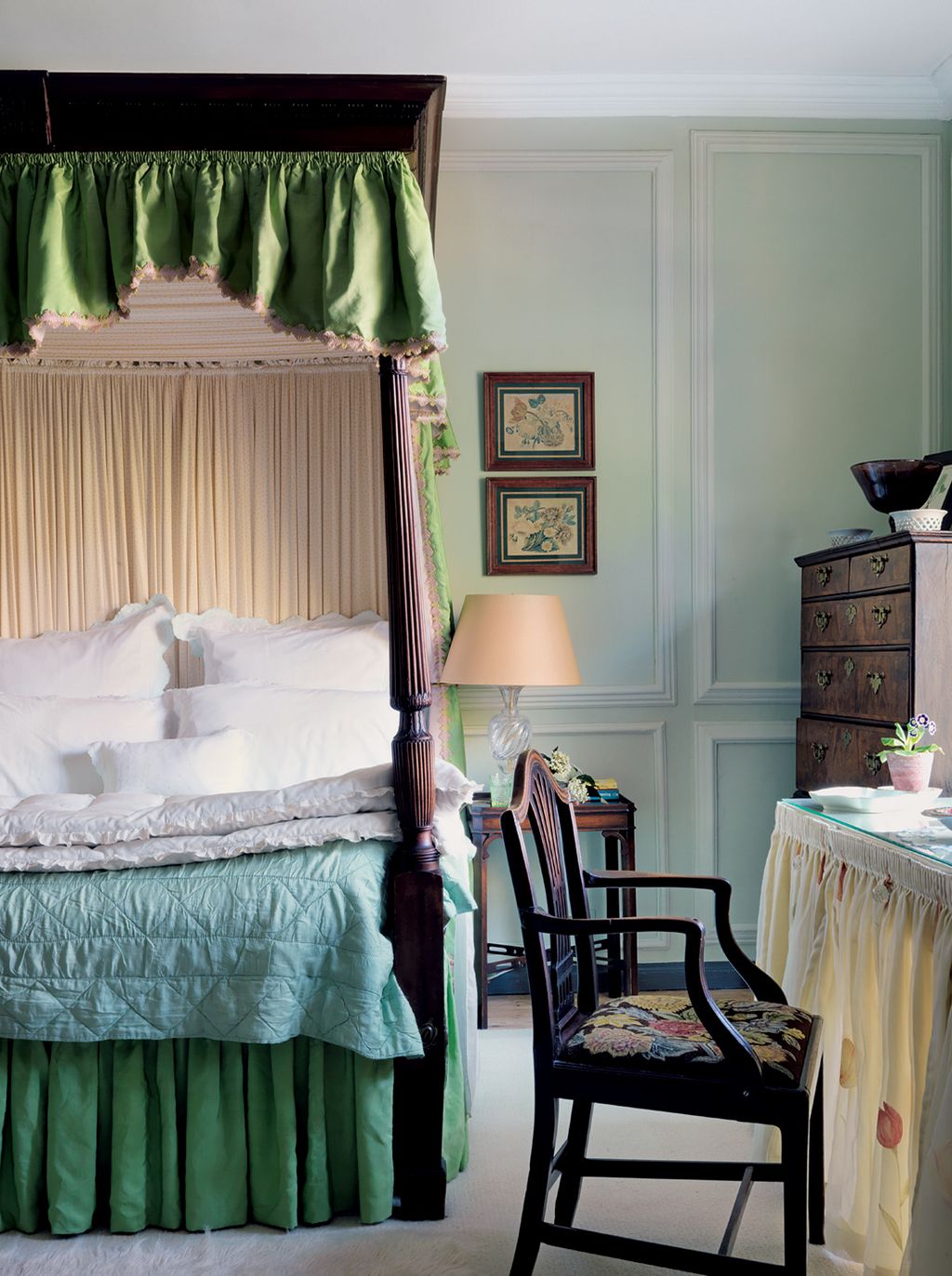
Nina Campbell made the apple-green silk bed hangings in this spare room for the owner's former London home.
 Simon Brown12/15
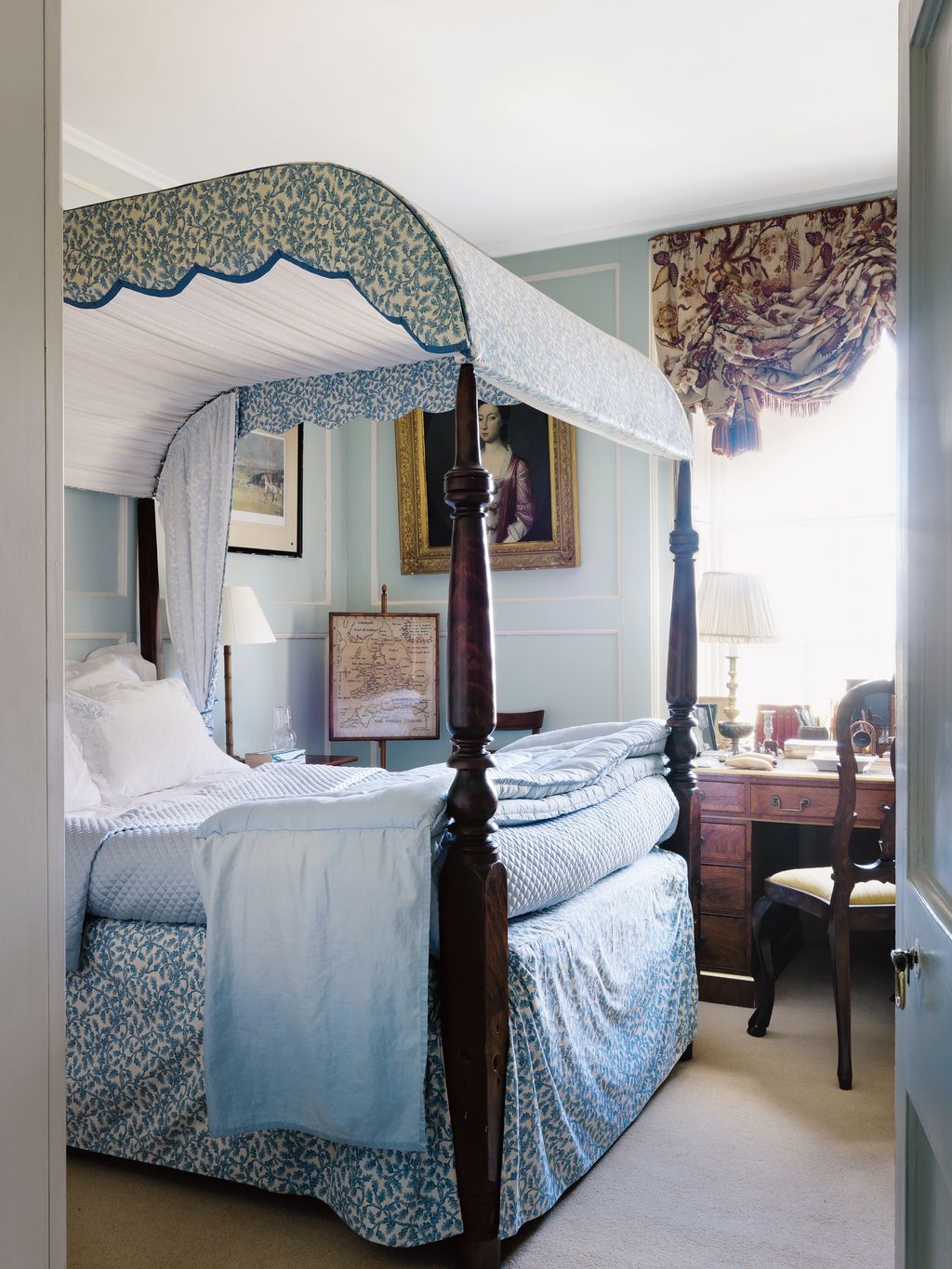
The nineteenth-century American bed was found in an antiques shop in Henley in the Seventies.


 Simon Brown13/15
The fabric used for the bed hangings in the main bedroom is a Seventies Colefax and Fowler chintz, since discontinued.
 Simon Brown14/15
Topiary animals add a surreal note to the garden.
 Simon Brown15/15
The house belonged to a magistrate at some stage; the courtroom still stands adjacent to the house.


