
The Brooklyn apartment of designer Sean McNanney and artist Sinan Tuncay is filled with eclectic curiosities from around the world
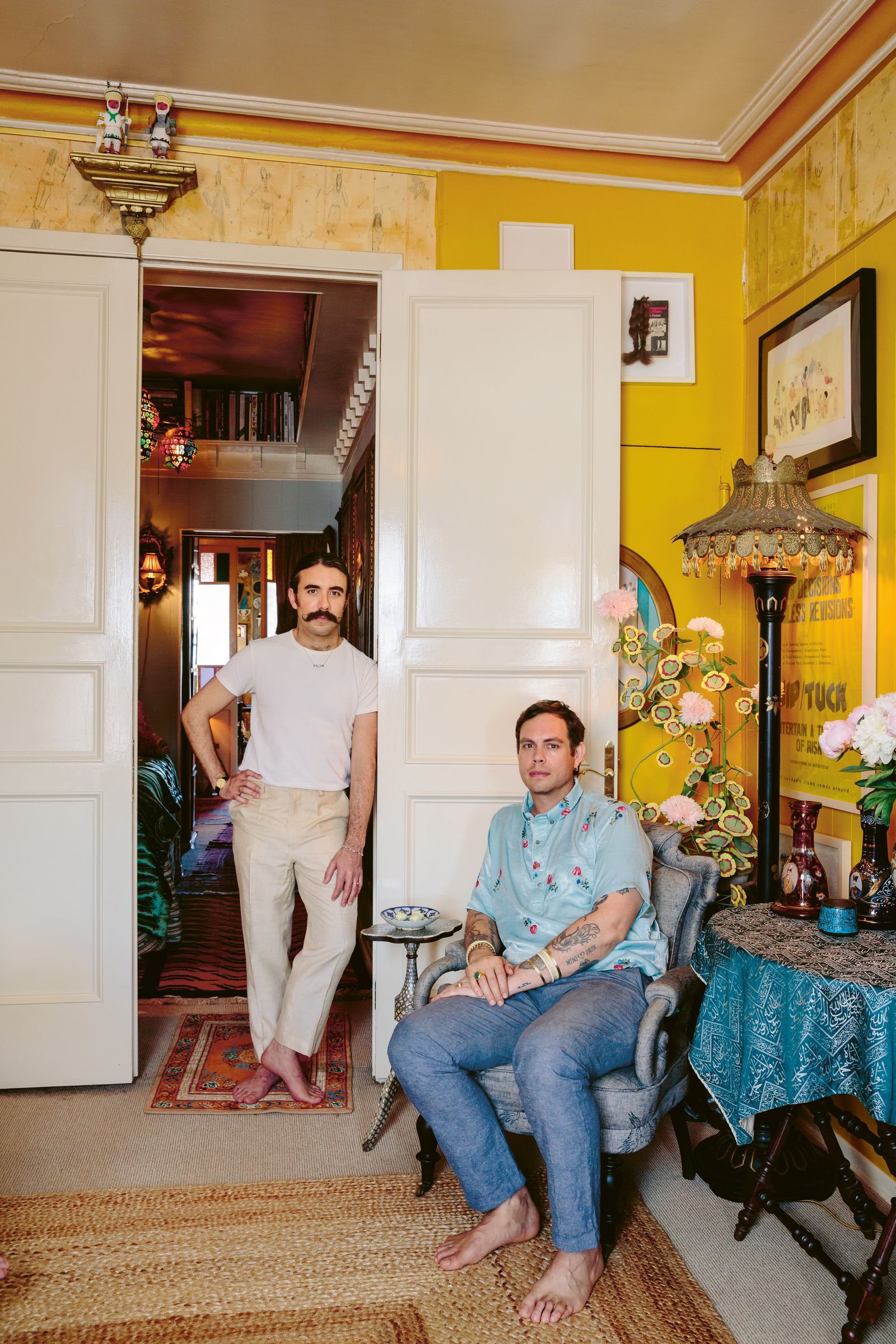
For all the talk of New York City becoming a playground for the rich, there is, in the year 2023, a type of inhabitation – closely related to the treehouse – that remains relatively accessible to the impecunious, unconventional, and adventuresome. These are called walk-up apartments, and until the last one is razed, eccentrics with the thighs of mountaineers are sure to call the city home.
Sean McNanney and Sinan Tuncay are two of these mountaineers, and beyond lugging themselves and their groceries up and down the heights of their building, they haul an inordinate number of artworks, objects, and (there is no other word for it) curiosities up and into their top-floor railroad apartment, from which these things may never descend. The photos in these pages are tacit proof of the couple’s physical fitness, and they reveal their considerable talent as orchestrators of what we might call the theater of life. This theater, as New Yorkers know, can play out behind any door, up any staircase, within any apartment – or treehouse. In Sean and Sinan’s, it plays out in an enfilade of rooms given over to the making of new things (Sean is a designer, Sinan an artist), the collecting of old things, and the practice of living beautifully and thoughtfully in their midst.
Impecunious? No. Unconventional and adventuresome? Read on.
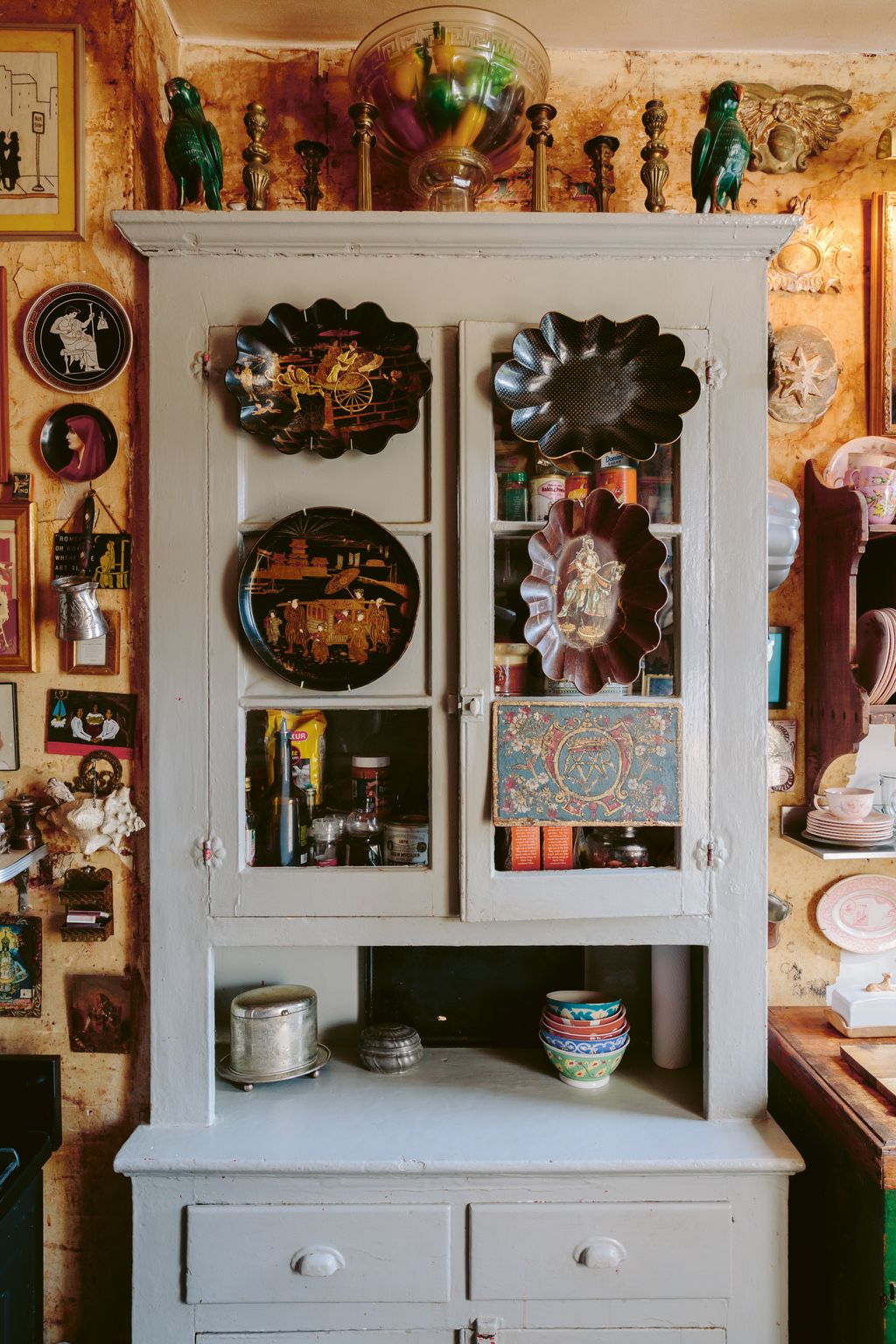
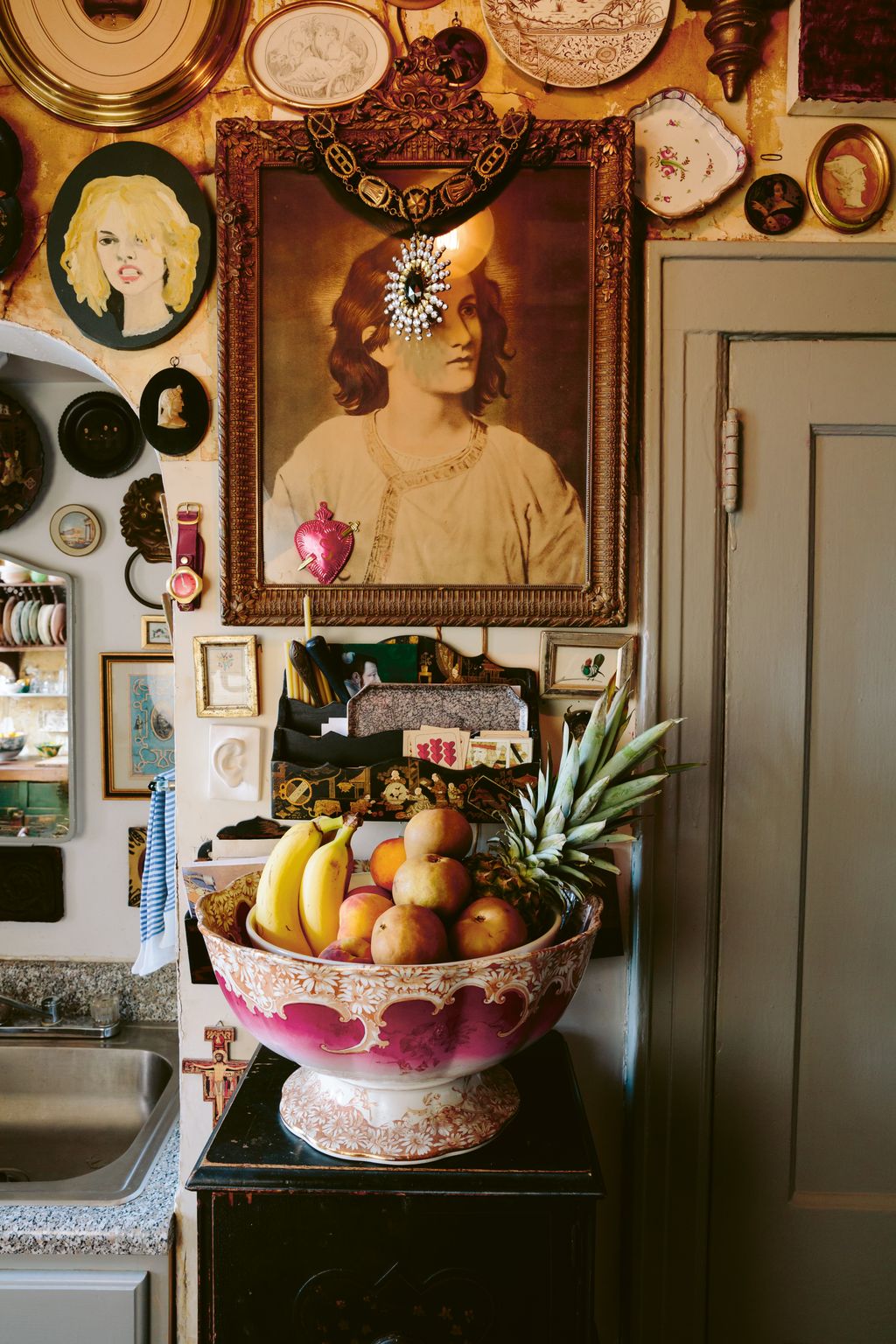
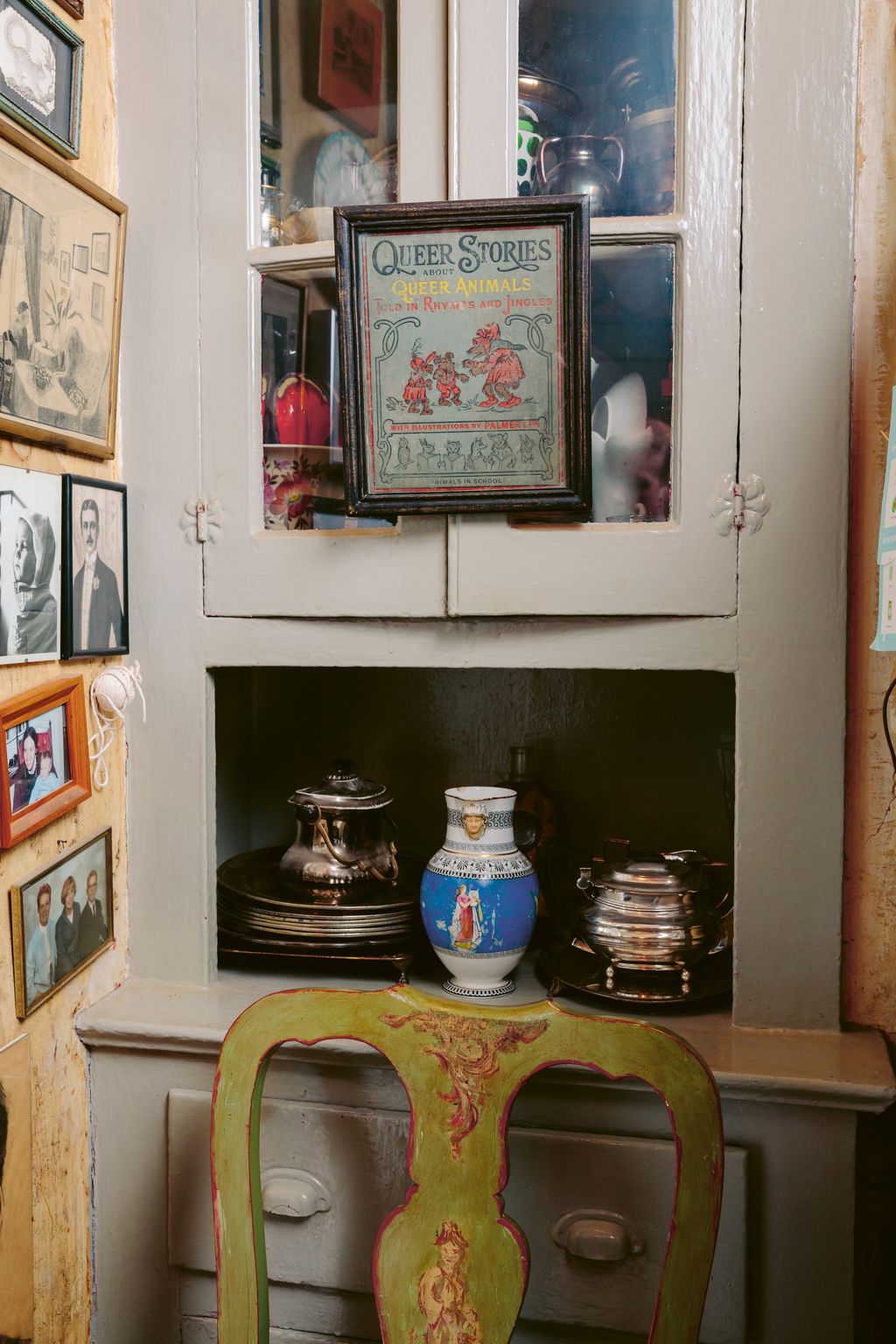
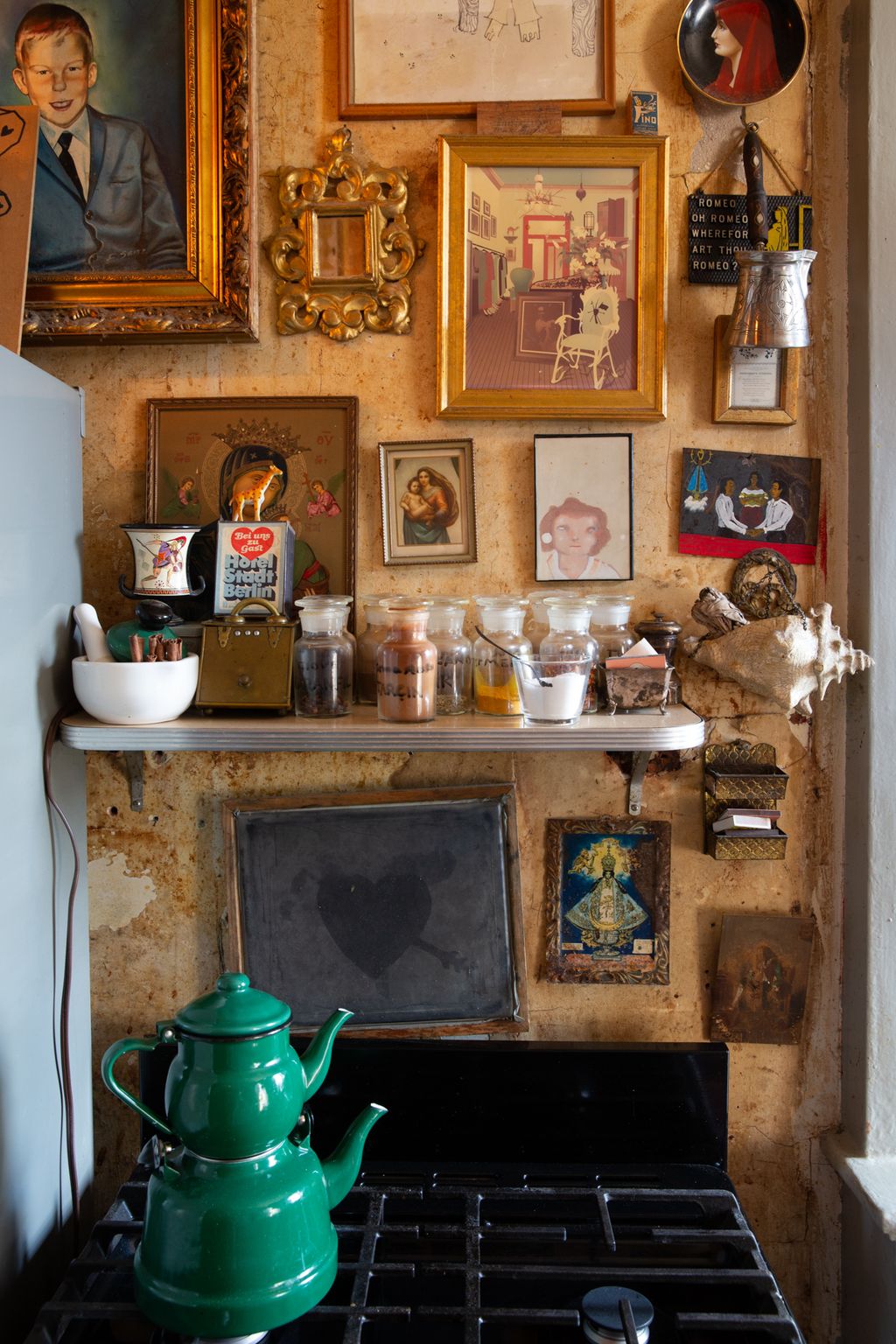
For when you step through Sean and Sinan’s front door, you are in a tenement kitchen, and if you look down, or into a mirror, you might expect to find yourself dressed in 1890s garb. Or perhaps the 1890s are dressed in you. The ochrey-umbery plaster peels in a way that feels distinctly pre-moon landing, and while the papier-mâché bread trays, Uzbek bowls, and Aesthetic Movement plates are very fine, they have the look of cargo carried over the sea in a great jumble, along with Jack Dawson, below the waterline. Maggie (A Girl of the Streets) would feel right at home. It is doubtful, however, that she would have possessed a punk rock portrait roundel, an ironic wristwatch wall clock, or a framed cover of Queer Stories About Queer Animals. If she had, I’m guessing they would have had a less ironic valence: more magpie, less gay liberation.
Taking in these anachronisms, you could be forgiven for asking, When am I?

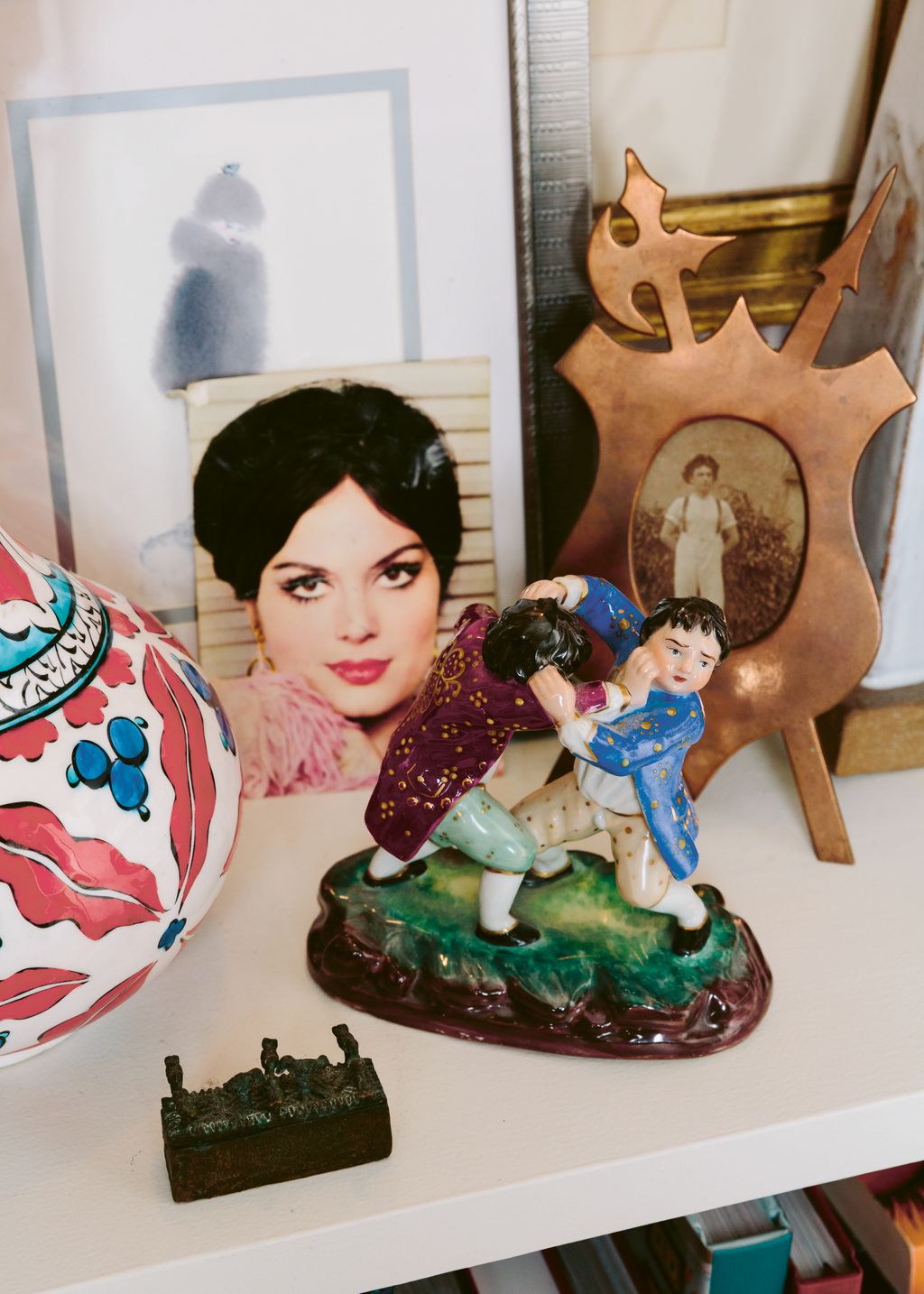
As you step into the next room, you are shuttled right out of Tenement City into a more opulent world of Ottoman associations. You may be in the 2020s now, but you are not in Brooklyn. From a position high above the room, in the center of a symmetrical salon-style hang, a beturbaned man presides over the scene, which consists of a divan, of sorts, and a low bookcase topped by objets and mementos. Most of these are Turkish, like Sinan, but there are European things—and even a painting by Sean’s mother—mixed in here and there. Like Turkey, and Sinan, this little lounge in the center of the apartment syncretically straddles spheres.
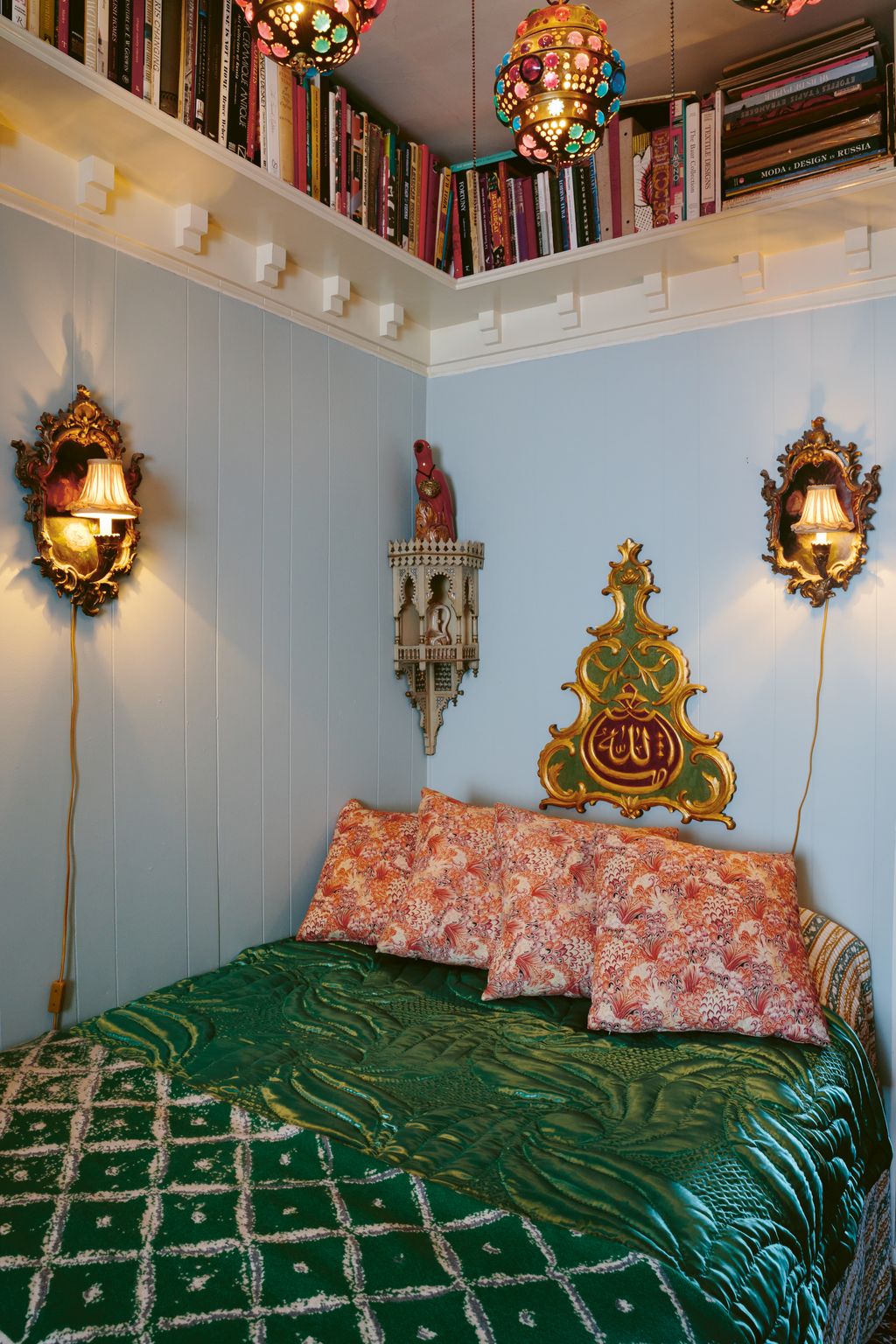
The next room in the enfilade is the couple’s bedroom, which evokes Venice and Egypt as much as Turkey. Pausing for a moment in yet another slippery, sphere-straddling room, you could be forgiven for asking, Where am I?
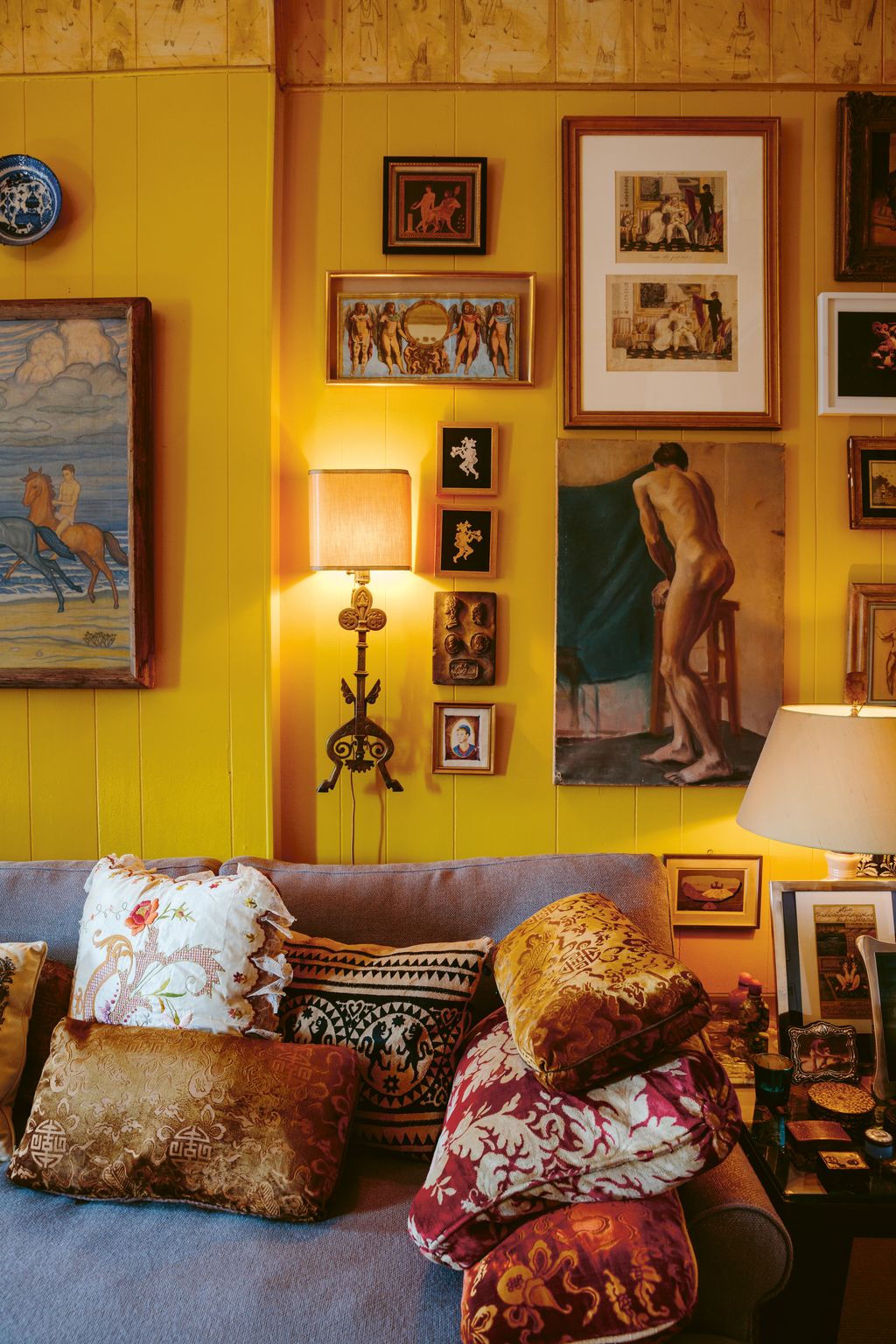
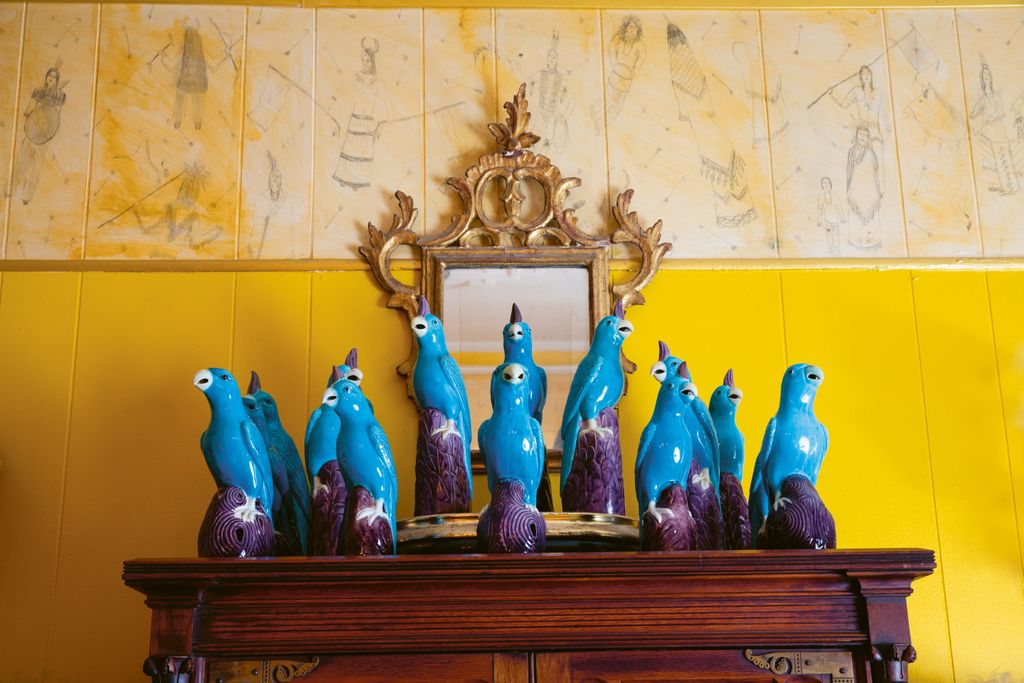
The answer becomes clear when you reach, in the next, inordinately yellow room, the terminus of the apartment. Here, the material culture of seemingly every time and place is on display, and any question of when or where you are flies out of the window. (And there are windows here, at the back of the walk-up.) A flock of Chinese ceramic parrots, collected individually over time, hovers near the ceiling. Behind them is an 1840s Italian mirror hanging against a frieze drawn by Sean in the faintest, most elegant hand. A Biedermeier armchair beckons you to sit and admire it all. Inevitably, however, your eye will be drawn to the collection of homoerotic art covering every wall and surface of the room except for the floor. It would take a small team of art historians and archaeologists to count all of the buttocks, and at no point in the process would they wonder when or where they are. Neither would you.
For here, at the heart of Sean and Sinan’s collection, in the theater of their life, you could be nowhere else. Only a walk-up apartment on a quiet street in Williamsburg could hold so much of the world. Only up an endless staircase, your legs aching, could you open a door on quite so many times and places (and buttocks).
New York City may be a playground for the rich, but for now, at least, it remains a playground for the rich in imagination, too. If you know where to look, and you have strong thighs, you can climb the stairs and find it.

Extracted from The New Antiquarians: At Home with Young Collectors by Michael Diaz-Griffith, published by Monacelli (phaidon.com/monacelli).
 Brian W Ferry1/12
Amid the ode to the male form are romantic objects selected for their own, non-figural qualities, including a sconce designed by Christopher Dresser. Extending the erotic lounge atmosphere are cushions covered in a variety of materials, from Mongolian silk velvet to Wiener Werkstätte lace. An embroidered silk specimen is from Sinan’s great-grandmother
 Brian W Ferry2/12
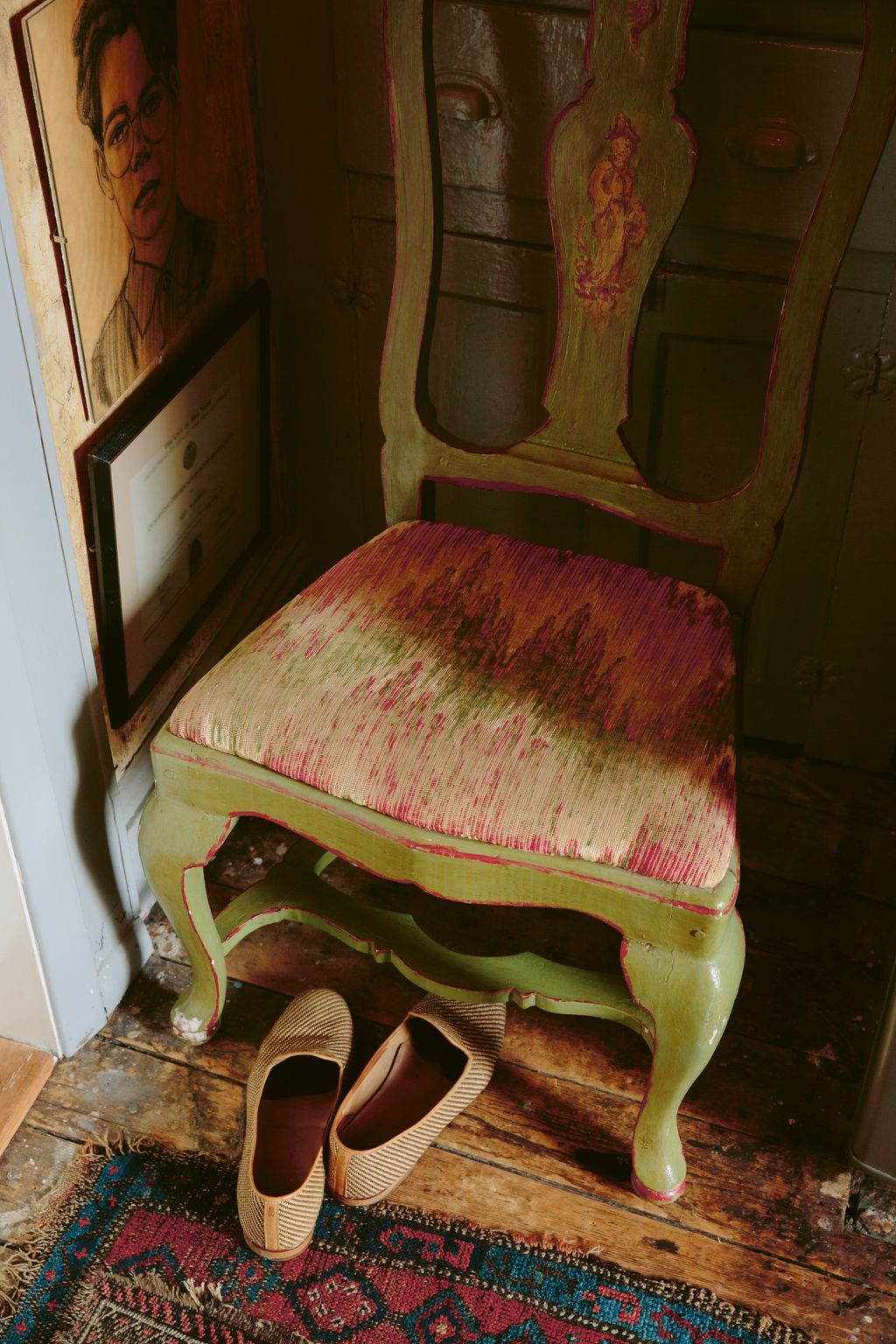
An 18th-century Italian painted chair is in active use, and the straw slippers by Stubbs & Wootton were not styled – when you live with beautiful things, whether they are new or old, happenstance conspires to produce picturesque results
 Brian W Ferry3/12
New Antiquarians tend to populate their kitchens with objects from their collections, and Sean and Sinan are no exception. Here, papier-mâché bread trays decorate the front of a painted wooden dresser, where collected bowls from Uzbekistan are stored
 Brian W Ferry4/12
Religious artwork is among the fascinating medley of pieces showcased in the tenement kitchen


 Brian W Ferry5/12
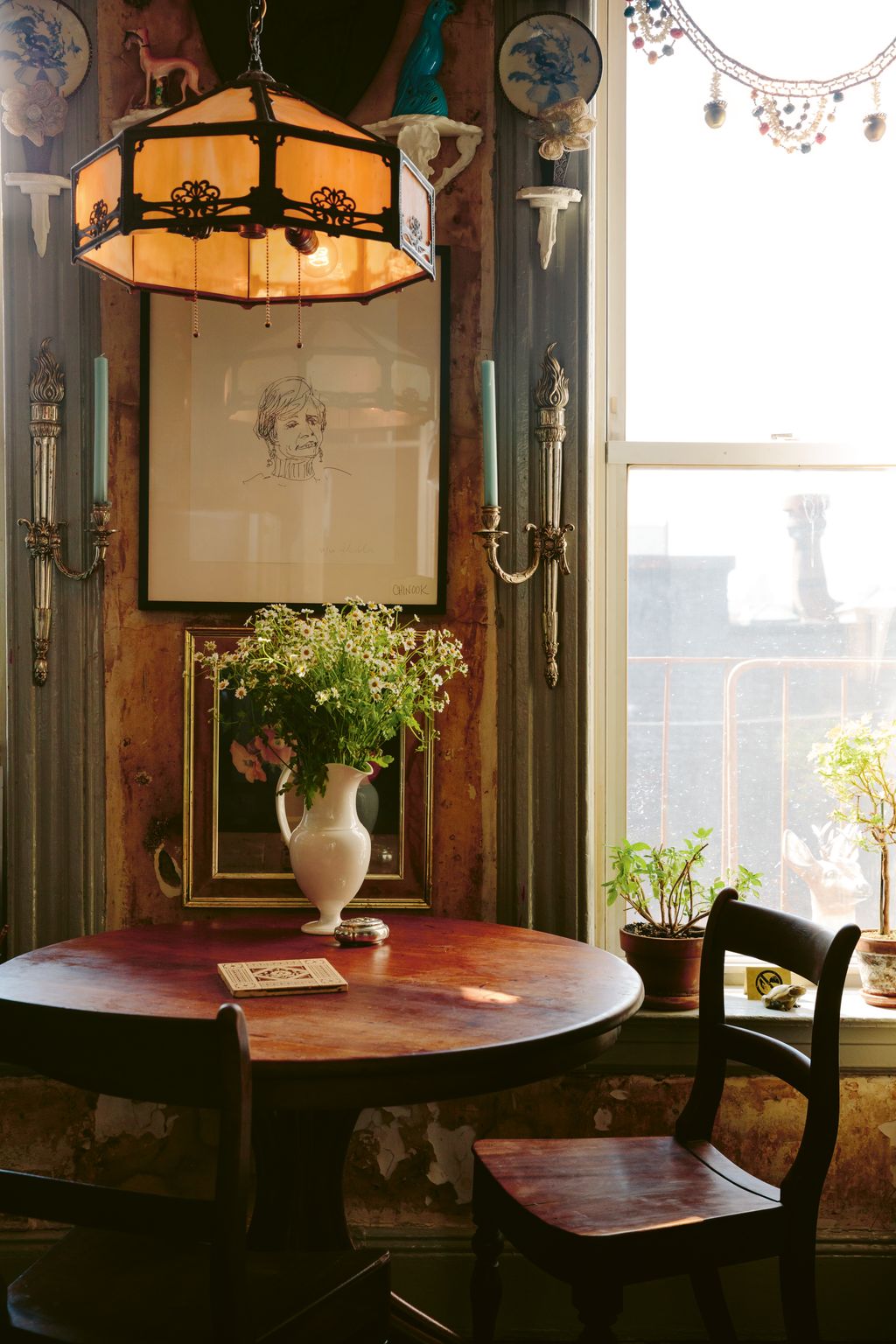
An eclectic mix of antique and vintage pieces furnishes the rooms of their home
 Brian W Ferry6/12
Antique photographs and framed book covers, including Queer Stories about Queer Animals, decorate this corner
 Brian W Ferry7/12
A low bookcase is topped by objets and mementos. Most of these are Turkish, reflecting Sinan's heritage
 Brian W Ferry8/12
While Sean and Sinan collect widely, with the construction of a total world in mind, they also maintain deep, serial collections of objects such as these Chinese ceramic parrots, which have been in continuous production since the 18th century. Like other discerning collectors, they tend to avoid examples produced after the Second World War


 Brian W Ferry9/12
In a corner of the sitting room, a Biedermeier armchair is teamed with an Aesthetic Movement floor lamp. Ottoman hookah bases are displayed on the side table
 Brian W Ferry10/12
 Brian W Ferry11/12
The couple’s bedroom draws on Venetian, Egyptian and Turkish influences
 Brian W Ferry12/12
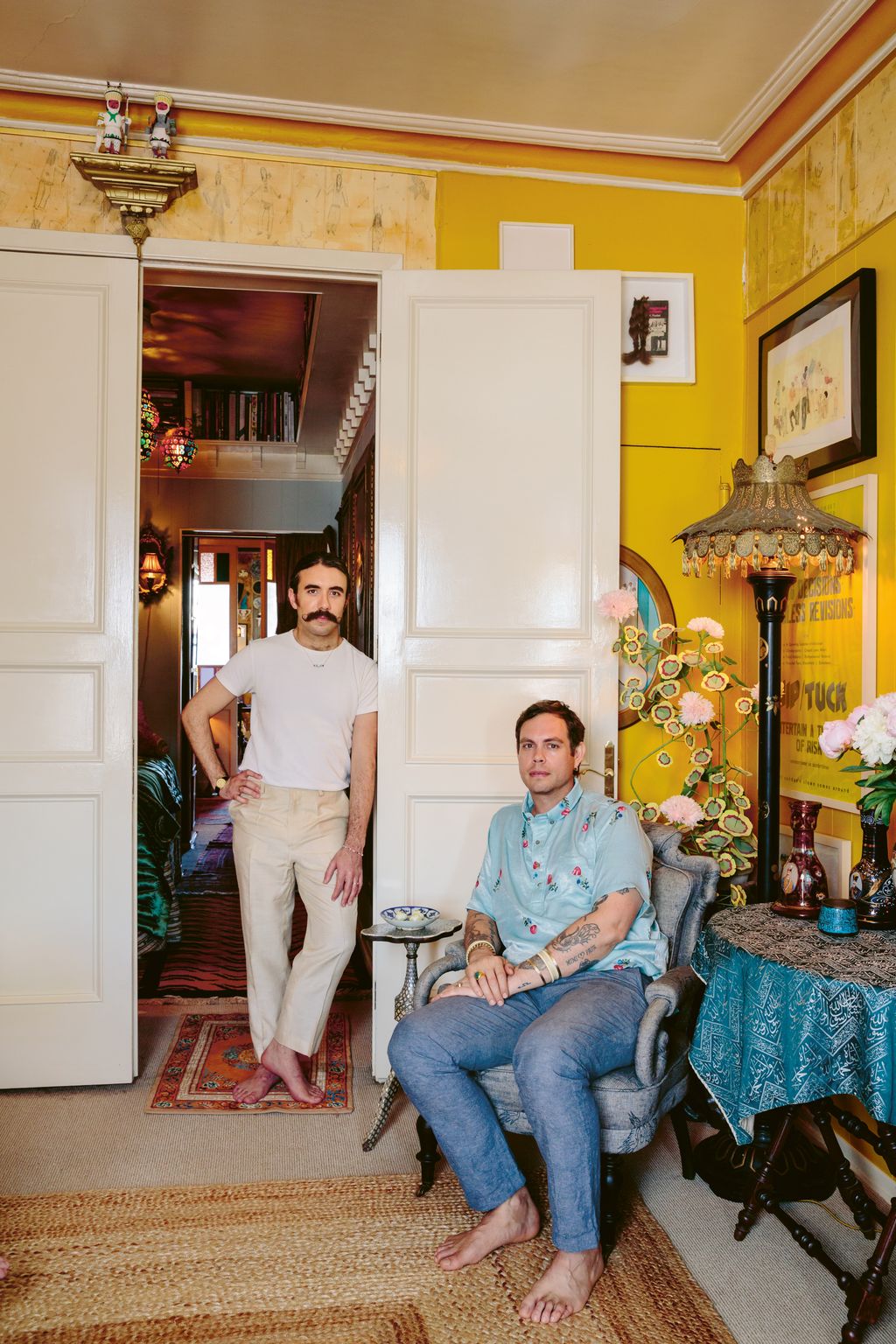
Sinan Tuncay (left) and Sean McNanney in their apartment


