
A decorator's Georgian house executed with just the right amount of wit and ostentation
The details are not the details. They make the design.' That was said by one of the heroes of mid-twentieth-century design, Charles Eames, but you only have to look at the many terraces of town houses built by the Georgians in the eighteenth and early-nineteenth centuries to recognise that he was voicing a perennial truth. The carefully considered proportions, the choice of materials and the architectural decoration of the individual houses within the row are the details that come together to form a single, harmonious design for the entire terrace.
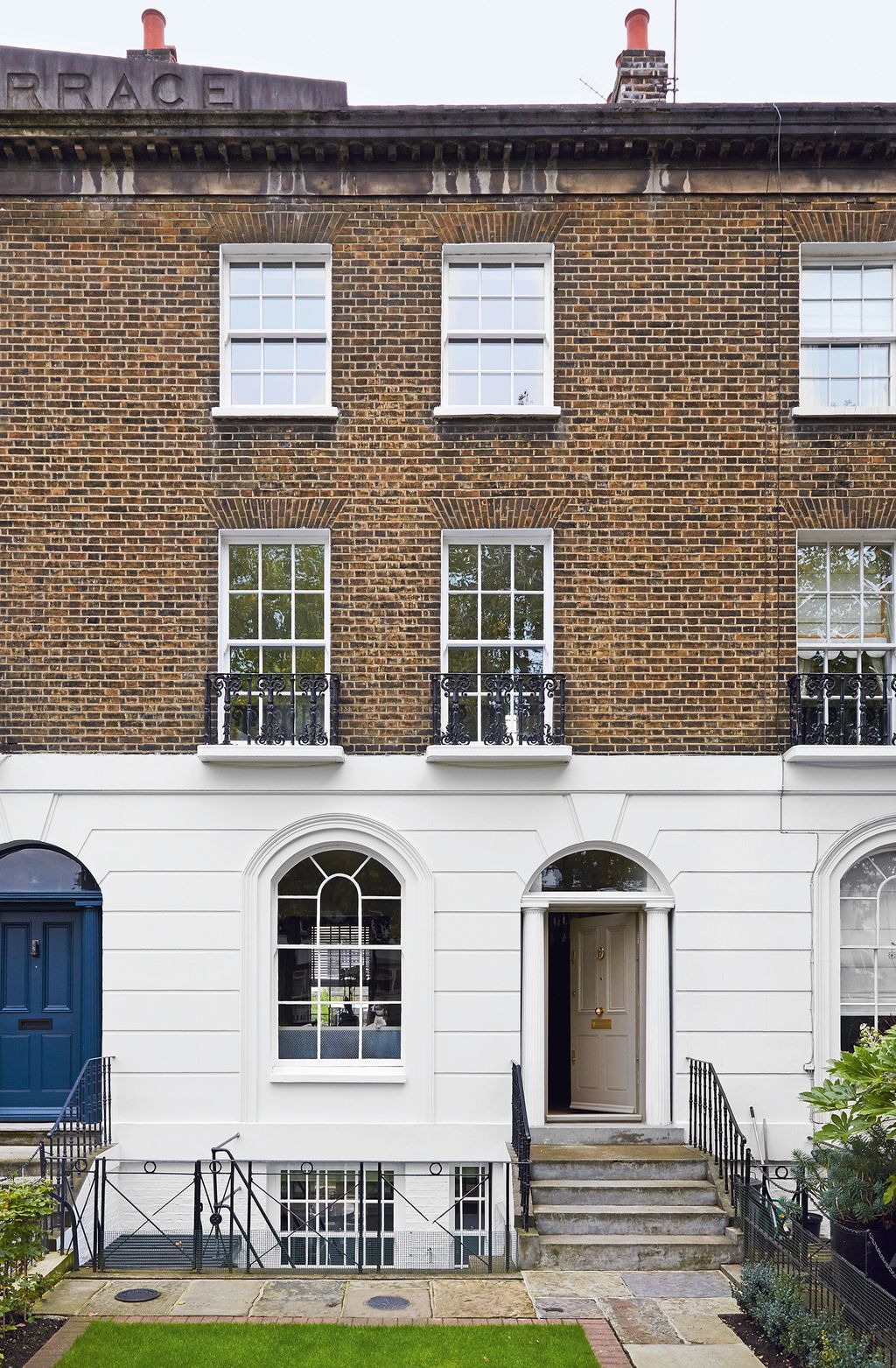
Robert Moore lives in just such a terrace, which is fitting, as he is the sort of interior designer who appreciates the importance of detail in the overall scheme. Built in 1840, his house in south London is, in fact, early Victorian in date, but, like many buildings of that time, the appearance continues largely in the elegant, late-Georgian mould. Robert and his partner, Jonathan Beak, lived previously in a warehouse conversion in Borough (featured in September 2009 House & Garden). The decision to swap lateral living in a loft-style apartment for vertical living in a traditional, four-storey house entailed considerable readjustment, but 'Georgian' had always appealed to Robert, and, in any case, he felt stimulated by the challenge of dealing with a totally different set of circumstances.
Many years ago, the house was converted into two flats and most of the original features - cornices, skirting boards and so on - were removed. Subsequently, it reverted to single occupancy but the interior remained divided up and very little had been changed during the four decades prior to Robert and Jonathan taking it on in 2011. In some ways, that was helpful to Robert, as he felt he could think more freely about the interior. He wanted to retain the historic stamp of the building but, at the same time, make internal alterations, not only to rectify the damage that had been wrought earlier, but also to suit his particular needs and taste - and he has achieved that counterpoint very successfully. When you look round the house as it is now, you absorb its early character but you also perceive how comfortable and agreeable the place is to live in today. Much of the success comes down to the details, which link the past and the present. For instance, the wide, arched openings in the sitting room and in the bedroom are new but they have been given traditional, 'eared' architraves, while the reconfigured entrance hall has been subtly painted with faux panelling.
Robert has been careful to respect the original, unostentatious nature of the architecture and treat the interior decoration accordingly, but he hasn't in any way tried to mimic a Georgian or early-Victorian scheme. He has been more imaginative than that, mixing furniture and art of different periods. He has also integrated touches of glamour- enough to create interest without being inappropriately glitzy- which include the handsome, crystal candelabrum in the sitting room.
MAY WE SUGGEST: How to decorate a Georgian house
The main structural changes involved the doorways. Typical of its date, the house initially had two rooms on each storey and a narrowish entrance corridor on the ground floor, along which were two doorways. Robert repositioned and widened the doorway to the front room, blocked up the one to the rear room, then made a generous archway in the partition wall between the two rooms, thus creating a continuous space for a sitting room that extends the full depth of the house. However, there remains a sense of division, as the front part is light and airy, with mirror glass lining the recesses to either side of the chimney breast, while the back part is darker and cosier.
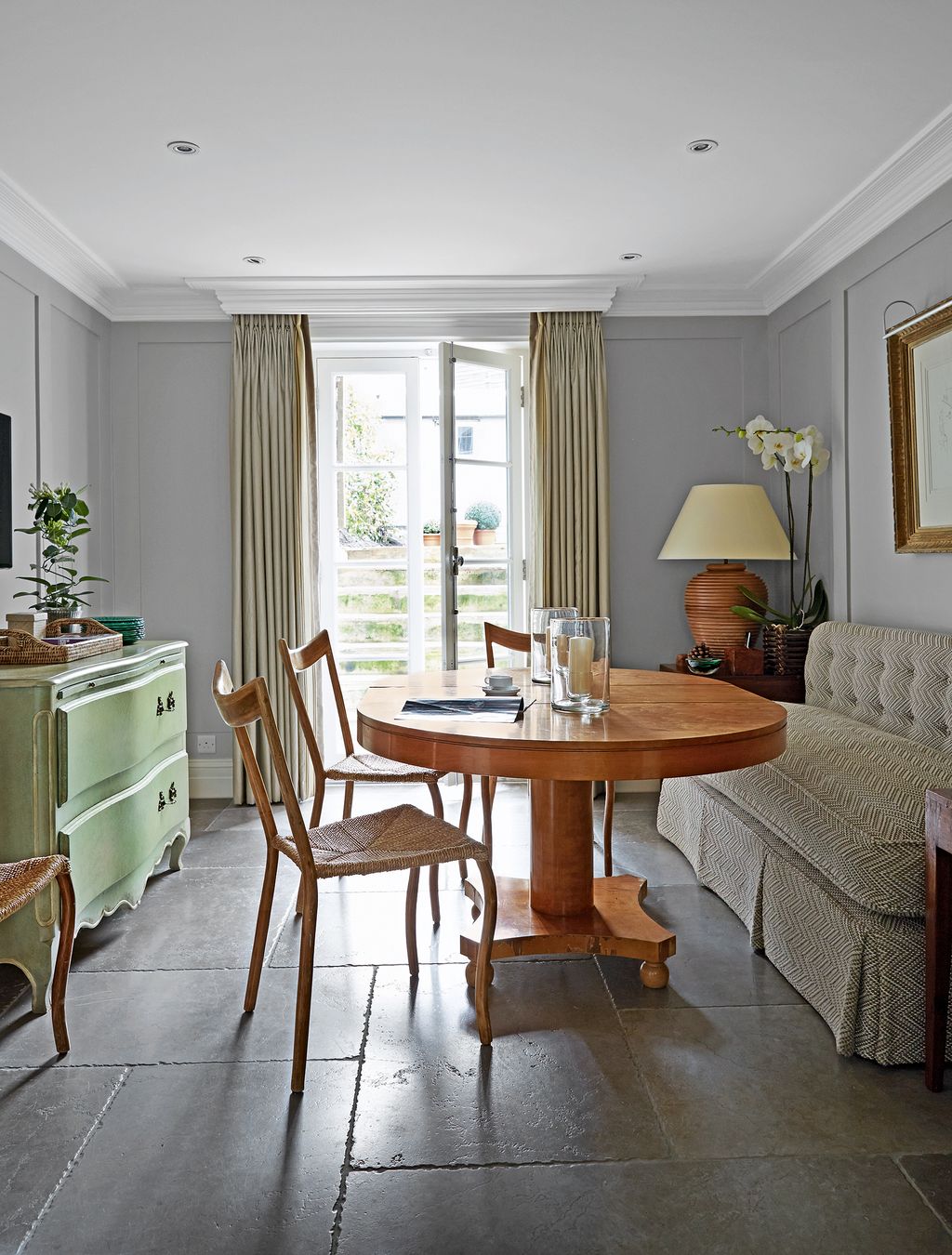
The lower-ground floor has also been remodelled to contrive a single, flowing space. Here, it is used for the kitchen and dining room, an arrangement designed for the style of entertaining that Robert and Jonathan enjoy. In the kitchen area is an eighteenth-century French vitrine; in the dining area is a Biedermeier pedestal table. Both these pieces, along with numerous others in the house, were formerly in the warehouse apartment and reflect Robert's liking for continental furniture. They also show that Robert is not the sort of overzealous designer who casts everything out at each move - he prefers to keep things that please him and incorporate them in new ways.
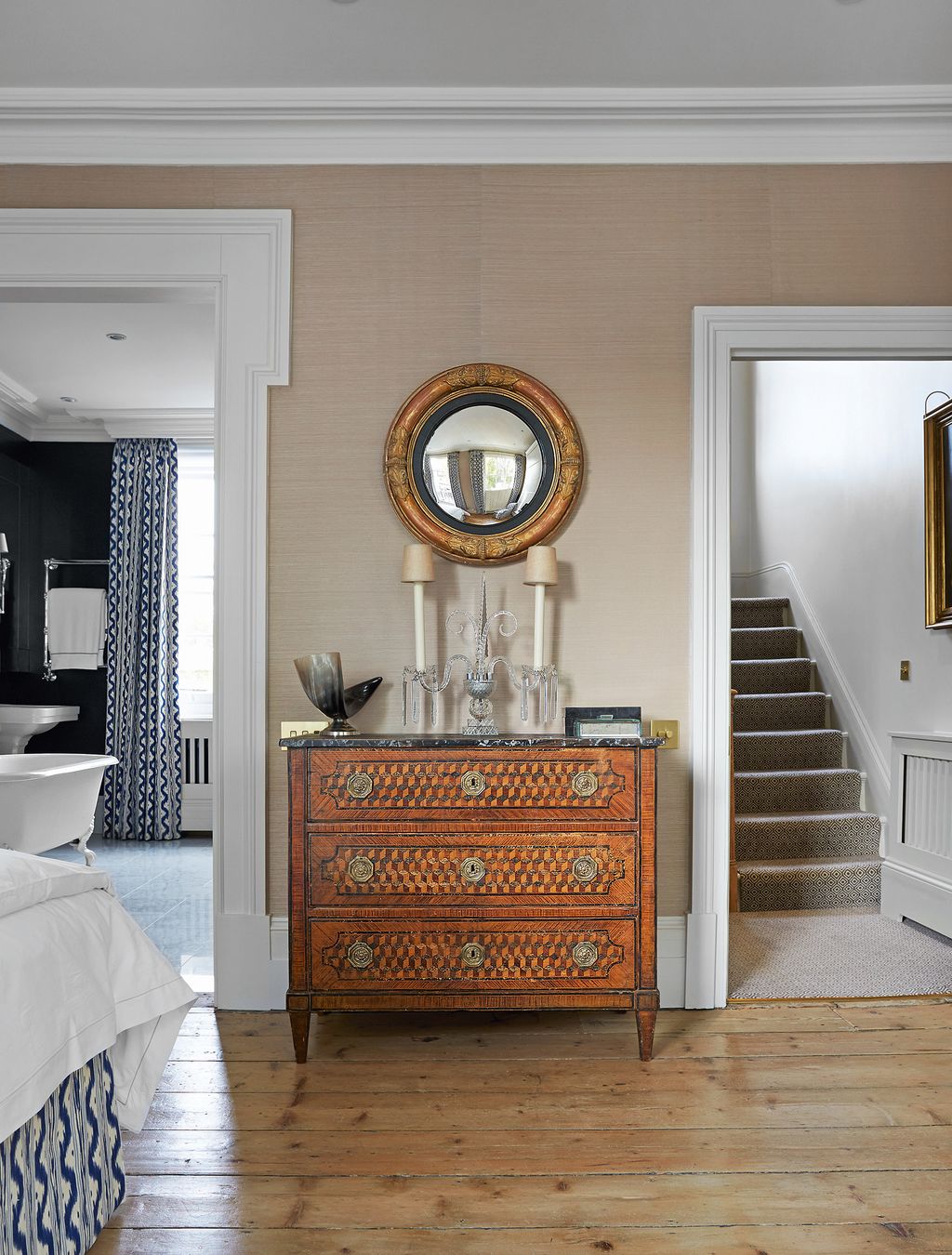
Another retained piece is the nineteenth-century Swiss chest of drawers that sits in the main bedroom next to the newly formed opening into the bathroom. In the same manner as in the sitting room, the two spaces are coloured contrastingly: the bedroom walls are lined with a wallpaper in a neutral shade that picks up warm tones, while the bathroom is painted in a deep basalt-blue. The built-in wardrobe, designed by Robert, has doors incised to replicate the stucco on the exterior of the house - a simple, but effective, detail that enlivens the large expanse of joinery without being fussy.
The top floor is used mainly as an office for Robert's design practice, which he set up four years ago, after having spent more than a decade working with Paolo Maschino at the Nicholas Haslam brand. This is where he hand-draws the visuals for his projects, which cover a wide spectrum, both urban and rural. Nowadays, designers usually rely on computers to generate their presentation drawings, but Robert feels the human hand is better at conveying the look, and atmosphere, he is after. Perhaps that is another of those 'small things' that go a long way towards achieving success when it comes to realising 'the bigger picture'.
 Paul Massey1/12
In the front part of the sitting room, a wide archway replaces the original doorway to the entrance corridor, but a short section of wall remains to screen the front door.
 Paul Massey2/12
The central table is Biedermeier, circa 1830. The sofa fabric is 'Boston Bleu' by Alton-Brooke.
 Paul Massey3/12
Robert's Jack Russell, Lucy, is seen in the library-like rear section of the sitting room, where flanking, ceiling-high bookcases create a recess for the sofa. Above the sofa is a fragment of nineteenth-century Chinese, silk wallpaper. Robert chose a rich yellow cotton velvet, 'Safari' in Old Gold from Marvic Textiles, to upholster the David Seyfried sofa.
 Paul Massey4/12
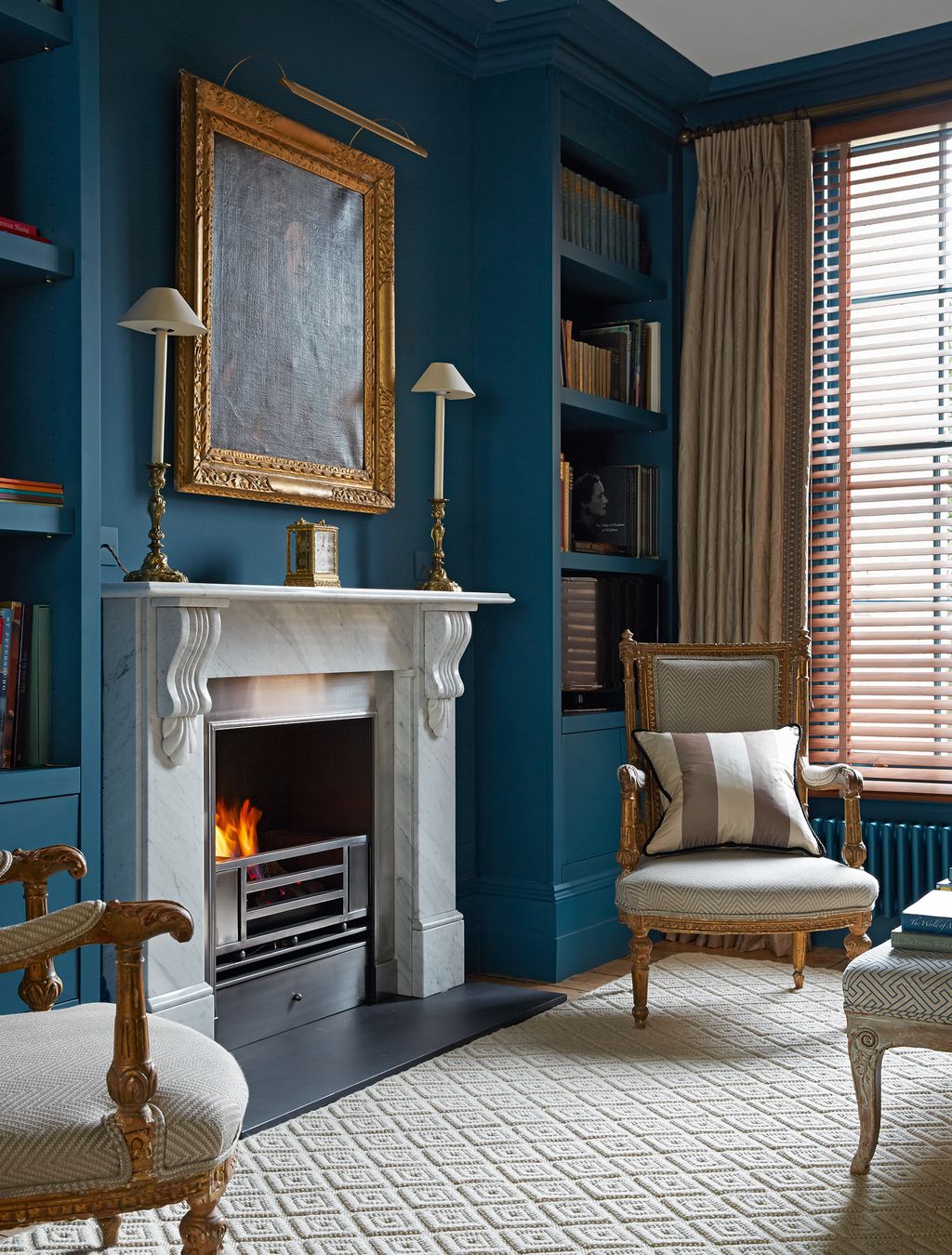
The chimneypiece, found in an architectural salvage yard, is a near-match to the original chimneypiece in the front part of the sitting room. The chairs are nineteenth-century French. The smart carpet here is 'Synchronised' from Tim Page Carpets.


 Paul Massey5/12
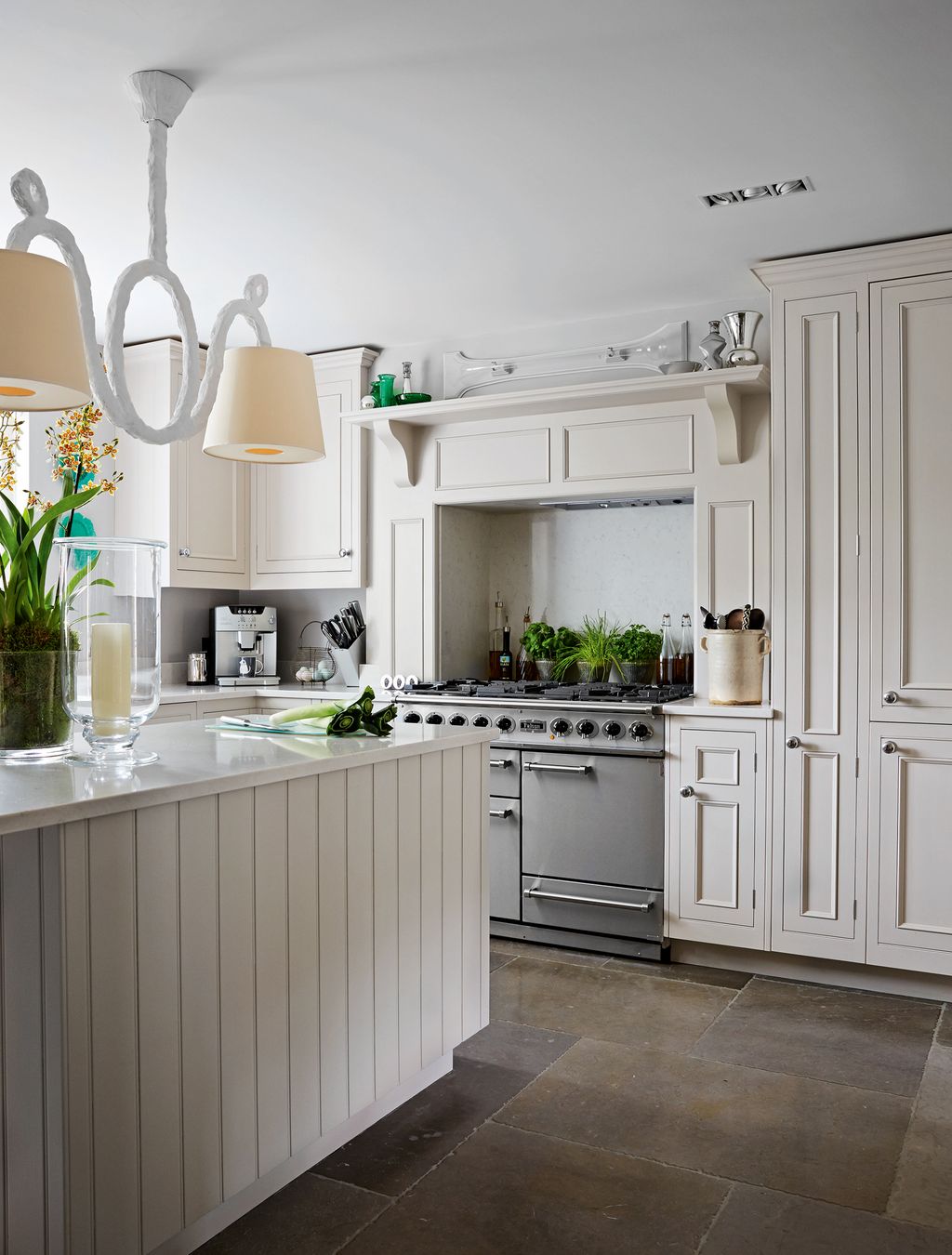
The kitchen has custommade units and is open plan with the dining area.
 Paul Massey6/12
 Paul Massey7/12
Doors lead from the dining area into the garden.
 Paul Massey8/12
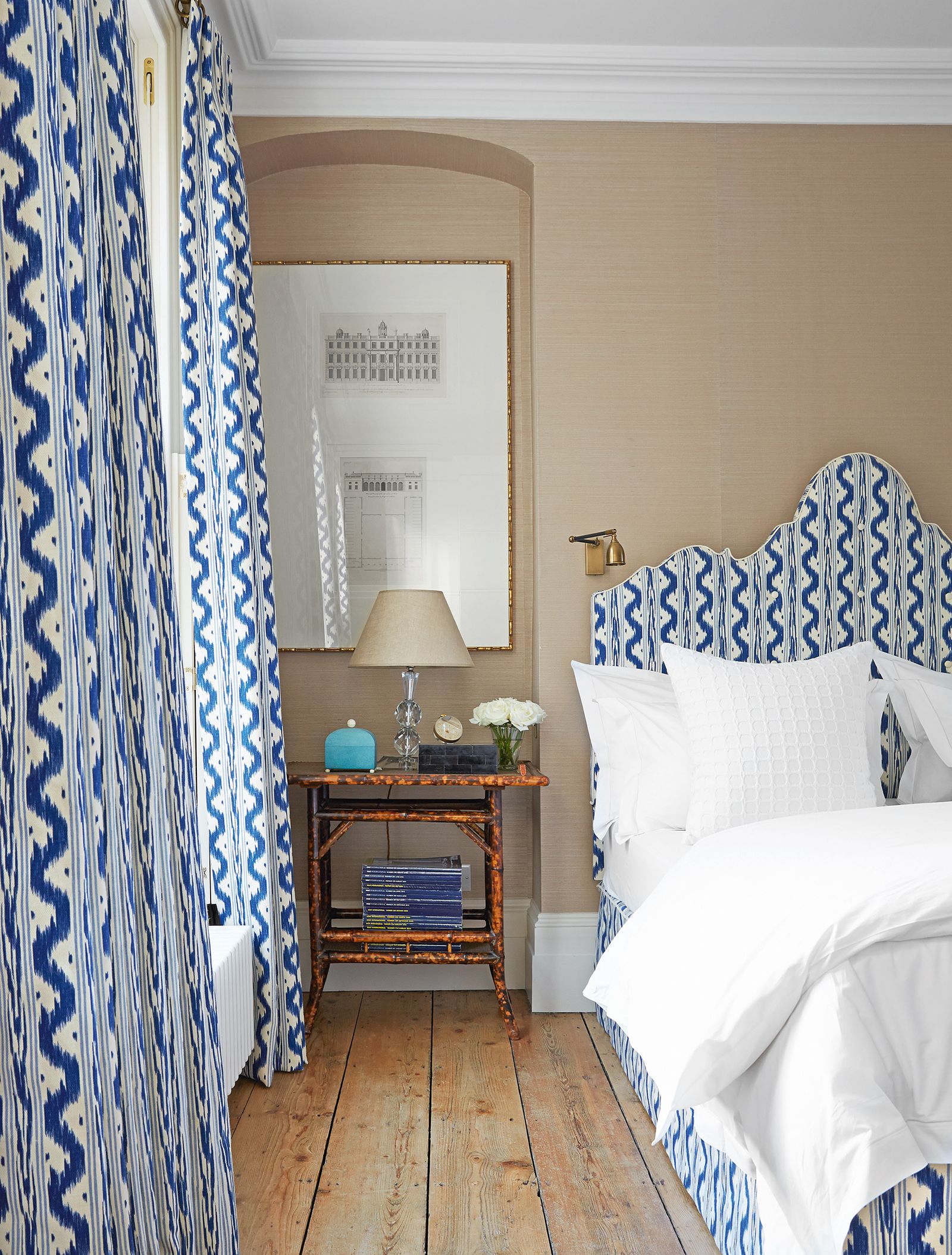
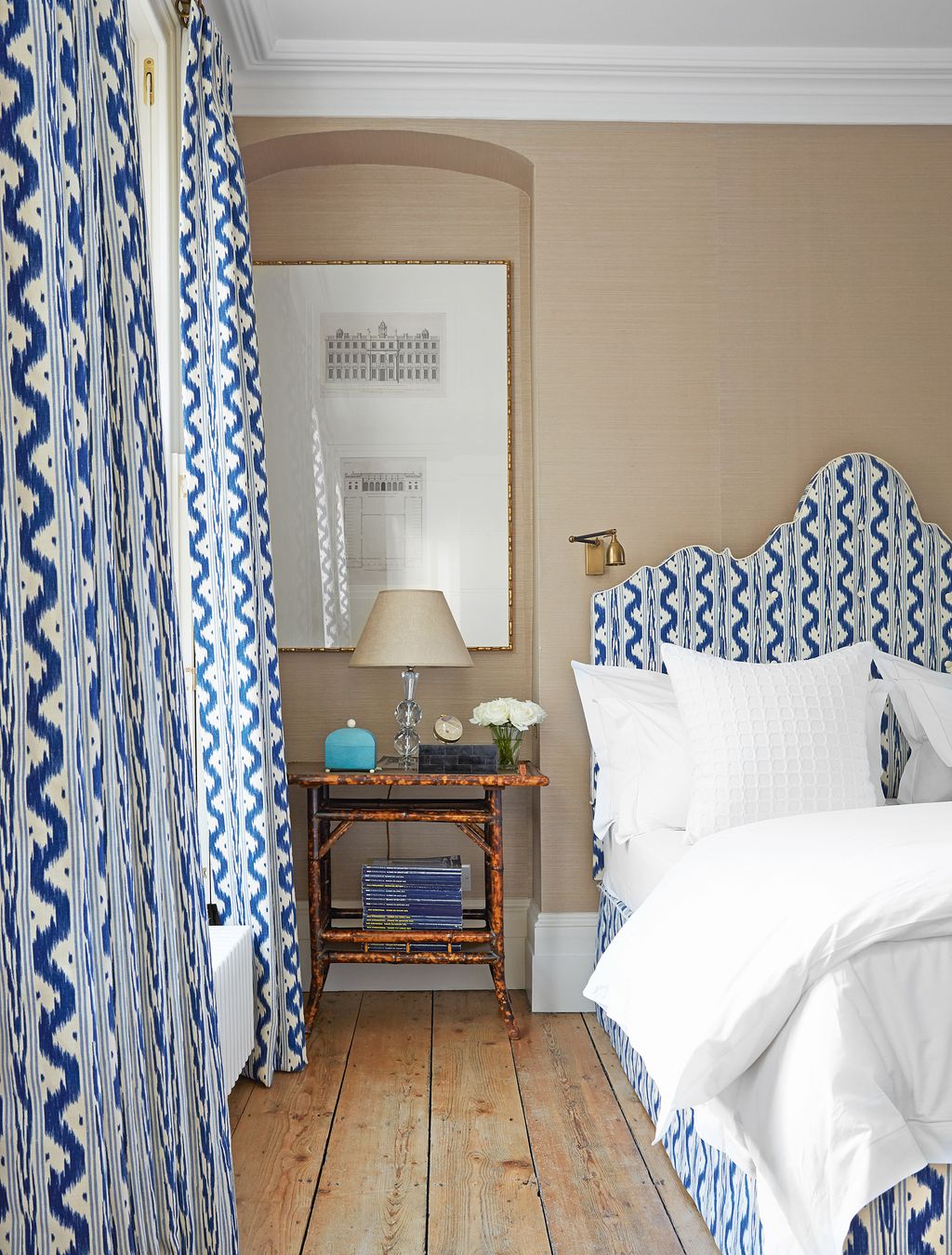
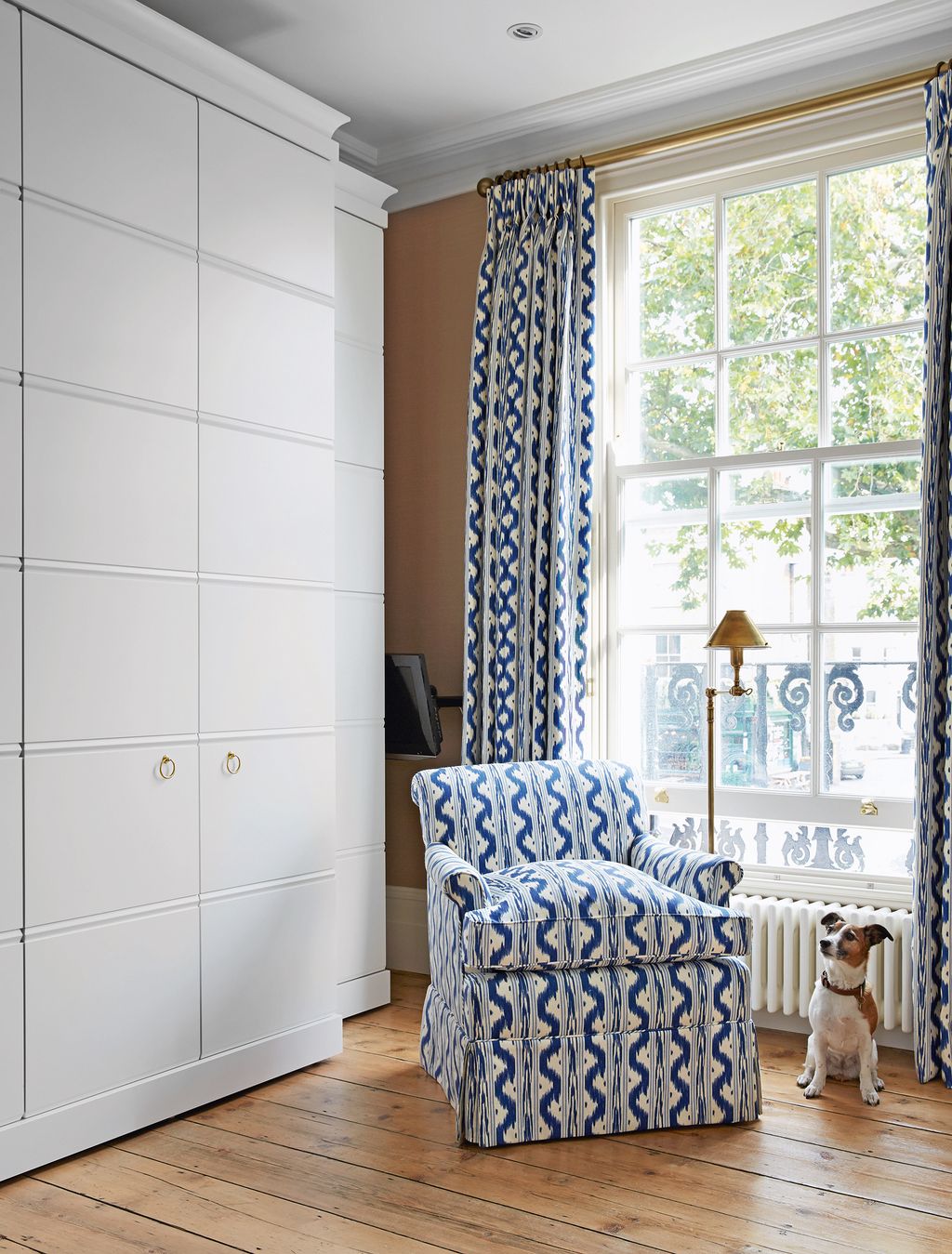
The bedhead in the main bedroom was designed by Robert, as was the wardrobe (below), detailed to echo the stuccowork on the house exterior. The blue and white fabric in the bedroom and bathroom is 'Palma Large' from Bernard Thorp.


 Paul Massey9/12
 Paul Massey10/12
The new opening between the bedroom and bathroom has an eared architrave. The floorboards in the bedroom are original; the tiles in the bathroom are Carrara marble; the carpeting on the stairs is grey 'Tess' from Alternative Flooring's Quirky collection.
 Paul Massey11/12
Applied moulding in the bathroom forms a framework for French Empire wall sconces and a Fifties, French mirror. The bathroom is painted in 'Basalt' by Little Greene.
 Paul Massey12/12


