
A cowshed in rural France transformed in to a stylish home by the owners of Pinch
'Right,’ we thought. ‘First things first: remove all the rubbish and 30 years’ worth of cow dung and let’s see what we have to work with.’ Oona Bannon is recalling what was going through her and her husband Russell Pinch’s minds in 2003 as they began the process of converting a 17th-century cow barn in rural western France. The site is barely an hour from the coast and Ile de Ré – sometimes referred to as the French Hamptons – but its atmosphere is far more aligned with the local village of Surgères, which is, happily, further off the tourist and expat trail.
The story really starts almost 40 years earlier, when Russell’s parents and a few aunts and uncles, all with a sense of idealism and a can-do attitude, bought the little hamlet in which the barn sits. This sounds far more romantic than it must have been at the time. Historically, there were 27 buildings on the site – workers’ cottages, rabbit and pigeon houses, stables and more – but by the Seventies most of these had, as Oona puts it, ‘fallen into disrepair and seeped into the fields’. Nonetheless, Russell’s father John was enraptured by the place and ran around with such excitement that he nearly knocked himself unconscious on a stone gate.

From the age of four, Russell spent his summers camping and playing in the garden, as the grown-ups slowly restored the small handful of dilapidated stone buildings that remained. These became a cluster of five holiday houses, each taking about five years to complete and, one by one, filled by different branches of the family. By the early 2000s, only one building remained untouched – the dung- and detritus-filled barn – and this was to become Russell and Oona’s.
For some unfathomable reason, the couple considered it would be a good idea to take on the project at around the same time that they were launching their furniture company, Pinch. ‘I don’t know what we were thinking,’ Oona now confesses. ‘We had no budget. Russell was doing all the work on the house with his dad and I was there in my wellies trying to be helpful.’
Meanwhile, they had phone calls to their London studio redirected to France. ‘It was ridiculous – the phone would ring and we would pretend to be in London and act professional.’ If they managed to sell a piece of furniture, they would celebrate this by spending the money on supplies for the next phase of works. It involved seven years of backbreaking labour, with no family holidays (they also had two daughters along the way, who spent their summers playing in the sandpit of a building site). ‘But Russell loved it,’ Oona explains. ‘He really connects with the process of creating something and gets a sense of calm from seeing progression.’
Today, the cowshed is a four-bedroom house and the time the family spends in this quiet little corner of France is far more relaxing. The girls – Ada is now 11 and Floris is 10 – can live relatively free range compared to when they are in Brixton, where the Pinches have their main home. And, as you would expect, a great deal of life here is conducted outdoors. The Charente-Maritime area has an appealing microclimate with enough sunshine to rival the weather on the Côte d’Azur. When the extended family is also in residence, there is much hopping between terraces and loggias to have meals together.
MAY WE SUGGEST: A fixer-upper in Southern France decorated by the textile designer Kathryn Ireland
Russell and Oona have embraced open-plan living in the main body of the building with its double-height ceiling, where the large oak beams and local Charente-stone walls have been left exposed. Approximately 20,000 blocks of parquet flooring – a gift from Oona’s father, who sourced them from a convent under refurbishment in the west of Ireland – were individually cleaned, repaired and laid in a herringbone pattern. Perhaps the floor’s provenance explains the miraculous luck that there were only eight pieces of wood left by the time the last one was tapped into position.
Pinch is best known for its elegant wooden furniture, much of which has been used in this house. While there is an appealing sense of restraint in the pieces that the brand designs, it is not austere: an encounter with a dining chair, for example, does not feel like a punishment. Rather, as someone who spent two very happy days here with the Pinches, I can attest to the fact that the furniture is every bit as inviting, comfortable and easy to get on with as the owners themselves.
 Michael Sinclair1/11
A contemporary stove from Saey provides a stylish backdrop for a relaxed mix of furniture, with pieces by Pinch, including a ‘Goddard’ sofa, ‘Clyde’ lamp table and ‘Soren’ light, alongside People of the Sun’s rattan ‘Malawi Chair’.
 Michael Sinclair2/11
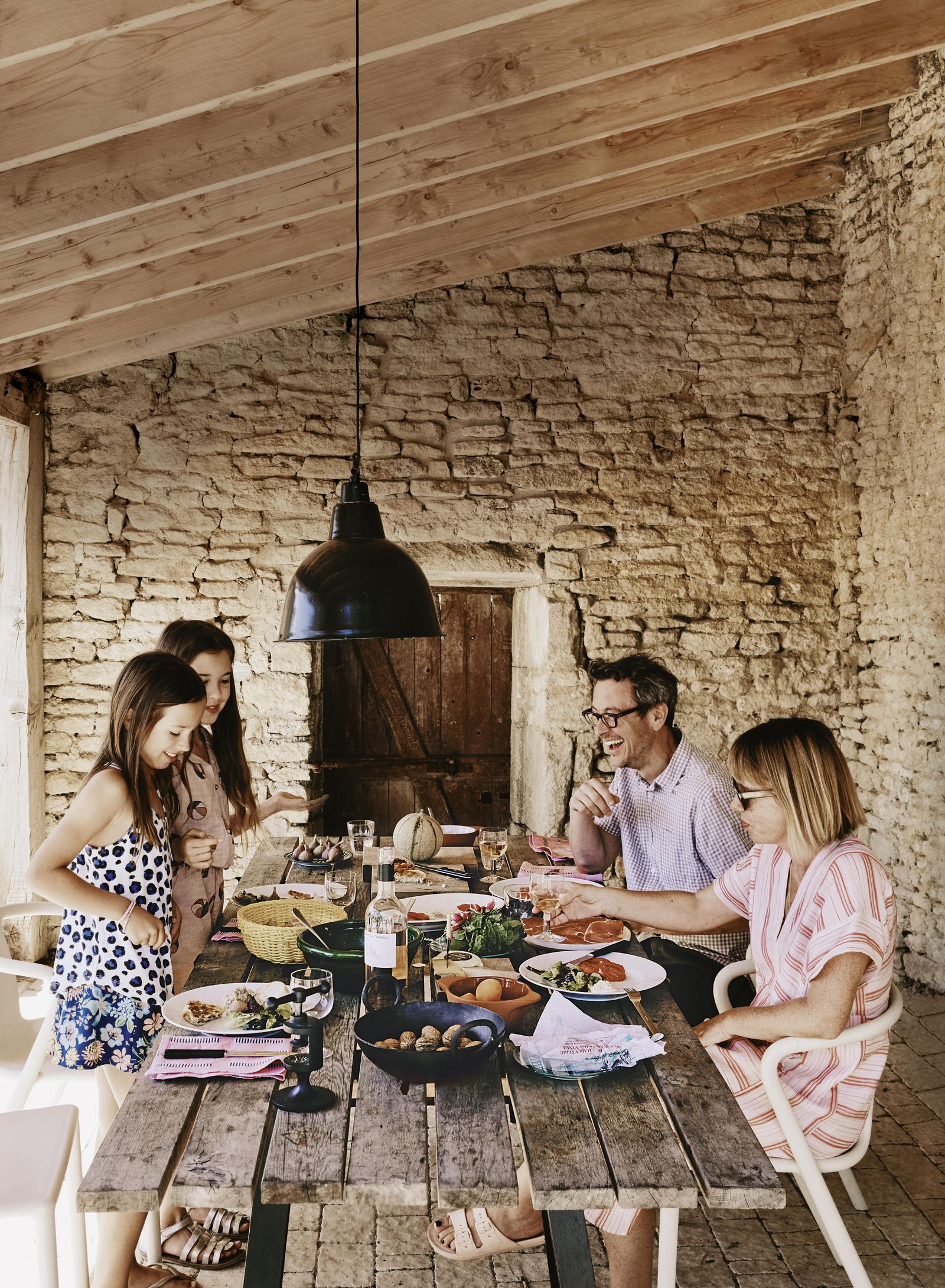
Oona and Russell enjoy lunch in the loggia with their daughters Ada, 11, and Floris, 10.
 Michael Sinclair3/11
Designed and built by Russell, the kitchen combines oak surfaces and splashbacks with cupboards painted in ‘Railings’ by Farrow & Ball. A Pinch ‘Achilles’ table in scrubbed oak is teamed with ash ‘Holland Park’ chairs designed by Russell for Ercol.
 Michael Sinclair4/11
The Charente-stone walls offer a rustic contrast with a Pinch lacquered ‘Frey’ sideboard. A vintage lamp and porcelain bowls by Billy Lloyd are displayed alongside a painting by a local artist.


 Michael Sinclair5/11
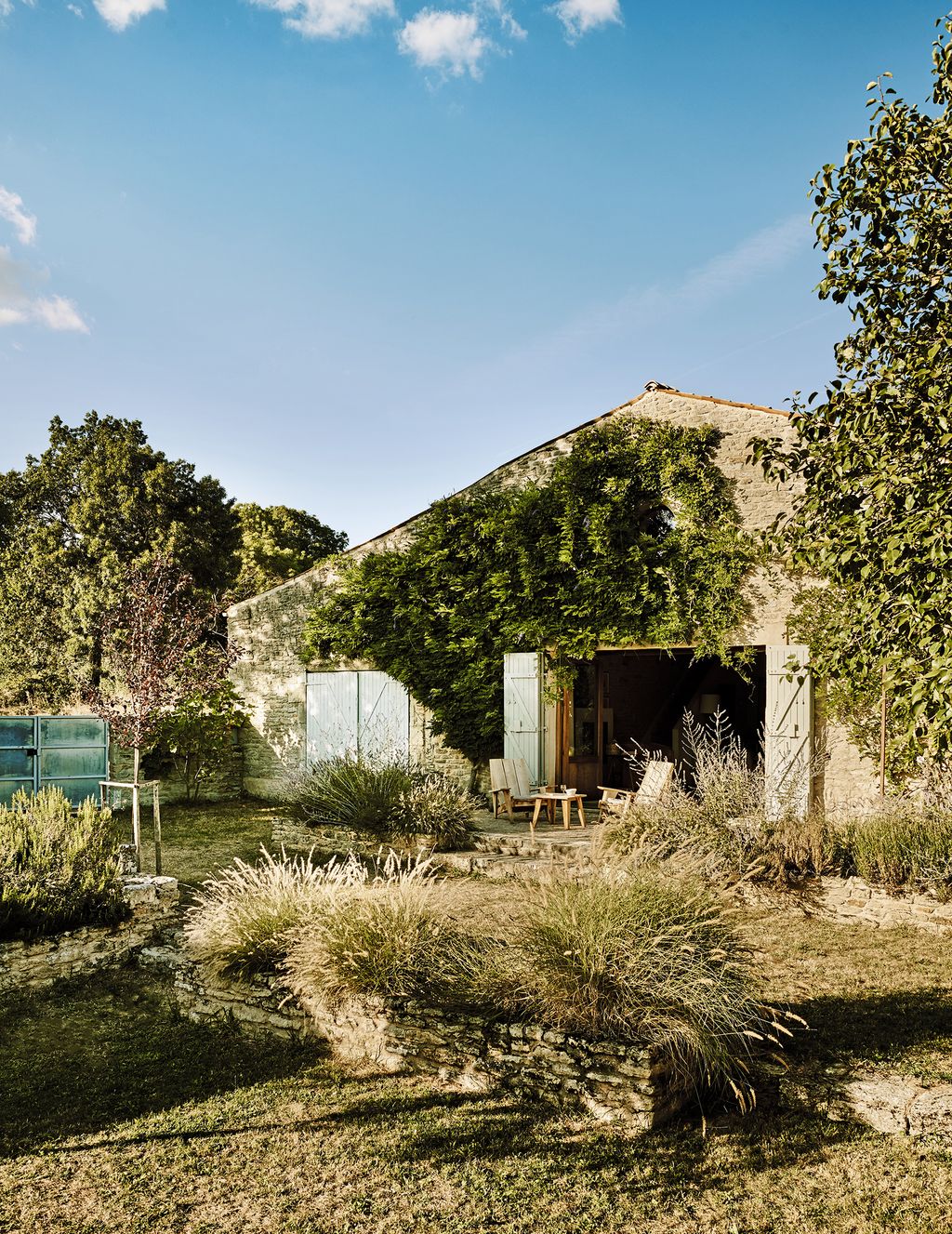
Wisteria covers the stone wall by the main entrance that leads into the double-height sitting room. Fragrant plantings of Russian sage and lavender are combined with grasses including Miscanthus sinensis ‘Starlight’.
 Michael Sinclair6/11
The snug is bathed in sunlight for most of the day, making it the perfect place to relax on the Pinch ‘Boyd’ sofa in Kravet’s peach ‘Versailles’ velvet.
 Michael Sinclair7/11
This middle space in an enfilade along one side of the main room acts as an antechamber for the spare room and has good overhead light for painting.
 Michael Sinclair8/11
A Pinch ‘Yves’ desk in walnut and leather and a prototype ‘Avery’ chair provide a secluded spot to work on the landing above the kitchen.


 Michael Sinclair9/11
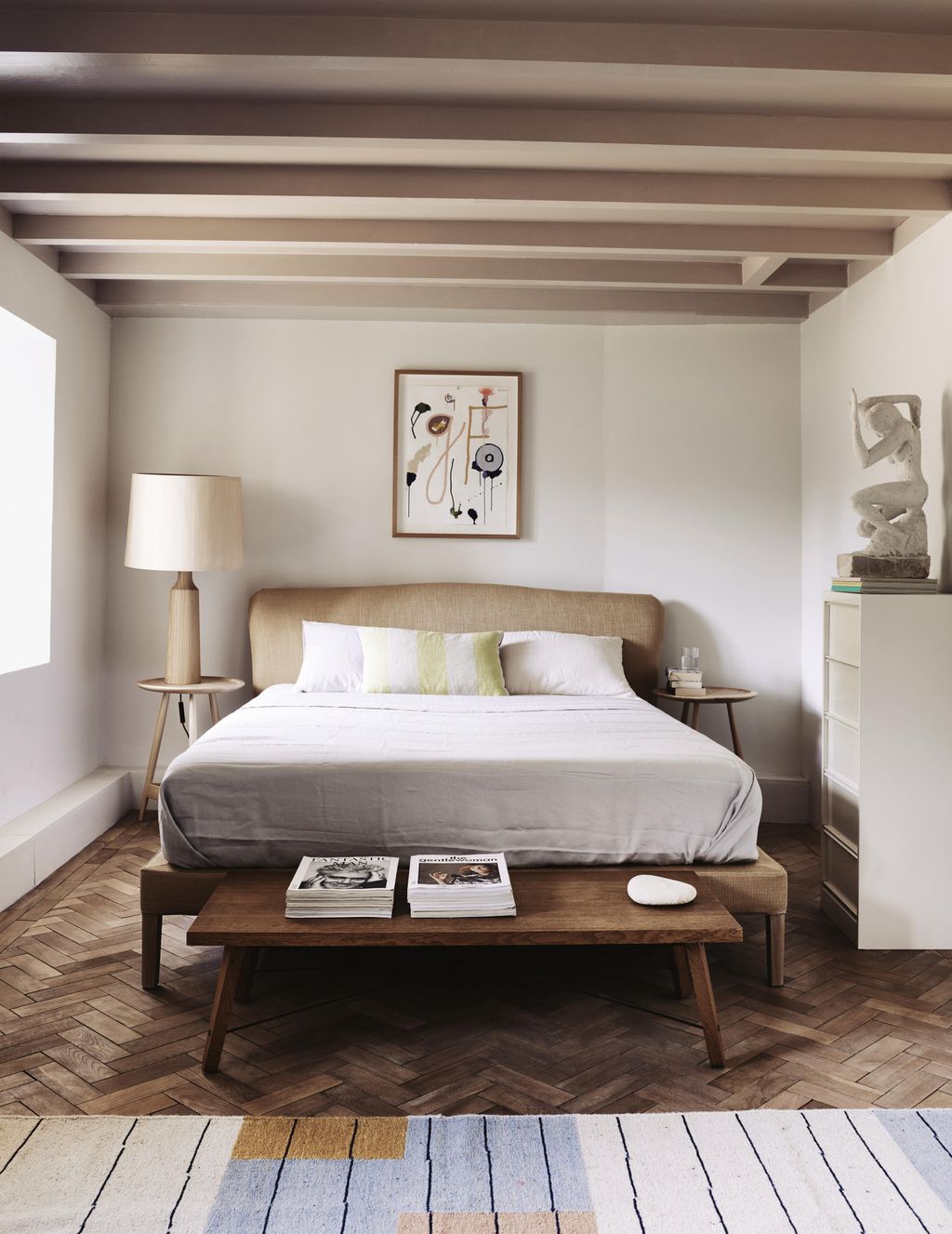
A sculpture by Russell’s father John looks over a Pinch ‘Moreau’ bed. On the ceiling, Farrow & Ball’s ‘Peignoir’ paint in modern eggshell reflects light.
 Michael Sinclair10/11
A bath in Little Greene’s ‘Orange Aurora’ and ceiling in ‘Red Earth’ paint by Farrow & Ball tone with Russell’s ‘Maiden’ stool for Benchmark.
 Michael Sinclair11/11
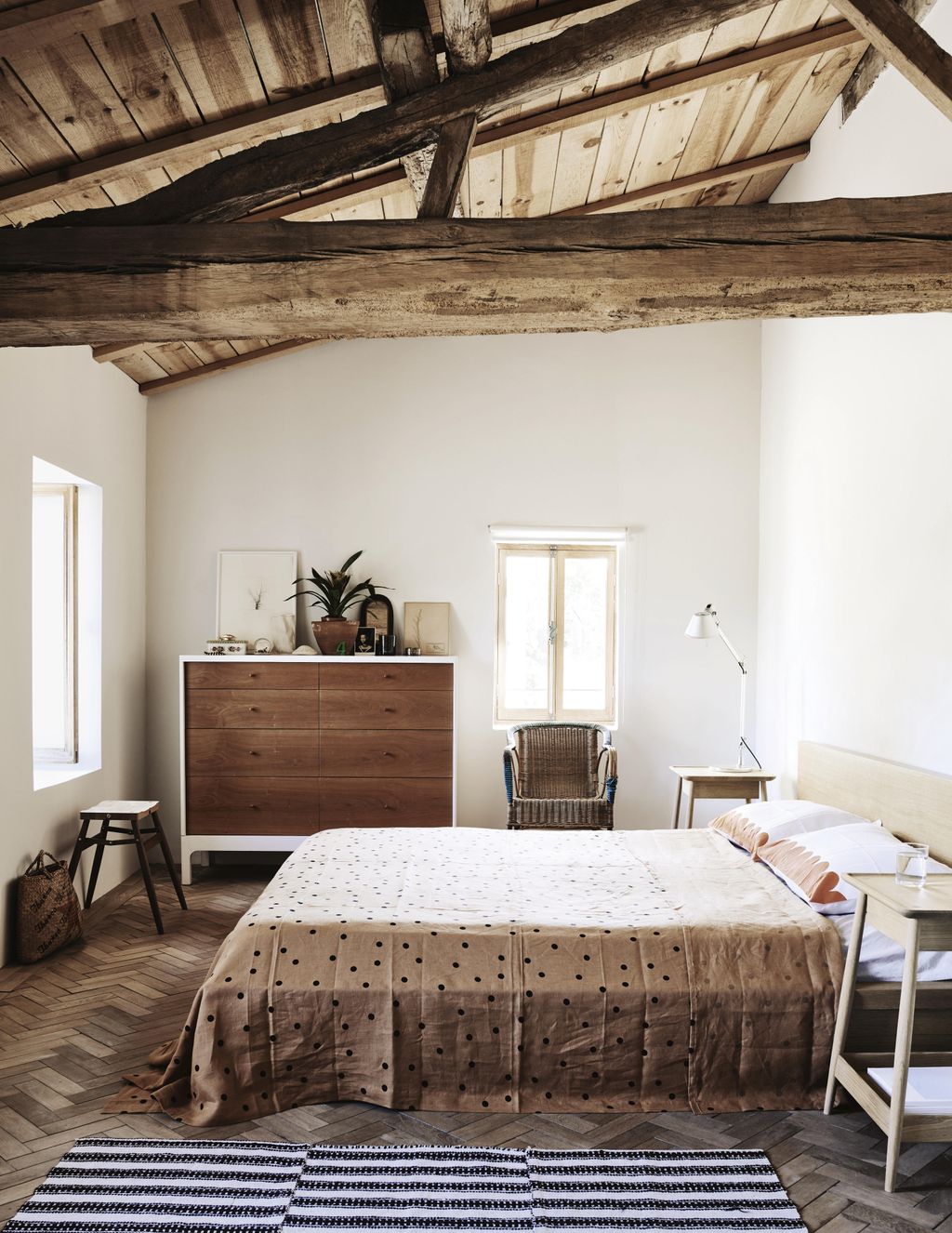
Bed linen by Castle and a striped kilim from Morocco complement Pinch’s ‘Joyce’ chest of drawers and oak ‘Harlosh’ bedside tables.


