
A characterful and elegant house by McLean Quinlan that sits lightly in its rural setting
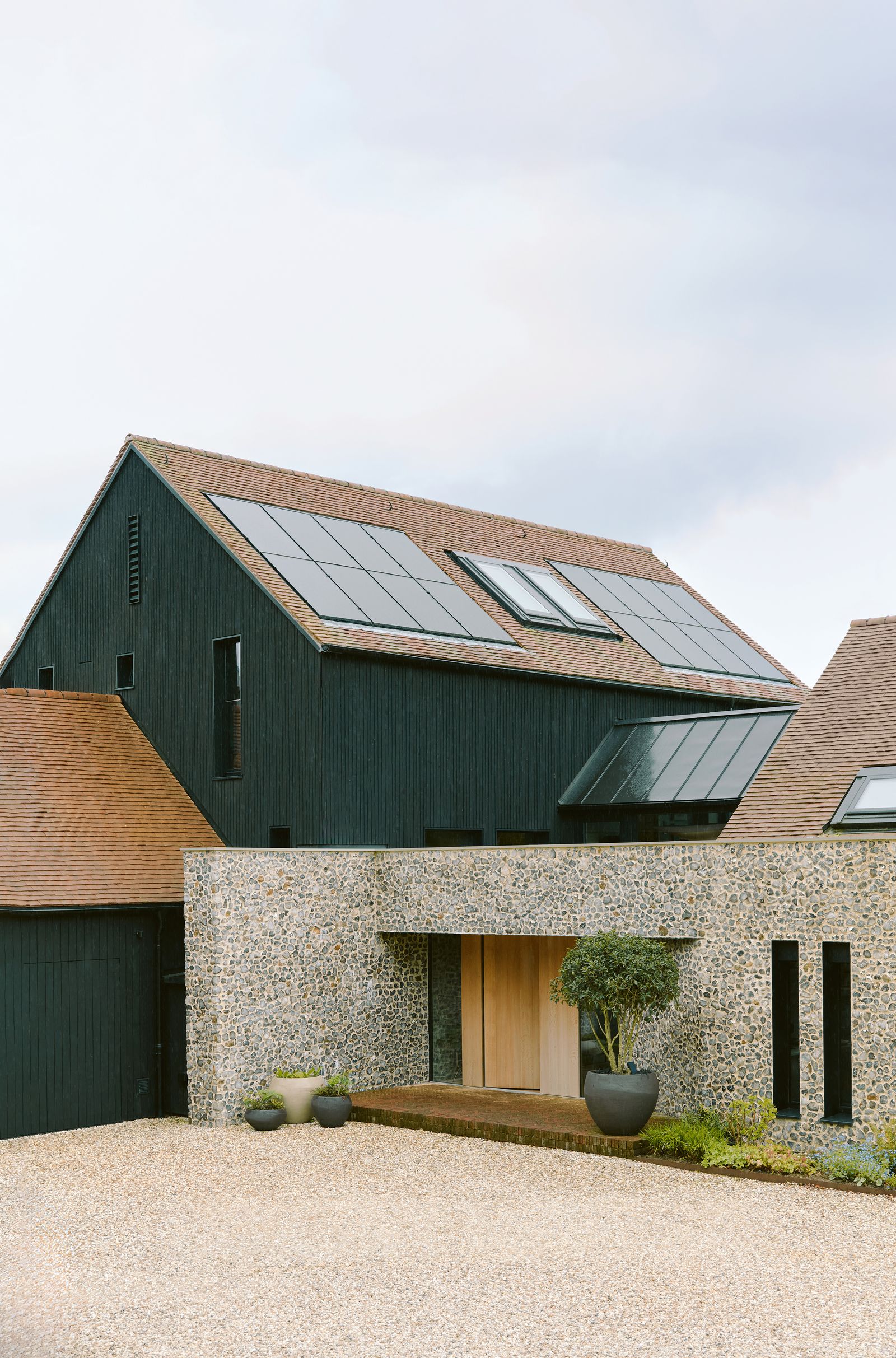
In a quiet corner of rural Surrey, a couple with two teenage children set architects McLean Quinlan a challenging brief: design a modern, sustainable house with character and elegance, that would be sympathetic to its surroundings yet practical for family life. Crucially, every facet of its design - from the timber frame to the paint work - needed to be as energy efficient and as sustainable as possible.
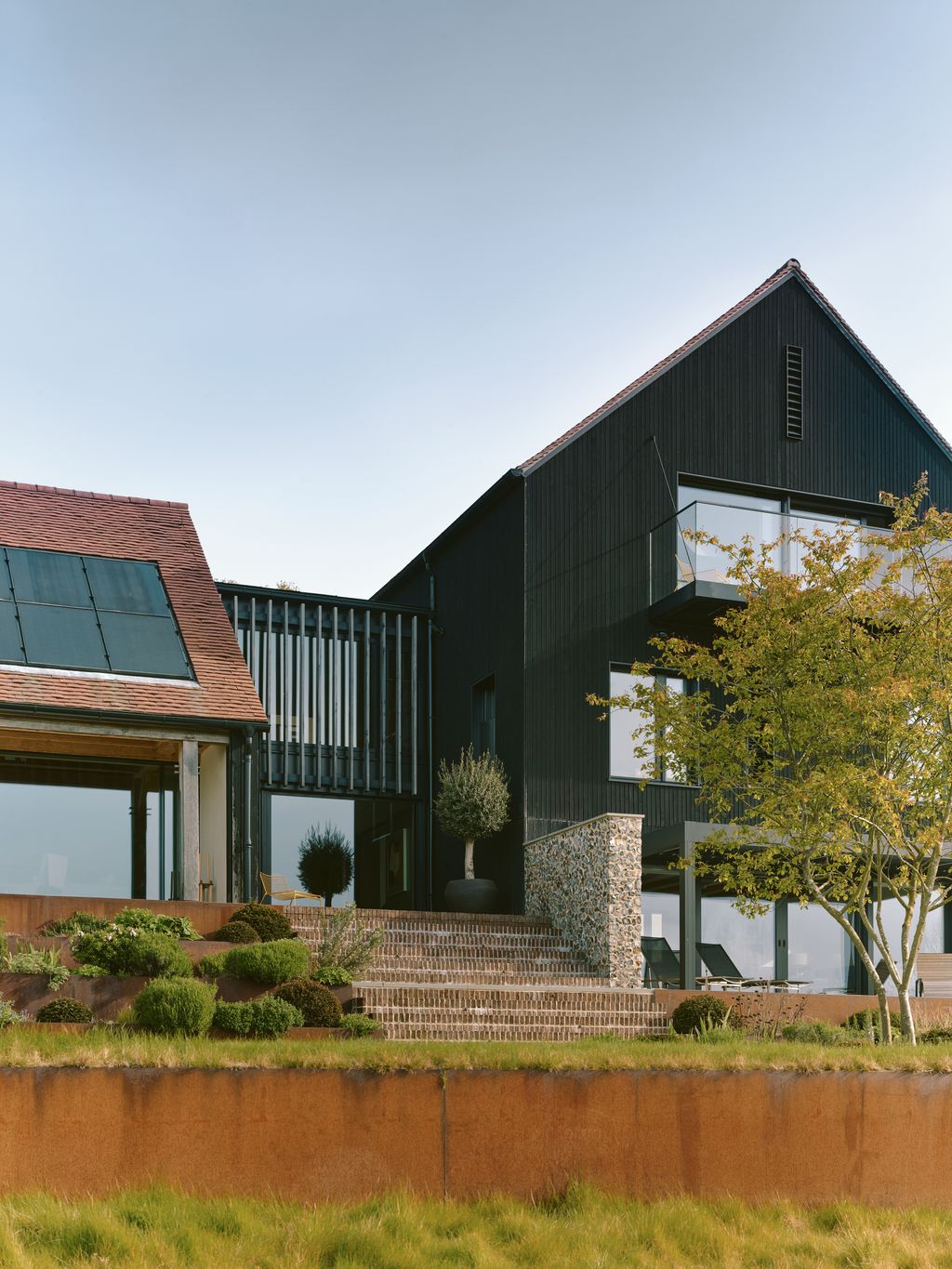
The resulting house, Downland Barns, built in a mesmerising location on the brow of a hill with panoramic countryside views, is just that. Drawing inspiration from the local vernacular, with flint, black timber, clay tiles and a pitched roofline that references the historic buildings in the area, the house consists of three interlinked structures and is designed to function entirely off-grid for short periods if required.
For the owners, it was the second time they had embarked on a sustainable newbuild. Their previous home, also in Surrey, was a prefabricated structure from German company Baufritz, which produces energy-efficient houses using wood from sustainably managed forests and building materials chosen specifically to keep the occupants as healthy as possible. In these houses, insulation is made from organic wood shavings and the building materials are natural without any harmful chemical treatments. They also feature a system that mitigates the impact of electrosmog: electromagnetic fields from appliances, phones and Wi-Fi, which some people fear might be damaging to health.
'We loved our old house, so we agreed we would only do it again if we could find a really special spot,' says the owner. 'We'd already earmarked the lane, then this site came up. It was very much our dream option.' The plot came with a 1940s house in poor condition and an adjacent late-18th-century timber-framed barn. The couple bought the property with the intention of replacing the house and, through word-of-mouth recommendation, approached McLean Quinlan. Led by Fiona McLean and her daughter Kate Quinlan, the firm is respected for its considered approach and contextual rural homes that have won multiple RIBA awards in recent years.
'We felt that Fiona and Kate, as a mother-daughter team, had an understanding of family life,' says the owner. And we liked that their houses feel contemporary but lived-in and loved.' Conversations began over what the family wanted from the new house in terms of its layout, feel and function. The focus on sustainability, threaded through the project, helped to convince local planners of the merits of the new building as a replacement for the old.
'It's always good to have a beautiful site, so we were thankful for that,' says Fiona, who worked on the commission with Kate and Kate's husband, Alastair Bowden, a director at the practice. 'It is also important, with a project like this, to see the inside and out as one - and useful to have clients who are familiar with the design and build process, and who are enthusiastic about what they're doing.'
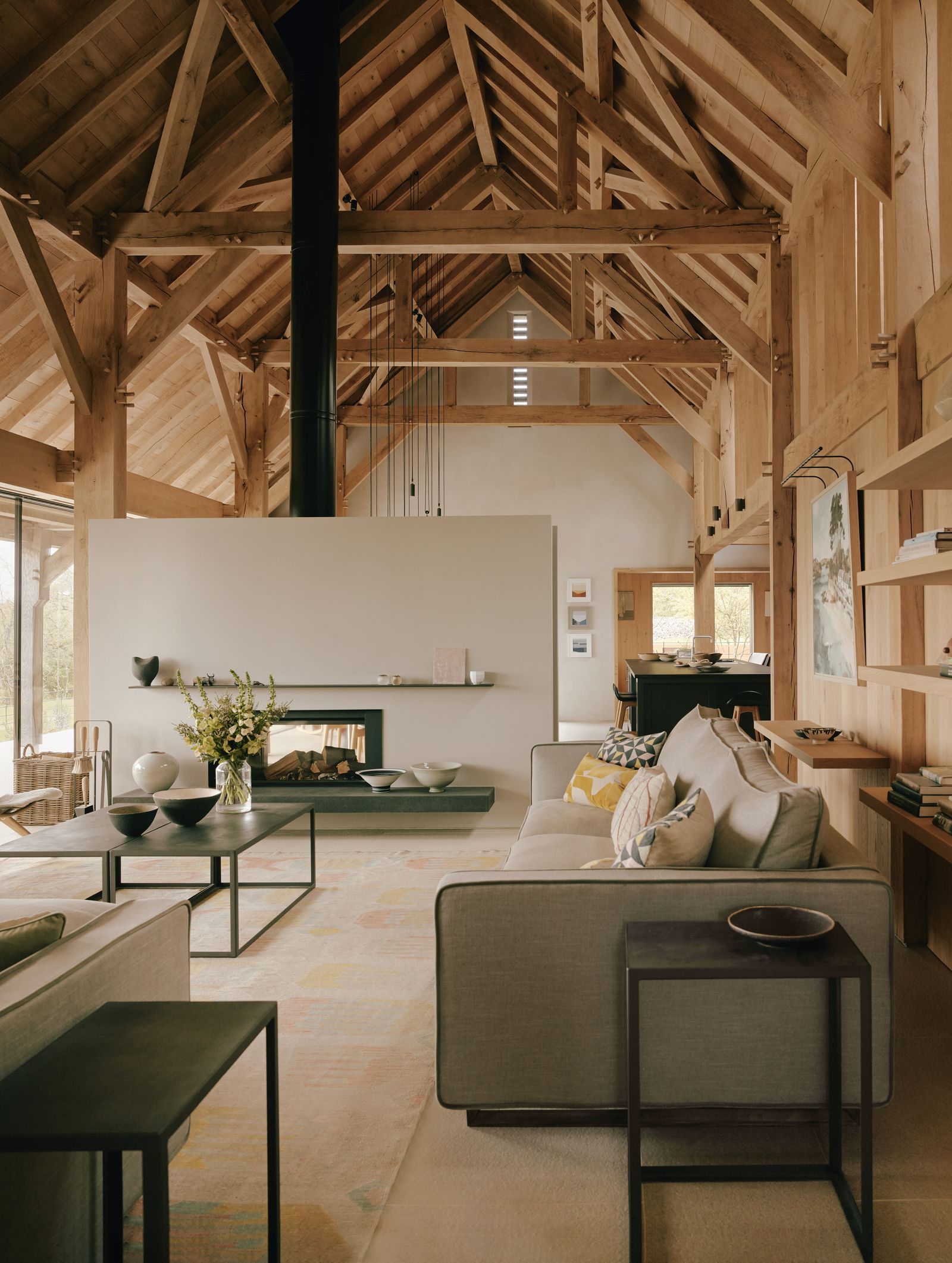
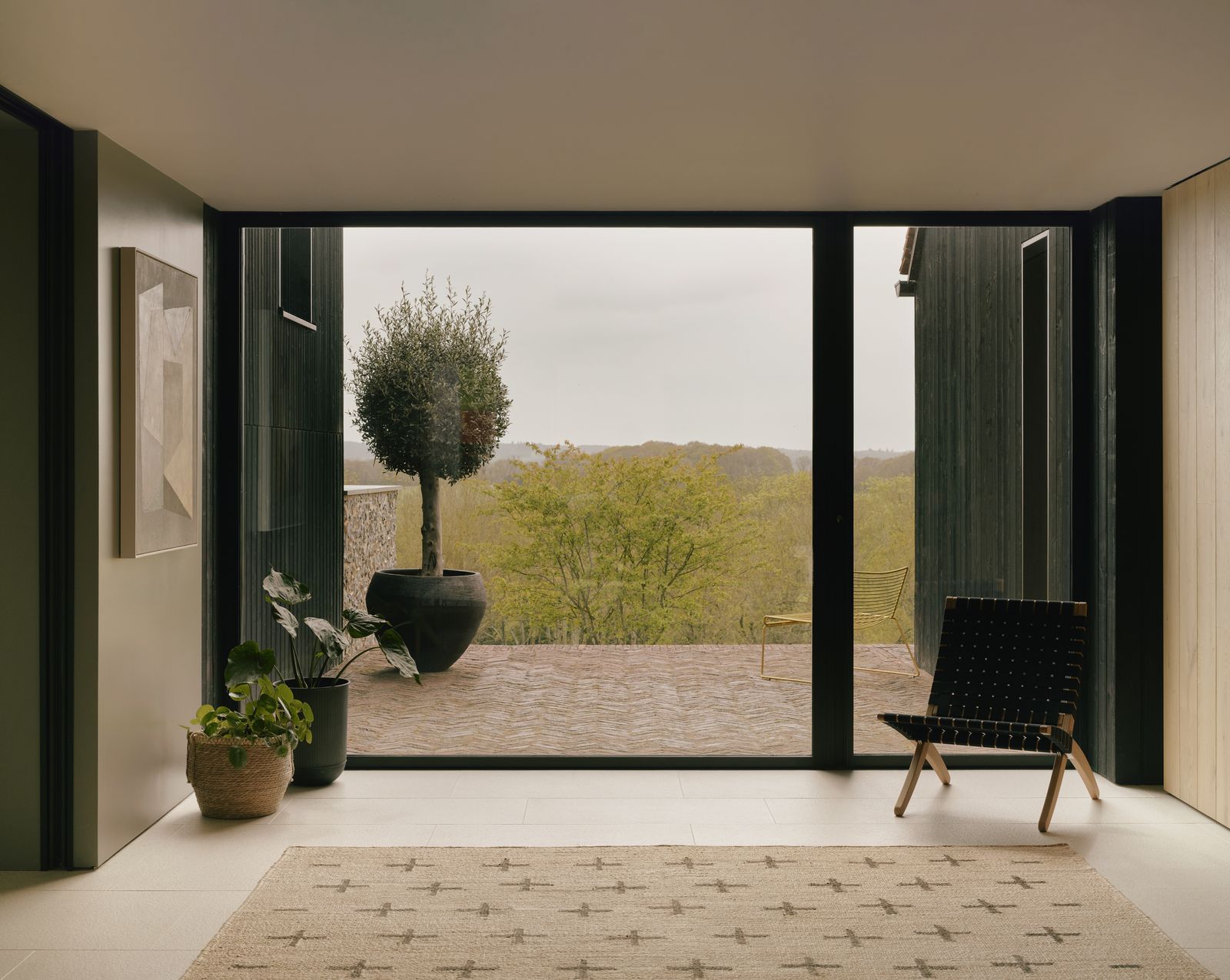
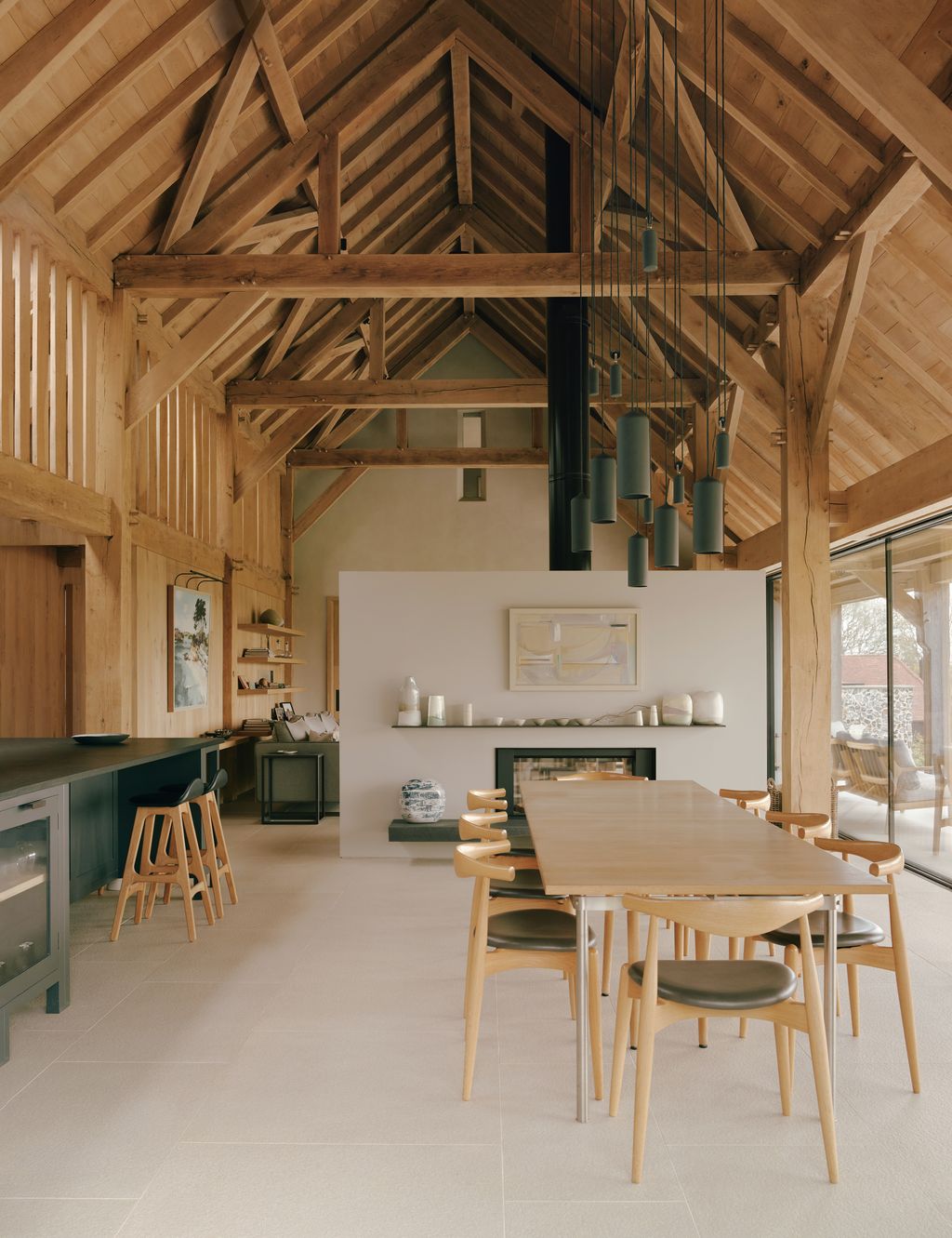
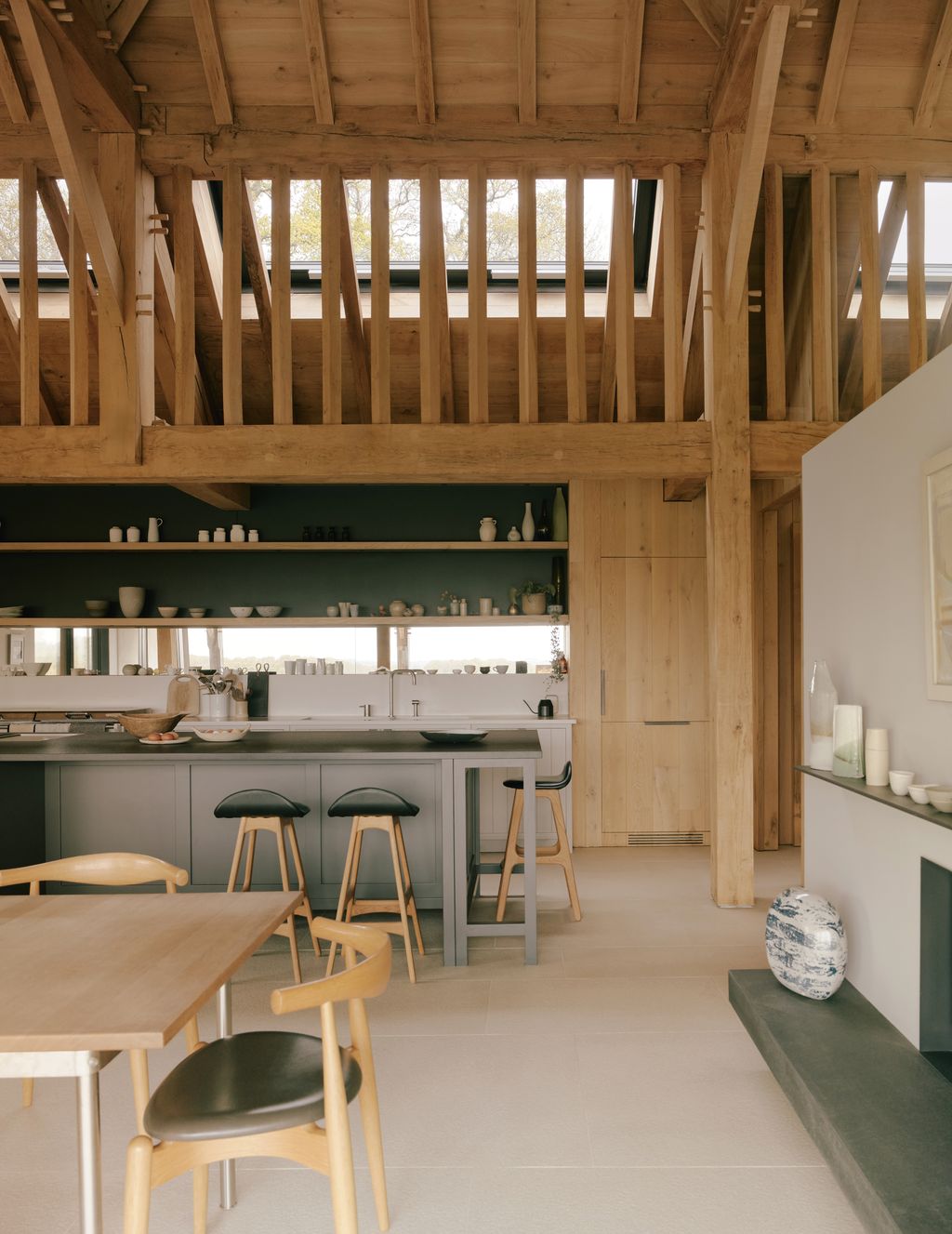
The conversations eventually led to a design that balances open-plan living with more intimate spaces, as well as practical elements, such as a boot room and pantry, which were essential for a family with two children, two dogs and a love of riding. At the heart of the house is a green-oak-framed barn, partly inspired by the 'great rooms' in Arts and Crafts houses. The space is mostly double height, with sitting and dining areas lightly separated from one another by a large contemporary fireplace, alongside which is the kitchen. On the south-facing wall, floor-to-ceiling windows give dramatic views of the landscape and open onto a terrace where the pale ceramic tiles used for the interior are continued outside.
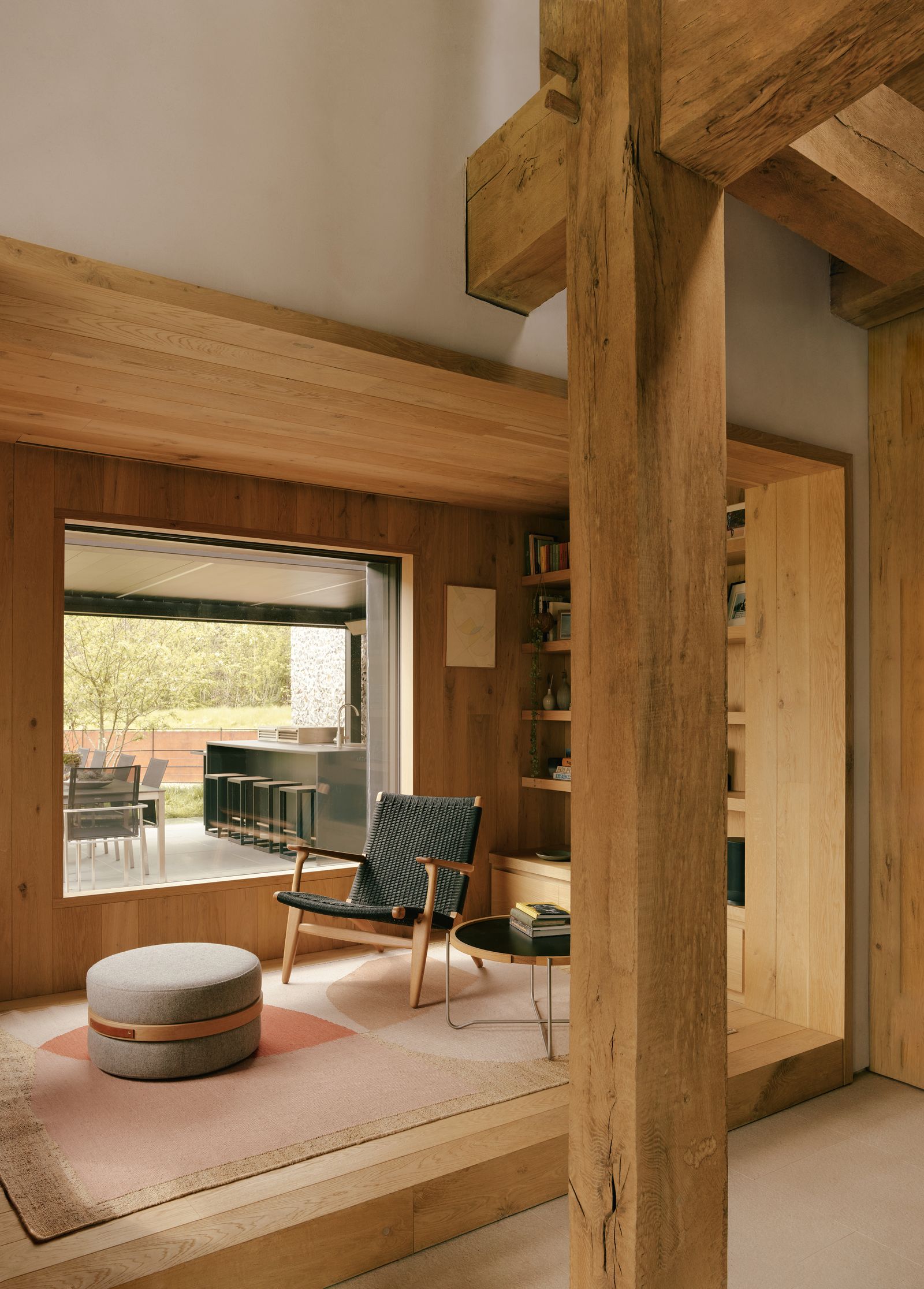
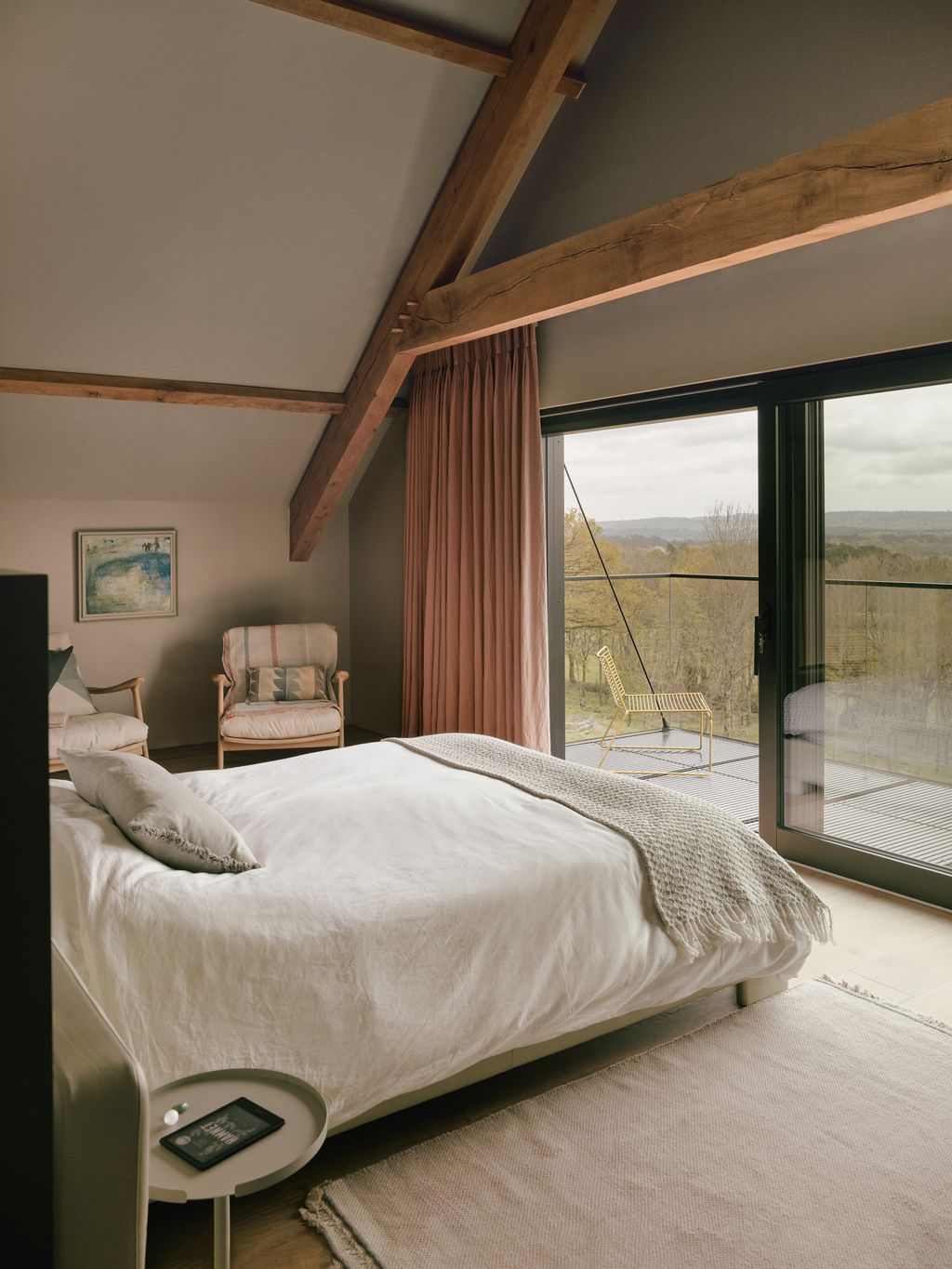
Beyond the kitchen, McLean Quinlan designed a Scandinavian-influenced, timber-panelled nook, which acts as a more intimate reading room. A second barn-like structure to the other side of the entrance hall, which is staggered half a level below the main living area, houses a family room, office and gym on the ground floor, plus five bedrooms arranged on the two storeys above, with the main bedroom and en-suite bathroom on the uppermost level.
When the initial plans were in place, the couple again turned to Baufritz to produce what was essentially a bespoke kit for the building. 'We showed them McLean Quinlan's plans and they said they could do it,' explains the owner. "This reassured us that the house's construction would incorporate the company's values relating to sustainability and health. We had the design and level of detail from McLean Quinlan and a highly sustainable, ecologically aware building from Baufritz. The collaborative process embraced natural and environmentally friendly materials throughout.' Construction took place during the pandemic. Fortunately, Baufritz had pre-ordered everything for the project and built the timber framework and insulated external-wall system in its factory in Germany, creating a giant jigsaw puzzle for assembly on site.
Downland Barns is now close to self-sufficiency, with its combination of a super-efficient insulated structure and high-spec glazing. The house runs on renewable energy, with air-source heat pumps, plus a mechanical heat recovery system warming the house through underfloor heating. On the roof, photovoltaic panels convert thermal energy into electricity, with a connection to five Tesla Powerwall storage batteries in the adjoining garage, which bank electricity for when it is needed. The resulting system manages to power the entire house, heat the outdoor swimming pool and feed three electric cars, with any excess electricity sold back to the grid during the sunnier months of the year.
The house's walls were finished with natural clay plaster, low-energy LED lighting was installed and a home automation set-up ensures that every element of the building's energy expenditure can be monitored and controlled from the owners' smartphones. Outside, landscape consultants Landform installed a rainwater-harvesting system, which irrigates the garden and field, while the woodlands below the house have been rewilded.
Baufritz also dismantled and restored the 18th-century barn, which now sits alongside the new building, with any replacement timber sourced from salvaged barns of a similar age. Completed in autumn 2021, the house has delighted the family, just as they hoped it would. 'It's beautiful. The privacy, the seclusion and experiencing every season - it makes the most of the landscape, which is what we wanted,' says the owner. 'We loved our old house, but we've never missed it. As soon as we arrived, this was home'.
McLean Quinlan | mcleanquinlan.com/
 Michael SINCLAIR1/8
'Buck' bar stools by Hammel partner cabinetry made by Rozen to McLean Quinlan's design. Studio WM's 'Porcelain Lamp' pendants are grouped above a Hans J Wegner 'CH322' dining table and 'CH20' dining chairs in oak, all from Carl Hansen & Son. Ceramics by the owner are displayed above the fireplace. The large ceramic floor tiles are from Mosa.
 Michael SINCLAIR2/8
The green-oak structure is complemented by Farrow & Ball's 'Purbeck Stone' on the wall units and "Tar' on the island, while its Off Black' showcases shelves, on which ceramics by the owner are displayed, and complements the slate hearth and mantelshelf, which hold more of her pieces.
 Michael SINCLAIR3/8
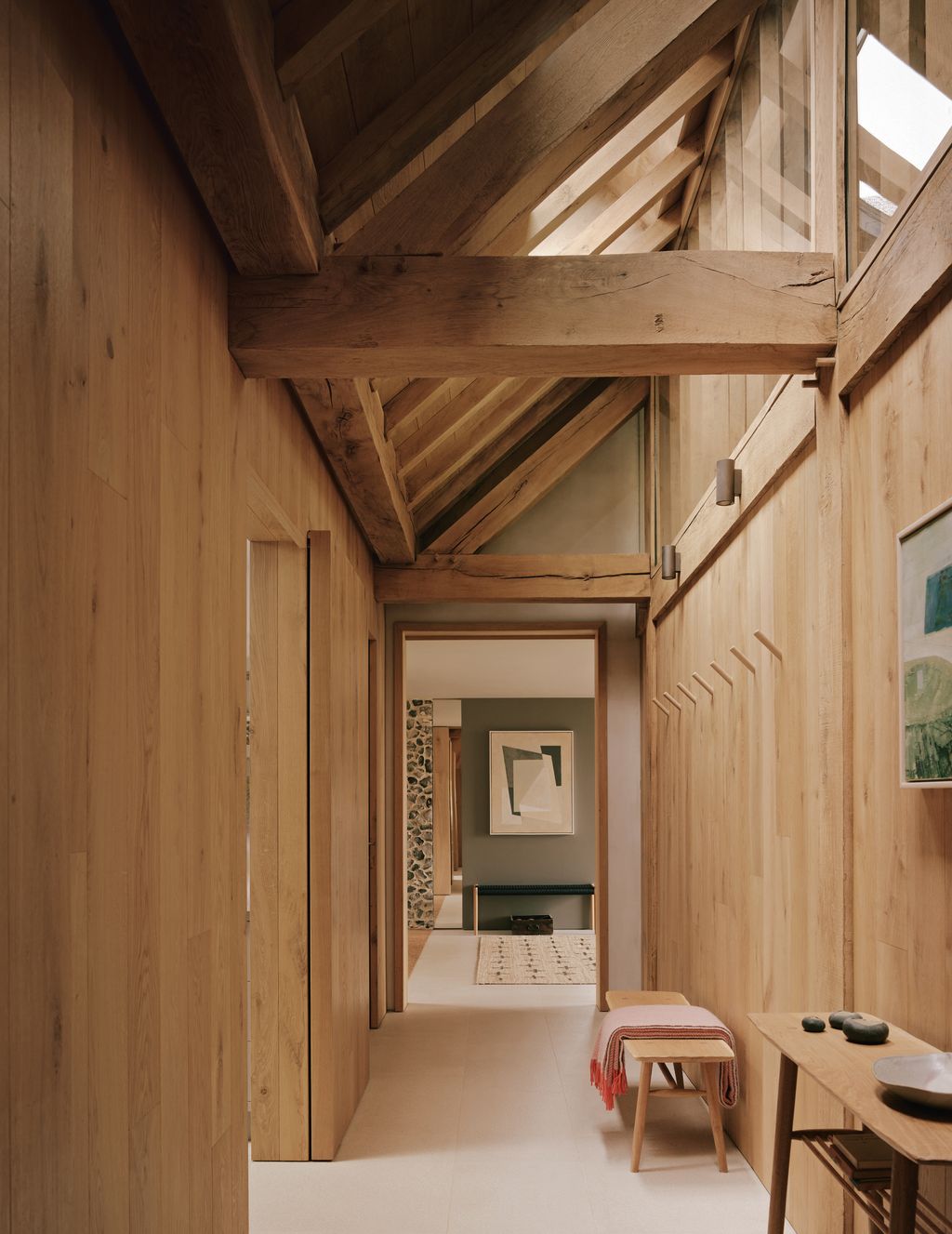
The 'Mawnan' oak console table and bench are by Will Nock Studio.
 Michael SINCLAIR4/8
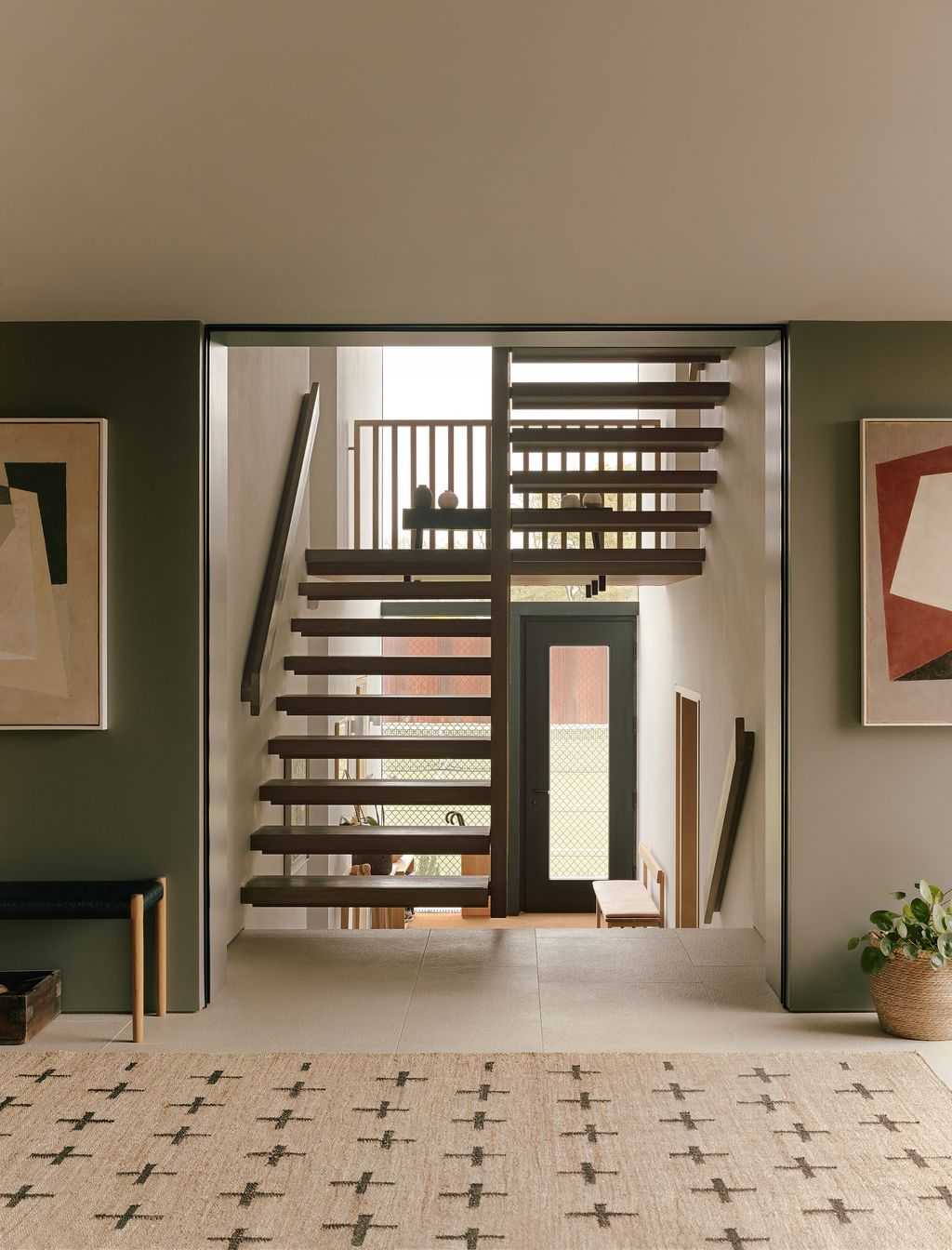
Set off by walls in Farrow & Ball's 'Worsted', abstract paintings by British artist Jeremy Annear frame a view of the oak staircase and the door onto the tennis court at the side of the house. A hand-woven Jute Cross' rug in black from Nordic Knots tones with the Danish JL Moller '63' oak bench


 Michael SINCLAIR5/8
Loaf armchairs add to the relaxed feel.
 Michael SINCLAIR6/8
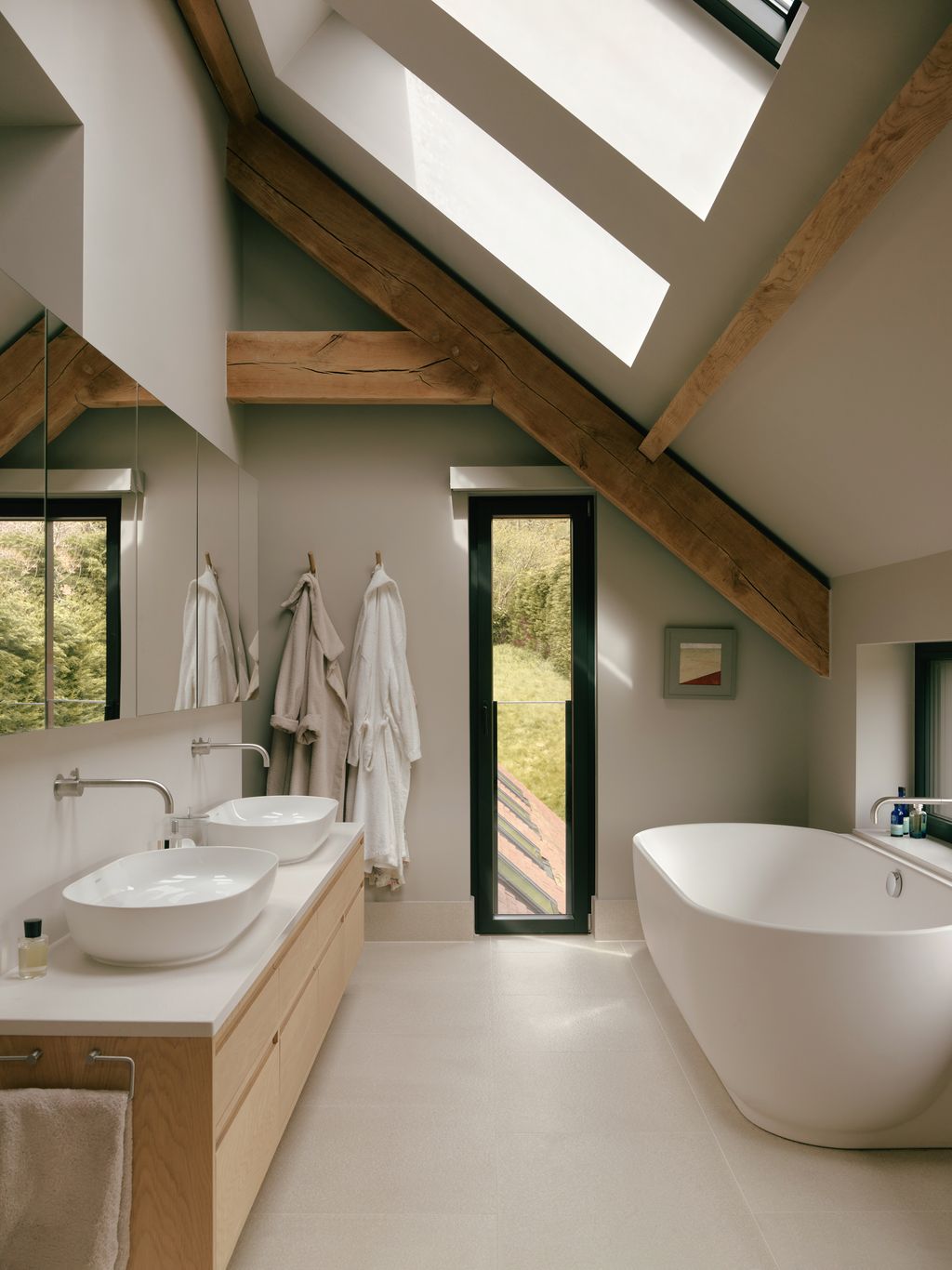
A Duravit bath and basins establish a calm, simple look
 Michael SINCLAIR7/8
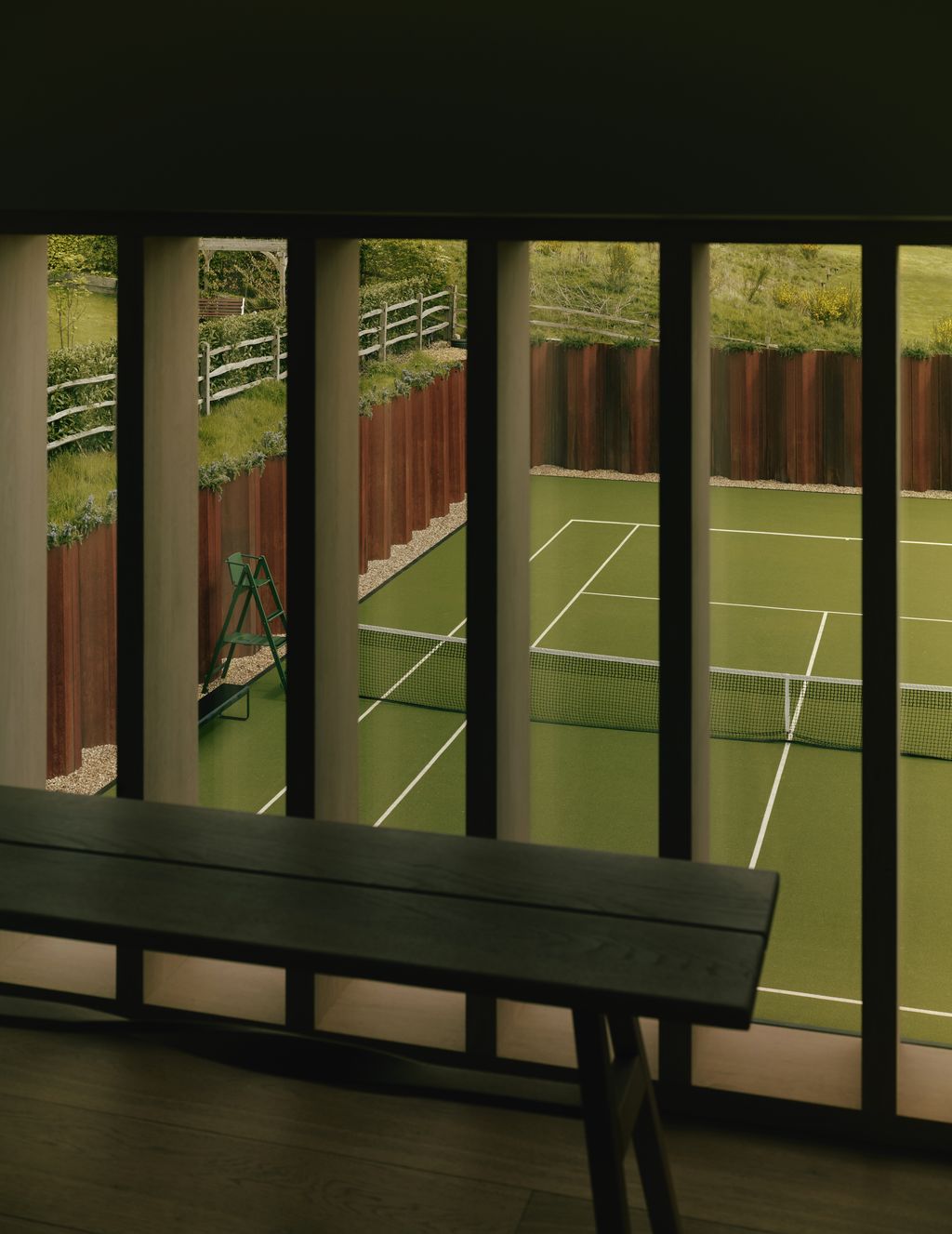
A 'Crib' bench by Tom Raffield is placed beside a window, offering a great view of the tennis court below
 Michael SINCLAIR8/8
Landform created terraces with Corten-steel retaining walls, planted with a mix of structural evergreens softened by perennials.


