
A 17th century Swedish farmhouse's perfect, pared-back coziness
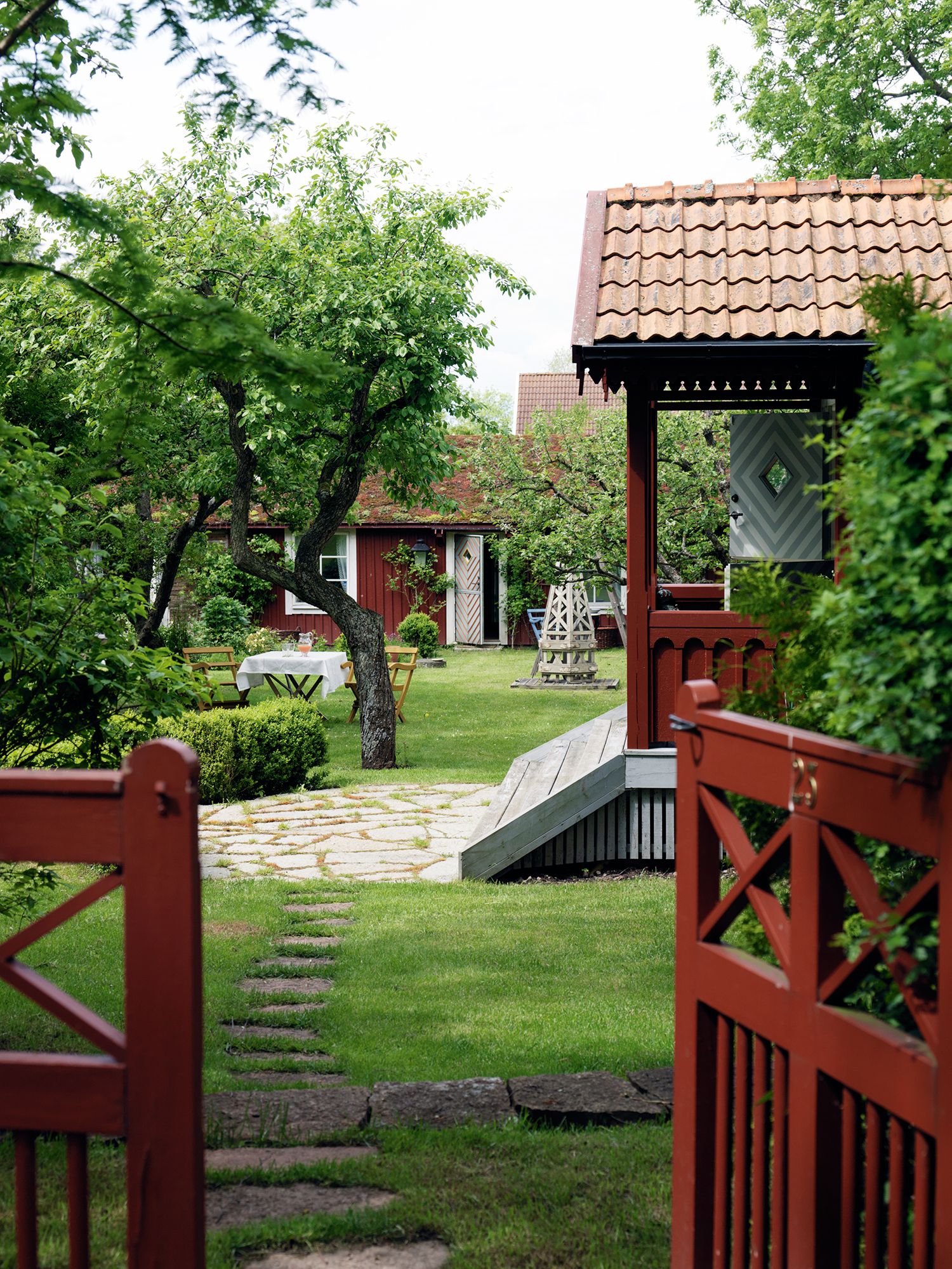
Buying a house sight unseen over the internet is a bold step that can backfire. Designer Lars Bolander thought he had found his ideal getaway on the narrow island of Oland in Sweden, but was disenchanted when he visited it a few months later. 'It was a bit of a shock,' he says. 'It wasn't my dream house. It was poky and filled with horrible wallpaper and leather furniture, which I loathe.'
Öland, off the south-east coast of Sweden, is a popular tourist destination in the summer. It is filled with ancient ruins, Viking burial grounds and scenic attractions such as seventeenth-century windmills and the king and queen's summer palace. It is also just five hours' drive from Stockholm. Houses on the island are extremely covetable because they are in short supply; Lars's village, on the west side of the island, is just one little street of houses with no shops. 'Most of the houses are 150 to 200 years old,' he says. Nearby beaches offer views out to the Baltic and the local ferry runs to Gotland, 'where Ingmar Bergman used to live, and lots of designers and actors still do'. Lars grew up across the bridge, in the town of Kalmar, and fell in love with Öland while training at the Capellagarden, a crafts and design school founded by the late Carl Malmsten, one of Sweden's top furniture designers. 'Now I can see the school's ceramics studio from my kitchen window,' he says.
MAY WE SUGGEST: A Wiltshire farmhouse filled with Swedish antiques
It took Lars just a year to renovate his little 1800s farmhouse. The previous tenants' decorating desecrations were easy to fix for someone of his experience - he worked with decorator Gaby Schreiber in London and designed houses for German millionaire Gunter Sachs before setting out on his own. But expanding the diminutive structure required great ingenuity. 'It is a very narrow house, about seven metres wide - it had served for a while as the local telephone exchange,' he explains. Lars decided to link the house to its neighbouring barn, a bare-bones structure that needed extensive renovation. 'Downstairs the floor was just earth and there was a ladder leading to an upstairs that was filled with junk,' he recalls.
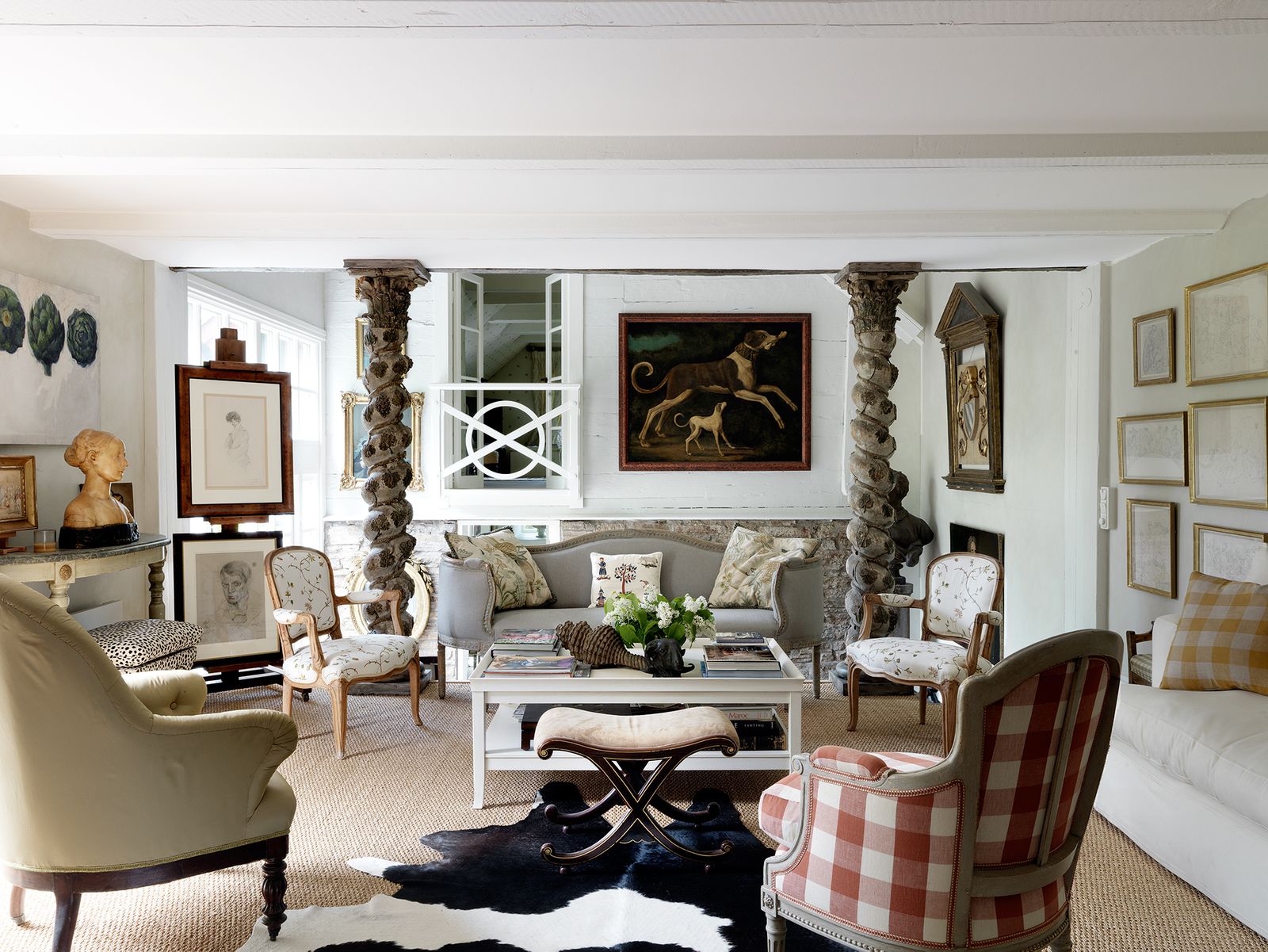
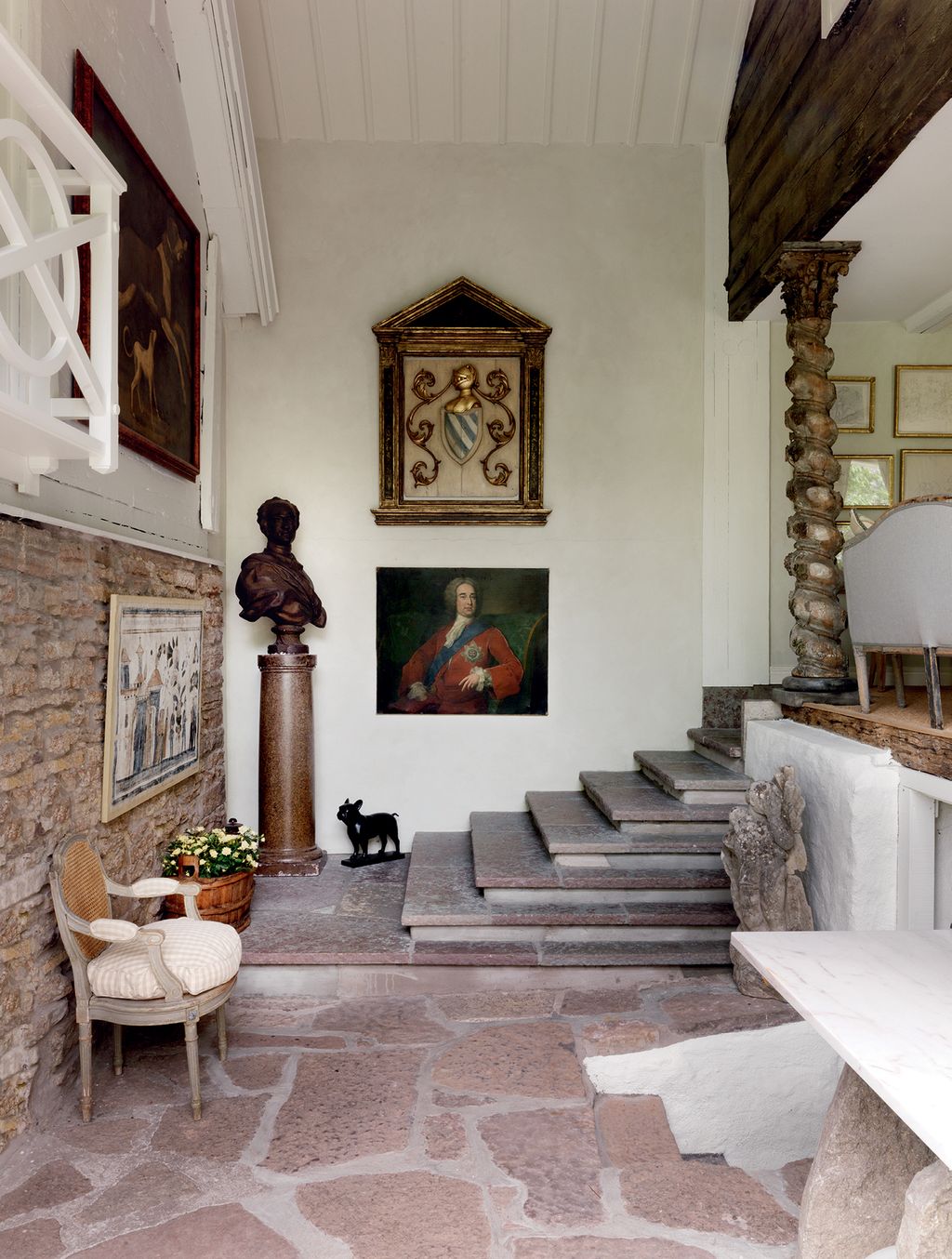
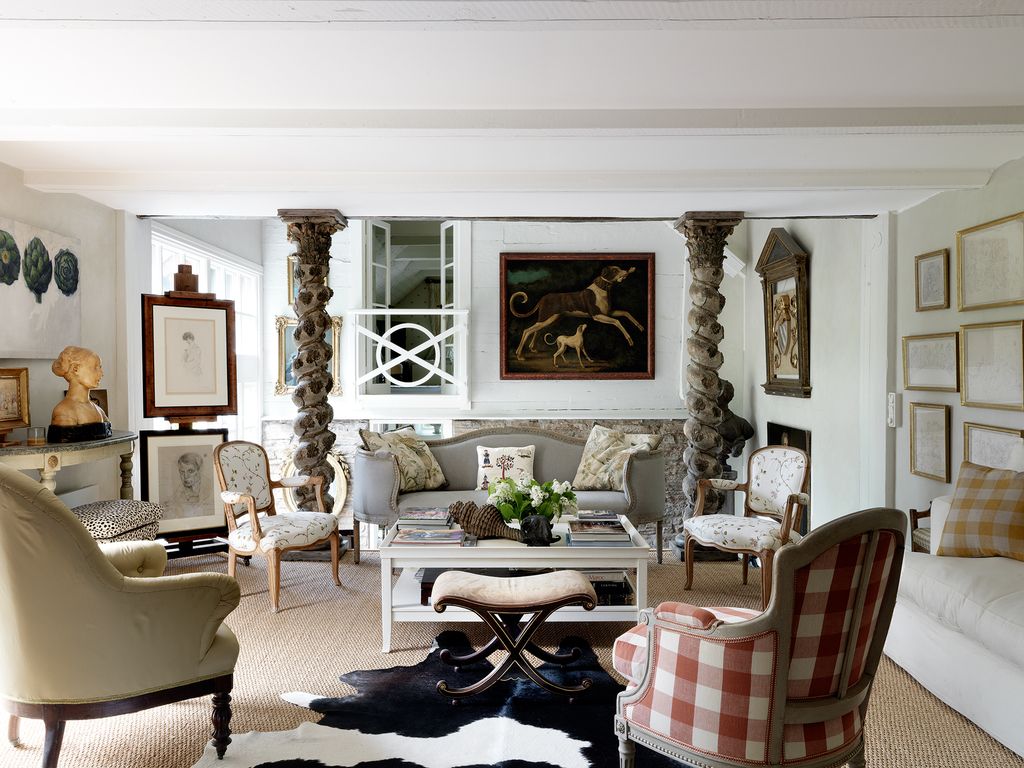
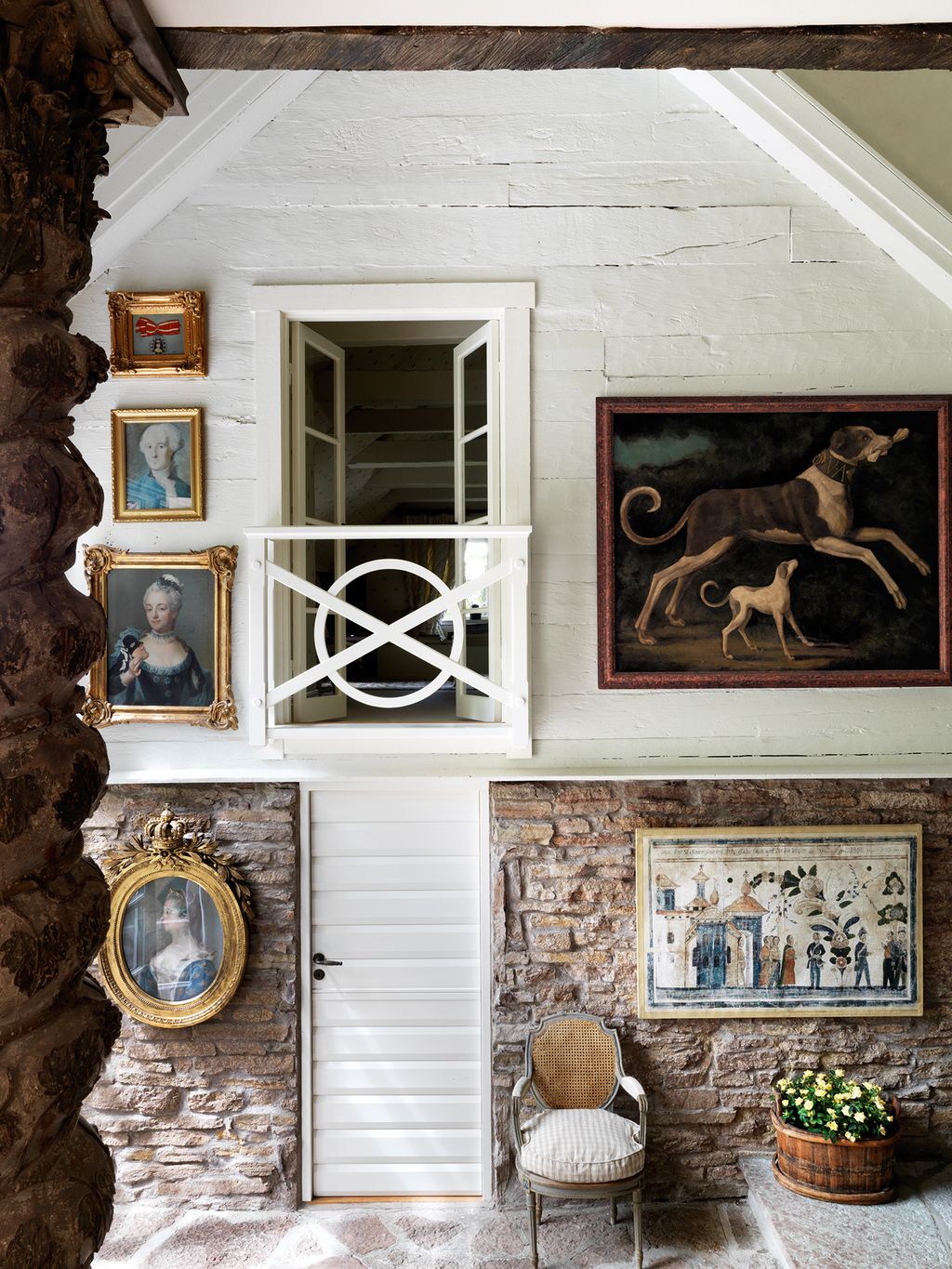
To blend the two buildings into a workable whole, he opened up and linked both spaces. He cut open the lower half of the main house, effectively removing one wall of the sitting room, and supported the ceiling with two wooden columns carved with vines, dating from 1780. A new atrium connects the two buildings, and doubles as the entrance hall for the house. The old front door has become 'the tradesman's entrance', Lars chortles.
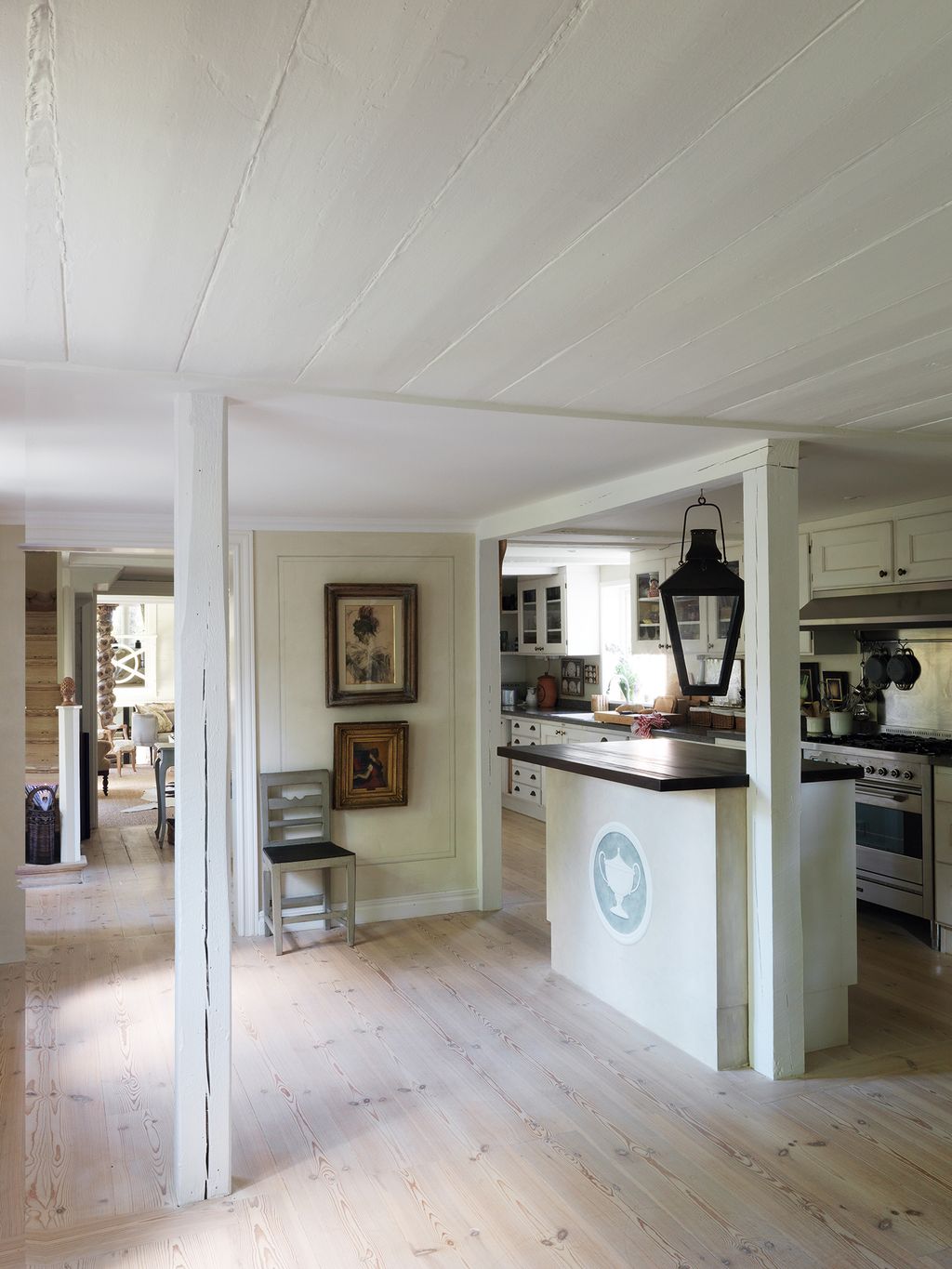
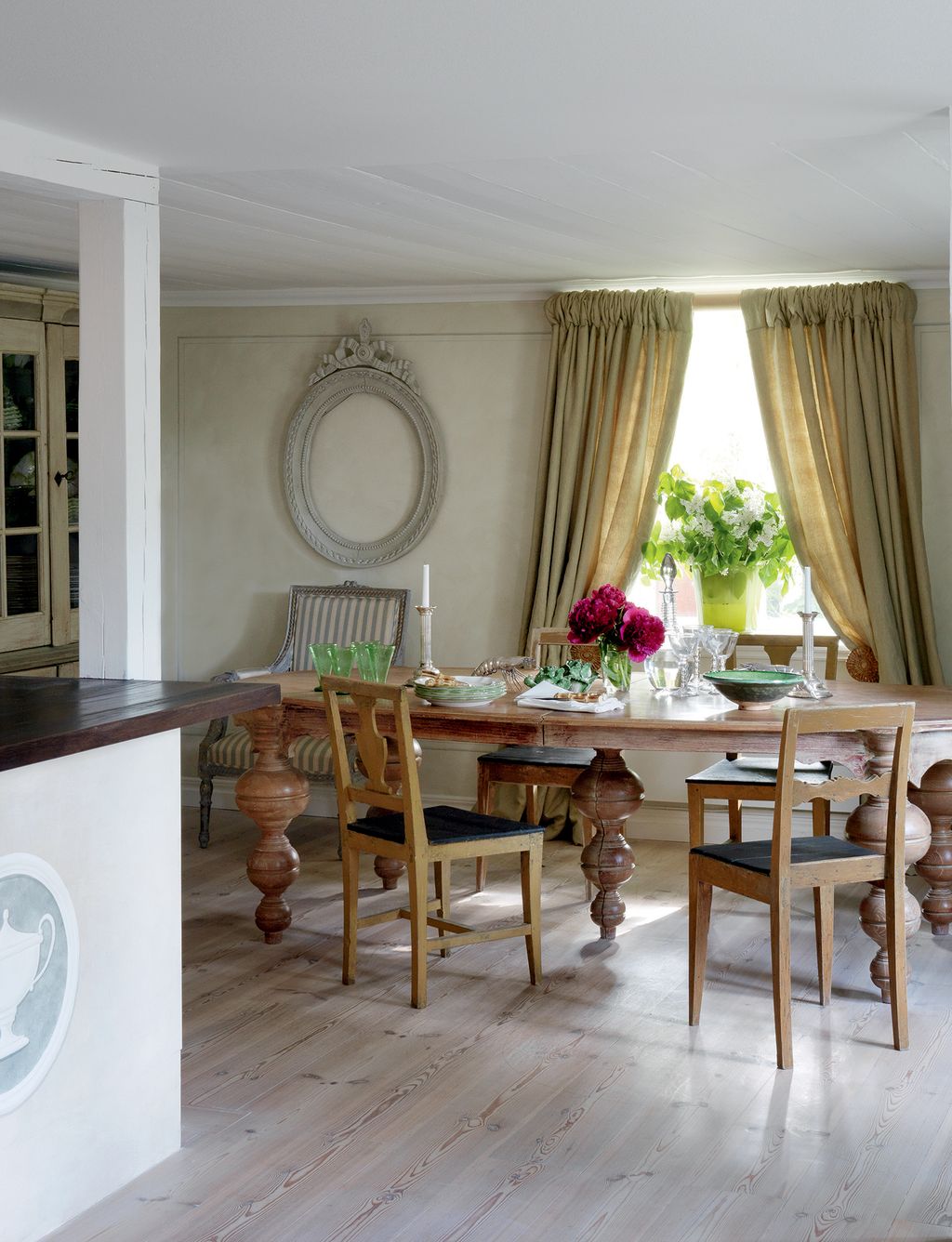
Inside the farmhouse, Lars has opened up the space as much as possible to create a light, airy feel. The three bedrooms upstairs have been converted into two spacious bedrooms, a generous bathroom and a landing area that doubles as an office. And downstairs, he has kept the sitting room, but two-thirds of the ground floor is now taken up with a combined kitchen and dining room. 'We all cook,' says Lars. 'My eldest son is a chef at the Gramercy Tavern in New York; my wife, Nadine Kalachnikoff, used to own a catering company; and the kitchen is my favourite place in the house. We must have about 400 cookbooks.'
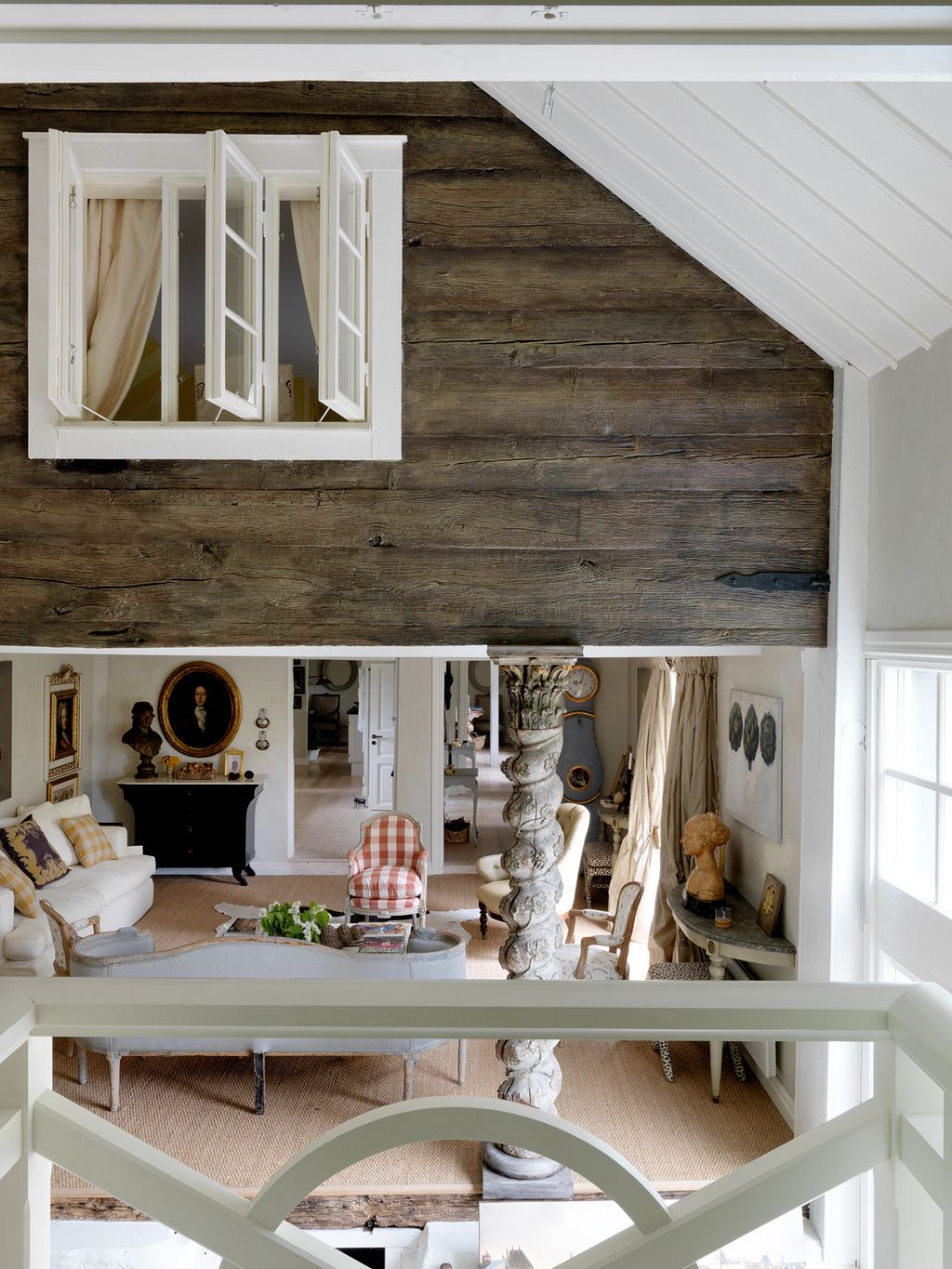
Lars says his one miscalculation was to make the steps down from the main bedroom to the bathroom too narrow. The barn houses the main bedroom suite, which consists of a bedroom upstairs - complete with a Juliet balcony opening on to the atrium - and a capacious, comfortable bathroom downstairs. 'It is hard to navigate in the night,' he says of the staircase. So he has created a little upstairs lavatory, literally out of thin air-the tiny room is cantilevered off the side of the building. It is no understatement to say that every centimetre of space on the property has been used. Even the garage in the garden has been pressed into service and converted into a guest suite.
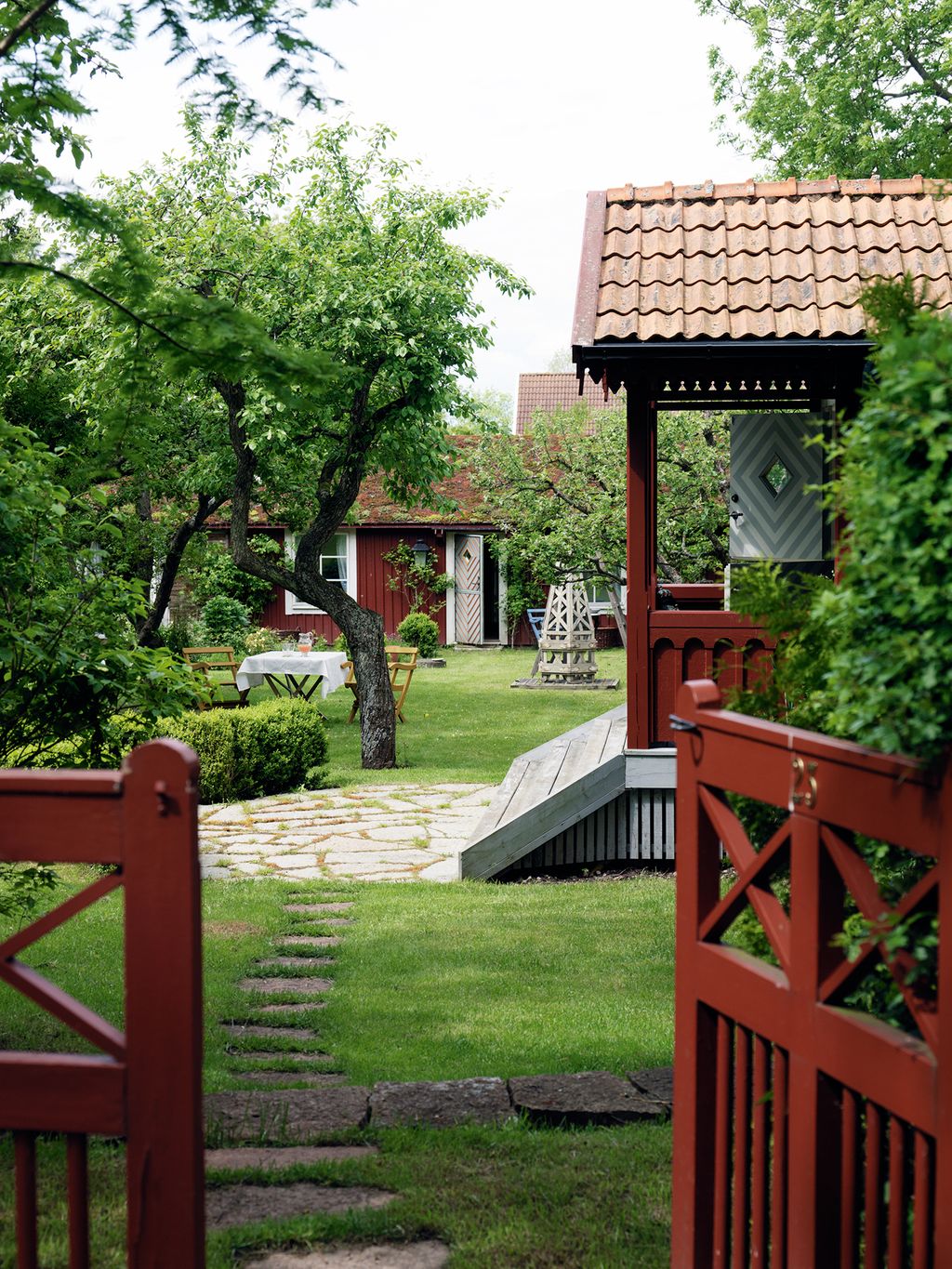
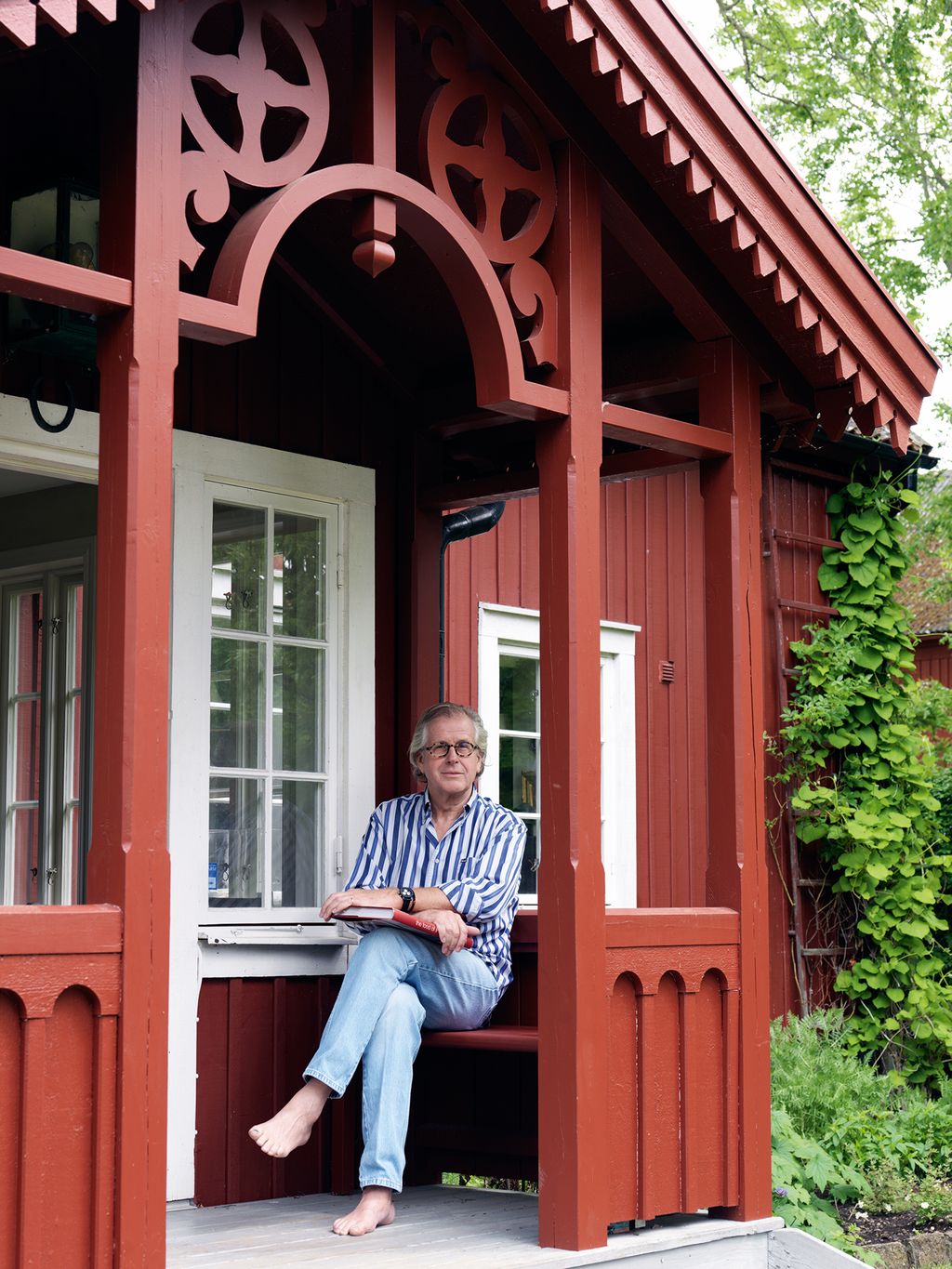
To give the house more presence, Lars added a carved porch to the front -a nod to the early eighteenth century, when a passion for the baroque generated elaborate doorways appended to simple farmhouses. The exterior of the house is painted in traditional Falun red, a colour that predominates in the Swedish countryside. This tough, linseed-oil-based paint has a luminous glow and its coarse crystals provide a strong seal against the harsh weather. 'The first Christmas we spent here was freezing,' Lars recalls. 'There was half a metre of snow outside and it was 20 to 25 degrees below zero.'
Inside, the furniture is a mix of Swedish and English. Lars brought over everything he had in his London studio, which 'all worked very easily', while most of the wooden chairs and dernilune tables were found locally in Swedish barns. One of the oldest objects in the house is a Swedish bathtub sofa, 'designed for women to sit sideways when they wore crinolines,' he says. With a nod to Gustavian style and its suites of furniture painted white or light grey and set against pale walls, Lars chose a similarly subdued palette. 'The only colour I have is a red check on one chair in the sitting room,' he notes.
MAY WE SUGGEST: The interiors of Svindersvik, a beautiful Rococo mansion in Sweden
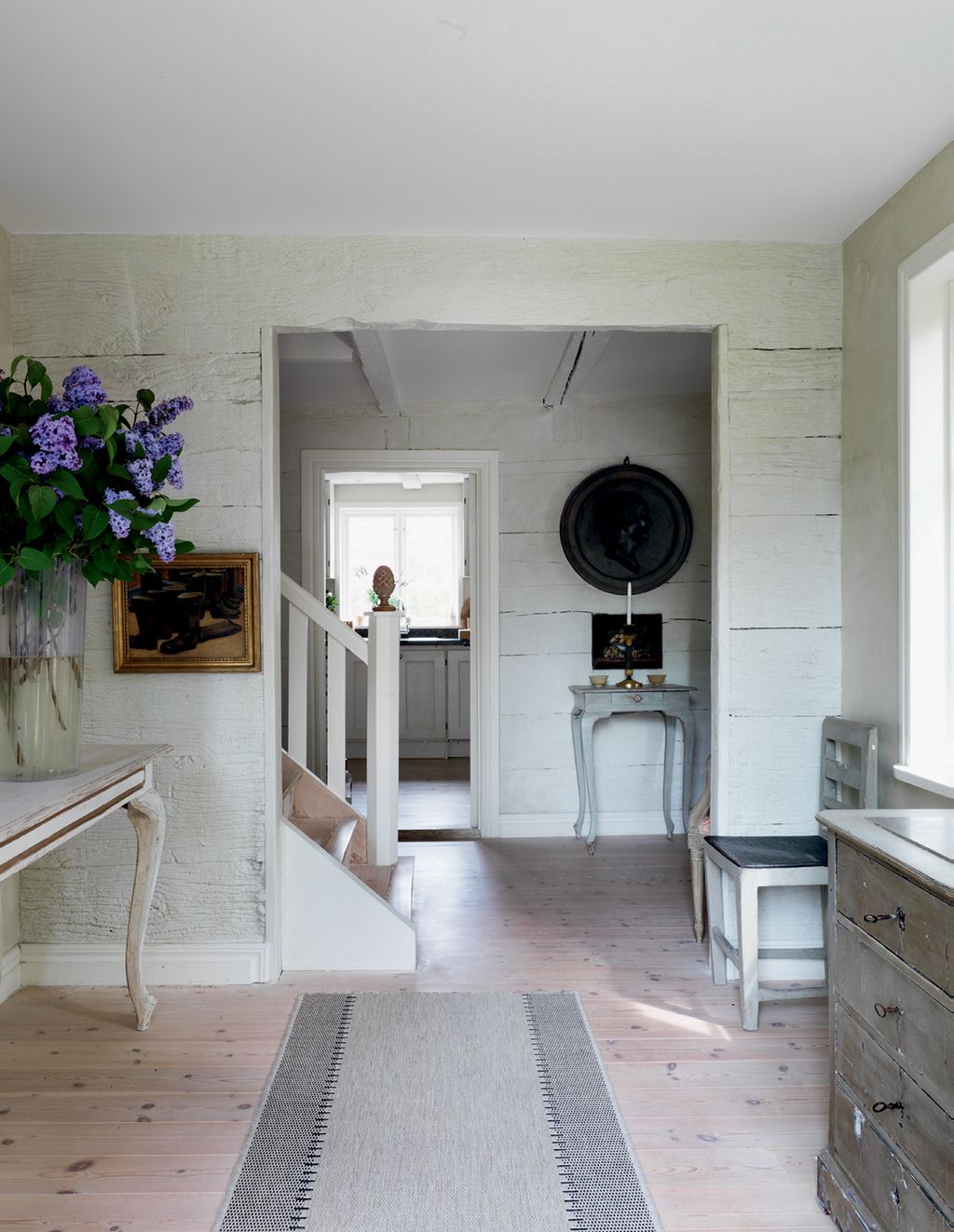
The Gustavian aesthetic derives from the need to generate as much light as possible in an interior. As Lars wrote in his book, Scandinavian Design (Vendome Press), 'Scandinavians live for light. Inside Scandinavian houses it is summer all the time.' To this end, the walls and ceilings of the farmhouse are predominantly white, except m the bedrooms, which have simply patterned British and Scandinavian wallcoverings. There is sisal flooring in the sitting room, and bare wood planks cover much of the rest of the ground floor, continuing up the main staircase. One of the things Lars loves most about the house are the wide planks on the hall walls, which he also painted white.
A downside of all the exposed wood is that the house is a sounding box. The upside? 'You can talk to anyone in the house from the kitchen. It is very useful,' Lars jokes.
 Simon Brown1/13
The atrium connects the main house with the barn and doubles as the entrance hall.
 Simon Brown2/13
Lars Bolander removed the lower half of the original front wall and replaced it with two wood columns, carved with vines and dating from 1780, to provide support. The Swedish bathtub sofa is one of the oldest pieces in the house, 'designed for women to sit sideways when wearing crinolines'.
 Simon Brown3/13
On the upper level of the barn is the main bedroom, with a balcony overlooking the atrium.
 Simon Brown4/13
The window of one of the bedrooms in the main house opens on to the atrium.


 Simon Brown5/13
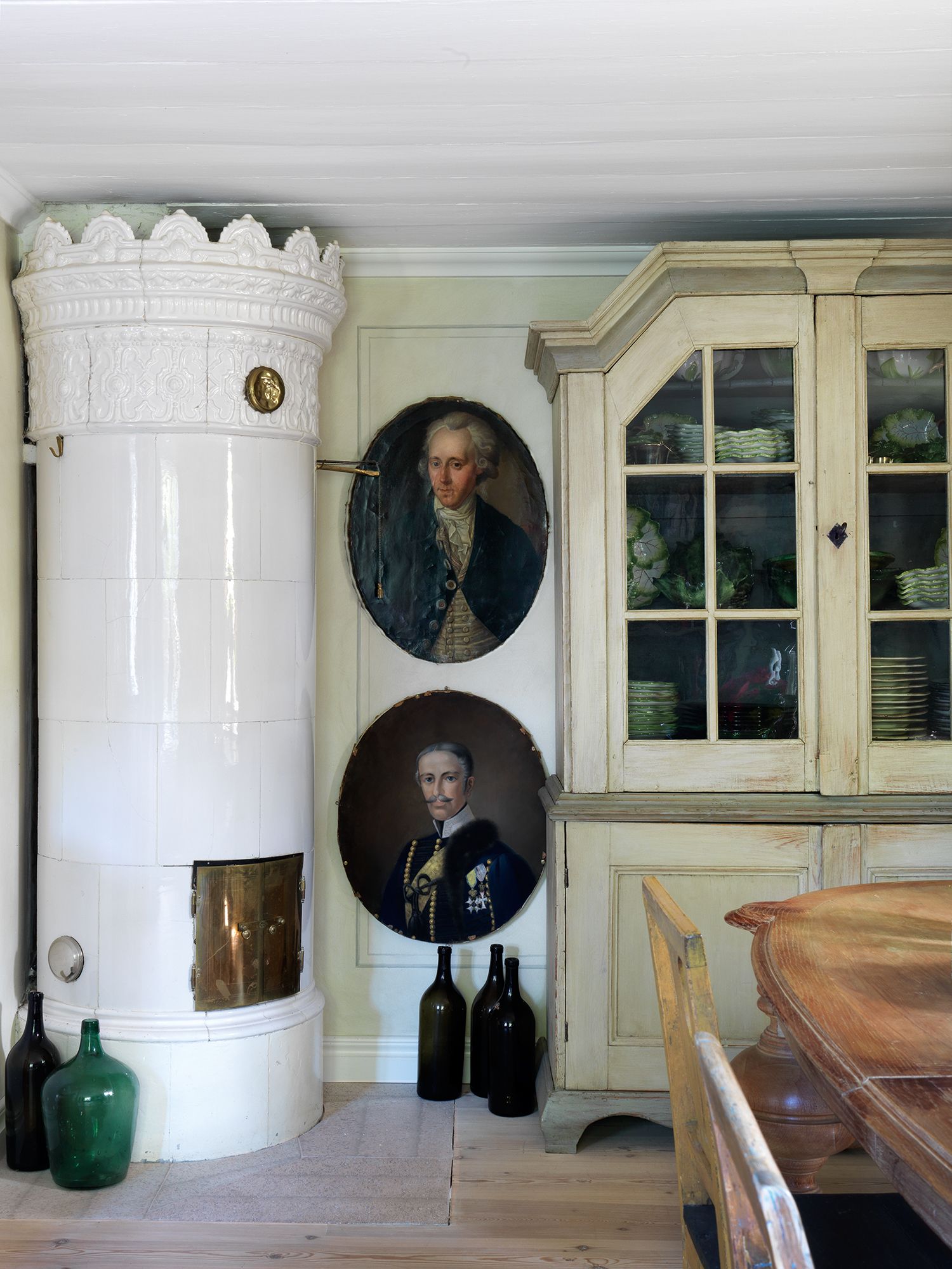
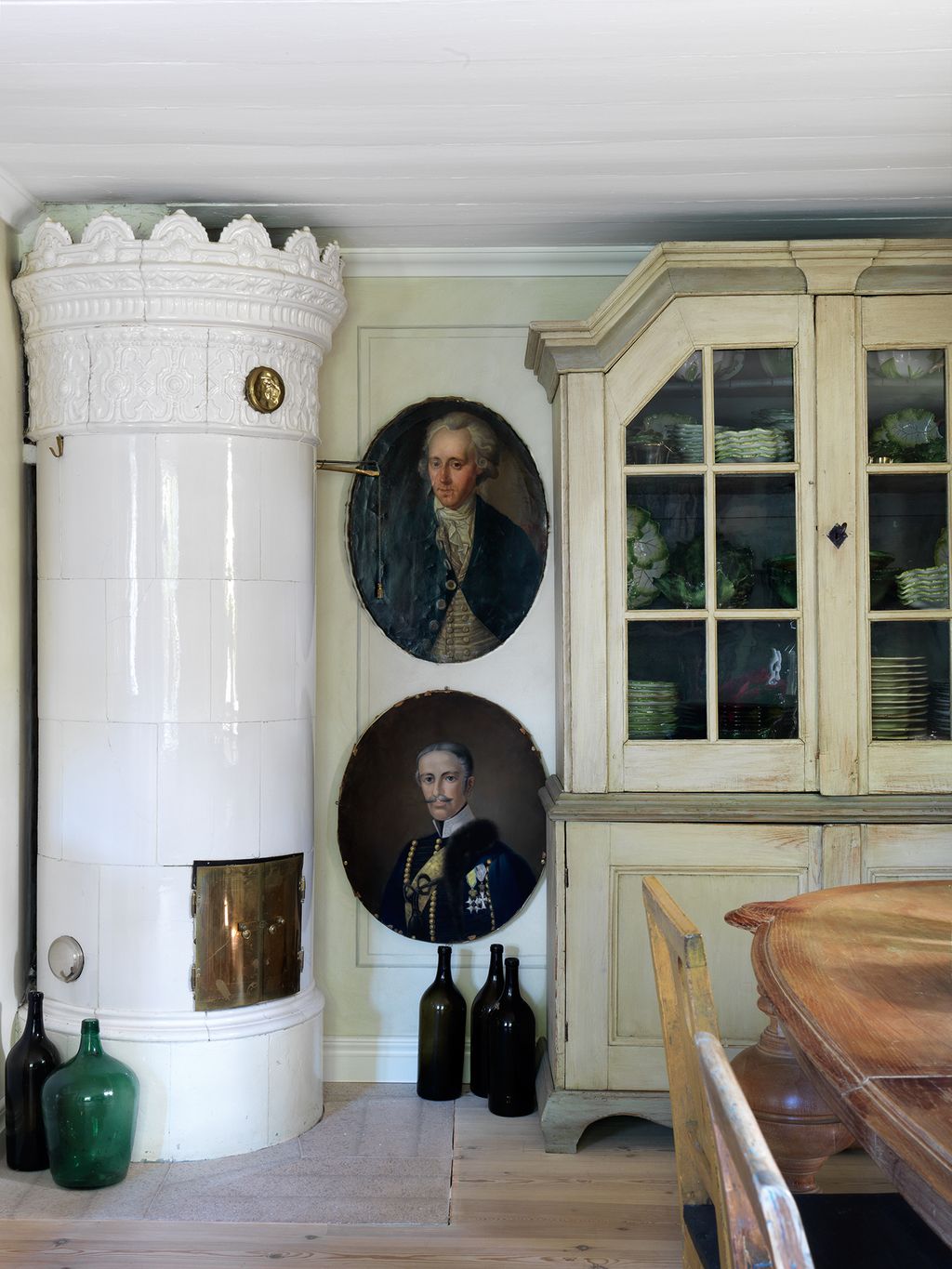
The ceramic-tile stove is original to the house and dates from about 1780; Lars bought the oval portraits for their decorative frames, which now hang in the dining area.
 Simon Brown6/13
Two-thirds of the ground floor in the main house is devoted to a spacious kitchen and dining area.
 Simon Brown7/13
Lars bought the oak dining table, which extends with two leaves, in Paris.
 Simon Brown8/13
Lars opened up the space on the ground floor to keep the feel light and airy.


 Simon Brown9/13
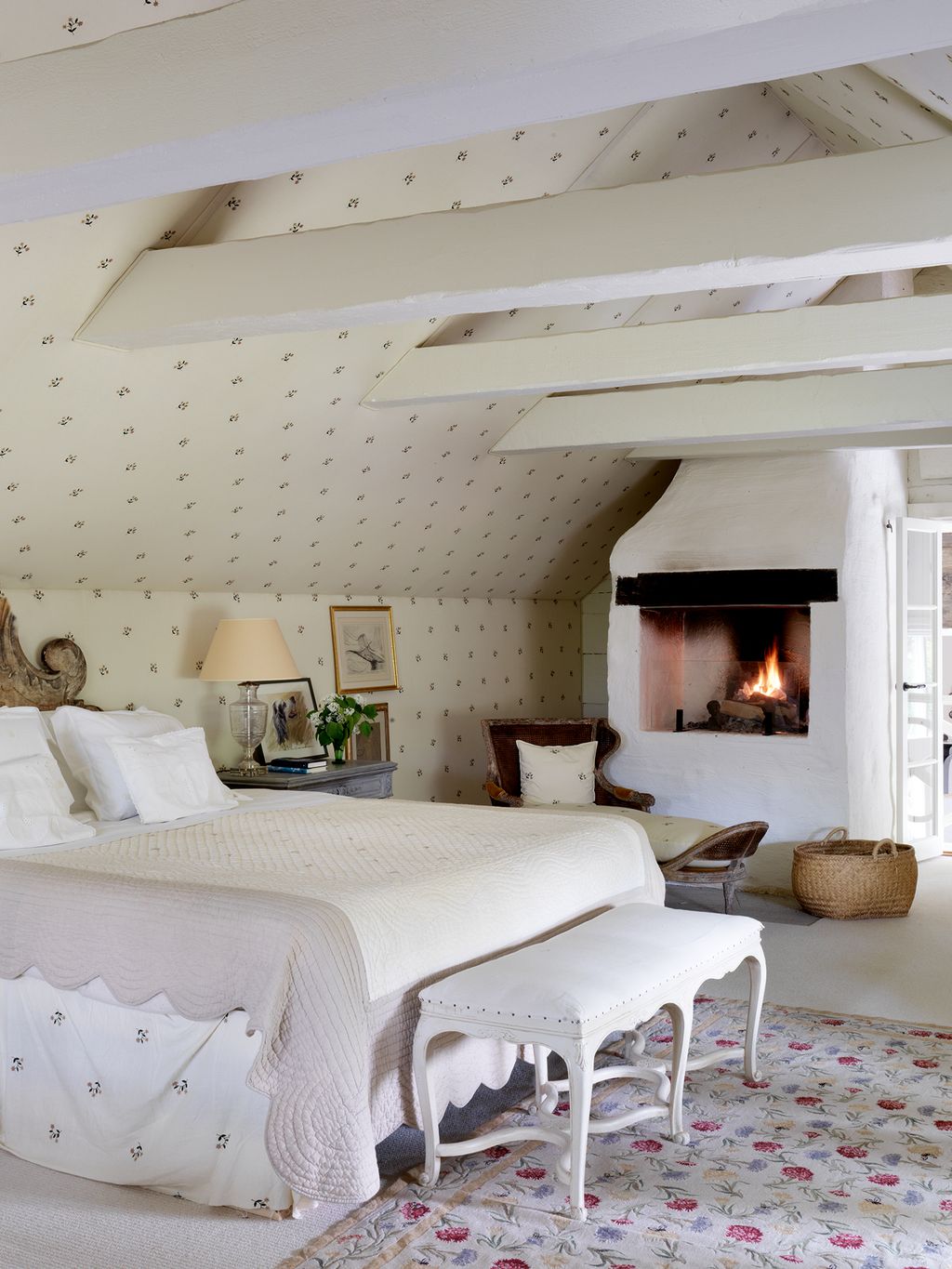
Lars broke through the original chimney to create the fireplace in the main bedroom.
 Simon Brown10/13
In a spare bedroom, the fabric (now discontinued) used for walls and curtains is by Ian Sanderson; the embroidered pillowcases are from the shop at the Royal Palace in Stockholm.
 Simon Brown11/13
Lars painted the house in Falun red, a colour commonly seen in rural Sweden.
 Simon Brown12/13
Lars sits on his porch, which was added to the house to give it more presence.


 Simon Brown13/13
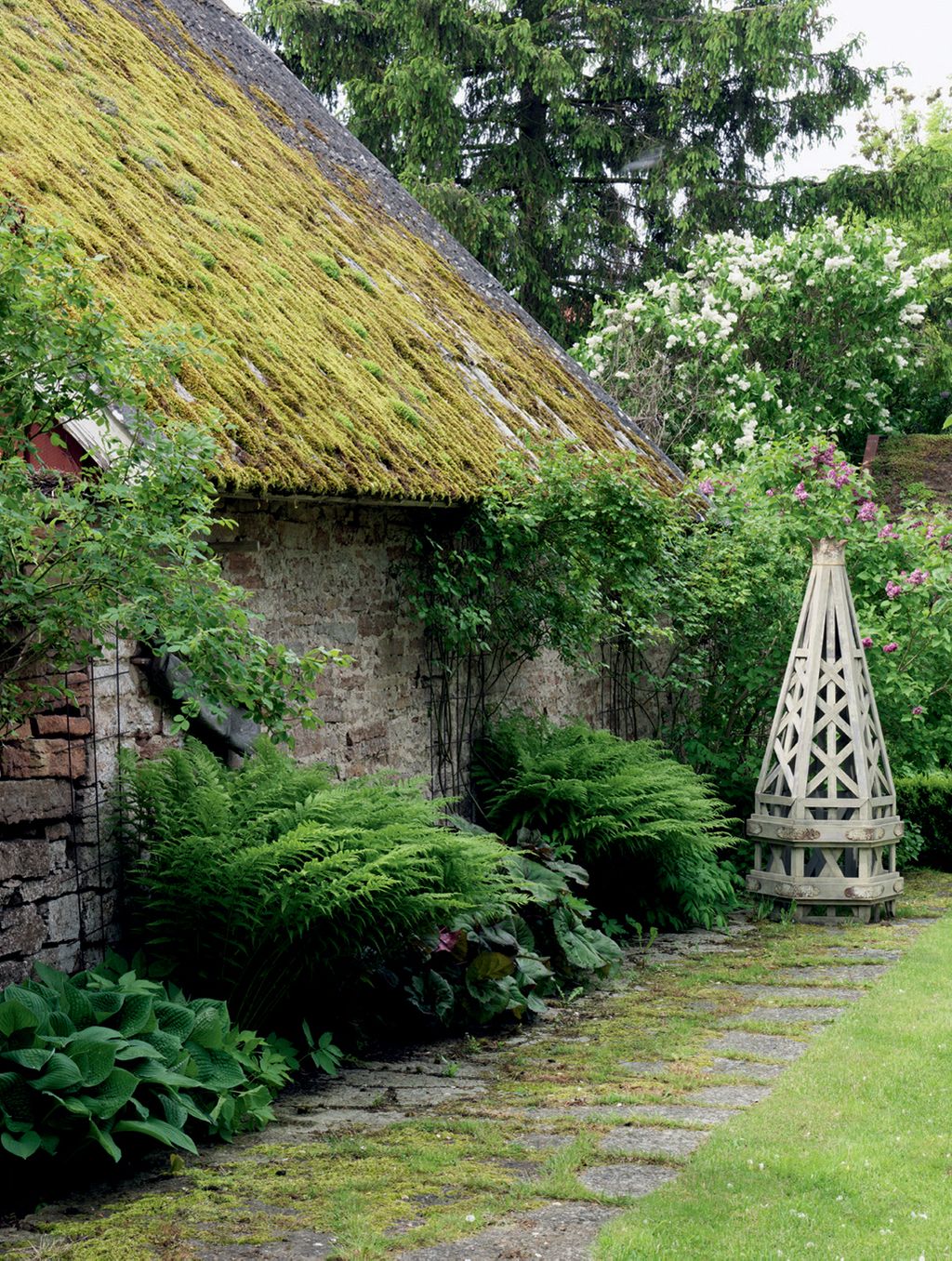
The stone used to make the garden path is the same as that in the atrium.


