
How to decorate with kilims and jajims

When speaking to interior designers about how they create layered, interesting spaces, one of the things we hear most often is that antiques – particularly antique textiles – play an important role. Not only is this the sustainable option, but there is a wealth of choice available. From antique and vintage Swedish rugs to the historic Zieglers – named after the Manchester-based, Anglo-Swiss company Ziegler & Co, which established a workshop in Sultanabad – modern-day Arak in Iran – in 1883, there is a long and rich history of textile weaving to call upon.
The textile traditions of Turkey, Central Asia and the Middle East are some of the most ancient and venerable in the world, and fabrics from these regions have long been collected and prized for their beauty. Some of our favourite designers, including Phillip Hooper and Susan Deliss, have based their decorating careers around dealing in these textiles. It does seem that the rugs known as kilims and jajims, which are made across a vast area from Turkey to Azerbaijan, are having a particular moment. A kilim is a flat-woven textile, often with stripes or variations on a set of geometric motifs. A jajim is a variation on a kilim, in which the fabric is woven in narrow strips that are sewn together. As well as the regional variety offered by kilims, Susan particularly loves 'the many layers they to a room - colour, pattern, texture, a story, cultural references. Memories too if you have collected them yourself – you will never forget that shop where you bought them', she says. Depending on their weight, size and condition, she uses them on the floor and walls, usually behind furniture, as window coverings and door curtains and for upholstery.
Whether made into cushions, covering ottomans and other furniture, or occupying their customary position on the floor, these rugs, with their earthy colours and traditional motifs, are a surprisingly versatile decorative element. They fit in well with both pared-back and highly colourful interiors, and in contemporary or traditional rooms. Scroll down for our indispensable address book of where to source antique rugs, and if you're lacking inspiration, we've also rounded up our favourite design ideas.
- Robert Kime: This respected interior design studio is also known for its fine selection of antique rugs and runners.
- Larusi: Based in London, Souad Larusi specialises in vintage Moroccan Berber rugs dating from the 1970s onwards.
- Keshishian: On Pimlico Road, SW1, this is a favourite with interior designers. Its offering stretches from the Gothic to Pop-art examples.
- Robert Stephenson Handmade Carpets: With decades of experience, Robert Stephenson has a showroom on Elystan Street, SW3, that stocks a selection of Persian, Turkish and Indian carpets, as well as mid-century Scandinavian flatweaves.
- Farnham Antique Carpets: As well as selling carpets, this specialist company has completed notable work at National Trust properties and at Castle Howard, and provides expert cleaning and restoration services.
- Gallery Yacou: Based in north London, this fourth-generation family business specialises in antique oriental and European examples.
- Franses: With over 100 years’ experience, it sells to both collectors and museums, and is a good source of decorative antique, Art Deco and modernist designs.
- Woven Place: The American company has just opened its first London showroom on Bloomfield Terrace, SW1, in collaboration with the Pimlico Road antique dealer Christopher Howe.
 Chris Horwood1/19
Francesca Gentilli spends her working life sourcing the best fabrics and textiles from India, Turkey, Morocco, Uzbekistan and beyond, and her own house is the best showcase of her finds. The suzani bedcover and Turkish kilim in the spare bedroom were sourced by Francesca on a buying trip. They help to maintain the room's sense of light airiness while adding layers of interest.
 Michael Sinclair2/19
After sensitively reconfiguring its interior to suit the needs of their family, the owners of this Welsh cottage have furnished it with an appealing mix of homely pieces gathered over the years. Whitewashed brick walls and stone floors are a classic cottage look. Antique leather armchairs with sheepskins and kilim cushions face each other across an ottoman upholstered in vintage fabric bought years ago from Robert Kime.
 Mark Anthony Fox3/19
We love the rich patterns of jajims, a variation on the classic Turkish or Central Asian kilim, in which the fabric is woven in narrow strips that are sewn together. In this former vicarage near Bath, Anna Haines has used cushions from Howe on the sofa that are made from an antique jajim.
 Paul Massey4/19
For Philip Hooper, joint managing director of Sibyl Colefax & John Fowler, his own house in Somerset offered a rare opportunity for experimentation. Walls in Papers and Paints’ ‘Pale Gres de Flandres Brown’ are the background for curtains in Jasper Fabrics’ ‘Jaipur Jali’ linen from Michael S Smith in the kitchen. A pair of painted benches, from The Decorative Fair in Battersea, pick up on the blues of the antique kilim from Sibyl Colefax & John Fowler.


 Simon Brown5/19
In her Cotswold house, fashion designer Penelope Chilvers has created a rhubarb fool effect on the wall by mixing two emulsion paints and then brushing over them with a large brush. The headboard is made from an old Kilim and the bed linen is from Piglet in Bed. The collage on the wall features a leather notebook found in South Africa, which she mounted on an antique Japanese watercolour of a kimono design.
 Jerome Galland6/19
In a contemporary and eclectic house designed by Laura Gonzalez, an array of kilim rugs add a sense of depth. Walls in Braquenié’s ‘Kalamkar’ in pétale from Pierre Frey and painted wood Solomonic columns found in a local antique shop frame the door to the main bedroom’s antechamber.
 Dean Hearne7/19
In the younger boy's bedroom of this house designed by Bodil Bjerkvik Blain, the ceiling light is an antique boat lantern. The vintage cupboards were sourced by Bodil in France and then painted in the son's favourite shade. She added fabric glass inserts in a strip which coordinates with the bolster on the bed. A patterned kilim rug on the floor picks up on the colours featured in the wallpaper and on the woodwork.
 Paul Massey8/19
The spare bedroom in Sarah Hiscox's Wiltshire house is a riot of antique textiles. A bed hanging from an antique shop in Shropshire stands out against the pale linen curtains and Farrow & Ball’s ‘James White’ on the walls, ceiling and original beams in this more recently built part of the house. The earthier tones of a bedcover made from a Bennison fabric remnant, a cushion found in a charity shop and kilim rugs inherited by Renshaw ground the scheme.


 Paul Massey9/19
Wanting a place to display her treasured collection, Emma Burns, Managing Director at Sibyl Colefax & John Fowler, transformed a converted barn at her country home into a sitting-room-cum-guest-cottage full of hidden surprises and witty details. The armchairs have been upholstered using jajim rugs.
 Paul Massey10/19
In a Georgian farmhouse renovated by Maria Speake of Retrouvius, a kilim rug warms up the bare wooden floor, coordinating with the red and tan of the armchairs. The earthy colours of kilims work well against pale grey walls.
 Lucas Allen11/19
When antique dealer Christopher Howe was asked to decorate this house in Bray, he set about uncovering its original features. Now eclectic furniture and unusual fabrics complement the exposed brickwork and beams. In this sitting room Christopher has paired a 1940s jajim rug from Woven Accents with grey walls covered in a linen/horsehair blend.
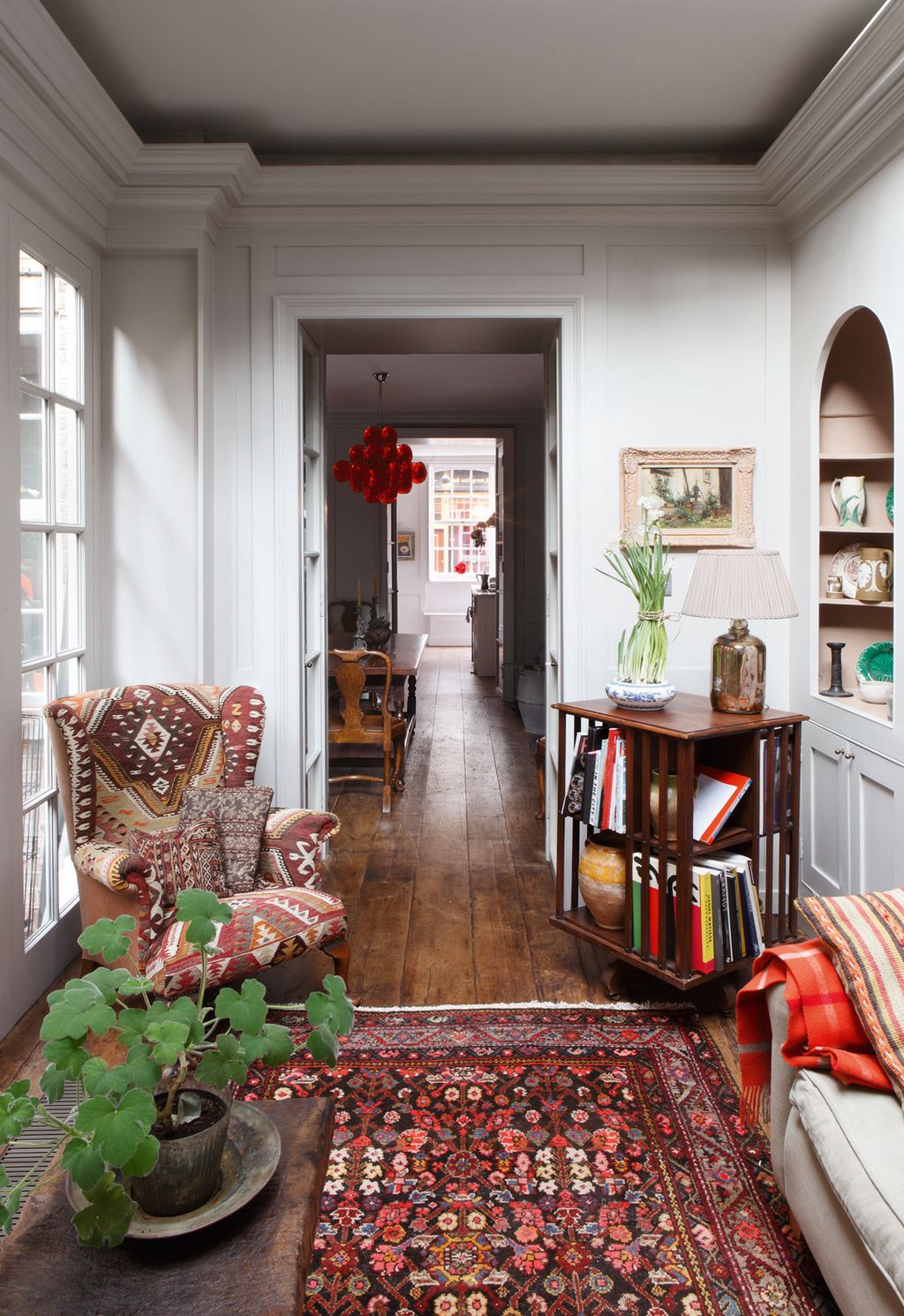 Alexander James12/19
In a restores silk weavers' house in Spitalfields, the conservatory has a wing chair upholstered in an antique kilim from Kingston Antiques Market.


 Paul Massey13/19
Green is another excellent counterpoint to the colours in a kilim. In the bedroom of a London house decorated by Ben Pentreath, an antique kilim has been layered over rush matting, and works unexpectedly well with the William Morris wallpaper.
 Franck Allais14/19
In this modern high street and vintage scheme devised by our decoration team, a kilim covered stool and kilim cushions, both from Ceraudo, add texture and colour to a room done out in neutrals, greens and reds.
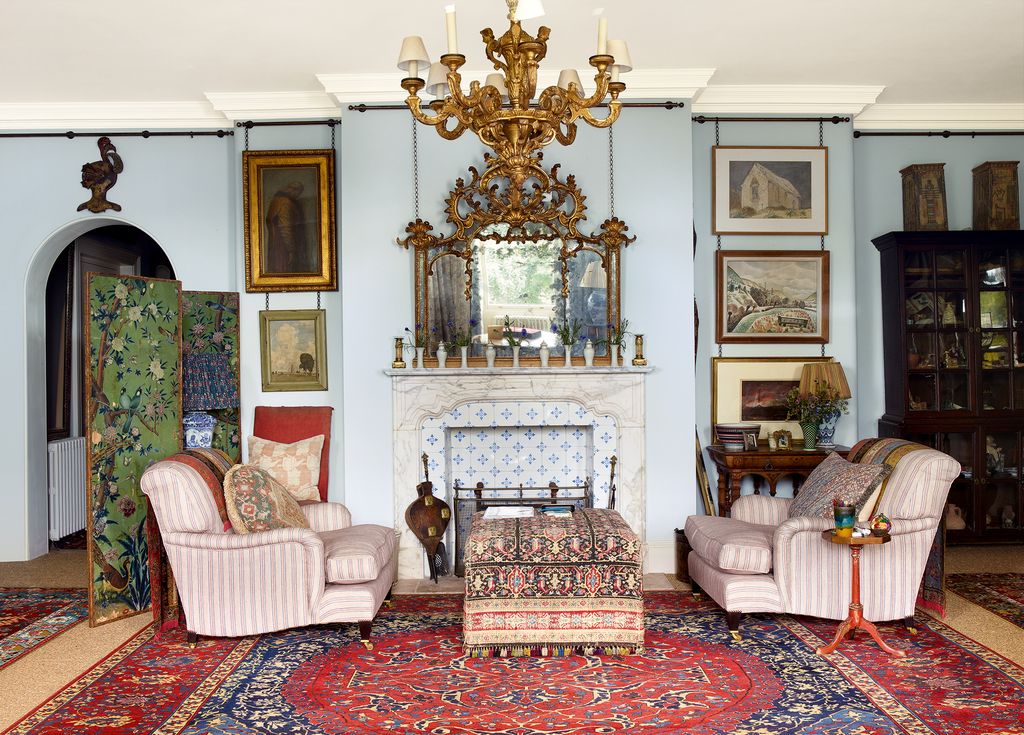 Simon Upton15/19
Robert Kime has a lifetime of experience in collecting and decorating with Turkish textiles, and his London flat is a masterclass in how to use them. Here armchairs upholstered in Robert’s own ‘Tynemouth Ticking’ linen in grey, inspired by an antique fabric in his collection, face each other across an ottoman covered in an eighteenth-century Turkish textile.
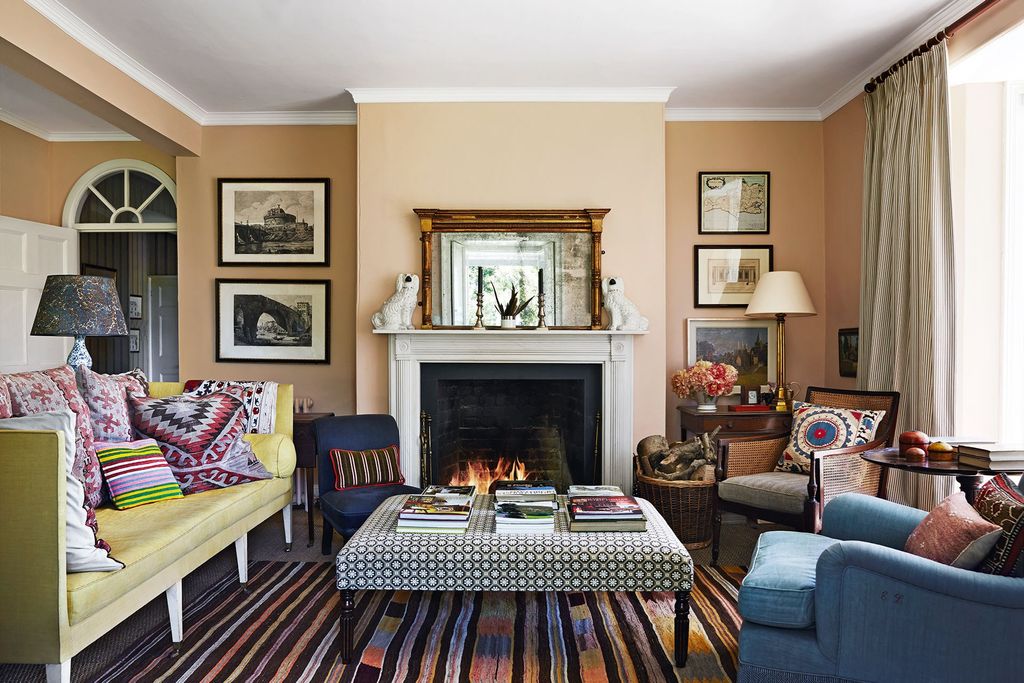 Sharyn Cairns16/19
Cushions can be an easy way to bring kilims and jajims into a room of almost any style. The sitting room at Ben Pentreath's parsonage in Dorset combines elegant Georgian furniture with earthier textiles.


 Simon Brown17/19
The living room of Ptolemy Dean's home in Sussex, is painted in Farrow & Ball's 'Light Blue.' This tone clashes wonderfully with the kilim-covered sofa from Settle and the rust red ottoman from Teasal England (used here as a coffee table). In true country style, this room is meant to be comfortable rather than grand.
 Simon Brown18/19
Kilims and jajims can happily mix and match. In the sitting room of Alexandra Tolstoy's Oxfordshire cottage, decorated with the help of Sibyl Colefax & John Fowler decorator Emma Burns, a stool re-covered in an antique djadjim rug stands on another antique djadjim from Gallery Yacou.
 Elsa Young19/19
Kilims are an excellent way to cover up floors that aren't in the best of condition. Says Susan Deliss, textile dealer and interior designer: "I like layering on the floors - in this flat the floors were not in great shape, so I painted them white, put sisal IKEA rugs down, and then put kilims and other rugs on top." The kilims in this hallway manage to ground the vivid pattern of the wallpaper.


