
Design ideas for gloss paint and lacquer
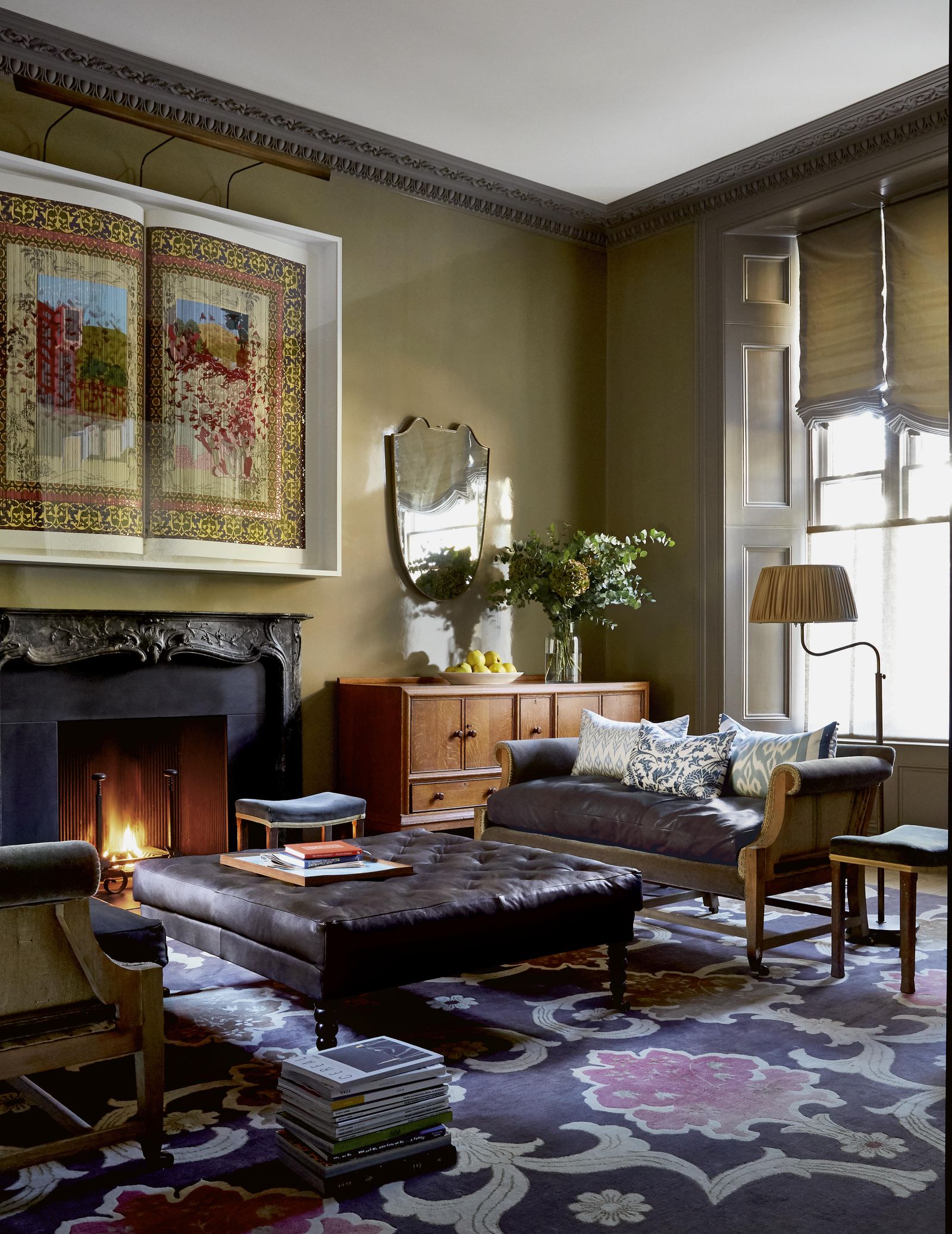
Gloss paint is a relatively affordable and easy way to give a room a bit of zest. Its softly reflective finish is a wonderful tool for opening up an otherwise dingy space and bouncing light around. It highlights woodwork and adds an extra layer of visual interest. Out of fashion for most of the last two decades, interior designers are bringing it back and using it in interesting ways, so we've gathered some bright ideas from the House & Garden archive to inspire you.
A word to the wise: gloss paint may be an easy way to achieve a decorative finish but the cost comes in the application. Prep the surface meticulously and make sure it's super smooth before you paint; a good clean, light sanding and wipe down with white spirit and a clean cloth should do the trick. To paint, you must use a brush and be very methodical to ensure a glassy, smooth finish. Arm yourself with two brushes, one loaded with paint and another fairly dry. Brush the paint horizontally, then vertically, and then use the dry brush to brush the paint vertically, from the bottom up. This method will prevent drips, and keep your brushstrokes nice and consistent.
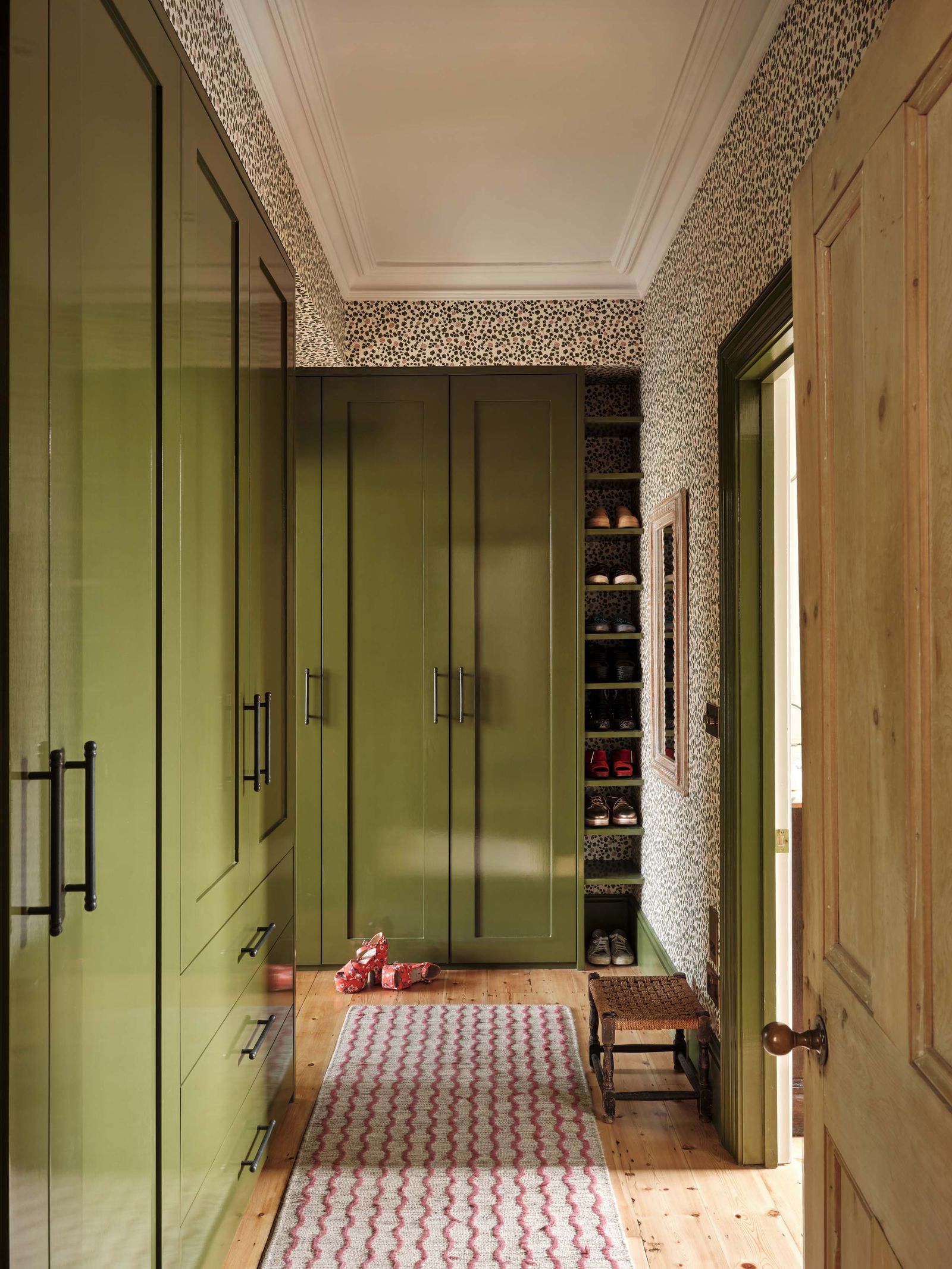
Lacquer turns what could otherwise be a rather underwhelming room into a jewel box’, says the interior designer Nicola Harding. The word lacquer – denoting a hard and often shiny coating applied to a variety of surfaces – is derived from lac, the resinous substance secreted as a protective covering by the lac insect. But the use of lacquer in East Asia, which can be traced back to thousands of years BC, was not derived from insects but from the sap of the Toxicodendron vernicifluum tree. Lacquered objects first reached Europe from East Asia in the early 16th century, and the technique has proved desirable ever since. Modern methods involve dissolving shellac insect resin in a solvent. The resultant liquid is then applied and sanded down to achieve that sought-after glossy coating.
These days, however, the term is used more loosely to describe different ways of attaining a high-shine surface. The real thing is rare. This is, in part, due to the expense (it is very labour intensive) and environmental concerns surrounding the high solvent and VOC content of shellac. That said, great strides have been made in the use of waterbased resins, which are now often the preferred coating to achieve the desired effect.
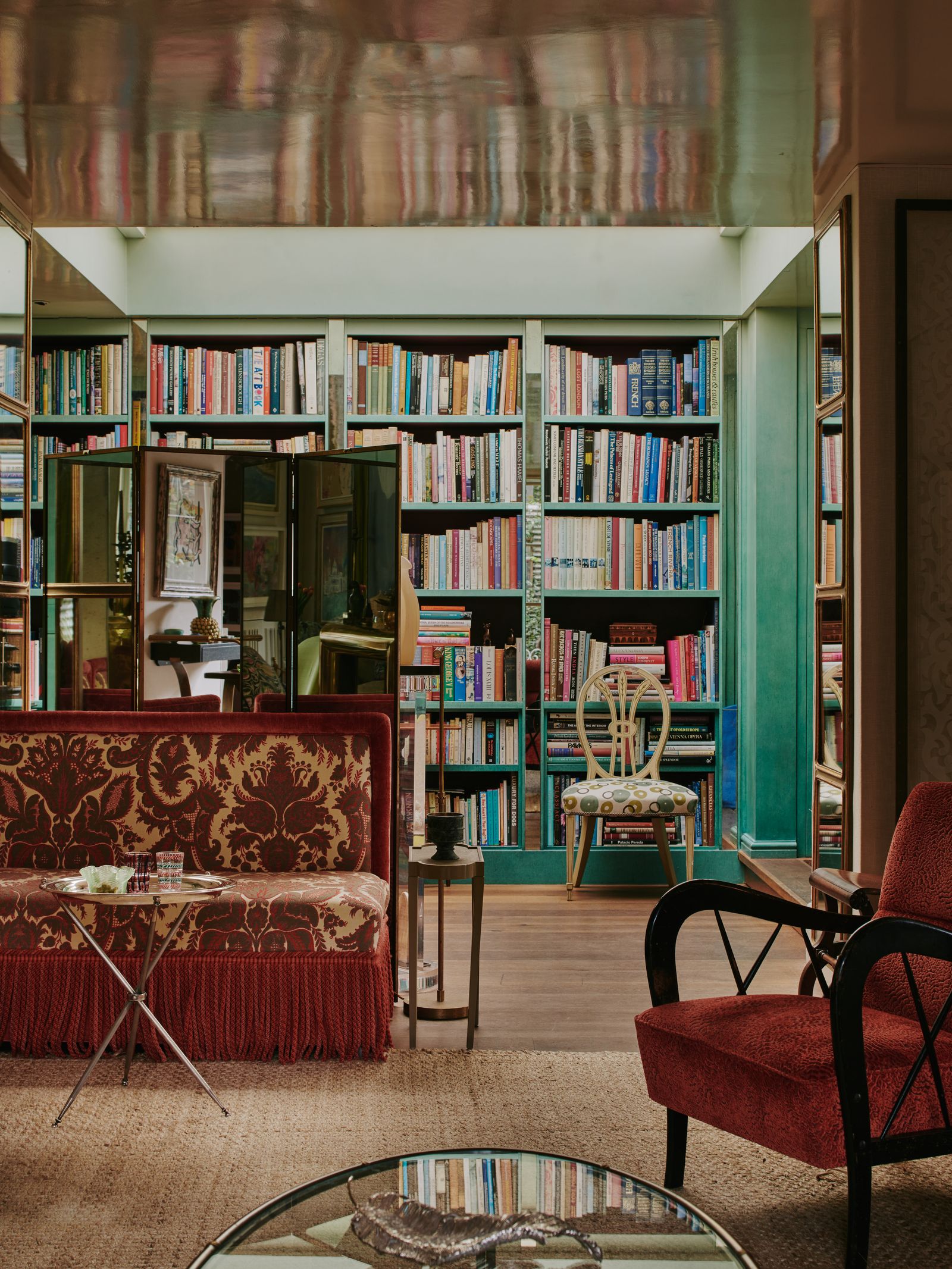
Along with other specialist finishes, including faux wood, faux marbling and gilding, there has been a recent revival of lacquer-look surfaces. Paris-based interior designer Jean-Louis Deniot uses them regularly, taking inspiration from the Arts and Crafts movement, in particular the work of Maison Jansen. ‘You start with a dark colour but can count on it becoming brighter as it interacts with the light,’ he explains.
This is almost always a job for the professionals. Henry van der Vijver, of HV’Art, applies up to 14 layers of water-based resin, polishing between each one. One of his first projects was in the house of interiors doyenne Nina Campbell, whose much photographed lacquered entrance hall has been coveted since its creation in 2009.

To minimise the cost, consider using lacquer in a smaller space, such as a downstairs loo, where it can still have a huge impact. According to Nicola Harding, ‘It doesn’t feel terribly relaxed, so I probably wouldn’t use it in a bedroom or snug.’ However, as shown above in a project by Adam Bray, there are ways of incorporating high-shine surfaces into these rooms.
If your budget does not stretch to lacquering, gloss paint can be a great alternative. When repeatedly applied and sanded down, it will dry with a reflective sheen. As Adam points out, unlike lacquer, gloss paint will leave you with a ‘mirror-like finish’, so it is worth thinking about the kind of overall effect you are hoping to achieve.
.jpg) James McDonald1/17
James McDonald1/17This extraordinary nine-storey townhouse in Notting Hill is the work of designer Bryan O'Sullivan and his studio, who saw it as a place to experiment with colour and work with a host of artisan makers. The experimentation is most notable in this room, which Bryan transformed into a library with the help of blue high gloss lacquer walls and an orange ceiling. These were lacquered by the specialist painter Matthew Bray and make this room a wonderfully enveloping space.
 Milo Brown2/17
Interior designer Lonika Chande frequently uses gloss paint in her projects – in this Stoke Newington house the woodwork in the living room is painted in the cheerful ‘Murrey Red’ by Papers & Paints, a lively complement to walls in Farrow & Ball’s ‘Setting Plaster’.
 Ben Pentreath3/17
In fashion designer Charlotte Dellal's country house, Ben Pentreath has used lacquer to create a warm and enveloping scheme in the library. “Glazed and lacquered olive-green walls – painted for us by Mathew Bray and Matthew Collins – glow in an astonishing way in the afternoon sunlight,” he says.
 Ben Pentreath4/17
Ceilings are a lovely place to employ gloss paint, bouncing the light around and creating an unexpected decorative feature. Also in Charlotte Dellal's house, Ben Pentreath has used a Fornasetti wallpaper for the bar area, with a glossy cherry red ceiliing. “Charlotte and Maxim’s hospitality is renowned, and the bar cart is appropriately well stocked,” says Ben.
.jpg)


 Boz Gagovski5/17
In this 1930s Chelsea flat, Daniel Slowik has used a stippled oil glaze lacquer (a specialist treatment beloved by John Fowler) in the hallway. “It throws light around whilst avoiding the spray-on wet look that often is the fate of gloss walls,” says Daniel. The lights are from Collier Web and complement the Deco antique gilded iron console and the white painted 1920s mirror from Justin Evershed-Martin.
 Paul Massey6/17
The Plain English units in this kitchen of a 19th century London house decorated by Nicola Harding are painted in 'Aubergine' eggshell by Pure & Original, with a gloss finish on the matching cupboards. The dark colour could enclose the room, but the gloss keeps things airy and open.
 Paul Massey7/17
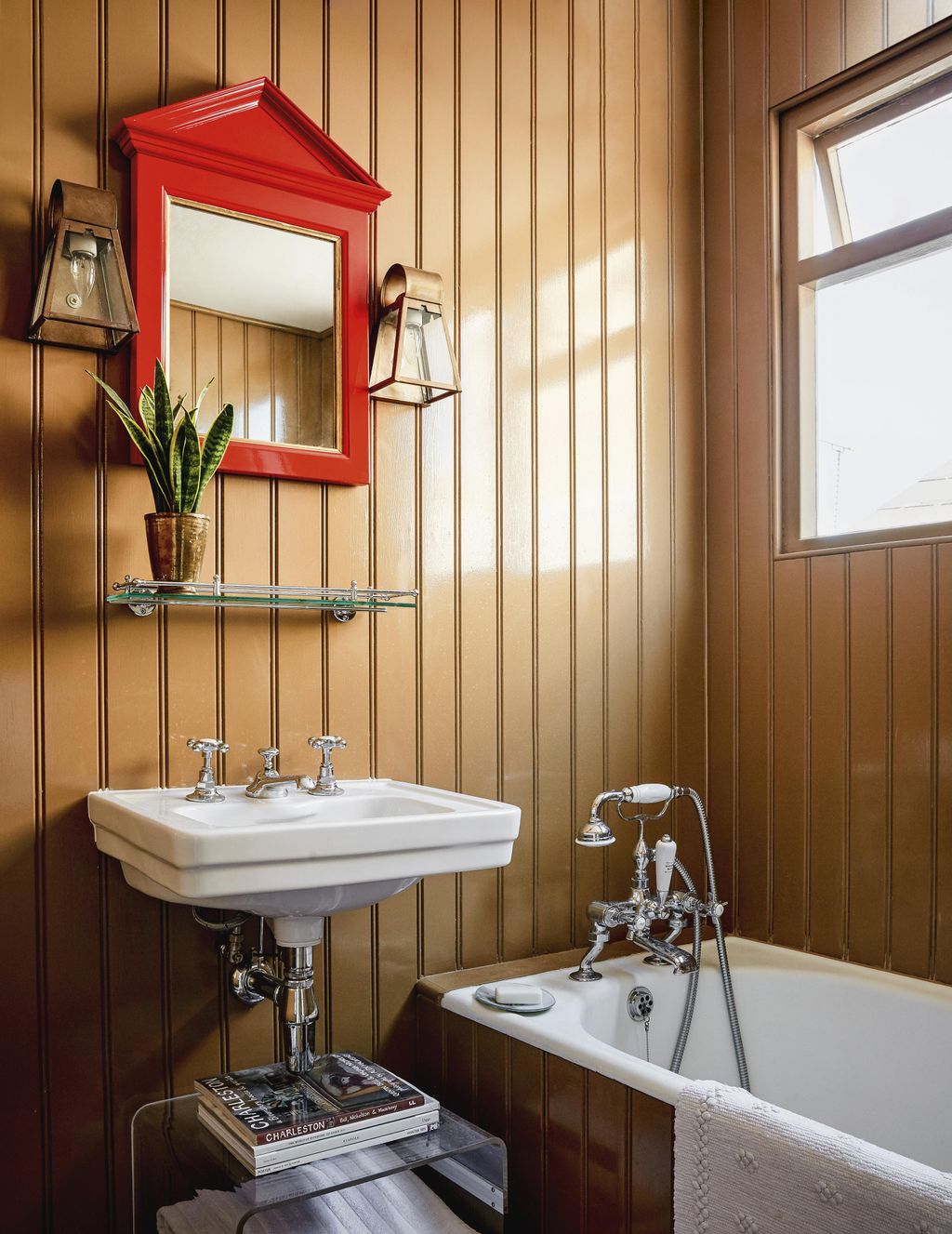
Artist and maker Bridie Hall has used gloss paint in various rooms of her north London house, including in the bathroom, where she has painted the panelling in ‘Verdure Brown’ from Papers and Paints.
 Paul Massey8/17
Bridie has also deployed gloss paint to great effect in the kitchen of her London house. She describes this look as ‘typical Ben Pentreath country-house style’, as traditional cabinets with olive-green paintwork in a gloss finish provide a rich contrast with cheery red and white Marmoleum floor tiles arranged in a chequerboard pattern.


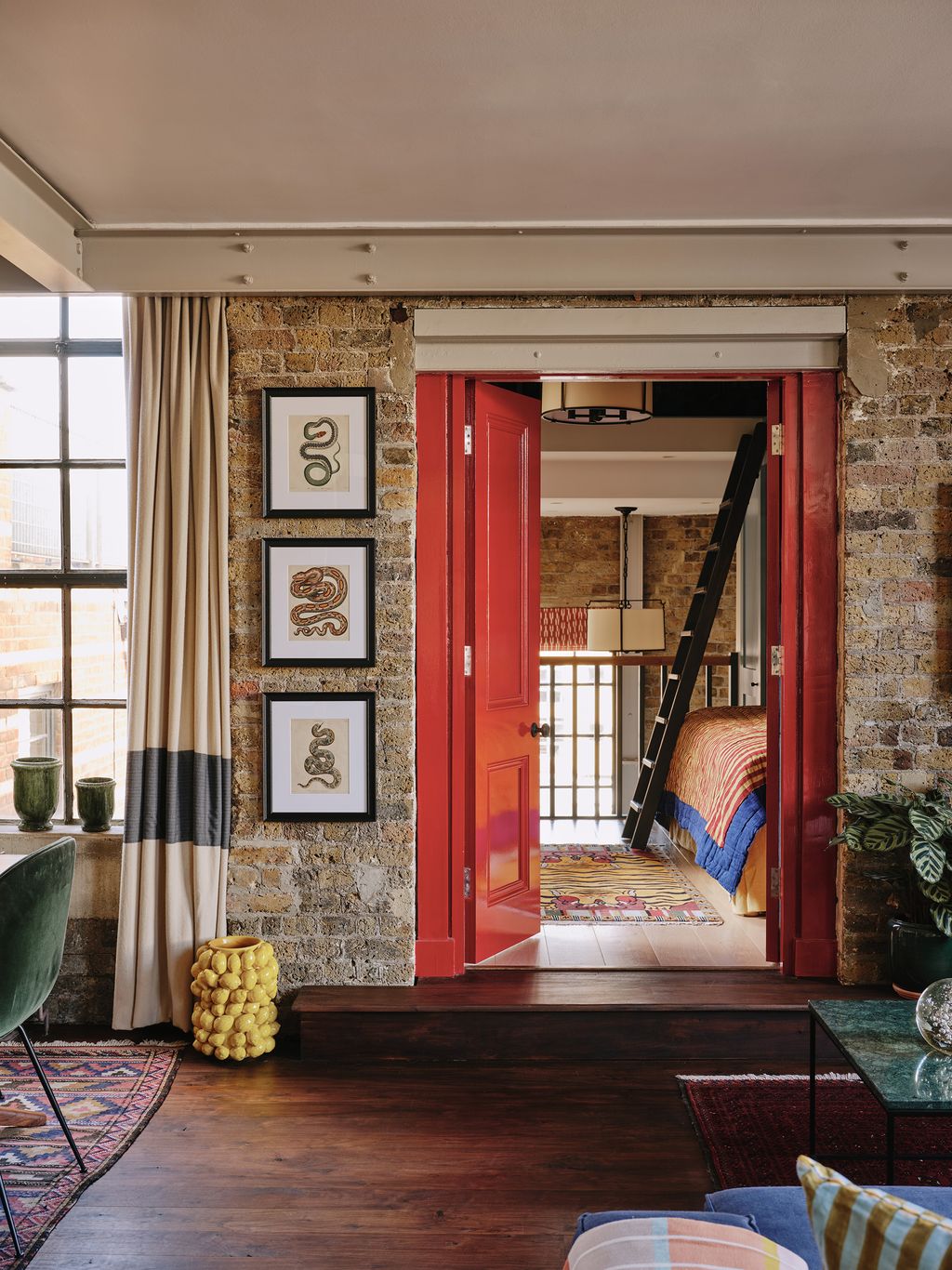 Christopher Horwood9/17
The doors into the guest bedroom of a London Bridge flat by Howark Design are painted in a custom cherry red gloss. It's a lovely jolt of colour that helps to delineate the rooms but also provides a lovely view from each of them.
 Romain Laprade10/17
The bedroom of Fabrizio Casiraghi's Parisian flat is where he has introduced colour on the walls, choosing a Japanese lacquer technique in an olive green. It creates a cabin-like feel in the space, which has the constellations painted on the ceiling. You could easily recreate this with gloss paint, though it wouldn't be as shiny.
 Davide Lovatti11/17
Walls in a bespoke khaki gloss by Papers and Paints establish a Georgian feel in the hallway of the late Tara Craig's tiny London flat. A well-placed window stops the narrow passage from feeling dingy and again the gloss paint works to further extend the space and light.
 Paul Massey12/17
Using high-gloss paint is a bright idea for small spaces such as this one. Playing on the lack of natural light in her bathroom, Rita Konig had the bath area of this small bathroom in her extended west London flat covered in horizontal and vertical boards, painted in a high-gloss 'Deep Brunswick Green' from Papers and Paints.


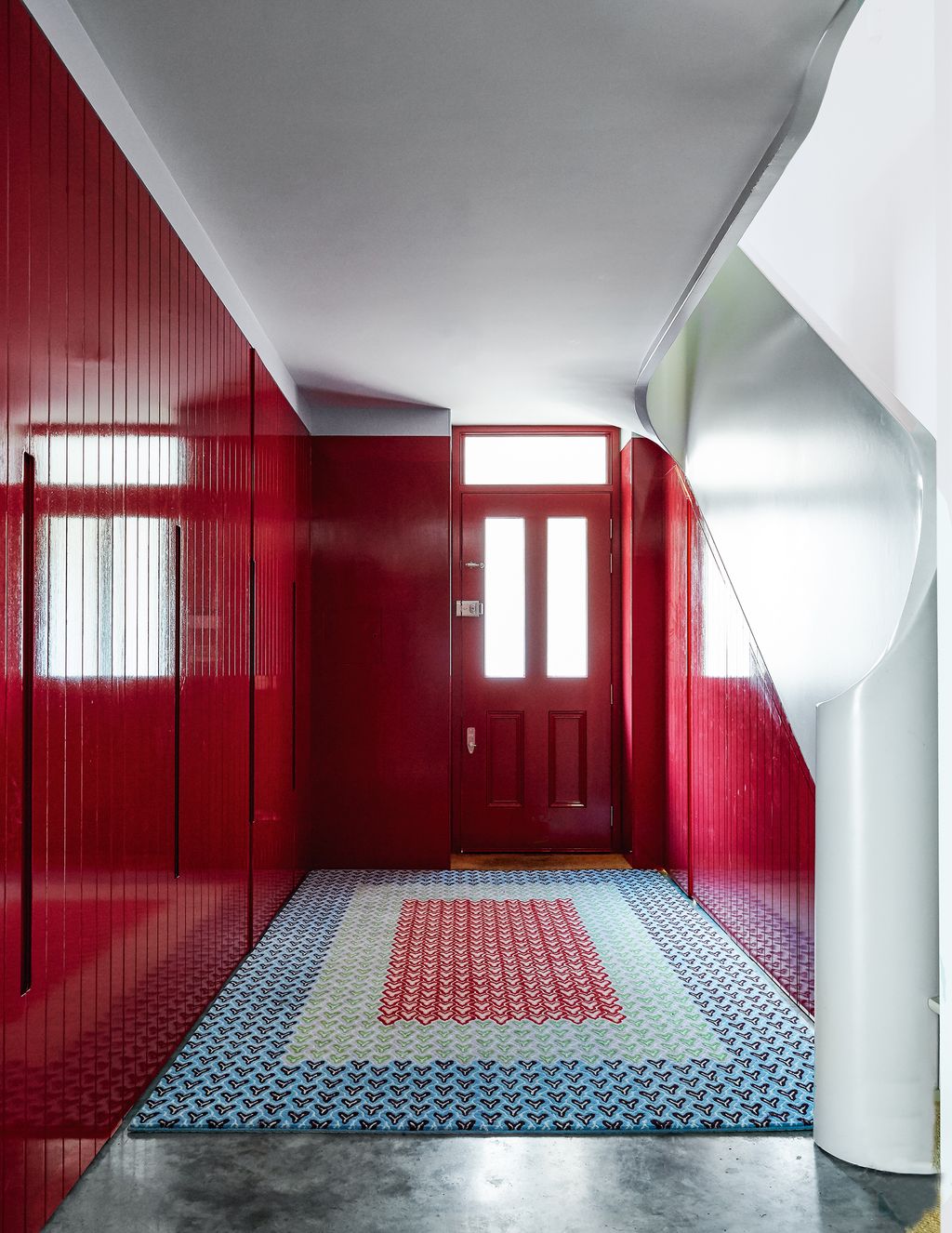 Paul Massey13/17
In the downstairs corridor of a west London home designed by The Rug Company's Suzanne Sharp, panelling is painted in Farrow & Ball’s ‘Rectory Red’ in a high shine gloss. The gloss paint bounces the light around and opens the otherwise gloomy space up.
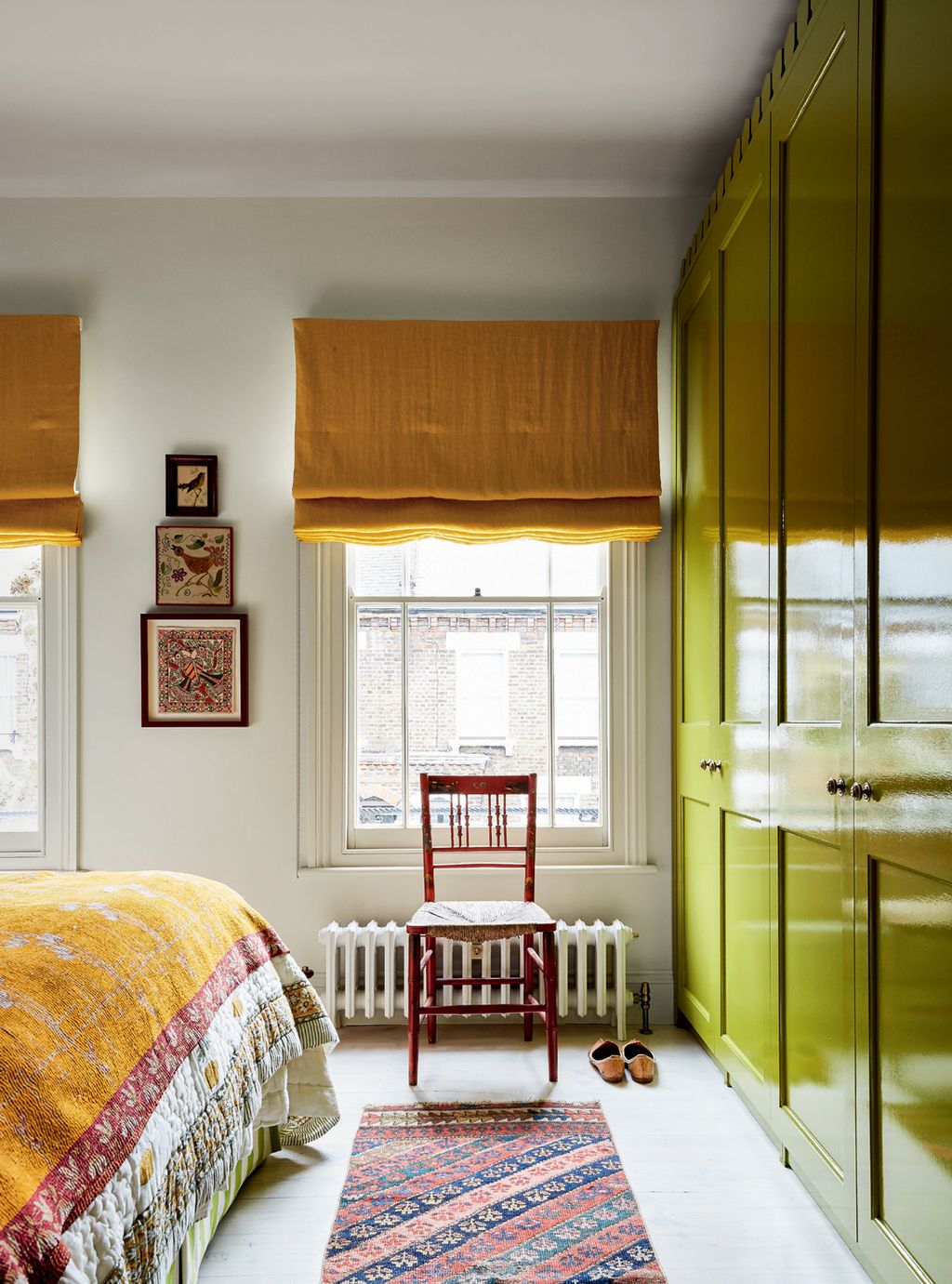 Paul Massey14/17
Interior designer Lonika Chande has created a zesty bedroom in her west London home. A yellow canopy bed and blinds are enlivened further by the use of Little Greene’s ‘Citrine’ traditional oil gloss on the built-in wardrobes. It captures the light from the windows and bounces it out across the room.
 Simon Brown15/17
Walls in a dark blue gloss paint contrast with a bespoke Carrara marble shower surround and vanity unit in this bathroom by Beata Heuman. The ‘Moroccan Encaustic Cement Pattern 06k’ tiles from Best Tiles add decorative detail to the floor in a similar shade to the gloss paint chosen by Beata.
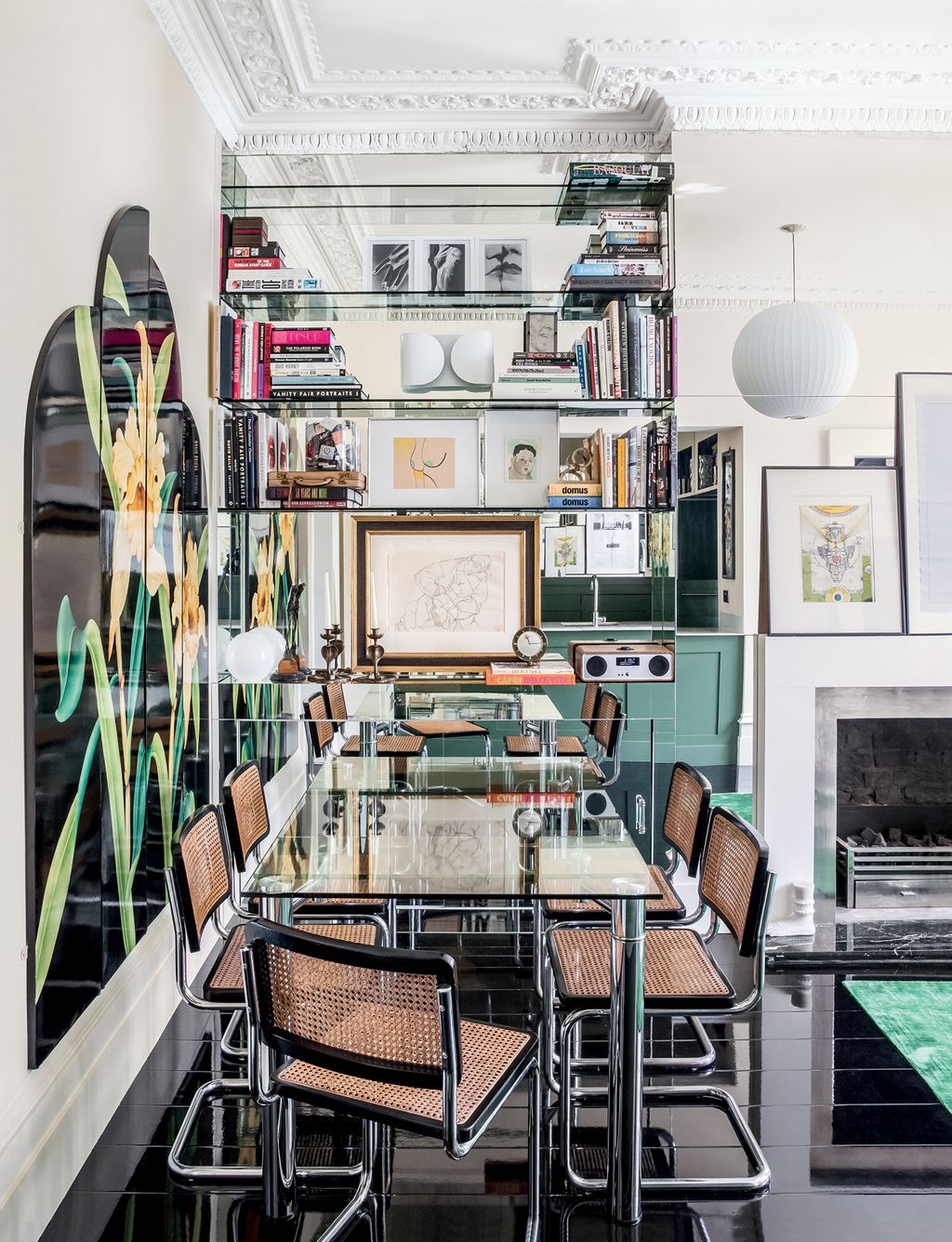 Taran Wilkhu16/17
Zoe Zimmer's house is very glossy, thanks to the use of mirrors, a Sixties lacquered screen on the wall and most surprisingly, black gloss floorboards. They are a high maintenance choice for flooring as the dark colour shows every speck of dirt, but the look is certainly impactful. Alongside the mirrored walls, they visually double the space.


 Jake Curtis17/17
Adam Bray has used gloss paint throughout this sophisticated flat in central London. We love the idea of using it in a dressing room, as he has done here in a blue-green shade, so that light bounces from the windows around the narrow space. 'I love gloss walls - they really do bounce the light about,' says Adam. 'But it is rare to get a client who will agree to them.'

Comments
Back to Top


