
The importance and beauty of architectural drawings

In the Summer of 1996 I was planning a trip around England with two friends. I decided that I would need a new sketchbook so I went to my favourite art shop in London, Cornelissen in Great Russell Street, and bought a cloth-bound sketchbook made by Sennelier in Paris.
My two friends were Jane, a painter, and Francis, an architect. We were travelling around country houses and we each had our own interests. Jane was most interested in the gardens and would sit drawing parterres and topiary, while Francis was busy making perspective sketches of the houses.
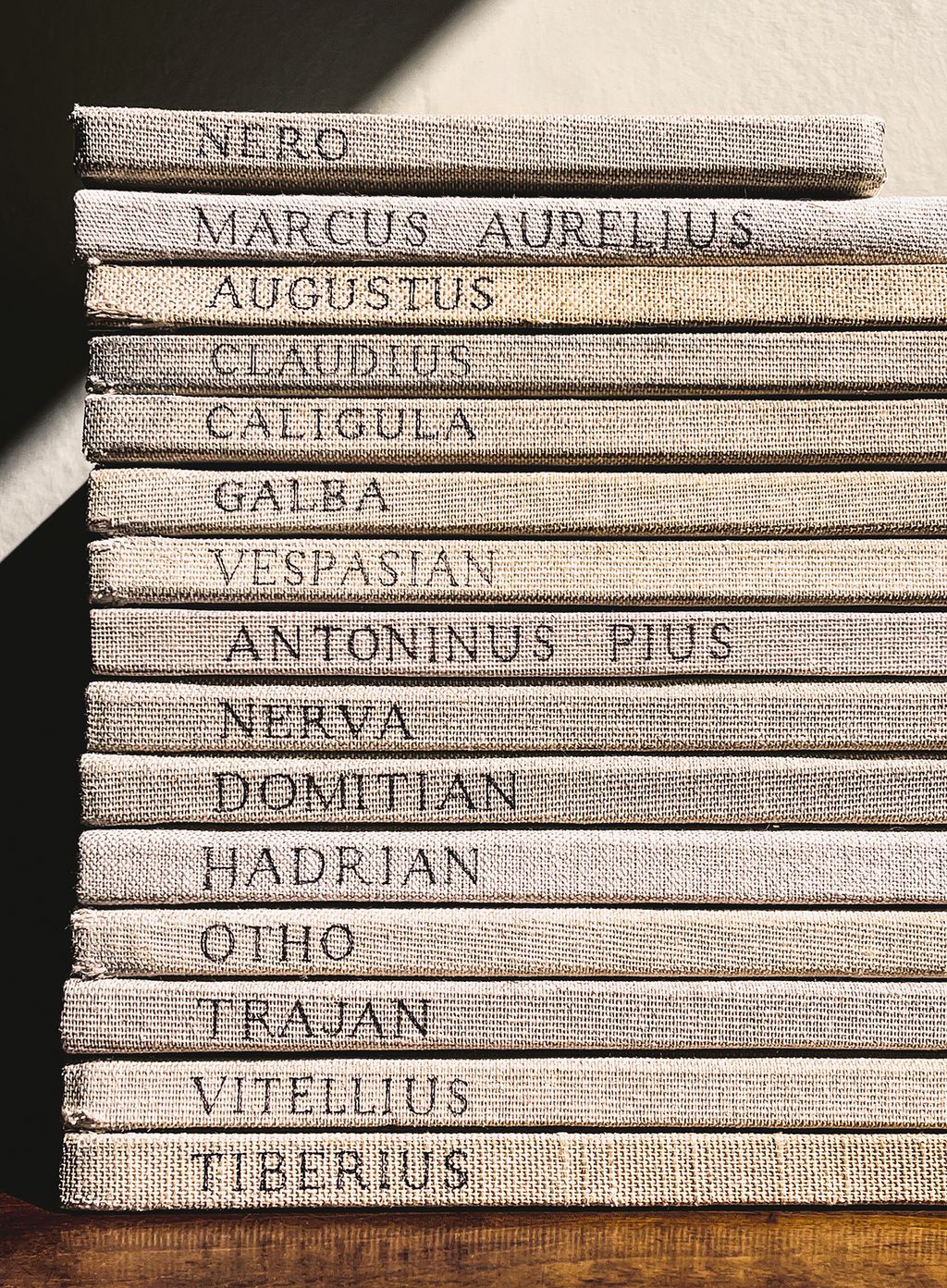
I have always loved plans of buildings, and the first pages of my new sketchbook were filled with plans of garden pavilions and parts of country houses. I had a tape measure with me and the plans were annotated with dimensions so that I had a record of their size. By the end of the trip I was hooked on measuring and we fancifully imagined that one day I might have lots of sketchbooks full of similar drawings. If this ever happened we thought it would be a good idea to name this first one, and without giving it too much thought I wrote the name of the first Roman emperor, Augustus, onto the spine of the book.
The measured plans that were made on that trip were sketched by eye and so, although they had dimensions marked on them, they were not strictly accurate. A few weeks later I set off on a university field trip to Venice and this provided a perfect opportunity to take measurements of buildings and transfer them with a scale ruler into the sketchbook while on site.
So it was in Venice in the Autumn of 1996 that I first started making precise measured drawings in a sketchbook. Years later I now have fifteen sketchbooks, all named after Roman emperors, the most recent of which is Marcus Aurelius. Those first pages of Augustus feel like they were done a long time ago: in fact twenty-five years have passed and this milestone seems like a good time to gather together the contents of all the sketchbooks so that they can be seen by a wider audience.
MAY WE SUGGEST: George Saumarez Smith's layered, comfortable house in Winchester
Architects and measuring
Until relatively recently, measured drawings were an important part of architectural education. In my first year at Architecture school in Edinburgh we had to make a measured drawing of a building, and I chose part of William Playfair’s courtyard façade of the University’s Old College. We were the last group to do this exercise as by the following year measured drawing was no longer part of the syllabus.
This is a great pity as measured drawings are a very good way of understanding scale and composition. As you take measurements and put them down on paper, and as proportional relationships reveal themselves, you feel yourself unlocking secrets of the design. It is as if, by measuring the building, you enter into a conversation with its architect.
I have also found that in order to take measurements you have to physically engage with a building, touching its surfaces and seeing how different parts are put together. This gives more of an insight into materials and construction than conventional sketching which normally involves sitting at a distance.
It should be added that the practice of architects making measured drawings goes back a long way. A cornerstone of Renaissance architecture was the careful study of ancient ruins, measured drawings of which filled the pages of architectural treatises and pattern books.
Perhaps the best known architect of the Italian Renaissance, Andrea Palladio, established his reputation by making measured drawings of the ruins of Ancient Rome which, together with his own designs, became famous through the publication of his Four Books of Architecture.
Throughout the eighteenth and nineteenth centuries architects were antiquarians and archaeologists, and their discoveries inspired new movements. Measured drawings of the antiquities of Athens led to the Greek Revival, those of Egyptian and Indian architecture to new fashions for those styles. Individual architects’ personal expressions were now shaped by their own experience of measuring fragments of buildings in far-flung places.
In the early twentieth century there was a great dissemination of measured drawings in published form. The Architectural Press, for example, produced a series of books called The Practical Exemplar of Architecture between 1907 and 1927, effectively an encyclopaedia of architectural detail for ready use by architects and students.
Part of any architectural education at this time would include measured drawings, and they formed the foundation of a Beaux-Arts classical training. Following the study of ruins and fragments, students would then make imaginative reconstructions of ancient buildings as the first step towards architectural design.
Teaching measured drawing in this way provided a huge boost to classical literacy and much Edwardian architecture was based on carefully measured precedents. But by the middle of the twentieth century the well established method of Beaux-Arts education had to change. The ruins of Ancient Rome no longer seemed relevant to an increasingly unclassical world and new directions were needed.
Despite the collapse of the Beaux-Arts system and changes brought by the Modern Movement, old buildings continued to be studied through measured drawings until near the end of the twentieth century when these were gradually phased out. As surveying buildings disappeared from education, it also disappeared from practice. The first step of most architectural projects used to be to make a measured survey, but increasingly this could be done digitally by specialist surveying companies.
All of this means that, while a book of measured drawings of buildings would have been a very normal thing for an architect to publish a hundred years ago, it is now very unusual. For me it has been a form of self-education and I hope that it may inspire other architects to rediscover the value of drawing and measuring by hand.
Sketchbooks: Collected Measured Drawings and Architectural Sketches by George Saumarez Smith (Triglyph Books) is out now. Buy a copy here.

 1/8
1/8A sketchbook drawing in progress showing ruled construction lines and freehand curves.
 2/8
2/8Measuring a doorcase in the courtyard of Palazzo Nicolaci Villadorata, Noto, Sicily, September 2011.
 3/8
3/8A stack of my Sennelier sketchbooks with the names of Roman emperors drawn on the spine.
 4/8
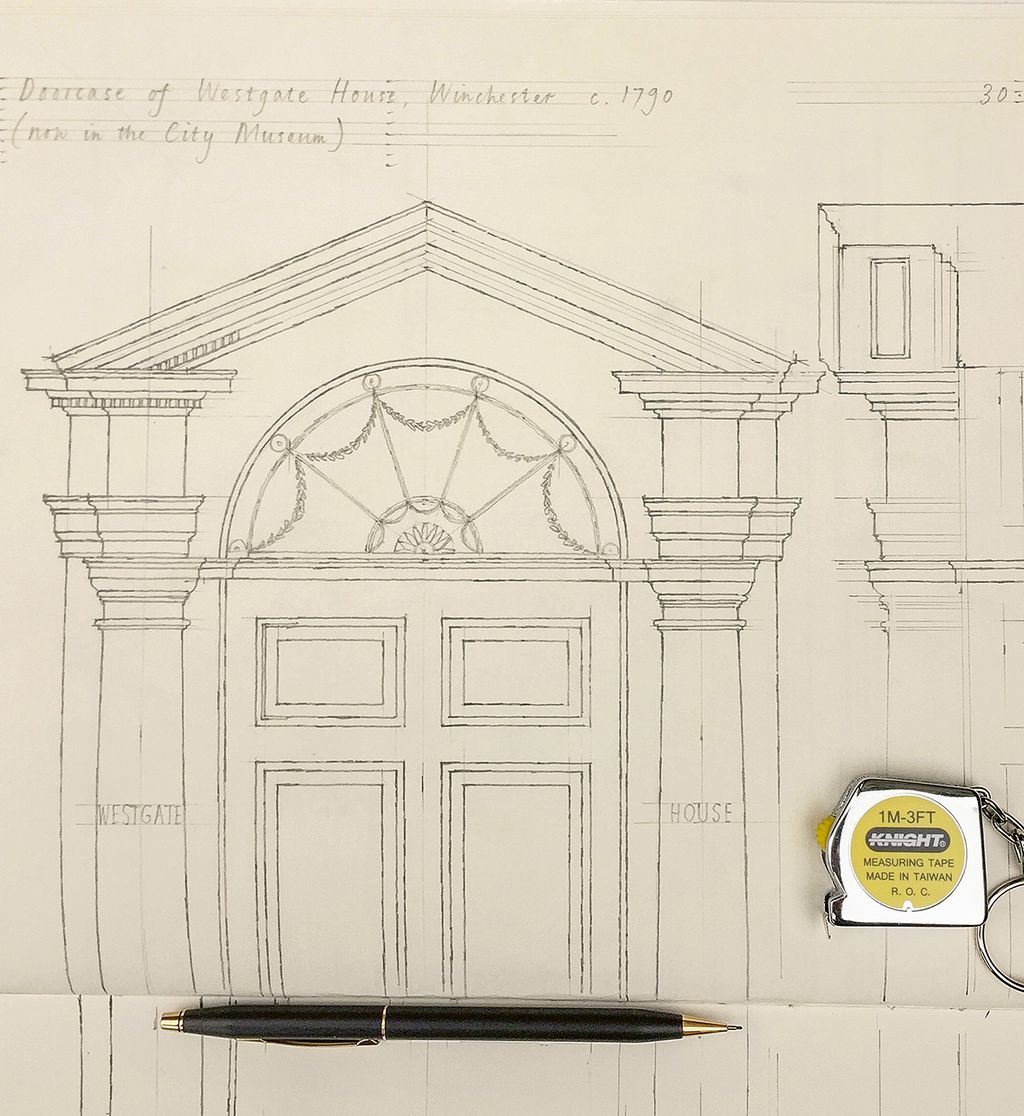
4/8Midway through a drawing showing the title and date in place and the freehand stage in progress.


 5/8
5/8Shading the finished drawing to bring out three-dimensional modelling.
 6/8
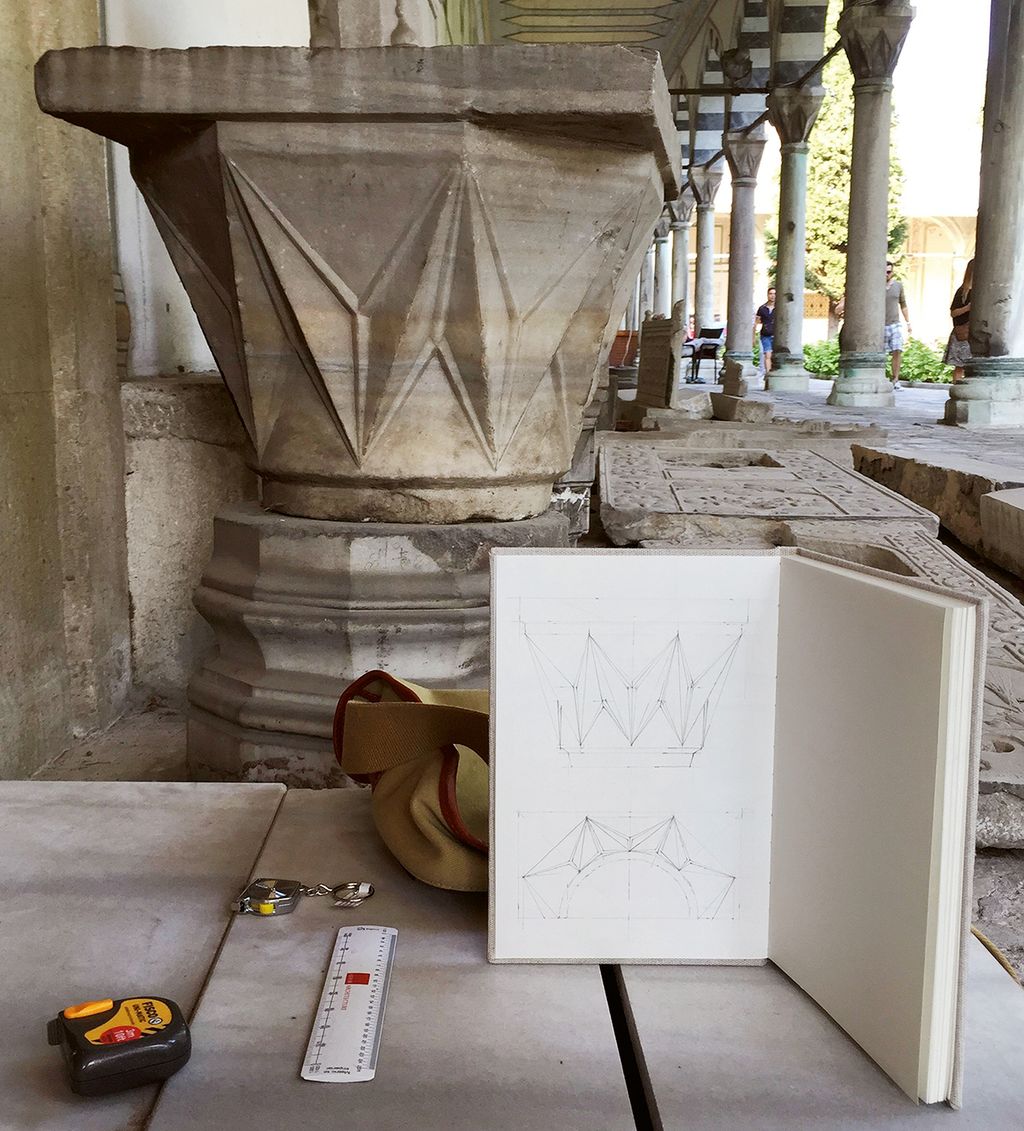
6/8Titus sketchbook with drawing in progress on site, taken in the courtyard of the Topkapi Palace, Istanbul, September 2015.
 7/8
7/8Terracotta Frieze Tile from Etruscan temple at Sassi Caduti, Falerii Veteres. Now in the Villa Giulia, Rome. (Vitellius)
 8/8
8/8Cast bronze decoration to front doors, Casino dei Principi, Villa Torlonia, Rome. (Vitellius)


