
At home with a stylish creative couple in the Hamptons and Brooklyn
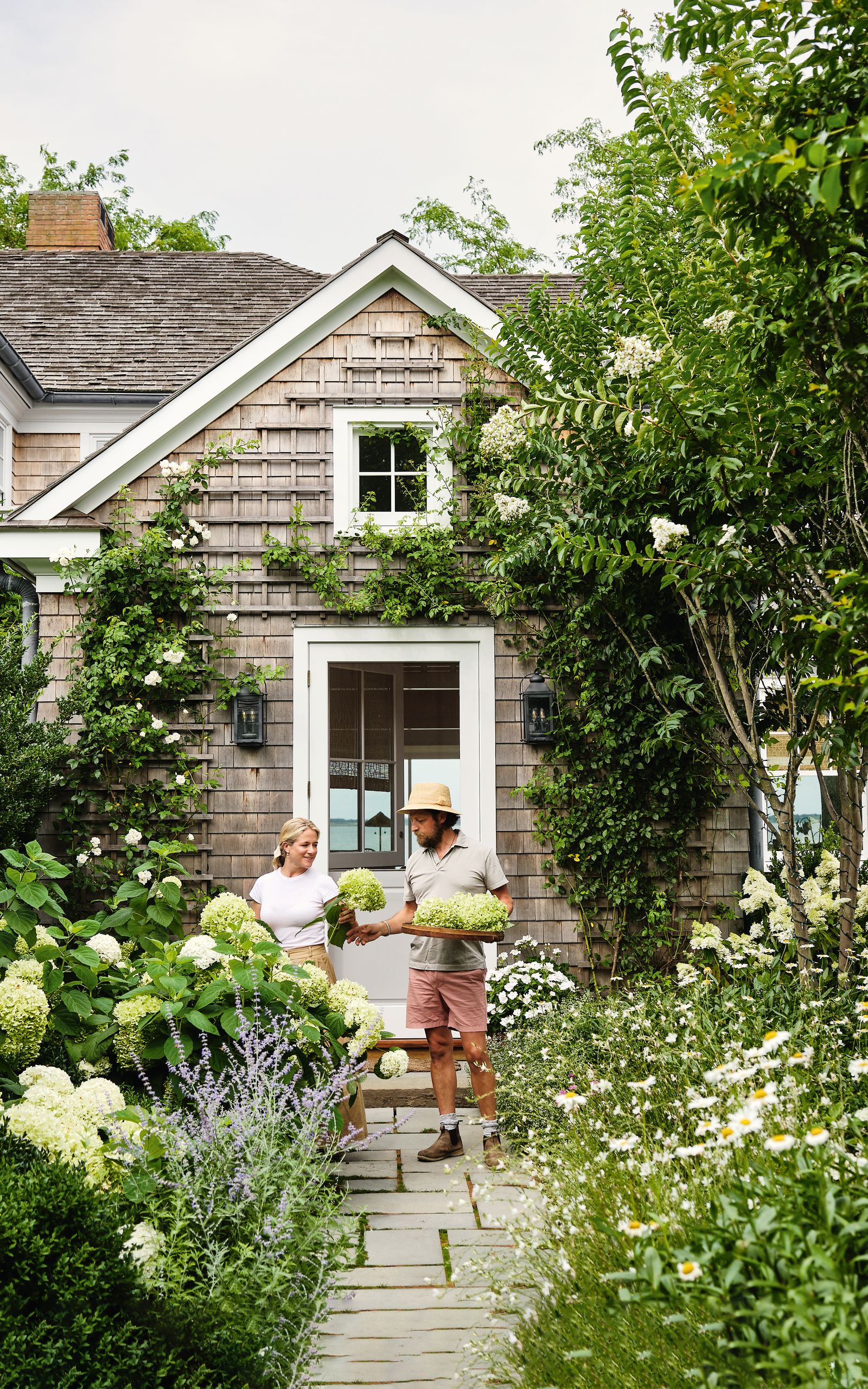
Discussing what the future might look like is a punchy move on a first date, but that is exactly what happened when sculptor Fitzhugh Karol and Lyndsay Caleo enjoyed pad see ew noodles at a Thai restaurant on Hope Street in Providence, Rhode Island in 2005. Fitzhugh, fresh from a year-long internship with the renowned abstract sculptor Toshiko Takaezu in Quakertown, New Jersey, told Lyndsay that he imagined a life based on the one he had experienced with Takaezu. ‘For Toshiko, making work, tending the garden and cooking and feeding people was one connected cycle,’ he says. ‘I saw it as a triangle, where the house, studio and garden all joined together.’ Luckily for Fitzhugh, Lyndsay had a similar life plan.
At the time, both were in graduate school at the Rhode Island School of Design. Fitzhugh was studying ceramics and Lyndsay metalsmithing. They had met while working in the school’s studio, but this date kicked off the idea that they might have a creative adventure together. After graduation, they began renovating a brownstone in Park Slope, Brooklyn, and set up a studio in Sunset Park – then an undeveloped area of Brooklyn. Lyndsay launched her jewellery brand Caleo and Fitzhugh began his sculpture practice, showing in New York and New England galleries.
Around the same time, Lyndsay’s brother Bill, who had also recently done up a house in Brooklyn, approached the couple, suggesting they join forces commercially to renovate a house in Fort Greene. The Brooklyn Home Company was born. They agreed that Bill would handle the business side and Lyndsay the creative direction; Fitzhugh would fabricate and install sculptural elements, often made out of reclaimed timber from the renovation. ‘As a development company, we wanted to bring our approach as craftspeople and makers to our projects,’ Lyndsay says. ‘The triangle was a little more spread out in those early days. Home was home, a creative workshop for ideas, but we moved the studio a few times. We did have an English style garden in the back of the brownstone, though, with tree peonies and climbing roses as the real highlights.’
The couple married in 2016, on the deck of their boat Lucy, a 50-foot Lord Nelson Victory Tug, which they bought in 2015. She was ‘on the hard up’, says Fitzhugh, when they found her in Stonington, Maine, so they gave her an overhaul, making a feature of the best parts and modernising others. After the arrival of their daughter Charlotte in 2017 and son Fitzhugh in 2019, a weekend refuge from busy city life became very appealing and a house in Springs, a low-key village in the north of East Hampton, New York, beckoned. They set about renovating the house, which sits on a gentle hill above Gardiners Bay with views of a mostly uninhabited Gardiners Island.
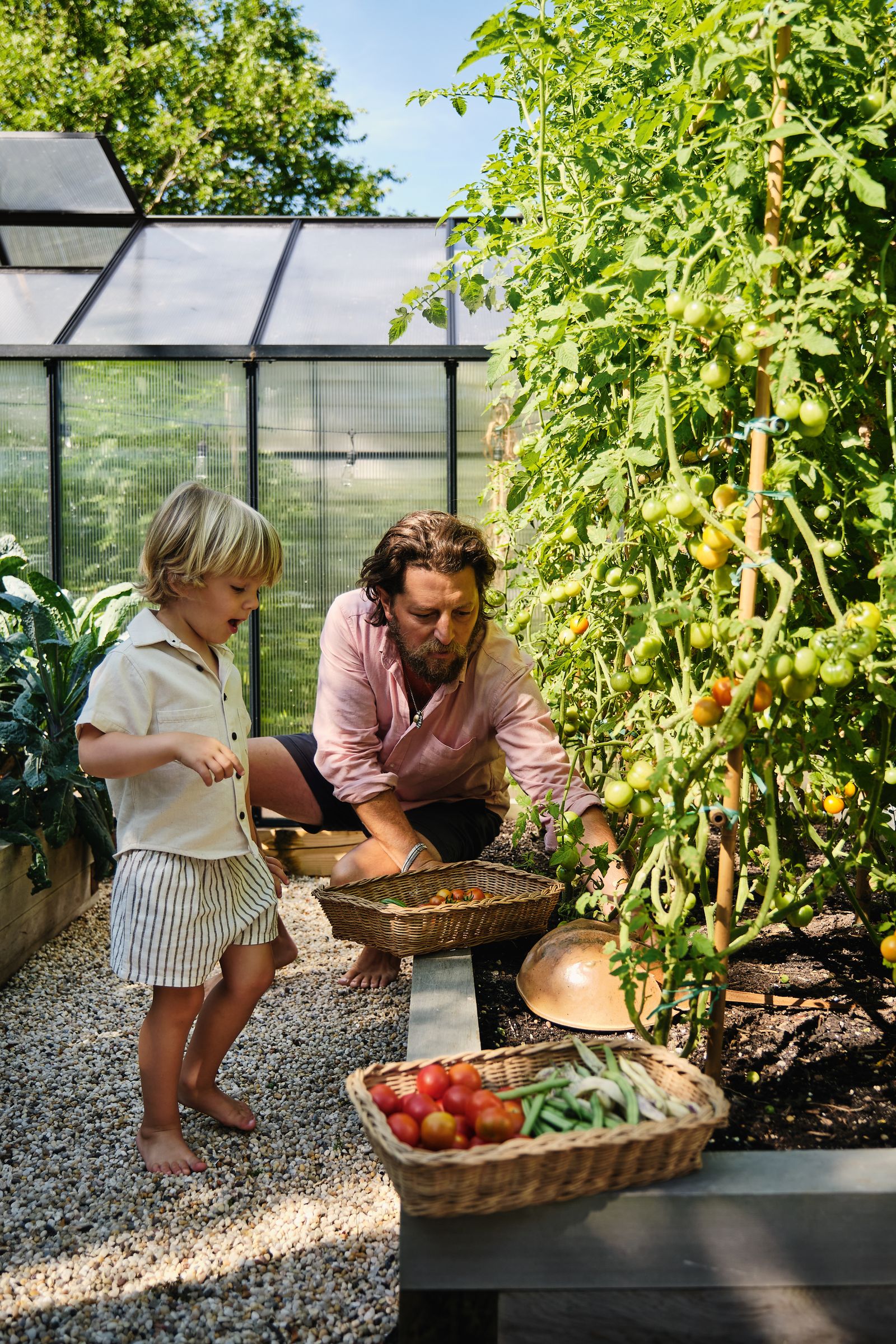
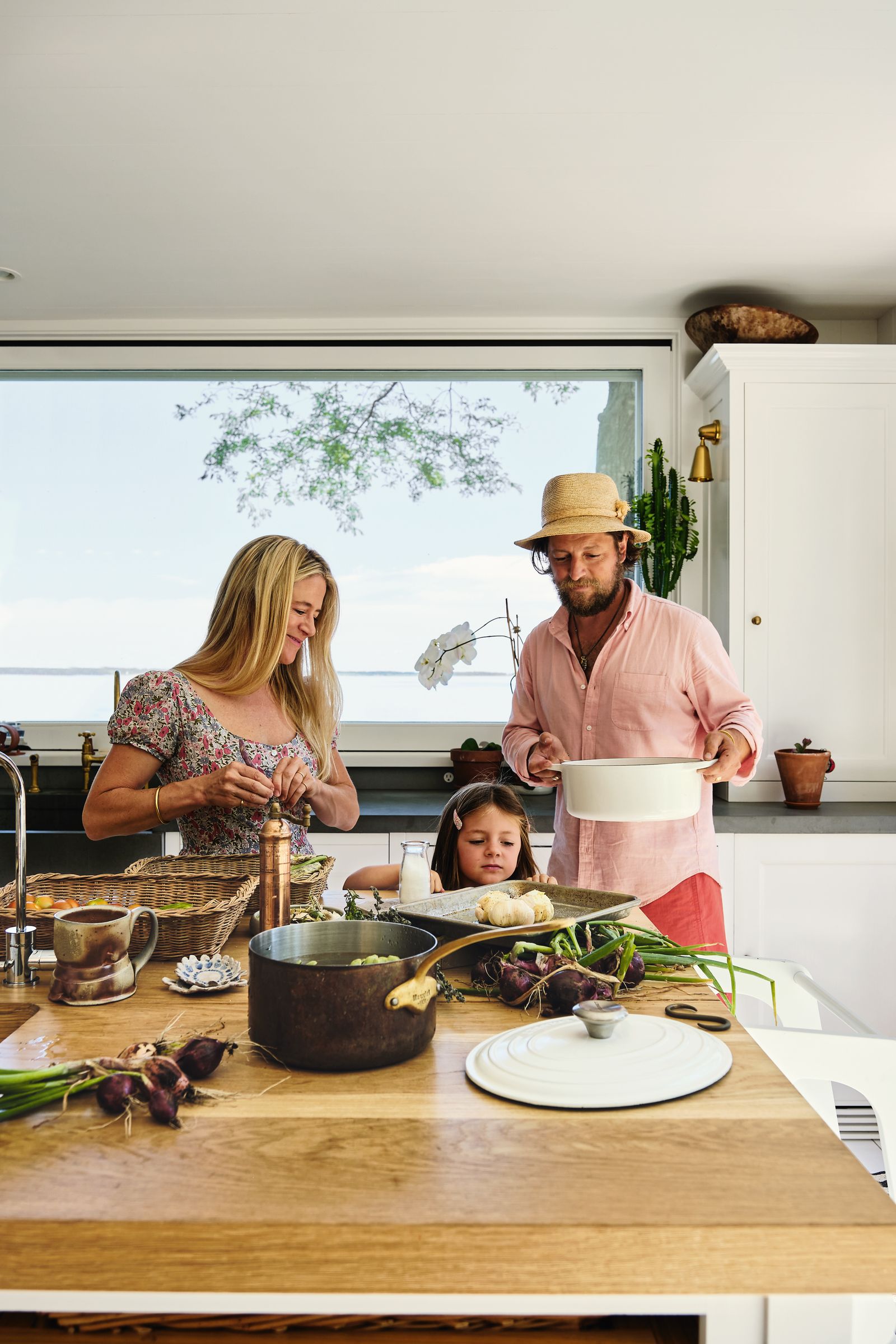
During the worst of the pandemic, the house became a retreat for the family, who moved from Brooklyn to Springs full-time, bringing the triangle of garden, studio and home into sharp relief. In the garden, the children got involved in everything from seeding to the harvest. The raised beds offer bounty from the earliest lettuces to the final autumn chard, all for the picking only a step away from the kitchen’s screen door. Full baskets are carried inside and everything is used in that day’s dishes – tomato sauces, pies, artichokes and big green salads. ‘The kids just want to pickle everything,’ says Fitzhugh, laughing. A pot simmers on the stove many days, though it is not always food for lunch or supper. Sometimes, it is seawater that has been collected from the beach and boiled down to a slurry. This is then left in shallow pans on tables outside in the sun to evaporate, leaving its sea salt behind, which is bottled and tagged to be given to friends and family.
The studio part of the equation is a few steps further on, through the garden, where an old garage was gently winter proofed and is heated primarily by a small cast-iron stove that Fitzhugh grew up with in New Hampshire. Here, he develops ideas. There are maquettes for his more monumental works – the large-scale metal or wood sculptures now in private collections and public spaces, including in Brooklyn’s Prospect Park and under the Brooklyn Bridge – and smaller, more intimate reliefs made of clay tile, which are hung narratively in groupings.
The vocabulary and shape of Fitzhugh’s work captures a childhood spent under an open sky among the mountains of New England and rock steps climbed on hikes with his parents – steps that fellow hikers would fashion, leaving them for those that followed. ‘I’ve always been interested in the silhouettes of landscapes. As a kid, I’d imagine myself in miniature inside the landscapes I was drawing,’ he says. ‘I think this is why I like to begin by working on a small scale, creating a maquette – and why I encourage folks to climb or crawl through many of my larger works.’
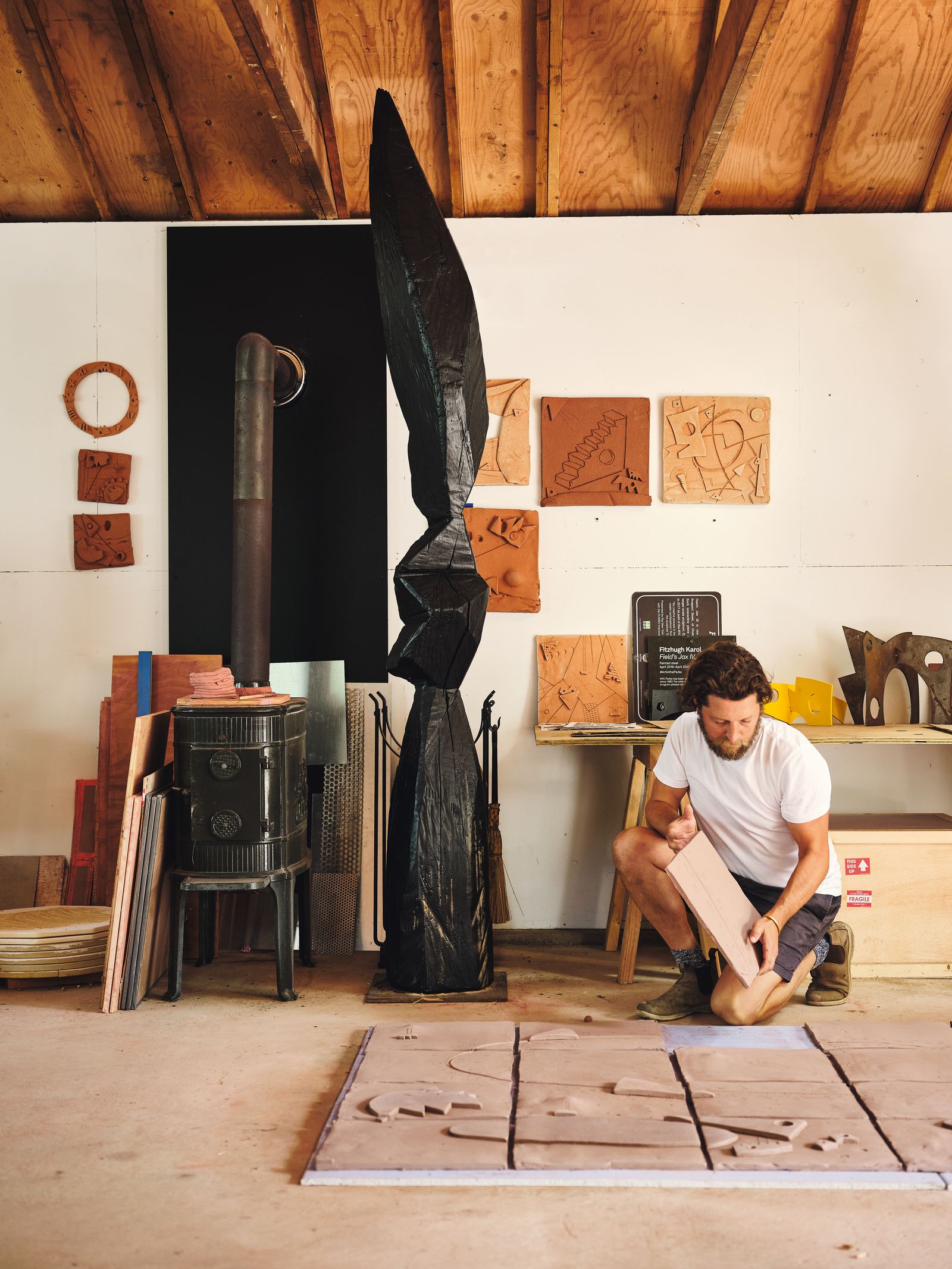

The children work with clay, too, making ‘tiles’ – slices they manipulate that are then glazed and hung on the wall as a record of their handiwork. The couple might meet in the studio if they are discussing an installation of Fitzhugh’s art or planning the fabrication of a sculptural design – a handrail, chimneypiece or light fixture for a project. Often Lyndsay works on the first floor of the house, in a sunlit space with a clear view out to Lucy, anchored in the bay. Responsible for the look and feel of the interiors of The Brooklyn Home Company’s properties, Lyndsay’s love of a calm palette is a hallmark of her work. ‘It’s not that it all has to be white,’ she says. ‘I like pale colours because they let textures show much more clearly and I want the background to be unfussy, so other materials or art can come through. In our house here, Fitzhugh’s work, which is over and near the fireplace, says something very different from the pale floors, walls and upholstery. So does the antique round library table – which also happens to make an excellent roundabout for the kids. I like this interplay.’
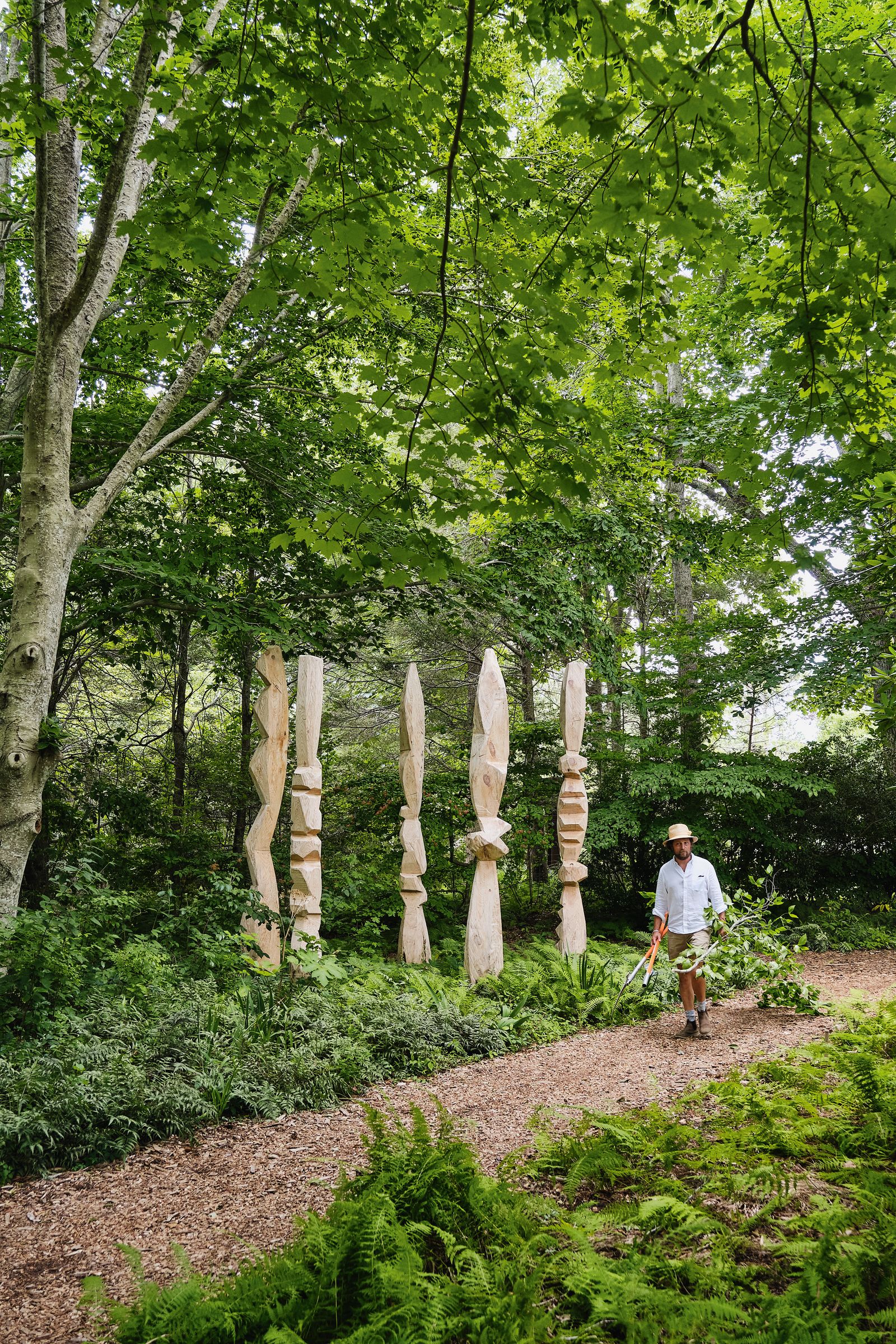
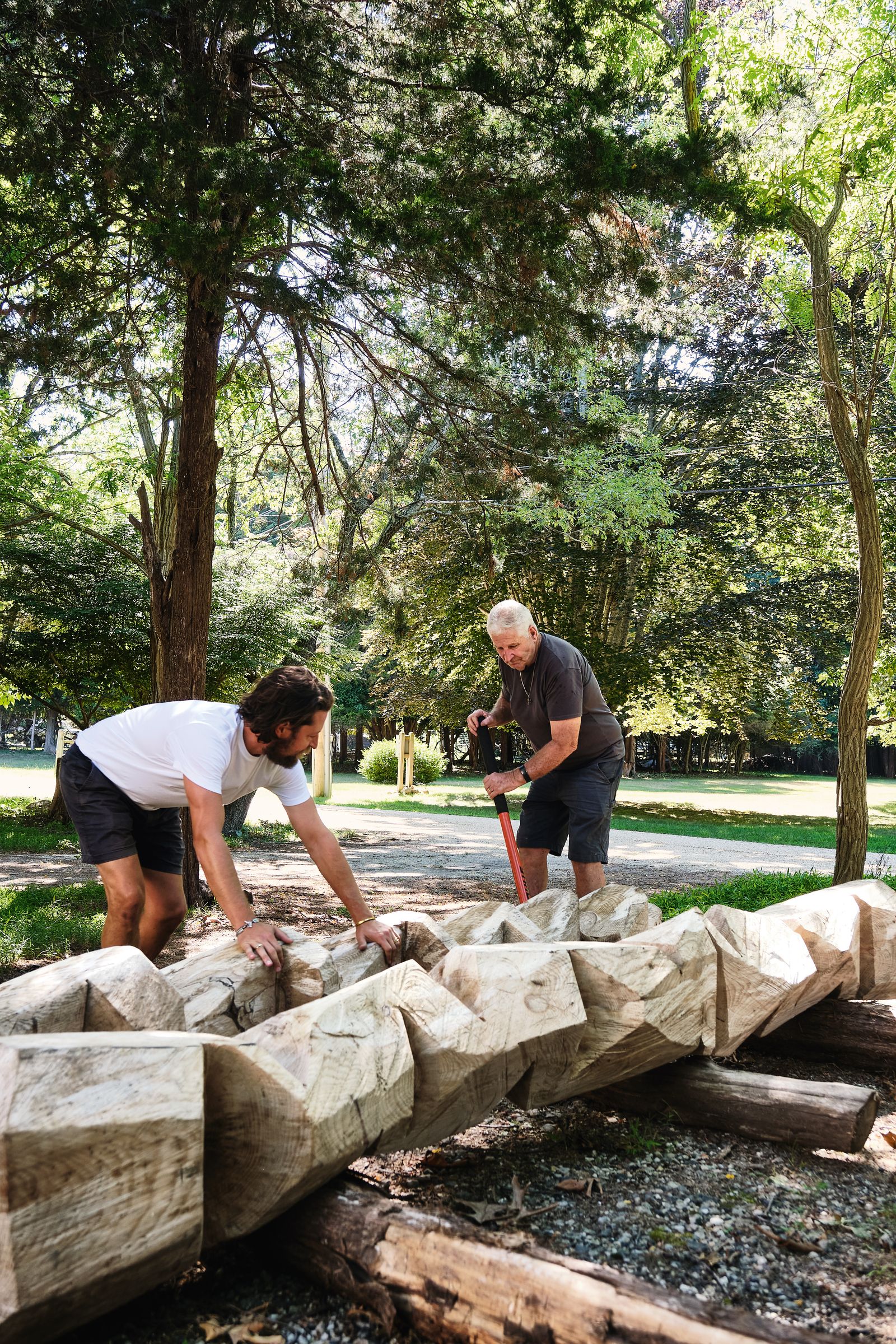
Across the lane is Papa Joe, a neighbour with a backhoe digger. In late 2021, space was made using this digger for the carving of 20 enormous tree trunks from a local tree service. They had been felled due to a beetle blight in the bark, but were fine for what Fitzhugh wanted to do, which was to create large-scale totemic carvings. ‘When they were finished, I titled the series Friendship to reflect the friendship with Papa Joe and my kinship with the trees, I suppose. It just felt natural,’ Fitzhugh explains.


Friendship spent last summer at LongHouse Reserve, a 16-acre estate and sculpture garden in East Hampton, New York, as part of its Art in the Gardens programme. ‘Instead of being sent to the chipper, they were returned to a place less than a mile from where the trees spent many decades growing,’ he says with satisfaction.
A day at the house in Springs might end with supper on board Lucy with friends, and a jump off the bow to swim. ‘She isn’t a fast boat,’ says Fitzhugh. ‘But when we are out on her going for a little jaunt round Gardiners Bay, we look back at the house as the light is fading. We can see our triangle and we can feel the rhythm of our family pursuits and what we are, each day, hoping to create.’
 Dean Hearne1/11
Fitzhugh’s Jigsaw series is displayed above the sitting room fireplace
 Dean Hearne2/11
A slab of elm with a carved base serves as the dining table
 Dean Hearne3/11
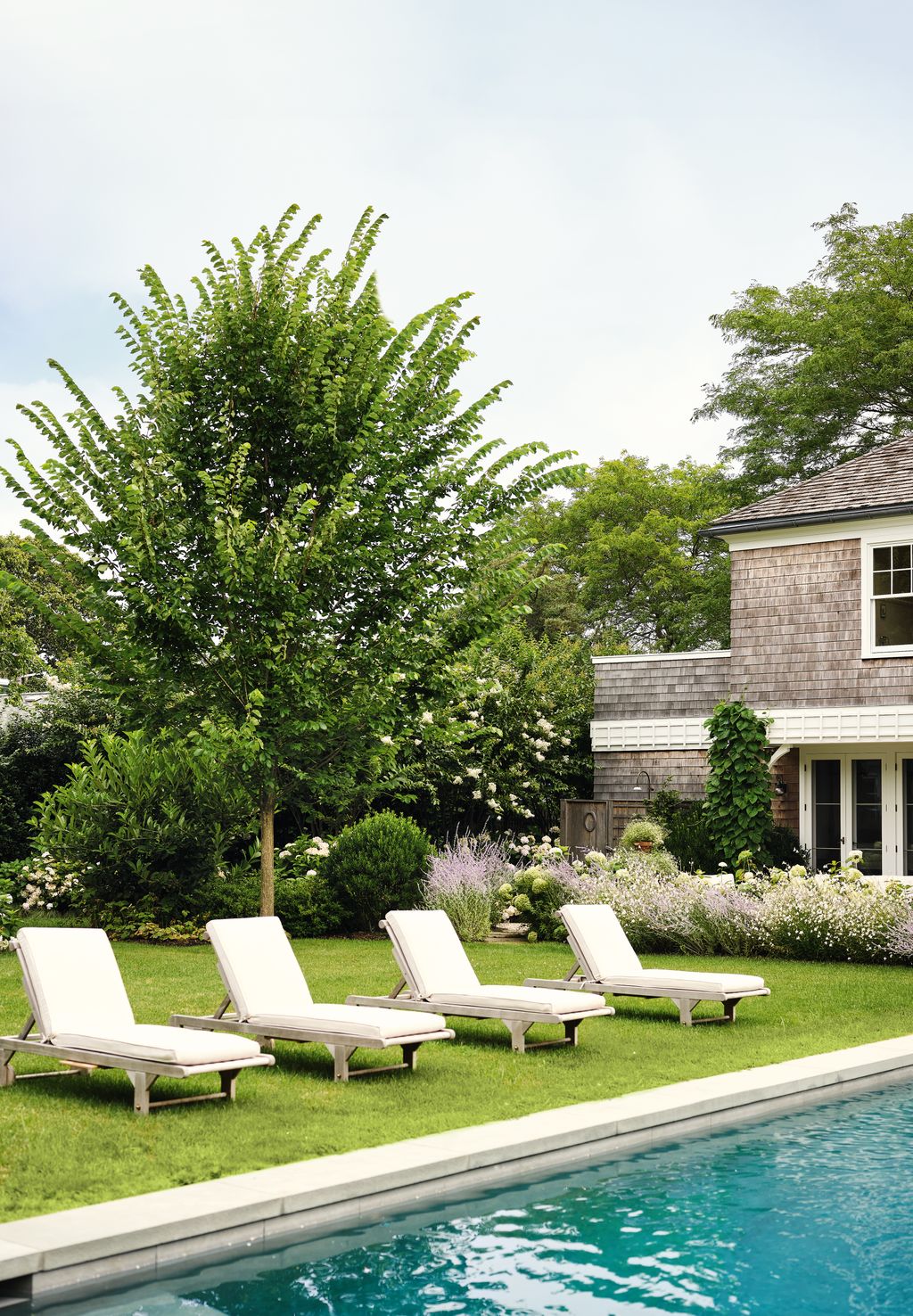
Flowing borders of herbaceous perennials edge the lawn that surrounds the pool, creating a soft, beautiful backdrop
 Dean Hearne4/11
In her first-floor study, Lyndsay works on sketches and plans at an antique desk from 1stDibs, which is positioned to make the most of the view through the expansive picture window. Pale upholstered furniture and painted floorboards set off a striking cantilevered, circular occasional table made by her husband


 Dean Hearne5/11
The main bathroom is a wonderfully tranquil space
 Dean Hearne6/11
In the studio, discussing designs for The Brooklyn Home Company
 Dean Hearne7/11
Fitzhugh and Lyndsay with their children, Charlotte and Fitzhugh, at the bottom of their garden on the shore of Gardiners Bay, where their Lord Nelson Victory Tug, Lucy, is anchored.
 Dean Hearne8/11
Fitzhugh and Lyndsay enjoy evenings spent with friends on their tugboat Lucy


 Dean Hearne9/11
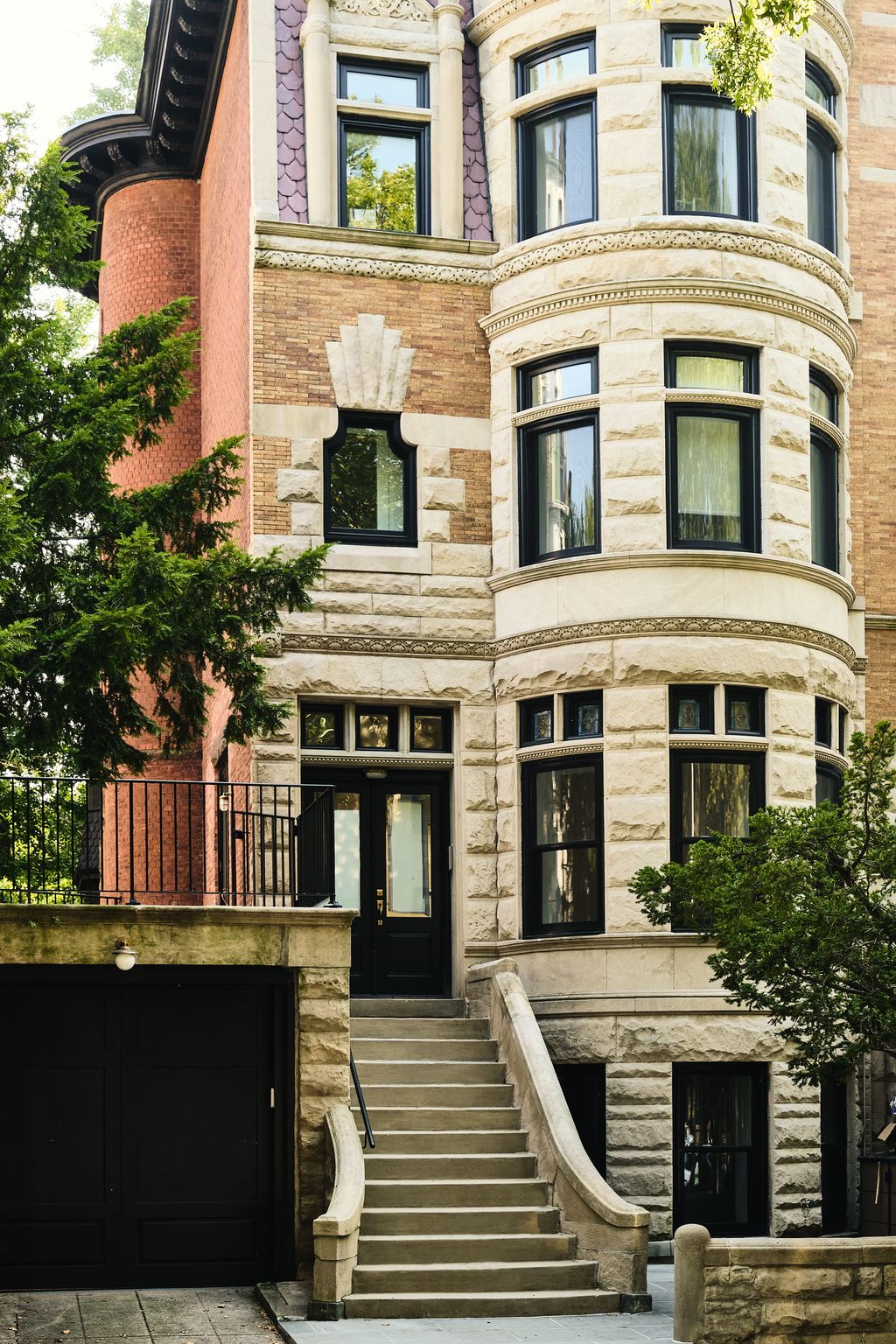
The exterior of a recent project by The Brooklyn Home Company
 Dean Hearne10/11
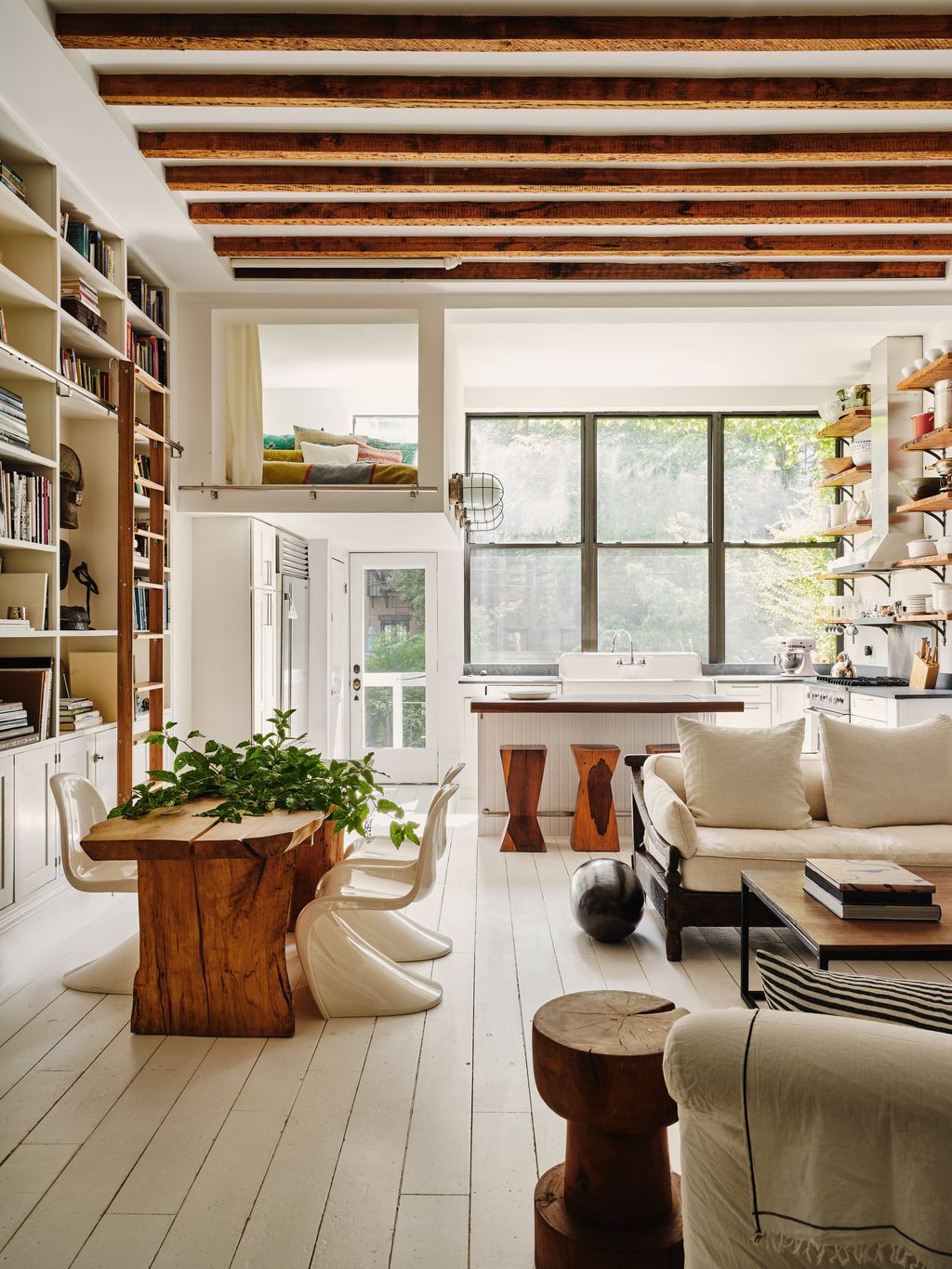
At their house in Brooklyn, the living area is furnished with an eclectic mix of pieces
 Dean Hearne11/11
Fitzhugh made the four-poster for the main bedroom with wood from trees felled in New York’s Finger Lakes region


