
Journalist Fiona Golfar tells the story of her Cornish home
I am the child of second-generation Jewish immigrants. There is nothing in my DNA that prepared me for Cornish life. My family thought that having a second home in West Sussex – an hour and a half from Kensington – was quite far enough from the metropolis for anyone to travel. Not for us stoic marches to rocky beaches to eat soggy sandwiches while we huddled behind a windbreak.
When I married my husband Robert, I acquired three wonderful stepchildren. After our first child was born 23 years ago, Robert suggested we rent a house in Fowey in Cornwall, near his two aunts. He used to visit them every summer as a boy and said he would love to show the place to me.
There was a lot of family history entangled there. Robert’s family were all theatre folk living in north London and had been close friends and neighbours with the Du Mauriers. During the Second World War, his young aunts followed their great friend Daphne – whose family had bought a house in Fowey in 1926 – to Cornwall to become land girls working on the farms while the men went to the front. The aunts loved the experience and stayed on after the war ended, farming near Fowey for the rest of their lives.
So every summer, for 10 years, we rented an old rectory, perched on top of rolling hills that led down to a smugglers’ cove. It was relaxing, romantic, chaotic and charmingly behind the times – I loved the fact that to change television channels you had to stick a pencil in the set and wiggle. Somehow it did not matter that it would often rain for an entire week or that I had to drive half an hour to find a shop that sold herbs. It all just worked. We played games, read books, did puzzles, went for long walks, got wet and loved every minute.
Meanwhile, in my London life, I was an editor at Vogue, flying round the world photographing glamorous people in beautiful houses and writing about them. My quirky Cornish life seemed a million miles away, but increasingly struck me as the essence of normality – especially compared to the different universe I was exploring through my work. I would dream of swimming in the exhilarating sea with its gullies of warm water brought by the Gulf Stream. And of the coastline, the steep winding paths bordered by myriad wildflowers, which led down to the secret beaches Robert had first discovered as a child. It was an enchanted Cornish world, waiting there for us. We were building memories on top of memories.
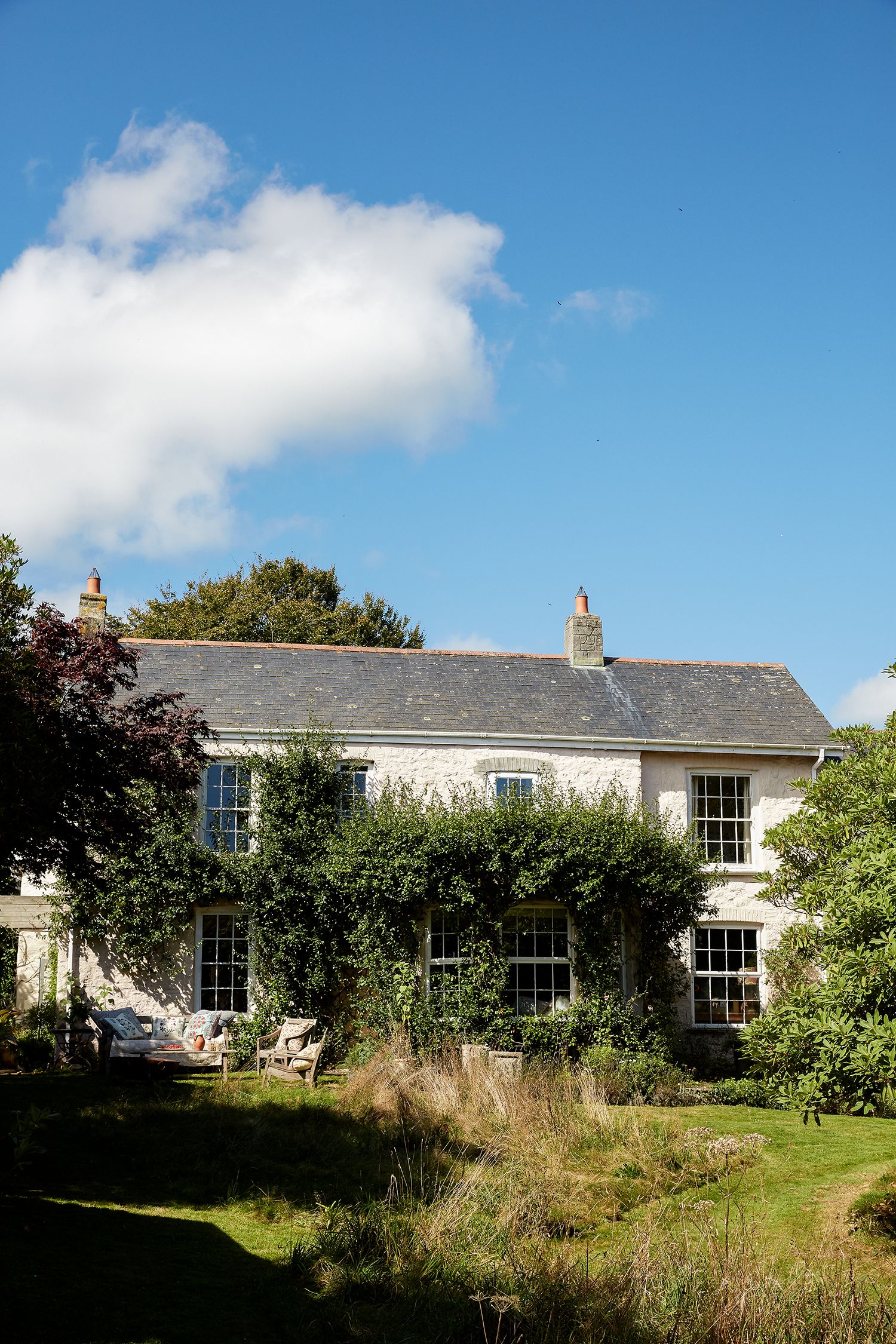
One day, when Robert was visiting his aunts without me, he called me on my mobile: ‘I’ve bought a house.’ Just like that. I fell over. And when I first set eyes on our new home, I didn’t like it one bit. The 18th-century stone farmhouse was inland – a 10-minute drive from Fowey and from the beach – with no winding paths in sight and, among other drawbacks, it had a plastic porch and a nasty Formica-clad kitchen. I held my tongue but eventually asked him, ‘Why?’
MAY WE SUGGEST: Prince Charles’s sixteenth-century house in Cornwall
‘Well,’ he said. ‘I saw a black-and-white photograph in the window of the estate agent in Fowey and had a feeling. Then I brought the aunts over and it felt right to them, too, so I bought it.’ I wanted to cry but, as it was the most spontaneous and creative thing I’d ever known him to do, I found it touching. He wanted his family to share in the parallel existence he loved most in the world in a house that was his own.
The house changed everything for all of us, but the person most responsible for the practical aspects of turning this wreck into a serene family home was my stepdaughter Louisa Byng. She had just set up a project management company, Aristeia, and she and her husband Tom spent five months living on a building site, while it poured with rain, brilliantly translating my garbled intentions and dreams into reality.
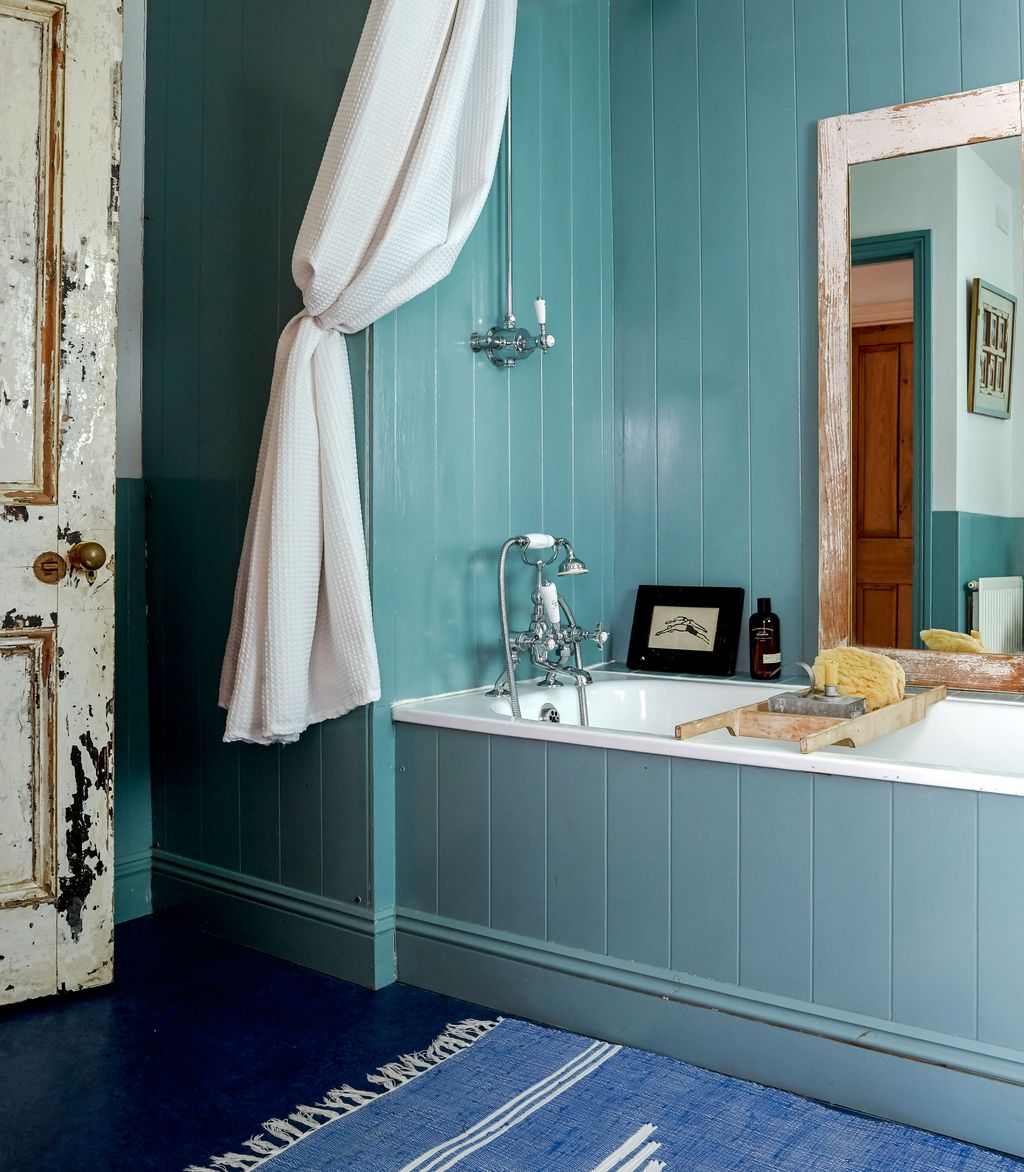
They did a wonderful job and the layout was transformed, including a stylish new shower room, but I wouldn’t say the house is decorated – its character is more inadvertent than that. In pulling it together, I always came across things that called to me: whether found by the light of a torch at 6am at Kempton flea market, in a Lostwithiel antique shop, a junk emporium in Hammersmith or an Indonesian warehouse. Now, it is a comfortable mishmash, which is just how I like it.
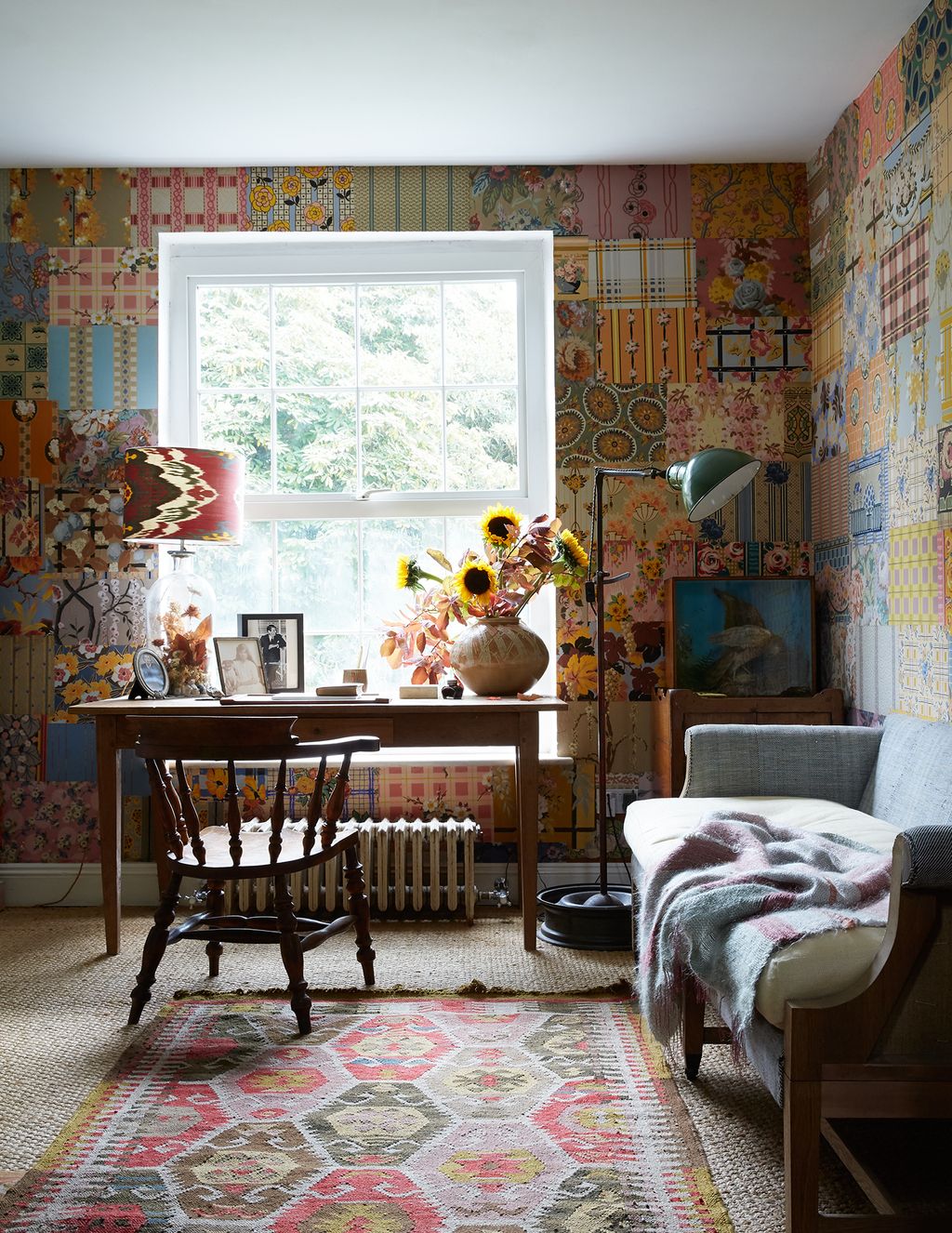
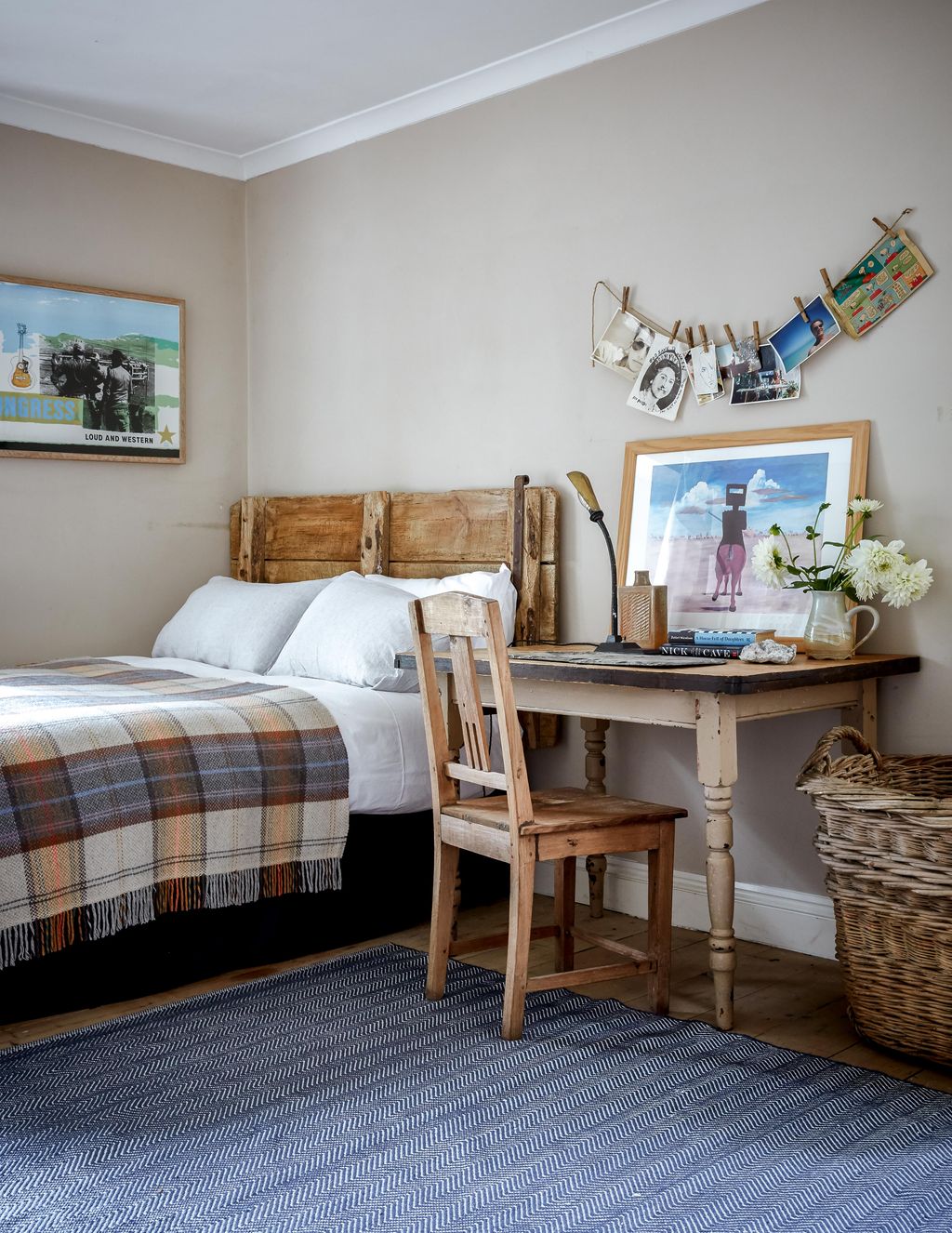
I have never set foot in a fabric shop, looked at wallpapers or made any kind of mood board. That is not my style. For me, there’s nothing to beat the thrill of stumbling upon a box of Fifties patchwork wallpaper samples, as I did one rainy Friday in Portobello Road Market – I spent happy hours with a bemused wallpaperer from Plymouth collaging Robert’s office walls with them. Though staggering home with the Berber straw and wool rugs that I found on the back of a fruit stall on nearby Golborne Road comes close. They are perfectly at home now in the entrance hall. The ancient doors discovered in a local reclamation yard and turned on their side became headboards. Every plate, mug, jug and vase has been made by local potters and each has a charm of its own.
The house already has our family history embedded in it. I am a storyteller by nature so, for me, every single item has a significant provenance. Even the string from which I like to hang photos with clothes pegs was an idea copied from a house on Formentera, which I shot for Vogue. The only thing that is really state of the art in this house is the television. No pencil required.
 Paul Massey1/19
A red electric Aga, painted floorboards and a mix of vintage furniture create a colourful rustic feel.
 Paul Massey2/19
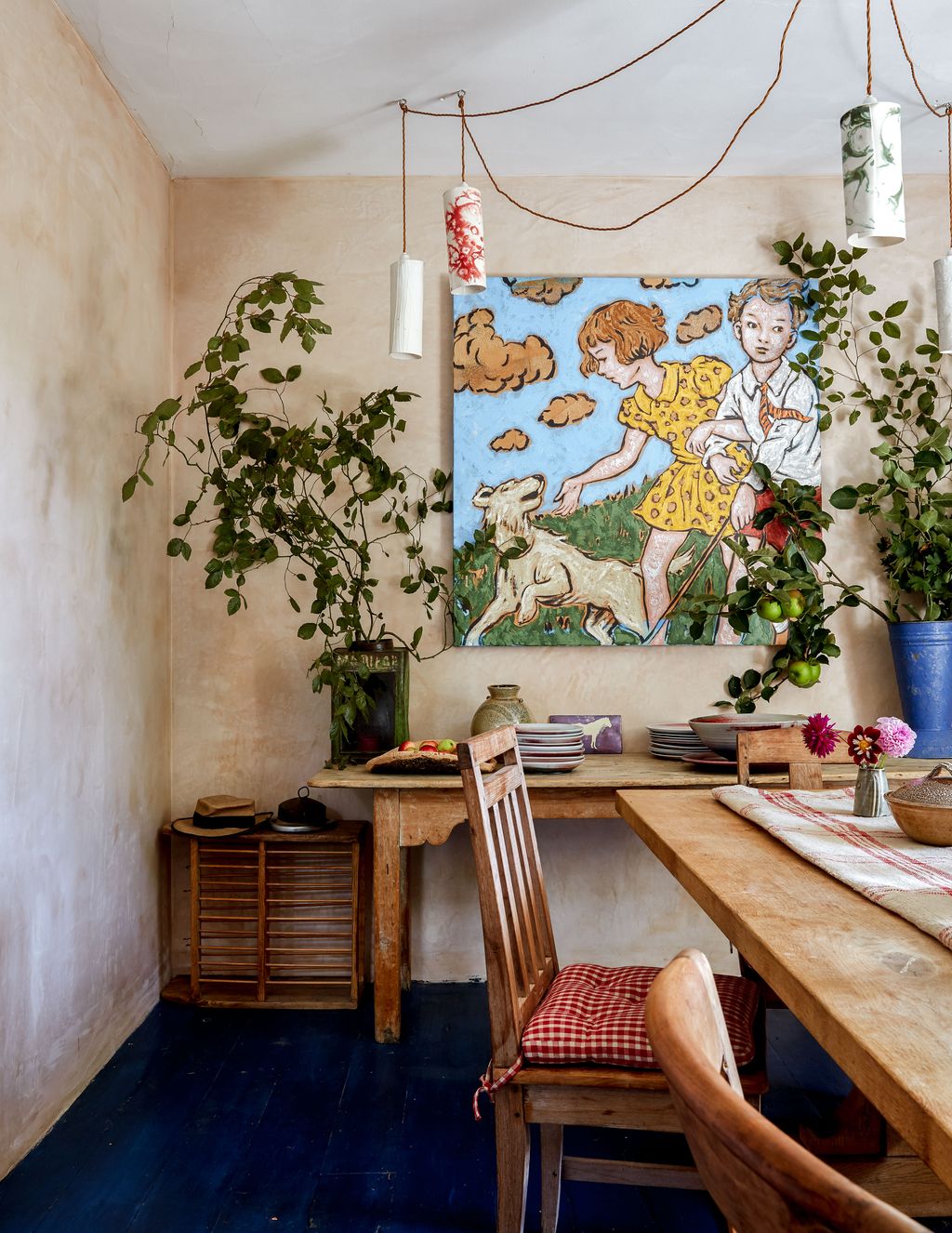
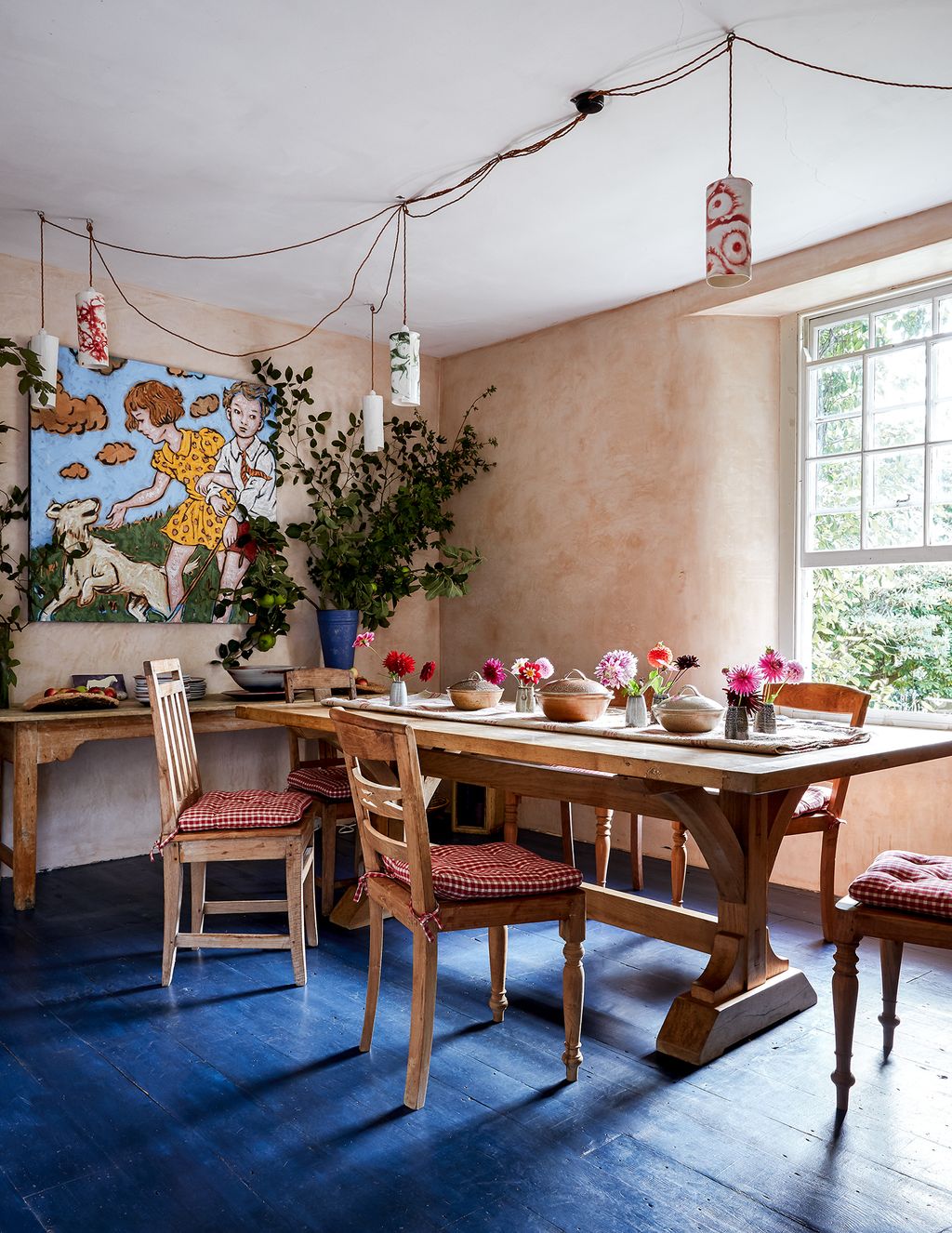
A painting by Australian artist David Bromley and hand-thrown china lights add distinctive touches. The antique table is set with salt-glazed ceramics by the local potter John Webb.
 Paul Massey3/19
 Paul Massey4/19
In the sitting room, fleeces by local firm Celtic & Co and a rug from The Rug Company soften the look of salvaged shelving and a log wall.


 Paul Massey5/19
 Paul Massey6/19
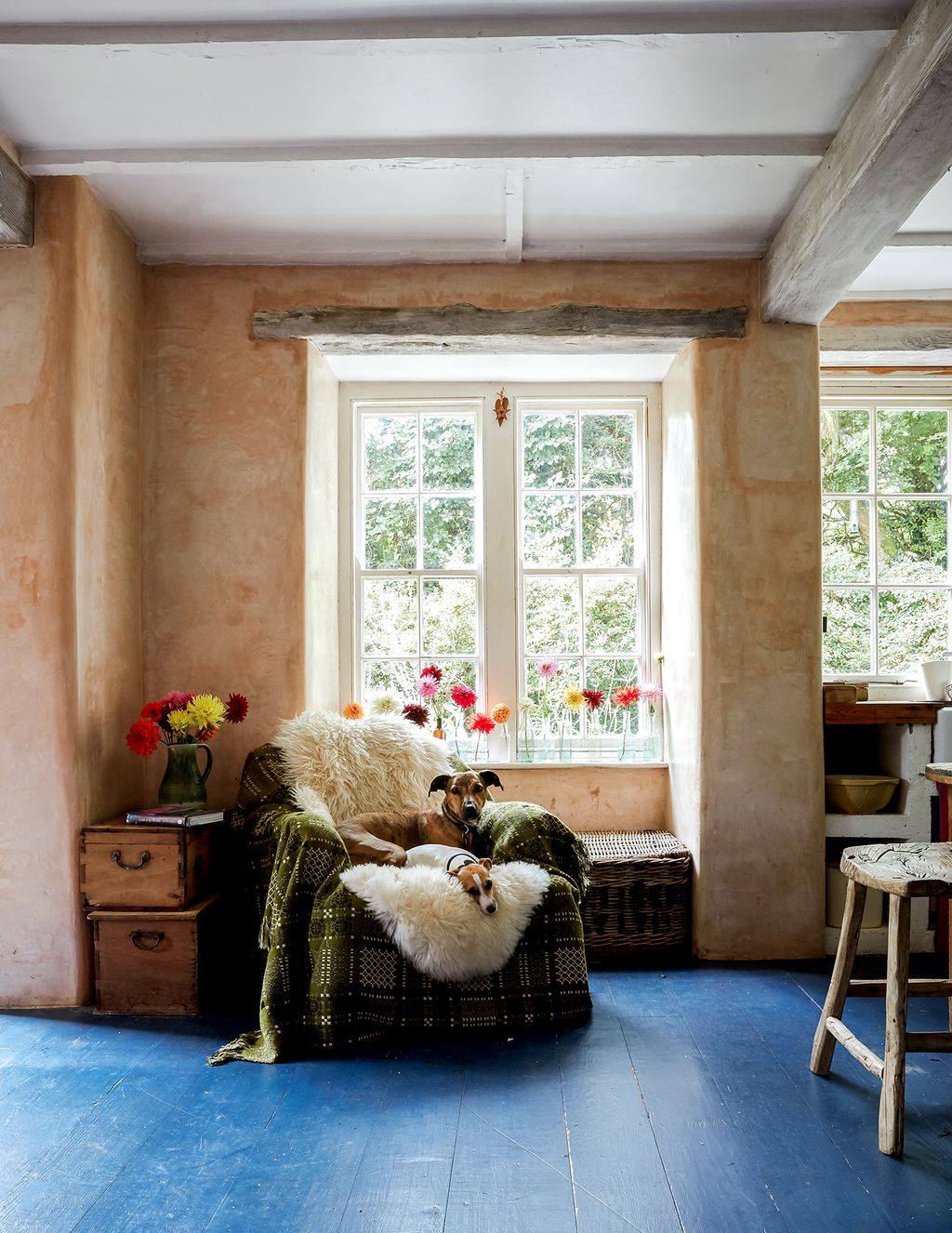
In a corner of the kitchen, Stevie the whippet cross and Maybe the Jack Russell relax on an armchair covered in an old Welsh blanket, surrounded by dahlias from the garden.
 Paul Massey7/19
Made from recycled plastic bottles, Weaver Green’s ‘Nomad Sultan Rug’ echoes the colours of the vintage wallpapers in the study.
 Paul Massey8/19
A collage of Fifties wallpaper samples covers the walls of Robert’s study.


 Paul Massey9/19
]In the hall, a green wall shows off a set of vintage botanical prints taken from a book, and rattan lights pick up on a straw and wool Berber rug.
 Paul Massey10/19
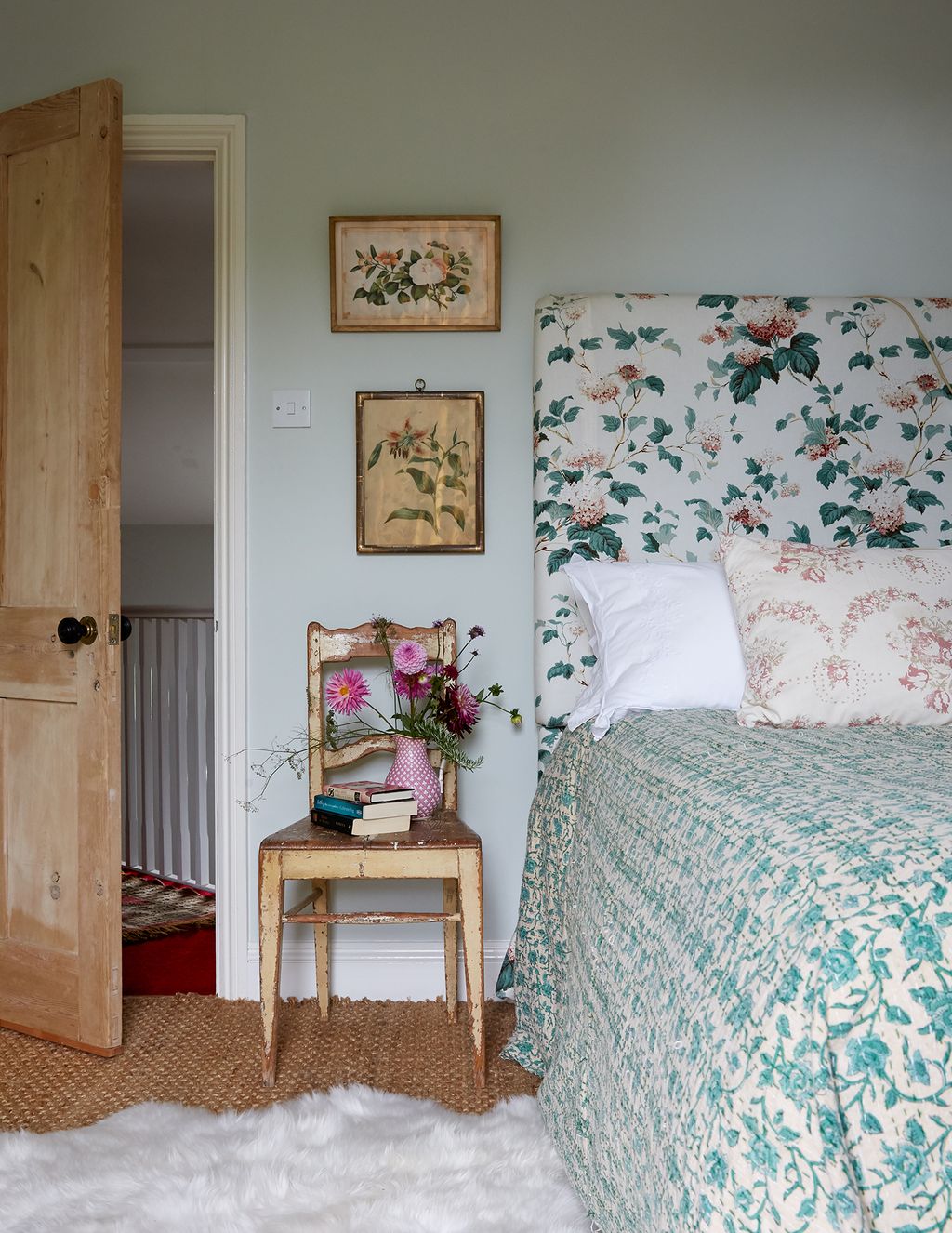
Pretty florals, including a headboard in a vintage Colefax and Fowler fabric, an Indian quilt and botanical prints from Robert’s aunts bring nostalgic charm to a spare room.
 Paul Massey11/19
 Paul Massey12/19
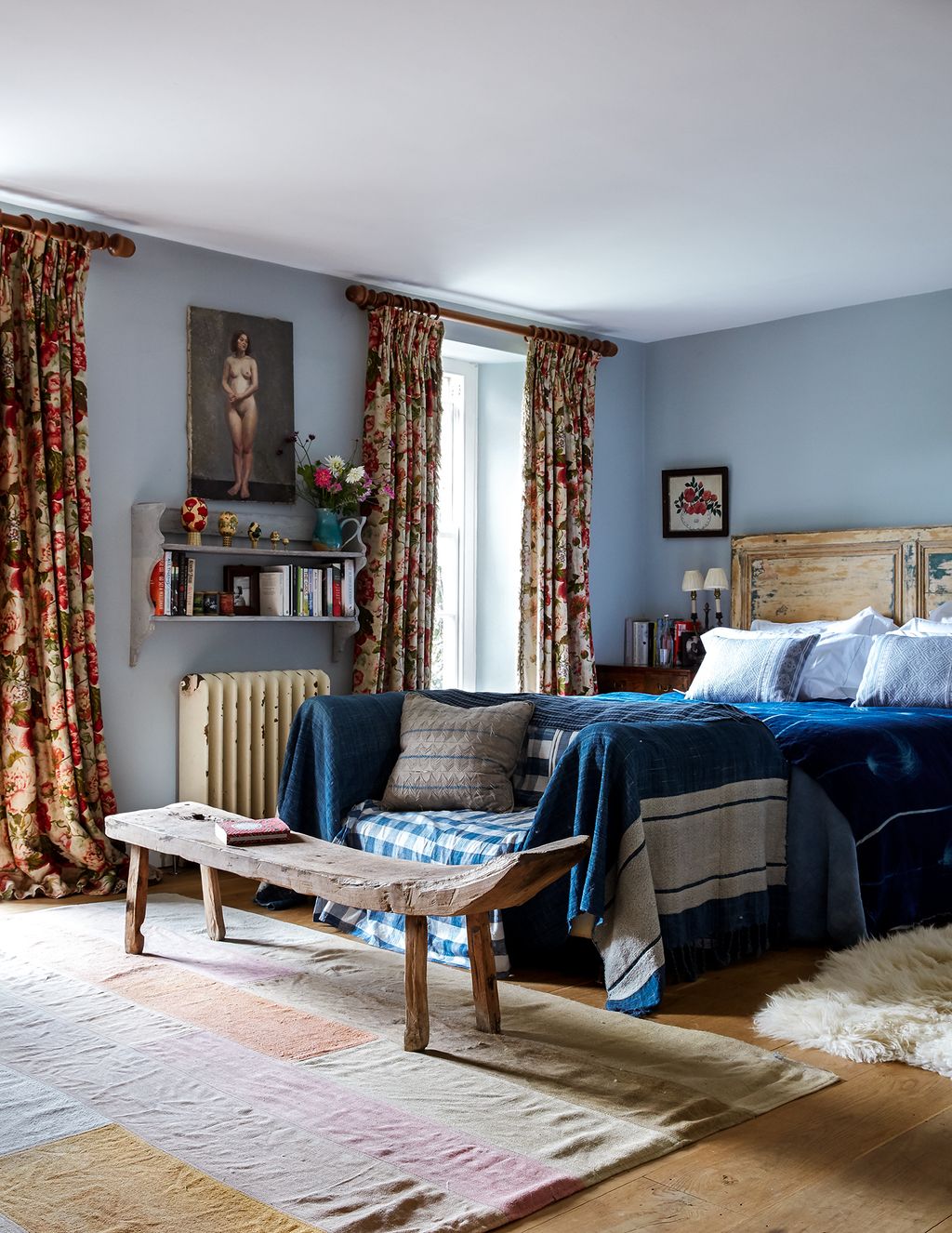
In the main bedroom, vintage floral curtains provide an eye-catching focal point among an eclectic mix of finds – from a weathered headboard made from a reclaimed door to a Balinese bench. The indigo bedcover and layered textiles on a sofa from Alfies Antique Market contrast with a striped rug from The Rug Company.


 Paul Massey13/19
 Paul Massey14/19
 Paul Massey15/19
 Paul Massey16/19
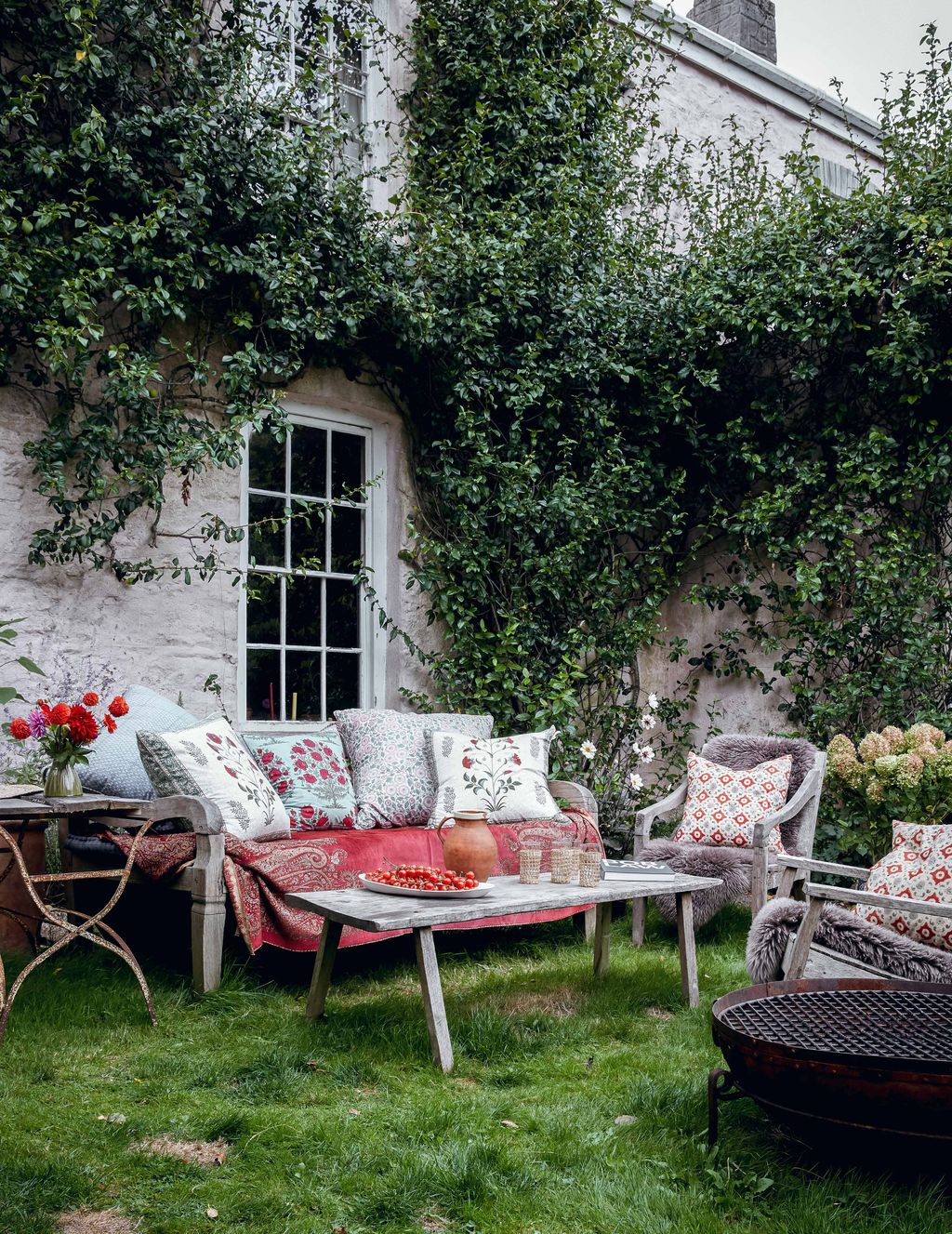
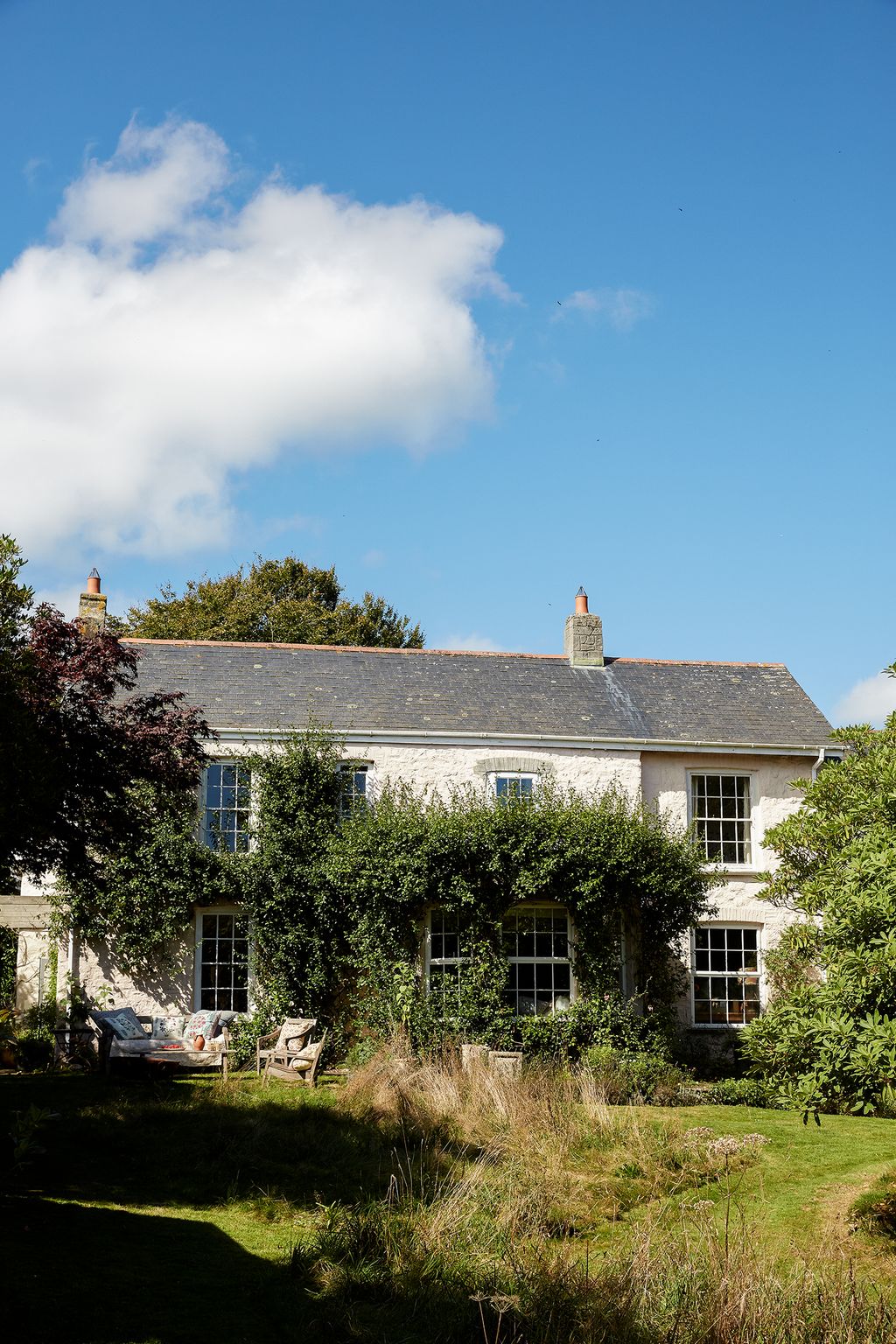
A quince covers what was originally the front of the 18th-century stone farmhouse.


 Paul Massey17/19
Antique mirrors reflect light into the leafy outdoor area off the kitchen, where a plastic conservatory once stood.
 Paul Massey18/19
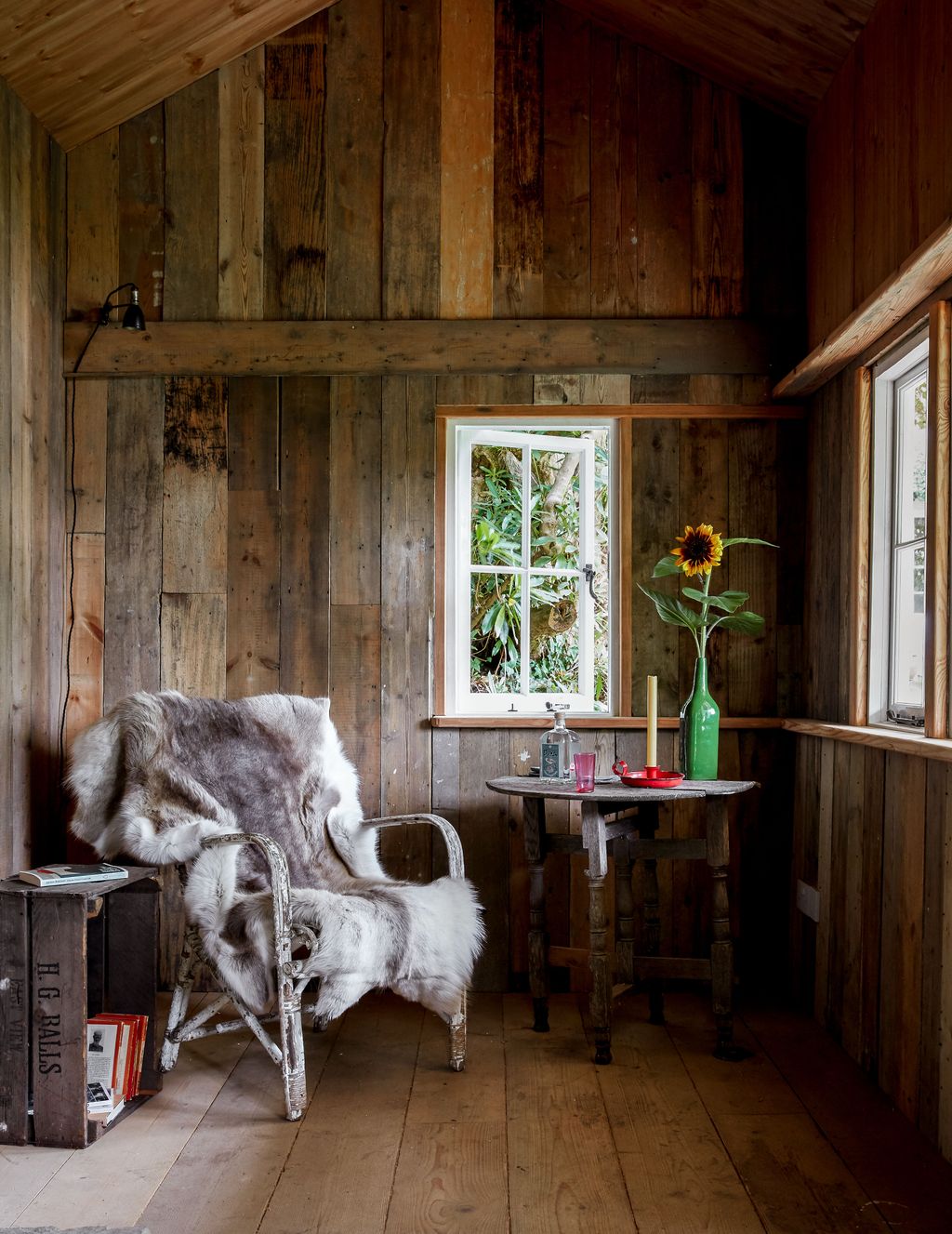
Fiona’s writing shed is known as The Dale after its maker, local carpenter Dale Primmer.
 Paul Massey19/19


