
The designer David Netto brings a feeling of ease and wit to a monumental New York apartment

‘What I think I enjoy most about being a designer are the relationships,’ says the writer and interior David Netto in the introduction to his new book. ‘Which is odd, because in the beginning that was the thing that bothered me so much. I hated being in a service business, having to share myself with clients who intimidated me. But I worked on that, and it turned out that people I have admired my entire life – and some I never thought I would even meet – have become clients and, in many cases, friends.’
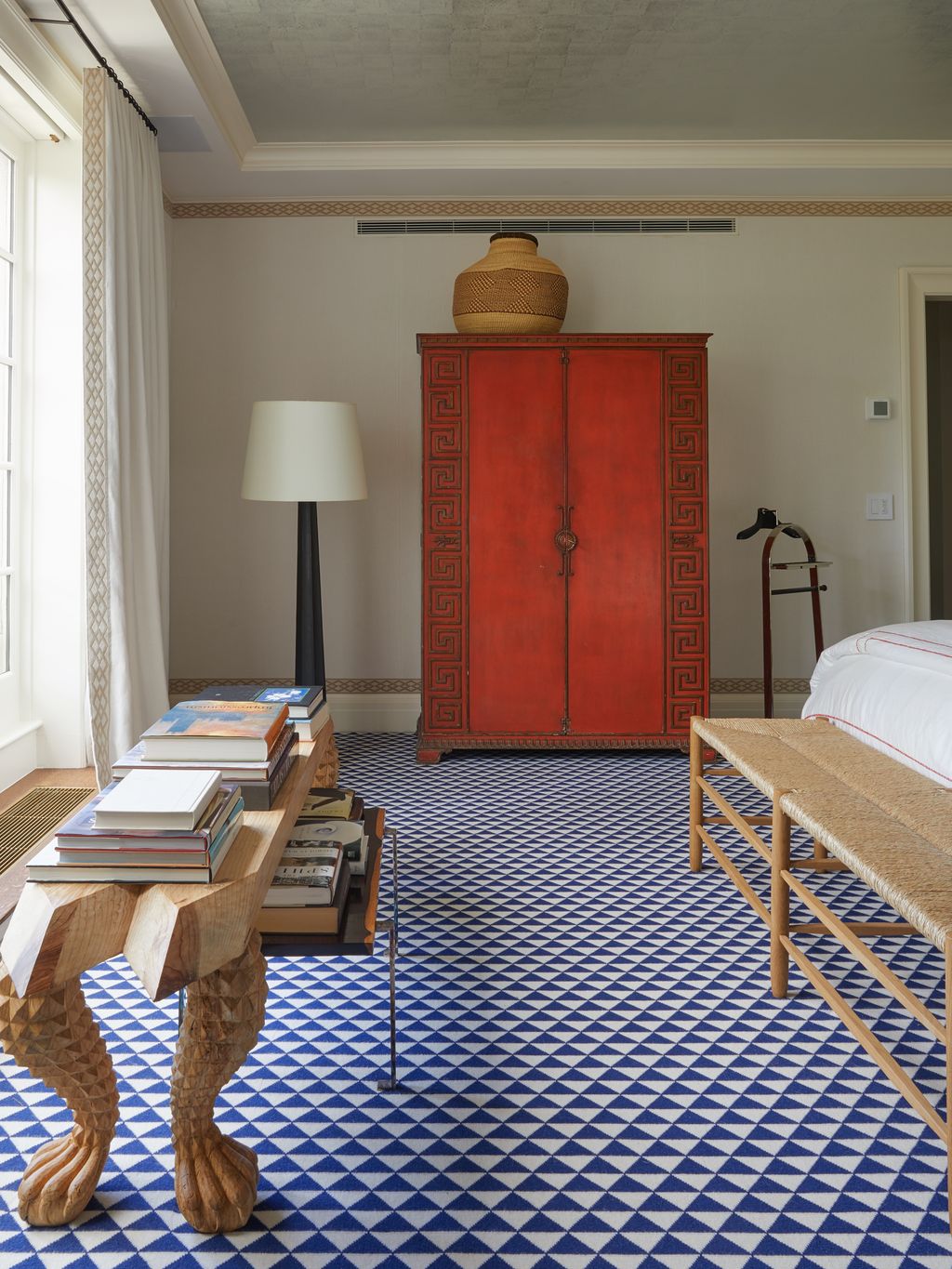
The interiors of this family’s apartment, on a leafy street on New York City’s Upper East Side, are rooted in just such a story. David describes meeting the client in 2017 and knowing right away that he, ‘really wanted her to have something special, just the best; the couple had such different tastes and that was part of their dynamic. The client told me her husband’s taste was hunt prints and old masters and hers was much more contemporary and eclectic. But they are sophisticated people and it was my job to bring the alchemy of composition to the table. Literally.’
‘He had two very different personalities to take into account,’ says the owner. ‘I think the way he handled that was by making parts of the apartment in my husband’s style or mine – one thing or the other. That way each vibe got expressed with some guts; not too much here is up the middle.’
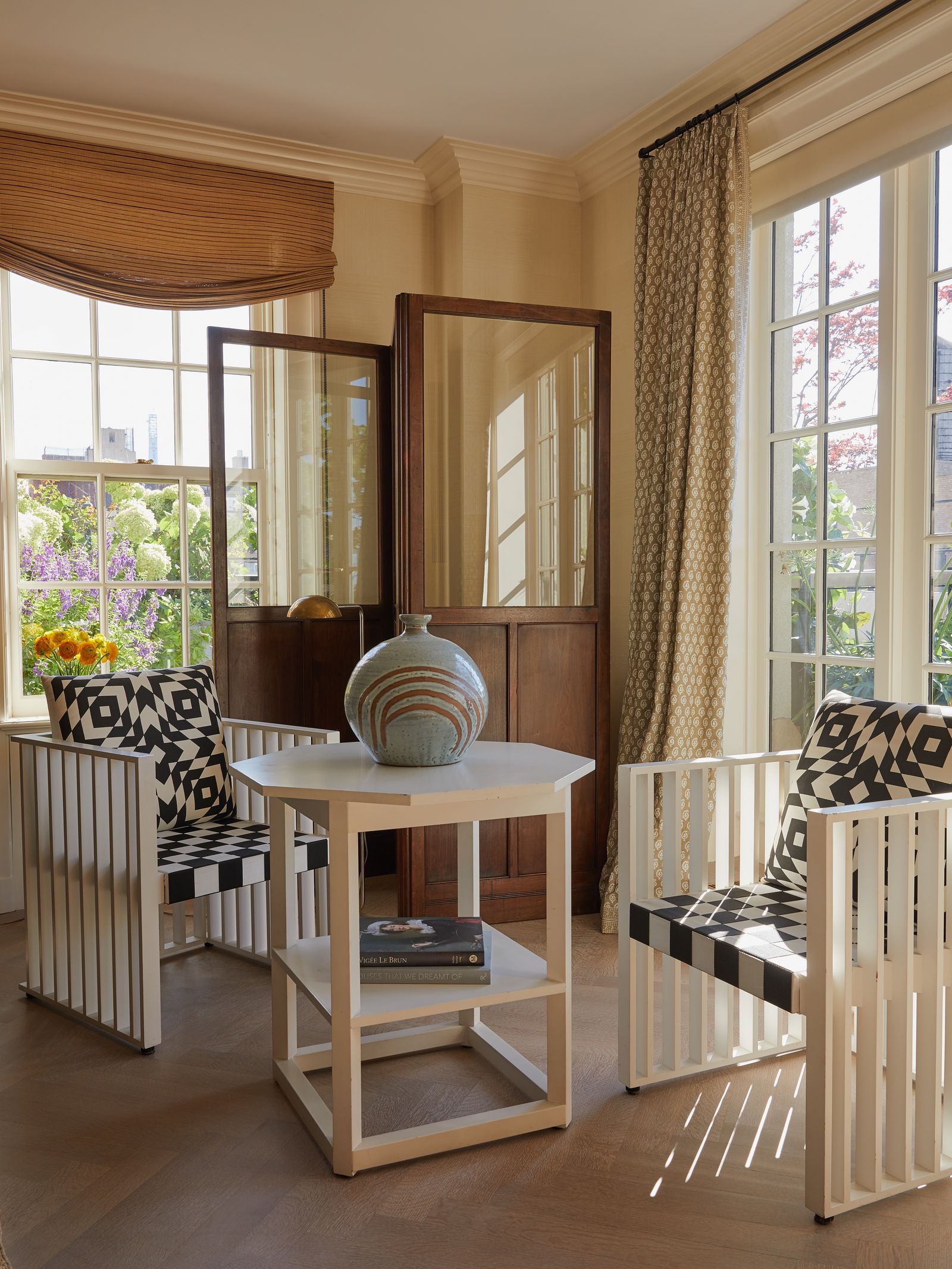
The original project began with the purchase of a penthouse floor of massive charm but intimate scale, converted long ago from maids' rooms. Architect David Hottenroth of Hottenroth + Joseph was enlisted, having originally worked on the place years before for a Parish Hadley project.
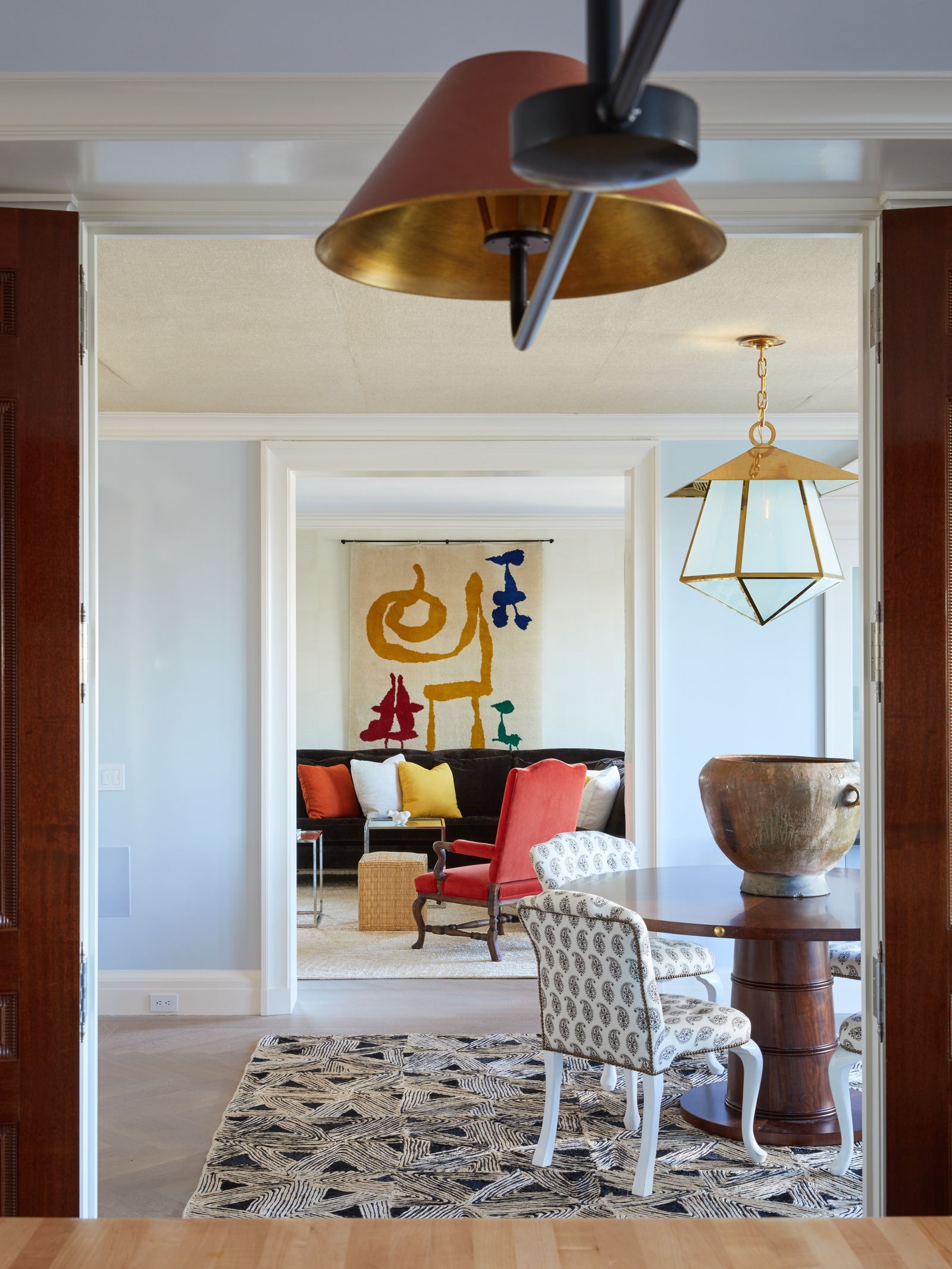
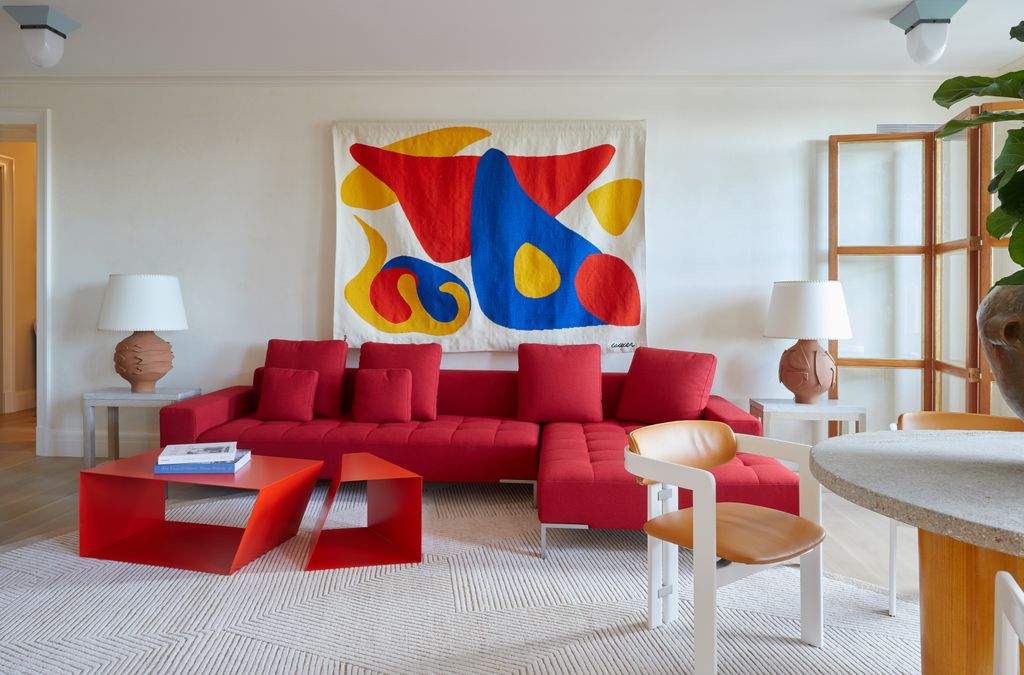
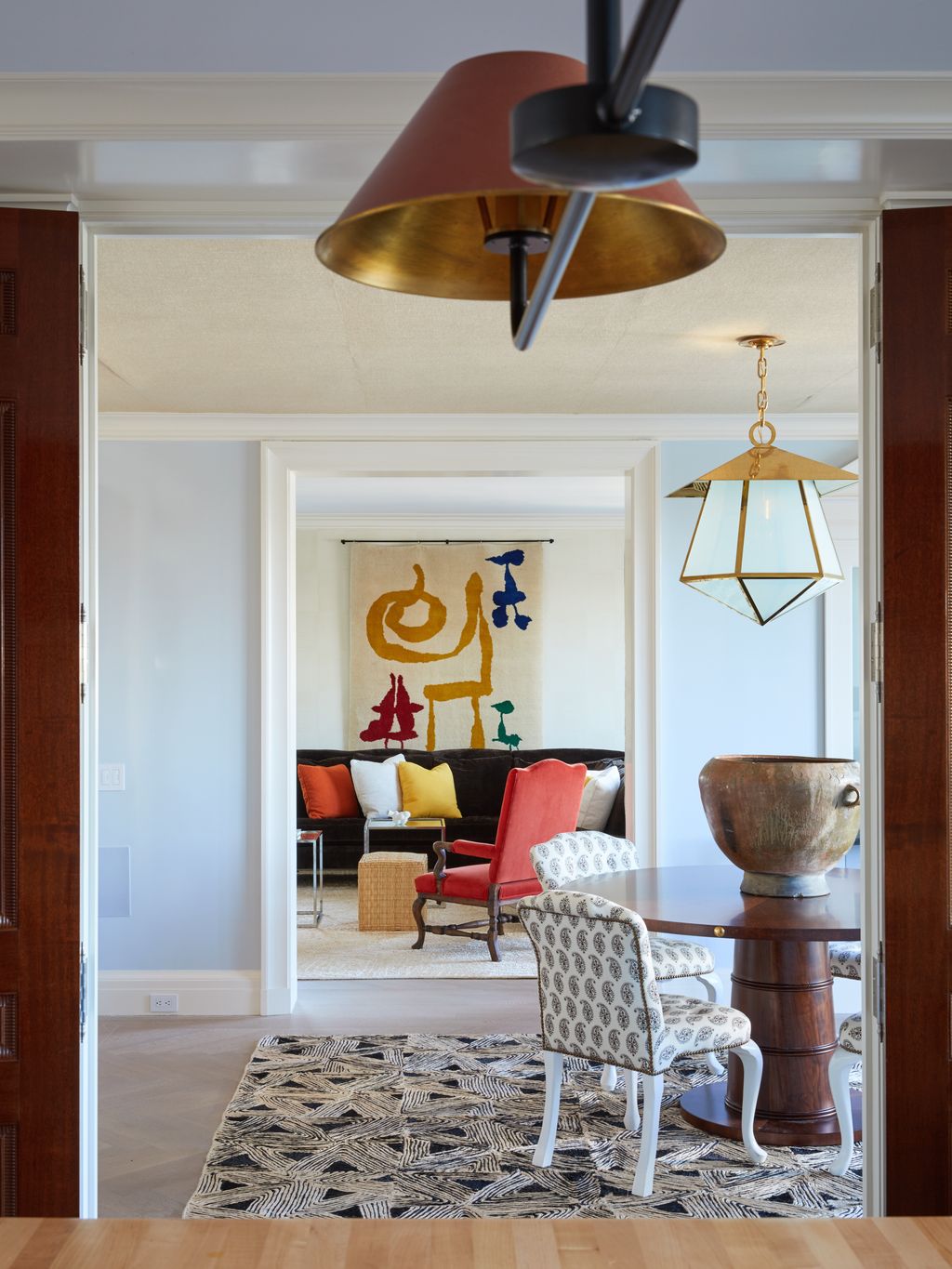
The couple were interested in collecting both art and furniture. David describes finding items like a Miro tapestry for the living room – ‘perfect because you can hit a ball into them’ – and contrasting it with an antique Swedish chair covered in orange velvet as a moment of surprise. ‘I wanted them to have something a little unfamiliar, a little more exotic. And the more yeses I got, the more I realised that anything was possible. I wanted it to be sweet for them, but theatrical enough too, to stop it looking small. I like to pull colour out of a work of art and have it participate in three dimensions, moving from room to room. Follow the red: it starts in the Miró tapestry, jumps to the velvet on the chair, and ends up in the kitchen as the shades on the pendant light.’
In 2020, several years after the family moved in and the original job was complete, the two apartments on the floor below the penthouse became available. Some detective work ensued, as David and the client went to look at what else was on the market.
‘He did such a careful job of walking us through some unique (for New York) options,’ says the owner. ‘He sat us down and said, ‘Before you commit to downstairs, let’s look at the top three or four apartments on the market in major buildings that would be an equivalent investment.' I have to say that adding the downstairs apartment to the little penthouse we started out with has been beyond anything in my wildest imagination.’
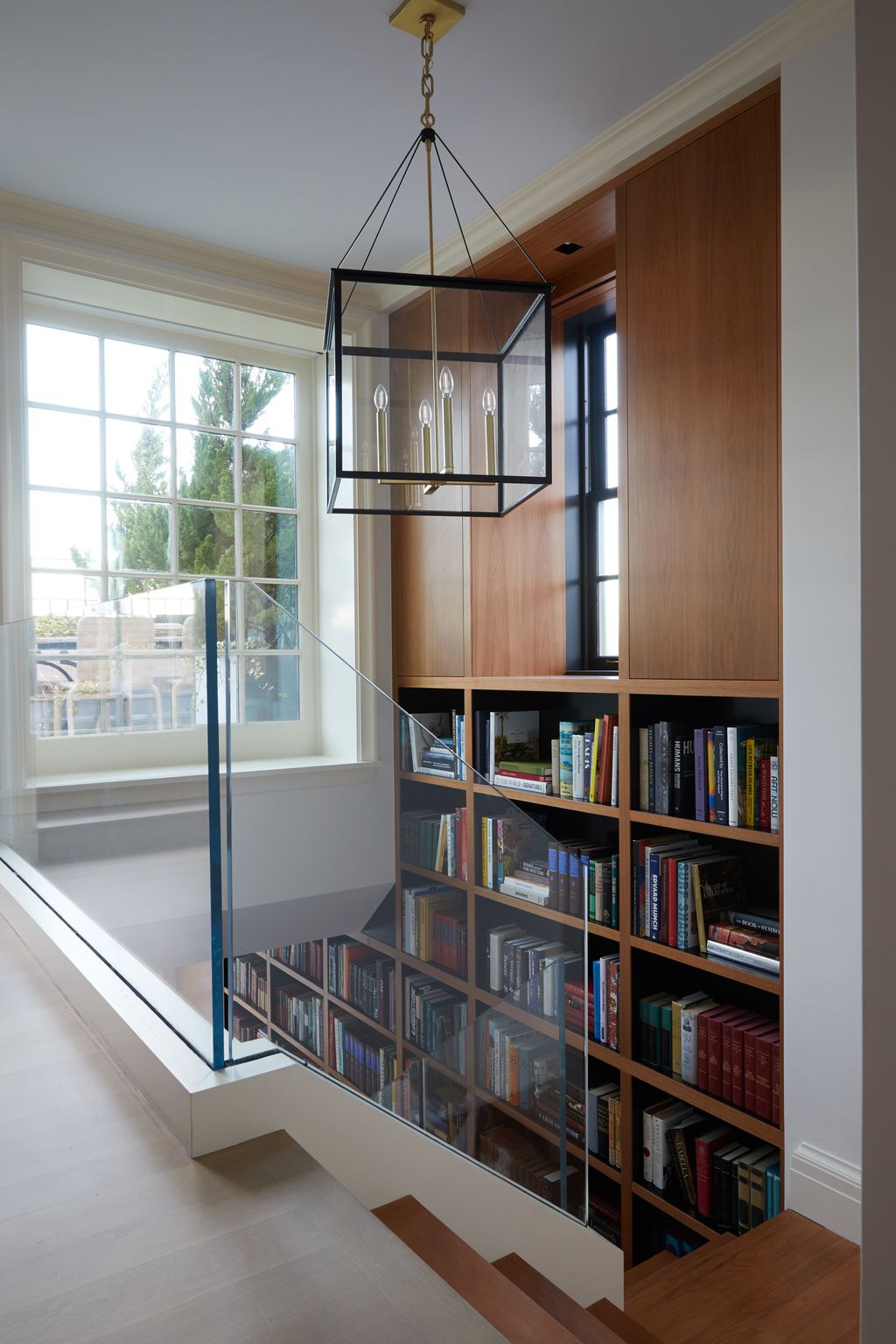
David Hottenroth returned and together the designer and architect created a staircase connecting the two spaces. ‘I was thinking of Pierre Chareau’s Maison de Verre when I decided to make the double-height wall of the stairs connecting the two apartments into a bookcase, which I call the vertical library. Didn’t get the Maison de Verre’s iconic rivets, but our stair is painted the Chareau red that so influenced Richard Rodgers – and now me.’
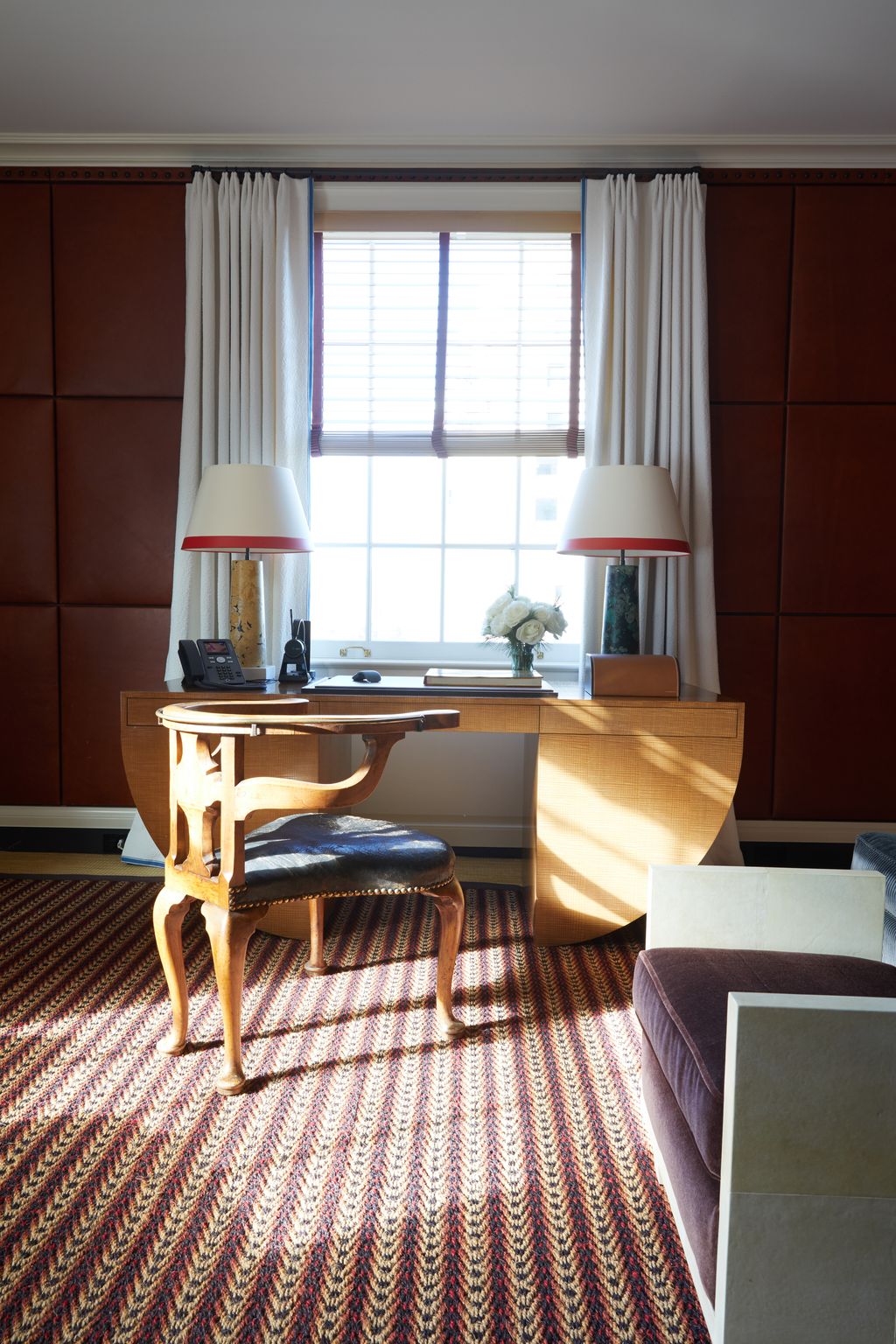
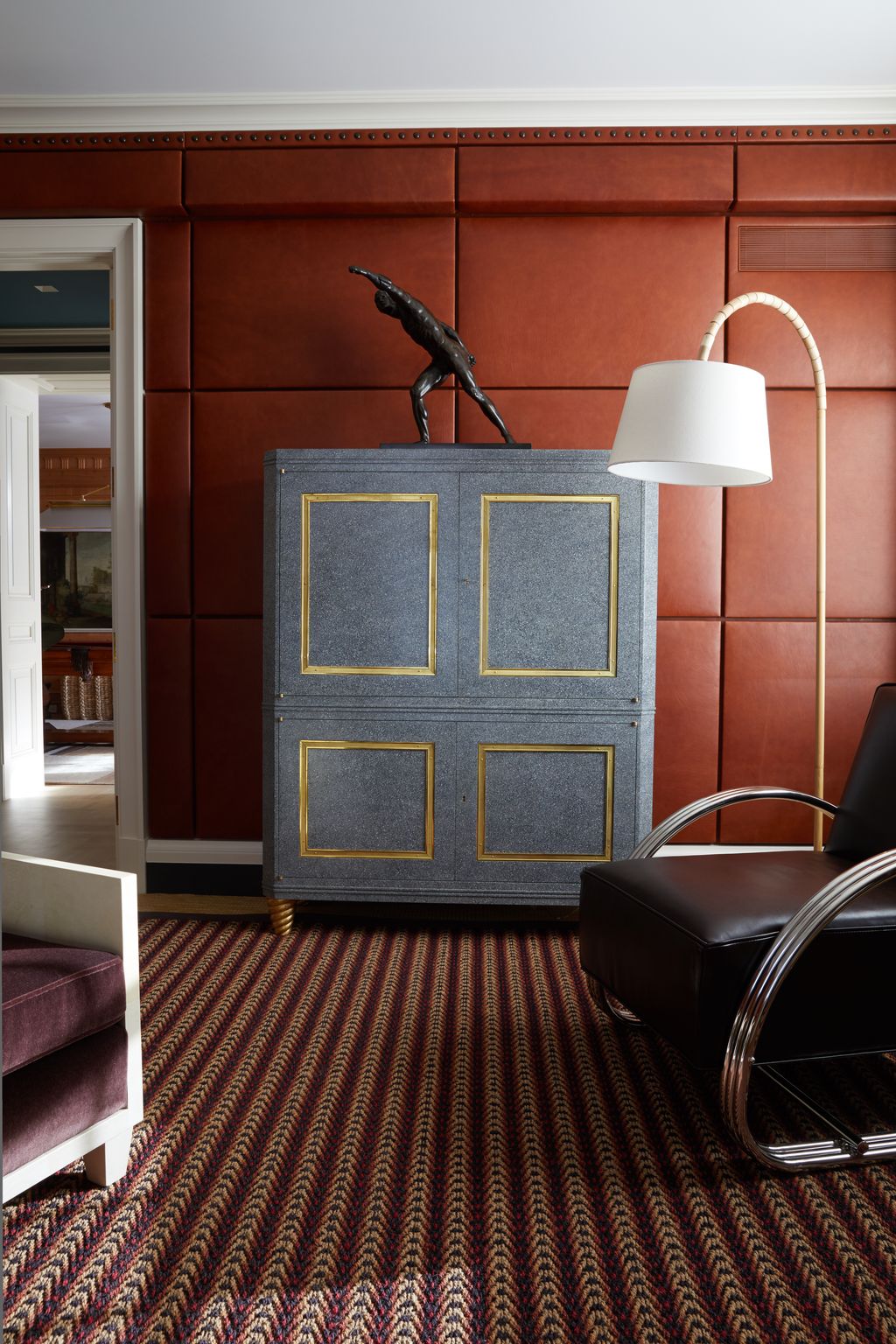
The new, lower floor became a kind of club house – the couple’s nine-year-old son’s bedroom moved downstairs to join an enormous family room. A gym was concealed behind the bookcase doors, and a leather walled study was added for the husband with a connecting billiard room.
Once the combination of the two floors took place, there was a far more expansive footprint for the couple’s distinct tastes to take root. For her, a ‘monumental’ Lincoln Seligman painting of a red-turbaned gentleman hangs in the guest room, ‘ bringing a certain air of mystery’, coupled with curtains in a fabric by Josef Frank.
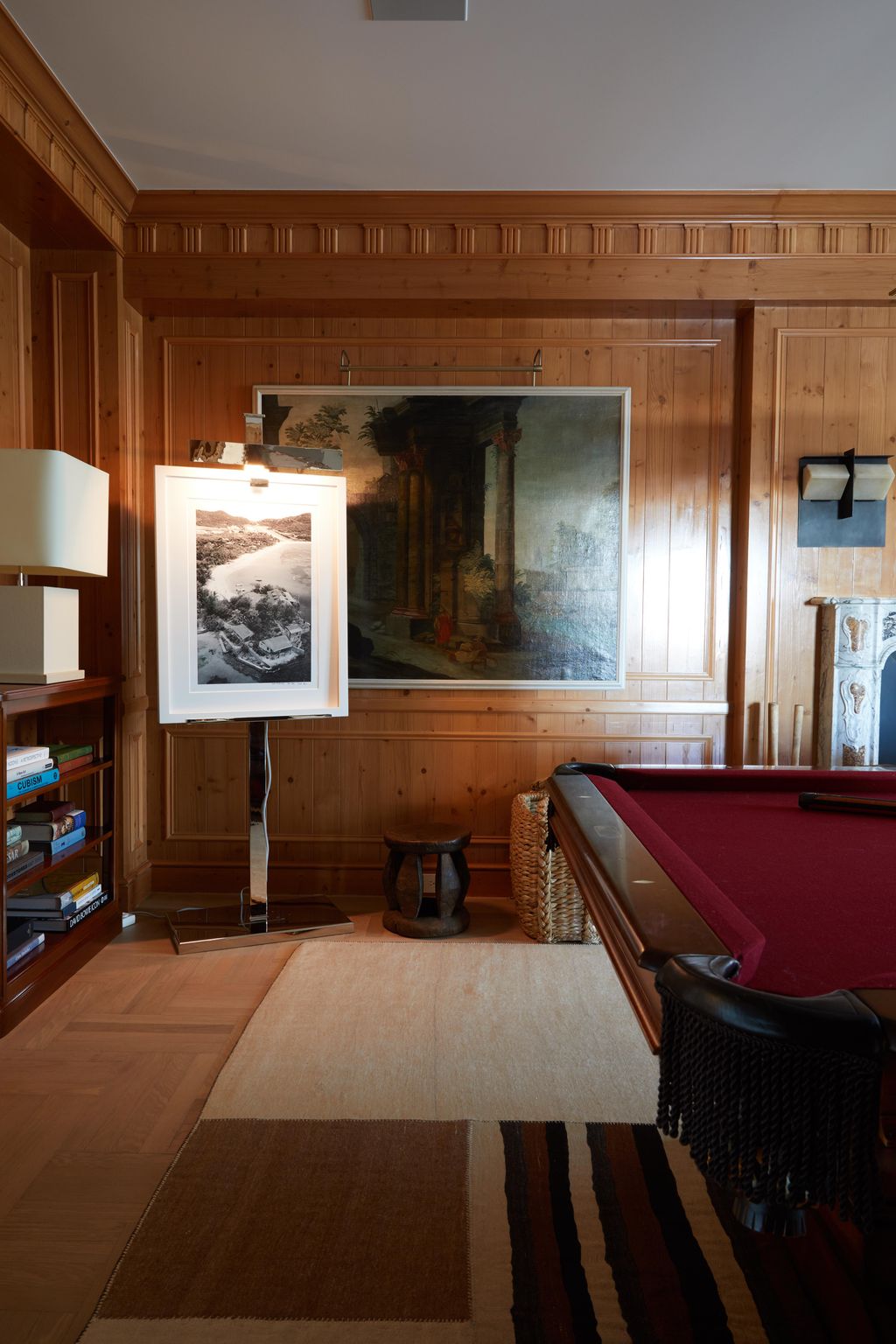
In the study and companion billiards room the husband's fascination with the decor of the early James Bond films is explored. A mid-18th century marble mantel – ‘One of the great mantels I will ever buy, from an Italian palace’ – is fitted with a black steel slip, ‘to keep things edgy.’ This is flanked by an Italian landscape that is ‘reminiscent of those early films and M’s office where everything was very Georgian and proper and then a button would be pressed and a screen would come up out of the table. That was the vibe we were going for.’ A Robert Motherwell print rests on the mantel, below a pair of Pierre Chareau sconces which the designer describes as referring to the elemental style of the staircase and connecting a design point of view across the project.
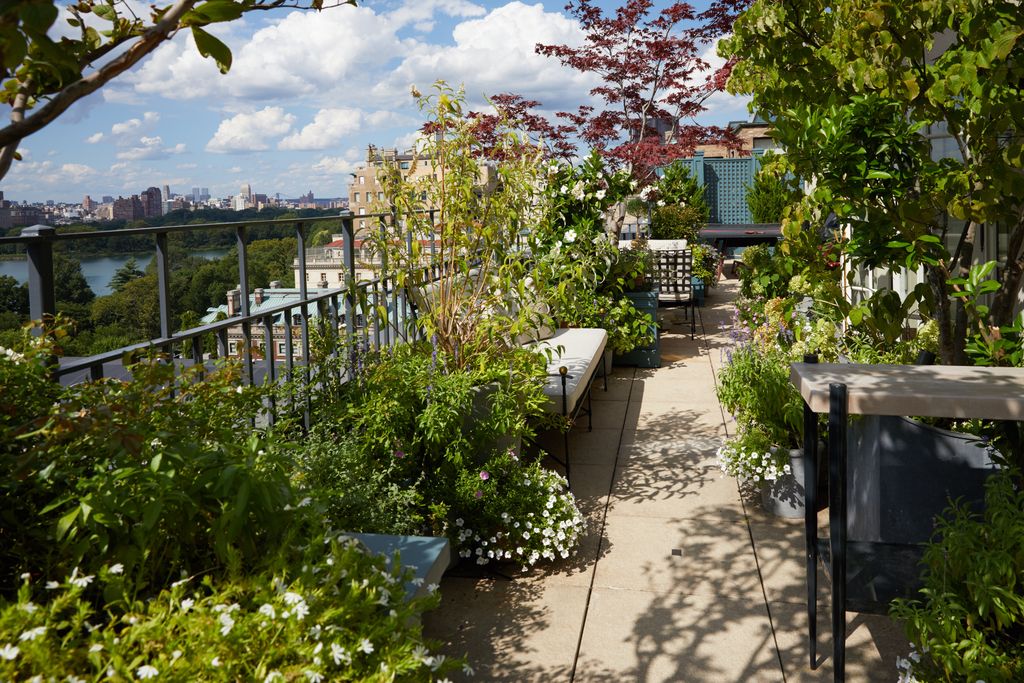
A blowsy, loose English-style garden brings a landscape to the terraces on the original penthouse floor with maximal views across to Central Park’s reservoir. For students of NYC architecture the historic buildings that make up the skyline in that part of the city – the Guggenheim, the Convent of the Sacred Heart school and the Cooper Hewitt – are all near neighbours. For the family though, that view is their ‘front lawn’. From the terrace on the original penthouse floor an astute visitor can also peek through the railings and spy what was once the largest apartment in New York City, Marjorie Merriweather Post’s 54-room penthouse on Fifth Avenue. It’s a reminder that this apartment sits in New York’s most formal neighbourhood, but a dynamic conversation between client, designer and architect have created a family home whose style is cool, elevated and spirited in atmosphere.
‘He helped us realise that we didn’t want more formality; we wanted more of what he had already given us. The only real country house in the city that I have ever seen! So here we are,’ says the owner. ‘Walking into this apartment for the first time was an emotional experience for me. It was like he created a home that somehow was the home we’ve always lived in but have never lived in. When I arrived from that place to this apartment, I felt I already had memories here that hadn’t even happened yet.’
David Netto's new book ‘David Netto’ is published by Vendome Press and out now
 1/25
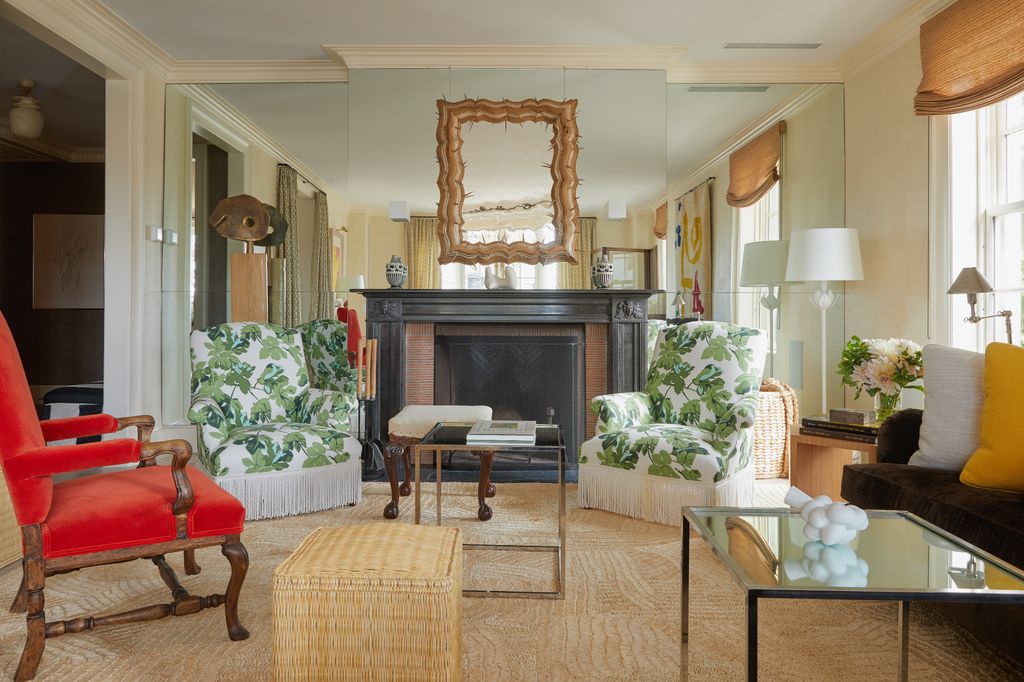
1/25‘A mirrored chimney breast is a favorite device of mine no matter what,’ says David. ‘But this one doubles the view of the park.' The hanging mirror is by Mike Diaz. The black marble Regency mantel is from Jamb, and the Louis XIII fauteuil covered in scarlet velvet comes from Laserow.
 2/25
2/25 3/25
3/25The view from the living room looking towards the kitchen.
 4/25
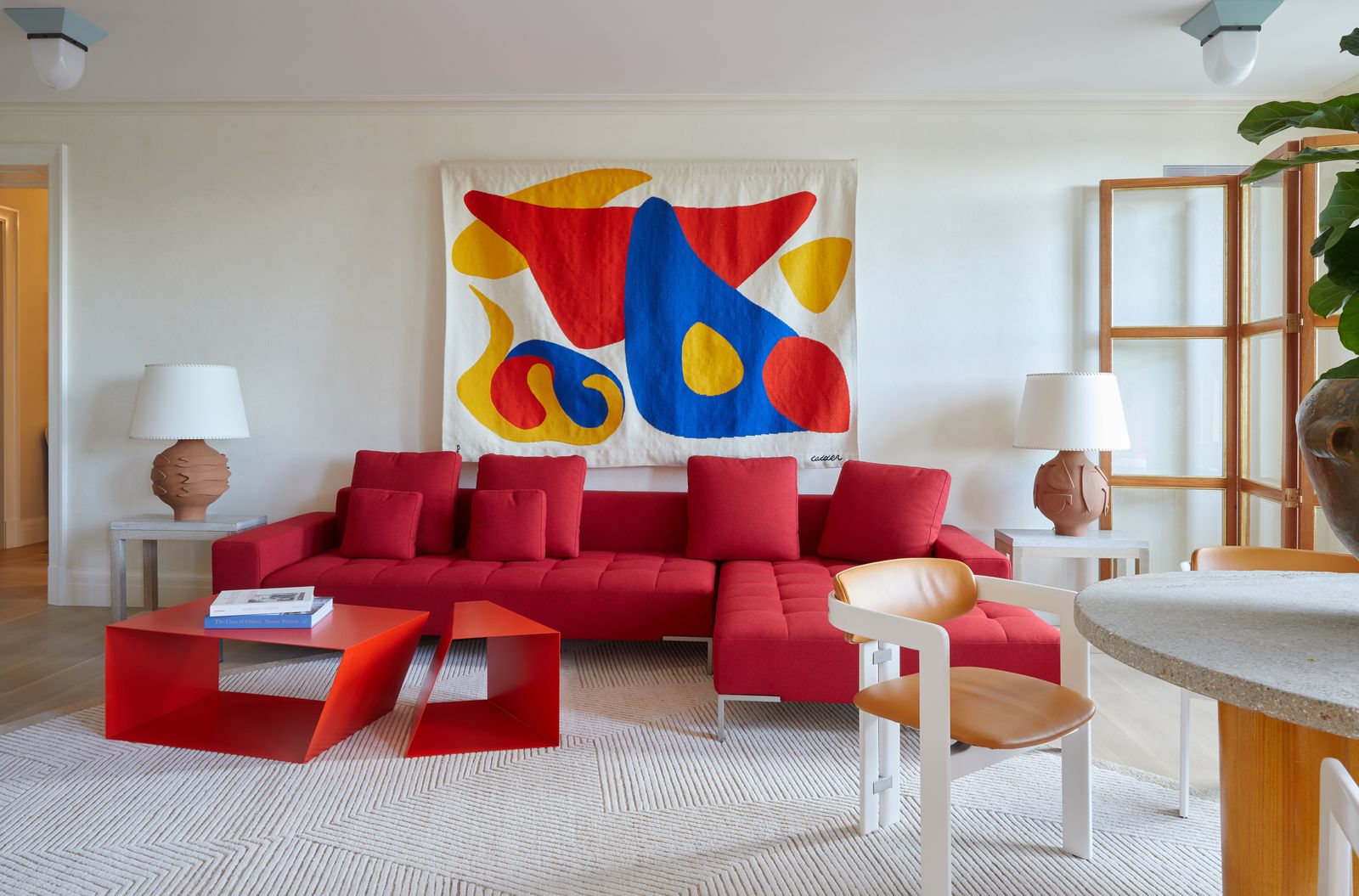
4/25‘In the family room, Calder tapestries are perfect because you can hit a ball into them—no foul!’


 5/25
5/25‘I like to pull color out of a work of art and have it participate in three dimensions, moving from room to room,’ says David. ‘Follow the red: it starts in the Miró tapestry, jumps to the velvet on the chair, and ends up in the kitchen as the shades on the pendant light from Urban Electric Co.’
 6/25
6/25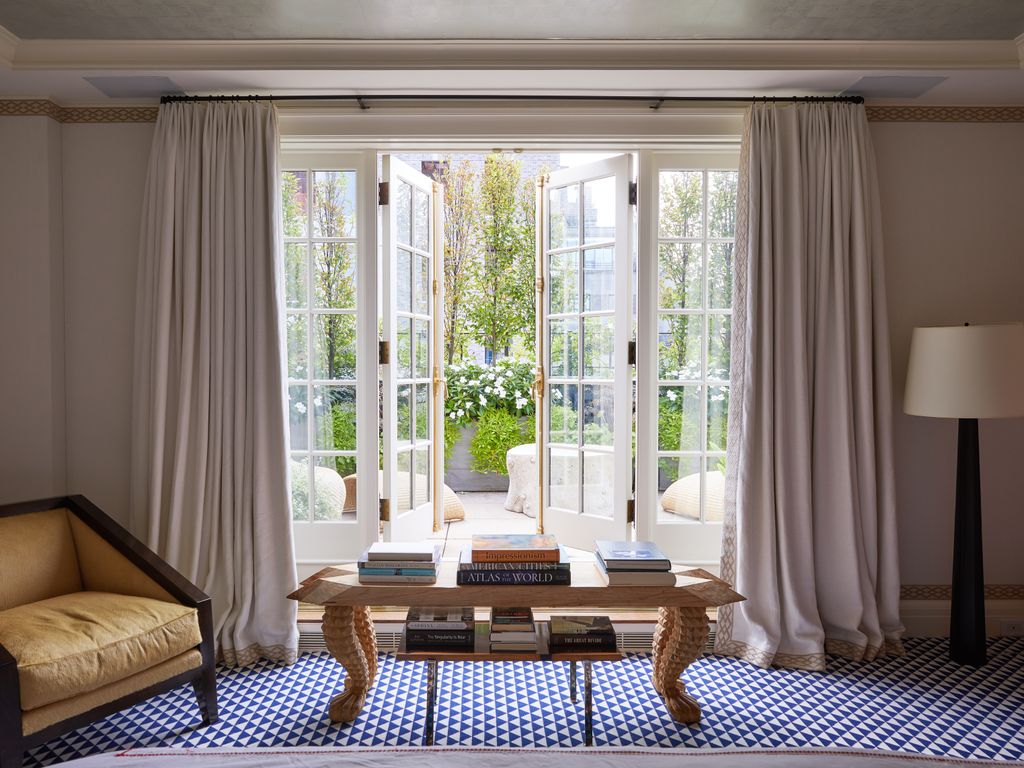 7/25
7/25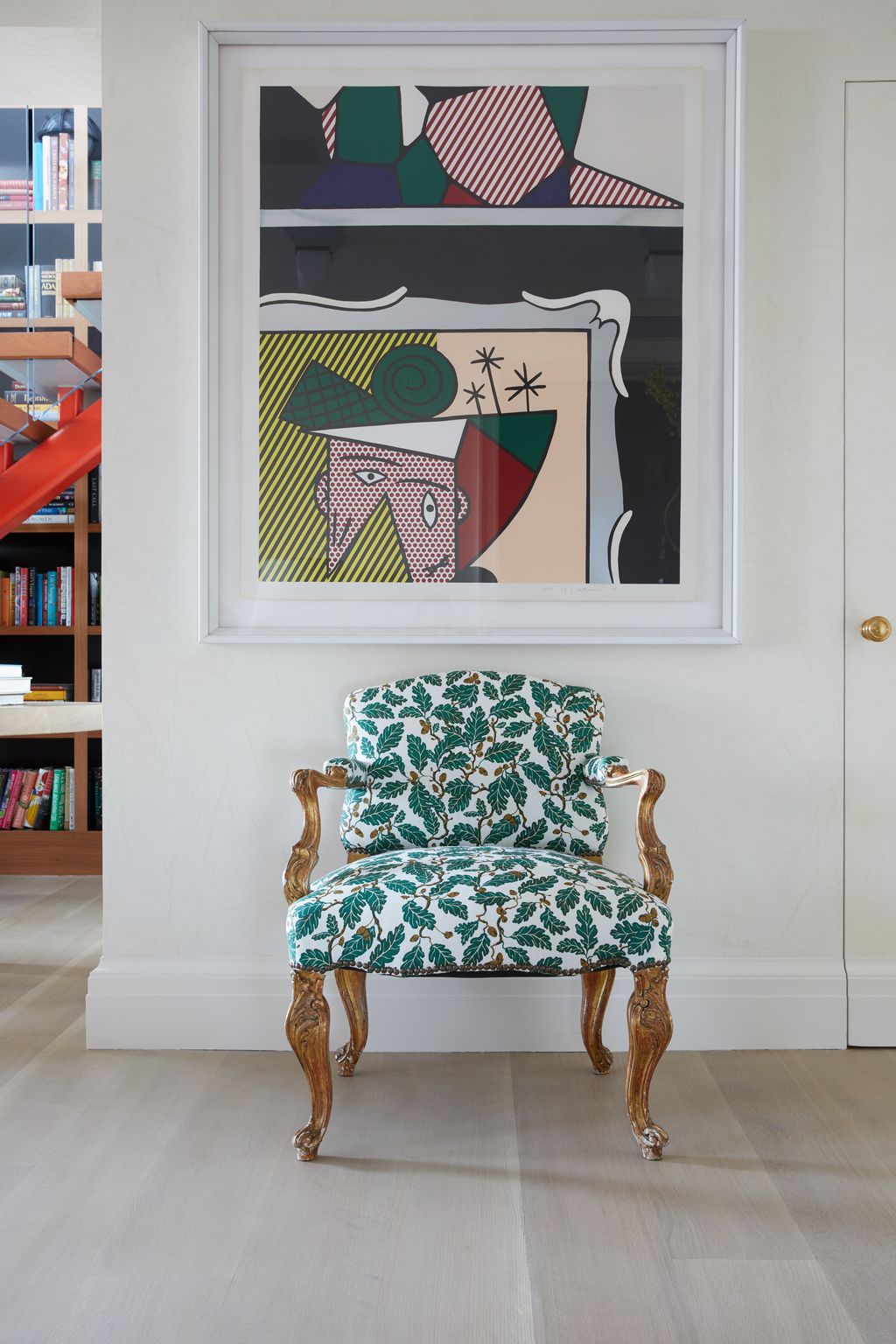 8/25
8/25


 9/25
9/25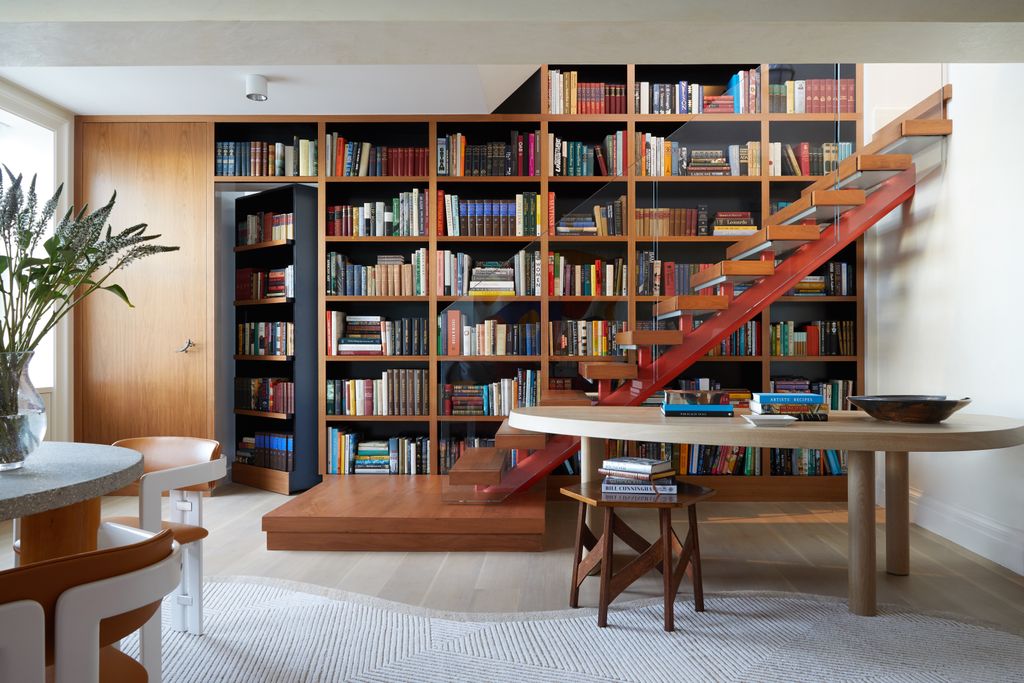 10/25
10/25David was thinking of Pierre Chareau’s Maison de Verre when architect David Hottenroth and he decided to make the double-height wall of the stair connecting the two apartments into a bookcase, ‘which I call the vertical library. Didn’t get the Maison de Verre’s iconic rivets, but our stair is paintedthe Chareau red that so influenced Richard Rodgers—and now me.’
 11/25
11/25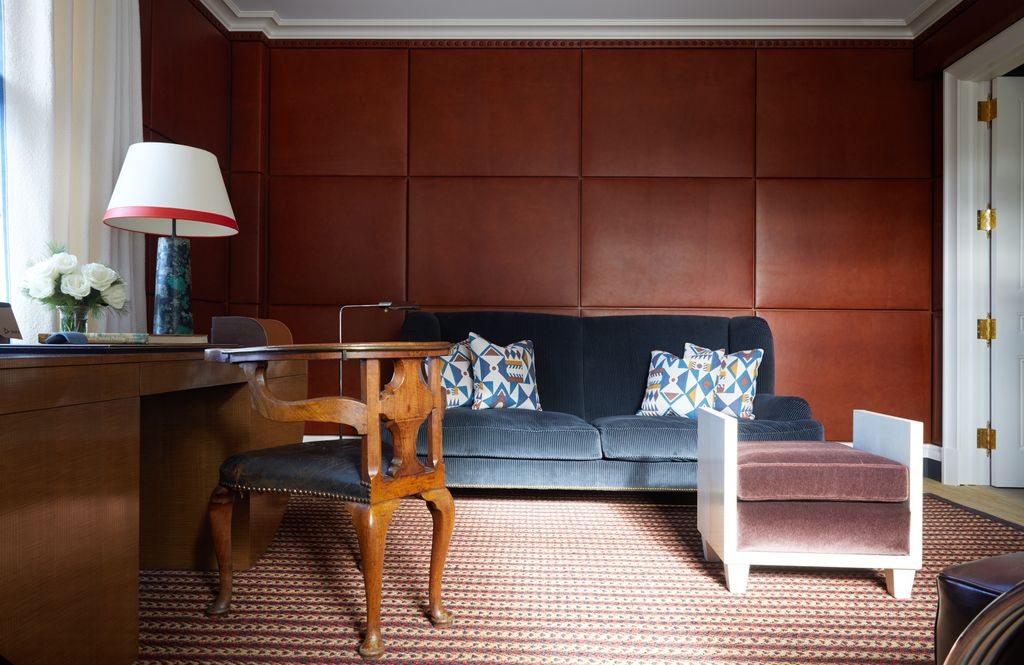 12/25
12/25The walls of the gentleman’s study are upholstered in leather panels


 13/25
13/25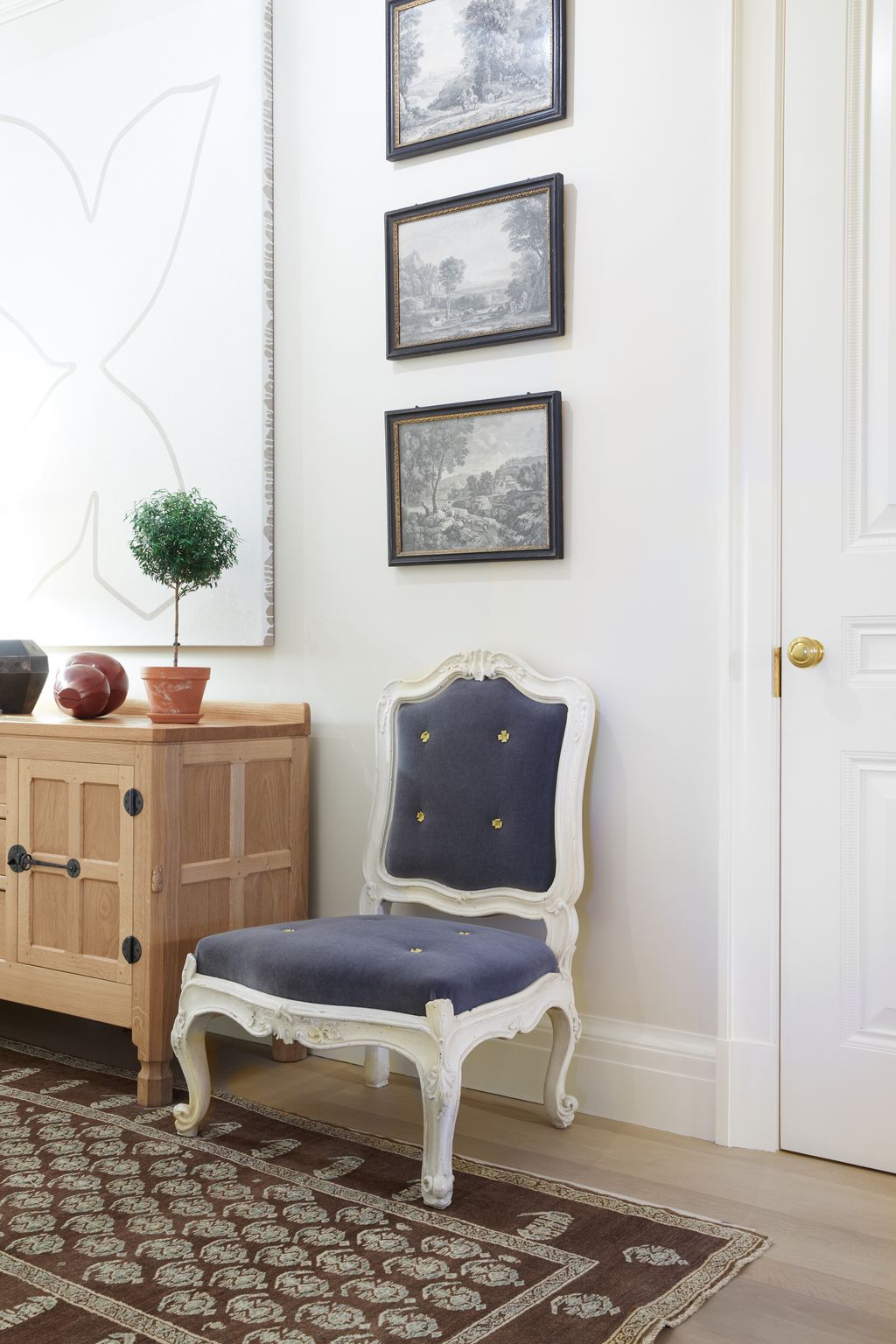 14/25
14/25In the gallery, the painting is by Paul Kremer and the mid-18thcentury chair (one of a pair) comes from Gerald Bland.
 15/25
15/25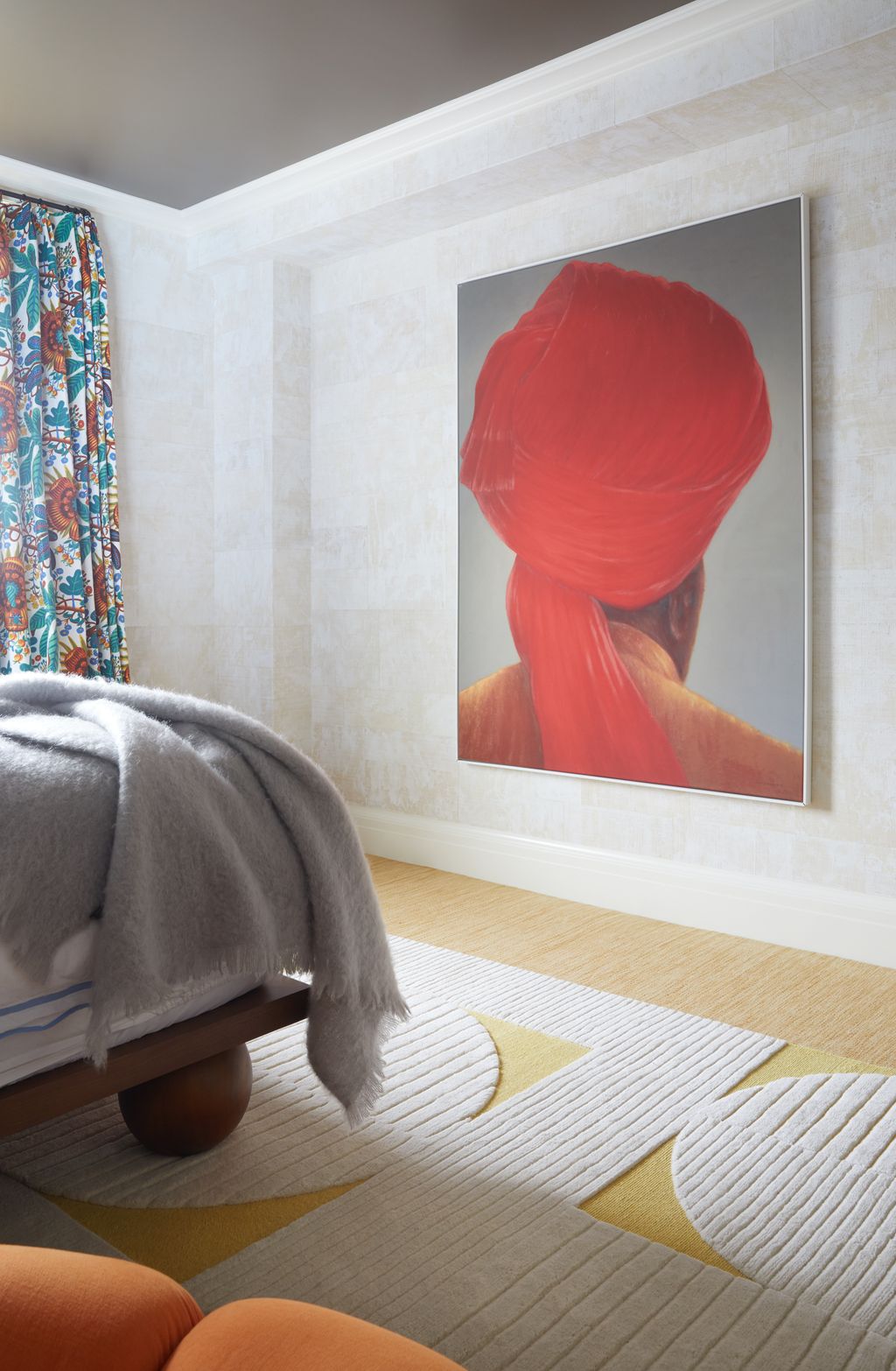 16/25
16/25A monumental painting by Lincoln Seligman brings a certainair of mystery to the guest bedroom, giving one something tocontemplate. The rug is from Atelier de Troupe, and the curtain fabricis by Josef Frank


 17/25
17/25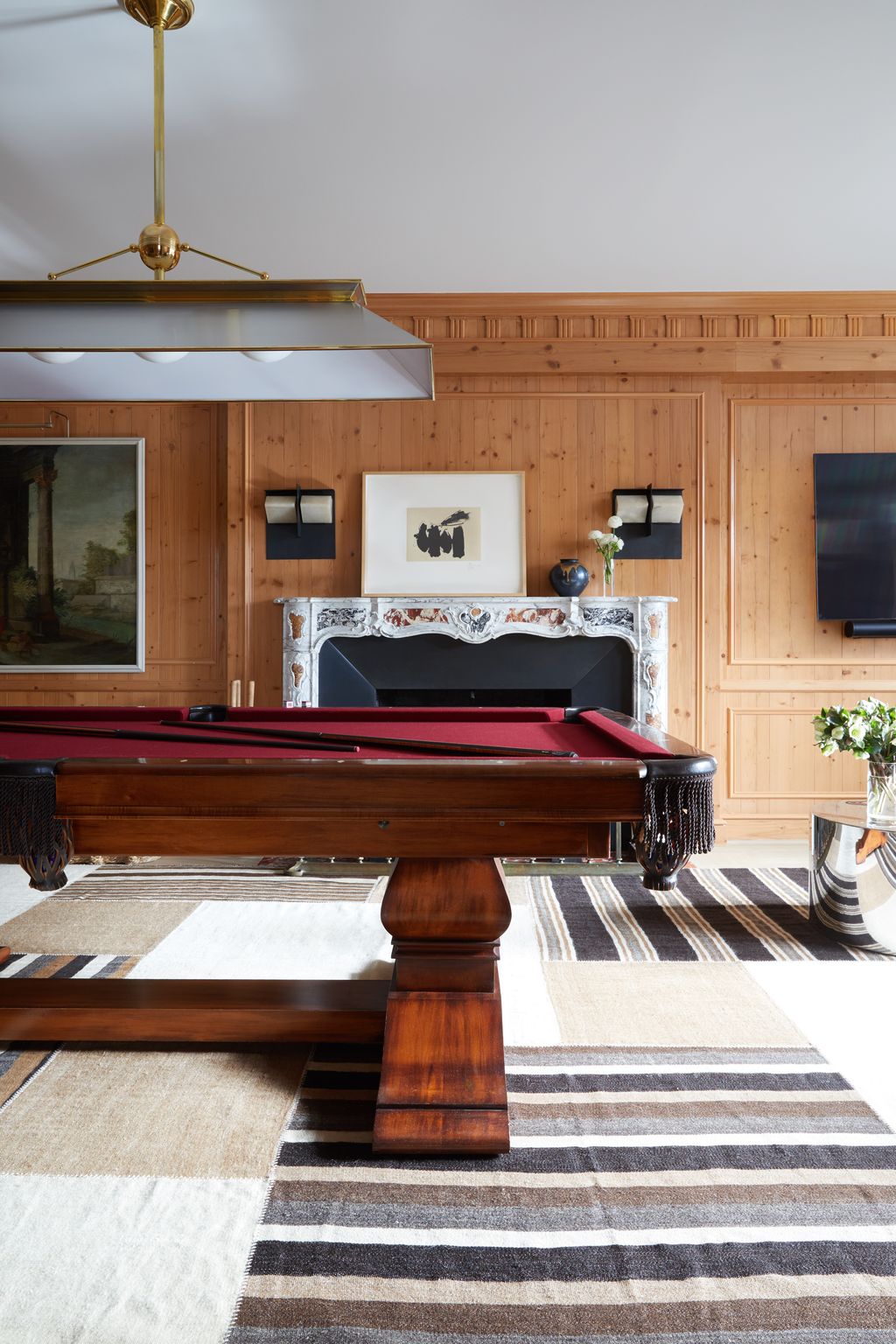 18/25
18/25The main event downstairs is a handsome paneled billiardsroom—another feature one would normally find only in a countryhouse, but normal is not what we’re after here. The fixture over the pooltable is from Urban Archaeology, as are the Pierre Chareau sconces. One of the great mantels I will ever buy went into this room. From amid-eighteenth-century Italian palace, it is fitted with a black steelslip to keep things edgy. A print of Robert Motherwell’sElegy to theSpanish Republic rests on the mantel.
 19/25
19/25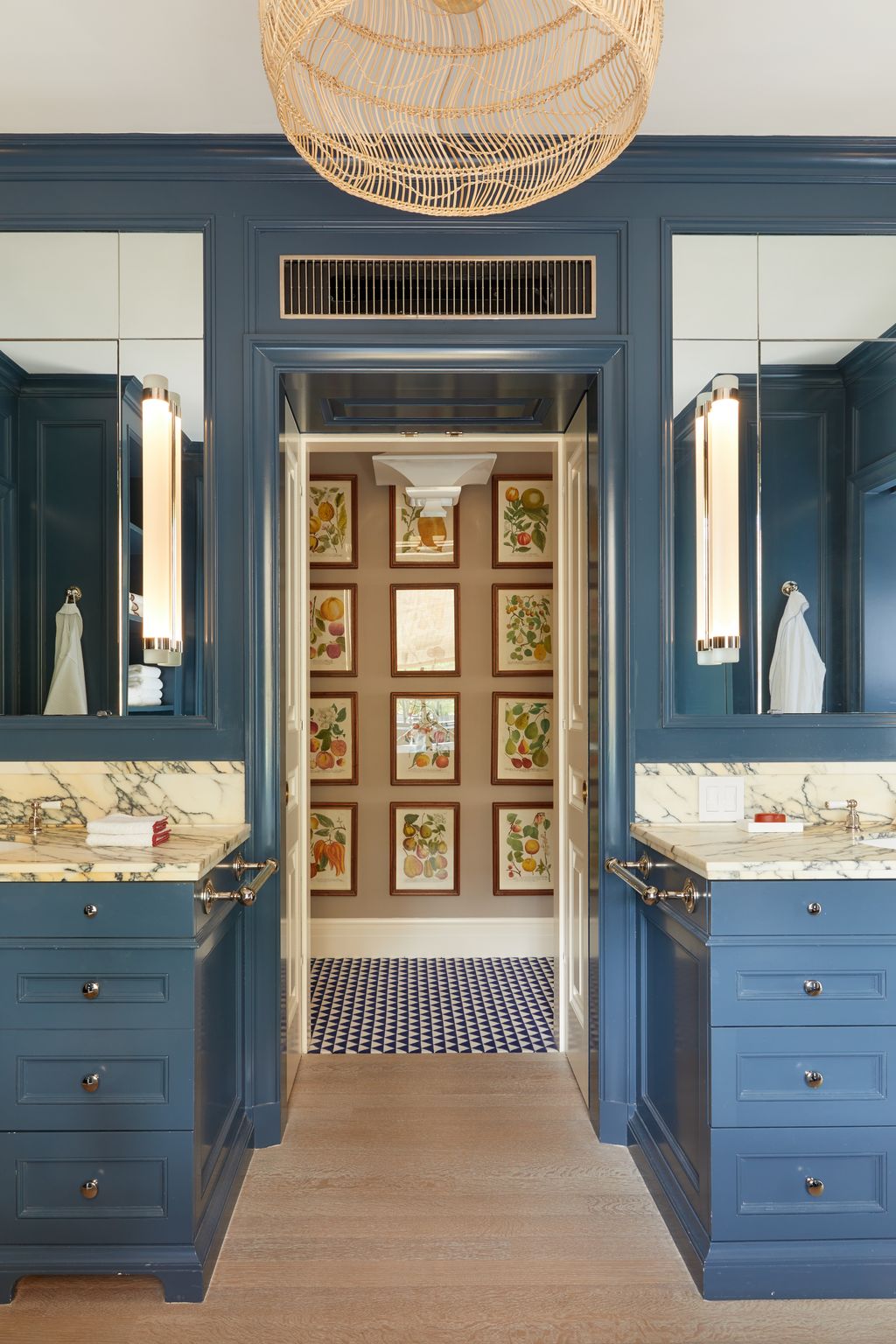 20/25
20/25‘It’s very hard to think of another apartment in New York with more charm, or of clients whose friendship has meant more to me,’ says David.


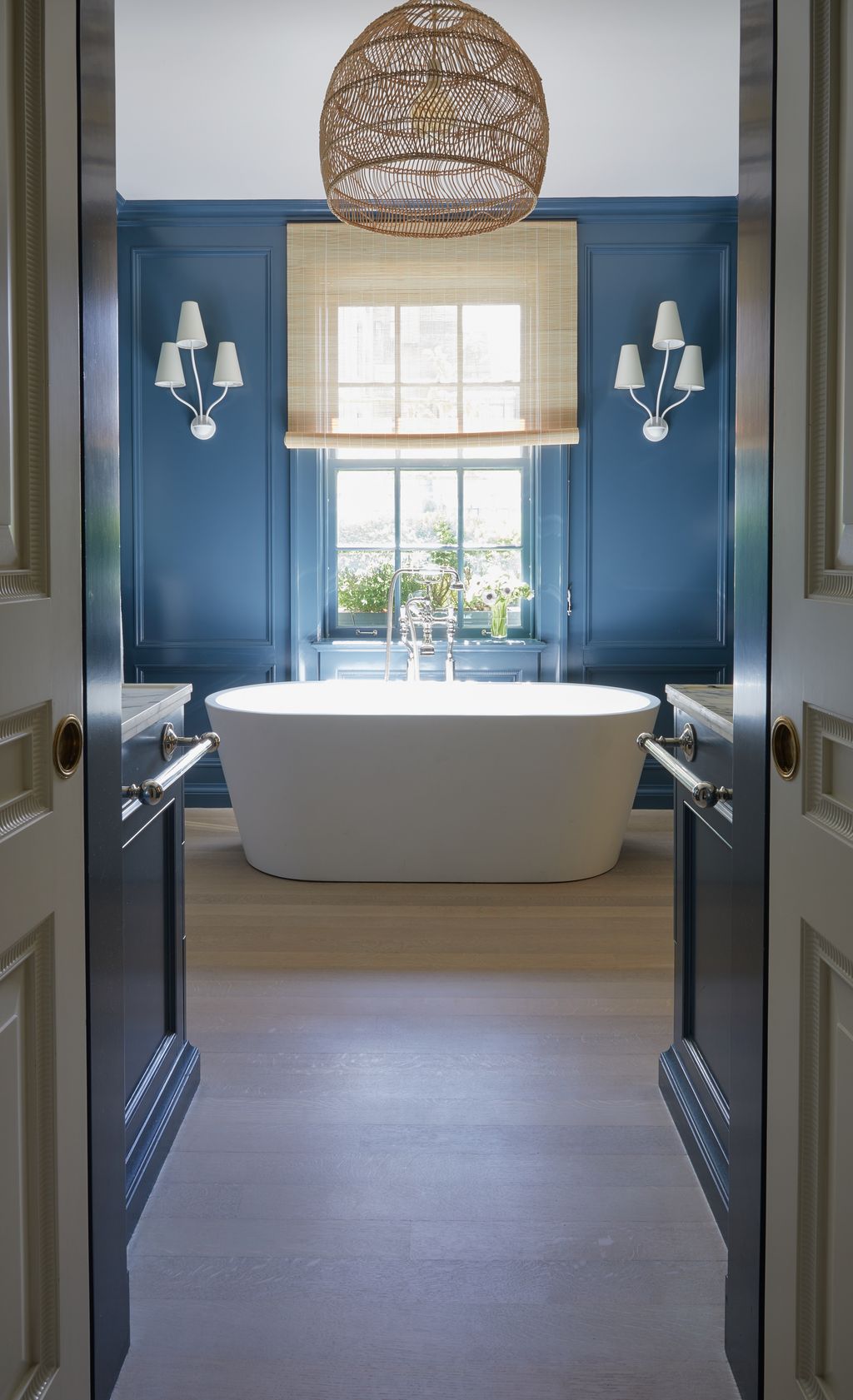 21/25
21/25'The principal bath, with sconces from Aerin, looks out on a wall of green that makes the wraparound terrace feel like a London square.
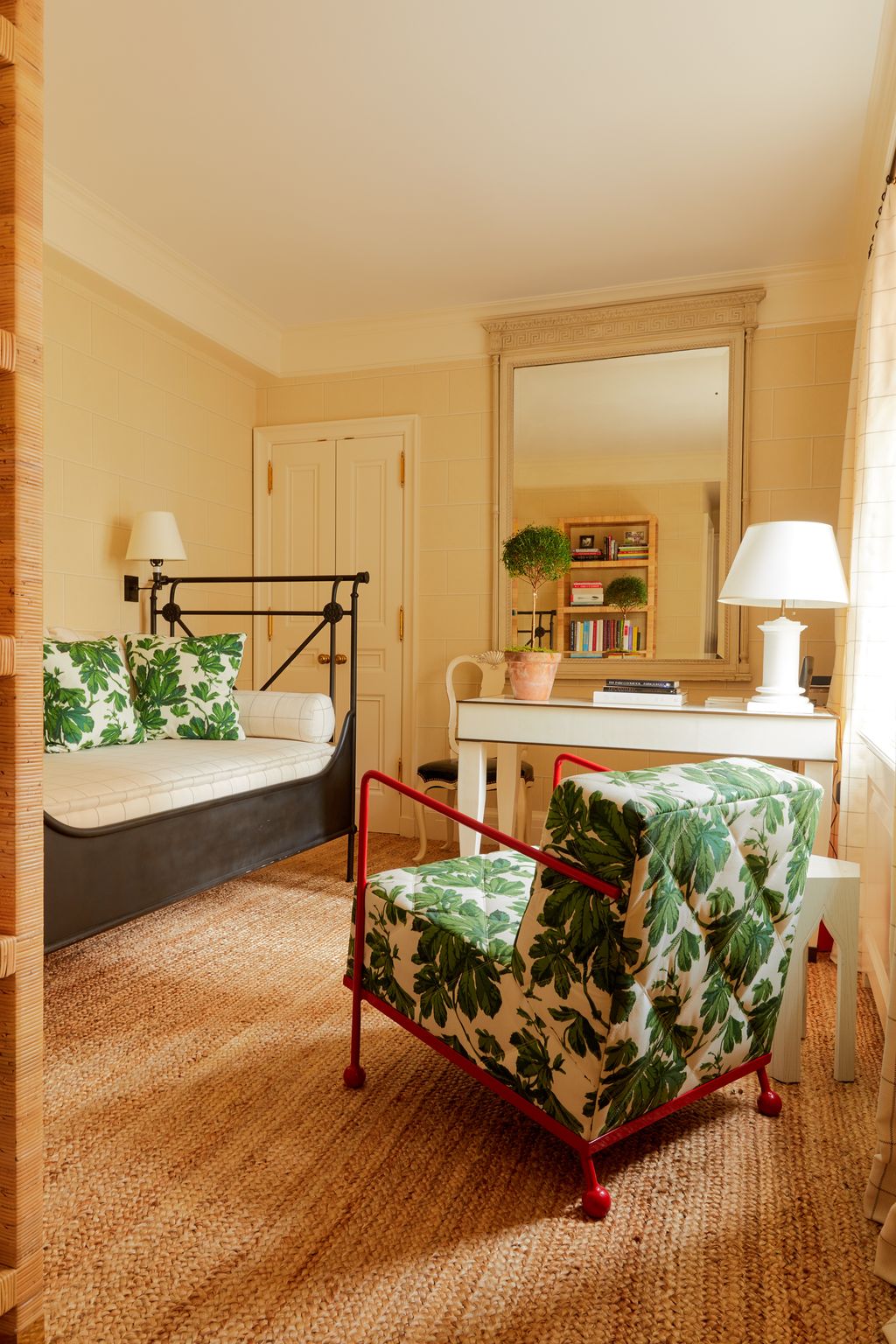 22/25
22/25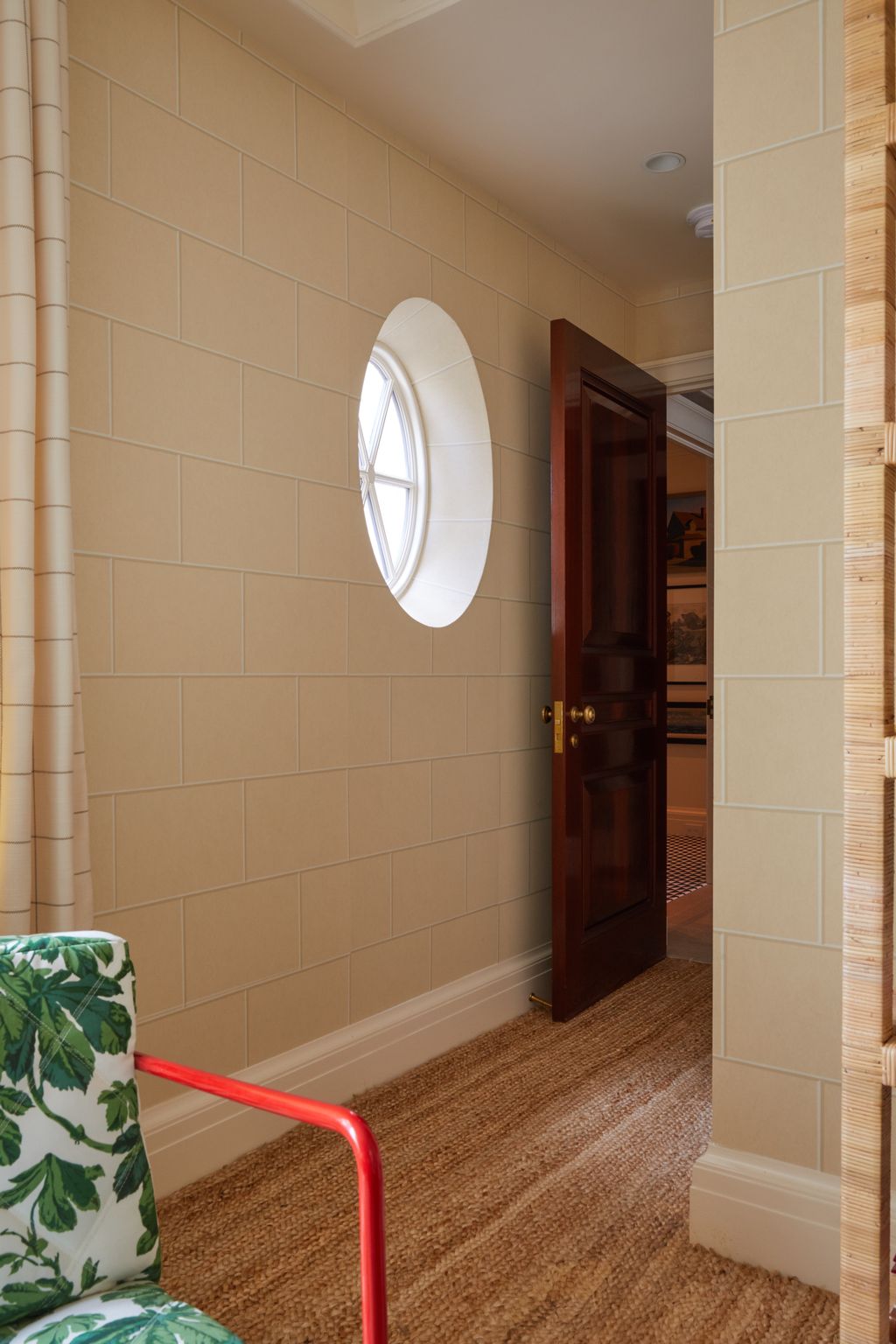 23/25
23/25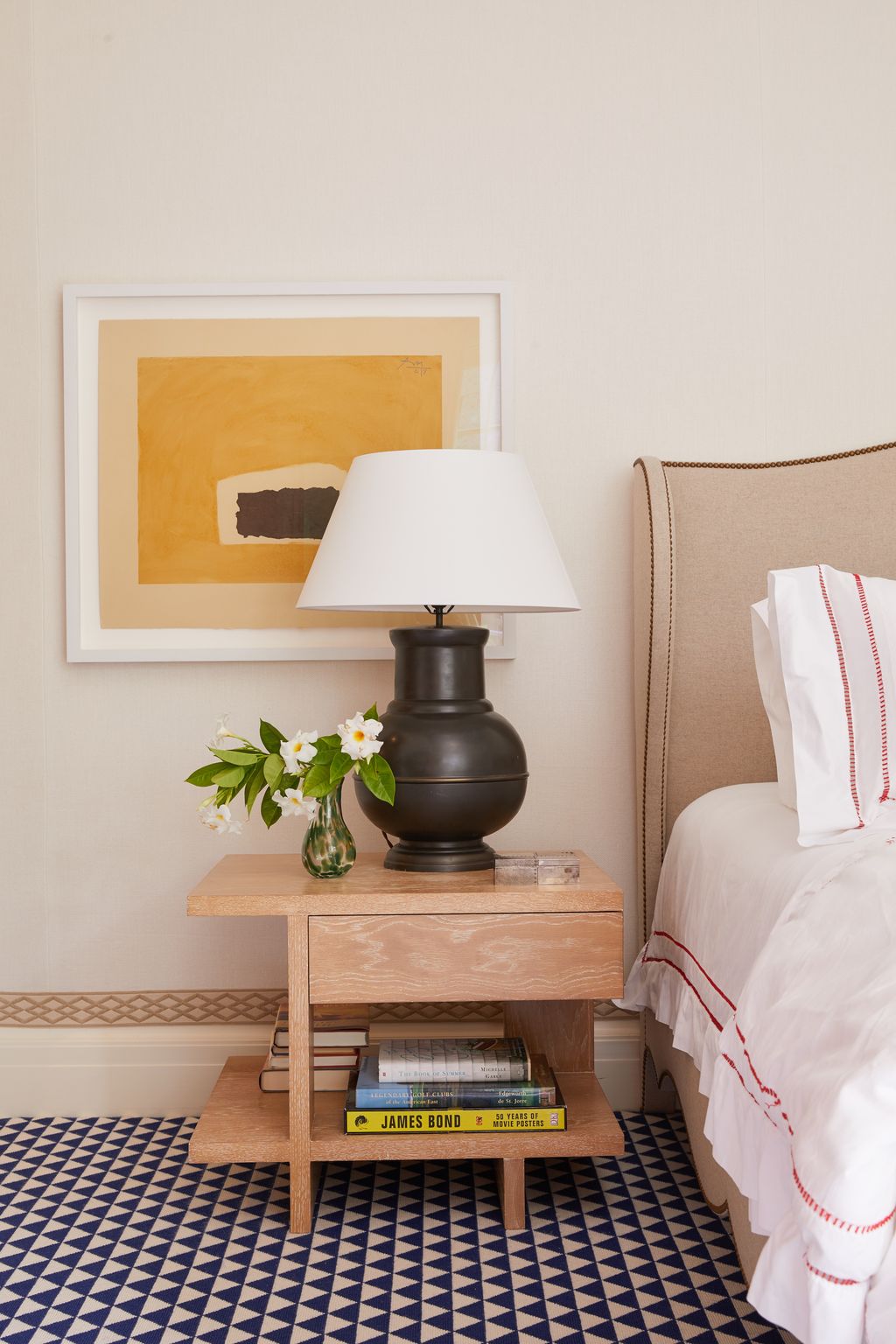 24/25
24/25


 Rishad Mistri25/25
Terraces wrap around the upper level of this apartment, which began as a small penthouse but has now absorbed the floor below.


