
As Charles Jencks' Cosmic House opens to the public, we look inside
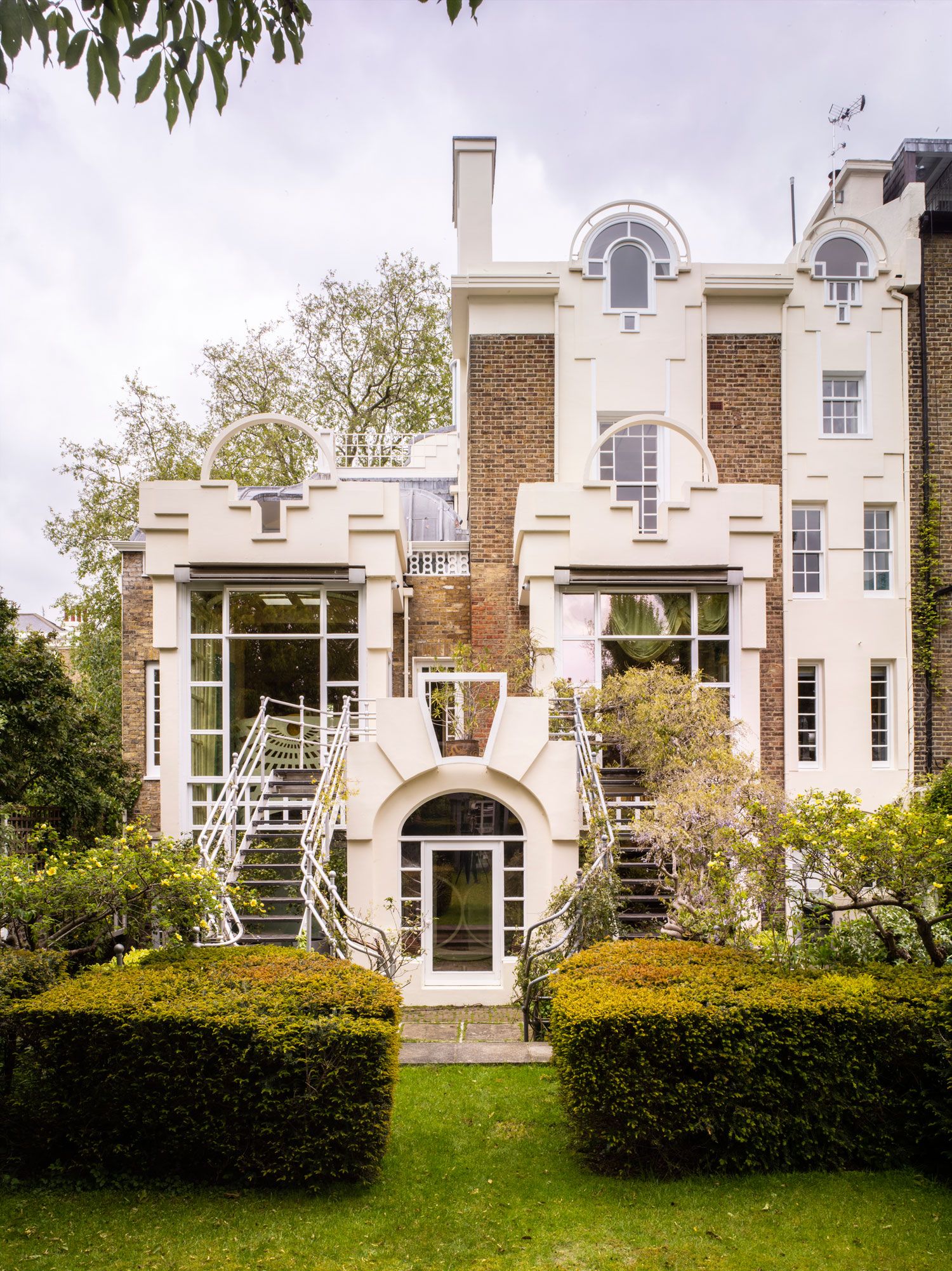
For years this was the family home of the architect and landscape artist Charles Jencks and his architect wife, Maggie. For Jencks, a leading proponent of Post Modernism, No. 19 became an opportunity to create a ‘cosmic house’ exploring the meaning of time, the seasons, the galaxies, the sun and the moon and the stars.
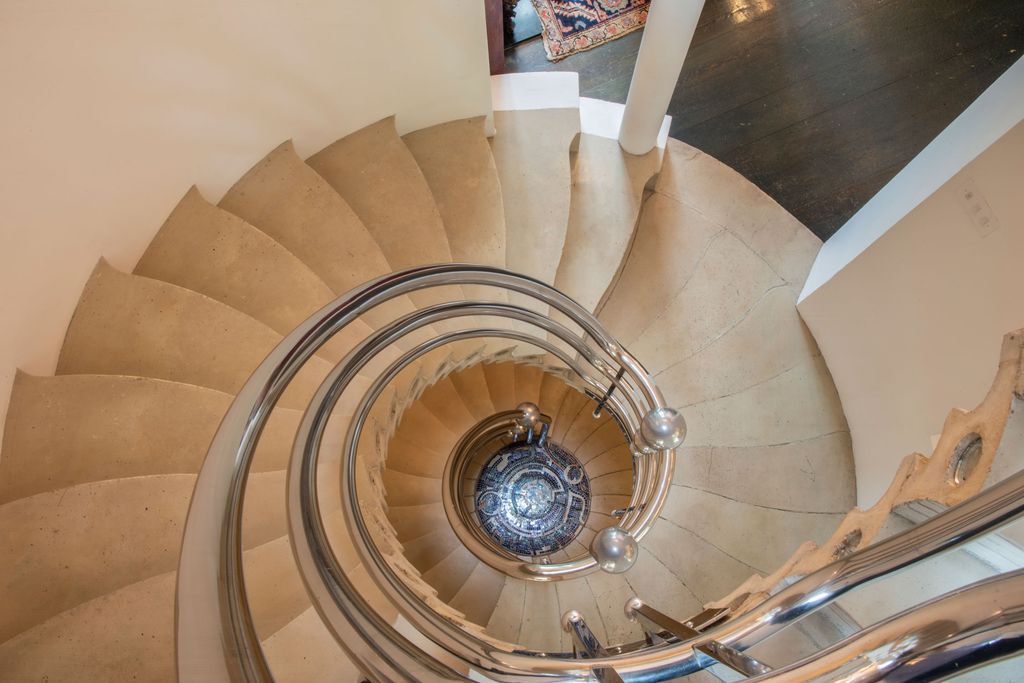
Every night Jencks’ children, Lily and John, would climb the ‘Solar Stairs’ to bed, with 52 treads for every week of the year, each with seven divisions for the days of the week, lit by the silvery light from the ‘Moonwell’ above.
Their mother, Maggie Keswick, a writer, author, gardener, and designer died in 1995 after founding Maggie’s, the cancer care centres which take her name. After their father Charles’s death in 2019, Lily and John decided that their extraordinary family home should become an archive of their parents’ lives and vision and shared with the public. This idiosyncratic new museum, ‘The Cosmic House’ opened on September 24, an exuberant explosion of ornament, artwork, colour and symbolism. Lily, a landscape artist herself, says she “aims to dance lightly” with her parents’ legacy.
Every space is named thematically. Ceilings billow into sails, or tents, elliptical mirrored domes or are painted with swirling, cloudy skies. Philosophers, poets, astronomers and architects from many centuries and countries are represented in busts or frescoes. Floors have enigmatic messages stencilled on them. Mirrored doors in the original entrance turn into “windows of the world used as a decorative order” writes Jencks, adding a prosaic piece of housekeeping,” most of them open to store things – umbrellas and light bulbs – but two work as a door into the cloak room and parody all of this pretension.”
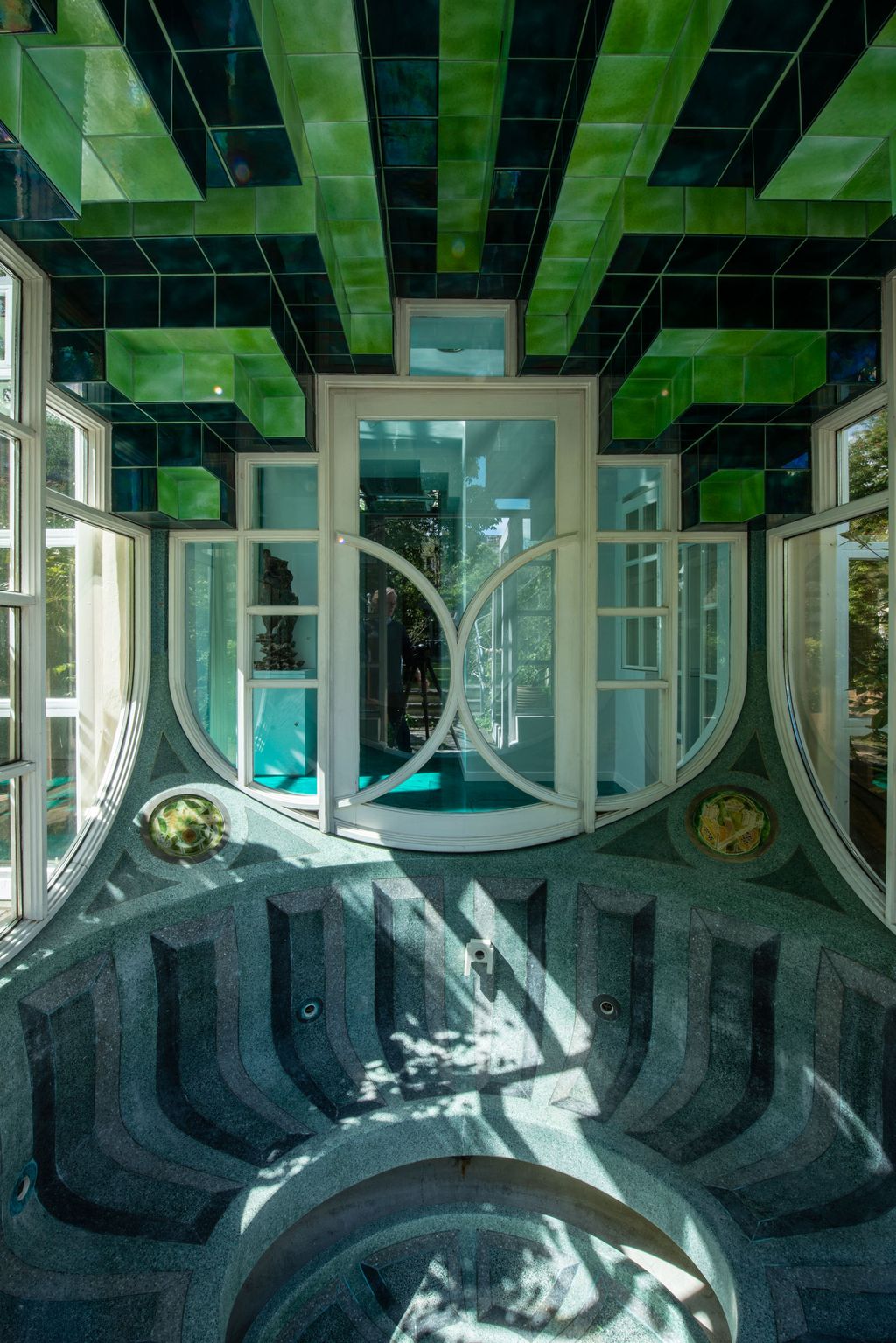
Classical Orders are overturned as architect Piers Gough upended the Renaissance dome of Borromini to sink the bowl for a jacuzzi that never worked but” Hey! At least I borrowed from Borromini” Gough jests. Wit and irony abound in the explanations recorded in a tour guide written by the FT’s architectural critic Edwin Heathcote whom Charles appointed as his Keeper of Meaning before the Cosmic House’s incarnation as a museum and cultural space.
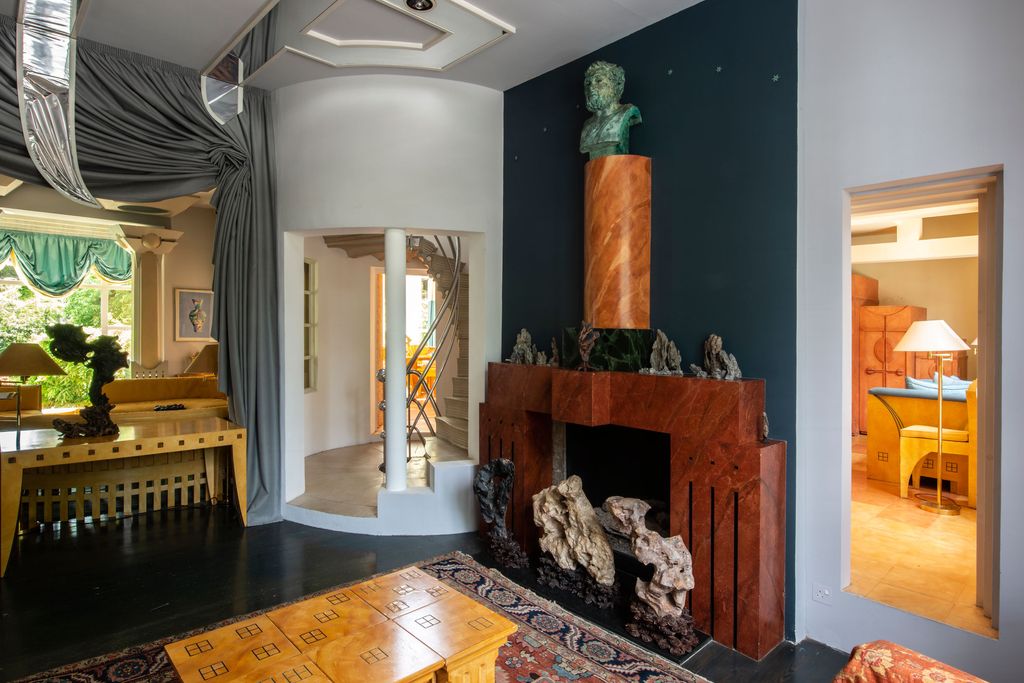
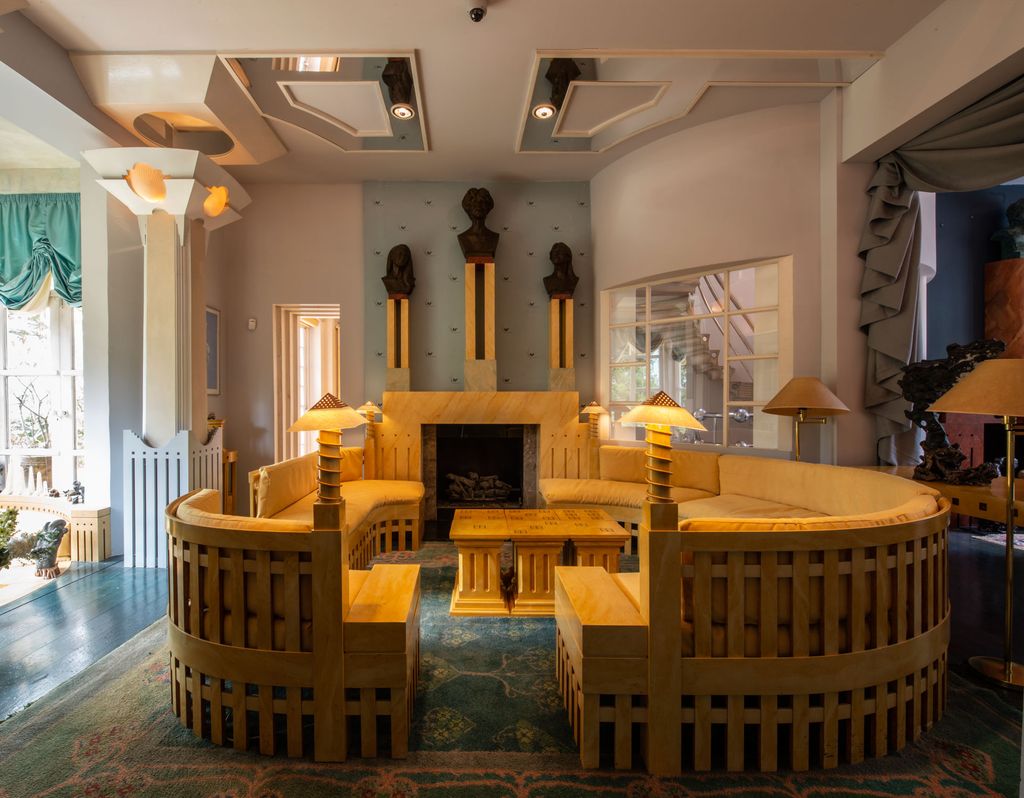
Colour changes from the milky and silvery whites of the top floor bedrooms to the sunny living area on the ground floor. The Spring Room and The Winter Room showcase fireplaces designed by American architect Michael Graves who addressed post modernism on a corporate scale by sticking Mickey Mouse ears on Disney’s HQ, Seating, chairs and tables in both rooms designed by Charles Jencks and made in MDF with golden satinwood shine so brightly they would make the Sun King blink.
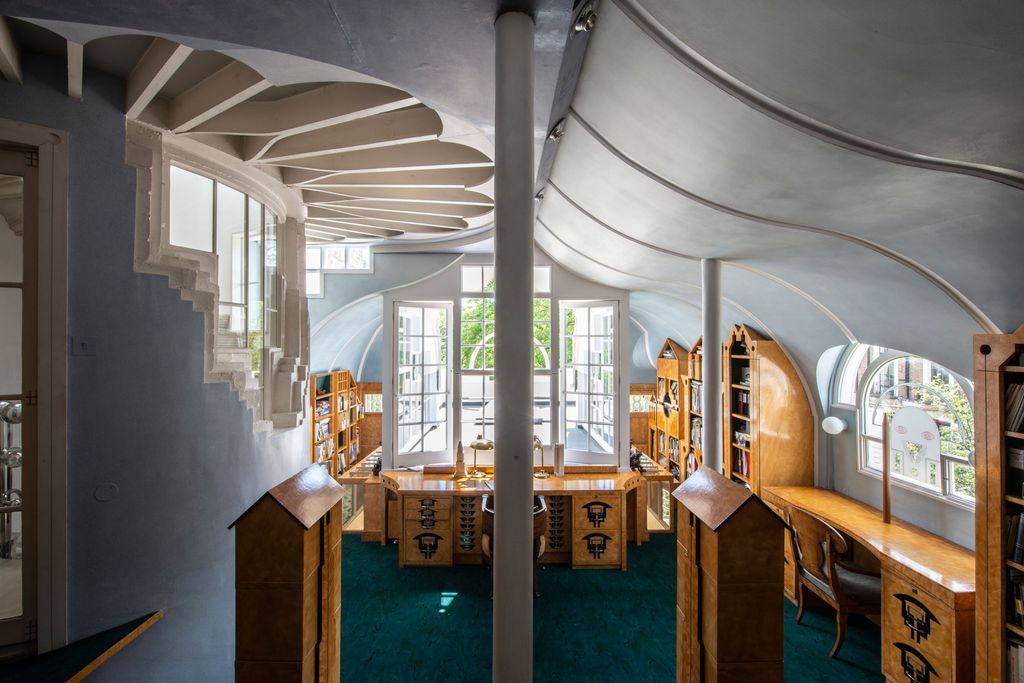
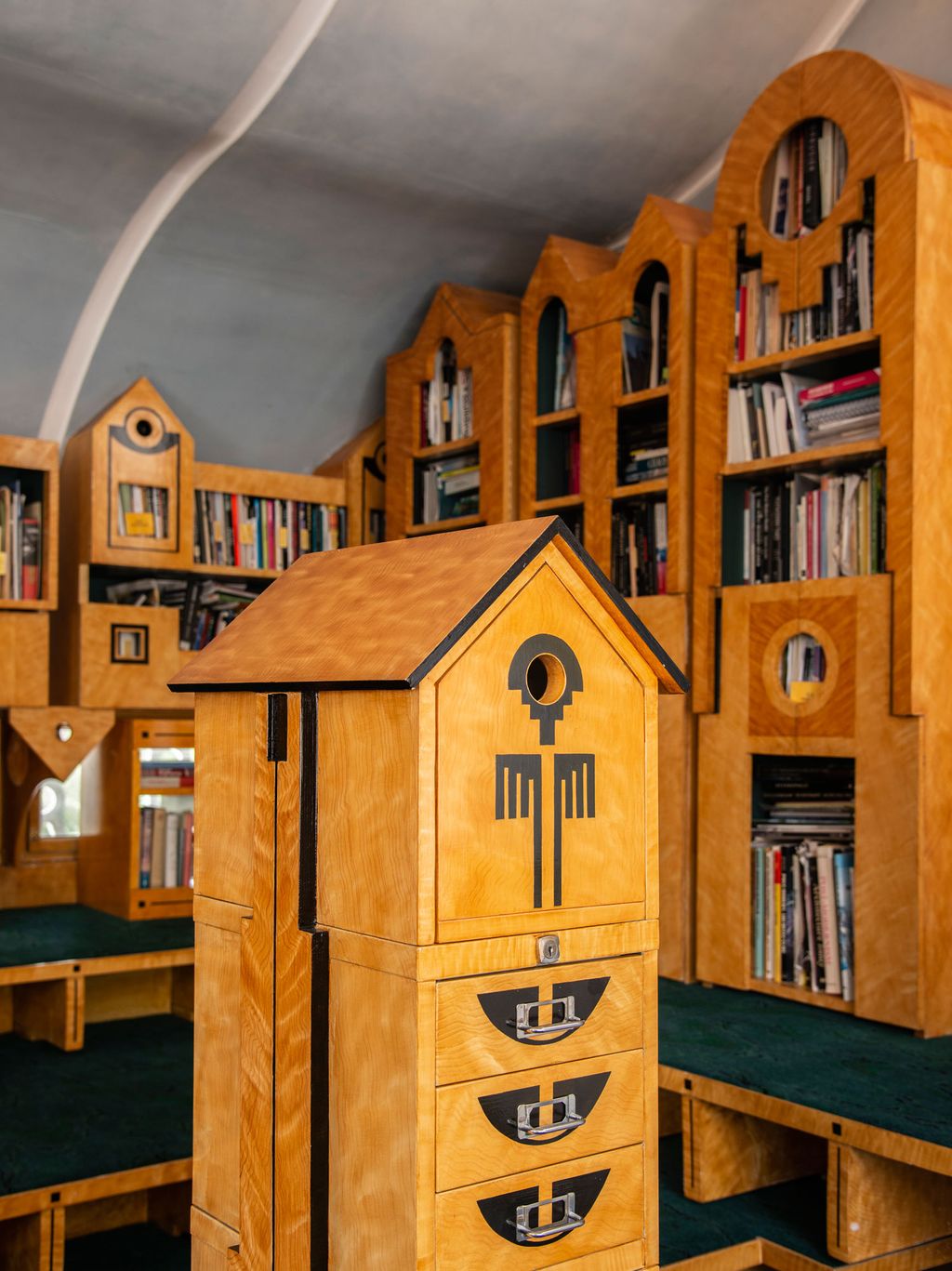
Bookshelves in the Architectural Library which the Jencks Foundation plans to put online for research introduce their contents with their individual designs. So Egyptian volumes are housed beneath conical pyramids, Roman in domes, Early Medieval in stepped gables and symmetrically pitched slabs of Late Modernism.
“The idea is to make usually neutral bookshelves tell a story.” Jencks explains. “After all, if a village of houses tells us something about its inhabitants why can’t individual bookshelves convey something about the content of their occupants?” Just as The Cosmic House tells us a great deal about the enthusiasms of its owner.
Domesticity never tames Charles Jencks’ insatiable curiosity. Even the kitchen called The Indian Summer because of architectural flourishes such as clunky columns, conical capitals, and mandalas painted on the floor and windows. Kitchen cupboards above the oven are enscripted ‘The Temple of Heat’ and ‘The Temple of Water’ above the sink. A kitsch collection of statues of Hindu gods, teapots, crockery is framed in a frieze of salad spoons. As Charles so aptly observed “If you can’t stand the kitsch, get out of the kitchen.”
Recognising the role his wife, Maggie Keswick Jencks played in their home, a drawing Charles Jencks made as the frontispiece for his book ‘Symbolic Architecture’ (1985) to explain the origins of The Cosmic House, depicts Maggie as the architect and himself as the client, holding a banner between them which reads “Iconographic Programme’. Now the curators and archivists of the Jencks Foundation plan an exhibition on Maggie Keswick Jencks.
The Cosmic House (thecosmichouse.org) is open from 12.30 – 5.30 Mon-Fri, no children under 12, £5 a ticket, no wheelchair access regrettably.
 Sue Barr1/11
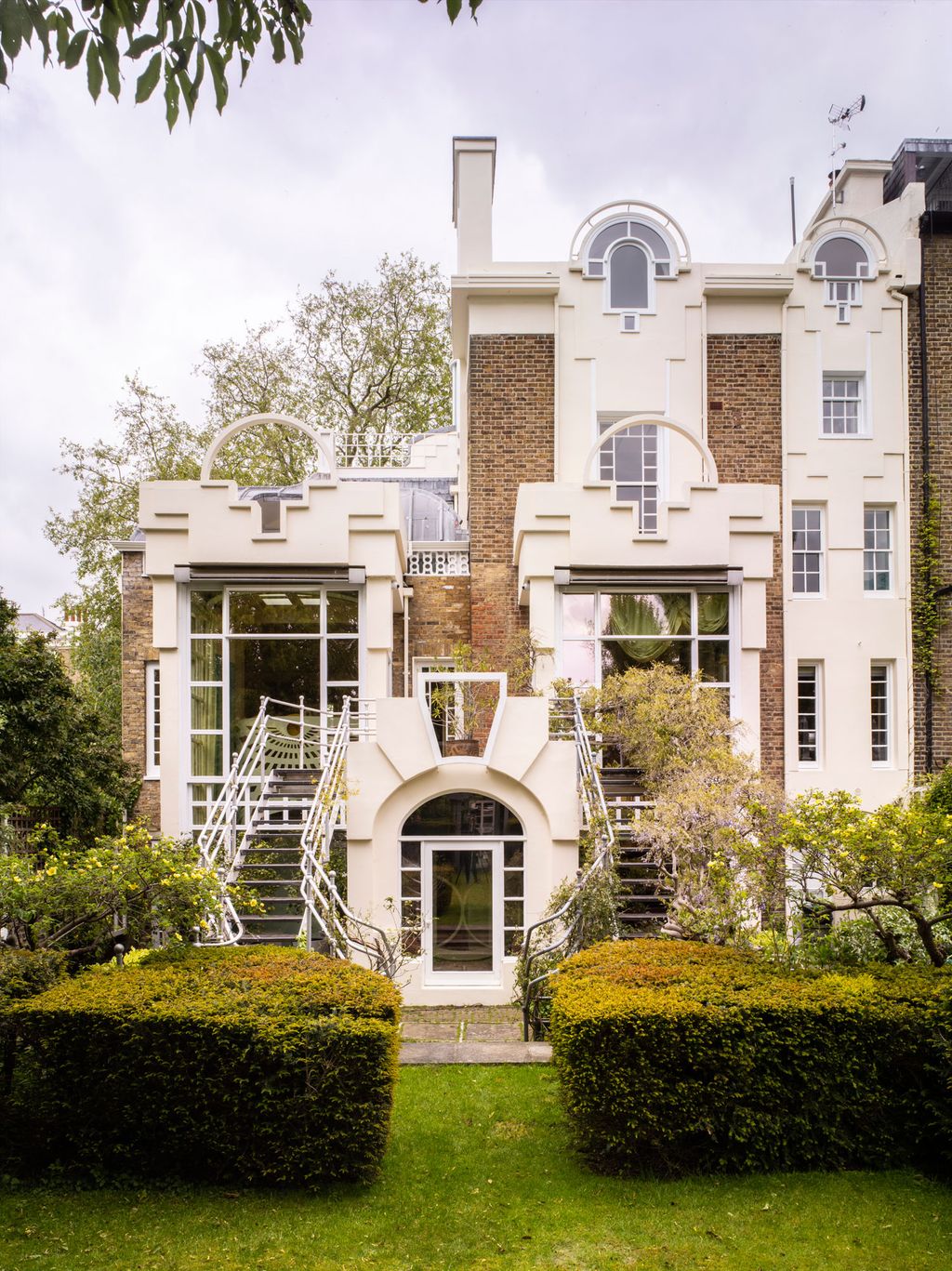
The Garden facade with a representation of the family of four through the repeated ‘Jencksiana’ motif around windows and terraces.
 Sue Barr2/11
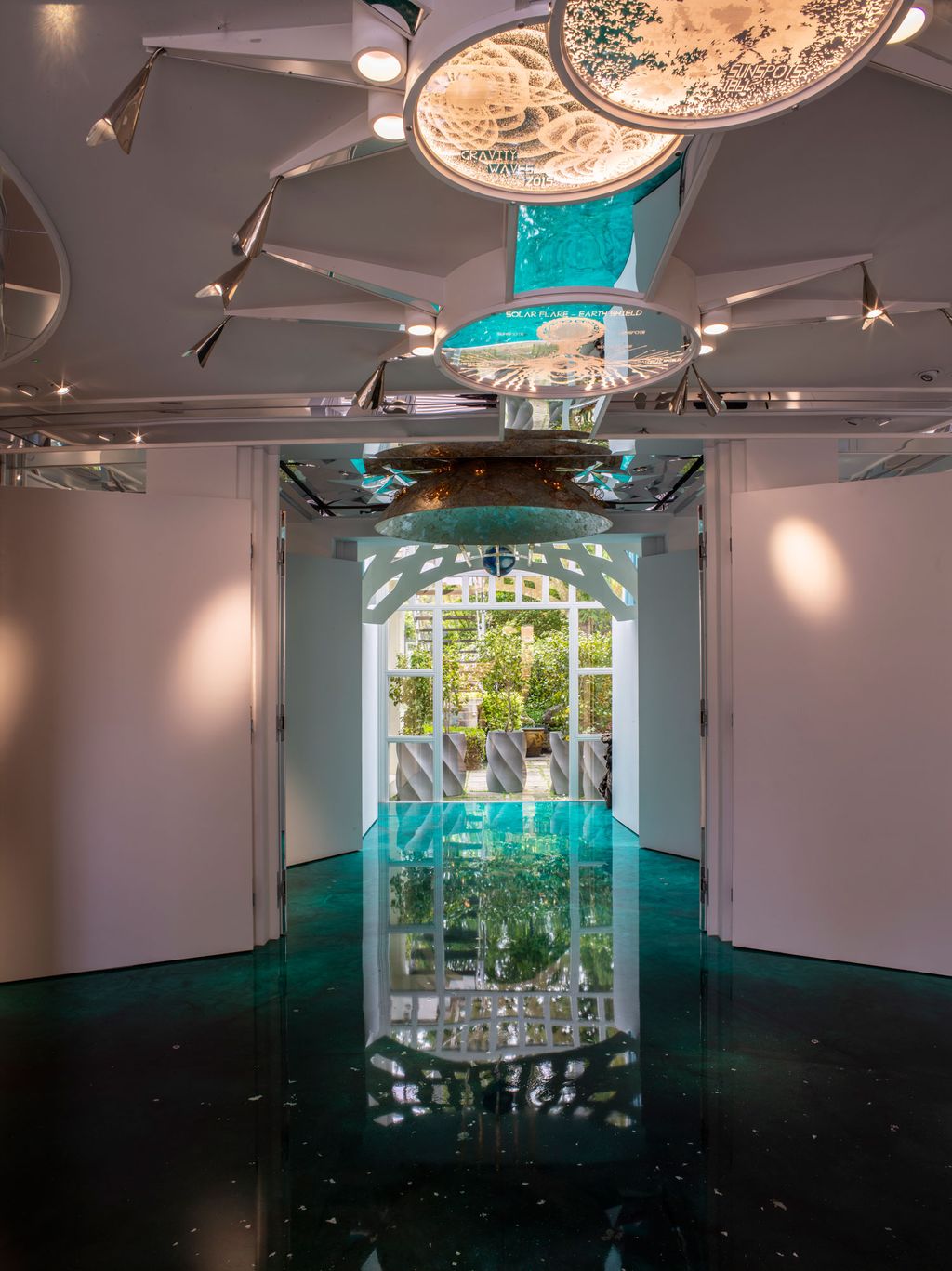
The new Exhibition Room with the evolution of scientific representations of the sun in the ceiling lights, looking out to the Time Garden, with a floor that resembles malachite, and sculpture by Charles and Lily Jencks above.
 Sue Barr3/11
The Dome of Water is a jacuzzi designed by Piers Gough, the design is based on an inverted dome by Borromini.
 Sue Barr4/11
The Solar Stair is a cantilevered concrete spiral in the centre of the building, with Eduardo Paolozzi’s Black Hole mosaic at the base.


 Sue Barr5/11
The Winter Room has a fireplace designed by Michael Graves with Celia Scott’s bust of Hephaestus looking over the room where Chinese Scholar’s Rocks dance as if they were the fire’s flames. The view shows the layering of space with glimpses into the Spring, Summer and Autumn rooms.
 Sue Barr6/11
The Spring Room has a fireplace designed by Michael Graves, crowned with female representations of the 3 months of spring by Penelope Jencks, note the springing light detail.
 Sue Barr7/11
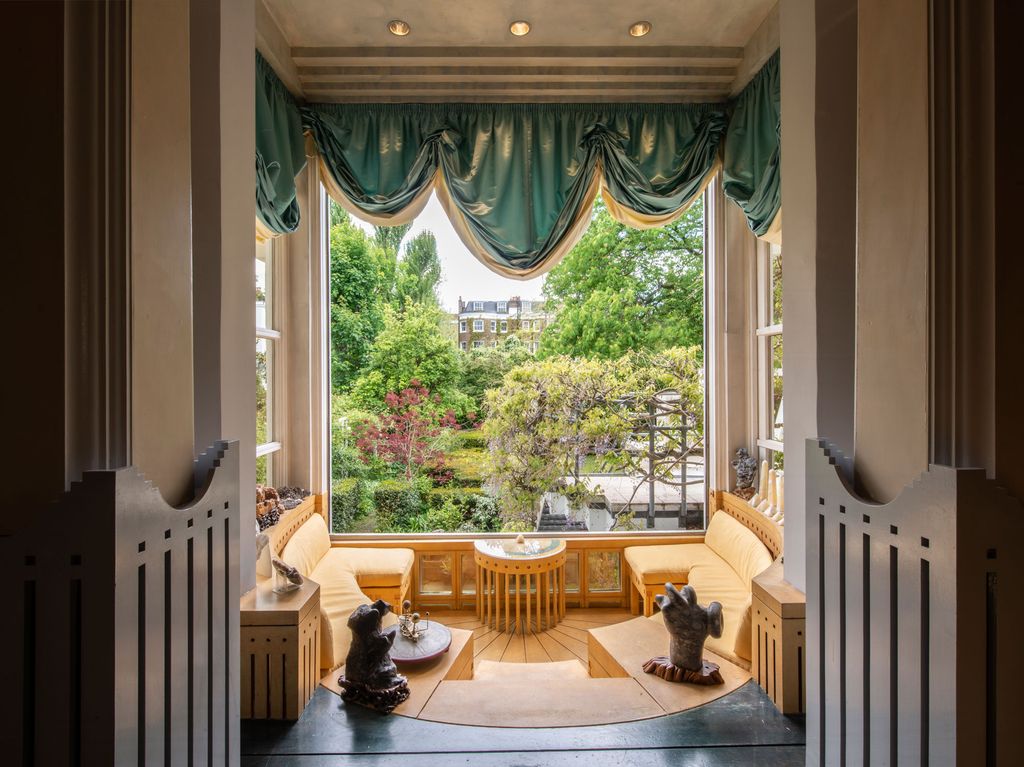
The Sundial Room faces south over the garden room with radial seating around a sundial.
 Sue Barr8/11
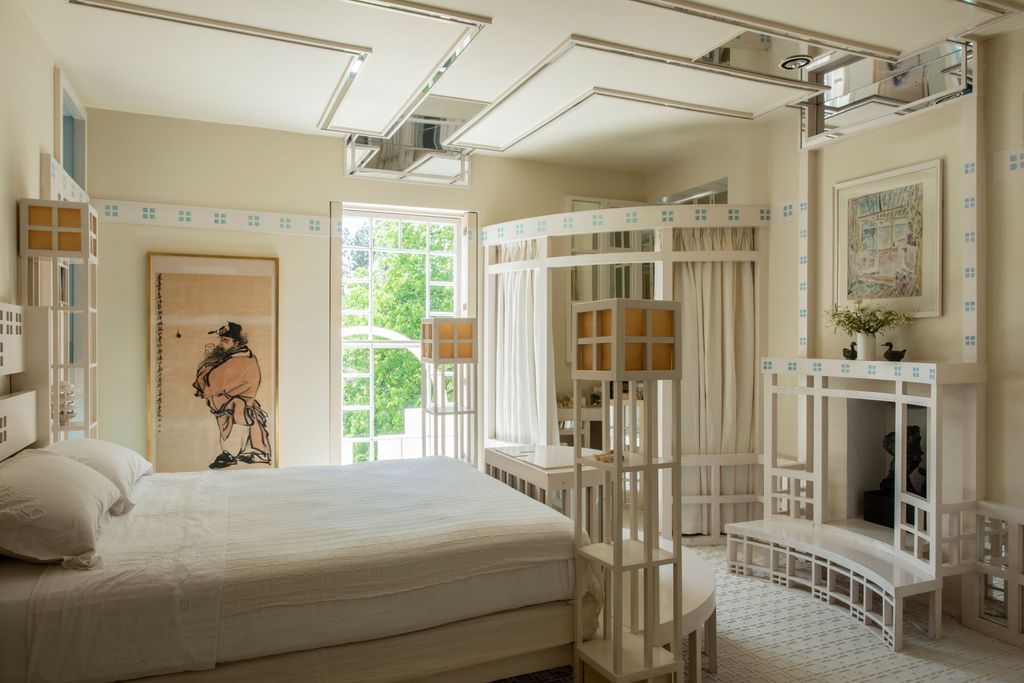
The Four Square Room was Charles and Maggie's bedroom, designed around
many iterations of the subdivided square motif which Charles considered the most elemental form of architecture.


 Sue Barr9/11
The Architectural Library is Charles’ study with a tent-like roof painted to be the sky; it is a ‘City of Books’ designed so that each bookshelf relates to the thematic style or individual architect the bookshelf contains.
 Sue Barr10/11
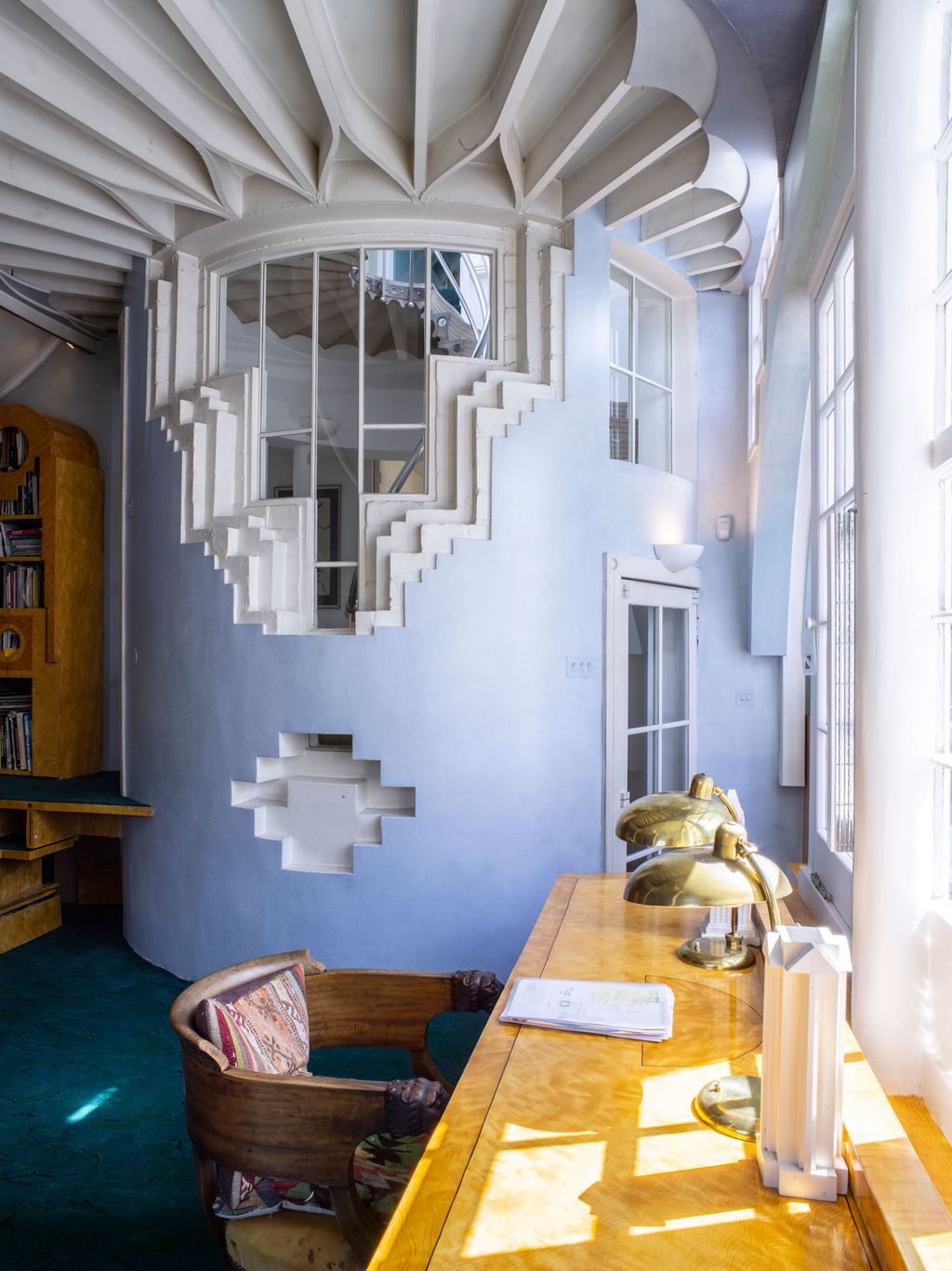
The Architectural Library is entered from the Solar Stair. Here you can see the radial structure of the library roof expressed as sun rays. Cut outs around the stair resemble a surprised face, while the layers of construction are visible in the window detail, a Post-Modern play on the Modernist desire of truth to materials.
 Sue Barr11/11
The Architectural Library with the slide-scraper in the foreground, an ad-hoc combination of off-the-shelf filing cabinets with painted MDF ornamentation.


