
The essential books you need to learn about decorating
In this digital age, there are those who query the need for books; surely we can find all the inspiration we need on Pinterest, Instagram – and right here on houseandgarden.co.uk? Well, not exactly. Yes, design is visual, but there is almost always an element of intellectual rigour behind the best of it, which is not easily transmuted via squares on a phone screen. It is more than just a good eye that lifts a room from bland to beguiling.
Additionally, there’s something satisfying about the physicality of books (and magazines), of being able to mark them up with post-it notes, and cross reference an image in one with something in another. We’ve put together a collection of our favourites. Some are classics, others contemporary; some are chosen for the practical tips they offer, others for the dreams they may inspire. All are tomes that we refer to regularly.
 1/19
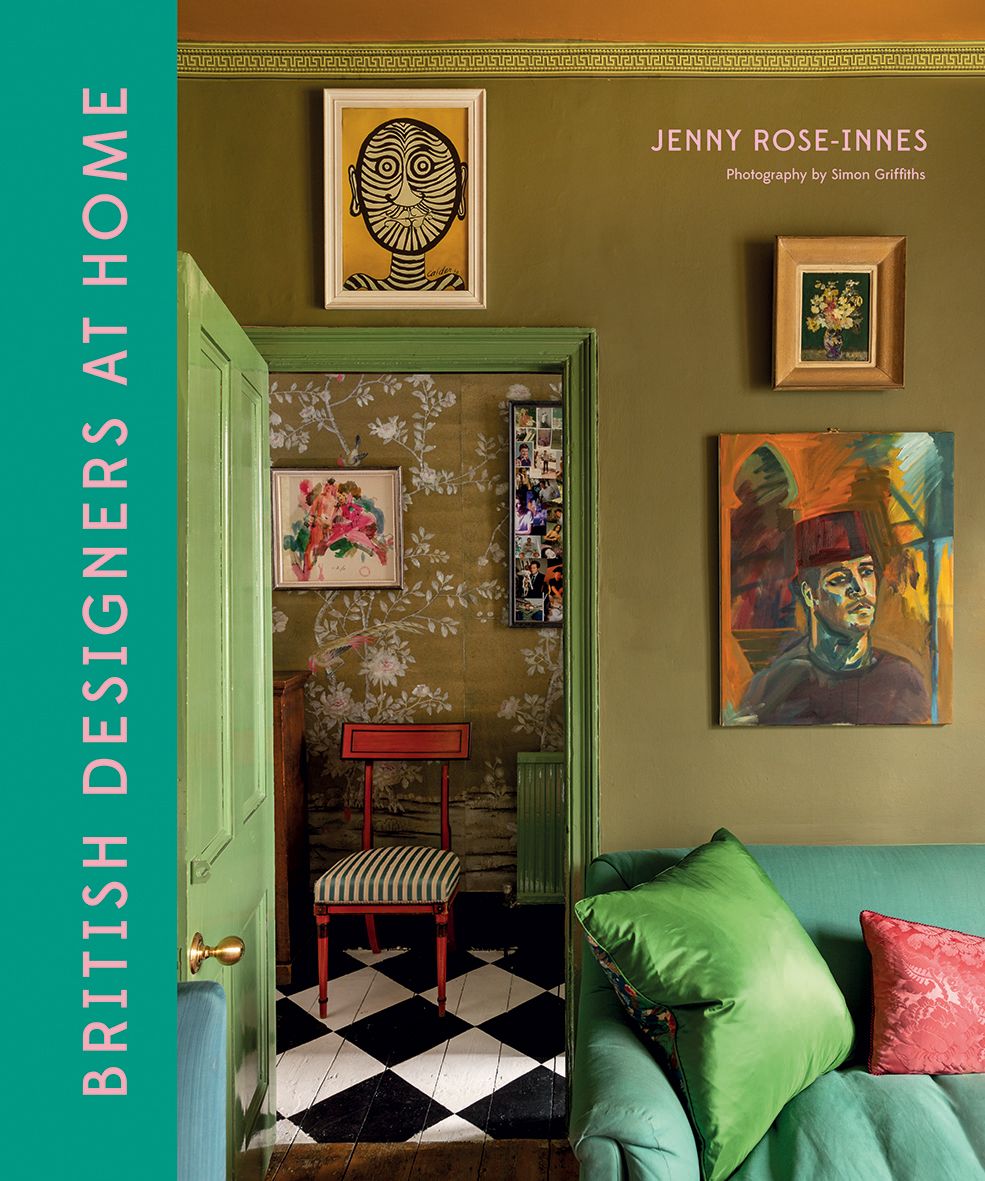
1/19British Designers At Home by Jenny Rose-Innes, 2020
Containing photographs of and texts on the private homes of several of the top British designers from the established greats – Robert Kime, Emma Burns, Alidad, Nina Campbell, Veere Grenney – to those closer to the starts of their careers - Beata Heuman, Octavia Dickinson, Sarah Vanrenen – this is the ideal place to begin increasing your knowledge of interior design. Not only is there a wealth of inspiration and a veritable education on every page, but nearly all of the designers featured have got their own books too, where you can acquaint yourself with more of their exceptional work and identify the details that make such a difference. We especially love Every Room Should Sing by Beata Heuman, and Design Secrets by Kit Kemp - which has got how-tos for creating your own shell mirror, patchwork lampshade and even a Kit Kemp headboard.
 2/19
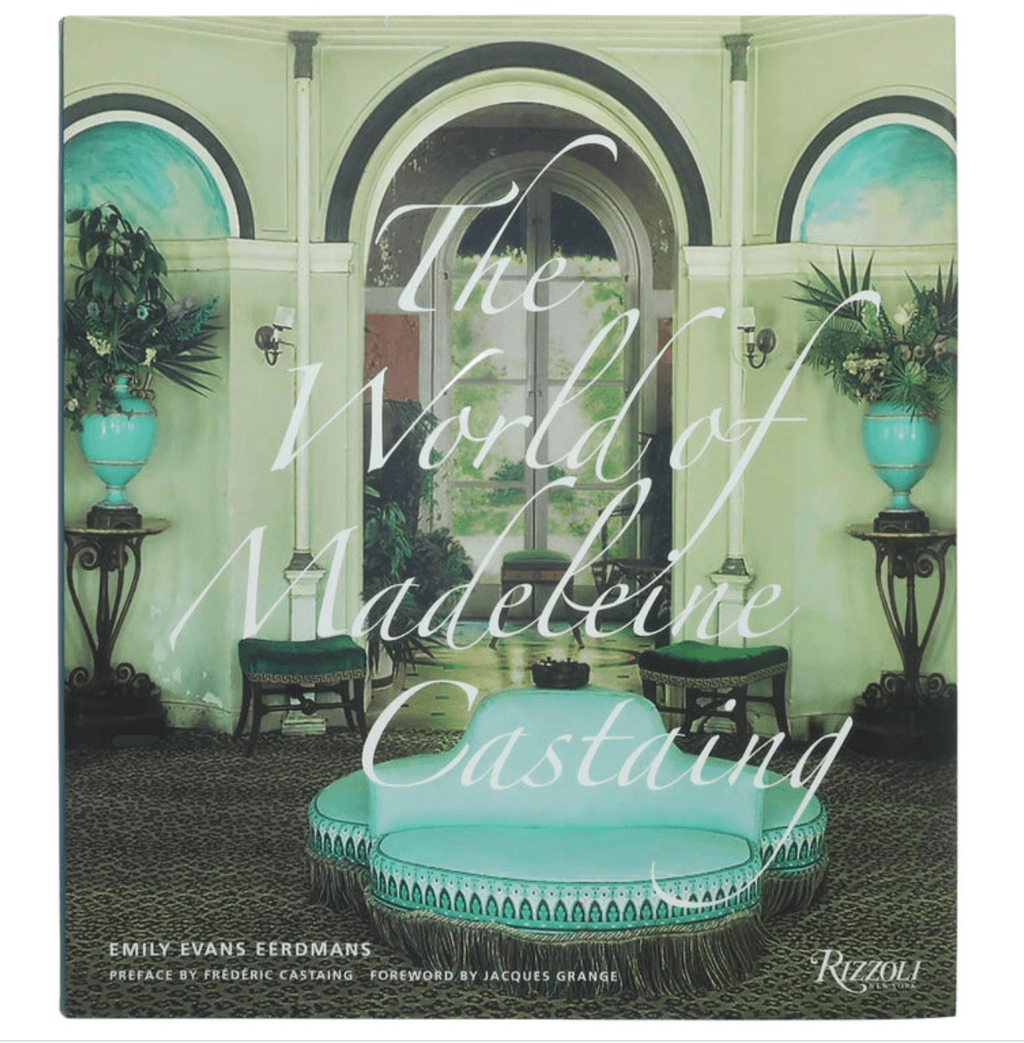
2/19The World of Madeleine Castaing by Emily Evans Eerdmans, 2010
There aren’t many decorators who have a look named after them; Le Style Castaing refers to a blend of neo-Classicism and Proustian romanticism, accompanied by a certain shade of blue and often - though not always - leopard-print carpets (excellent, incidentally, at not showing the dirt if you’re constantly coming in and out of the garden.) This jewel of a coffee table volume explores Castaing’s life, from her upbringing to her legendary relationships with artists including Chaim Soutine and Jean Cocteau (she and Cocteau decorated a villa together – it’s due to re-open in 2022 and we cannot wait) to, of course, her work. The foreword is by the great French interior designer Jacques Grange – who once worked for her.
 3/19
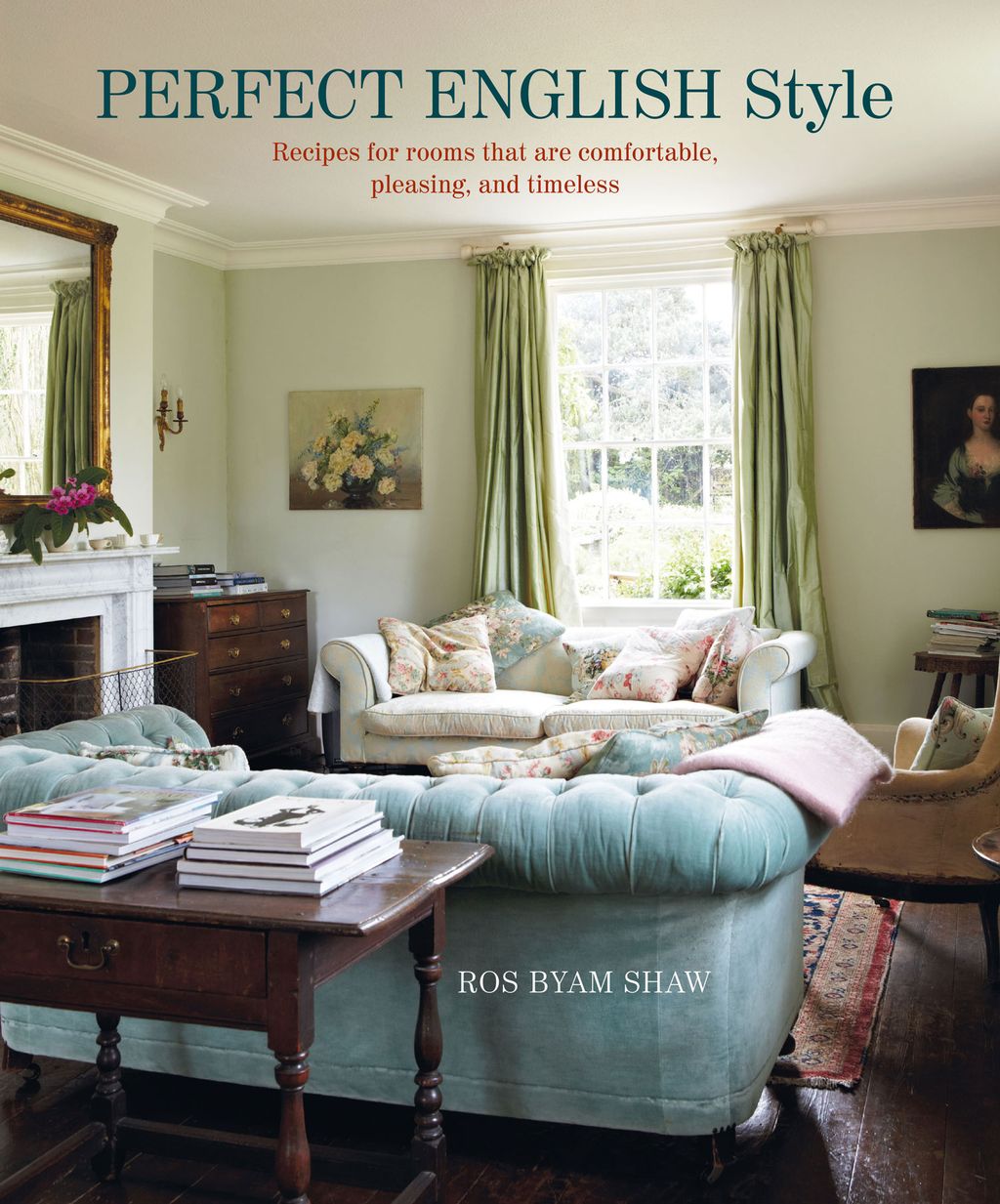
3/19Perfect English Style by Ros Byam Shaw, 2021
Following several other wonderful books by the same author – Perfect English, Perfect English Cottage, Perfect English Farmhouse and Perfect English Townhouse – this is a broader look at the basic ingredients of English style – a style which is practiced throughout the world, and has realised extraordinary longevity, thanks to its comfort, timelessness, achievability and allure. Chapters are arranged by room or theme – ‘Antiques’, ‘Fabrics’ - and there are photographs of houses that include Ros’s own, Ben Pentreath and Charlie McCormick’s London flat and several projects that Emma Burns had a hand in. At the back is a helpful sourcebook (if you’re reading this in 2030, it’s probably worth cross referencing it with The List by House & Garden to make sure you have the most up-to-date contact details.)
 4/19
4/19Restoring Junk by Suzanne Beedell, 1970
This little handbook is particularly useful for anybody on a budget, or anybody who enjoys rootling through attics, markets, and the more affordable variety of antiques shop. Contained within the covers are recipes for cleaning products that won’t destroy objects of age, and helpful tips on re-beautifying everything from arms and armour to veneered furniture, via taxidermy, papier mâché and paintings. For instance, if the marquetry on a chest is lifting, you should “try pressing it down with a warmed caul and cramping it well.” With bamboo furniture that is splintering, “a wooden rod or dowel inserted through the middle of the bamboo will strengthen it so that you can tidy up the break and stick the splinters back down again.”


 5/19
5/19Josef Frank - Against Design, by Christoph Thun-Hohenstein, Hermann Czech and Sebastian Hackenschmidt, 2015
Josef Frank is most known now for his fabric designs. Instantly recognisable, they’re inspired by such disparate influences as the Italian Renaissance, folklore, neo-Classicism, Biedermeier and Viennese Modernism. But he also designed houses and furniture and was of the belief that comfort was more important than fashion, that homes were not machines for living (he was a contemporary of Le Corbusier) nor works of art, and that people should be allowed to move their belongings into whichever configuration suited them best - regardless of what the designer decreed. It’s a very contemporary view, and he was very much ahead of his time – as this exhibition catalogue emphasises. It’s significant because it demonstrates the importance of doing what feels right to you, which is why we’re including it (it’s jolly hard to find an affordable copy.)
 6/19
6/19The Decoration of Houses by Edith Wharton and Ogden Codman, 1897
Before Edith Wharton was a Pulitzer-prize winning author, she was a Manhattan socialite with an in interest in architecture and interiors and a house in Newport that she deemed ‘incurably ugly.’ Codman is the architect she employed to work with, and this book is an ode to nobility, grace, and timelessness – and a scathing attack on the ‘vulgar’. It’s not perfect; the tone is dated, illustrations are black and white, and the section on decorating your ballroom might not be as pertinent now as it was then, but Wharton’s ideas about proportion, simplicity and comfort are still the bedrock of any scheme, which is why this book has been described as the equivalent of the King James version of the Bible. Wharton sold that house in Newport and bought The Mount in the Berkshires; Edith Wharton At Home by Richard Guy Wilson is an excellent companion volume, full of colour photographs that demonstrate all the principles set out in The Decoration of Houses.
 7/19
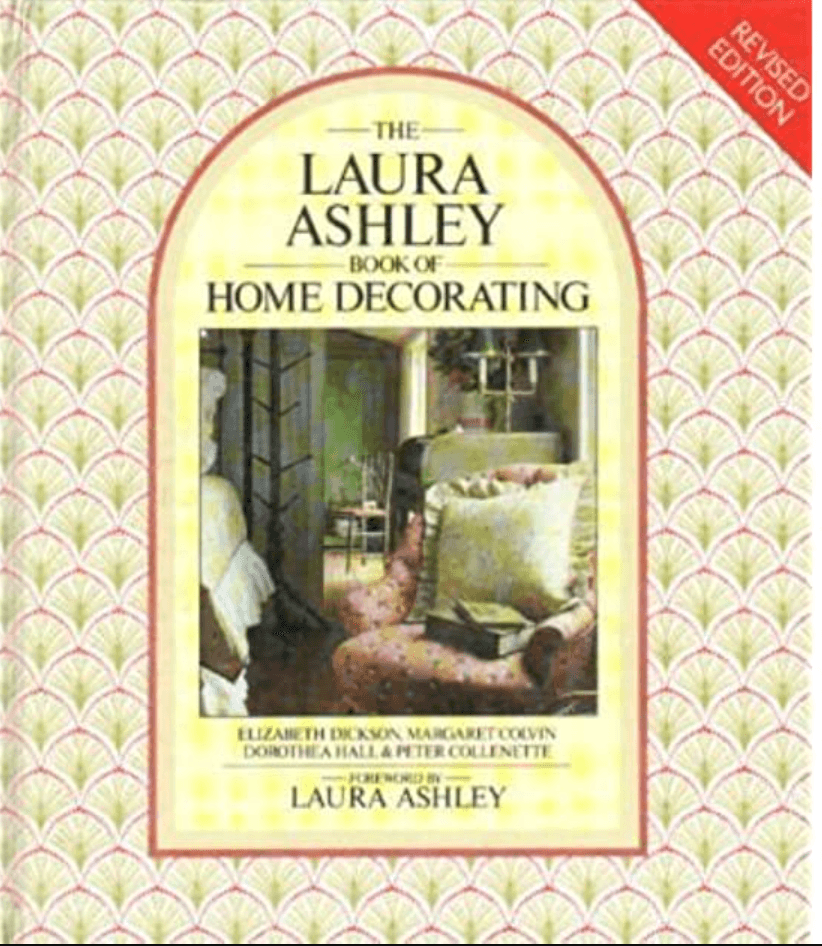
7/19The Laura Ashley Book of Home Decorating by Elizabeth Dickson, Margaret Colvin, Dorothea Hall and Peter Collenette, 1982
If you’ve got a hankering for that deliciously 80s approach of matching everything – valance, dressing table curtain and pelmet - then this book is full of images and inspiration. However it’s also got extremely helpful how to guides on every sort of home furnishing, from painting to covering walls in fabric and tenting a ceiling, interlining curtains to creating a scalloped heading, and even making a canopy for your bed, whether a full fourposter or a draped coronet. If you’ve got a sewing machine and the necessary skills, this volume makes mass production of loose covers and bolster pillows a real possibility.
 8/19
8/19Ceramics For the Home by Annabel Freyberg, 1999
Ceramics can be a minefield – so pretty, and yet the terms are so confusing. This is an outstanding guide not only to the history of each type, but how to display your collection so that it become part of your interior, rather than looking like you’ve installed a museum cabinet in a corner. There are wonderful photographs of numerous houses, including Victor Hugo’s home in St. Peter Port, Guernsey, where the porcelain passage has plates even on the ceiling.


 9/19
9/19The Grammar of Ornament, by Owen Jones, 1856
“Construction should be decorated. Decoration should never be purposely constructed,” wrote Owen Jones at the beginning of this illustrated encyclopaedia-like record of decorative pattern. Arranged in chapters from ‘Ornament of Savage Tribes’ (which might be re-titled, were it to be written now) through Egyptian and Indian to Celtic and Italian, Jones wanted to show that the foundation for good, modern design was in studying the lessons of history. As a resource it inspires in more ways than one and is as useful to someone restoring an Elizabethan manor as someone looking for ideas prior to painting a chest of drawers.
 10/19
10/19The Guide to Period Styles for Interiors
by Judith Gura, published 2005
The next best thing to a three-month internship in the furniture department at the V&A, this critical book is packed with clear images and a concise history of every significant Western European and American style from the 17th century to the end of the 20th century. The second edition – which is the one you’ll receive if you order it now - comes with helpful sidebars on individual designers, from Chippendale to Tiffany. There’s a lot to be said for recognising whether a chair is Louis XIV, George III or Art Nouveau; at the very least it helps when you’re shopping by search engine.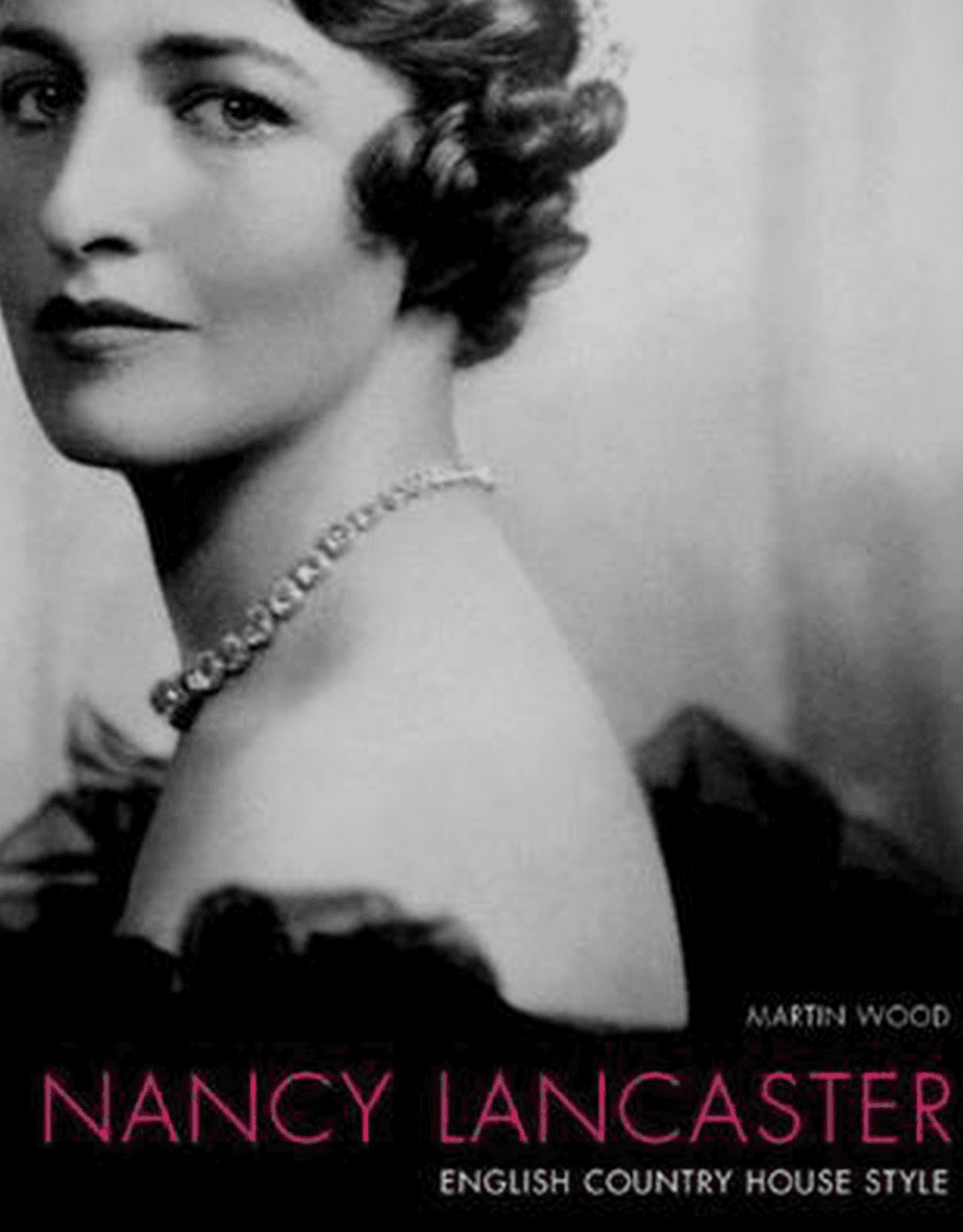 11/19
11/19Nancy Lancaster: English Country House Style by Martin Wood, 2005
Or indeed – any book on Nancy Lancaster, the American who brought to fruition what is now universally recognised as and referred to as ‘English Country House Style’. This book is full of photographs, illustrations and meticulous analysis of some of Nancy’s most famous rooms, from the Gothic bedroom at Haseley Court to the legendary yellow room at Avery Row. It’s well worth buying Wood’s John Fowler; Prince of Decorators too; he was Nancy’s partner at Sibyl Colefax & John Fowler, the decorating business that was founded by Sibyl Colefax, bought by Nancy in 1944, and is still creating some of the most exceptional interiors in the world. It’s impossible to underestimate Nancy and John’s influence – and there’s no better place to study their work than via their own projects.
 12/19
12/19David Hicks; A Life of Design by Ashley Hicks, 2009
After John Fowler refused to hire a young David Hicks, Hicks made a conscious decision to do something different to Fowler. He still wanted to use antiques and historic patterns, but he infused them with clean lines and a strong, bold modernist vision that rejected any hint of chintz or prettiness, turning English decorating on its head and creating an alternative English style that has also been extraordinarily far reaching in its impact (if you’re a fan of Jonathan Adler, for instance . . .) David Hicks designed and decorated for Vidal Sassoon (famously wrapping all his books in paper – he told Francis Bacon it was because Sassoon’s taste in literature was so abysmal) as well as the young Prince Charles and Princess Anne, and created a nightclub on the QE2. This book, by his son, is biographical in its approach, and is packed with photographs of his visually show-stopping projects.


 13/19
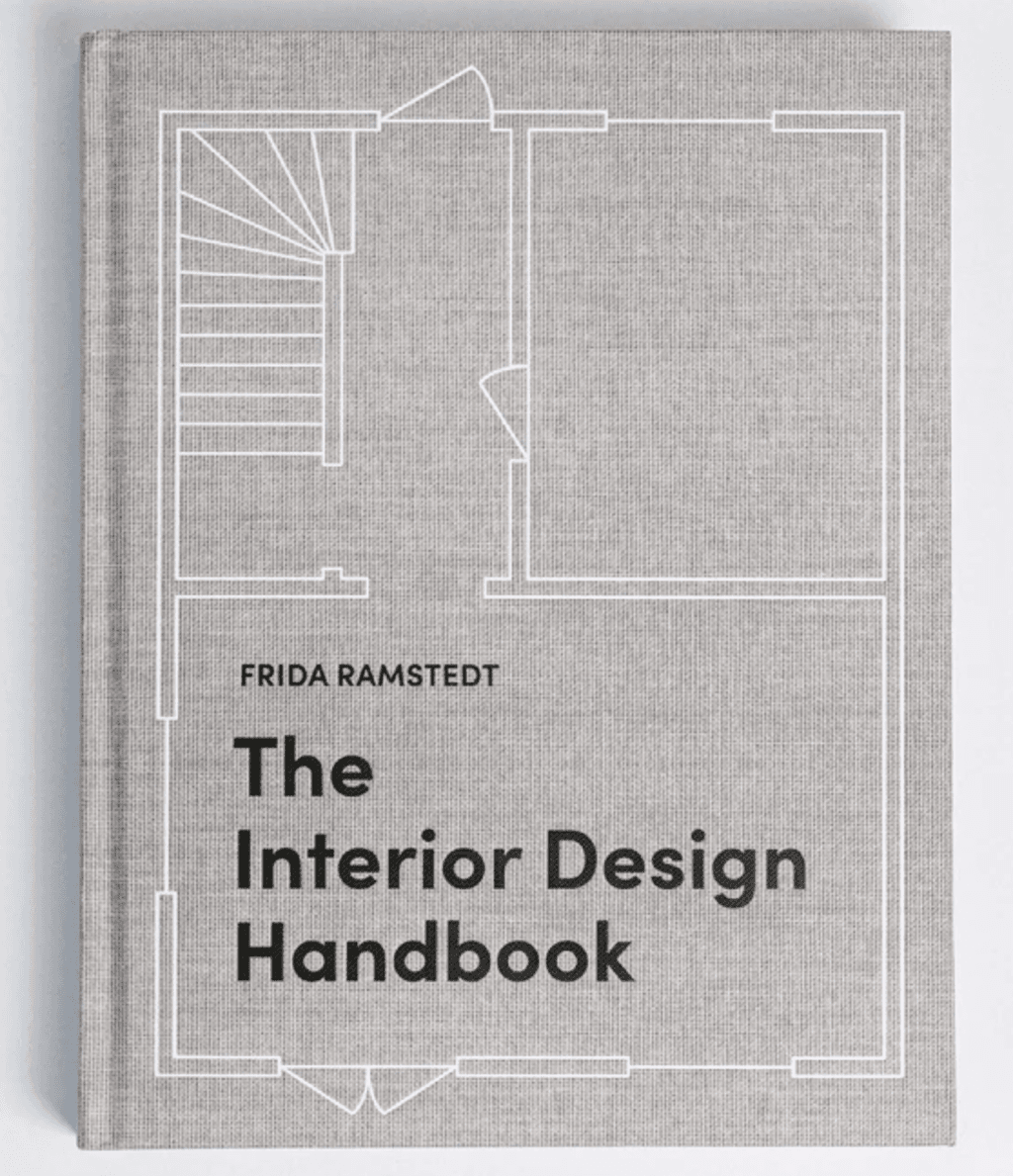
13/19The Interior Design Handbook by Frida Ramstedt, 2020
This very useful book is not quite the design equivalent of painting by numbers, but it’s about as close as you are going to get. Aimed at everybody, regardless of individual taste, it explains and simplifies the fundamental principles of decorating, offering up rules of thumb (what height to hang pictures) tricks of the trade (which way to lay floorboards to make your room feel wider) and suggesting a huge variety of minor adjustments that can have major impact.
 14/19
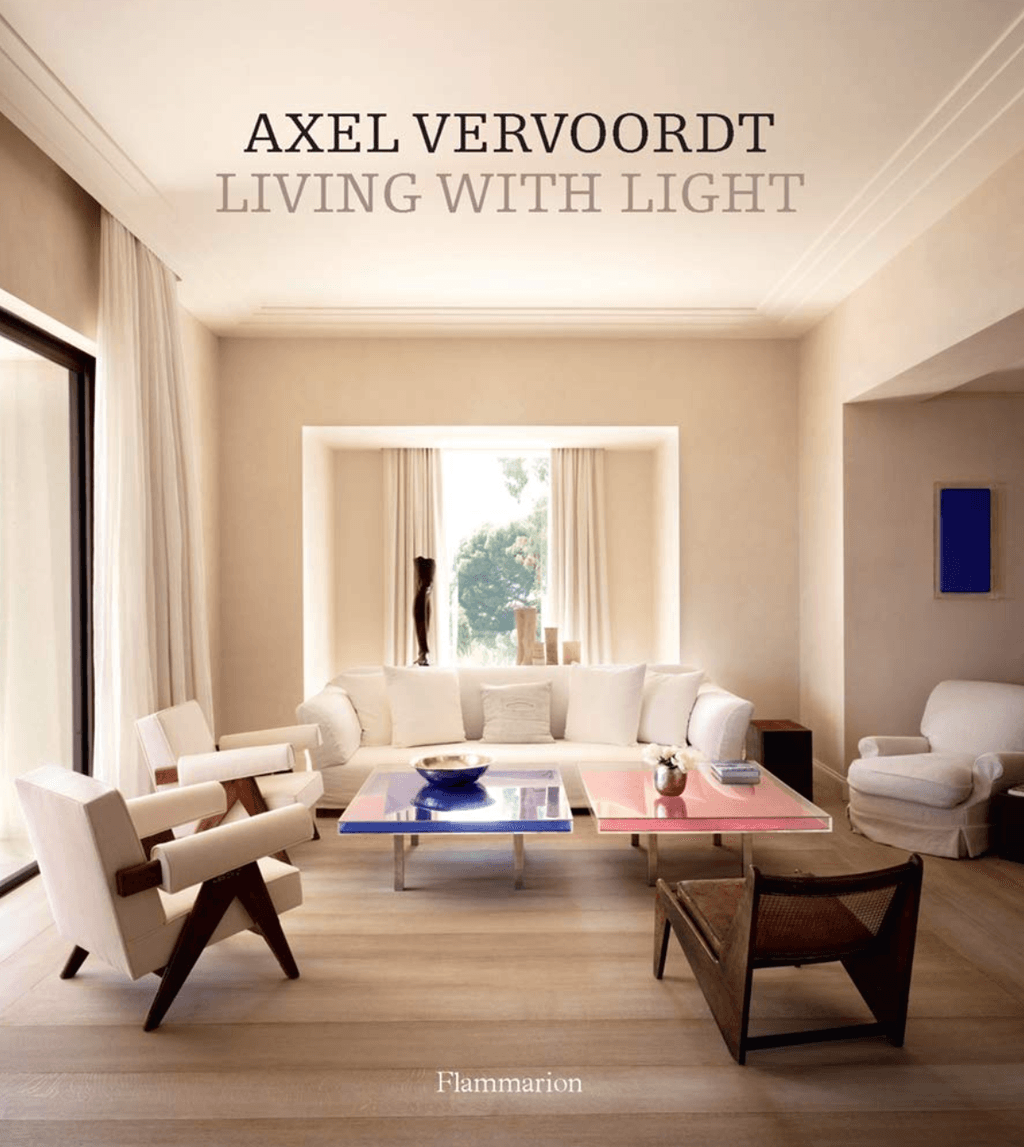
14/19Axel Vervoodt: Living With Light by Michael Gardner, 2013
This is for anybody who wants a more minimalist approach. Vervoodt is one of the modern masters-of-design, fusing Japanese philosophies of harmony with European sensibilities, and focusing on a house’s bones, beauty, the materials of nature, and light. This book features twenty projects - urban, rural, beside the sea, from New York to London via Provence and Portugal - and there’s a lot learn, not least that sometimes less really is more. If this sophisticated aesthetic of purity and restraint appeals, we also recommend pre-ordering Rose Uniacke At Home, due out in October.
 15/19
15/19Vogue Living; Houses, Gardens, People, 2011
With a foreword by Calvin Klein and an introduction by Hamish Bowles, this American publication from House & Garden’s sister magazine is everything it suggests on the cover. Here is Sofia Coppola’s house in LA, Christian Louboutin’s house on the Nile – as well as the Marquess of Cholmondeley’s Houghton, and Madonna and Guy Ritchie’s house in Ashcombe, which once belonged to Cecil Beaton (Ritchie still lives there.) Some of the excesses might not be for all, and much won’t be in reach for many, but amid the dreams are usable ideas a plenty, from Janet de Botton’s method of displaying porcelain in her breakfast room in Provence, to the hand-crocheted bed hangings that surrounded the late Marella Agnelli’s bed in Marrakech.
 16/19
16/19Renzo Mongiardino; Renaissance Master of Style by Laure Verchère, 2013
This is one for those who aspire to opulence and majesty. Mongiardino sought to resurrect the grandeur of antiquity – rejecting both minimalism and modernism (he trained as an architect; Gio Ponti was a contemporary) in favour of Byzantium and Renaissance Europe, Ancient Greece and Rome. His clients ran the gamut from rockstars to royalty, from Gianni Versace to Rudolf Nureyev, William Randolph Hearst to Elsa Peretti; additionally he designed sets for La Scala and worked with the film director Franco Zeffirelli, for which he was twice nominated for an Oscar (that heavenly 1968 Romeo and Juliet – that’s Mongiardino.) A designer who could ‘transform an empty, banal room into a fairy-tale château’, this book focuses on his influences, showing how he used them; the frieze in a palace in Jaipur that was translated into a scheme for Lee Radziwell’s drawing room in London, the 18th century Sicilian veranda that informed the wall treatment for Valentino’s dining room in Rome. The foreword is by Roberto Peregalli and Laura Sartori Rimini of Studio Peregalli, who “knew him intimately and benefited from his teaching.” Their designs share that cinematic quality of bridging the present and the past without lapsing into academic reproduction. If this style is for you, consider adding Grand Tour: The Worldly Projects of Studio Peregalli to your wish list, as well as Alidad: The Timeless Home by Sarah Stewart-Smith.


 17/19
17/19Parish Hadley: 60 years of American Design by Sister Parish, Albert Hadley and Christopher Petkanas, 1995
Sister Parish (who, despite the name, was not a nun) essentially invented American Country Style, the trans-Atlantic take on the English Country House Style, undercutting Aubusson rugs with patchwork quilts, painted floors, and slip-covers made from ticking, creating gloriously inviting rooms ‘comfortable for forty, comfortable for four.’ Parish and her business partner Albert Hadley worked for host of notable names - Astors and de la Rentas and Gettys – and, most famously, the Kennedys; the chapter on the Kennedy White House is fascinating, while the whole is supported by wonderful photographs.
 18/19
18/19Designing History; The Extraordinary Art & Style of the Obama White House by Michael S. Smith, published in 2020
Michael S. Smith (https://www.houseandgarden.co.uk/article/michael-s-smith-decorating-advice) delivered the most exciting White House redecoration since the Kennedy era – but this book is more than that. It places the Obama White House within the context of the last two centuries of White House history and describes the importance of choosing art and other items that represent not just the inhabitants, but the Office of the President of the United States of the America; Michelle Obama’s goal “was to make the White House feel more open, welcoming, and accessible to all Americans.” While most readers are unlikely to find themselves in the position of decorating an official residence, it is a fascinating insight into doing so, and a lesson in working with what you already have, which can be applied to every project, however big or small.
 19/19
19/19The Secret Lives of Colour by Kassia St Clair, published in 2016
While not strictly a decorating book, wouldn’t you like to know more about whichever shade you decide to paint your bedroom, kitchen or drawing room? Here is the history of Indian yellow (apparently once made from the urine of cows fed only on mango), of beige (the cult 1920s decorator Elsie de Wolfe’s favourite colour, but now almost universally loathed for its conventionality), of scarlet (associated with martyrdom, and the colour Mary Queen of Scots wore underneath her more sombre dress when she was executed) and much more.


Comments
Back to Top


