


Interior design is more than room layout, furniture and fabric: the best designers show us how to live well. It’s why there’s so much worth in examining their own houses. Often, there are clever ideas to be found, but what we’re also looking for are elements that transcend variance in style – one such instance being the quantum of designers who swear allegiance to the Officina Profuma-Farmaceutica di Santa Maria Novella. ‘Without doubt, they do the very best scents for the house,’ states Joanna Plant. ‘I have a weakness for the bath salts,’ says Nina Campbell. ‘I’ve never worn anything but Santa Maria Novella,’ reveals Francis Sultana. And ‘if I could only have one Christmas present for ever more, I’d choose Santa Maria Novella pot pourri,’ says Lucy Hammond Giles, a director at Sibyl Colefax & John Fowler, who credits her managing director Emma Burns with having introduced her to it. Emma, in turn, explains that she found out about it from her friend Liz Smith, who was fashion editor of The Times in the early 1990s – the chronicling of discovery being part of the products’ word-of-mouth wondrousness.

There’s more in the way of highly desirous wares (read on), but first, the fascinating story of the apothecary behind the label. Most associate the name Santa Maria Novella with a basilica and monastic complex in Florence – and they would be right. In 1221 the land it stands on, and a church, Santa Maria Inter Vineas (Holy Mary Among the Vines), was granted to a group of Dominican friars, an order that prioritises intellectual study and community. They immediately began cultivating a botanical garden to make ointments, balms, and medicines – both for their own use, and for those who came to their infirmary (there was no hospital in the city then.) In 1334, the friars successfully healed Dardano Acciaioli, who came from one of the most powerful families in Florence and, in gratitude, funded a chapel devoted to San Niccolò, adjoined to the new cloisters that were being built on the site along with a larger church - Santa Maria Novella.

For the Dominicans also believed that art and architecture could, through their beauty, serve as a medium to honour God, and lead people to the divine. The construction of the new church coincided with the flourishing of Florence as one of the richest cities in Europe, and enthusiastic patronage of devotional art. While the friars themselves commissioned the crucifix by Giotto, and reliquaries for the sacristy from their fellow Dominican, Fra Angelico, other artworks including Masaccio’s Holy Trinity (famously one of the first monumental Renaissance paintings to use perspective), Leon Battista Alberti’s façade, a Botticelli altarpiece, and frescoes by Filippino Lippi and Domenico Ghirlandaio were paid for by the Ruccellais, the Strozzis, and the Tornabounis – who were related to the Medicis.


Those families also patronised the apothecary, which was now being run out of a room next to the Chapel di San Niccolò. The plague had been a recurrent problem in Florence since 1348, and the friars created Acqua di Rose - a sweet-smelling mild disinfectant, which proved extremely popular. Leonardo da Vinci stayed at the monastery in 1504 and 1505 and, as a present, left behind a design for a distillation bottle. And Catherine de Medici, on becoming engaged to Henry, Duke of Orleans in 1533 – he was to become King of France – and deciding she couldn’t move to the French court without a personal perfumer, chose Renato Bianco who had been raised and trained at Santa Maria Novella (and, rumour has it, was also adept at making poisons). Before she went, Catherine commissioned a scent to give to her husband, which was to capture the elegance of Florence. Acqua della Regina was the world’s first modern perfume, and Santa Maria Novella’s fame began spread across the upper echelons of European society.

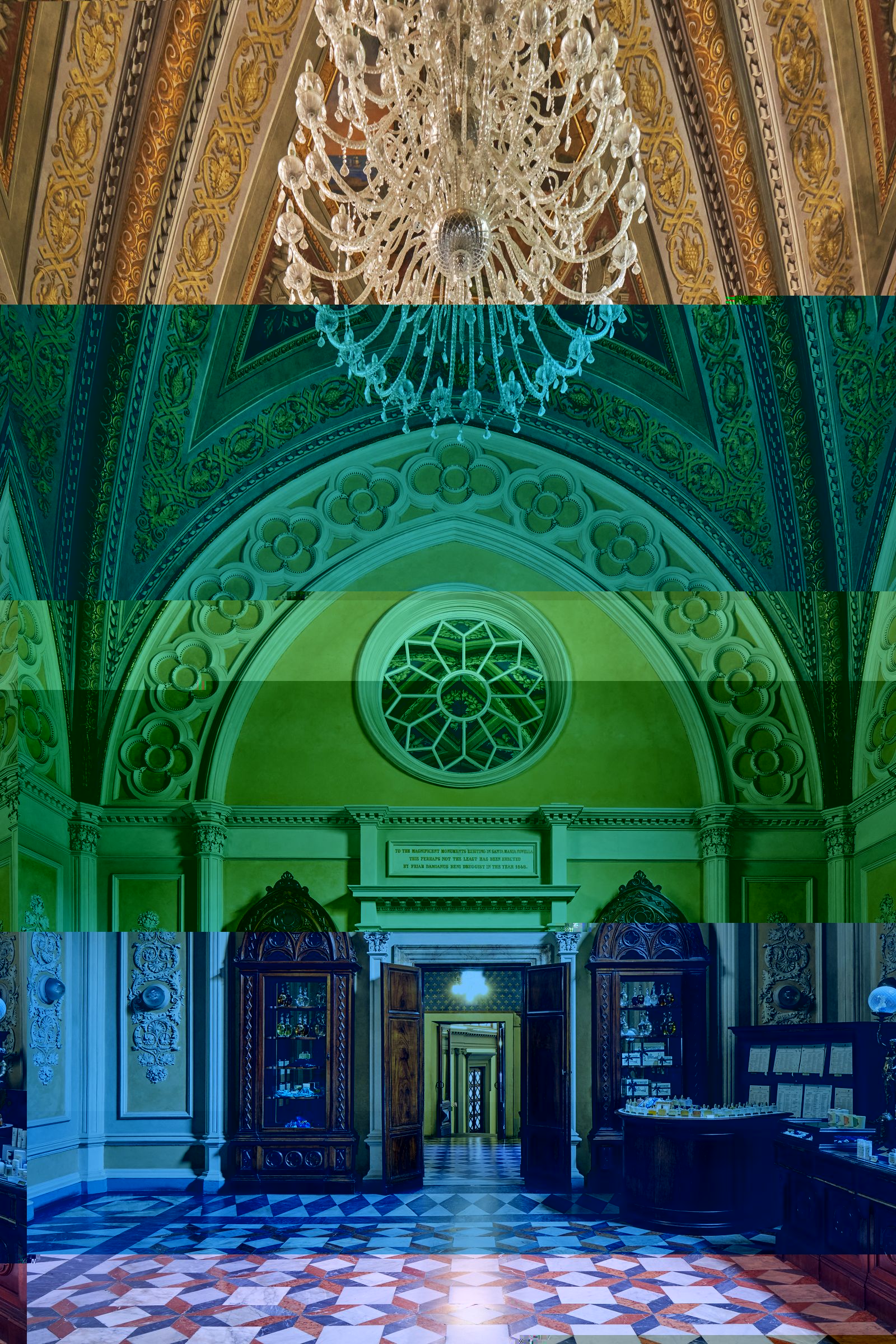
It was in 1542 that the apothecary opened to the public, via its door on Via della Scala. The sacristy of the chapel of San Niccolò, ever adorned with its 14th century frescos, became the storeroom, and in 1612, the apothecary was given the equivalent of a royal seal by the Grand Duke of Tuscany. The friars continued to experiment and develop new recipes, and demand grew. In 1847 the chapel was transformed, with 14th century-style furniture, and new paintings by Paolino Sarti on the Gothic vaulted ceiling that depict the four continents, into a Grand Sales Hall.
Amazingly, the shop is still in that exquisite chapel now. The apothecary was confiscated by the Italian state during the Risorgomento of the mid-19th century, but the nephew of one of the friars succeeded in purchasing the business from the government. Run by various descendants of the same family, it survived two world wars – saved, partly, by the art and its beauty; the Allies were given specific instructions not to bomb the historical centre of Florence. And it recovered from the devastating 1966 flood, after which a perfume was designed in honour of the ‘Mud Angels’, the thousands of volunteers who descended on Florence from across the world to save the damaged art.

And while Emma Burns and Francis Sultana once had to find ways of importing Santa Maria Novella from Florence, or make special trips, recent expansion has led to the opening of boutiques in London, Paris, New York and LA (among other major cities). Since 2021, the apothecary has been wholly owned by Italmobiliare. Award-winning new scents have been added to the 70-strong line-up of perfumes and eau-de-colognes, inspired by the grounds and greenhouses of various Medici villas – one is based on a jasmine given to Cosimo de Medici in the 17th century by the King of Portugal. For developments and refinements are in line with the brand’s heritage - and the friars’ careful notes. With that, Aqua di Rose is still in production, in these plague-free days as an excellent make up remover and toner. So is the perfume developed for Catherine de Medici, Acqua della Regina, with top notes of Italian citrus fruits and bitter orange, layered over neroli, rosemary, cloves, lavender and musk.
.png)

And that pot pourri raved about earlier has its roots in the 17th century; ‘it’s seductive scent is second to none,’ says Emma Burns, mentioning that one of her friends even keeps a sachet in his car - while Joanna Plant describes it as ‘complex and not immediately identifiable, reminiscent of an autumnal walk in Tuscan woodland,’ and Lucy Hammond Giles salutes ‘the depths of dead leaves, and the dark within it that balances the light’, which are buds and blossoms. Melograno, the cologne that Francis Sultana has been wearing since he was 19, in informed by the pomegranate, and is a distinctive floral oriental scent with warm, woody undertones. It also lends itself to hand-made wax tablets that can be secreted in drawers to odour our clothes, a terracotta version of the fruit that is ‘ideal for airing cupboards,’ says Joanna, dog shampoo favoured by Bridie Hall – ‘it makes Max the best-smelling poodle in London,’ she says - and bath salts that, when employed, ‘fill the whole house with clouds of heavenly scented steam,’ Joanna continues. There’s more, and to experience the products is to understand the friars’ belief in the importance of beauty - that also, Francis points out, extends to the packaging - and to discover a transporting quality that surely takes us closer to the divine. And wouldn’t we all like to access an essence of paradise within our homes?


