
Often, the thing that makes an interior designer's work exciting and interesting is the level of cohesion that it achieves. There is some hidden thread that binds every room together, tying up the project neatly. But how do we achieve this in our own homes, without the aid of a professional or a sizeable budget to spend?
Some designers recommend sticking to paints from within a certain family; colours with a certain earthiness, or colours from a tonal group. Others suggest using the same fabric in multiple rooms, incorporating a number of different colourways for a more subtle finish. Lately, though, we've been noticing a secret third way: the use of motifs.
Motifs are nothing new in the creative world. Artists, like Gustav Klimt, Keith Haring and Yayoi Kusama have all used various patterns and repeating shapes throughout their work. Here, the message is strengthened with every use. In the words of Damien Hirst, ‘you get meaning through repetition.'
Away from the canvas, former House & Garden features writer, Tom Barrie wrote about the evil eye motif he'd spotted cropping up in designers' collections and projects. Then, he wrote about the tree of life motif. Both of these symbols carry a deeper meaning, be it warding off dark energy or some lunge towards immortality, yet in their ubiquity their once clear message has become a little cloudy.
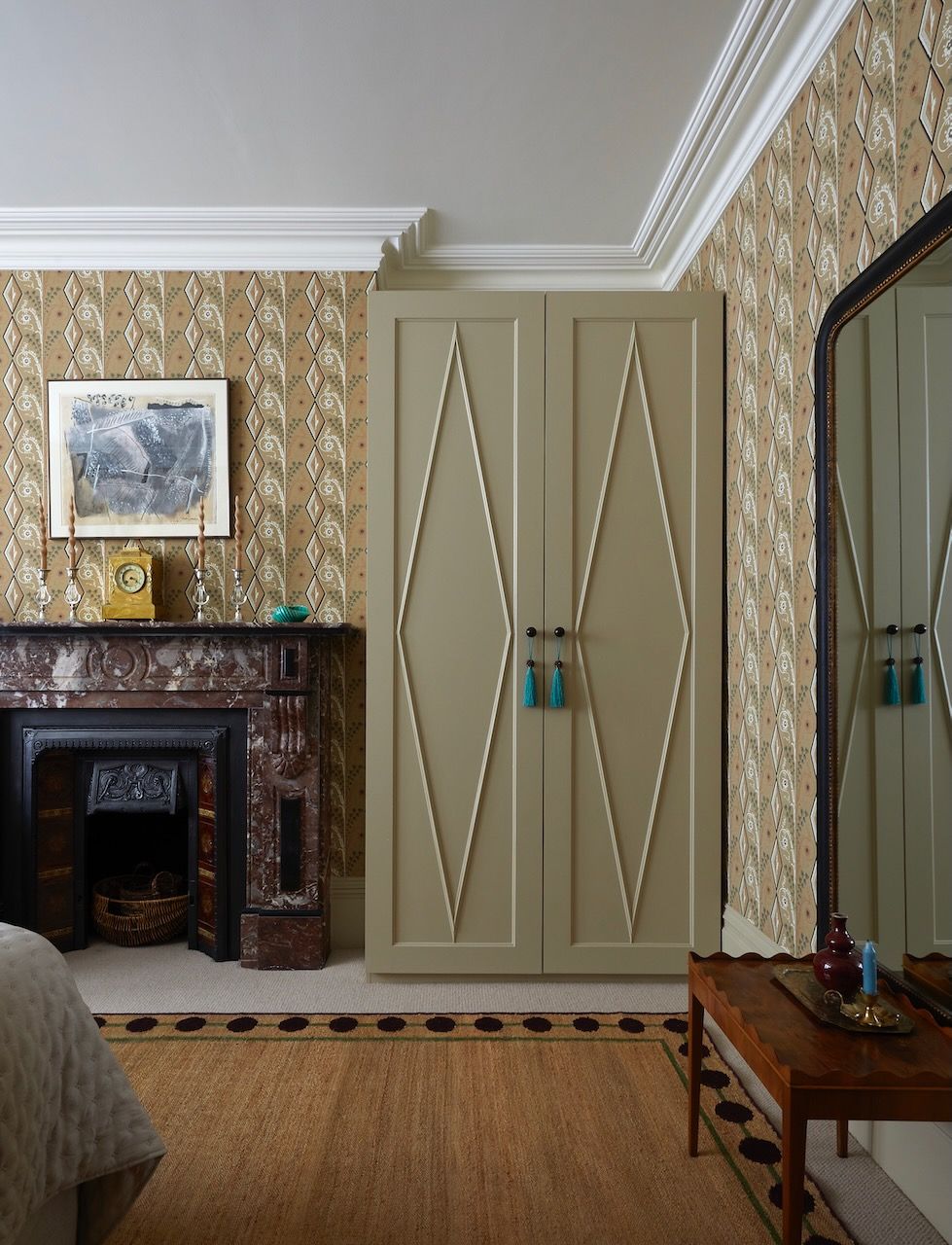
Whether you are on board with the idea or not, motifs are an inescapable feature of design. One motif lodestar is interior designer Laura Stephens, who employed a diamond motif in an apartment she created for a client. ‘We used a wallpaper in the primary bedroom called ‘Gallier Diamond’ by Brunschwig & Fils. The client loved it so much that it served as an inspiration throughout the flat,' she says. Yet, rather than extrapolating the colour of the paper as one might predict, Laura and her client chose to pull out the repeating diamond. 'We got my joiner to replace the doors of this IKEA wardrobe to match,' she explains.
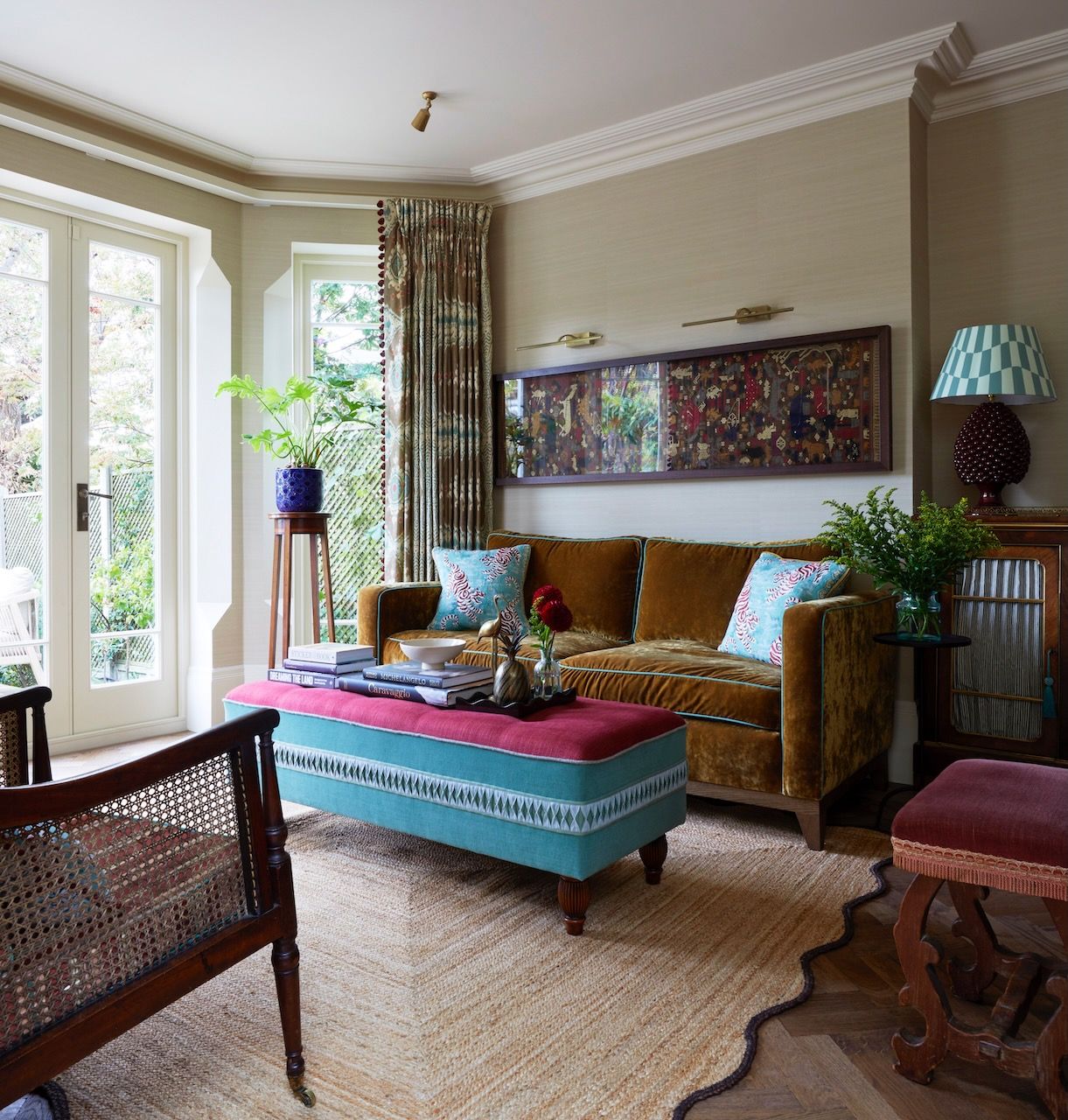
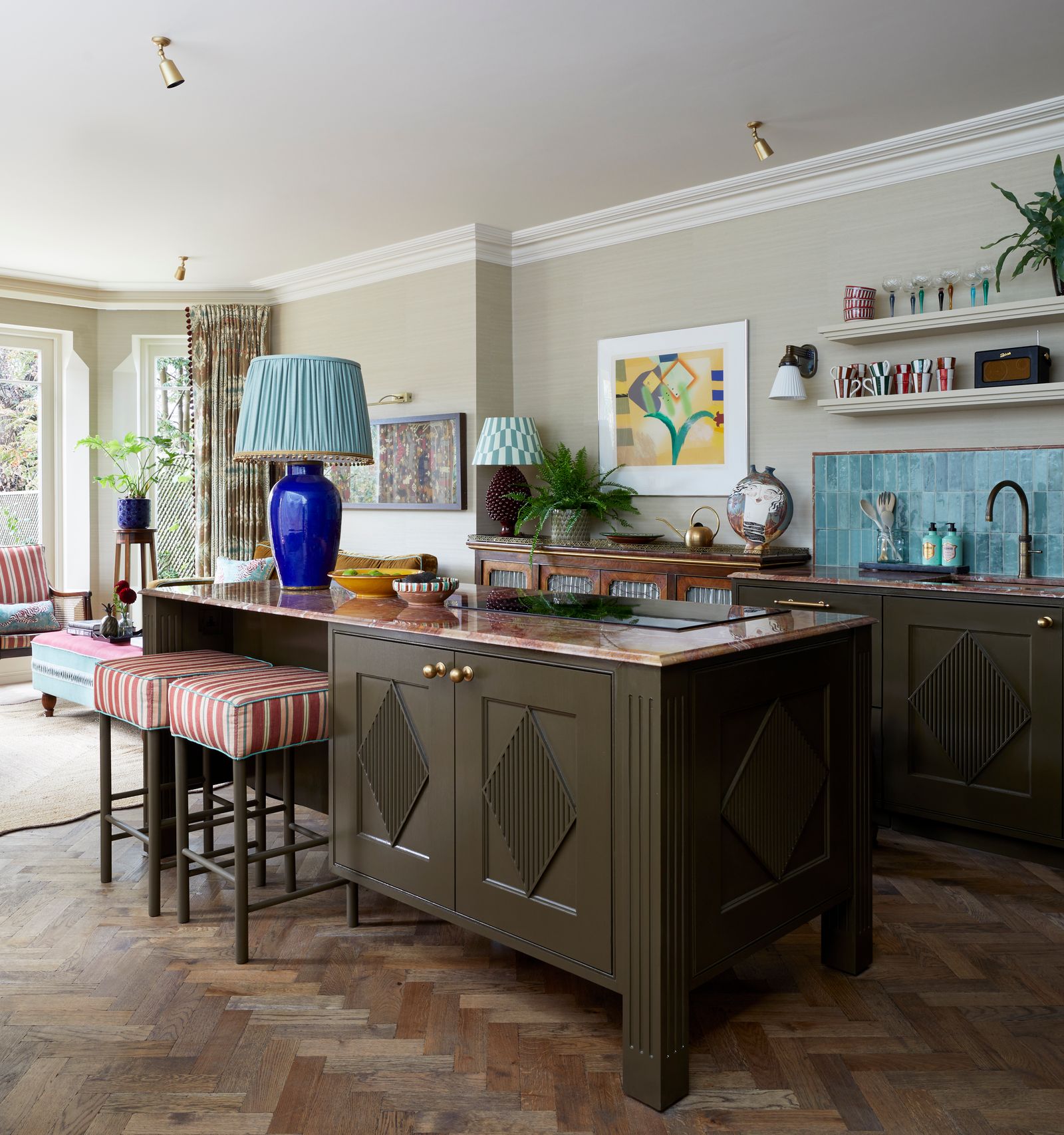
The shape can be seen again, on the bespoke kitchen island that Laura had made for the project. This time, the diamond motif has a Gustavian slant. It is subtle, but impactful, subliminal message that creates a sense of calm through familiarity. In the living room, she trimmed an ottoman with a diamond pattern too, adding more to the meaning.
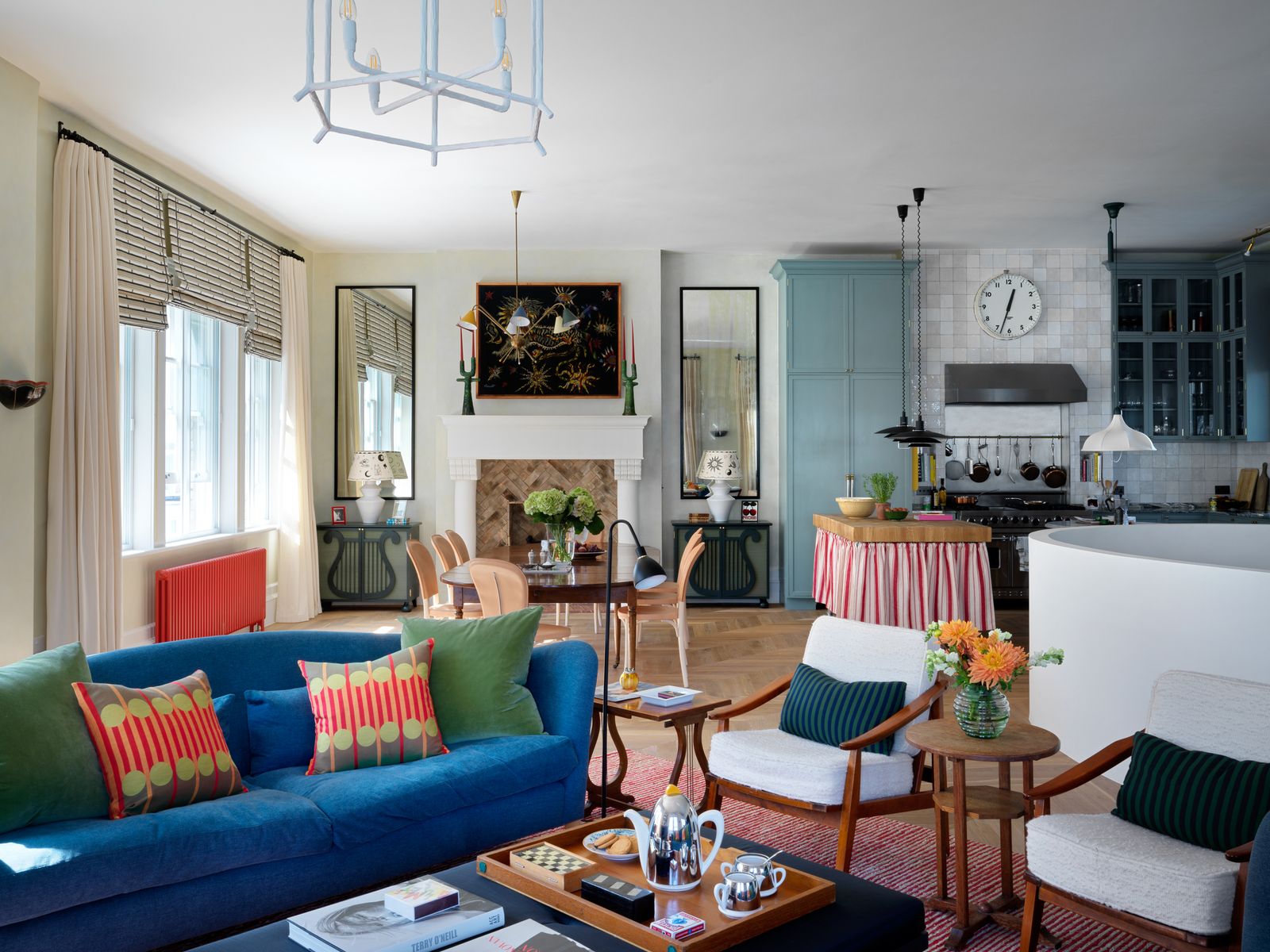
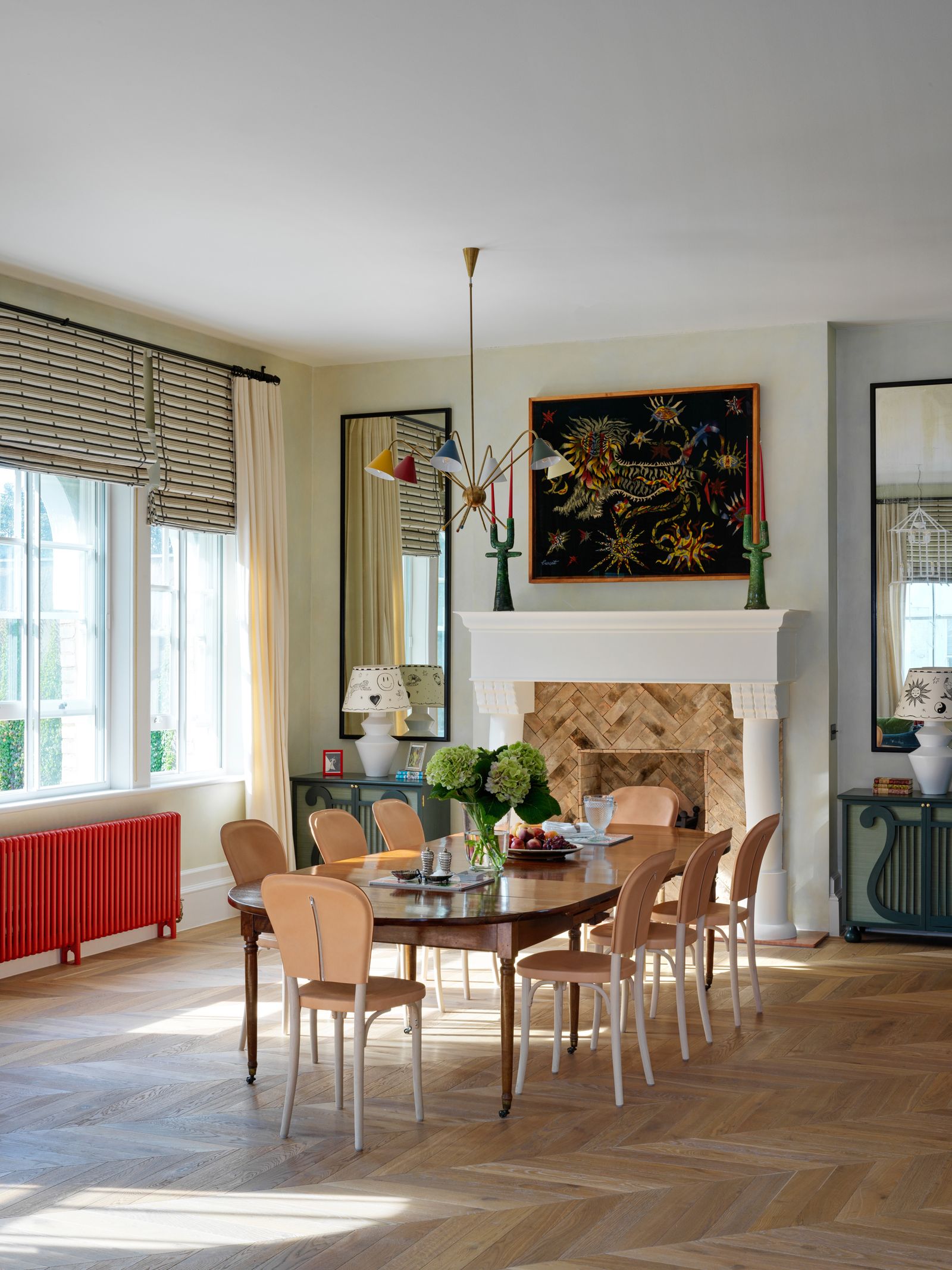
Interior designer Beata Heuman has also been spotted using motifs in her projects. In this London apartment (pictued top), a lyre motif appears in a number of places. Below, a custom pair of Shoppa by Beata Heuman lyre cabinets flank a dramatic mantlepiece. In this case, the motifs are almost like little signatures: stamps that oh-so-quietly say, ‘Beata was here.’
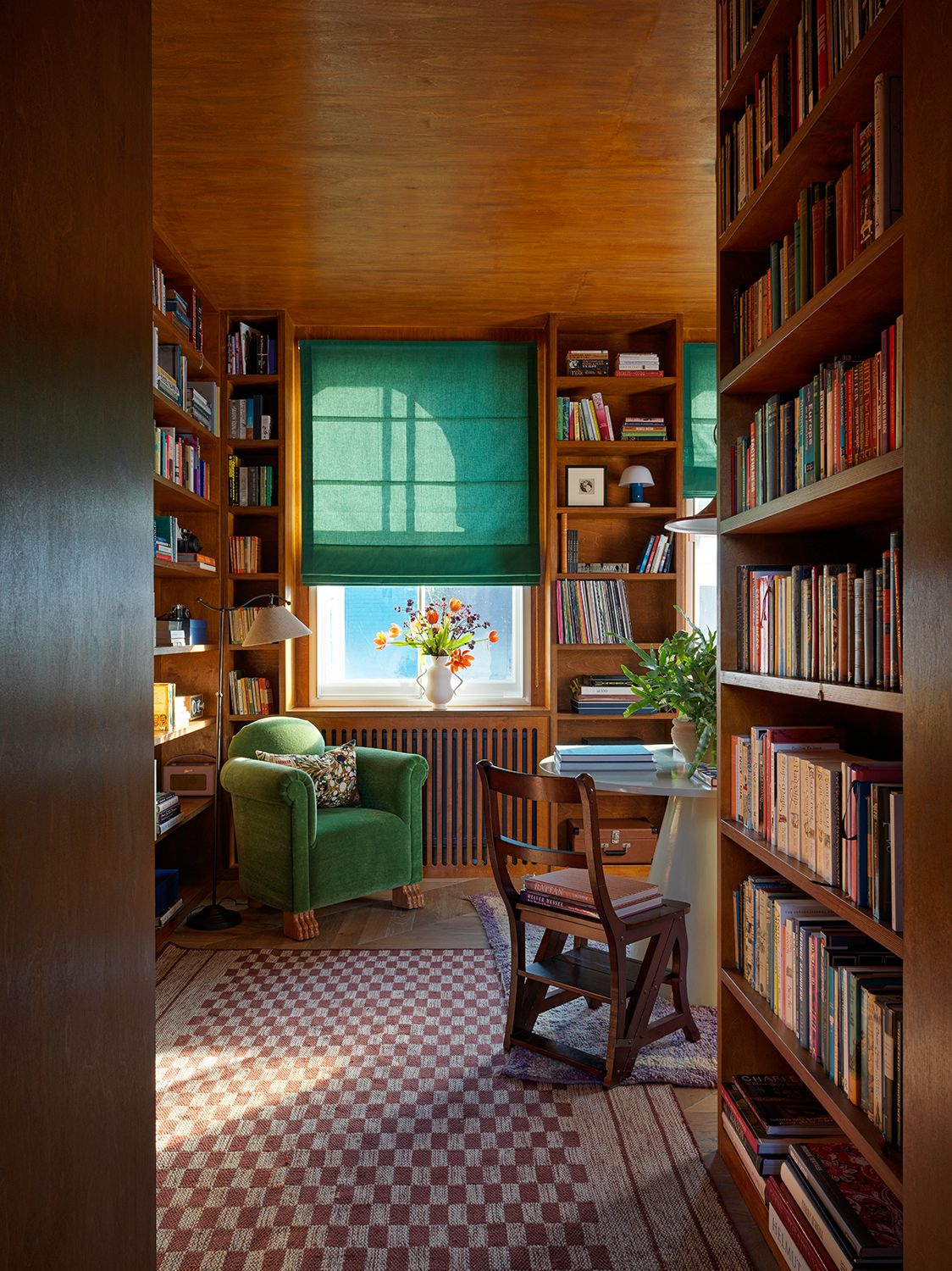
The musical motif isn't the only one Beata has been seen using, as the Swedish designer has a penchant for paws too. In the above image, the fireplace was inspired by a design in Julian Schnables' Palazzo Chupi. As Caroline, senior designer at Beata Heuman's studio, explains ‘we turned the legs upside down so that the paws were holding up the mantle, and had it made out of plaster so that it felt light and sculptural in the space.’ Elsewhere in the project, a Shoppa by Beata Heuman chair sits on charming claw feet.
Perhaps one of the most well known examples of motif mania is in Matilda Goad's house. An early adopter of the scallop, she is credited with popularising the pattern in the design world. The scalloped granite backsplash, seen below, was a late addition to her kitchen, but something would be missing without it.

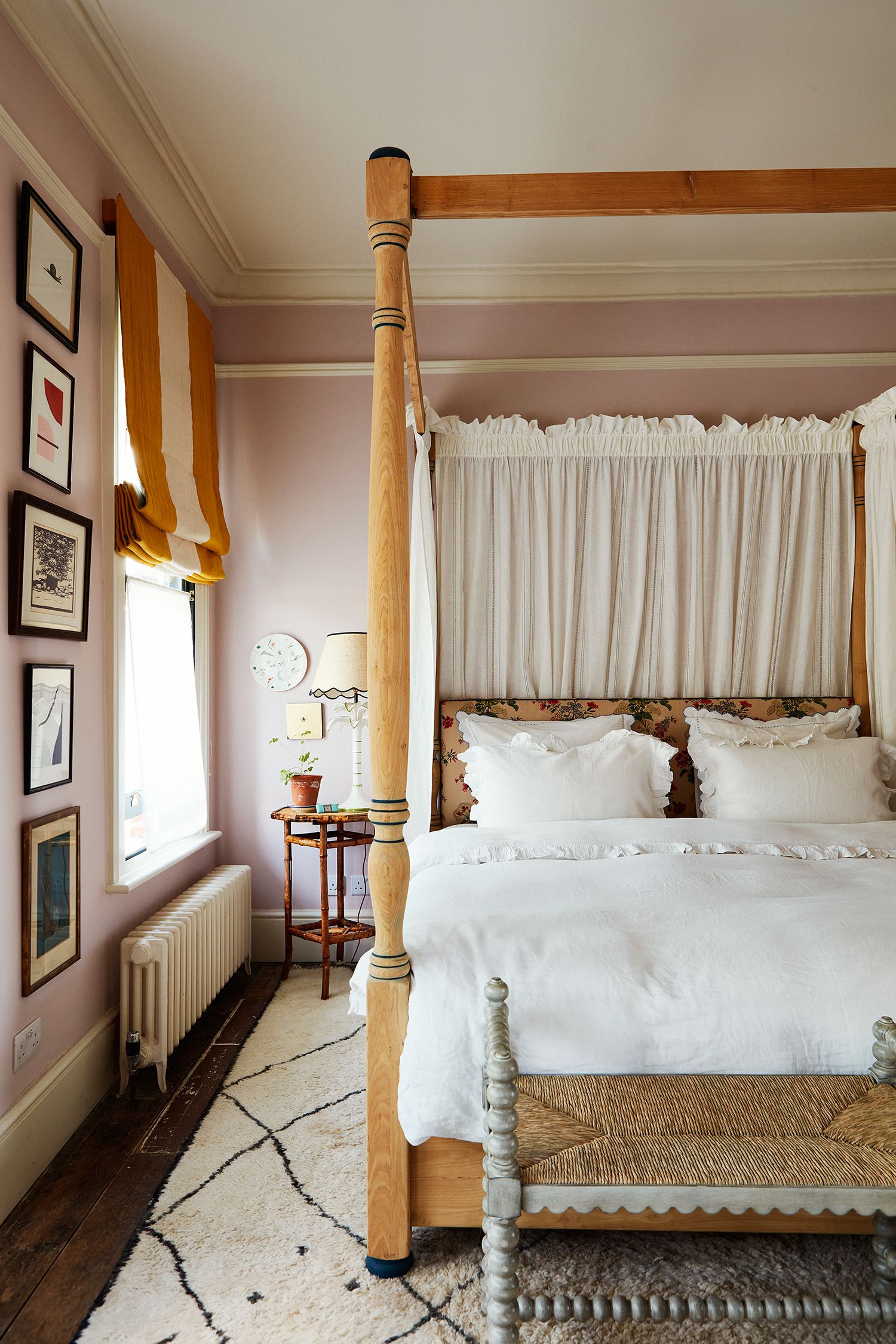
In her bedroom, Matilda has chosen a scalloped lampshade from her own product line, and a bench with scalloped detailing. It's an unexpected way to tie the primary bedroom's scheme in with the kitchen's, but Matilda has done it with flair. No colours, fabrics, or wallpapers have been used in both rooms–and yet the spaces sit neatly alongside one another.
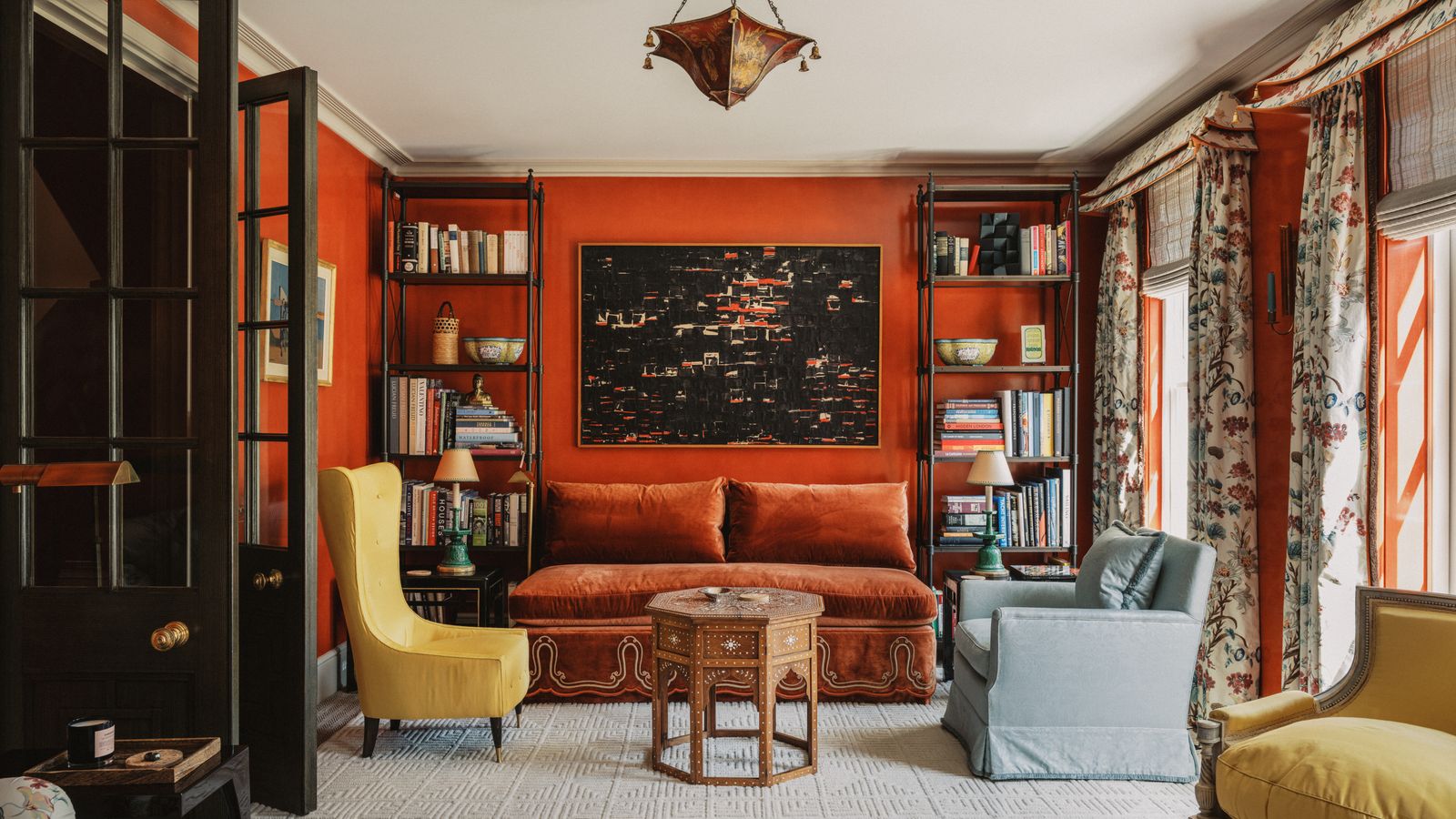
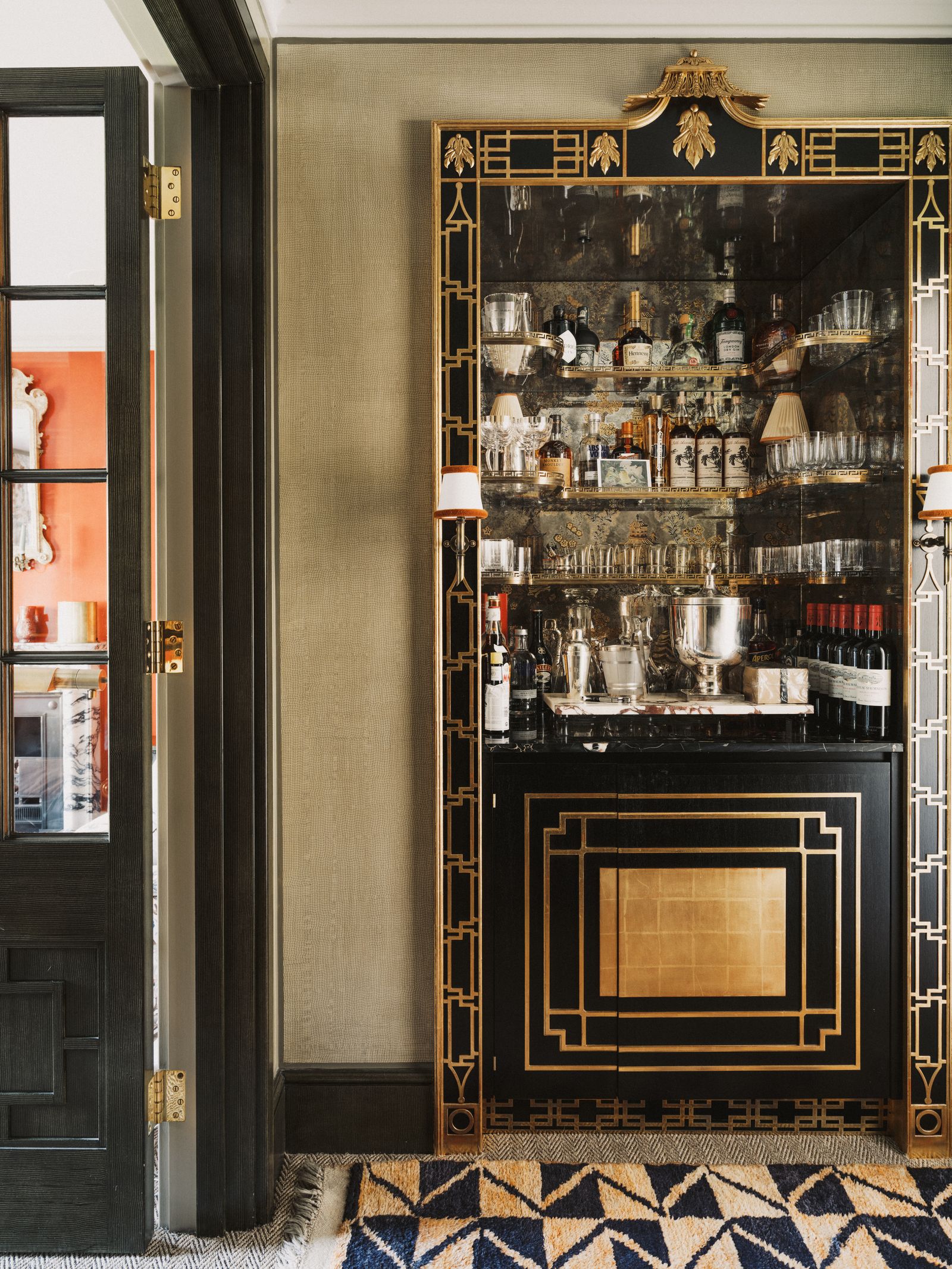
In a London pied-à-terre by Veere Greeney, a particular accent emerged throughout the project. As House & Garden's deputy editor, David Nicholls, put it, ‘one of the most delightful elements of the entire project is a pair of two-tiered pagoda-inspired pelmets in a Colefax chintz and finished off with bells.’ This striking motif is one that reappears in the fretwork balustrade and the verre eglomise bar on the landing just outside the sitting room.
Was this intentionally used to make the flat feel cohesive? ‘Not to put too fine a point on it,’ Veere says with a smile, ‘I think it was me just being a little camp.’