

In some ways, the countryside represents security. At least for me it does. It is a sort of refuge. In part, that comes from a sense of familiarity. Life moves more slowly out in the country; things don’t change as much. If you are fortunate enough to have somewhere away from the city to escape to, you will know the feeling when you arrive that the eiderdown will be on your bed as it always is and the books that you’ve read – or meant to read – are still there within reach for you to touch. There will be all the familiar layers, added to over the years (and, in some cases, generations) and possibly unchanged for decades.
I don’t think that is the case in cities, where people tend to move house more frequently. And the houses get changed more dramatically when they do –kitchens and bathrooms ripped out and replaced with brand new ones, and basements dug out. In London, we are constantly exposed to new things, so many divine things that you would love to have. It can be so dangerous walking down Pimlico Road and seeing what Soane or Robert Kime or Tarquin Bilgen have displayed in their windows.
So, in general, city houses are smarter than those in the country. And you want them to be – that’s why you’re in the city. The pace is faster and maybe you even want to show off a bit. Cities, by their very nature, are competitive places. (That said, the country can be too – it’s just more understated!)

Decorating and living in the country tends to be much more about comfort and practicality than fashionability. In my last house in London, there were dark brown walls, zebra skin, a shagreen coffee table and gilded lamps. But, in the country, I have floral slipcovers, old rugs on top of sisal and an open fire. It’s still a smart room, but it’s the complete antithesis.
In the city, you are often rushing around. You get home from work and, if you are entertaining, you need to have the smarter bits of the house looking presentable. A drawing room might be more of a drawing room. Whereas, country houses are often more inclusive places without so much of a division between the formal, grown-up rooms and the rest of the house. They are sociable places for family, friends and kids and dogs.
I probably use the same sort of fabrics everywhere, but the treatment can vary. In London, I might use a lovely carriage cloth to upholster doors or dining room chairs, but in the country it might be just used as a bit of cloth over a hall table. It can take on a completely different personality, depending on the context. And then there are slipcovers. In the city, you might want them to be precisely tailored like a Savile Row suit whereas, in the country, they might have a slightly baggier look.
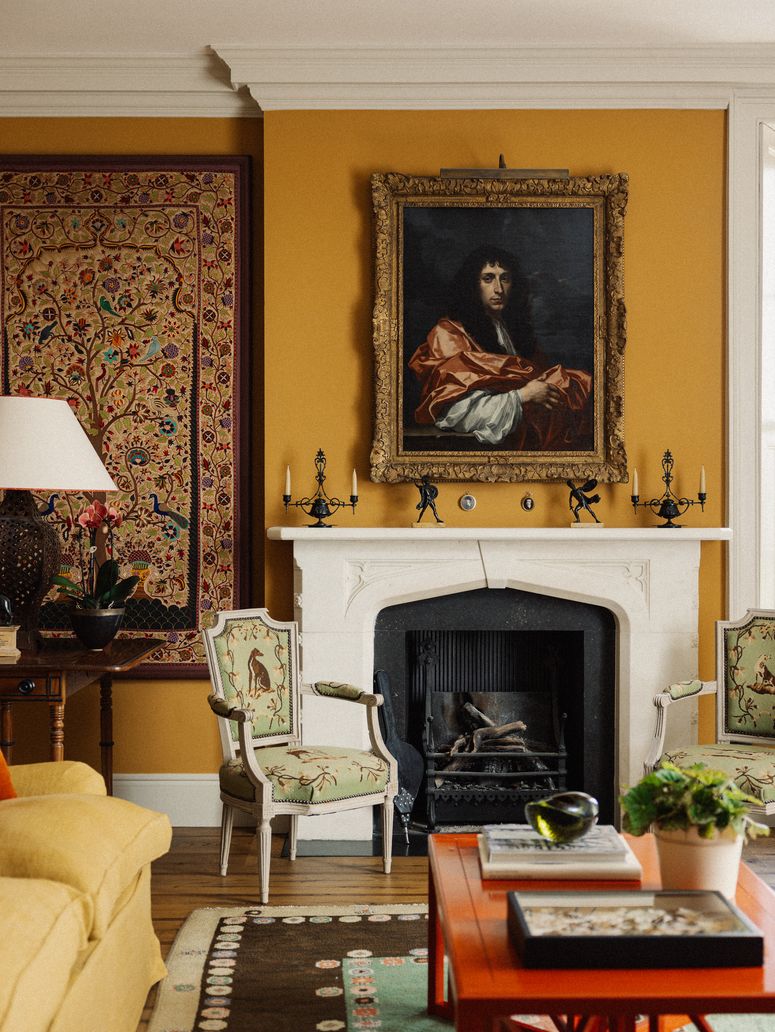
I think John Fowler said lampshades ought to look as if they were ‘made by the under housemaid’. It was about creating that feeling of maybe not caring as much. You are less likely to want a silk taffeta ottoman in the country. I saw some beautiful hessian curtains that the decorator Mark Smith did for a cottage and they were so chic. It’s unpretentious and perhaps it’s more confident in a way. Confidence is so important in decorating.
A house in the country does not have to look like a house in the country, however. It is far more important that it reflects the tastes and needs of the inhabitants. I have a fabulous French client who I’ve helped in endless different places – Paris, Normandy, Saint-Tropez, Île de Ré – and all the houses are completely her. There is always a chic bar and she loves pink. So, in the country, there is a pink resin floor in the boot room and Yves Klein-blue worktops in the kitchen. It was confidence that made it work.


