


Last year, White Cube gallery showed a film by the artist Christian Marclay entitled Doors. Ten years in the making, it’s a non-stop video montage of entrances and exits collaged together from hundreds of movies. Shifting between monochrome and colour, French New Wave and Hollywood blockbuster, it shows hundreds of different types and styles of aperture-closing apparatus. “Watching it, it struck me how little credit we give to doors, compared to domestic detailing like panelling or windows,” remarked interior designer Tom Morris.
It’s an issue that’s previously been identified by Dorothy Draper: ‘Doors are usually orphans – nobody pays any attention to them,’ she wrote in her 1939 decorating bible. And certainly, looking around, it seems that the internal openings of homes up and down the land are accessorised in a manner that looks almost exclusively to function: The doors are painted white, panelled if they’re in a period house, or flat fronted for something modernist or new build. There’s nothing necessarily wrong with that approach (white is classic and clean), but might we be missing a trick? Tom notes that doors can be an architectural asset, and Dorothy posits that they can contribute a great deal to a decorative scheme, and there are, among those who work in the interiors industry, a fair few inspirational instances of alternative door treatments. If you were still in doubt, ‘a well decorated room is the sum of the details, so not giving a door much thought seems a waste,’ opines Daniel Slowik.

We might start with an analysis of what exactly would suit our own particular circumstances, for there is always a ‘correct’ approach, and you may be among those whose doors don’t match the period of house build. “There was a vogue for flat panel doors in the 1960s and 70s, and every Millie who was thoroughly modern gladly chucked their mouldings in favour of sweet nothing,” says Benedict Foley. If this is you, Atkey & Co can help. But at the same time, in these happy days when putting form over function is no longer audibly sniffed at by purists, door decoration can simply be about whimsy, and fun. That could come in the form of colour, applying Sicilian palazzo details to a Victorian terrace, or disguising a new-build door as something semi-precious.
Colour
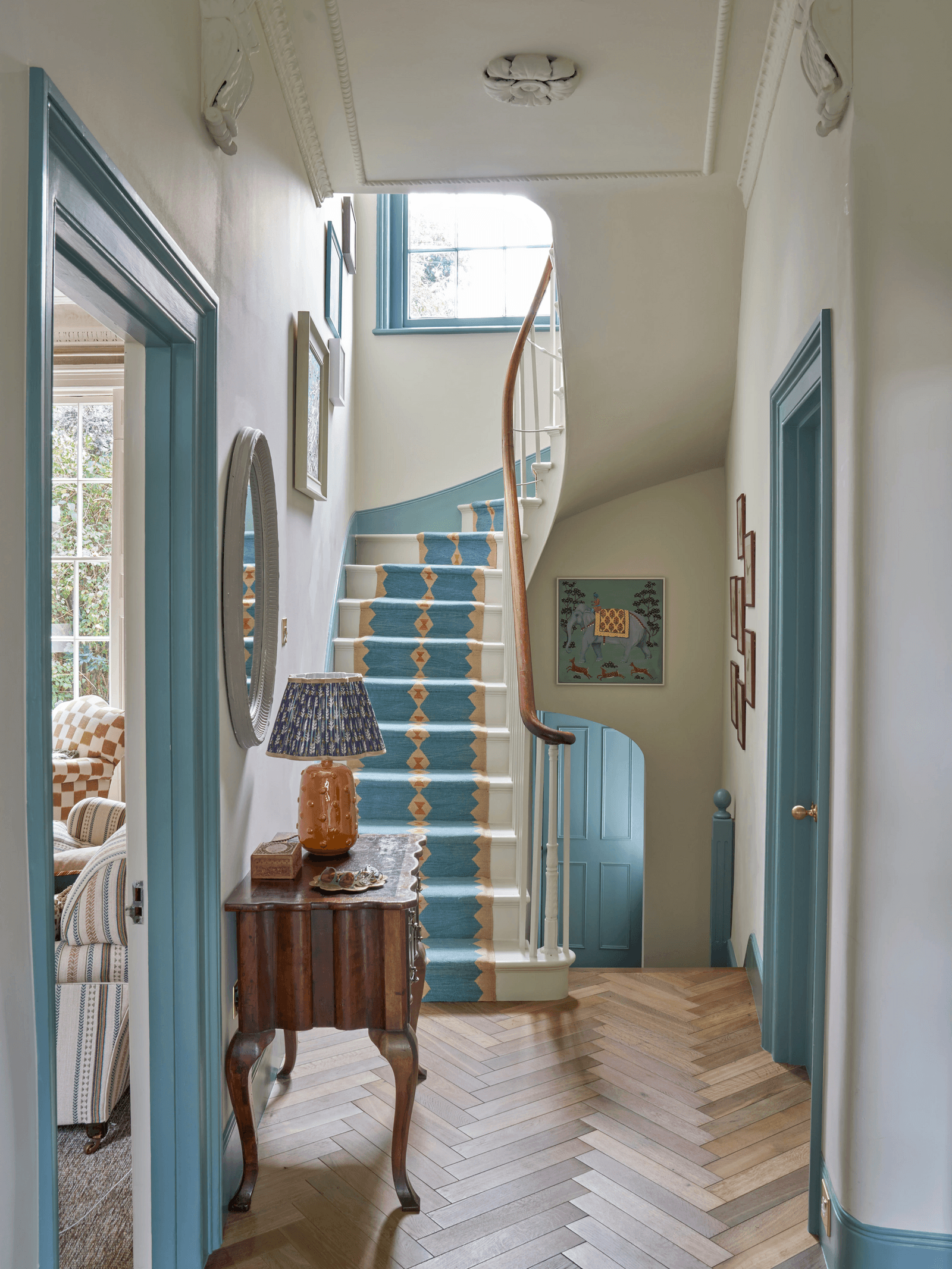
Let’s look at colour, which can conceal as much as it can highlight. Painting a door to match the room it’s in is ideal if ‘your room has too many doors, or you don’t like their looks,’ says Dorothy Draper. But if you do like them, you could opt for a contrast hue, in which case Tamsin Saunders reminds us that we need to think about the door as part of a whole, and review ‘how the colour complements and enhances and interacts with the other colours you see through to – whether that’s down a corridor, into another room or out into the garden.’
Importantly, we also need to remember a door’s position as a transition point between rooms, and thus ‘make the door work for both of the rooms it’s in,’ says Patrick O’Donnell, colour consultant for Farrow & Ball. For example, does the door need to be a different colour on each side? This can seem confusing, particularly when it comes to the reveal and the split (the technical terms for the door edges), but ‘you paint those for the room the door opens into,’ explains Patrick. Tamsin, on the other hand, will sometimes paint the edges another colour altogether, or paint them with an unexpected pattern. ‘Every surface is an opportunity for creative expression, but it’s a balance,’ she advises, ‘You are conducting an orchestra, not dealing with a series of prima donnas.’
Architectural details: architraves and pediments

Don’t forget the architraves around the door, if you’ve got them, or if they’ve been removed you may want to use colour to restore the missing weight. Using paint, Patrick increased the measurements of the architraves around the door in his bedroom. ‘It balances the volume of the adjacent chest,’ he says. Notably Nancy Lancaster performed a similar sleight of eye in her famous yellow drawing room, only she enlarged the overall size of the doors using mirrors.

Still using paint, Patrick has given that same door a trompe l’oeil classical pediment, complete with urns, despite its being in what he describes as a very ordinary 1930s suburban house. ‘I wanted something amusing,’ he says, ‘and it gives it a grandeur.’ Benedict Foley has done similar at Max Hurd’s house, which from the outside is an unassuming London terrace, by physically adding to the architraves and making the kitchen door castellated. Vital, if you’re using paint in a solid colour, ‘is to achieve a neat edge’ says Patrick: ‘I measured and taped and made sure it was perfect.’
Paint effects: trompe l’oeil panelling and semi-precious stones

Other approaches can be more freehand, such as trompe l’oeil panelling, which is ‘an easy project, that can transform a flat-fronted door with no mouldings,’ suggests Patrick (but do remember there are different types of panelling.) ‘Specialist painting can make a door the indicator of something special to come as you enter a room,’ says Daniel Slowik, and ‘why not make it marble, malachite, or tortoiseshell?’ puts forward Patrick. If the door is moulded, then the reeding can be picked out in a contrasting colour, or gilded. And happily for the DIY enthusiast, tips are freely available for all paint effects, ‘though you might want to practice first on an old section of skirting, or something,’ says Patrick. Equally, if you’re local to Shrewsbury or are happy to make a holiday of it, know that you could sign up with Master the Art for a course taught by Roger Newton (who was trained in the legendary Sibyl Colefax & John Fowler paint studio) and his daughter Kate.
The inspiration of the past
For further ideas, we can look back, because doors were once generally given greater due. Stalking the halls of some of the many houses that are open to visitors in this country, there are a variety of details, from glorious gothic carvings at Strawberry Hill (which might need more expert application to effect) to charmingly painted panels at Charleston Farmhouse. Also note the wealth of baize doors that traditionally separated the servants quarters from the rest of the house, which come with the benefit of providing excellent sound insulation, and can look strikingly smart in a strong hue, particularly when brass-studded.
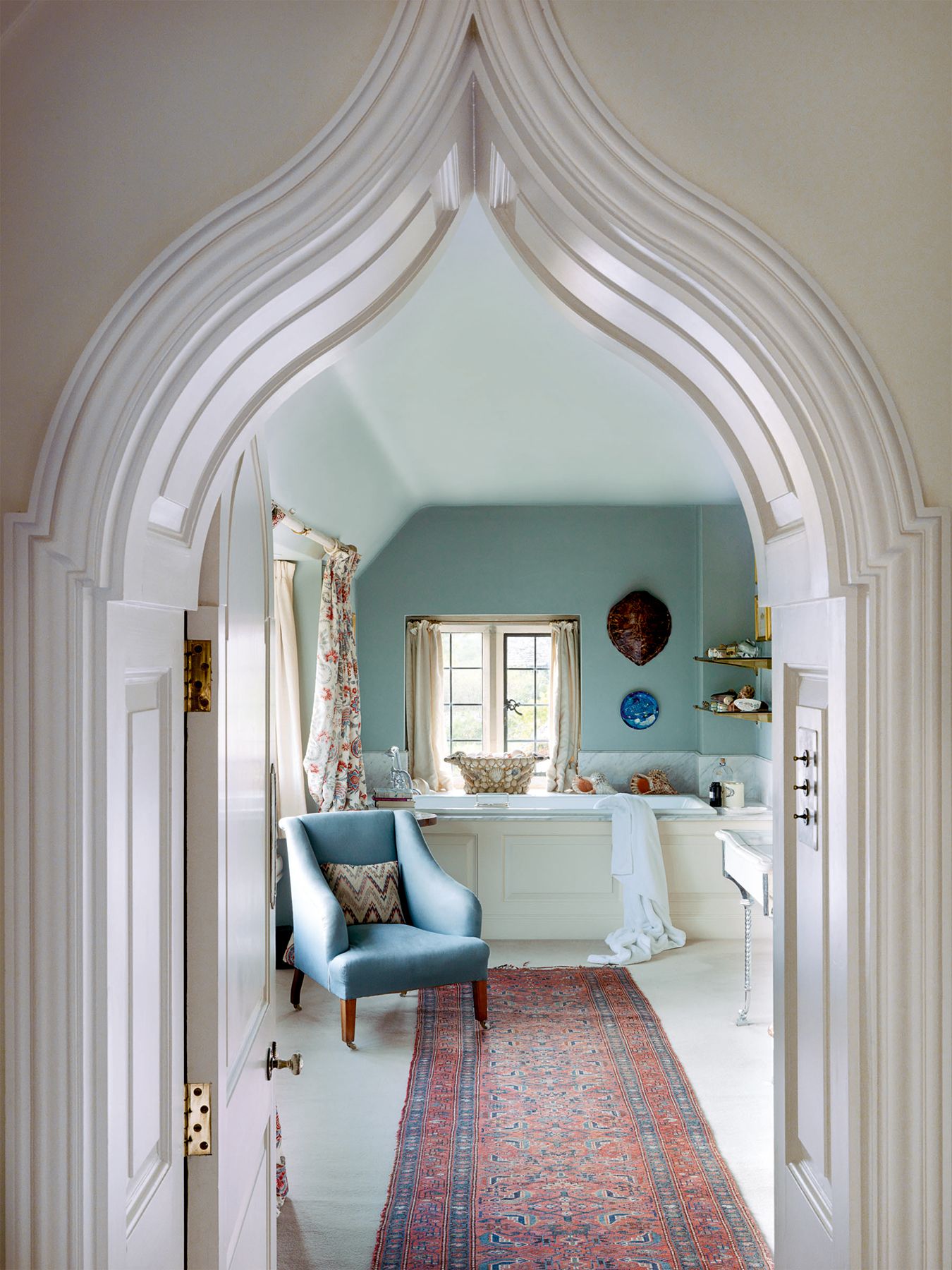
Museums and galleries can equally inspire, and ideas don’t need to come specifically from doors, nor, as hinted earlier, from houses in this country. Also, don’t make the mistake of thinking that the advent of open plan, as pioneered by Le Corbusier in the early 20th century, spelt sudden death in terms of anyone having an interest, for the Modernist architects ‘were quite good on doors,’ says Tom. ‘Most of them sought to do something different with them rather than get rid of them.’ To which end, note the charming ‘ogive’ door in the house in the Cotswolds below.
Discreet doors
There are, of course, the more discreet doors. Tom lists ‘glazed doors, sliding doors, pocket doors,’ that were also favoured by Modernist architects, and Tamsin says that she’ll often use these for the ‘engine rooms’ (meaning utility rooms, cloakrooms, loos, bathrooms) because she tries to avoid having too many of the same type of door.

Also consider jib doors: ‘Was there anything more exciting as a child?’ asks Tom. Totally flat fronted, jib doors can be painted, panelled, wallpapered or covered in fabric, and can have paintings hanging on them, as Nina Campbell has done with the jib door between her bedroom and her wardrobe in her London house. Also notable are the sliding doors to Nina's bathroom (below), which are mirrored, reflecting back the wallpapered room. Of course, it doesn’t need to be a jib door to be hung with art, as proven by Benedict and Daniel in their Dedham Vale cottage and ‘I’ll often hang wallhangings on a door to highlight it,’ says Tom. Then, don’t forget wardrobe doors – a whole wall of them might be opportunity for a mural, moots Tamsin.

Door accessories

Finally, ‘do not stint on cheap door handles,’ says Tamsin, and know that they too can be vehicles for pattern, whether carved, painted or ceramic. Add to that hinges, door plates, and locks that can be paired with elaborately tasselled keys.
Indeed, we could say that doors are a perfect exemplar of that old axiom about opportunity coming knocking. ‘Whatever you do, don’t just forget about them. They are full of possibilities,’ said Dorothy Draper.


