
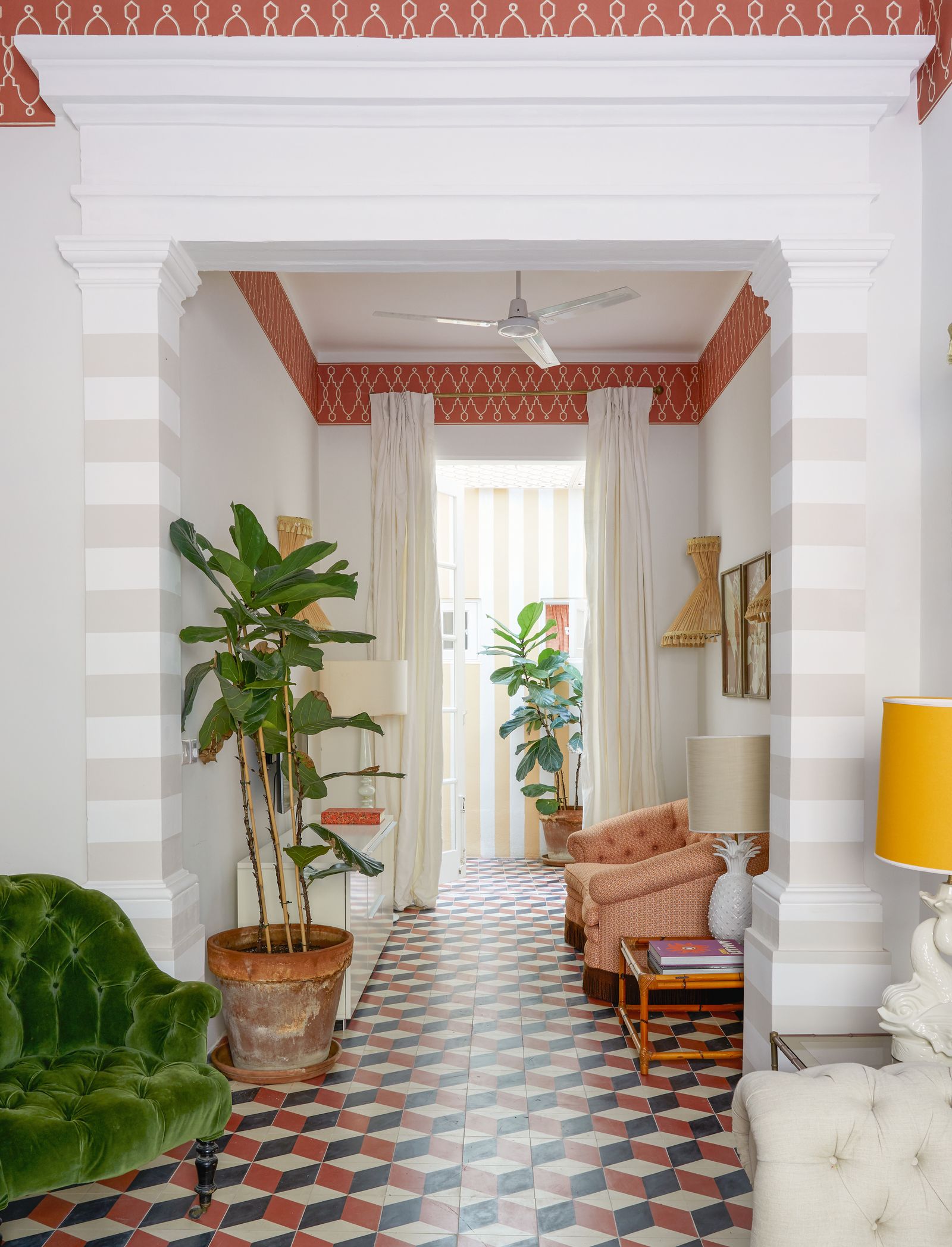
Whether it’s a floor-to-ceiling chimney breast clad in zellige tiles, a dining nook wrapped in a bucolic tiled mural or perhaps a statement bedside table, tiles are increasingly turning up outside their traditional habitat of the bathroom or kitchen.
It’s unsurprising when you consider the current gravitation towards playful and layered interiors and the huge increase in availability of creative tile options. Sarah Watson, founder of handmade tile specialists Balineum, puts it perfectly: ‘Tiles have a sense of activity and subtle imperfection that makes me smile. There is something freeing about living in a space that is not perfect or does not follow strict decorating rules.’
To dive deeper, we quizzed the experts on their favourite ways to use tiles beyond the kitchen and bathroom, what this material can bring to a scheme and the practical things to consider.
The joy of tiles: what they bring to a room
Using tiles beyond the typical wet areas gives an added layer to any home. ‘Tiles bring richness and a sense of craftsmanship when used in unexpected places. Much like a textile, they bring depth and can feel quite sculptural when used on a larger scale,’ interior designer Anna Haines explains.
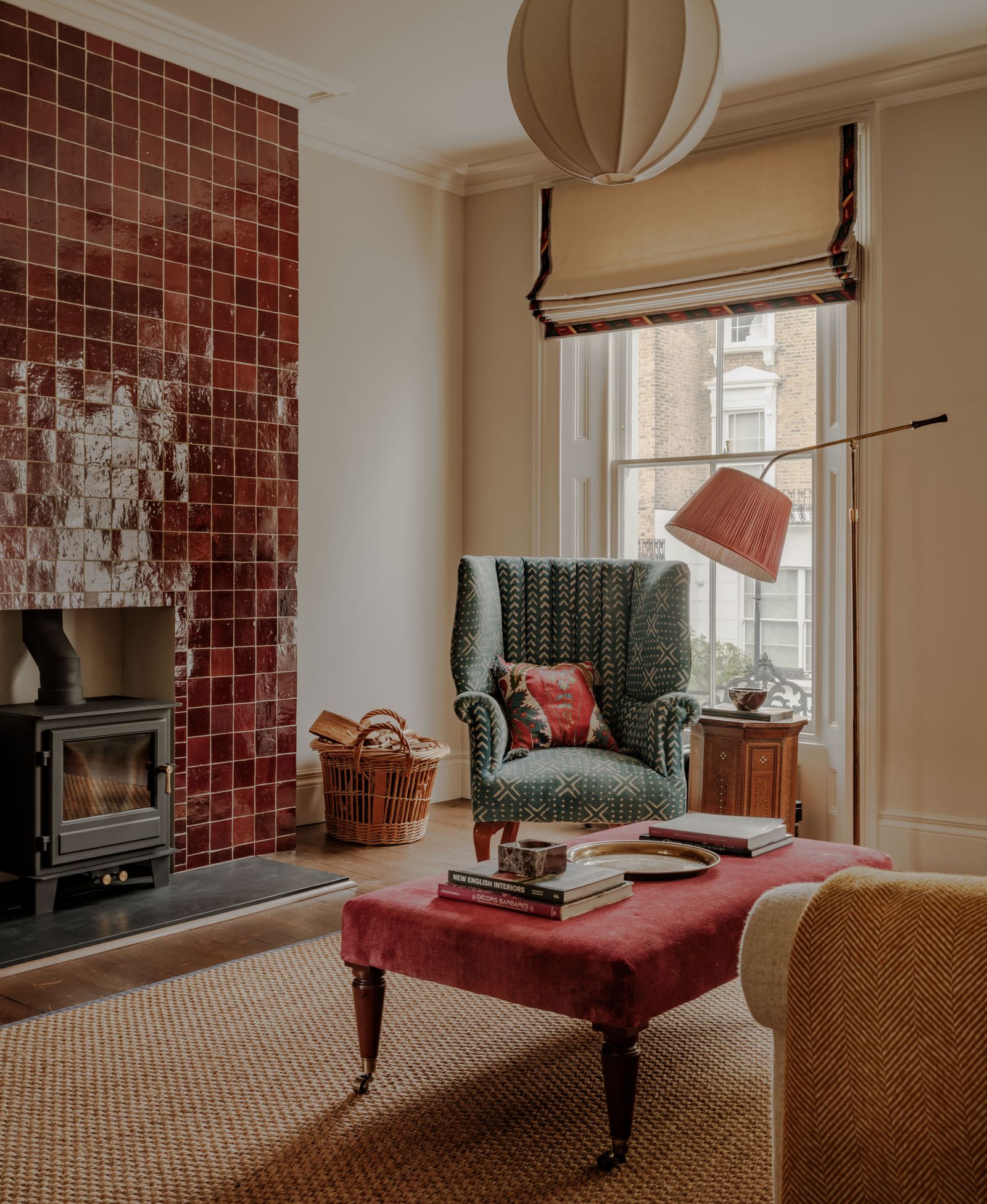
For Anna, tiles can create an ‘architectural punctuation mark in a space.’ In a recent project in Maida Vale, she tiled the living room chimney breast floor to ceiling in burgundy zellige tiles made in Fez, Morocco by Habibi. ‘Each one is hand-glazed, so no two are exactly the same. The edges are irregular, and the colour shifts from tile to tile so that when they’re installed together, the variations create a surface that feels alive and organic,’ Haines explains. Due to their reflective nature, zellige and other glazed tiles work wonders to bounce light around a room – another element to their appeal, especially in dark rooms or tucked away corners.
When it comes to using tiles for a decorative purpose, the sky, or your imagination, is really the only limit. As with Anna’s tiled chimney breast, tiles have long been used to frame fireplaces, especially as they are a fire resistant material. However, they can also be used to highlight other architectural elements.
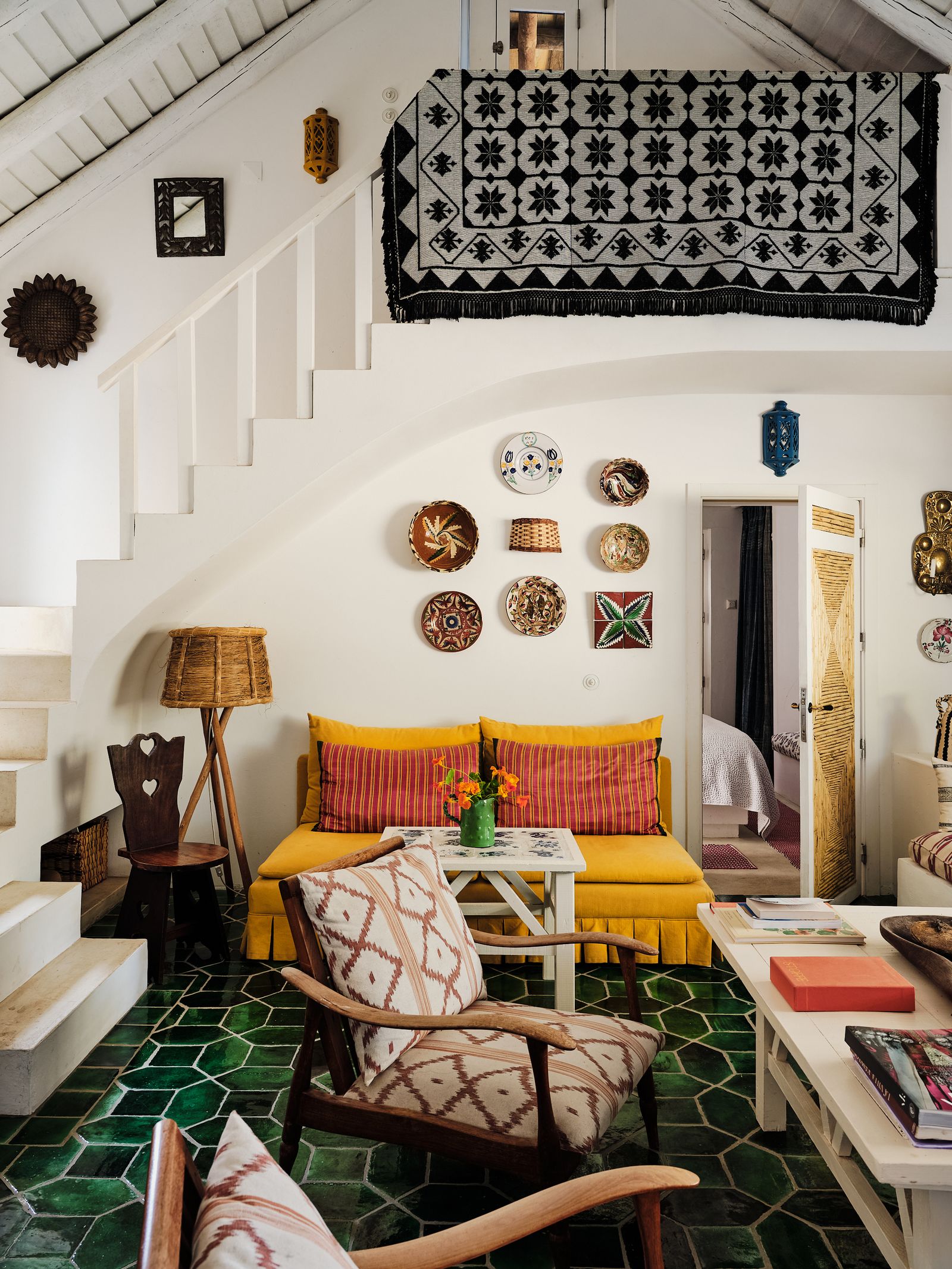
‘Tiles bring an unexpected lift to a scheme when used to accent dado rails, cornicing, ceilings or even the upstands of staircases (the section between each step). We’ve also used them to line the back of a home bar and highlight windowsills or niches,’ Melissa Hutley, Hutley & Humm co-founder and interior designer, shares. Using them in this way brings colour, texture, and a bespoke quality to a scheme, making a space feel unique.
For Balineum’s Sarah Watson, arches are one of her go-to suggestions for using tiles to highlight the architecture of a house. However, her favourite option is tiling an entire space to create a dramatic look. ‘For a dining nook, interior designer Sophie Ashby commissioned a bucolic tiled mural by artist Anna Glover that we made in our British factory. To see a pattern emerge over an expanse of tiles – not just a single tile on repeat provides a huge amount of joy,’ Watson shares.
From a material standpoint, tiles are very well suited to some areas of the home. ‘We often use tiles in back-of-house areas where a more durable finish is required, but also as flooring in dining rooms, orangeries, and spaces that connect to outdoor living. They’re a brilliant way of introducing both practicality and character into areas that see a lot of use,’ Hutley advises.

The practical part: how to choose and style your tiles
Not all tiles are made equal so it’s always important to check the tiles you are using will work in the space you have envisioned. ‘Look at the size of the tiles in relation to the space so you know if they’ll need to be cut down and think about the edges if they’re going to be visible,’ interior designer Octavia Dickinson shares.
Grout is always an important factor but when the tile design is a decorative statement you might want to think even more carefully about the role it plays. ‘Paler grout colours tend to darken with use and cleaning, so we usually opt for darker tones for longevity. If we’re using coloured tiles, we’ll often colour-match the grout to keep the look seamless, but a contrasting grout can also be a striking design feature in its own right when paired with paler tiles,’ Hutley shares.
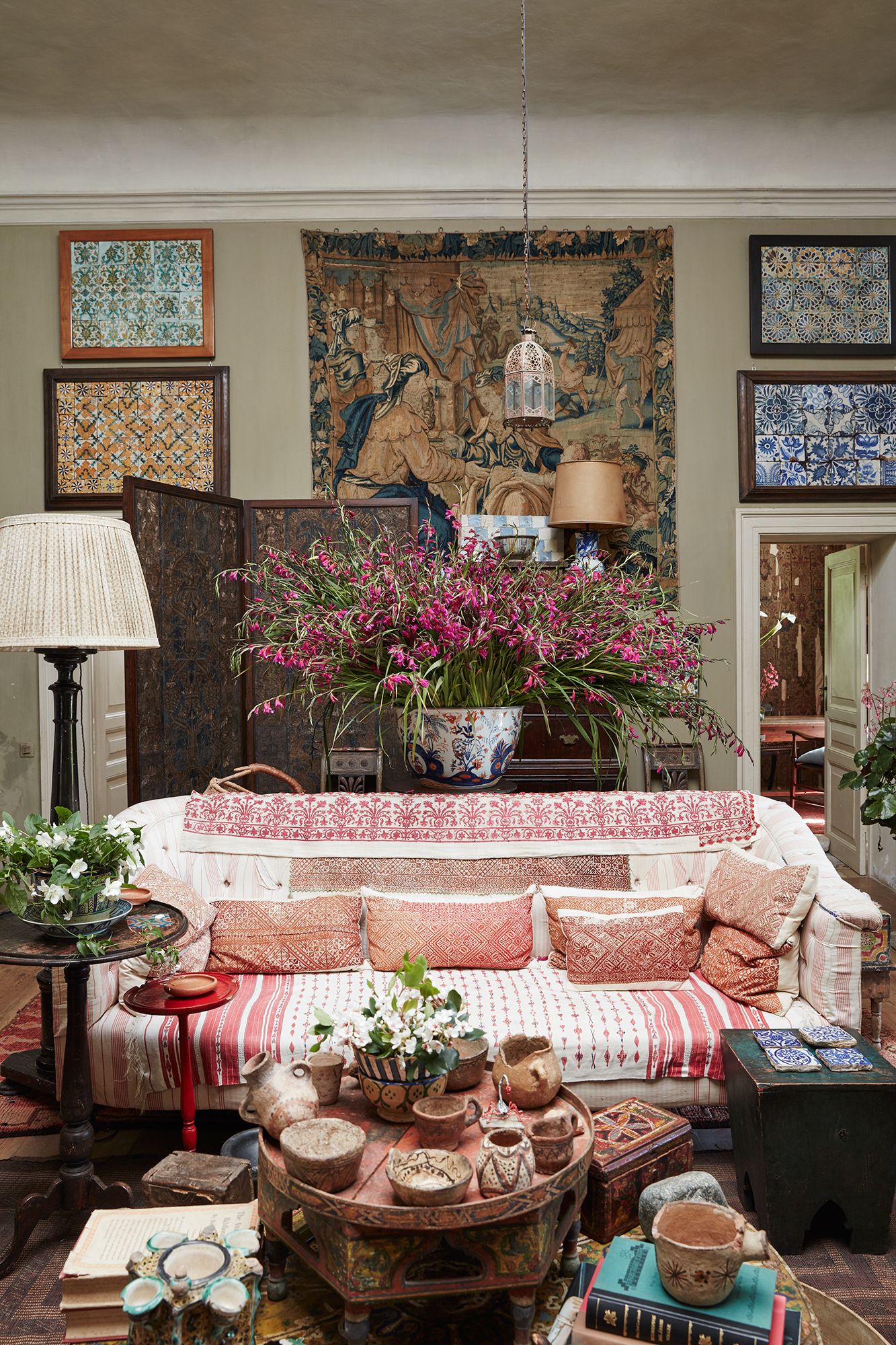
Tiles cool a room, hence why they are so popular in warmer climes, and this is also an important factor to take into account. It’s always advisable to pair them with warmer materials to create balance, absorb sound and stop the room feeling too cold. This can be achieved with the use of rugs, wall tapestries or upholstered furniture.
On the flip side, it can help balance a scheme in the other direction. ‘I’m always trying to mix and balance textures, and where you have lots of soft furnishings, like in a drawing room or bedroom, tiles add a nice contrast, whether around a fire or on a bedside table,’ Dickinson adds.
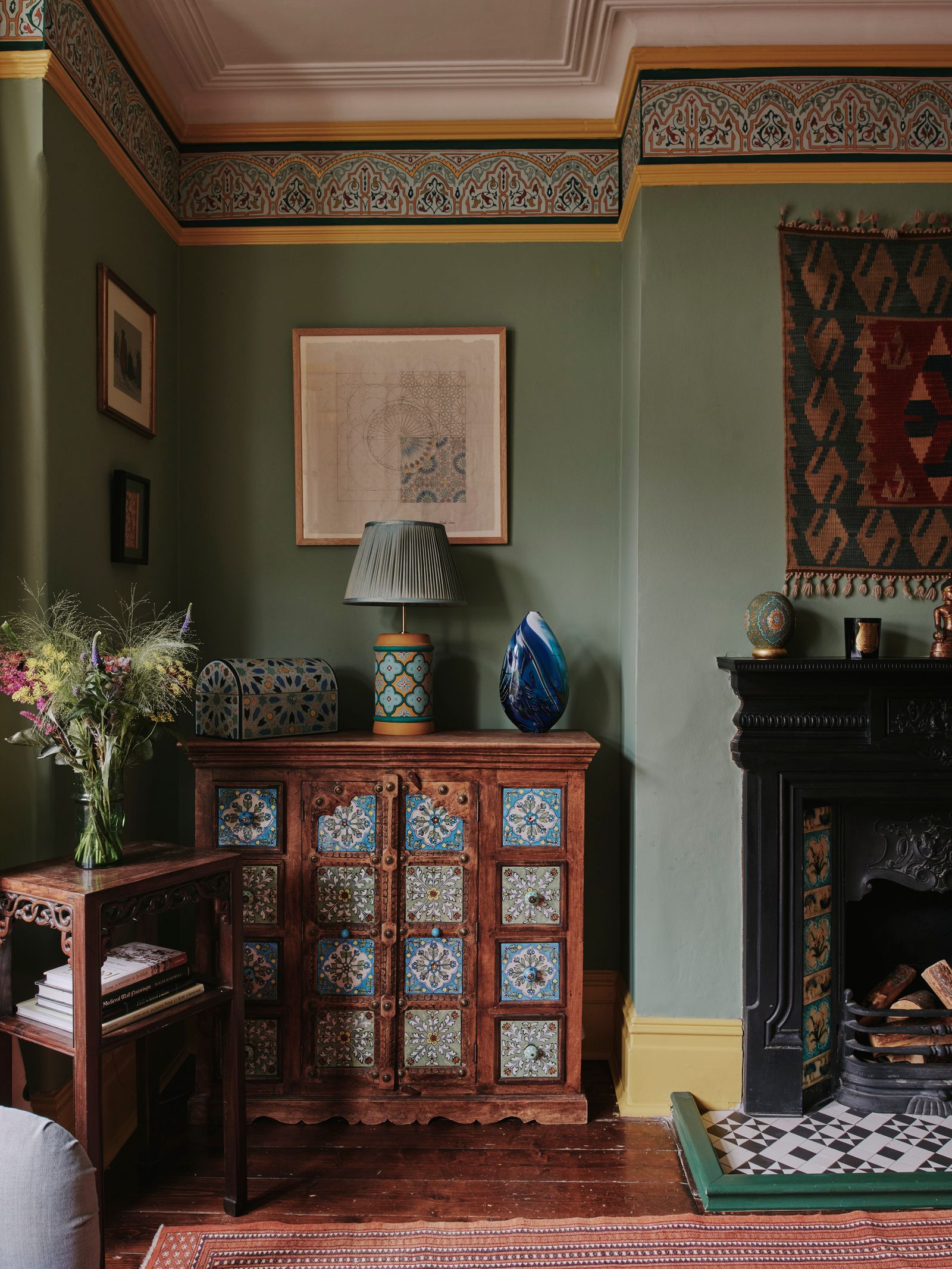
Tiled furniture: what you need to know
Adding a piece of tiled furniture into the mix can be a good way to dip your toe into the idea without totally redecorating. ‘Tiled furniture can feel quite sculptural and bring a contemporary edge to a space. Pieces like a tiled ottoman, for example, create a more tactile surface, making it feel more like a design feature in its own right,’ Haines highlights.
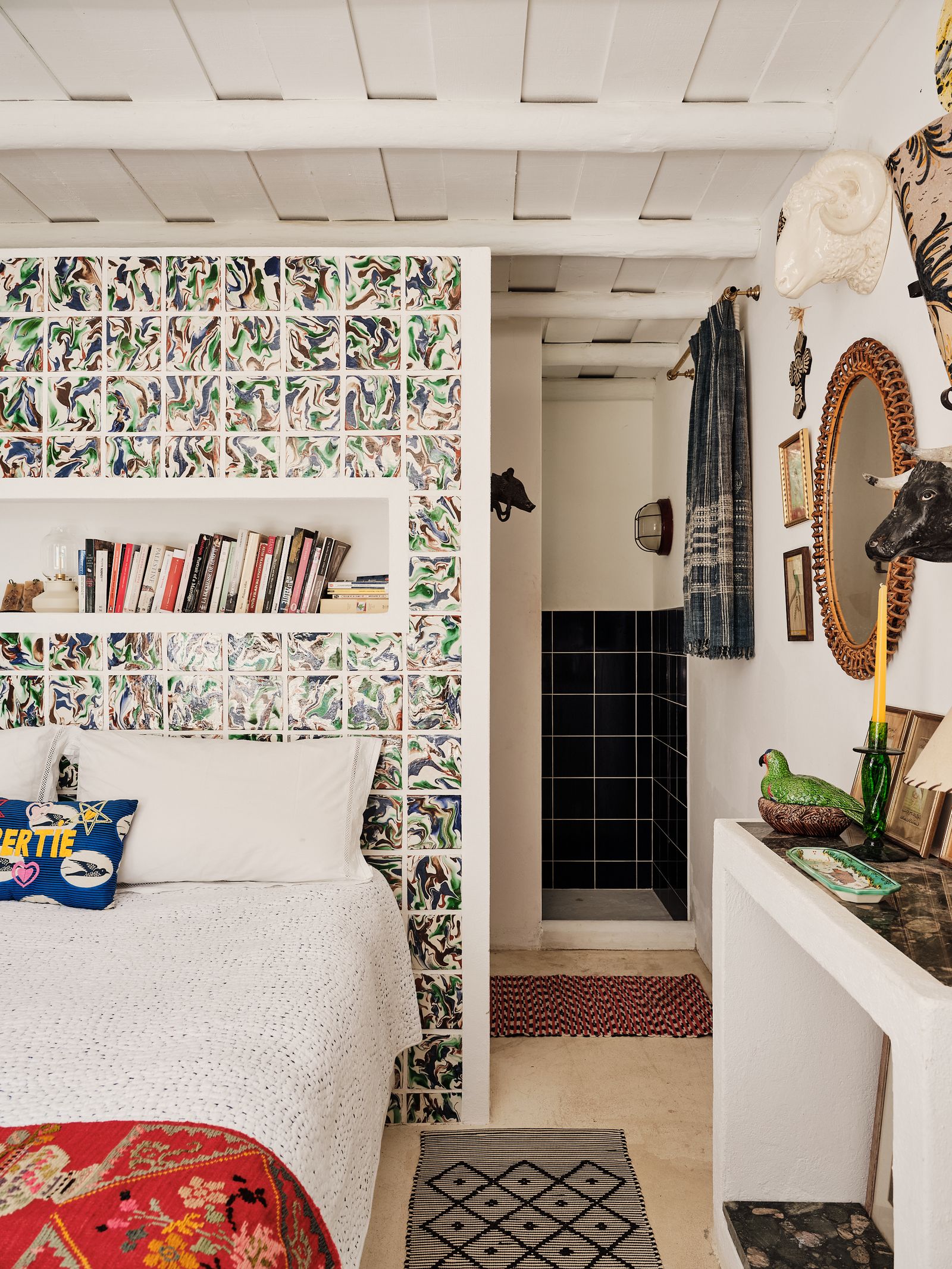
There are beautiful options on the market or you could try a DIY approach if you are feeling adventurous. Just remember that the size of tile you choose makes a difference. ‘Smaller mosaic tiles are fine, but medium-sized tiles can make it harder to balance things on top,’ Dickinson points out.
As a piece of tiled furniture is likely to be a statement piece, Haines suggests keeping other elements in the room relatively simple: ‘Perhaps pair it with similarly robust textures like bouclé or a mohair. Antique textiles would also be a natural pairing, as would thick pile rugs like a vintage Beni Ourain.’ After all, tiles need breathing space if they are to make their full impact.


