

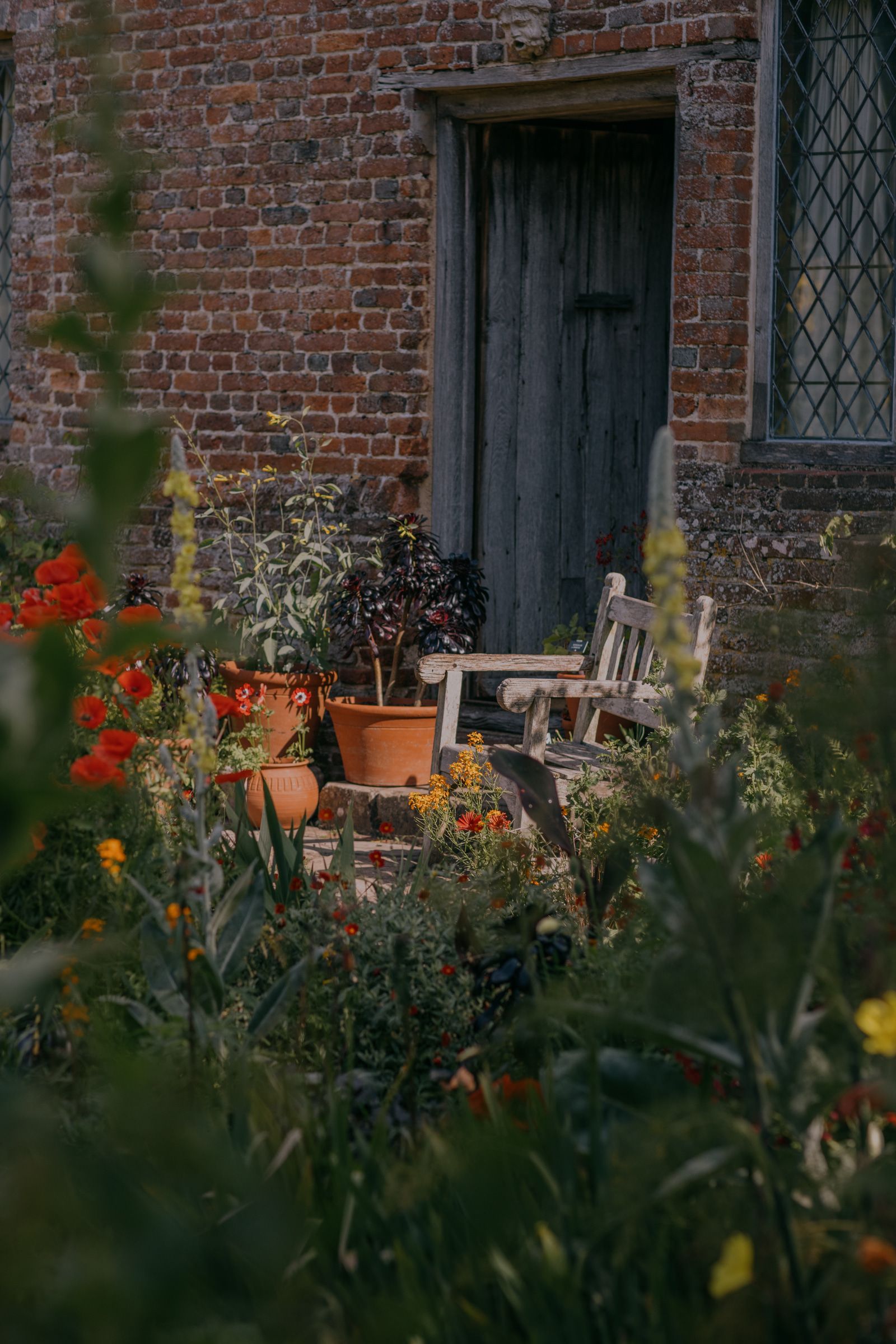
The garden at Sissinghurst Castle in Kent has attracted visitors from far and wide since it first opened to the public in the late 1930s. Created from scratch by the writer and poet Vita Sackville-West and her husband, the diplomat and author Harold Nicolson, it is the epitome of the romantic English country garden, with a series of ‘rooms’ filled with colourful planting schemes. Thanks to Vita and Harold’s differing approaches, it is at once formal and traditional, wild and exuberant. As Vita wrote in a piece for House & Garden in the 1950s, ‘How shall I sum up this garden, that has been made in so short a time, and yet looks so matured that it might have been here for as long ago as the old Tudor house round which it has been made? This may sound sentimental, but it is very true.’
Now in the care of the National Trust, it is tended by a dedicated team led by head gardener Troy Scott-Smith. An exciting new course from Create Academy offers unprecedented access to the Sissinghurst garden as Troy shares expert techniques, planting insights and practical advice. ‘The Art of Gardening at Sissinghurst’ was filmed over the course of a year and will be released in three seasonal parts, with 17 lessons in total. From beds and borders to staking and succession, participants will learn how to work with annuals, biennials and perennials to build dynamic displays. And with a focus on seasonal gardening techniques, the course will reveal how to time tasks and plant combinations to bring a touch of Sissinghurst to your own garden.
‘Gardening has given me so much joy over the years, and I’d love to share some of that joy with you, giving you the confidence to give gardening a go,’ says Troy. We have asked him to share his top autumn gardening jobs to offer a taste of this enlightening new course.
Lifting and dividing perennials
Autumn is the perfect time to lift and divide perennials. The soil is still warm and moist, creating ideal conditions for replanting. Look for plants that are underperforming or flowering poorly. Use a fork to carefully lift the clump – either the whole group or sections from the side.
Once lifted, break the clump into palm-sized pieces and replant them into freshly improved soil enriched with compost. While the bed is empty, take the opportunity to really work the soil.
Exception: If you’re gardening on heavy clay or poorly drained soil, delay lifting until early spring (around late February). Divisions planted too late in autumn on such soils may not root in time before winter.
Propagation
Autumn is an excellent time for propagation – making new plants for free.
Cuttings: Take tip cuttings from tender plants like salvias. Just a few cuttings per plant is enough, as indoor space is often limited. Root them in plug trays or around the edge of pots, kept just slightly moist. By early November, they should be rooted and can sit quietly over winter, ready to grow strongly in spring.
Seeds: Collect ripe seeds from perennials and annuals. Choose a dry day, and store seeds in labeled paper bags. Later in autumn, clean and packet them, marking both the plant name and sowing time. Some hardy annuals can be sown now to overwinter, while others should wait until spring. Stagger sowing rather than doing everything at once.

Planting spring-flowering bulbs
Bulbs are one of the most rewarding autumn jobs, giving big splashes of spring colour for little effort.
Daffodils/Narcissi: Plant in September while they are beginning growth.
Tulips: Delay planting until after Bonfire Night, ideally November to Christmas, to avoid disease and early sprouting.
For a natural look, vary planting density. In orchards or meadow grass, scatter bulbs for a more informal feel. Among perennials, tulips are best spaced evenly but sparsely so they weave between other plants, softening their impact.
Lawn care
Autumn lawn care pays off the following year. This work will build resilience against summer heat and drought.
Scarify: Rake out thatch (dead grass) with a spring-tine rake or mechanical scarifier.
Aerate: Spike or hollow-tine the lawn, then apply an organic topdressing to improve soil health and root depth.
Overseed: Sow grass seed into bare patches – it will germinate quickly in autumn conditions.
Hedge cutting
Many hedges are trimmed in autumn, but timing depends on the species:
Yew: Cut once a year from August to mid-November. Later pruning ensures a sharp, clean look all winter.
Hornbeam: Cut twice a year, typically June and October, for a formal look.
Box: Traditionally cut in June, but winter cutting (November–December, in mild weather) may help disrupt box moth caterpillars.

Rose pruning
Rose pruning runs from mid-October through late February (before buds break).
Climbers: Start with wall-trained roses in mid-October – it’s warmer for ladder work, and prevents pruning from damaging shrub roses below.
Shrubs: Follow with shrub roses after the climbers are finished. For old shrub roses (pre-1867 varieties), bend long shoots horizontally to encourage flowering along their length, and remove some old stems low down to stimulate strong new growth. For modern hybrid teas or English roses, pruning can be delayed until March.
A final thought
Autumn is a proactive season. Summer is about maintenance – deadheading and tidying – but autumn is when you can truly shape the garden’s future. The soil is still warm, the days are long enough, and the garden’s growth is slowing. This is the moment to get ahead: lift, divide, plant, prepare, and plan. Do the groundwork now, and your garden will reward you with strength and beauty in spring.
Troy’s debut online seasonal gardening course, The Art of Gardening at Sissinghurst, is available from Create Academy from Thursday September 25 (createacdemy.com). It costs £147 for lifetime access.


